seamus dubhghaill

Promoting Irish Culture and History from Little Rock, Arkansas, USA


Leave a comment

Charles II Proclaimed King of Ireland

charles-ii

King Charles II is proclaimed king in Dublin on May 14, 1660, six days after London, thus ending Oliver Cromwell’s reign as Lord Protector and beginning a brief and limited Catholic Restoration.

The Restoration of the monarchy begins in 1660. The Commonwealth of England, Scotland and Ireland (1649–60) result from the Wars of the Three Kingdoms but collapse in 1659. Politicians such as General George Monck try to ensure a peaceful transition of government from the “Commonwealth” republic back to monarchy. From May 1, 1660 the English, Scottish and Irish monarchies are all restored under King Charles II. The term Restoration may apply both to the actual event by which the monarchy was restored, and to the period immediately before and after the event.

With the collapse of The Protectorate in England during May 1659 the republic which had been forced upon Ireland by Oliver Cromwell quickly begins to unravel.

Royalists plan an uprising in Ireland and seek to turn Henry Cromwell and Lord Broghill, who is in contact with the King’s court in the summer of 1659, towards the cause but the plan comes to aught. Henry Cromwell leaves Ireland in June 1659. Broghill shows reluctance to declare for the King, but nevertheless republicans are suspicious of him following George Booth‘s revolt in England in 1659.

Sir Theophilus Jones, a former soldier under Charles I of Ireland and governor of Dublin during the republic, seizes Dublin Castle with a group of officers and declares for Parliament. Acting in Charles II’s interest, Sir Charles Coote seizes Galway while Lord Broghill holds firm in Munster. On January 9, 1660 a council of officers declare Edmund Ludlow a traitor and he flees to England. The regicide Hardress Waller re-takes Dublin Castle in February 1660 but with little support he surrenders to Sir Charles Coote. Waller along with fellow regicide John Cook is arrested and sent to England. The officers in Dublin support General Monck.

The army is purged of radicals and a Convention Parliament is called. Coote seeks to move the Convention Parliament towards restoration, but his rival Broghill does not openly declare for the King until May 1660.

In February 1660 Coote sends a representative to King Charles II in the Netherlands and invites him to make an attempt on Ireland, but the King regards it as inexpedient to try to reclaim Ireland before England. At the same time Broghill sends his brother to invite the King to land at Cork. In March 1660 a document is published asking for the King’s return, “begged for his forgiveness, but stipulated for a general indemnity and the payment of army arrears.”

Following events in England, Charles is proclaimed King of Ireland in Dublin on May 14 without any dissent. The Irish Royal Army is reestablished.

After 1660, the commonwealth parliamentary union is treated as null and void. As in England the republic is deemed constitutionally never to have occurred. The Convention Parliament is dissolved by Charles II in January 1661, and he summons his first parliament in Ireland in May 1661.

(Pictured: Charles II in Garter robes by John Michael Wright or studio, c. 1660–1665)


Leave a comment

Death of Broadcaster Derek Davis

derek-davis

Irish broadcaster Derek Davis dies in Dublin on May 13, 2015. On television, he co-hosts Live at 3, presents Davis at Large and Out of the Blue and wins Celebrity Bainisteoir.

Davis is born on April 26, 1948, in Bangor, County Down, Northern Ireland to a Protestant father and a Roman Catholic mother. He attends St. MacNissi’s College, a Catholic boarding school in County Antrim and describes his early childhood life as ecumenical. During his childhood he acquires a love of boats which later provide the inspiration for the TV series Out of the Blue.

Davis starts as a news reporter with the American network ABC and BBC Northern Ireland before spending 11 years in the newsroom at RTÉ. In the early 1980s he becomes a newsreader for The Six-o-clock News and begins to become well-known due to his sometimes-off-the-cuff comments on news stories.

Davis impersonates Big Tom on the RTÉ satirical programme Hall’s Pictorial Weekly and, as a result, is offered a part in a showband in Cork. After a ballroom tour, he joins RTÉ proper in 1975, initially to work as a television news reporter, eventually becoming newsreader on the nine o’clock news. In the mid-1980s, he hosts his own talk show, Davis at Large. It is on this show, which is screened live, that he is attacked and hurled across the studio by a guest female body builder. In addition to this he has an interactive summer current affairs show, simply called Davis. In 1986, he begins co-hosting (with Thelma Mansfield) RTÉ 1’s afternoon programme Live at 3, a role he fills for eleven years.

Davis presents the Rose of Tralee twice in 1995 and 1996, the first of these when Gay Byrne is taken ill at short notice. He memorably thanks the providers of the air conditioning while wiping sweat from his brow. Live at 3 comes to an end in 1997. Davis returns to the screen in the late 1990s with a marine programme devoted to boats and the waters around Ireland called Out of the Blue, which runs for four series, the last of which is broadcast in 2001.

In 2000, Davis presents a radio quiz show called A Question of Food. During the summer season he takes over RTÉ Radio 1‘s mid-morning slot usually occupied by Today with Pat Kenny, and he also hosts the radio phone-in show, Liveline, when regular presenter Joe Duffy is on holiday. Later, he presents Sunday Magazine with Davis on 4 on 4fm.

In 2005, Davis hosts a show called Time on Their Hands, a travel series for older people. One of his last television appearances is on the second season of Celebrity Bainisteoir in 2009, in which he and seven other Irish celebrities manage an intermediate Gaelic football club team from their home county in an official GAA tournament. Davis’s team wins the tournament.

During the 2010s, Davis makes frequent guest appearances on TV3‘s Tonight with Vincent Browne, where he and another guest preview the following morning’s papers.

After a short illness Derek Davis dies on May 13, 2015, at the age of 67. His funeral takes place in the Victorian Chapel, Mount Jerome Cemetery and Crematorium in Harold’s Cross, Dublin.


Leave a comment

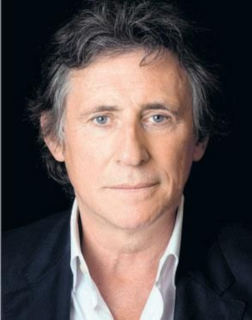
Birth of Gabriel Byrne, Actor, Director & Producer

gabriel-james-byrne

Gabriel James Byrne, internationally acclaimed actor, film director, film producer, writer, cultural ambassador and audiobook narrator, is born in Dublin on May 12, 1950.

Byrne is the first of six children. His father is a cooper and his mother a hospital worker. He is raised Catholic and educated by the Irish Christian Brothers. He spends five years of his childhood in a seminary training to be a Catholic priest. He later says, “I spent five years in the seminary, and I suppose it was assumed that you had a vocation. I have realized subsequently that I didn’t have one at all. I don’t believe in God. But I did believe at the time in this notion that you were being called.” He attends University College Dublin (UCD), where he studies archeology and linguistics, and becomes proficient in the Irish language. He plays football in Dublin with the Stella Maris Football Club.

Byrne works in archeology after he leaves UCD but maintains his love of his language, writing Draíocht (Magic), the first drama in Irish on Ireland’s national Irish television station, TG4, in 1996.

He discovers his acting ability as a young adult. Before that he works at several occupations which include being an archaeologist, a cook, a bullfighter, and a Spanish schoolteacher. He begins acting when he is 29 years old. He begins on stage at the Focus Theatre and the Abbey Theatre in Dublin, later joining the Royal Court Theatre and the Royal National Theatre in London.

Byrne comes to prominence on the final season of the Irish television show The Riordans, later starring in the spin-off series, Bracken. He makes his film début in 1981 as Lord Uther Pendragon in John Boorman‘s King Arthur epic, Excalibur.

Byrne does not visit the United States until he is 37 years old. In 1988, he married actress Ellen Barkin with whom he has two children. The couple separates amicably in 1993 and divorce in 1999.

In November 2004, Byrne is appointed a UNICEF Ireland Ambassador. In 2007 he is presented with the first of the newly created Volta awards at the 5th Jameson Dublin International Film Festival for his lifetime achievement in acting. He also receives the Honorary Patronage of the University Philosophical Society, of Trinity College Dublin on February 20, 2007. He is awarded an honorary degree in late 2007 by the National University of Ireland, Galway, in recognition of his “outstanding contribution to Irish and international film.”

Byrne is featured as therapist Dr. Paul Weston in the critically acclaimed HBO series In Treatment (2008). In his return to theater in 2008, Byrne appears as King Arthur in Alan Lerner and Frederick Loewe‘s Camelot with the New York Philharmonic which is featured in a PBS broadcast in the Live From Lincoln Center series in May of 2008.

Byrne currently resides in Manhattan, New York.

(From IMDb Mini Biography by Bernie Corrigan)


Leave a comment

Caroline Casey Completes 4-month Elephant Ride Across India

caroline-caseyVisually-impaired Irish adventurer, activist and management consultant Caroline Casey arrives back in Dublin on May 11, 2001 after a four-month elephant ride across India during which she raises €250k for charity.

Casey, born in 1971, is diagnosed with ocular albinism as a child but is not personally informed until her 17th birthday. She graduates from University College Dublin with BA, DBS and MBS degrees. She works at a couple of jobs including as a management consultant for Accenture.

In 2000, at the age of 28, Casey leaves her job at Accenture to launch the Aisling Foundation, with an aim to improve how disability is treated. In early 2001, she begins her solo trek across India on elephant back. She travels approximately 1,000 km and raises €250k for The National Council for the Blind of Ireland and Sightsavers. She becomes the first female mahout from the west. The journey is the subject of a National Geographic documentary Elephant Vision and a TED Talk.

Then, as founding CEO of Kanchi in Dublin, Casey develops a set of best practices for businesses, to help them see “disabled” workers as an asset, as opposed to a liability. Hundreds of companies have adopted these standards, changing their policies and attitudes. In 2004, she starts the Ability Awards, sponsored by O2, to recognize Irish businesses for their inclusion of people with disabilities, as employees, suppliers, customers and members of the community. The initiative receives great international praise and, in 2010, a parallel program is launched in Spain, backed by Telefónica.

In 2015 Casey founds business inclusion company Binc which, in August 2017, launches #valuable – a worldwide call to action for business to recognise the value and potential of the 1 billion people living with a disability and position disability equally on the global business agenda. To start the conversation and build momentum, Casey embarks on a 1,000km horse adventure through Colombia, ending with a keynote address at “One Young World Summit 2017” in Bogotá.


Leave a comment

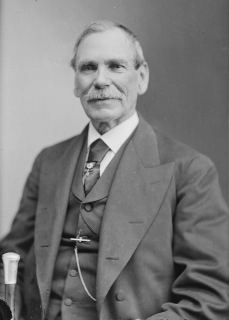
Birth of James Shields, U.S. Politician & Army Officer

james-shields

James Shields, Irish American Democratic politician and United States Army officer, is born in Altmore, County Tyrone, in what is now Northern Ireland, on May 10, 1806. He is the only person in U.S. history to serve as a Senator for three different states. He represents Illinois from 1849 to 1855, in the 31st, 32nd, and 33rd Congresses, Minnesota from 1858 to 1859, in the 35th Congress, and Missouri in 1879, in the 45th Congress.

Born and initially educated in Ireland, Shields emigrates to the United States in 1826. He is briefly a sailor and spends time in Quebec before settling in Kaskaskia, Illinois, where he studies and practices law. In 1836, he is elected to the Illinois House of Representatives, and later as State Auditor. His work as auditor is criticized by a young Abraham Lincoln, who with his then fiancée, Mary Todd, publishes a series of inflammatory pseudonymous letters in a local paper. Shields challenges Lincoln to a duel, and the two nearly fight on September 22, 1842, before making peace and eventually becoming friends.

In 1845, Shields is appointed to the Supreme Court of Illinois, from which he resigns to become Commissioner of the U.S. General Land Office. At the outbreak of the Mexican–American War, he leaves the Land Office to take an appointment as brigadier general of volunteers. He serves with distinction and is twice wounded.

In 1848, Shields is appointed to and confirmed by the Senate as the first governor of the Oregon Territory, which he declines. After serving as Senator from Illinois, he moves to Minnesota and there founds the town of Shieldsville. He is then elected as Senator from Minnesota. He serves in the American Civil War and, at the Battle of Kernstown, his troops inflict the only tactical defeat of Stonewall Jackson in the war. He resigns his commission shortly thereafter. After moving multiple times, he settles in Missouri and serves again for three months in the Senate.

Shields dies unexpectedly in Ottumwa, Iowa on June 1, 1879, while on a lecture tour, after reportedly complaining of chest pains. His body is transferred to Carrollton, Missouri by train, where a funeral is held at the Catholic church, and his body escorted to St. Mary’s Cemetery by two companies of the Nineteenth Infantry, the Craig Rifles, and a twenty-piece brass band. His grave remains unmarked for 30 years, until the local government and the U.S. Congress fund a granite and bronze monument there in his honor.

A bronze statue of Shields is given by the State of Illinois to the United States Capitol in 1893 and represents the state in the National Statuary Hall. The statue is sculpted by Leonard Volk and dedicated in December 1893. Statues of Shields also stand in front of the Carroll County Court House in Carrollton, Missouri and on the grounds of the Minnesota State Capitol in Saint Paul.


Leave a comment

Birth of Mary Hayden, Historian & Activist

mary-hayden

Mary Teresa Hayden, Irish historian, Irish language activist and campaigner for women’s causes, is born in Dublin on May 9, 1862.

Hayden is educated initially at the Dominican College, Eccles Street and then at Alexandra College in Dublin. She attends the Royal University of Ireland where she graduates with a BA in 1885 and an MA in 1887 in Modern Languages. With Agnes O’Farrelly she campaigns for women’s rights in the university.

A campaigner for gender equality and noted as a public speaker, Hayden is a prominent member of the Irish Women’s Suffrage and Local Government Association. She is a member of the Gaelic League and friends with Patrick Pearse. However, she opposes violence and disapproves of the 1916 Easter Rising.

In 1911 Hayden is elected to the senate of the National University of Ireland and in 1915 is appointed Professor of History at University College Dublin, a position she retains until her death.

Hayden helps to form the Women’s Social and Progressive League as a political party committed to opposing the 1937 constitution of Ireland and any regressive consequences it would entail. She opposes articles 40, 41, and 45 concerning the status of women.

Mary Hayden dies in Dublin on July 12, 1942.


Leave a comment

Death of Cardinal Tomás Ó Fiaich

tomas-o-fiaich

Roman Catholic Cardinal Tomás Ó Fiaich, the Primate of All Ireland and Archbishop of Armagh and an ardent Irish nationalist, dies of cardiac arrest in a hospital at Toulouse, France at the age of 66 on May 8, 1990, after falling ill on a pilgrimage to Lourdes. Lourdes is a Catholic shrine where a peasant girl reported a vision of the Virgin Mary in 1858. Miraculous cures have been reported there.

Ó Fiaich is born Thomas Fee on November 3, 1923, in Cullyhanna, County Armagh, Northern Ireland, within sight of the border with the Republic of Ireland. He changes his name to the Gaelic form as his love of the Irish language and nationalist sentiments develop.

An announcement of the death, issued by the church’s press office in both Belfast and Dublin, says Ó Fiaich had appeared unwell to doctors accompanying the group of 600 pilgrims from his seat at Armagh in Northern Ireland.

Ó Fiaich is admitted first to a hospital in Lourdes, then flown by helicopter to Toulouse. Philippe Giovanni, director of the Rangueil Hospital there, says the cardinal died of a brutal cardiac arrest soon after being admitted.

While calling for a unified Ireland and criticizing British policy in Northern Ireland, Ó Fiaich, whose name is pronounced O’Fee, also castigates the violence of the Irish Republican Army, the predominantly Catholic outlawed guerrilla army that seeks to end British rule in Northern Ireland and unite it with the Republic of Ireland.

Ó Fiaich is appointed spiritual leader of Ireland’s four million Catholics in in 1977. Two years later Pope John Paul II makes him one of the first cardinals of his papacy.

Tributes to Ó Fiaich poured in from some both sides of the Irish border. In Dublin, Taoiseach Charles Haughey says he is “devastated, … deeply grieved.” Britain’s top official in Northern Ireland, Secretary of State Peter Brooke, also expresses sadness. “We did not always agree about everything, but he treated me with the greatest possible courtesy, friendliness and warmth.”

However hardline Protestant leader Ian Paisley of Northern Ireland’s Democratic Unionist Party says Ó Fiaich is “the mallet of Rome against the Protestants of Northern Ireland.” He claims Ó Fiaich had “made an outrageous statement that the majority of bigotry in Ulster stemmed from the Protestant section of the community” and added, “He did not seem to realize that the IRA, which is carrying out the most atrocious of outrages … were the people who needed to be indicted with bigotry.”

In Belfast, Ulster Television suspends scheduled programs for an hour and airs a religious program and a news program about the cardinal.

Ó Fiaich retains close ties to Armagh, which had been dubbed “bandit country” because of the IRA activity. From the time he becomes primate, he speaks publicly of his wishes for a united Ireland. He visits IRA guerrillas in jail, calls the British Army’s fatal shooting of an Irish civilian murder, and says the border dividing Ireland is “unnatural.”

Following his death, Ó Fiaich lies in state at St. Patrick’s Cathedral, Armagh, where thousands of people line up to pay their respects.

(From: AP News, apnews.com, May 8, 1990)


Leave a comment

Birth of John MacBride

john-macbride

Major John MacBride, Irish republican executed by the British for his participation in the 1916 Easter Rising, is born in Westport, County Mayo on May 7, 1865.

MacBride is born to Patrick MacBride, a shopkeeper and trader, and the former Honoria Gill. He is educated at the Christian Brothers School in Westport and at St. Malachy’s College in Belfast. He studies medicine but gives it up and begins working with a chemist’s firm in Dublin.

MacBride joins the Irish Republican Brotherhood (IRB) and is associated with Michael Cusack in the early days of the Gaelic Athletic Association. He also joins the Celtic Literary Society through which he comes to know Arthur Griffith, who is to remain a friend and influence throughout his life. Beginning in 1893, he is termed a “dangerous nationalist” by the British government. In 1896, he travels to the United States on behalf of the IRB. Upon his return he emigrates to South Africa.

In the Second Boer War MacBride is instrumental in the raising of the Irish Transvaal Brigade and leads it into action against the British. When organised resistance collapses, he and the surviving members cross the border into Mozambique. After the war he marries Maud Gonne and they have a son, Seán MacBride, who is also to make a name for himself in Irish Politics. The marriage, however, is not a success and they go their separate ways. MacBride keeps up his associations with Republican activists but does not become personally involved other than making the odd speech in support of Ireland’s Cause.

After returning permanently from Paris to Dublin in 1905, MacBride joins other Irish nationalists in preparing for an Insurrection. Because he is so well known to the British, the leaders think it wise to keep him outside their secret military group planning a Rising. As a result, he happens to find himself in the midst of the Rising without notice.

MacBride is in Dublin early on Easter Monday morning, April 24, to meet his brother, Dr. Anthony MacBride, who is arriving from Westport to be married two days later. As MacBride walks up Grafton Street, he sees Thomas MacDonagh in uniform and leading his troops. He offers his services and is appointed second-in-command at the Jacob’s Biscuit Factory, which is occupied and held through Easter Week until the order to surrender is received. As he is dressed in civilian clothes rather than a military uniform, he could likely have escaped without too much difficulty but rather he decides to go with his comrades into captivity.

Tried by court martial under the Defence of the Realm Act, MacBride is found guilty and sentenced to death. He is executed on May 5, 1916, two days before his forty-eighth birthday. Facing the British firing squad, MacBride refuses to be blindfolded saying, “I have looked down the muzzles of too many guns in the South African war to fear death and now please carry out your sentence.”

John MacBride is buried in the cemetery at Arbour Hill Prison in Dublin.


Leave a comment

Birth of Margaret Anna Cusack, Founder of Poor Clares Convent

margaret-anne-cusack

Margaret Anna Cusack, founder of the first Poor Clares convent in the west of Ireland and a talented writer who publishes on the issues of social injustice, is born to an aristocratic family of English origin in Coolock, County Dublin on May 6, 1829. Her writings and actions focus on advocacy of women’s rights including equal pay, equal opportunity for education, and legal reform to give women control of their own property.

Cusack is raised in the Anglican church tradition until her conversion to Catholicism in 1858. She enters the Irish Poor Clare Sisters and is among the first group of Sisters sent to found the convent at Kenmare, County Kerry.

During the next 21 years, Cusack, now known as Sister Francis Clare, dedicates herself to writing. Her writings include a wide range of concerns including lives of the saints, local histories, biographies, books and pamphlets on social issues and letters to the press. As the “Nun of Kenmare” she writes on behalf of the liberation of women and children who are victims of oppression. Income from her books and from her famine relief fund is distributed throughout Ireland. While doing all she can to feed the hungry, at the same time she campaigns vigorously against the abuse of absentee landlords, lack of education for the poor and against a whole system of laws which degrade and oppress a section of society.

To broaden the scope of her work Cusack moves to Knock, County Mayo in 1881 with the idea of expanding the ministry of the Poor Clares. She starts an industrial school for young women and evening classes for daytime land-workers. Several women are attracted by this work and in 1884 she decides to found her own community, The Sisters of St. Joseph of Peace.

Continued conflict in Knock with Church leaders leads Cusack to seek support in England. Under Cardinal Henry Edward Manning and Bishop Edward Bagshawe, she receives approbation for the new religious order from Pope Leo XIII and the Congregation of the Sisters of St. Joseph of Peace is founded in January 1884, in the Diocese of Nottingham, England.

Later, Cusack travels to the United States to continue her work with immigrant Irish women but is immediately rebuked by Archbishop Michael Corrigan of New York. Just at that time, New Jersey stretches out a hand of welcome and encouragement as Bishop Winand Wigger of the Archdiocese of Newark invites her to establish homes for young Irish working women there. Within a few years, however, she claims that because of Archbishop Corrigan’s criticism of her among bishops throughout the United States, the work of her new community cannot continue as long as she remains with them.

Physically exhausted, sick and disillusioned with a patriarchal Church, Cusack withdraws from the Sisters of St. Joseph of Peace and leaves behind the sisters she so dearly loved. She eventually returns to her friends in the Church of England. In later years, she keeps in contact with the Sisters and expresses a loving concern for them. She dies on June 5, 1899, and is buried in the cemetery reserved for the Church of England at Leamington Spa, Warwickshire, England.

Cusack passes into obscurity for a long time until, as a result of the Second Vatican Council, religious orders are encouraged to review their roots and the intent of their founders. Since then, there have been a number a studies on Cusack, such as Philomena McCarthy’s The Nun of Kenmare: The True Facts. With the rediscovery of the life and times of Cusack, she has been hailed as a feminist and a social reformer ahead of her time.


Leave a comment

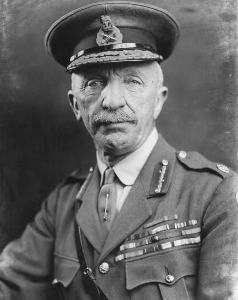
Birth of Field Marshal Sir Henry Hughes Wilson

henry-hughes-wilson

Field Marshal Sir Henry Hughes Wilson, 1st Baronet, GCB, DSO, one of the most senior British Army staff officers of World War I and briefly an Irish unionist politician, is born at Currygrane in Ballinalee, County Longford on May 5, 1864.

Wilson attends Marlborough public school between September 1877 and Easter 1880, before leaving for a crammer to prepare for the Army.

Wilson serves as Commandant of the Staff College, Camberley, and then as Director of Military Operations at the War Office, in which post he plays a vital role in drawing up plans to deploy an Expeditionary Force to France in the event of war. During these years he acquires a reputation as a political intriguer for his role in agitating for the introduction of conscription and in the Curragh incident of 1914, when he encourages senior officers to resign rather than move against the Ulster Volunteers.

As Sub Chief of Staff to the British Expeditionary Force (BEF), Wilson is John French‘s most important adviser during the 1914 campaign, but his poor relations with Douglas Haig and William Robertson see him sidelined from top decision-making in the middle years of the war. He plays an important role in Anglo-French military relations in 1915 and, after his only experience of field command as a corps commander in 1916, again as an ally of the controversial French General Robert Nivelle in early 1917. Later in 1917 he is informal military advisor to British Prime Minister David Lloyd George, and then British Permanent Military Representative at the Supreme War Council at Versailles.

In 1918 Wilson serves as Chief of the Imperial General Staff, the professional head of the British Army. He continues to hold this position after the war, a time when the Army is being sharply reduced in size whilst attempting to contain industrial unrest in the UK and nationalist unrest in Mesopotamia, Iraq and Egypt. He also plays an important role in the Irish War of Independence.

After retiring from the army Wilson serves briefly as a Member of Parliament, and also as security advisor to the Government of Northern Ireland. He is assassinated on his own doorstep by two Irish Republican Army (IRA) gunmen on June 22, 1922, while returning home from unveiling the Great Eastern Railway War Memorial at Liverpool Street station.