seamus dubhghaill

Promoting Irish Culture and History from Little Rock, Arkansas, USA


1 Comment

Death of Samuel McCaughey, Australian Philanthropist


samuel-mccaughey

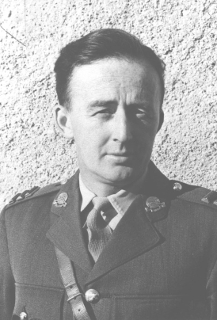
Sir Samuel McCaughey, Irish-born pastoralist, politician and philanthropist in Australia, dies in Yanco, New South Wales on July 25, 1919.

McCaughey is born on July 1, 1835, at Tullynewey, near Ballymena, County Antrim, the son of Francis McCaughey, farmer and merchant, and his wife Eliza, née Wilson.

McCaughey comes to Australia with an uncle, Charles Wilson, a brother of Sir Samuel Wilson, and lands at Melbourne in April 1856. He immediately goes to the country and begins working as a jackaroo. Within three months he is appointed an overseer and two years later becomes manager of Kewell station while his uncle is on a visit to England.

In 1860, after his uncle’s return, McCaughey acquires an interest in Coonong station near Urana with two partners. His brother John who comes out later becomes a partner in other stations.

During the early days of Coonong station McCaughey suffers greatly from drought conditions but overcomes these by sinking wells for artesian water and constructing large tanks, making him a pioneer of water conservation in Australia.

In 1871 McCaughey is away from Australia for two years on holiday, and on his return does much experimenting in sheep farming. At first, he seeks the strains that can produce the best wool in the Riverina district. Afterwards, when the mutton trade develops, he considers the question from that angle.

In 1880 Sir Samuel Wilson goes to England and McCaughey purchases two of his stations, Toorale and Dunlop Stations, during his absence. He then owns about 3,000,000 acres. In 1886 he again visits the old world and imports a considerable number of Vermont sheep from the United States and also introduces fresh strains from Tasmania. He ultimately owns several million sheep, earning the nickname of “The Sheep King.”

In 1900 McCaughey purchases North Yanco and, at great cost, constructs about 200 miles of channels and irrigates 40,000 acres. The success of this scheme is believed to have encouraged the New South Wales government to proceed with the dam at Burrinjuck.

McCaughey becomes a member of the New South Wales Legislative Council in 1899, and in 1905 he is made a Knight Bachelor. He suffers from nephritis and dies from heart failure at Yanco on July 25, 1919, and is buried in the grounds of St. John’s Presbyterian Church in Narrandera. He never marries.

2 Comments

Birth of Geoffrey Henry Cecil Bing, Barrister & Politician

geoffrey-henry-cecil-bing

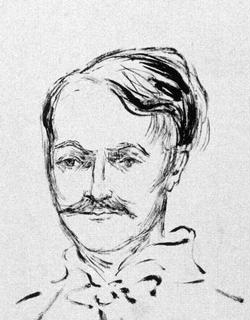
Geoffrey Henry Cecil Bing, British barrister and politician who serves as the Labour Party Member of Parliament for Hornchurch from 1945 to 1955, is born on July 24, 1909, at Craigavad near Belfast in what is now Northern Ireland.

Bing is educated at Rockport School and Tonbridge School before going on to Lincoln College, Oxford, where he reads history. He graduates with a second-class degree in 1931, before attending Princeton University, where he is a Jane Eliza Procter Visiting Fellow between 1932 and 1933. He is called to the bar from the Inner Temple in 1934.

Always a radical and a member of the socialist left, Bing is active in the Haldane Society of Socialist Lawyers and the National Council for Civil Liberties. During the Spanish Civil War, he joins the International Brigades as a journalist, barely avoiding capture at Bilbao. He is also an early anti-Nazi.

During World War II, Bing serves in the Royal Corps of Signals, attaining the rank of major. A 1943 experiment with parachutes at the GSO2 Airborne Forces Development Centre leaves him disfigured and he bears the scars for many years.

At the 1945 general election, Bing stands for Labour in Hornchurch, winning the seat. He is re-elected in 1950 and 1951, serving until 1955. He serves briefly as a junior whip in 1945-1946 but this is widely thought to have been the unintended result of confusion on the part of Clement Attlee, who confuses him for another Labour MP of a similar name.

On the backbenches, Bing is, according to his Times obituary, “the unrestrained leader of a small group of radicals, never fully trusted by their colleagues and known as ‘Bing Boys.'” He takes a particular interest in the cases of Timothy Evans and John Christie, and he supports the campaign to overturn the conviction of Evans, which is ultimately successful. He supports Communist China and takes a keen interest in Northern Ireland, the brewers’ monopoly and parliamentary procedure.

Bing also builds a practice in West Africa. He becomes close to Kwame Nkrumah, the first post-colonial president of Ghana and is appointed Ghana’s attorney-general, a post he holds until 1961. When Nkrumah is ousted in 1966, Bing is arrested and ill-treated, before being sent home some months later. His memoir of Nkrumah’s Ghana, Reap the Whirlwind, is published in 1968.

Geoffrey Henry Cecil Bing dies in London on April 24, 1977, at the age of 67.


Leave a comment

Birth of Former Politician John Cushnahan

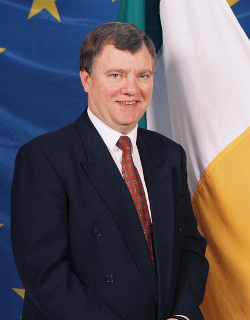
Portrait of MEP John Walls CUSHNAHAN

John Walls Cushnahan, former politician in both Northern Ireland and the Republic of Ireland, is born in Belfast, Northern Ireland on July 23, 1948. He serves as leader of the Alliance Party of Northern Ireland and then as a Member of the European Parliament for Fine Gael.

Cushnahan is educated at St. Mary’s Christian Brothers Grammar School and Queen’s University, Belfast and works as a teacher before going into politics. He works as General Secretary of the Alliance Party from 1974 until 1982 and is a member of Belfast City Council between 1977 and 1985.

In 1982 Cushnahan is elected to the Prior Assembly for North Down and two years later he becomes the new leader of Alliance, succeeding Oliver Napier. During his tenure as leader, he seeks to strengthen the party’s links with the British Liberal Party. The Anglo-Irish Agreement is signed during this period and Cushnahan faces the difficult position of giving Alliance support to it and facing the united opposition of the Unionist parties. However, when the Assembly is dissolved in 1986, Cushnahan finds it financially difficult to remain in politics and so stands down as leader in 1987 to be succeeded by John Alderdice.

Two years later Cushnahan makes a surprise political comeback when he moves to the Republic of Ireland and stands as a Fine Gael candidate in the 1989 election to the European Parliament, winning a seat in the Munster constituency. He is an MEP for fifteen years before retiring at the 2004 elections.

Cushnahan now serves as a board member of the peace and reconciliation charity Co-operation Ireland.


Leave a comment

Birth of James Henry Cousins, Playwright & Actor

james-h-cousins

James Henry Cousins, Irish writer, playwright, actor, critic, editor, teacher and poet, is born in Belfast on July 22, 1873, a descendant of Huguenot refugees. He uses several pseudonyms including Mac Oisín and the Hindu name Jayaram.

Largely self-educated at night schools, Cousins works some time as a clerk and becomes private secretary and speechwriter to Sir Daniel Dixon, 1st Baronet, the Lord Mayor of Belfast. In 1897 he moves to Dublin where he becomes part of a literary circle which includes William Butler Yeats, George William Russell and James Joyce. It is believed that he serves as a model for the Little Chandler character in Joyce’s short story collection Dubliners.

Cousins is significantly influenced by Russell’s ability to reconcile mysticism with a pragmatic approach to social reforms and by the teachings of Helena Blavatsky. He has a lifelong interest in the paranormal and acts as reporter in several experiments carried out by William Fletcher Barrett, Professor of physics at the University of Dublin and one of the founders of the Society for Psychical Research.

Cousins produces several books of poetry while in Ireland as well as acting in the first production of Cathleen ní Houlihan, under the stage name of H. Sproule, with the famous Irish revolutionary and beauty Maud Gonne in the title role. His plays are produced in the first years of the twentieth century in the Abbey Theatre, the most famous being “the Racing Lug”. After a dispute with W.B. Yeats, who objects to “too much Cousins,” the Irish National Theatre movement splits with two-thirds of the actors and writers siding with Cousins against Yeats.

Cousins also writes widely on the subject of Theosophy and in 1915 travels to India with the voyage fees paid for by Annie Besant, the President of the Theosophical Society. He spends most of the rest of his life in the sub-continent, apart from a year as Professor of English Literature at Keio University in Tokyo and another lecturing in New York. Toward the end of his life, he converts to Hinduism. At the core of Cousins’s engagement with Indian culture is a firm belief in the “shared sensibilities between Celtic and Oriental peoples.”

While in India he becomes friendly with many key Indian personalities including poet Rabindranath Tagore, Indian classical dancer Rukmini Devi Arundale, painter Abdur Rahman Chughtai and Mahatma Gandhi. He is the person who brings change into the life of poetry of the great renowned Kannada poet and writer Kuvempu. He writes a joint autobiography with his wife Margaret Elizabeth Cousins, a suffragette and one of the co-founders of the Irish Women’s Franchise League and All India Women’s Conference (AIWC).

In his The Future Poetry Sri Aurobindo acclaims Cousins’ New Ways in English Literature as “literary criticism, which is of the first order, at once discerning and suggestive, criticism which forces us both to see and think.” He also acknowledges that he learned to intuit deeper being alerted by Cousins’ criticisms of his poems. In 1920 Cousins comes to Pondicherry to meet the Mother and Sri Aurobindo.

James Cousins dies on February 20, 1956, in Madanapalle, Andhra Pradesh, India at the age of 82.


Leave a comment

Birth of Chauncey Olcott, Actor, Singer & Songwriter

chauncey-olcott

John Chancellor “Chauncey” Olcott, American stage actor, songwriter and singer of Irish descent, is born in Buffalo, New York on July 21, 1858. His mother, Margaret (née Doyle), is a native of Killeagh, County Cork.

In the early years of his career Olcott sings in minstrel shows, before studying singing in London during the 1880s. Lillian Russell plays a major role in helping make him a Broadway star. When the producer Augustus Pitou approaches him in 1893 to succeed William J. Scanlan as the leading tenor in sentimental operettas on Irish themes, Olcott accepts and performs pseudo-Irish roles for the remainder of his career.

Olcott combines the roles of tenor, actor, lyricist and composer in many productions. He writes the complete scores to Irish musicals such as Sweet Inniscara (1897), A Romance of Athlone (1899), Garrett O’Magh (1901), and Old Limerick Town (1902). For other productions he collaborates with Ernest Ball and George Graff, Jr. in works such as The Irish Artist (1894), Barry of Ballymore (1910), Macushla (1912), and The Isle o’ Dreams (1913). There are some twenty such works between 1894 and 1920.

Olcott is a good songwriter who captures the mood of his Irish American audience by combining melodic and rhythmic phrases from traditional Irish music with melancholy sentiment. Some numbers from his musicals become very popular, such as “My Wild Irish Rose” from A Romance of Athlone, “Mother Machree” from Barry of Ballymore, and “When Irish Eyes Are Smiling” from The Isle o’ Dreams. Sometimes he uses tunes from others, such as that of the title song from Macushla from Irish composer Dermot Macmurrough (pseudonym of Harold R. White) or Too Ra Loo Ra Loo Ral (Irish Lullaby) by James Royce Shannon for his production Shameen Dhu (1914).

In 1925, a serious illness forces Olcott to retire, and he moves to Monte Carlo, Monaco where he dies of pernicious anemia on March 18, 1932. His body is brought home and interred in the Woodlawn Cemetery in The Bronx, New York City.

Olcott’s life story is told in the 1947 Warner Bros. motion picture My Wild Irish Rose starring Dennis Morgan as Olcott. The film’s plot is based on the biography by Olcott’s widow, Rita Olcott, Song in His Heart (1939).

In 1970, Olcott is posthumously inducted into the Songwriters Hall of Fame.


Leave a comment

Transplant Patient Adele Chapman Leaves the Hospital

adele-chapman

Seven-year old Adele Chapman from Belfast, Britain’s first triple-organ transplant child, leaves the hospital on July 20, 1998. Twelve weeks earlier, she undergoes a pioneering liver, pancreas, and small intestine transplant at Birmingham Children’s Hospital.

Chapman has to wait two years for a donor to come forward. The hospital releases pictures of Adele in March 1998 in a bid to get donors to come forward. Her donor is of a similar age to her and also donates her heart and kidneys for transplants.

The youngest of five children, Chapman says the first thing she plans to do when she gets home is to “give my daddy and brothers and sisters a hug and a kiss.” Her mother Doreen says the family has been on a “roller coaster of emotion” over the past two years. At times, they had thought Adele would not survive. “Three months ago she was lying absolutely devastated on the bed and could not move. The transformation is just wonderful,” she said. “Now we are looking to the future.”

Chapman’s complex 10-hour operation is carried out by a team led by Jean de Ville de Goyet from Birmingham Children’s Hospital and David Mayer from the Queen Elizabeth Hospital in Birmingham. The Children’s Hospital is the only centre in the United Kingdom which can perform small intestine and liver transplants on children.

Chapman had a rare bowel disease which prevented her from eating solid food for two years. But only four weeks after her operation she is tucking into toast and doughnuts. Shortly after the surgery, the hospital says there has been no major medical or surgical problems as a result of the operation, although she still has a single feeding tube attached to her nose.

Chapman’s family calls for more donors to come forward. Donor organisations are trying to get more people signed up to the national organ donor register. The number of transplants has fallen by 10% in the years prior to 1998. Beverley Cornforth, a transplant educationalist, says the real problem is the 30% who say no to donating organs. This is often because people who die have not stated in advance that they would like to donate their organs and families are too distressed to decide for them.

(From BBC News, July 20, 1998)


Leave a comment

Birth of Thomas Talbot, Canadian Soldier & Politician

thomas-talbot

Thomas Talbot, Irish-born Canadian soldier and politician, is born at Malahide Castle near Dublin on July 19, 1771. He is the fourth son of Richard Talbot and his wife Margaret Talbot, 1st Baroness Talbot of Malahide. Richard Talbot, 2nd Baron Talbot of Malahide and Sir John Talbot are his elder brothers.

Talbot receives a commission in the army as ensign before he is twelve years old, and is appointed at sixteen to aid his relative, the Lord Lieutenant of Ireland. He sees active service in Holland and at Gibraltar.

Talbot immigrates to Canada in 1791, where he becomes personal secretary to John Graves Simcoe, Lieutenant Governor of Upper Canada. After returning to England, Talbot convinces the government to allow him to implement a land settlement scheme along the shore of Lake Erie. His petition for 5,000 acres is granted in 1803. On May 21, 1803 he lands at a spot which has since been called Port Talbot and builds a log cabin. Nearby, he adds a sawmill, a cooper shop, a blacksmith shop, and a poultry house along with a barn. When settlers begin to arrive in 1809, Talbot adds a gristmill as well.

Here Talbot rules as an absolute, if erratic, potentate, doling out strips of land to people of his choosing, a group that emphatically does not include supporters of the American Revolution, liberals or anyone insufficiently respectful. For every settler he places on 50 acres of land, he receives an additional 200 acres for himself. One of the conditions attached to the free grant of 50 acres is the right to purchase an additional 150 acres at $3 each, and the promise of a road in front of each farm within three and a half years. The other condition is the building of a small house and the clearing and sowing of 10 acres of land.

The result of the road-making provision is that the settlement becomes noted for its good roads, especially for that named Talbot Road. By the late 1820s Talbot has organized the construction of a 300 mile long road linking the Detroit River and Lake Ontario as part of grand settlement enterprise in the south western peninsula. By 1820, all of the land originally allotted to Talbot has been taken up. From 1814 to 1837 he settles 50,000 people on 650,000 acres of land in the Thames River area. Many, if not most of the settlers, are American. He places about 20,000 immigrants on the Talbot settlement by 1826.

Because Talbot has done his work so well, the government places the southwestern part of the province under his charge. This affords him the opportunity of extending the Talbot road from the Long Point region to the Detroit River. In 1823, he decides to name the port after his friend Baron Edward Smith-Stanley, 14th Earl of Derby, whose son, Frederick Arthur Stanley eventually becomes Governor General of Canada and donates to the hockey world the elusive trophy, which still bears his name.

Talbot’s administration is regarded as despotic. He is infamous for registering settlers’ names on the local settlement map in pencil and if displeased is alleged to erase their entry. However, his insistence on provision of good roads, maintenance of the roads by the settlers, and the removal of Crown and clergy reserves from main roads quickly results in the Talbot Settlement becoming the most prosperous part of the province. Eventually, however, he begins to make political demands on the settlers, after which his power is reduced by the provincial government. His abuse of power is a contributing factor in the Upper Canada Rebellion of 1837.

Talbot dies in the home of George Macbeth at London, Ontario on February 5, 1853 and is interred in the cemetery of St. Peters Anglican Church near Tyrconnell, Ontario in Elgin County. Talbot’s home in Port Talbot, called Malahide, is demolished in 1997 generating much public outcry from heritage preservationists. Talbotville, a community in Southwold, Ontario, and the city of St. Thomas, Ontario are named after him, as well as Colonel Talbot Road and Talbot Street in both London and St. Thomas.


Leave a comment

Birth of Francis Elrington Ball, Author & Legal Historian

the-judges-in-ireland-1221-1921

Francis Elrington Ball, Irish author and legal historian best known as F. Elrington Ball, is born in Portmarnock, County Dublin on July 18, 1863. He is best known for his work The Judges in Ireland 1221–1921 (1926).

A younger son of John Thomas Ball, the Lord Chancellor of Ireland from 1875 to 1880, and his wife Catherine Elrington, Ball is unsuccessful in seeking election as a Unionist to Parliament at the 1900 United Kingdom general election in Ireland in South Dublin. His father had represented University of Dublin in Parliament from 1868 to 1875.

Ball is, however, best known for his scholarship, particularly for his work on Jonathan Swift, the local history of Dublin and on the history of the judiciary in Ireland from 1221 to 1921. The destruction of the Four Courts in 1922, during the Irish Civil War, and of the public records and legal archives it contained (especially those of the Irish Public Records Office) make his prior research into the history of the Irish judiciary up to 1921 particularly valuable to later scholars. The review published in the Irish Law Times & Solicitors’ Journal described it as “a truly marvellous condensation of judicial history involving the exhaustive study of a long period, the earlier part of which was hitherto obscure.” The same review characterised Ball as “a writer of great care and accuracy, whose work is always characterised by minute and diligent research.”

Ball also serves as a governor of the Blue Coat School, Oxmantown, Dublin. Francis Elrington Ball dies in 1928.


Leave a comment

The Glasdrumman Ambush

glasdrumman-ambush-ni-map

The Glasdrumman ambush, an attack by the South Armagh Brigade of the Provisional Irish Republican Army (IRA) against a British Army observation post, takes place on July 17, 1981, at a scrapyard in Glasdrumman, County Armagh, southwest of Crossmaglen.

The crisis, triggered by the 1981 Irish hunger strike of Provisional IRA and Irish National Liberation Army (INLA) prisoners, leads to an increase in militant Irish republican activity in Northern Ireland. British intelligence reports unveil IRA intentions of mounting illegal checkpoints and hijacking vehicles on the IRA-controlled roads in South County Armagh, near the Irish border. To counter it, the British Army deploy the so-called COPs (close observation platoons), small infantry sections acting as undercover units, a tactic introduced by Major General Richard Trant in 1977.

On May 6, 1981, a day after the death of hunger-striker Bobby Sands, one IRA member from a three-man unit is arrested while trying to set up a roadblock east of the main Belfast-Dublin road by twelve members of the Royal Green Jackets, divided in three teams. A second volunteer crosses the border, only to be arrested by the Irish Army. The third IRA man escapes apparently injured. A total of 689 rounds are fired by the soldiers.

After this initial success, the British Army continues these tactics. On July 16, another operation is carried out by eighteen Royal Green Jackets soldiers. That night, four concealed positions – Alpha, Bravo, Charlie and Delta – are inserted into the Glassdrumman area, around a scrapyard along the border. The plan is that another unit, called the triggering team, would ambush any IRA unit on sight, while the other four would block the expected escape routes. On July 17, the commanders in charge of Alpha and Delta teams, suspecting that the operation has been compromised by the presence of local civilians, orders the withdrawal of their men. Shortly thereafter, Bravo team is suddenly engaged by automatic fire from an M60 machine gun and AR-15 rifles fired by six or seven IRA members. The concealed position, emplaced inside a derelict van, is riddled by more than 250 bullets. The team’s leader, Lance Corporal Gavin Dean, is killed instantly and one of his men, Rifleman John Moore, is seriously wounded. Moore is later awarded the Military Medal. The IRA members fire their weapons from across the border, 160 yards away.

British army commanders conclude that “it was not worth risking the lives of soldiers to prevent an IRA roadblock being set up.” The incident also exposes the difficulties of concealing operations from local civilians in South Armagh, whose sympathy with the IRA is manifest. Several years later, the IRA would repeat its success against undercover observation posts in the course of Operation Conservation in 1990.


Leave a comment

Death of James Kelly, Irish Army Intelligence Officer

james-kelly

James Kelly, former Irish Army intelligence officer who is found not guilty, along with two former Irish government ministers, of attempting to illegally import arms for the Provisional Irish Republican Army in the Arms Crisis of 1970, dies on July 16, 2003.

Kelly is the eldest of ten children, born on October 16, 1929 into a staunchly Irish republican family from Bailieborough, County Cavan.

Kelly is a central figure in the Arms Crisis, having traveled to Hamburg to arrange the purchase of arms. It emerges later that Neil Blaney had ordered him to do so outside normal legal channels, but before the weapons arrive the Gards Special Detective Unit hears of the plan and informs the Taoiseach, Jack Lynch, aborting the importation and resulting in criminal charges for the plotters. Although in his summation the judge says it is no defence for Kelly to say that he believes that the government authorised the importation of arms, Kelly is acquitted.

Despite his acquittal, Kelly suffers financially because he had felt compelled to resign from the Army even before the prosecution was brought. He prints and publishes a personal memoir in paperback format called Orders for the Captain? in 1971.

Kelly never denies his involvement in extra-legal arms purchase talks, but contends that he had been ordered to do so by some ministers. A typical version of the events is found in a 1993 hostile biography of Charles Haughey, claiming: “As early as October 1969, to the certain knowledge of Charles Haughey, James Gibbons, the Department of Justice, the Special Branch and Army Intelligence, there were meetings with leading members of the IRA, when they were promised money and arms. The critical encounter took place in Bailieborough, County Cavan, on Saturday, 4 October 1969. It had been arranged by Captain James Kelly, an army intelligence officer, and Cathal Goulding. Kelly, at that stage, was already the subject of several security reports to the Secretary of the Department of Justice, Peter Berry, from the Special Branch, implicating Kelly with subversives and with promises of money and of arms.” Kelly never objected to such versions of the events of 1969.

Kelly is elected vice-chairman of Aontacht Éireann. Aontacht Éireann meets with little success at the polls and by 1980 he has joined Fianna Fáil, becoming a member of its national executive. Following the first applications of the 1987 Extradition (European Convention on the Suppression of Terrorism) Act, he resigns from the party in 1989 in opposition to the extradition of Provisional IRA prisoners to the United Kingdom. He also serves twice as President of the 1916-1921 Club. He launches a successful defamation case against Garret FitzGerald over an article in The Irish Times.

James Kelly dies on July 16, 2003 and is buried in Glasnevin Cemetery in Dublin. The epitaph on his grave is “Put not your trust in princes,” a quote from Psalm 146.