Horan emigrates to Australia with his parents and siblings as a small child. In Melbourne, he attends Bell Street School in Fitzroy and forms a friendship with Jack Blackham. Blackham encourages in Horan a love of cricket. Horan makes his first-class debut for Victoria in the 1874-1875 season.
The first of only two players born in Ireland to play Test cricket for Australia, Horan is the leading batsman in the colony of Victoria during the pioneering years of international cricket. He plays for Australia in the game against England subsequently designated as the first Test match, before touring England with the first representative Australian team, in 1878. Four years later, he tours England for the second time and plays in the famed Ashes Test match at The Oval.
An aggressive middle-order batsman renowned for his leg side play, Horan supplements his batting by bowling medium-pace in the roundarm style common to his era and once captures six wickets in a Test match innings. During a season disrupted by financial disputes and a strike by leading players, he captains Australia in two Test matches of the 1884–85 Ashes series but loses both games. Horan’s form peaks between the ages of 26 and 29 when he scores seven of his eight first-class centuries, including a score of 124 in a Test match on his home ground at the Melbourne Cricket Ground in January 1882.
In 1879, Horan begins writing a weekly newspaper column that continues until his death 37 years later. He establishes himself as the first Australian cricket writer who has played the game at the highest level, thus paving the way for many players to enter the media. Bill O’Reilly, the noted Australian player-writer of the twentieth century, describes him as, “the cricket writer par excellence.”
Horan’s documentation of the early years of Australian cricket are the basis for many works on the subject. Gideon Haigh writes that any, “serious scholar in the field…should probably acquaint himself with Tom Horan.” An anthology of his articles is published for the first time in 1989 when he is posthumously inducted into the Sport Australia Hall of Fame for his writing. In part, his citation reads, “…it was as the first nationally known cricket writer that he made his major contribution to the game.”
Thomas Patrick Horan dies on April 16, 1916, in Malvern, Victoria, Australia.
Clancy is one of eleven children and the eldest of four boys born to Johanna McGrath and Bob Clancy. During World War II he serves as a flight engineer in the Royal Air Force in India. After his demobilization, Clancy works as a baker in London. In 1947 he emigrates to Toronto, Canada with his brother Tom Clancy. The following year, the two brothers move to Cleveland, Ohio to stay with relatives. Later, they attempt to move to California, but their car breaks down and they relocate to the New York City area instead.
After moving to Greenwich Village in 1951, both Patrick and Tom devote themselves primarily to careers in the theater. In addition to appearing in various Off-Broadway productions and television shows, they produce and star in plays at the Cherry Lane Theatre in Greenwich Village and at a playhouse in Martha’s Vineyard. After losing money on some unsuccessful plays, the brothers begin singing concerts of folk songs after their evening acting jobs are over. They soon dub these concerts “Midnight Specials” and the “Swapping Song Fair.” Patrick and Tom are often joined by other prominent folk singers of the day, including Pete Seeger, Woody Guthrie, and Jean Ritchie.
In 1956 their younger brother, Liam Clancy, immigrates to New York, where he teams up with Tommy Makem, whom he had met while collecting folk songs in Ireland. The two begin singing together at Gerde’s Folk City, a club in Greenwich Village. Patrick and Tom sing with them on occasion, usually in informal folk “sing-songs” in the Village. Around the same time, Patrick founds Tradition Records with folk-song collector and heiress Diane Hamilton, and in 1956 the Clancy Brothers and Tommy Makem release their first album, The Rising of the Moon, with only Patrick’s harmonica as musical accompaniment. However, the Clancys and Makem do not become a permanent singing group until 1959.
In the late 1950s, Clancy with his brothers and Makem begin to take singing more seriously as a permanent career, and soon they record their second album, Come Fill Your Glass with Us. This album proves to be more successful than their debut album, and they begin receiving job offers as singers at important nightclubs, including the Gate of Horn in Chicago and the Blue Angel in New York City. The group garners nationwide fame in the United States after an appearance on The Ed Sullivan Show, which leads to a contract with Columbia Records in 1961. Over the course of the 1960s, the Clancy Brothers and Tommy Makem record approximately two albums a year for Columbia. By 1964, Billboard magazine reports that the group was outselling Elvis Presley in Ireland.
The group performs together on stage, recordings, and television to great acclaim in the United States, Ireland, the United Kingdom, Canada, and Australia until Tommy Makem leaves to pursue a solo career in 1969. They continue performing first with Bobby Clancy and then with Louis Killen until Liam leaves in 1976 also to pursue a solo career. In 1977 after a short hiatus, the group reforms with Patrick, Tom, and Bobby Clancy and their nephew Robbie O’Connell. Liam returns in 1990 after the death of Tom Clancy.
In 1968, after two decades in North America, Clancy returns to live in Carrick-on-Suir, where he purchases a dairy farm and breeds exotic cattle. When not on tour or working on his farm, he spends much of his time fishing, reading, and doing crossword puzzles. In the late 1990s, he is diagnosed with a brain tumor. The tumor is successfully removed, but he is also stricken with terminal lung cancer around the same time. He continues performing until his failing health prevents him from doing so any longer.
Patrick Clancy dies at home of lung cancer on November 11, 1998, at the age of 76. He is buried, wearing his trademark white cap, in the tiny village of Faugheen, near Carrick-on-Suir.
Patrick Joseph McCall, Irish songwriter and poet known mostly as the author of lyrics for popular ballads, is born at 25 Patrick Street in Dublin on March 6, 1861. He is assisted in putting the Wexford ballads, dealing with the Irish Rebellion of 1798, to music by Arthur Warren Darley using traditional Irish airs. His surname is one of the many anglicizations of the Irish surname Mac Cathmhaoil, a family that were chieftains of Kinel Farry (Clogher area) in County Tyrone.
He spends his summer holidays in Rathangan, County Wexford, where he spends time with local musicians and ballad singers. His mother came from Rathangan near Duncormick on the south coast of County Wexford. His aunt Ellen Newport provides much of the raw material for the songs and tunes meticulously recorded by her nephew. He also collects many old Irish airs but is probably best remembered for his patriotic ballads. Airs gathered at rural céilí and singsongs are delivered back to the Royal Irish Academy in Dublin.
He marries Margaret Furlong, a sister of the poet Alice Furlong, in 1901. They live in the suburb of Sutton, near Howth.
In 1902 he is elected as a Dublin City councillor, defeating James Connolly, and serves three terms. As a councillor he concerns himself with local affairs, particularly projects to alleviate poverty.
Patrick Joseph McCall dies on March 5, 1919, one day before his 58th birthday, in Sutton, Fingal, Dublin.
Joseph Tomelty, Irish character actor and playwright, is born at Portaferry, County Down, on March 5, 1911. He works in film, television, radio, and on the stage, starring in Sam Thompson‘s 1960 play Over the Bridge.
Tomelty is the eldest of seven children. His father is known as “Rollickin’ James” for his skill on the fiddle. He leaves his local primary school at the age of 12 and is apprenticed to the trade of housepainter, his father’s trade. He moves to Belfast and attends classes at Belfast Technical College.
Tomelty first acts with St. Peter’s Players and with others in 1937 and 1938 takes part in discussions which lead to the formation of the Northern Ireland Players on a more professional basis. Radio plays Barnum is Right and Elopement are broadcast in December 1938 and February 1939 respectively. The Northern Ireland Players choose the stage version of Barnum is Right for their first major commercial venture at the Empire Theatre in June 1939.
In 1940 the Northern Ireland Players join forces with the Ulster Theatre and the Jewish Institute Dramatic Society to form the Group Theatre. In 1942 Tomelty becomes its general manager remaining in the post until 1951. His play, Idolatry at Innishargie, enjoys a short run at the Group Theatre in 1942, but The End House, a controversial political play, does not even appear there. The play deals with what he describes as “the inhumanity that resulted from the Special Powers Act.” It is however performed at the Abbey Theatre in Dublin in 1944.
Meanwhile, his career as a character actor rapidly develops and a successful stage and film career is underway. In 1948 he is commissioned by the BBC in Belfast to write the weekly radio comedy drama series The McCooeys. This radio series lasts for seven years with Tomelty writing 6,000 word scripts for each episode. He continues to write plays, including his masterpiece, and a modern Irish theatre classic, All Souls’ Night in 1948.
In 1954 Tomelty is injured in an automobile accident while filming Bhowani Junction in England and, while he recovers, he is never as productive again. He dies in Belfast on June 7, 1995.
On March 4, according to the official accounts, 233 convicts led by Philip Cunningham, a veteran of the Irish Rebellion of 1798 as well as the mutiny on the convict transport ship Anne, escapes from a prison farm intent on “capturing ships to sail to Ireland,” In response, martial law is quickly declared in the Colony of New South Wales. The mostly Irish rebels, having gathered reinforcements, are hunted by the colonial forces until they are sequestered on March 5 on a hillock nicknamed Vinegar Hill. Under a flag of truce, Cunningham is arrested, and troops charge and the rebellion is crushed by a raid.
According to the official records of the day, around 230 are eventually brought in over next few days. Of the convicts directly engaged in the battle, 15 are killed and nine, including the ringleaders Cunningham and William Johnston, are executed, with two subjected to gibbeting. Two men, John Burke and Bryan McCormack, are reprieved and detained at the Governor’s pleasure, seven are whipped with 200 or 500 lashes then allotted to the Coal River chain gang, while 23 others are sent to the Newcastle coal mines. Another 34 prisoners are placed in irons until they can be “disposed of.” It is not known whether some, or all of them, are sent to the Coal River. Of the remaining rebels, some are put on good behaviour orders against a trip to Norfolk Island, while the majority are pardoned and allowed to return to their places of employment as having been coerced into the uprising.
Cunningham, badly wounded but still alive, is court martialed under the martial law and hanged at the Commissariat Store at Windsor, which he had bragged he would burn down. Initially, military officers are intent on hanging a token number of those captured having convened a military court at the Whipping Green but this is quickly stopped by Governor Gidley King fearful of the repercussions.
Martial law is eventually lifted on March 10, 1804, but this does not end the insurgency. Irish plots continue to develop, keeping the Government and its informers vigilant, with military call out rehearsals continuing over the next three years. Governor King remains convinced that the real inspirers of revolt had kept out of sight. He had some suspects sent to Norfolk Island as a preventive measure.
This meeting is very important, as it is Tony Blair’s last chance at intensive negotiation before his attention is totally caught up in the Iraq War. Progress cannot afford to slip further as the Stormont Assembly election has to be formally declared by March 21 if it is to take place as scheduled on May 1.
David Trimble, representing the unionists, has said the Irish Republican Army (IRA) must “go out of business” before his party will re-enter a coalition government with Sinn Fein. In late 2002, he uses the word “disbandment” but he is now careful to avoid being overly prescriptive.
He wants visible, verifiable decommissioning to restore unionist confidence, severely damaged by the IRA spy ring allegations which led to the collapse of devolution in October 2002. Trimble is also urging sanctions to punish republican politicians if the Provisionals renege.
The key demands of the republicans are demilitarisation, guarantees that unionists cannot pull down the Stormont Assembly again, devolution of policing and criminal justice, further police reforms, and a dispensation for 30-40 fugitive IRA members to go back to Northern Ireland without prosecution.
Republicans insist discussions must not revolve around getting rid of the IRA. They prefer to interpret the prime minister’s talk of “acts of completion” as an admission of failure to implement his obligations under the Good Friday Agreement, shortcomings they outlined in a 57-page dossier handed in to Downing Street.
Tony Blair claims he does not want to get involved in a bartering game – but in fact the government is prepared make major moves in return for IRA concessions. The prime minister is offering a radical three-year plan to withdraw 5,000 of the 13,000 soldiers in Northern Ireland and tear down a large number of border watchtowers and military bases.
Sinn Fein wants written guarantees on troop withdrawal and police reform, criminal justice and on-the-run terrorists. But important details need ironing out.
Policing and the return of fugitive paramilitaries are extremely sensitive issues for both republicans and unionists. A balance must be struck so that on-the-runs, mostly republican, are freed on licence after some sort of judicial process but not given amnesty, unacceptable to unionists.
Government sources claim Sinn Fein is poised to join the policing board, endorsing the police service for the first time, but this too will require delicate handling to ensure unionists don’t walk away.
One British government source states, “Everybody knows what has to be done, the question is if the will is there to achieve it. One of the problems is no one is absolutely clear what the IRA is prepared to do.”
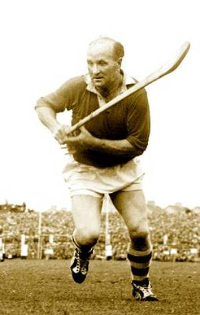
Ring establishes many championship records, including career appearances (65), scoring tally (33-208), and number of All-Ireland medals won (8), however, these records are subsequently bested by Brendan Cummins, Eddie Keher, and Henry Shefflin respectively. Ring is widely regarded as one of the greatest hurlers in the history of the game, with many former players, commentators, and fans rating him as the number one player of all time.
Born near Cloyne, County Cork, Ring first excels at hurling following encouragement from his local national schoolteachers Michael O’Brien and Jerry Moynihan. He first appears on the Cloyne GAA minor team at the age of twelve before later winning a county minor championship medal with the nearby St. Enda’s team. A Cork Junior Hurling Championship medal with Cloyne follows, however, a dispute with club officials sees Ring join Glen Rovers GAA in Blackpool in 1941. Over the next twenty-six years with the club, Ring wins one Munster Senior Club Hurling Championship medal and fourteen county senior championship medals. As a Gaelic footballer with the Glen’s sister club, St. Nicholas’ GAA, he also wins a county senior championship medal. He retires from club hurling at the age of forty-six following a victory over University College Cork GAA in the 1967 championship quarter final. Over the course of his senior championship career Ring estimates that he played in 1,200 games.
Ring makes his debut on the inter-county scene at the age of sixteen when he is picked on the Cork minor panel for the All-Ireland final. In spite of victory, he is denied an All-Ireland Minor Hurling Championship medal as he is Cork’s last non-playing substitute. Still eligible for the grade in 1938, Ring collects a set of All-Ireland and Munster Minor Hurling Championship medals as a member of the starting fifteen. An unsuccessful year with the Cork junior hurlers follows before he makes his senior debut during the 1939-40 league. Over the course of the next quarter century, Ring wins eight All-Ireland medals, including a record four consecutive championships from 1941 to 1944, a lone triumph in 1946 and three additional consecutive championships from 1952 to 1954. The only player to lift the Liam MacCarthy Cup three times as captain, he is denied a record-breaking ninth All-Ireland medal in 1956, his last All-Ireland final appearance. Ring also wins nine Munster medals, four National Hurling League medals, and is named Hurler of the Year at the age of thirty-eight. He plays his last game for Cork in June 1963. After indicating his willingness to line out for the team once again in 1964, Ring fails to be selected for the Cork team, a move which effectively brings his inter-county career to an end.
After being chosen as a substitute on the Munster GAA inter-provincial team in 1941, Ring is an automatic choice on the starting fifteen for the following twenty-two years. He scores 42-105 as he wins a record eighteen Railway Cup medals during that period, in an era when his skill and prowess draw crowds of up to 50,000 to Croke Park for the annual final on Saint Patrick’s Day. Ring’s retirement from the game is often cited as a contributory factor in the decline of the once prestigious championship.
In retirement from playing Ring becomes involved in team management and coaching. As a mentor to the St. Finbarr’s College senior team, he guides them to their first two All-Ireland and Harty Cup triumphs in 1963 and 1969. At club level Ring is instrumental as a selector with Glen Rovers when they claim their inaugural All-Ireland title in 1973, having earlier annexed the Munster and county senior championship titles. It is with the Cork senior team that he enjoys his greatest successes as a selector. After an unsuccessful campaign in his first season on the selection panel in 1973, Ring is dropped the following year before being reinstated in 1975. Over the next three years Cork claims three successive All-Ireland titles.
Ring is most famous for his scoring prowess, physical strength, and career longevity. He remains the only player to have competed at inter-county level in four different decades. Often the target of public attention for his hurling exploits, in private Ring is a shy and reserved individual. A teetotaller and non-smoker throughout his life, he is also a devout Roman Catholic.
On Friday, March 2, 1979, Ring has a scheduled appointment with his doctor and former teammate Dr. Jim Young in Cork city centre. As he is walking past the Cork College of Commerce on Morrisson’s Island at 3:30 PM he suffers a massive heart attack and collapses. He is taken by ambulance to the South Infirmary Hospital but is pronounced dead on arrival.
Philip Tisdall, lawyer and politician who is a leading figure in the Irish Government for many years, is born on March 1, 1703, in County Louth.
Tisdall is the son of Richard Tisdall, who is MP for Dundalk in 1703–1713 and for Louth in 1717–1727, by his wife Marian Boyle, daughter of Richard Boyle, MP, a cousin of the Earl of Cork. His father is also Registrar of the Court of Chancery.
In 1736 he marries Mary Singleton, daughter of the Rev. Rowland Singleton and Elizabeth Graham, and niece and co-heiress of Henry Singleton, Chief Justice of the Irish Common Pleas, a marriage which brings him both wealth and influence. He quickly becomes one of the leaders of the Bar, partly through his legal ability and partly through his marriage into the wealthy and influential Singleton family. He is made a Bencher of the King’s Inns in 1742.
He sits in the Irish House of Commons as MP for Dublin University from 1739 to 1776 and then for the city of Armagh from 1776 until his death. He is elected as member for Armagh in 1768 but chooses to continue sitting for the University.
In 1742 Tisdall is appointed Third Serjeant, then Solicitor-General in 1751 and Attorney-General in 1760. He is also appointed judge of the Prerogative Court of Ireland, an office he holds from 1745 until his death. In 1763 he becomes Principal Secretary of State, and on February 28, 1764, he is appointed to the Privy Council of Ireland. For almost 20 years he is a crucial figure in the Irish Government, which relies on him on to manage the Irish House of Commons, a task which he performs with great skill and tact. Tisdall is almost all-powerful until 1767, when George Townshend, 1st Marquess Townshend, arrives as Lord Lieutenant of Ireland. Townshend has a mandate to restore the direct power of the Crown over Irish affairs and to bypass the Irish managers like Tisdall. To his credit, Townshend recognises that Tisdall’s support is still an asset to the Government and makes great efforts to conciliate him. Townshend lobbies hard for Tisdall to be appointed Lord Chancellor of Ireland, but comes up against the inflexible British reluctance, then and for many years after, to appoint an Irishman to this crucial office. He retains the confidence of successive Lords Lieutenants. In 1777, despite his age and failing health, he is asked to resume his role as Government leader in the House of Commons. He agrees, but dies at Spa, Belgium on September 11 of the same year.
Tisdall is strikingly dark in complexion, hence his nicknames “Black Phil” and “Philip the Moor,” and is described as “grave in manner and sardonic in temper.” Despite his somewhat forbidding appearance, he is a hospitable character, who is noted for entertaining lavishly, even when he is well into his seventies, both at his town house in South Leinster Street, and his country house at Stillorgan. John Scott, 1st Earl of Clonmell, who succeeds him as Attorney General, writes that Tisdall would have lived longer if he had adopted a more sedate lifestyle in his later years.
Alice Taylor, best-selling Irish writer and novelist particularly known for her nostalgia works looking back at life in a small village, is born on February 28 , 1938, on a farm in Lisdangan, Newmarket in northern County Cork.
Taylor is educated at Drishane Convent. She works in Bandon before marrying Gabriel Murphy. They have four sons and one daughter. When she marries she moves to Innishannon in the southern part of the county in 1961. There she runs a guesthouse, the local post office, and a shop.
In 1984 she edits and publishes a local magazine, Candlelight, and in 1986 she publishes an illustrated collection of her poetry. However it is the launch of her book To School Through the Fields, published in May 1988, which brings her fame. She has numerous interviews on national shows including RTÉ Radio‘s Gay Byrne Show and The Late Late Show. The next books are equally successful and have been sold internationally. Since then she has moved on to novels which have also become best sellers.
Her husband dies in 2005. Taylor remains very connected to the village of Innishannon where she continues to live. Since her eldest son has taken over responsibility for the shop, she has been able to devote more time to her writing. One of the programs she has been involved in is the restoration of the old Innishannon Tower.
Conway is born to James Conway and his wife Julieanne Conway. As a child, he immigrates to France with his parents. At 14, he enrolls in the Irish Brigade of the French Army and rises rapidly to the rank of colonel by 1772.
Following the outbreak of the American Revolutionary War he volunteers to the Continental Congress for service with the American rebels in 1777. Based on an introduction from Silas Deane, the Congress appoints him a brigadier general on May 13, and sends him on to George Washington.
Conway commands the leading brigade on the American right flank at the Battle of Germantown and is justly praised for his actions. However, Washington opposes his promotion to major general, believing that many American-born officers with longer and valuable service deserve the rank. This, and Conway’s condescending attitude, lead to continued friction between the men. Congress appoints Conway a major general anyway in December 1777 and makes him inspector general of the army.
When his name is used politically, it is used to describe the infighting known as the Conway Cabal. During the affair, he has written a letter to General Horatio Gates in which he refers to Washington as a “weak general.” The letter is intercepted by Washington and his backers after its delivery is botched by Brigadier General James Wilkinson and is brought before the Congress for inquiry. When the contents of the letter are made public, Conway loses his command as a result. He tries a ploy that had worked before his promotion and submits his resignation to Congress in March 1778. This time, however, it is accepted, so he is forced to leave the Continental Army. John Cadwalader shoots him in a duel on July 4, 1778. When he recovers, he writes an apology to Washington and returns to France.
Conway later returns to the French Army. In 1787 he receives promotion to Maréchal-de-camp (Major General) and an appointment as Governor of French colonies in India.
In 1793 he fights with royalist forces in opposition to French Revolution in southern France. Their loss forces him to become an exile from his adopted country.
During the French Revolution he is condemned to death. He is saved only by an appeal to Great Britain, against which he had fought in the American Revolution, but is compelled to flee from France for his life. He supposedly returns to Ireland and remains there until his death.
After that Conway disappears from history. He is believed to have died about 1800 in poverty and exile.







 seamus dubhghaill