seamus dubhghaill

Promoting Irish Culture and History from Little Rock, Arkansas, USA


Leave a comment

The M62 Coach Bombing

m62-coach-bombing

The M62 coach bombing occurs on February 4, 1974, on the M62 motorway in Northern England, when a Provisional Irish Republican Army (IRA) bomb explodes in a coach carrying off-duty British Armed Forces personnel and their family members. Twelve people, nine soldiers and three civilians, are killed by the bomb, which consists of 25 pounds of high explosive hidden in a luggage locker on the coach.

The coach has been specially commissioned to carry British Army and Royal Air Force personnel on leave with their families from and to the bases at Catterick and Darlington during a period of railway strike action. The vehicle departs from Manchester and is making good progress along the motorway. Shortly after midnight, when the bus is between junction 26 and 27, near Oakwell Hall, there is a large explosion on board. Most of those aboard are sleeping at the time. The blast, which can be heard several miles away, reduces the coach to a “tangle of twisted metal” and throws body parts up to 250 yards.

The explosion kills eleven people outright and wounds over fifty others, one of whom dies four days later. Amongst the dead are nine soldiers – two from the Royal Artillery, three from the Royal Corps of Signals, and four from the 2nd battalion Royal Regiment of Fusiliers. One of the latter is Corporal Clifford Haughton, whose entire family, consisting of his wife Linda and his sons Lee (5) and Robert (2), also die. Numerous others suffer severe injuries, including a six-year-old boy, who is badly burned.

The driver of the coach, Roland Handley, is injured by flying glass, but is hailed as a hero for bringing the coach safely to a halt. Handley dies at the age of 76 after a short illness in January 2011.

Suspicions immediately fall upon the IRA, which is in the midst of an armed campaign in Britain involving numerous operations, later including the Guildford pub bombing and the Birmingham pub bombings.

Reactions in Britain are furious, with senior politicians from all parties calling for immediate action against the perpetrators and the IRA in general. The British media are equally condemnatory. According to The Guardian, it is “the worst IRA outrage on the British mainland” at that time, whilst the BBC describes it as “one of the IRA’s worst mainland terror attacks.” The Irish newspaper The Sunday Business Post later describes it as the “worst” of the “awful atrocities perpetrated by the IRA” during this period.

IRA Army Council member Dáithí Ó Conaill is challenged over the bombing and the death of civilians during an interview and replies that the coach had been bombed because IRA intelligence indicated that it was carrying military personnel only.

Following the explosion, the British public and politicians from all three major parties call for “swift justice.” The ensuing police investigation led by Detective Chief Superintendent George Oldfield is rushed, careless, and ultimately forged, resulting in the arrest of the mentally ill Judith Ward who claims to have conducted a string of bombings in Britain in 1973 and 1974 and to have married and had a baby with two separate IRA members. Despite her retraction of these claims, the lack of any corroborating evidence against her, and serious gaps in her testimony – which is frequently rambling, incoherent, and “improbable” – she is wrongfully convicted in November 1974.

The case against Ward is almost completely based on inaccurate scientific evidence using the Griess test and deliberate manipulation of her confession by some members of the investigating team. The case is similar to those of the Guildford Four, the Birmingham Six, and the Maguire Seven, which occur at the same time and involve similar forged confessions and inaccurate scientific analysis. Ward is finally released in 1992, when three Appeal Court judges hold unanimously that her conviction was “a grave miscarriage of justice,” and that it had been “secured by ambush.”

Leave a comment

Death of IRA Volunteer Seán South

sean-south

Seán South, a member of an Irish Republican Army (IRA) military column led by Sean Garland on a raid against a Royal Ulster Constabulary (RUC) barracks in Brookeborough, County Fermanagh, Northern Ireland, on January 1, 1957, dies of wounds sustained during the raid along with another IRA volunteer, Fergal O’Hanlon.

South is born in 1928 in Limerick where he is educated at Sexton Street Christian Brothers School, later working as a clerk in a local wood-importing company called McMahon’s. South is a member of a number of organisations including the Gaelic League, Legion of Mary, Clann na Poblachta, and Sinn Féin. In Limerick he founds the local branch of Maria Duce, a social Catholic organisation, where he also edits both An Gath and An Giolla. He receives military training as a lieutenant of the Irish army reserve, the LDF which later becomes the FCA (An Fórsa Cosanta Áitiúil or Local Defence Force), before he becomes a volunteer in the Irish Republican Army.

South is a devout Catholic, being a member of An Réalt, the Irish-speaking chapter of the Legion of Mary, and a conservative, even by the standards of the day. He is also a member of the Knights of Columbanus.

On New Year’s Day 1957, fourteen IRA volunteers cross the border into County Fermanagh to launch an attack on a joint RUC/B Specials barracks in Brookeborough. During the attack a number of volunteers are injured, two fatally. South and Fergal O’Hanlon die of their wounds as they are making their escape. They are carried into an old sandstone barn by their comrades which is later demolished by a British army jeep. Stone from the barn is used to build a memorial at the site.

The attack on the barracks inspires two popular rebel songs: “Seán South of Garryowen” and “The Patriot Game.” “Seán South of Garryowen,” is written by Sean Costelloe from County Limerick to the tune of another republican ballad “Roddy McCorley” and is made famous by The Wolfe Tones. The popularity of this song leads to the misconception that South is from Garryowen, a suburb in Limerick city. In fact, South is actually from 47 Henry Street in Limerick.

South is also mentioned in The Rubberbandits song “Up Da Ra”, which pokes fun at the concept of armchair republicanism using the literary device of the unreliable narrator.

There is a plaque dedicated to Seán South outside his birthplace on Henry Street, Limerick.


Leave a comment

Death of Dan Breen, Irish Patriot & Politician

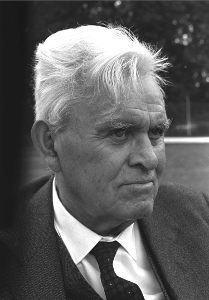
Irish republican Dan Breen (1967)

Daniel “Dan” Breen, volunteer in the Irish Republican Army during the Irish War of Independence and the Irish Civil War, dies in Dublin on December 27, 1969. In later years, he was a Fianna Fáil politician.

Breen is born in Grange, Donohill parish, County Tipperary, on August 11, 1894. His father dies when he is six, leaving the family very poor. He is educated locally before becoming a plasterer and later a linesman on the Great Southern Railways.

Breen is sworn into the Irish Republican Brotherhood in 1912 and the Irish Volunteers in 1914. On January 21, 1919, the day the First Dáil meets in Dublin, Breen takes part in the Soloheadbeg Ambush. The ambush party of eight men, led by Seán Treacy, attacks two Royal Irish Constabulary (RIC) men who are escorting explosives to a quarry. The two policemen, James McDonnell and Patrick O’Connell, are fatally shot during the incident. The ambush is considered to be the first incident of the Irish War of Independence.

During the conflict, the British put a £1,000 price on Breen’s head, which is later increased to £10,000. He quickly establishes himself as a leader within the Irish Republican Army (IRA). He is known for his courage. On May 13, 1919 he helps rescue his comrade Seán Hogan at gunpoint from a heavily guarded train at Knocklong station in County Limerick. Breen, who is wounded, remembers how the battalion is “vehemently denounced as a cold-blooded assassins” and roundly condemned by the Catholic Church. After the fight, Treacy, Séamus Robinson, and Breen meet Michael Collins in Dublin, where they are told to make themselves scarce although they do not necessarily agree.

Breen and Sean Treacy shoot their way out through a British military cordon in the northern suburb of Drumcondra (Fernside). They escape, only for Treacy to be killed the next day. Breen is shot at least four times, twice in the lung.

The British reaction is to make Tipperary a “Special Military Area,” with curfews and travel permits. Volunteer GHQ authorises entrerprising attacks on barracks. The British policy forces Breen and Treacy to retreat to Dublin. They join Michael Collins’ Squad of assassins, later known as the Dublin Guard, and Dublin becomes the centre of the war.

Breen is present in December 1919 at the ambush in Ashtown beside Phoenix Park in Dublin where Martin Savage is killed while trying to assassinate the Lord Lieutenant of Ireland, Viscount John French. The IRA hides behind hedges and a dungheap as the convoy of vehicles drives past. They have been instructed to ignore the first car but this contains their target, Lord French. Their roadblock fails as a policeman removes the horse and cart intended to stop the car.

Breen utterly rejects the Anglo-Irish Treaty, which makes him, like many others, angry and embittered. In the June 1922 elections Breen is nominated as a candidate by both the pro- and anti-Treaty sides, but is not elected.

Breen is elected to Dáil Éireann at the 1923 general election as a Republican anti-Treaty Teachta Dála (TD) for the Tipperary constituency. Following the Anglo-Irish Treaty, Breen joins the Anti-Treaty IRA in the civil war, fighting against those of his former comrades in arms who support the Treaty. He is arrested by the National Army of the Irish Free State and interned at Limerick Prison. He spends two months there before going on hunger strike for six days followed by a thirst strike of six days, prompting his release.

Breen writes a best-selling account of his guerrilla days, My Fight for Irish Freedom, in 1924. He represents Tipperary from the Fourth Dáil in 1923 as a Republican with Éamon de Valera and Frank Aiken. He is defeated in the June 1927 general election and travels to the United States where he opens a prohibition speakeasy. In 1932 he returns to Ireland and regains his seat as a member of Fianna Fáil in the Dáil at that year’s general election. During World War II he is said to hold largely pro-Axis views. He represents his Tipperary constituency without a break until his retirement at the 1965 election.

Breen dies in Dublin on December 27, 1969 and is buried in Donohill, near his birthplace. His funeral is the largest seen in west Tipperary since that of his close friend and comrade-in-arms Seán Treacy at Kilfeacle in October 1920. An estimated attendance of 10,000 mourners assemble in the tiny hamlet, giving ample testimony to the esteem in which he was held.

Breen is the subject of a 2007 biography Dan Breen and the IRA by Joe Ambrose.


Leave a comment

Death of IRA Chief of Staff Cathal Goulding

cathal-goulding

Cathal Goulding, former Chief of Staff of the Irish Republican Army and the Official IRA, dies in Dublin on December 26, 1998.

Goulding is born on January 2, 1923, one of seven children born on East Arran Street, north Dublin to an Irish republican family. As a teenager Goulding joins Fianna Éireann, the youth wing of the Irish Republican Army (IRA). He joins the IRA in 1939. In December of that year, he takes part in a raid on Irish Army ammunition stores in Phoenix Park, Dublin. In November 1941 he is gaoled for a year in Mountjoy Prison for membership in an unlawful organisation and possession of IRA documents. Upon his release in 1942, he is immediately interned at the Curragh Camp, where he remains until 1944.

In 1945, he is involved in the attempts to re-establish the IRA which has been badly affected by the authorities in both the Irish Free State and Northern Ireland. He is among twenty-five to thirty men who meet at O’Neill’s Pub, Pearse Street, to try to re-establish the IRA in Dublin. He organises the first national meeting of IRA activists after the World War II in Dublin in 1946 and is arrested along with John Joe McGirl and ten others and sentenced to twelve months in prison when the gathering is raided by the Garda Síochána.

Upon his release in 1947, Goulding organises IRA training camps in the Wicklow Mountains and takes charge of the IRA’s Dublin Brigade in 1951. In 1953, Goulding, along with Seán Mac Stíofáin and Manus Canning, is involved in an arms raid on the Officers Training Corps armoury at Felsted School, Essex. The three are arrested and sentenced to eight years’ imprisonment, but are released in 1959 after serving only six years at Pentonville, Wakefield, and Stafford prisons. During his time in Wakefield prison, he befriends EOKA members and Klaus Fuchs, a German-born spy who has passed information about the U.S. nuclear programme to the Soviet Union, and becomes interested in the Russian Revolution.

In 1959, Goulding is appointed IRA Quartermaster General and in 1962 he succeeds Ruairí Ó Brádaigh as IRA Chief of Staff. In February 1966, together with Sean Garland, he is arrested for possession of a revolver and ammunition. In total, Goulding spends sixteen years of his life in British and Irish jails.

Goulding is instrumental in moving the IRA to the left in the 1960s. He argues against the policy of abstentionism and develops a Marxist analysis of Irish politics. He believes the British state deliberately divides the Irish working class on sectarian grounds to exploit them and keep them from uniting and overthrowing their bourgeois oppressors. This analysis is rejected by those who later go on to form the Provisional IRA after the 1969 IRA split.

Goulding remains chief of staff of what becomes known as the Official IRA until 1972. Although the Official IRA, like the Provisional IRA, carries out an armed campaign, Goulding argues that such action ultimately divides the Irish working class. After public revulsion regarding the shooting death of William Best, a Catholic from Derry who is also a British soldier, and the bombing of the Aldershot barracks, the Official IRA announces a ceasefire in 1972.

Goulding is prominent in the various stages of Official Sinn Féin‘s development into the Workers’ Party. He is also involved in the anti-amendment campaign in opposition to the introduction of a constitutional ban on abortion along with his partner, Dr. Moira Woods. However, in 1992, he objects to the political reforms proposed by party leader Proinsias De Rossa and remains in the Workers’ Party after the formation of Democratic Left. He regards the Democratic Left as having compromised socialism in the pursuit of political office.

In his later years, Goulding spends much of his time at his cottage in Raheenleigh near Myshall, County Carlow. He dies of cancer in his native Dublin and is survived by three sons and a daughter. He is cremated and his ashes scattered, at his directive, at the site known as “the Nine Stones” on the slopes of Mount Leinster.


1 Comment

Execution of IRA Officer Joe McKelvey

joe-mckelvey

Joe McKelvey, Irish Republican Army (IRA) officer, is executed by firing squad along with three other Anti-Treaty militants, on December 8, 1922, during the Irish Civil War.

McKelvey is born into a nationalist family in Stewartstown, County Tyrone. He has a keen interest in the Gaelic Athletic Association and the Irish language. He studies as an accountant and gains some of the qualifications necessary for this profession, but never fully qualifies. He works for a time at the Income Tax Office on Queen’s Square in Belfast and later finds work in Belfast’s engineering industry with Mackies on Springfield Road. He joins the Irish Republican Brotherhood and the Irish Volunteers, which after 1919, become known as the Irish Republican Army (IRA). He is a founding member of the O’Donovan Rossa Club, Belfast, founded in 1916 on the Falls Road. Each year the club honours him with a juvenile hurling blitz, an invitational competition which is participated in by clubs throughout Ireland.

McKelvey participates in the Irish War of Independence (1919–1921) against the British, in which he commands the IRA’s Belfast Brigade. On August 22, 1920, he helps to organise the killing of Royal Irish Constabulary (RIC) Detective Oswald Swanzy in Lisburn. The killing itself is carried out by IRA men from Cork, but McKelvey arranges a taxi to carry the assassins to and from the scene and disposes of their weapons. In reprisal for this shooting, 300 Catholic homes in Lisburn are burned out. McKelvey is forced to lie low in Dublin for some time after these events.

In March 1921, the IRA is re-organised by its leadership in Dublin into Divisions and McKelvey is appointed commander of the Third Northern Division, responsible for Belfast and the surrounding area. In May 1921, McKelvey’s command suffers a severe setback, when fifty of his best men are sent to County Cavan to train and link up with the IRA units there, only to be surrounded and captured by the British Army on Lappanduff hill on May 9. In most of Ireland, hostilities are ended with a truce declared on July 11, 1921.

McKelvey is alone among the leadership of the Belfast IRA in going against the acceptance of the Anglo-Irish Treaty. Most of his comrades support Michael Collins‘ assurances that, although the Treaty accepts the partition of Northern Ireland from the rest of the country, this is only a temporary concession which will be dealt with later. McKelvey does not accept this. As a result, he leaves his command as head of the IRA Third Northern Division and joins the Anti-Treaty IRA in Dublin.

In March 1922, McKelvey participates in the anti-Treaty IRA‘s repudiation of the authority of the Dáil, the civil government of the Irish Republic declared in 1919, and is elected to the IRA Army Executive. In April 1922 he helps command the occupation of the Four Courts in defiance of the new Irish Free State. This action helps to spark the civil war between pro- and anti-Treaty factions. McKelvey is among the most hardline of the anti-Treaty republicans and briefly, in June 1922, becomes IRA Chief of Staff, replacing Liam Lynch.

On June 28, 1922, the new Irish Free State government shells the Four Courts to assert its authority over the militants defending it. The Republicans in the Four Courts surrender after two days of fighting and McKelvey is captured. He is held for the following five months in Mountjoy Prison in Dublin.

On December 8, 1922, Joe McKelvey is executed by firing squad along with three other Anti-Treaty militants, Rory O’Connor, Liam Mellows, and Richard Barrett. The executions are ordered in reprisal for the Anti-Treaty IRA’s murder of Sean Hales, a Pro-Treaty member of the Third Dáil.


Leave a comment

The McGurk’s Bar Bombing

mcgurks-bombing

The Ulster Volunteer Force (UVF) explodes a bomb at McGurk’s Bar, an Irish Catholic-owned pub in Belfast, on December 4, 1971, killing fifteen Catholic civilians including two children and wounding seventeen others. This is the highest death toll from a single incident in Belfast during the Troubles. The bombing sparks a series of tit-for-tat bombings and shootings by loyalists and republicans, which help make 1972 the bloodiest year of the conflict.

On the evening of Saturday, December 4, 1971, a four-man UVF team meets in the Shankill area of Belfast and are ordered to bomb a pub on North Queen Street. According to the only convicted bomber, Robert Campbell, they are told not to return until the job is done. Campbell says that their target had not been McGurk’s, but another pub nearby. It is believed this is a pub called The Gem, which is allegedly linked to the Official Irish Republican Army (IRA). The 50-pound bomb is disguised as a brown parcel, which they place in a car and drive to their target. Campbell says they stop near The Gem at about 7:30 p.m. but are unable to gain access to it because there are security guards outside. After waiting for almost an hour, they drive a short distance to McGurk’s. At about 8:45 PM, one of them places the bomb in the porch entrance on Great George’s Street and rushes back to the car. It explodes just moments after they drive off. Campbell implies that McGurk’s had been chosen only because it was “the nearest Catholic pub.”

The blast causes the building to collapse. Bystanders immediately rush to free the dead and wounded from the rubble. Firefighters, paramedics, police, and soldiers are quickly on the scene. Fifteen Catholic civilians are killed, including two children, and an additional seventeen are wounded. The rescue effort lasts many hours.

Within two hours of the blast, a sectarian clash erupts nearby at the New LodgeTiger’s Bay interface. The British Army and Royal Ulster Constabulary (RUC) move in, and a gun battle develops. A British Army officer, Major Jeremy Snow, is shot by the IRA on New Lodge Road and dies of his wounds on December 8. Two RUC officers and five civilians are also wounded by gunfire. Eventually, five companies of troops are sent into the district, and they search almost 50 houses.

Meanwhile, the UVF team has driven to a nearby pickup point where they dump their car. They walk to the area of St. Anne’s Cathedral and are picked up by another car. They are driven back to the Shankill area and meet the man who had ordered the attack in an Orange Hall, telling him that “the job has been done.”

Among those killed are Philomena and Maria McGurk, wife and 12-year-old daughter of pub owner Patrick McGurk. Patrick and his three sons are seriously injured. Shortly after the attack, McGurk appears on television calling for no retaliation, “It doesn’t matter who planted the bomb. What’s done can’t be undone. I’ve been trying to keep bitterness out of it.”

In March 1976, the RUC receives intelligence that links UVF member Robert Campbell and four others to the McGurk’s bombing. Campbell is arrested on July 27, 1977, and held at Castlereagh RUC base. He admits his part in the bombing but refuses to name the others.

On July 29, 1977, Campbell is charged with 15 counts of murder and 17 counts of attempted murder. On September 6, 1978, he pleads guilty to all charges and receives life imprisonment with “a recommendation to serve no less than 20 years,” in part for a separate conviction for the murder of a Protestant delivery driver in 1976. He is the only person to have been charged for the bombing. He eventually serves fifteen years in prison and is released on September 9, 1993.


Leave a comment

The Remembrance Day Bombing

remembrance-day-bombing

The Remembrance Day bombing, also known as the Enniskillen bombing or Poppy Day massacre, takes place on November 8, 1987, in Enniskillen, County Fermanagh, Northern Ireland. A Provisional Irish Republican Army (IRA) bomb explodes near the town’s war memorial during a Remembrance Sunday ceremony, which is being held to commemorate British military war dead. Eleven people, many of them old age pensioners, are killed and 63 are injured.

The bomb explodes as a parade of Ulster Defence Regiment (UDR) soldiers is making its way to the memorial and as people wait for the ceremony to begin. It blows out the wall of the Reading Rooms, where many of the victims are standing, burying them under rubble and hurling masonry towards the gathered crowd. Bystanders rush to free those trapped in the rubble.

Eleven people, all Protestant, are killed by the Provisional IRA that day, including three married couples. The dead are Wesley and Bertha Armstrong, Kitchener and Jessie Johnston, William and Agnes Mullan, John Megaw, Georgina Quinton, Marie Wilson, Samuel Gault, and Edward Armstrong. Armstrong is a serving Royal Ulster Constabulary (RUC) officer and Gault has recently left the force. Gordon Wilson, whose daughter Marie dies in the blast and who is himself injured, goes on to become a peace campaigner and member of Seanad Éireann. The twelfth fatality, Ronnie Hill, dies after spending 13 years in a coma. Sixty-three people are injured, including thirteen children. Ulster Unionist politicians Sam Foster and Jim Dixon are among the crowd. Dixon receives extensive head injuries but recovers. A local businessman captures the immediate aftermath of the bombing on video camera. His footage, showing the effects of the bombing, is broadcast on international television.

A few hours after the blast, the IRA calls a radio station and says it has abandoned a 150-pound bomb in Tullyhommon, twenty miles away, after it failed to detonate. That morning, a Remembrance Sunday parade, which includes many members of the Boys’ and Girls’ Brigades, has unwittingly gathered near the Tullyhommon bomb. Soldiers and RUC officers were also there, and the IRA says it attempted to trigger the bomb when soldiers were standing beside it. The bomb is defused by security forces and is found to have a command wire leading to a “firing point” across the border.

The IRA apologises, saying it had made a mistake and that the target had been the UDR soldiers who were parading to the memorial. The bombing leads to an outcry among politicians in the Republic of Ireland and the United Kingdom. British Prime Minister Margaret Thatcher says, “It’s really desecrating the dead and a blot on mankind.” The Secretary of State for Northern Ireland, Tom King, denounces the “outrage” in the House of Commons, as does the Irish Minister for Foreign Affairs, Brian Lenihan, in Dáil Éireann. Seanad Éireann Senator Maurice Manning speaks of people’s “total revulsion.” It also facilitates the passing of the Extradition Act, which makes it easier to extradite IRA suspects from the Republic of Ireland to the United Kingdom.

The bombing is seen by many Northern Irish Protestants as an attack on them, and loyalist paramilitaries ″retaliate″ with attacks on Catholic civilians. The day after the bombing, five Catholic teenagers are wounded in a shooting in Belfast, and a Protestant teenager is killed by the Ulster Defence Association after being mistaken for a Catholic. In the week after the bombing, there are fourteen gun and bomb attacks on Catholics in Belfast.

The Remembrance Day bombing has been described as a turning point in the Troubles and an incident that shook the IRA “to its core.”


Leave a comment

Founding of Republican Sinn Féin

republican-sinn-fein

Republican Sinn Féin (Irish: Sinn Féin Poblachtach), an unregistered Irish Republican political organisation, is founded at the West County Hotel in Dublin on November 2, 1986.

Republican Sinn Féin (RSF) claim to be heirs of the Sinn Féin party founded in 1905 and take its present form in 1986 following a split with Provisional Sinn Féin. RSF members take seats when elected in local Irish councils but do not recognise the partition of Ireland and subsequently the legitimacy of the Northern Ireland or Republic of Ireland governments, so does not register itself under them.

The decision to form, or to reorganise or reconstitute as its supporters see it, the organisation was taken in response to Gerry Adams-led Sinn Féin’s decision at its 1986 ardfheis to end its policy of abstentionism and to allow elected Sinn Féin Teachtaí Dála take their seats in Leinster House‘s Dáil Éireann. The supporters of Ruairí Ó Brádaigh and Dáithí Ó Conaill who go on to form RSF oppose this move as it signals a departure from the traditional republican analysis which views the parliament of the Republic of Ireland as an illegal assembly, set up by an act of the British parliament. They argue that republicans owe their allegiance to the All-Ireland (32 County) Irish Republic, maintaining that this state exists de jure and that its authority rests with the IRA Army Council. Hence, if elected, its members refuse to take their seats in the Oireachtas.

The organisation views itself as representing “true” or “traditional” Irish republicanism, while in the mainstream media the organisation is portrayed as a political expression of “dissident republicanism.” Republican Sinn Féin rejects the Good Friday Agreement and indeed the Anglo-Irish Treaty. As part of this they refuse to discount Irish republicans using militant means to “defend the Irish Republic” and considers the Continuity Irish Republican Army (IRA) to be the legitimate army of the Irish Republic. The CIRA is designated as a terrorist organisation by the governments of the United Kingdom and Republic of Ireland.


Leave a comment

The Founding of Saor Éire

saor-eire

Saor Éire, a left-wing political organisation, is established on September 26, 1931 by communist-leaning members of the Irish Republican Army, with the backing of the IRA leadership. Notable among its founders is Peadar O’Donnell, former editor of An Phoblacht and a leading left-wing figure in the IRA. Saor Éire describes itself as “an organization of workers and working farmers.”

It is believed that the support of the then IRA chief of staff Moss (Maurice) Twomey is instrumental in the organisation’s establishment. However, Tim Pat Coogan claims that Twomey is doubtful about the organisation, worrying about involvement in electoral politics and possible communist influence.

During its short existence Saor Éire uses the republican publication An Phoblacht, under the editorship of Frank Ryan, to report on its progress and to promote its radical, left-wing republican views.

On the weekend of September 26-27, 1931, Saor Éire holds its first conference in Dublin at Iona Hall. One hundred and fifty delegates from both the Irish Free State and Northern Ireland attend the conference against a background of police raids on the houses and offices connected with Saor Éire and An Phoblacht. Seán Hayes is chairman, while David Fitzgerald acts as secretary.

The conference elects an executive of Hayes, Fitzgerald, Sean McGuinness, May Laverty, Helena Molony, Sheila Dowling, Sheila Humphreys, D. McGinley, Mick Fitzpatrick, Seán MacBride, Michael Price, Peadar O’Donnell, Mick Hallissey, M. O’Donnell, Patrick McCormack, Tom Kenny, L. Brady, Nicholas Boran, John Mulgrew and Tom Maguire. George Gilmore and Frank Ryan are also involved.

The constitution elaborates upon the aims by describing a two-phase programme. The first phase is described as being one of organisation and propagandising in order to organise a solid front for mass resistance to the oppressors. This is to build upon the day-to-day resistance and activity towards “rents, annuities, evictions, seizures, bank sales, lock-outs, strikes and wage-cuts.” This challenge, it is believed, would lead to power passing from the hands of the imperialists to the masses. The second phase is one of consolidation of power through the organisation of the economy and a workers’ and working farmers’ republic.

Ideologically Saor Éire adheres to the Irish socialist republicanism developed by James Connolly and Peadar O’Donnell. As a consequence of the heavy influence of O’Donnell, Saor Éire strongly advocates the revival of Gaelic culture and the involvement of the poorer rural working communities in any rise against the Irish capitalist institutions and British imperialism.

The organisation is attacked by the centre-right press and the Catholic Church as a dangerous communist group, and is quickly banned by the Free State government. The strength of reaction against it prevents it from becoming an effective political organisation. O’Donnell and his supporters attempt a similar initiative two years later with the establishment of the Republican Congress in 1933.


Leave a comment

Assassination of Sinn Féin County Councilor John Lynch

cairo-gang

Sinn Féin County Councilor John Lynch of Kilmallock, County Limerick, is assassinated by British agents at the Exchange Hotel in Dublin on September 23, 1920.

Captain Geoffrey Thomas Baggallay, a “one-legged” courts-martial officer, phones Dublin Castle at 1:15 AM telling of John Lynch’s presence at the Exchange Hotel. A group of 12 soldiers, believed to be members of the Cairo Gang, enter the hotel wearing military caps and long black Burberry coats. They hold the hotel porter, William Barrett, at gunpoint. After consulting the register, they proceed to Lynch’s room on the third floor, where Lynch has been staying since September 12.

They shoot Lynch and then leave, claiming that Lynch had fired a shot at them when they attempted to arrest him. The military reports a death at the hotel at 2:15 AM. The Royal Irish Constabulary (RIC) arrives after the military reports the death to them. The coroner’s verdict is that Lynch is shot by a soldier in self-defence. No evidence is given by any soldiers at the inquiry. The Irish Republican Army (IRA) believe that the actual murder is carried out by Henry James Angliss and Charles Ratsch Peel working undercover. The group of khaki-clad men who shoot Lynch number about twelve, and the IRA certainly believes that Angliss and Peel are among them based on inside information received from “Lt G” at Dublin Castle. Lt G is believed to be Lily Mernin who works as a typist at army headquarters.

Michael Collins believes that many of the British officers that are later killed on “Bloody Sunday” shot John Lynch in the Exchange Hotel. Lynch is the local Sinn Féin organiser of a loan and is in Dublin to hand over £23,000 in subscriptions to Collins. Altogether £370,163 is raised in the loan effort in Ireland by September 1920 when it closes down.

It is impossible to know who the twelve men of the raiding party are, however, apparently Lt. Angliss, under the influence of drink, divulges his participation in the shooting to a girl who passes this information on to an Irish Intelligence Service informant. Peel escapes death on “Bloody Sunday” by barricading himself in his room. George Osbert Smyth is understood to have been part of the raiding party, from information given to his family on a visit home. Osbert Smyth is shot dead in October 1920 while trying to arrest IRA suspects Dan Breen and Sean Treacy at a house in Drumcondra.

(Pictured: The Cairo Gang)