The bomb in the Horse and Groom pub detonates at 8:30 PM. It kills Paul Craig, a 22-year-old plasterer, two members of the Scots Guards and two members of the Women’s Royal Army Corps. The Seven Stars pub is evacuated after the first blast, and thus there are no serious injuries when the second bomb explodes at 9:00 PM.
These attacks are the first in a year-long campaign by an IRA Active Service Unit who are eventually captured after the Balcombe Street siege. A similar bomb to those used in Guildford, with the addition of shrapnel, is thrown into the Kings Arms pub in Woolwich on November 7, 1974. Gunner Richard Dunne and Alan Horsley, a salesclerk, die in that explosion. On August 27, 1975, the same IRA unit detonates a bomb in Surrey at the Caterham Arms pub which injures over 30 people. Surrey police say it is “a carbon copy of the Guildford bombs.”
In December 1974 the police arrest Gerry Conlon, Paul Hill, Patrick Armstrong and Carole Richardson, later known as the Guildford Four. The Guildford Four are falsely convicted of the bombings in October 1975 after the Metropolitan Police use the Prevention of Terrorism Acts to force false confessions. All four are sentenced to life in prison.
The Guildford Four are held in prison for fifteen years, although Gerry Conlon dies near the end of his third year of imprisonment. All the convictions are overturned years later in the appeal courts after it is proved the Guildford Four’s convictions had been based on confessions obtained by torture, while evidence specifically clearing the Four is not reported by the police.
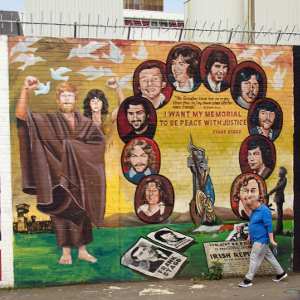
The Irish Republican Army (IRA) hunger strike is called off at Long Kesh prison – later known as HM Prison Maze – on October 3, 1981. While the IRA does not win immediate concessions, in some ways it is a Pyrrhic victory for Margaret Thatcher’s government. It galvanises support and membership for the IRA and generates huge sympathy for the strikers in the United States where fund-raising is a major priority. The death of the first hunger striker, Bobby Sands, creates a martyr and an iconic figure.
In January 1981, prison authorities begin to supply the prisoners with officially issued civilian clothing, whereas the prisoners demand the right to wear their own clothing. On February 4, the prisoners issue a statement saying that the British government has failed to resolve the crisis and declares their intention of a hunger strike. The hunger strike begins on March 1, when Bobby Sands, the IRA’s former officer commanding (OC) in the prison, refuses food. Unlike the first hunger strike the previous year, the prisoners join one at a time and at staggered intervals, which they believe would arouse maximum public support and exert maximum pressure on Prime Minister Margaret Thatcher.
The republican movement initially struggles to generate public support for the second hunger strike. The Sunday before Sands begins his strike, 3,500 people march through west Belfast. During the first hunger strike four months earlier, the marchers had numbered 10,000. Five days into the strike, Independent Republican MP for Fermanagh and South TyroneFrank Maguire dies, resulting in a by-election. There is debate among nationalists and republicans regarding who should contest the election. After negotiations they agree not to split the nationalist vote by contesting the election and Sands stands as an Anti H-Block candidate against Ulster Unionist Party candidate Harry West. Following a high-profile campaign, the election takes place on April 9, and Sands is elected to the British House of Commons with 30,492 votes to West’s 29,046.
Sands’ election victory raises hopes that a settlement can be negotiated, but Thatcher stands firm in refusing to give concessions to the hunger strikers. The world’s media descends on Belfast, and several intermediaries visit Sands in an attempt to negotiate an end to the hunger strike, including Síle de Valera, granddaughter of Éamon de Valera, Pope John Paul II‘s personal envoy John Magee, and European Commission of Human Rights officials. With Sands close to death, the government’s position remains unchanged.
On 5 May, Sands dies in the prison hospital on the 66th day of his hunger strike, prompting rioting in nationalist areas of Northern Ireland. More than 100,000 people line the route of his funeral, which is conducted with full IRA military honours. Margaret Thatcher shows no sympathy for his death.
In the two weeks following Sands’ death, hunger strikers Francis Hughes, Raymond McCreesh and Patsy O’Hara die. Following the deaths of Joe McDonnell and Martin Hurson, the families of some of the hunger strikers attend a meeting on July 28 with Catholic priest Father Denis Faul. The families express concern at the lack of a settlement to the priest, and a decision is made to meet with Gerry Adams later that day. The following day Adams holds a meeting with six of the hunger strikers to outline a proposed settlement on offer from the British government should the strike be brought to an end. The six men reject the settlement, believing that accepting anything less than the “Five Demands” would be a betrayal of the sacrifice made by Bobby Sands and the other hunger strikers who had died.
The hunger strike begins to break on July 31, when the mother of Paddy Quinn insists on medical intervention to save his life. The following day Kevin Lynch dies, followed by Kieran Doherty on August 2, Thomas McElwee on August 8 and Michael Devine on August 20. On September 6, the family of Laurence McKeown becomes the fourth family to intervene and asks for medical treatment to save his life, and Cahal Daly issues a statement calling on republican prisoners to end the hunger strike.
The strike is called off at 3:15 PM on October 3, 1981. Three days later, James Prior, the new Secretary of State for Northern Ireland, announces partial concessions to the prisoners including the right to wear their own clothes at all times. The only one of the “Five Demands” still outstanding is the right not to do prison work. Following sabotage by the prisoners and the Maze Prison escape in 1983, the prison workshops are closed, effectively granting all of the “Five Demands” but without any formal recognition of political status from the government.
(Pictured: A Belfast mural of the Long Kesh hunger strikers)
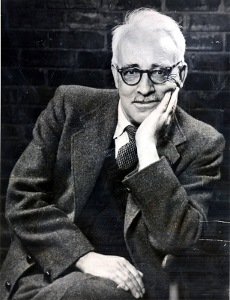
Raised in Cork, the only child of Minnie (née O’Connor) and Michael O’Donovan, O’Connor attends Saint Patrick’s School on Gardiner’s Hill and North Monastery CBS. His early life is marked by his father’s alcoholism, debt, and ill-treatment of his mother. His childhood is shaped in part by his mother, who supplies much of the family’s income by cleaning houses, because his father is unable to keep steady employment due to his drunkenness. He adores his mother and is bitterly resentful of his father. In his memoirs, he recalls his childhood as “those terrible years,” and admits that he has never been able to forgive his father for his abuse of himself and his mother. When his mother is seventy, O’Connor is horrified to learn from his own doctor that she has suffered for years from chronic appendicitis, which she has endured with great stoicism, as she has never had the time nor the money to see a doctor.
Following his release, O’Connor takes various positions including that of teacher of Irish, theatre director, and librarian. He begins to move in literary circles and is befriended by George William Russell (Æ), through whom he comes to know most of the well-known Irish writers of the day, including William Butler Yeats, Lennox Robinson, F. R. Higgins and Lady Gregory. In his memoirs, he pays tribute to both Yeats and Russell for the help and encouragement they gave him.
In 1935, O’Connor becomes a member of the board of directors of the Abbey Theatre in Dublin, founded by Yeats and other members of the Irish National Theatre Society. In 1937, he becomes managing director of the Abbey. Following Yeats’s death in 1939, O’Connor’s long-standing conflict with other board members comes to a head and he leaves the Abbey later that year. In 1950, he accepts invitations to teach in the United States, where many of his short stories have been published in The New Yorker and have won great acclaim. He spends much of the 1950s in the United States, although it is always his intention to return eventually to Ireland.
From the 1930s to the 1960s O’Connor is a prolific writer of short stories, poems, plays, and novellas. His work as an Irish teacher complements his plethora of translations into English of Irish poetry, including his initially banned translation of Brian Merriman‘s Cúirt an Mheán Oíche (The Midnight Court). Many of O’Connor’s writings are based on his own life experiences – notably his well-known The Man of the House in which he reveals childhood details concerning his early life in County Cork. The Sullivan family in this short story, like his own boyhood family, is lacking a proper father figure.
O’Connor’s early years are recounted in An Only Child, a memoir published in 1961 which has the immediacy of a precocious diary. He continues his autobiography through his time with the Abbey Theatre in Dublin in his book My Father’s Son, which is published posthumously in 1968. It contains valuable character sketches of many of the leading Irish literary figures of the 1930s, in particular Yeats and Æ.
Frank O’Connor has a stroke while teaching at Stanford University in 1961, and he later dies from a heart attack in Dublin on March 10, 1966. He is buried in Deans Grange Cemetery two days later.
On the day of the bombing, the bombers drive a car, loaded with 230 kilograms (510 lb) of fertiliser-based explosives, across the Irish border. At approximately 2:19 PM they park the vehicle outside S.D. Kells’ clothes shop in Omagh’s Lower Market Street, on the southern side of the town centre, near the crossroads with Dublin Road. They are unable to find a parking space near the intended target, the Omagh courthouse. The two male occupants arm the bomb and, upon exiting the car, walk east down Market Street towards Campsie Road.
Three telephone calls are made warning of a bomb in Omagh, using the same codeword that had been used in the Real IRA’s bomb attack in Banbridge two weeks earlier. At 2:32 PM, a warning is telephoned to Ulster Television saying, “There’s a bomb, courthouse, Omagh, Main Street, 500 lb., explosion 30 minutes.” One minute later, the office receives a second warning saying, “Martha Pope (which is the RIRA’s code word), bomb, Omagh town, 15 minutes.” The caller claims the warning on behalf of “Óglaigh na hÉireann.” One minute later, the Coleraine office of the Samaritans receives a call stating that a bomb will go off on “Main Street” about 200 yards (180 m) from the courthouse. The recipients pass the information on to the Royal Ulster Constabulary (RUC) but are claimed to be inaccurate and police inadvertently move people towards the bomb.
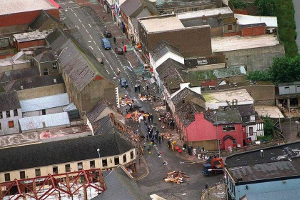
The car bomb detonates at 3:10 PM in the crowded shopping area. The bombing kills 29 people, including a woman pregnant with twins, and injures some 220 others. Twenty-one people who are in the vicinity of the vehicle die at the scene. Eight more people die on the way to or in the hospital. The death toll is higher than that of any single incident during what are considered “the Troubles.”
The bombing causes outrage both locally and internationally, spurs on the Northern Ireland peace process, and deals a severe blow to the Dissident republican campaign. The Real IRA apologises and declares a ceasefire shortly afterwards. The victims include people from many backgrounds: Protestants, Catholics, a Mormon teenager, five other teenagers, six children, a mother pregnant with twins, two Spanish tourists, and others on a day trip from the Republic of Ireland. Both unionists and Irish nationalists are killed and injured.
It is alleged that the British, Irish and U.S. intelligence agencies have information which could have prevented the bombing, most of which comes from double agents inside the Real IRA. This information is not given to the local police, the Royal Ulster Constabulary (RUC). In 2008 it is revealed that British intelligence agency, Government Communications Headquarters, was monitoring conversations between the bombers as the bomb was being driven into Omagh.
A 2001 report by the Police Ombudsman says that the RUC Special Branch failed to act on prior warnings and slammed the RUC’s investigation of the bombing. The RUC has obtained circumstantial and coincidental evidence against some suspects, but it has not come up with anything to convict anyone of the bombing. Colm Murphy is tried, convicted, and then released after it is revealed that Garda Síochána forged interview notes used in the case. Murphy’s nephew, Sean Hoey, is also tried and found not guilty.
In June 2009, the victims’ families win a GB£1.6 million civil action against four defendants. In April 2014, Seamus Daly is charged with the murders of those killed, however, the case against him is withdrawn in February 2016.
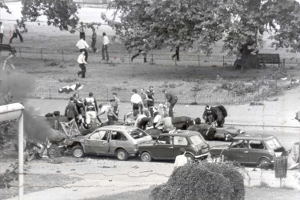
At 10:40 AM, a nail bomb explodes in the boot of a blue Morris Marina parked on South Carriage Drive in Hyde Park. The bomb comprises 25 lbs. of gelignite and 30 lbs. of nails. It explodes as soldiers of the Household Cavalry, Queen Elizabeth II‘s official bodyguard regiment, are passing. They are taking part in their daily Changing of the Guard procession from their barracks in Knightsbridge to Horse Guards Parade. Three soldiers of the Blues & Royals are killed outright, and another, their standard-bearer, dies from his wounds three days later. The other soldiers in the procession are badly wounded, and a number of civilians were injured. Seven of the regiment’s horses are also killed or had to be euthanised because of their injuries. Explosives experts believe that the Hyde Park bomb is triggered by remote by an IRA member inside the park.
The second attack happens at about 12:55 PM, when a bomb explodes underneath a bandstand in Regent’s Park. Thirty Military bandsmen of the Royal Green Jackets are on the stand performing music from Oliver! to a crowd of 120 people. It is the first in a series of advertised lunchtime concerts there. Six of the bandsmen are killed outright and the rest are wounded. A seventh dies of his wounds on August 1. At least eight civilians are also injured. The bomb had been hidden under the stand some time before and triggered by a timer. Unlike the Hyde Park bomb, it contains no nails and seems to be designed to cause minimal harm to bystanders.
A total of 22 people are detained in hospital as a result of the blasts. The IRA claims responsibility for the attacks by deliberately mirroring Prime MinisterMargaret Thatcher‘s words a few months before when Britain entered the Falklands War. They proclaimed that “The Irish people have sovereign and national rights which no task or occupational force can put down.” Reacting to the bombing, Thatcher states, “These callous and cowardly crimes have been committed by evil, brutal men who know nothing of democracy. We shall not rest until they are brought to justice.” The bombings have a negative impact on public support in the United States for the Irish republican cause.
On May 19, 2013, 61-year-old John Anthony Downey, from County Donegal, is charged with murder in relation to the Hyde Park bomb and intending to cause an explosion likely to endanger life. He appears at the Old Bailey on January 24, 2014, for the beginning of his trial and enters a not guilty plea. On February 25, 2014, it is revealed that Downey’s trial has collapsed after the presiding judge has ruled upon a letter sent by the Police Service of Northern Ireland to Downey in 2007, assuring him that he would not face criminal charges over the attack. Although the assurance is made in error and the police realise the mistake, it is never withdrawn, and the judge rules that therefore the defendant has been misled and prosecuting him would be an abuse of executive power. Downey is one of 187 IRA suspects who receive secret on-the-run letters guaranteeing them unofficial immunity from prosecution.
A memorial marks the spot of the Hyde Park bombing and the troop honours it daily with an eyes-left and salute with drawn swords. A plaque commemorating the victims of the second attack also stands in Regent’s Park.
Born Charles William St. John Burgess, Brugha is the tenth of fourteen children and is educated at the JesuitBelvedere College but is forced to leave at the age of sixteen because of the failure of his father’s business.
In 1899 Brugha join the Gaelic League, and he subsequently changes his name from Charles Burgess to Cathal Brugha. He meets his future wife, Kathleen Kingston, at an Irish class in Birr, County Offaly and they marry in 1912. They have six children, five girls and one boy. Brugha becomes actively involved in the Irish Republican Brotherhood (IRB) and in 1913 he becomes a lieutenant in the Irish Volunteers. He leads a group of twenty Volunteers to receive the arms smuggled into Ireland in the Howth gun-running of 1914.
He is second-in-command at the South Dublin Union under Commandant Éamonn Ceannt in the Easter Rising of 1916. On the Thursday of Easter Week, being badly wounded, he is unable to leave when the retreat is ordered. Brugha, weak from loss of blood, continues to fire upon the enemy and is found by Eamonn Ceannt singing “God Save Ireland” with his pistol still in his hands. He is initially not considered likely to survive. He recovers over the next year but is left with a permanent limp.
Brugha is elected speaker of Dáil Éireann at its first meeting on January 21, 1919, and he reads out the Declaration of Independence in Irish, which ratifies “the establishment of the Irish Republic.” On the following day, he is appointed president of the ministry pro tempore. He retains this position until April 1, 1919, when Éamon de Valera takes his place.
Brugha has differences with Michael Collins, who, although nominally only the IRA’s Director of Intelligence, has far more influence in the organisation as a result of his position as a high-ranking member of the Irish Republican Brotherhood, an organisation that Brugha sees as undermining the power of the Dáil and especially the Ministry for Defence. Brugha opposes the oath of allegiance required for membership of the IRB and, in 1919, his proposition that all Volunteers should swear allegiance to the Irish Republic and the Dáil is adopted.
At a top-level IRA meeting in August 1920, Brugha argues against ambushes of Crown forces unless there is first a call to surrender, but it is dismissed as unrealistic by the brigade commanders present. Brugha also has the idea of moving the front line of the war to England but is opposed by Collins.
In the months between the Treaty debates and the outbreak of Civil War, Brugha attempts to dissuade his fellow anti-treaty army leaders including Rory O’Connor, Liam Mellows and Joe McKelvey from taking up arms against the Free State. When the IRA occupies the Four Courts, he and Oscar Traynor call on them to abandon their position. When they refuse, Traynor orders the occupation of the area around O’Connell Street in the hope of easing the pressure on the Four Courts and of forcing the Free State to negotiate.
On June 28, 1922, Brugha is appointed commandant of the forces in O’Connell Street. The outbreak of the Irish Civil War ensues in the first week of July when Free State forces commence shelling of the anti-treaty positions.
Most of the anti-Treaty fighters under Oscar Traynor escape from O’Connell Street when the buildings they are holding catch fire, leaving Brugha in command of a small rearguard. On July 5, he orders his men to surrender but refuses to do so himself. He then approaches the Free State troops, brandishing a revolver. He sustains a bullet wound to the leg which severs a major artery.
Cathal Brugha dies on July 7, 1922, eleven days before his 48th birthday. He has been re-elected as an anti-Treaty Teachta Dála (TD) at the 1922 Irish general election but dies before the Dáil assembles. He is buried in Glasnevin Cemetery.
Belfast sees almost 500 people die in political violence between 1920 and 1922. Violence in the city breaks out in the summer of 1920 in response to the Irish Republican Army (IRA) killing of Royal Irish Constabulary Detective Oswald Swanzy after Sunday services outside a Protestant church in nearby Lisburn. Seven thousand Catholics and some Protestant trade unionists are driven from their jobs in the Belfast shipyards and over 50 people are killed in rioting between Catholics and Protestants.
Violence in Belfast wanes until the following summer of 1921. At the time, Irish republican and British authorities are negotiating a truce to end the war but fighting flares up in Belfast. On June 10, an IRA gunman, Jack Donaghy, ambushes three RIC constables on the Falls Road, fatally wounding one, Thomas Conlon, a Roman Catholic from County Roscommon, who, ironically, is viewed as “sympathetic” to the local nationalists. Over the following three days, at least 14 people lose their lives and 14 are wounded in fighting in the city, including three Catholics who are taken from their homes and killed by uniformed police.
Low-level attacks continue in the city over the next month until another major outbreak of violence that leads to “Bloody Sunday.” On July 8, the RIC attempt to carry out searches in the mainly Catholic and republican enclave around Union Street and Stanhope Street. However, they are confronted by about fifteen IRA volunteers in an hour-long firefight.
On July 9, a truce to suspend the war is agreed in Dublin between representatives of the Irish Republic and the British government, to come into effect at noon on July 11. Many Protestants/unionists condemn the truce as a “sell-out” to republicans.
On the night of July 9/10, hours after the truce is announced, the RIC attempt to launch a raid in the Lower Falls district of west Belfast. Scouts alert the IRA of the raid by blowing whistles, banging dustbin lids and flashing a red light. On Raglan Street, a unit of about fourteen IRA volunteers ambush an armoured police truck, killing one officer and wounding at least two others.
This sparks an outbreak of ferocious fighting between Catholics and Protestants in west Belfast the following day, Sunday July 10, in which 16 civilians lose their lives and up to 200 houses are destroyed. Of the houses destroyed, 150 are owned by Catholics. Most of the dead are civilians and at least four of the Catholic victims are ex-World War I servicemen.
Protestants, fearful of absorption into a Catholic Ireland and blindly angered by the presence of heresy and treason in their midst, strike at the Catholic community while vengeful Catholics strike back with counter-terror. Gun battles rage all day along the sectarian “boundary” between the Catholic Falls and Protestant Shankill districts and rival gunmen use rifles, machine guns and grenades in the clashes. Gunmen are seen firing from windows, rooftops and street corners. A loyalist mob, several thousand strong, attempt to storm the Falls district, carrying petrol and other flammable materials.
A tram travelling from the Falls into the city centre is struck by snipers’ bullets, and the service has to be suspended. Catholics and republicans claim that police, mostly from the Ulster Special Constabulary (USC), drive through Catholic enclaves in armoured cars firing indiscriminately at houses and bystanders. The police return to their barracks late on Sunday night, allegedly after a ceasefire has been agreed by telephone between a senior RIC officer and the commander of the IRA’s Belfast Brigade, Roger McCorley.
The truce is due to come into effect at midday on Monday, July 11, but violence resumes that morning. Three people are shot dead that day, including an IRA volunteer who is shot minutes before midday. In the north the official truce does not end the fighting. While the IRA is involved in the violence, it does not control the actions of the Catholic community. Tuesday July 12 sees the Orange Order‘s annual Twelfth marches pass off peacefully and there are no serious disturbances in the city. However, sporadic violence resumes on Wednesday, and by the end of the week 28 people in all have been killed or fatally wounded in Belfast.
The violence of the period in Belfast is cyclical, and the events of July 1921 are followed by a lull until a three-day period beginning on August 29, when another 20 lives are lost in the west and north of the city. The conflict in Belfast between the IRA and Crown forces and between Catholics and Protestants continues until the following summer, when the northern IRA is left isolated by the outbreak of the Irish Civil War in the south and weakened by the rigorous enforcement of internment in Northern Ireland.
At the time the day is referred to as “Belfast’s Bloody Sunday.” However, the title of “Bloody Sunday” is now more commonly given in Ireland to events in Dublin in November 1920 or Derry in January 1972.
The mid-1970s is one of the deadliest periods of the Troubles. From February 1975 until February 1976, the Provisional Irish Republican Army (IRA) and British Government observe a truce. This, however, marks a rise in sectarian tit-for-tat killings. Ulster loyalist paramilitaries, fearing they are about to be forsaken by the British Government and forced into a united Ireland, increase their attacks on Irish Catholics and nationalists. Under orders not to engage British forces, some IRA units concentrate on tackling the loyalists. The fall-off of regular operations causes serious problems of internal discipline and some IRA members also engage in revenge attacks. The tit-for-tat killings continue after the truce ends. On June 5, 1976, the UVF shoots dead three Catholics and two Protestants in an attack on the Chlorane Bar. This is claimed as revenge for the killing of two Protestants in a pub earlier that day.
On June 25, 1976, gunmen open fire inside a Protestant-owned pub in Templepatrick, County Antrim. Three Protestant civilians die. The attack is claimed by the “Republican Action Force“, which is believed to be a cover name used by some members of the IRA.
The Ramble Inn lies just outside Antrim, on the main A26 Antrim to Ballymena dual carriageway, near the village of Kells. The pub is owned by Catholics but in a rural area of County Antrim which is mostly Protestant. Most of its customers are Protestants from the surrounding area.
On the night of Friday July 2, 1976, a three-man UVF unit consisting of a driver and two gunmen steal a car from a couple parked in nearby Tardree Forest. The couple are gagged and bound before the men make off in the car. At about 11:00 PM, just before closing time, two masked gunmen in boilersuits enter the pub and open fire with machine guns, hitting nine people. Three die at the scene and a further three die later. The victims are Frank Scott (75), Ernest Moore (40), James McCallion (35), Joseph Ellis (27) and James Francey (50), all Protestants, and Oliver Woulahan (20), a Catholic.
On July 3 at 12:30 PM, an anonymous caller to theNews Letter claims the attack is in retaliation for the earlier attack in Templepatrick. It is widely believed that the UVF are responsible for the Ramble Inn attack. In the weeks that follow, a number of people are interviewed by police in relation to the shooting but are subsequently released without charge. To date, no one has been convicted of the attack.
In 2012 the Historical Enquiries Team (HET), a body which has been set up in Northern Ireland to re-investigate unsolved murders of the Troubles, meets with the family of James McCallion to deliver their findings. The probe concludes that the then Northern Ireland police force, the Royal Ulster Constabulary (RUC), had conducted a thorough investigation and the detectives working on the case did their best to bring the killers to justice.
In June 1921 the Kinnitty Company of the South Offaly No. 2 Brigade Irish Republican Army (IRA) is ordered to construct a roadblock in the rural area of Coolacrease near Cadamstown as part of county-wide military manoeuvres. The roadblock is located at the boundary of land owned by loyalist farmer William Pearson. At around midnight some of the Pearsons are said to have come to the roadblock and fire a shot or shots as a warning to rebels who are damaging their property. A brief gun battle ensues and a man is injured on each side.
Following official investigation into the identity of the men who attacked the roadblock, Thomas Burke, the IRA Officer Commanding South Offaly No. 2 Brigade, orders that the three brothers Richard, Abraham, and Sidney Pearson are to be executed and their houses destroyed.
On June 30, 1921, about a week after the roadblock shootings, a party of about thirty IRA men arrest Richard and Abraham Pearson. They are taken to their house and held under guard there with their mother, three sisters, younger brother, and two female cousins while the house is prepared to be burned. Their father, William Pearson, and brother Sidney are away from home at the time. The brothers Richard and Abraham Pearson are shot by a firing squad of about ten men, and the house is burned. Richard and Abraham Pearson die after six hours and fourteen hours, respectively.
The medical reports declare that the death of Richard Pearson is due to haemorrhage and shock caused by gunshot wounds to the left shoulder, right groin, right buttock, left lower leg and to the back with the most serious being the wound to the right groin. In the case of Abraham Pearson, death is declared to be the result of shock from gunshot wounds to the left cheek, left shoulder, left thigh, lower third of left leg and through the abdomen.
Traynor is an Irish politician and republican born into a strongly nationalist family in Dublin on March 21, 1886. He serves in a number of cabinet positions, most notably as the country’s longest-serving Minister for Defence. He is educated by the Christian Brothers in Dublin. In 1899 he is apprenticed to John Long, a famous woodcarver. As a young man he is a noted footballer and tours Europe as a goalkeeper with Belfast Celtic F.C. whom he plays with from 1910 to 1912.
Traynor joins the Irish Volunteers and takes part in the Easter Rising in 1916, following which he is interned in Wales. During the Irish War of Independence, he is brigadier of the Dublin Brigade of the Irish Republican Army. He leads the attack on The Custom House in 1921 and an ambush on the West Kent Regiment at Claude Road, Drumcondra on June 16, 1921, when the Thompson submachine gun is fired for the first time in action. When the Irish Civil War breaks out in June 1922, Traynor takes the republican side.
The Dublin Brigade is split however, with many of its members following Michael Collins in taking the pro-Treaty side. On June 29, 1922, Traynor and his supporters occupy O’Connell Street in an attempt to help the republicans who have occupied the Four Courts but are under attack by Free State forces. Traynor and his men hold out for a week of street fighting before making their escape. He organises guerilla activity in south Dublin and County Wicklow, before being captured by Free State troops in September. He is then imprisoned for the remainder of the war.
On March 11, 1925, Traynor is elected to Dáil Éireann in a by-election as a Sinn FéinTeachta Dála (TD) for the Dublin North constituency, though he does not take his seat due to the abstentionist policy of Sinn Féin. He is re-elected as one of eight members for Dublin North in the June 1927 Irish general election but just one of six Sinn Féin TDs. Once again, he does not take his seat. He does not contest the second general election called that year but declares his support for Fianna Fáil. He stands again in the 1932 general election and is elected as a Fianna Fáil TD for Dublin North.
In 1936 Traynor is first appointed to the Cabinet as Minister for Posts and Telegraphs. In September 1939 he is appointed Minister for Defence and holds the portfolio until February 1948. In 1948 he becomes President of the Football Association of Ireland, a position he holds until his death. He serves as Minister for Defence in several Fianna Fáil governments and as Minister for Justice, where he is undermined by his junior minister, and later Taoiseach, Charles Haughey, before he retires in 1961.
Oscar Traynor dies on December 15, 1963, in Dublin at the age of seventy-seven. He has a road named in his memory on the Coolock to Santry stretch in North Dublin.




 The
The