About 200 Anti-Treaty Irish Republican Army militants led by Rory O’Connor occupy the Four Courts in the centre of Dublin on April 14, 1922 in defiance of the Provisional Government. They intend to provoke the British troops, who are still in the country, to attack them, which they believe will restart the war with Britain and re-unite the Irish Republican Army against their common enemy. They also occupy other smaller buildings regarded as being associated with the former British administration, such as the Ballast Office and the Freemasons’ Hall in Molesworth Street, but the Four Courts remains the focus of interest. On June 15, O’Connor sends out men to collect the rifles that belong to the mutineers of the Civic Guards.
Winston Churchill and the Cabinet of the United Kingdom apply pressure on the Provisional Government to dislodge the rebels in Four Courts, considering their presence there as a violation of the Anglo-Irish Treaty. Michael Collins, President of the Provisional Government Cabinet, tries desperately to persuade O’Connor and his men to leave the building over the next three months. At the Third IRA Convention, the executive is split over whether the Irish Government should demand that all British troops leave within 72 hours. The motion is defeated, but the IRA splits into two factions opposed to the government, one conciliatory, led by Liam Lynch, Sean Moylan, and Liam Deasy, and the other less moderate, led by Tom Barry and Joe McKelvey.
During the month of June 1922, the Provisional Government engages in intense negotiations with the British Cabinet, seeking to diffuse the threat of imminent civil war. However, the conservative British Cabinet refuses to cooperate.
On June 22, 1922, arch-Unionist Sir Henry Wilson is assassinated by two IRA men, both former British soldiers, Reginald Dunne and Joseph O’Sullivan. It is considered by some that this is done on the orders of Michael Collins, who has been a close friend of Dunne in the London Irish Republican Brotherhood. David Lloyd George writes an angry letter to Collins which includes the line “…still less can Mr. Rory O’Connor be permitted to remain his followers and his arsenal in open rebellion in the heart of Dublin… organizing and sending out from this centre enterprises of murder not only in the area of your Government…”
On June 28, 1922, after the Four Courts garrison has kidnapped J.J. “Ginger” O’Connell, a general in the new Free State Army, Collins begins shelling the Four Courts with borrowed British artillery. O’Connor and 130 men surrender on July 3 and are arrested and imprisoned at Mountjoy Prison. This incident sparks the Irish Civil War as fighting breaks out around the country between pro and anti-treaty factions.
Cumann na mBan, an Irish republican women’s paramilitary organisation, is formed in Dublin on April 2, 1914.
In 1913, a number of women decide to hold a meeting in Wynn’s Hotel, Dublin, for the purpose of discussing the possibility of forming an organisation for women who would work in conjunction with the recently formed Irish Volunteers. A meeting led by Kathleen Lane-O’Kelly on April 2, 1914, marks the foundation of Cumann na mBan. Branches, which pledge to the Constitution of the organisation, are formed throughout the country and are directed by the Provisional Committee.
The primary aims of Cumann na mBan, as stated in its constitution, are to “advance the cause of Irish liberty and to organize Irishwomen in the furtherance of this object,” to “assist in arming and equipping a body of Irish men for the defence of Ireland” and to “form a fund for these purposes, to be called ‘The Defence of Ireland Fund.'”
Recruits come from diverse backgrounds, mainly white-collar workers and professional women, but with a significant proportion also from the working class. In September 1914, the Irish Volunteers split over John Redmond‘s appeal for its members to enlist in the British Army. The majority of Cumann na mBan members support the 10,000 to 14,000 volunteers who rejected this call and who retain the original name, the Irish Volunteers.
On April 23, 1916, when the Military Council of the Irish Republican Brotherhood finalises arrangements for the Easter Rising, it integrates Cumann na mBan, along with the Irish Volunteers and Irish Citizen Army, into the “Army of the Irish Republic.”
On the day of the Rising, Cumann na mBan members arrive armed with both a Webley revolver and a typewriter, entering the General Post Office (GPO) on O’Connell Street in Dublin with their male counterparts. By nightfall, women insurgents are established in all the major rebel strongholds throughout the city. The majority of the women work as Red Cross workers, are couriers, or procure rations for the men. Members also gather intelligence on scouting expeditions, carry despatches, and transfer arms from dumps across the city to insurgent strongholds. A number of Cumann na mBan members die during the Rising.
At the Four Courts, they help to organise the evacuation of buildings at the time of surrender and destroy incriminating papers. On April 29, the leaders at the GPO decide to negotiate surrender. Patrick Pearse, the overall Commandant-General, asks Cumann na mBan member Elizabeth O’Farrell to act as a go-between. Under British military supervision she brings Pearse’s surrender order to the rebel units still fighting in Dublin. Over 70 women, including many of the leading figures in Cumann na mBan, are arrested after the insurrection, and many of the women who are captured fighting are imprisoned in Kilmainham Gaol. All but twelve are released by May 8, 1916.
Revitalized after the Rising and led by Countess Markievicz, Cumann na mBan takes a leading role in popularising the memory of the 1916 leaders, organising prisoner relief agencies, opposing conscription, and canvassing for Sinn Féin in the 1918 general election, in which Markievicz is elected Teachta Dála.
Cumann na mBan supports the Provisional wing in the 1969-1970 split in the Irish Republican Army (IRA) and Sinn Féin. In Northern Ireland, Cumann na mBan is integrated into the mainstream IRA during the conflict, although they continue to exist as a separate organisation in the Republic of Ireland. In 1986, Cumann na mBan opposes the decision by the IRA and Sinn Féin to drop the policy of abstentionism and aligns itself with Republican Sinn Féin and the Continuity IRA.
In 2014, Cumann na mBan celebrates the Centenary of its foundation in Wynn’s Hotel, Dublin, the site of their founding in 1914. The U.K. Home Office in March 2015 lists Cumann na mBan as a group linked to Northern Ireland related terrorism. However, it is not so listed in 2008 by the U.S. State Department.
A British military convoy of Black and Tans and including a Royal Irish Constabulary Sergeant named Michael Hickey, sets off from Dungarvan Castle on the night of March 18, heading east for the coastal village of Clonea. Their goal that night is the arrest of Irish Republican Army (IRA) volunteer John Murphy, who has been involved in gun running between Clonmel, County Tipperary, and Dungarvan.
Irish Republican Army volunteers of the West Waterford flying column have plans that night to demolish Tarr’s Bridge over the Colligan River between Dungarvan and the Abbeyside. However, when they receive word of the British convoy heading east out of Dungarvan, a last-minute action is organized by the Active Service Unit (ASU) to intercept it on its way back to Dungarvan.
The IRA volunteers ambush the convoy at the Burgery, about a mile and a half northeast of Dungarvan. In overall command of the IRA unit is IRA General Headquarters (GHQ) Officer George Plunkett. Also present are West Waterford Brigade Commandant Pax Whelan, Active Service Unit (ASU) leader George Lennon, and Mick Mansfield.
A British Crossley tender is set on fire and prisoners are taken by the IRA, including Sergeant Hickey. Early on the morning of March 19, Hickey is executed by an IRA firing squad with a sign reading “police spy” affixed to his tunic. Hickey is later buried in an unmarked grave. Other prisoners, including Captain DV Thomas, the commander of the British garrison, are released.
After the ambush, a group of volunteers under Plunkett return to search for any armaments left behind by the British forces. Crown forces who are now searching the area engage the IRA party. IRA volunteers Seán Fitzgerald and Pat Keating are shot dead. Constable Sydney R. Redman, a Black and Tan, is shot dead during the return fire.
Paddy Devlin, Irish social democrat and Labour activist, former Stormont Member of Parliament (MP), founder of the Social Democratic and Labour Party (SDLP), and member of the 1974 Power Sharing Executive, is born in West Belfast on March 8, 1925.
Devlin lives almost all his life in Belfast and grows up in a highly political household. His early activism is confined to Fianna Éireann and later the Irish Republican Army (IRA). As a result, he is interned in Crumlin Road Gaol during World War II. He leaves the republican movement upon his release.
After the war he spends some time in Portsmouth and Coventry, where he becomes interested in Labour and trade union politics and briefly joins the British Labour Party. Devlin returns to Belfast in 1948 and helps establish the Irish Labour Party after the split of the Northern Ireland Labour Party (NILP). He later defeats Gerry Fitt to win a seat on the city council. Later Catholic Action claims the Irish Labour Party is infested with communists which effectively wipes out the party and Devlin loses his seat.
In the mid 1960s, Devlin joins the revived NILP and beats Harry Diamond for the Falls seat in Stormont. Devlin then joins Fitt, John Hume, Austin Currie, and others to found the SDLP in 1970. At the request of Secretary of State for Northern Ireland William Whitelaw in 1973, he becomes involved in ensuring safe passage for Gerry Adams to talks with the British government.
Devlin is a member of the Northern Ireland Assembly in 1973 and Minister of Health and Social Services in the power-sharing Executive from January 1, 1974, to May 28, 1974.
In 1978, Devlin establishes the United Labour Party, which aims to be a broad-based Labour formation in Northern Ireland. He stands under its label for the European Parliament in 1979 but polls just 6,122 first preferences and thereby loses his deposit.
In 1987, Devlin and remnants of the NILP and others, establish Labour ’87 as another attempt at building a Labour Party in Northern Ireland by uniting the disparate groups supporting labour and socialist policies but it is met with little or no success. In 1985 he loses his seat on the Belfast City council.
Devlin suffers from severe diabetes and throughout the 1990s suffers a series of ailments as his health and sight collapse. Devlin dies at the age of 74 on August 15, 1999.
The 1981 hunger strike begins on March 1, 1981, when Bobby Sands, a former commanding officer of the Irish Republican Army (IRA) and prisoner at Long Kesh prison, refuses food. Other prisoners join the hunger strike one at a time at staggered intervals, which they believe will arouse maximum public support and exert maximum pressure on Prime Minister Margaret Thatcher.
The movement initially struggles to generate public support for the hunger strike. The Sunday before Sands begins his strike, only 3,500 people march through the streets of west Belfast as compared to 10,000 marchers during a previous hunger strike four months earlier.
Five days into the strike, however, Independent Republican Member of Parliament (MP) for Fermanagh and South TyroneFrank Maguire dies, resulting in a by-election. There is debate among nationalists and republicans regarding who should contest the election, but they ultimately agreed not to split the nationalist vote by contesting the election and Sands stands as an Anti H-Block candidate against Ulster Unionist Party candidate Harry West. Following a high-profile campaign the election takes place on April 9, and Sands is elected to the British House of Commons with 30,492 votes to West’s 29,046.
Sands’ election victory raises hopes that a settlement can be negotiated, but Thatcher stands firm in refusing to give concessions to the hunger strikers. The world’s media descends on Belfast, and several intermediaries, including Síle de Valera, granddaughter of Éamon de Valera, Pope John Paul II‘s personal envoy John Magee, and European Commission of Human Rights officials, visit Sands in an attempt to negotiate an end to the hunger strike. With Sands close to death, the government’s position remains unchanged, and they do not force medical treatment upon him.
On May 5, Sands dies in the prison hospital on day 66 of his hunger strike, prompting rioting in nationalist areas of Northern Ireland. Over 100,000 people line the route of his funeral, which is conducted with full IRA military honours. Margaret Thatcher showed no sympathy for his death.
In the two weeks following Sands’ death, three more hunger strikers die – Francis Hughes on May 12, and Raymond McCreesh and Patsy O’Hara on May 21. The deaths result in further rioting in Northern Ireland, particularly Derry and Belfast. Following the May 21 deaths, Primate of All Ireland Tomás Ó Fiaich criticises the British government’s handling of the hunger strike. Despite this, Thatcher still refuses to negotiate a settlement.
On July 28, following the deaths of Joe McDonnell (July 8) and Martin Hurson (July 13), the families of some of the hunger strikers attend a meeting with Catholic priest Father Denis Faul. The families express concern at the lack of a settlement and a decision is made to meet with Gerry Adams later that day. At the meeting Father Faul puts pressure on Adams to find a way of ending the strike, and Adams agrees to ask the IRA leadership to order the men to end the hunger strike. The following day Adams holds a meeting with six of the hunger strikers to outline a proposed settlement on offer from the British government should the strike be brought to an end. The strikers reject the settlement, believing that accepting anything less than their original demands will be a betrayal of the sacrifice made by Bobby Sands and the other men who had died.
On July 31, the hunger strike begins to break when the mother of Paddy Quinn insists on medical intervention to save his life. The following day Kevin Lynch dies, followed by Kieran Doherty on August 2, Thomas McElwee on August 8, and Michael Devine on August 20. On September 6, the family of Laurence McKeown becomes the fourth family to intervene and asks for medical treatment to save his life, and Cahal Daly issues a statement calling on republican prisoners to end the hunger strike.
A week later James Prior replaces Humphrey Atkins as Secretary of State for Northern Ireland and meets with prisoners in an attempt to end the strike. Liam McCloskey ends his strike on September 26 after his family says they will ask for medical intervention if he becomes unconscious. It also becomes clear that the families of the remaining hunger strikers will also intervene to save their lives. The strike is called off at 3:15 PM on October 3. Three days later Secretary of State Prior announces partial concessions to the prisoners including the right to wear their own clothes at all times. The only one of their original five demands still outstanding is the right not to do prison work. Following sabotage by the prisoners and the Maze Prison escape in 1983, the prison workshops are closed, effectively granting all five of the demands but without any formal recognition of political status from the government.
Over the summer of 1981, ten hunger strikers die. Thirteen others begin refusing food but are taken off hunger strike, either due to medical reasons or after intervention by their families. Many of them still suffer from the effects of the strike, with problems including digestive, visual, physical and neurological disabilities.
Army bomb experts recover a fully armed handheld rocket launcher in County Tyrone on the morning of February 29, 2000. It is found at the side of a house near the rear of Killymeal Army base in Dungannon. The discovery comes just hours after it is learned that large amounts of Semtex high explosive have been stolen from Provisional Irish Republican Army (PIRA) hides.
The weapon is linked to dissident republicans and is of a type not seen in the province before. It is believed to have originated in eastern Europe and has been abandoned by those about to carry out an attack at the rear of the army base. The weapon is similar to one recently seized by the security forces in the Republic of Ireland and linked to the Real IRA.
The rocket launcher is found just after pupils have finished traveling to three local schools. The nearby leisure centre is also closed. Families are removed from their homes on Killymeal Road while the device is investigated.
Superintendent Julie Lindsay says that to abandon such a device in the area is an “act of indescribable recklessness which clearly put the life of people living nearby in danger.” She says officers were able to prevent children from walking by the garden where the device was located as they were going to the leisure centre.
Ken Maginnis, Ulster Unionist Security spokesman and Member of Parliament (MP) for the area, says the discovery of the weapon vindicates his party’s insistence that paramilitaries should disarm. He also says it proves that republicans are “wedded to the past.”
Social Democratic and Labour Party councillor Vincent Currie says the find will bring back bad memories of a previous mortar bomb attack on the army base which devastated many houses in the area. He adds that it is lunacy to leave such a device on a road used by schoolchildren.
On February 26, 1962, due to lack of support, the Irish Republican Army (IRA) ends what it calls “The Campaign of Resistance to British Occupation,” which is also known as the “Border Campaign.”
The Border Campaign is the first major military undertaking carried out by the IRA since the harsh security measures of the Republic of Ireland and Northern Ireland governments had severely weakened it in the 1940s.
The campaign is launched with simultaneous attacks by approximately 150 IRA members on targets on the Border in the early hours of December 12, 1956. A BBC relay transmitter is bombed in Derry, a courthouse is burned in Magherafelt, a B-Specials post near Newry is burned, and a half-built Army barracks at Enniskillen is blown up. A raid on Gough barracks in Armagh is beaten off after a brief exchange of fire.
On December 14, an IRA column under Seán Garland detonates four bombs outside LisnaskeaRoyal Ulster Constabulary (RUC) station before raking it with gunfire. Further attacks on Derrylin and Roslea RUC barracks on the same day are beaten off.
On the evening of December 30, 1956, the Teeling Column attacks the Derrylin RUC barracks again, killing RUC constable John Scally, the first fatality of the campaign. The new year of 1957 begins with Seán Garland and Dáithí Ó Conaill planning an attack on the Police station at Brookeborough but they assault the wrong building. Two IRA men, Seán South and Fergal O’Hanlon, are killed in the abortive attack. Garland is seriously wounded in the raid. He and the remainder of the group are pursued back over the border by British soldiers.
The year 1957 is the most active year of the IRA’s campaign, with 341 incidents recorded. In November, the IRA suffers its worst loss of life in the period when four of its members die preparing a bomb, which explodes prematurely, in a farmhouse at Edentubber, County Louth. The civilian owner of the house is also killed.
By 1958, the campaign’s initial impetus has largely dissipated with many within the IRA in favour of calling the campaign off. By mid-year, 500 republicans are in gaol or interned. The decline in IRA activity leads the Fianna Fáil government in the South to end internment in March 1959.
Following their release, some of the interned leaders met Seán Cronin in a farmhouse in County Laois and are persuaded to continue the campaign “to keep the flame alive.” The number of incidents falls to just 26 in 1960, with many of these actions consisting of minor acts of sabotage.
The final fatality of the conflict comes in November 1961, when an RUC officer, William Hunter, is killed in a gun battle with the IRA in south County Armagh.
By late 1961, the campaign is over and has cost the lives of eight IRA men, four republican supporters, and six RUC members. In addition, 32 RUC members are wounded. A total of 256 Republicans are interned in Northern Ireland during the campaign and another 150 or so in the Republic.
The Campaign is officially called off on February 26, 1962, with a press release drafted by Ruairí Ó Brádaigh and several other persons including members of the Army Council. The statement is released by the Irish Republican Publicity Bureau and signed “J. McGarrity, Secretary.”
An Irish general election is held on February 16, 1932, just over two weeks after the dissolution of the Dáil on January 29. The general election takes place in 30 parliamentary constituencies throughout the Irish Free State for 153 seats in the lower house of parliament, Dáil Éireann. The 1932 general election is one of the most important general elections held in Ireland in the 20th Century, resulting in the formation of the first Fianna Fáil government. Fianna Fáil becomes the largest party and would continue to be the largest party in Dáil Éireann and at every general election until 2011.
Cumann na nGaedheal fights the general election on its record of providing ten years of stable government. The party brings stability following the chaos of the Irish Civil War and provides honest government. However, by 1932 support of the government is wearing thin, particularly since the party has no solution to the collapse in trade which follows the depression of the early 1930s. Instead of offering new policies the party believes that its record in government will be enough to retain power. Cumann na nGaedheal also employs “red scare” tactics, describing Fianna Fáil as communists and likening Éamon de Valera to Joseph Stalin.
In comparison, Fianna Fáil has an elaborate election programme designed to appeal to a wide section of the electorate. It plays down its republicanism to avoid alarm but provides very popular social and economic policies. The party promises to free Irish Republican Army (IRA) prisoners, abolish the Oath of allegiance, and reduce the powers of the Governor-General and the Senate. It also promises the introduction of protectionist policies, industrial development, self-sufficiency, and improvements in housing and social security benefits.
The election campaign between the two ideologically opposed parties is reasonably peaceful. However, during the campaign the government prosecutes de Valera’s newly established newspaper, The Irish Press. The editor is also brought before a military tribunal. This is seen by many as a major blunder and a serious infringement on the belief of freedom of speech. The “red scare” tactics also seemed to backfire on the government, who seem to have little else to offer the electorate.
When the results are known Fianna Fáil is still 5 seats short of an overall majority but looks like the only party capable of forming a government. Discussions get underway immediately after the election and an agreement is reached in which the Labour Party would support Fianna Fáil. The party now has the necessary votes to form a minority government.
On March 9, 1932, the first change of government in the Irish Free State takes place. Similar to when the party first enters the Dáil in 1927, a number of Fianna Fáil Teachtaí Dála (TDs) have guns in their pockets. However, the feared coup d’état does not take place. W. T. Cosgrave is determined to adhere to the principles of democracy that he has practised while in government. Likewise, the army, Garda Síochána, and the civil service all accept the change of government, despite the fact that they will now be taking orders from men who had been their enemies less than ten years previously. After a brief and uneventful meeting in the Dáil chamber, Éamon de Valera is appointed President of the Executive Council of the Irish Free State by the Governor-General, James McNeill, who has come to Leinster House to make the appointment rather than require de Valera travel to the Viceregal Lodge, formerly a symbol of British rule. Fianna Fáil, the party most closely identified with opposing the existence of the state ten years earlier, is now the party of government. The 1932 general election is the beginning of a sixteen-year period in government for Fianna Fáil.
Construction of Nelson Pillar, a large granite pillar topped by a statue of Horatio Nelson in the middle of O’Connell Street (formerly Sackville Street) in Dublin, begins with the laying of the foundation stone on February 15, 1808, by the Lord Lieutenant the Duke of Richmond.
News of Nelson’s victory at Trafalgar reaches Dublin on November 8, 1805, and is greeted with boisterous celebrations in the streets, alongside mourning for the death of the hero. Within a month the Lord Mayor of Dublin, James Vance, calls a meeting of nobility, clergy, bankers, merchants, and citizens to plan a monument in Nelson’s memory, which is to be funded by public subscription.
The duke, dressed in a general’s uniform and accompanied by the Duchess in deep mourning for the dead hero, arrive at the foundation stone laying in a state coach drawn by six horses. The procession from Dublin Castle to the site includes Horse Yeomanry and Foot Yeomanry, sailors, officers of the Army and the Navy, subscribers, the committee, the Provost and Fellows of Trinity College, the Lord Mayor, the Common Council, sheriffs, aldermen, and peers according to their degrees.
The pillar is a Doric column that rises 121 feet from the ground and is topped by a 13-foot-tall statue of Nelson carved in Portland stone, giving it a total height of 134 feet, some 35 feet shorter than Nelson’s Column in London. The diameter of the column is 13 feet at the bottom and 10 feet at the top. All of the outer and visible parts of the pillar are granite from the quarry of Goldenhill, Manor Kilbride, County Wicklow. The interior is black limestone.
The pillar is completed by August 1809 and the statue of Nelson is hoisted into place. The statue is the work of Thomas Kirk, a young Cork-born sculptor then at the beginning of a successful career. The statue adds £630 to the cost of the pillar, which totals almost £7,000.
The monument is opened to the public on Trafalgar Day, October 21, 1809, the fourth anniversary of the battle. It offers the citizens of Dublin an unprecedented perspective on their city. For the payment of ten pence, they can climb the 168 steps of the inner stone staircase to the viewing platform.
On October 29, 1955, a group of University College Dublin students lock themselves inside the pillar and try to melt the statue with flame throwers. From the top they hang a poster of Kevin Barry, a Dublin Irish Republican Army (IRA) volunteer who is executed by the British during the Irish War of Independence. Gardaí force their way inside with sledgehammers. They take the students’ names and addresses and bring them downstairs. Rather than arrest the students, the Gardaí merely confiscate their equipment and tell everyone to leave quietly. None are ever charged.
At 1:32 AM on March 8, 1966, a bomb destroys the upper half of the pillar, throwing the statue of Nelson into the street. The bomb is planted by a group of former Irish Republican Army (IRA) volunteers in what is believed to mark the commemoration the 50th anniversary of the Easter Rising.
Six days after the original damage, on the morning of Monday, March 14, 1966, Irish Army engineers blow up the rest of the pillar after judging the structure to be too unsafe to restore. This planned demolition causes more damage on O’Connell Street than the original blast, breaking many windows.
The rubble from the monument is taken to the East Wall dump and the lettering from the plinth is moved to the gardens of Butler House, Kilkenny.
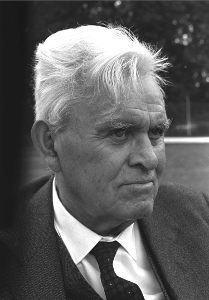
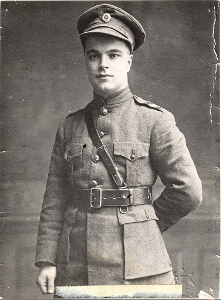
Treacy leaves school at the age of 14 and works as farmer while also developing deep patriotic convictions. He is a member of the Gaelic League, and of the Irish Republican Brotherhood (IRB) from 1911 and the Irish Volunteers from 1913.
He is picked up in the mass arrests following the Easter Rising in 1916. He spends much of the following two years in prison, where he goes on hunger strike on several occasions.
In 1918, Treacy is appointed Vice Officer-Commanding of the 3rd Tipperary Brigade of the Irish Volunteers, which becomes the Irish Republican Army in 1919.
On January 21, 1919, Treacy and Dan Breen, together with Seán Hogan, Séamus Robinson, and five other volunteers, help to ignite the conflict that is to become the Irish War of Independence. They ambush and shoot dead Constables Patrick MacDonnell and James O’Connell of the Royal Irish Constabulary (RIC), who are guarding a transport of gelignite explosives, during the Soloheadbeg Ambush near Treacy’s home. Treacy leads the planning of the ambush and briefs the brigade’s OC Robinson on his return from prison in late 1918. Robinson supports the plans and agrees they will not go to GHQ for permission to undertake the attack.
As a result of the Soloheadbeg Ambush, South Tipperary is placed under martial law and declared a Special Military Area under the Defence of the Realm Act. After Soloheadbeg ambush party member Seán Hogan is arrested on May 12, 1919, Treacy, Breen, and Séamus Robinson are joined by five men from the IRA’s East Limerick Brigade to organise Hogan’s rescue. Hogan is brought to the train which is intended to take him from Thurles to Cork city on May 13, 1919. As the train steams across the Tipperary border and into County Limerick, the IRA party boards the train in Knocklong. A close-range struggle ensues on the train. Treacy and Breen are seriously wounded in the gunfight and two RIC men die, but Hogan is rescued. His rescuers rush him into the village of Knocklong where a butcher cuts off his handcuffs using a cleaver.
A search for Treacy and the others is mounted across Ireland. Treacy leaves Tipperary for Dublin to avoid capture. In Dublin, Michael Collins employs Treacy on assassination operations with “the Squad“. In the summer of 1920, he returns to Tipperary and organises several attacks on RIC barracks before again moving his base of operations to Dublin.
By spring 1920 the political police of both the Crimes Special Branch of the Royal Irish Constabulary (RIC) and G-Division (Special Branch) of the Dublin Metropolitan Police (DMP) have been effectively neutalised by IRA counterintelligence operatives working for Michael Collins. The British thoroughly reorganise their administration at Dublin Castle and begin to import dozens of professional secret service agents from all parts of the British Empire into Ireland to track down IRA operatives and Sinn Féin leaders.
On October 11, 1920, Treacy and Breen are holed up in a safe house on the north side of Dublin when it is raided by a police unit. In the ensuing shootout, two senior British officers are wounded and die the next day while Treacy and Breen are wounded, Breen seriously. Treacy and Breen manage to escape through a window and shoot their way through the police cordon.
Treacy is discovered at the Republican Outfitters shop at 94 Talbot Street on October 14 a British Secret Service surveillance team led by Major Carew and Lt. Gilbert Price. They were stalking him in hopes that he would lead them to Collins or to other high-value IRA targets. Treacy realises that he is being followed and runs for his bicycle but grabs the wrong bike, taking one that is far too big for him, and falls. Price draws his pistol and closes in on Treacy. Treacy draws his parabellum automatic pistol and shoots Price and another British agent before he is hit in the head, dying instantly.
Treacy is buried at Kilfeacle graveyard where, despite a large presence of British military personnel, a volley of shots is fired over the grave.