Thomson is born to tea merchant John Thomson (1822–1894) and shopkeeper Catherine (née Andrews). He is the eldest of their three surviving children. Although he has no formal artistic training, as a young boy he often fills his schoolbooks with drawings of horses, dogs, and ships. He attends Coleraine Model School, but leaves at the age of fourteen to work as a clerk at E. Gribbon & Sons, Linen Manufacturers. Several years later his artistic talents are discovered, and in 1877 he is hired by printing and publishing company Marcus Ward & Co.
On December 29, 1884 Thomson marries Jessie Naismith Miller in Belfast. Soon afterwards they move back to London for Thomson’s career. They have one son together, John, born in 1886.
In 1911, he and his family move to Sidcup, hoping to improve their “ever delicate health.” Thomson’s correspondence reflects the fact that he misses being close to the National Gallery and the museums where he usually compiles research for his illustrations. During World War I, demand for Thomson’s work decreases to a few propaganda pamphlets and some commissions from friends. By 1917, Thomson has fallen on financial hardship and he has to take a job with the Board of Trade, where he works until 1919.
Northern Ireland is brought under direct rule from Westminster on May 29, 1974, following the collapse of Northern Ireland’s first power-sharing assembly the previous day.
The power-sharing assembly’s leader, Brian Faulkner, and fellow members resign on May 28. The collapse follows a seven-day general strike organised by militant unionists opposed to the Sunningdale Agreement. Over the week leading up to the collapse industrial production comes to a halt with power cuts of up to eighteen hours. Rubbish is not collected and there are reports that undertakers refuse to bury the dead.
In 1973, the British Government under Edward Heath held talks at Sunningdale in Berkshire with the government of the Irish Republic and three political parties – the Official Unionists led by Faulkner, the nationalist Social Democratic and Labour Party (SDLP), and the non-sectarian Alliance Party. They agree to set up a power-sharing executive for Northern Ireland and, eventually, a Council of Ireland involving the Republic with limited jurisdiction over issues of joint concern between north and south.
The declaration also recognises the wishes of unionists to remain within the United Kingdom and nationalists for a united Ireland. Both sides agreed the will of the majority should be respected. But hardline loyalists, led by Harry West, Ian Paisley and William Craig, do not attend most of the talks at Sunningdale, and when the proposals are announced, they criticise them strongly.
The new executive formally comes into power on January 1, 1974, but soon runs into trouble. Anti-power sharing unionists do their best to disrupt proceedings and eighteen members including Paisley are forcibly removed by the police.
In February, a general election sees Labour returned to power in Westminster and eleven of the twelve seats in Northern Ireland won by unionists opposed to the deal under the umbrella of the United Ulster Unionist Council. Of those supporting the executive, only Gerry Fitt is elected as the UUUC wins more than 50% of the vote.
With the Sunningdale executive teetering on the edge, the coup de grâce is delivered by the loyalist Ulster Workers’ Council, which organises a seven-day strike after the assembly approves the agreement in the week prior to the collapse of the power-sharing assembly. Devolved government is not re-established in Northern Ireland until 1998.
(Pictured: Ulster Workers’ Council (UWC) strike outside the Northern Ireland Parliament Buildings, commonly known as Stormont)
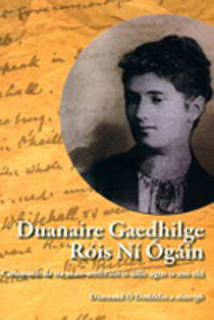
Young is born in Galgorm Castle, Ballymena, County Antrim, daughter and seventh of twelve children born to Grace Charlotte Savage, and John Young who is a prosperous unionist and high sheriff. Despite his position he is a believer in tenant rights. Her younger sister is the writer Ella Young and her brother Willie Young is secretary of the Ulster Unionist League.
Young is educated by governesses until 1884 before completing training as a teacher through Cambridge University. Young also attends Gaelic League classes in 1903 in London while visiting her sister who is living in the city at the time. After visiting the Bodleian Library she becomes committed to the study of the Irish language.
In the early 1900s Young returns to Ireland and continues her study of the Irish language in Belfast at Seán Ó Catháin‘s Irish College and in County Donegal at Coláiste Uladh in Gort an Choirce. Young also stays in Dublin and becomes friends with members of the Gaelic League and meets Margaret Dobbs. Young works with Dobbs on the Feis na nGleann (The Glens Festival), a gathering dedicated to the Irish language.
Young is not involved in nationalism though she is strongly supportive of creating and maintaining a sense of “Irishness” through language and culture. She is also a friend and patron of Roger Casement. She also works with Ellen O’Brien and contributes to O’Brien’s book, The Gaelic Church. She keeps meticulous diaries and becomes interested in Rathlin Island and the Gaelic spoken there.
Rose Young is buried in the Presbyterian churchyard at Ahoghill, County Antrim.
Devine, also known as “Red Mickey” because of his red hair, is born into a family from the Springtown Camp, Derry, Northern Ireland. In 1960, when he is six years of age, the Devine family including his grandmother, sister Margaret and parents Patrick and Elizabeth, move to the then newly built Creggan estate to the north of Derry city centre. He is educated at Holy Child Primary School and St. Joseph’s Secondary School, both in the Creggan.
After British soldiers shoot and kill two unarmed civilians, Dessie Beattie and Raymond Cusack, Devine joins the James Connolly Republican Club in Derry in July 1971. Bloody Sunday has a deep impact on him. In the early 1970s, Devine joins the Irish Labour Party and Young Socialists.
Devine helps found the Irish National Liberation Army (INLA) in 1975. In 1976, after an arms raid in County Donegal in the Republic of Ireland, he is arrested in Northern Ireland. He is convicted and sentenced to twelve years in prison. He joins the blanket protest before joining the hunger strike.
Devine participates in a brief hunger strike in 1980, which is called off without fatalities. However, on June 22, 1981, Devine joins the 1981 hunger strike at the Maze Prison. He dies on August 20, the tenth and last of the hunger strikers to die.
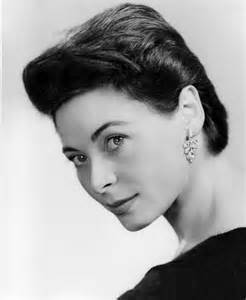
McKenna grows up in Galway, where her father is Professor of Mathematics at University College Galway, and in County Monaghan, speaking fluent Irish. She is still in her teens when she becomes a member of an amateur Gaelic theatre group and makes her stage debut at Galway’s Gaelic theatre, the Taibhdhearc na Gaillimhe, in 1940.
McKenna is remembered for her English language performances at the Abbey Theatre in Dublin where she eventually stars in what many consider her finest role in the George Bernard Shaw play, Saint Joan.
While performing at the Abbey Theatre in the 1940s, she meets actor Denis O’Dea, whom she marries in 1946. Until 1970 they live in Richmond Street South, Dublin. They have one child, a son Donnacha O’Dea, who swims for Ireland at the 1968 Summer Olympics and later wins a World Series of Poker bracelet in 1998.
In 1947, McKenna makes her debut on the London stage in The Chalk Garden. She reprises the role on Broadway in 1955, for which she receives a Tony Award nomination for “Best Actress in a Leading Role, Drama.” In 1956, she appears in the Cambridge Drama Festival production of Saint Joan at the Off-BroadwayPhoenix Theatre. Theatre critic Elliot Norton calls her performance the finest portrayal of Joan of Arc in memory. Siobhán McKenna’s popularity earns her the cover of Life magazine. She receives a second Tony Best Actress nomination for her role in the 1958 play, The Rope Dancers, in which she stars with Art Carney and Joan Blondell.
Although primarily a stage actress, McKenna appears in a number of made-for-television films and dramas. She also appears in several motion pictures such as King of Kings in 1961, as the Virgin Mary. In 1964, she performs in Of Human Bondage and the following year in Doctor Zhivago. She also appears in the miniseries The Last Days of Pompeii as Fortunata, wife of Gaius, played by Laurence Olivier. She stars in the title role of the Tales of the Unexpected episode “The Landlady.”
McKenna is awarded the Gold Medal of the Éire Society of Boston, for having “significantly fulfilled the ideals of the Éire Society, in particular, spreading awareness of the cultural achievements of the Irish people.”
McKenna’s final stage appearance comes in the 1985 play Bailegangaire for the Druid Theatre Company. Despite surgery, she dies of lung cancer on November 16, 1986, in Dublin, at 63 years of age. She is buried at Rahoon Cemetery in County Galway.
Raymond Peter McCreesh, the seventh in a family of eight children, is born in St. Malachy’s Park, Camlough, on February 25, 1957. He is born into a strong Irish republican family and is active in the republican movement from the age of sixteen. He attends the local primary school in Camlough, St. Malachy’s, and later attends St. Colman’s College, Newry.
McCreesh first joins Fianna Éireann, the IRA’s youth wing, in 1973, and later that year he progresses to join the Provisional IRA South Armagh Brigade. He works for a short time as steelworker in a predominately Protestant factory in Lisburn. However, as sectarian threats and violence escalate, he switches professions to work as a milk roundsman in his local area of South Armagh, an occupation which greatly increases his knowledge of the surrounding countryside, as well as enables him to observe the movements of British Army patrols in the area.
On June 25, 1976, McCreesh and three other IRA volunteers attempt to ambush a British Army observation post in South Armagh. It lay opposite the Mountain House Inn, on the Newry–Newtonhamilton Road. As the armed, masked and uniformed IRA volunteers approached the observation post, they are spotted by British paratroopers on a hillside. The paratroopers open fire on the volunteers, who scatter. Two of them, McCreesh and Paddy Quinn, take cover in a nearby farmhouse. The paratroopers surround the house and fire a number of shots into the building. After some time, McCreesh and Quinn surrender and are taken to Bessbrook British Army base. Local Catholic priests facilitate their surrender. The third volunteer, Danny McGuinness, takes cover in a disused quarry outhouse but is captured the following day. The fourth member of the unit manages to escape despite being shot in the leg, arm and chest.
On March 2, 1977, McCreesh and Quinn are sentenced to fourteen years in prison for the attempted murder of British soldiers, possession of a rifle and ammunition, and an additional five years for IRA membership. The rifle that McCreesh has in his possession when captured is one of the rifles used in the Kingsmill massacre on January 5, 1976, when ten Protestant civilians are shot dead.
McCreesh is sent to the Maze Prison. He joins the blanket protest and takes part in the 1981 Irish hunger strike. He dies on 21 May, after 61 days on hunger strike.
Members of Sinn Féin, the political wing of the republican Irish Republican Army (IRA), vote to accept the Good Friday Agreement on May 10, 1998, effectively acknowledging the north-south border. This marks a major shift in modern republicanism as, up until now, Sinn Féin has regarded participation in a Northern Ireland body as a tacit acceptance of partition.
The agreement comes at the party’s annual conference, which includes about thirty IRA prisoners granted special leave in order to vote.
The British and Irish governments welcome the decision to formally approve the peace agreement signed at Stormont in April to create the Northern Ireland Assembly and new cross-border institutions. TaoiseachBertie Ahern says he now looks forward to an overwhelming “yes” vote in referendums on the deal later in the month. The British government praises Sinn Féin leader Gerry Adams saying the decision marks a final realisation that violence does not pay.
Secretary of State for Northern IrelandMo Mowlam expresses her delight at the outcome, “I recognise how significant this decision is for republicans and pay tribute to the leadership of Gerry Adams in bringing his party to support the agreement, north and south of the border.” In what she describes as an “exceptional decision,” the IRA’s commanding officer, Patrick Wilson, who is confined in HM Prison Maze, is among the 30 republican inmates freed for the conference in an effort to bring about a “Yes” vote.
Sinn Féin also votes to amend its constitution to allow members to sit in a new Northern Ireland Assembly after Adams tells his members they have a real chance to influence the strategy of the party and the way towards a united Ireland.
Martin McGuinness, one of Sinn Féin’s UK Members of Parliament (MP), tells the BBC he is optimistic about achieving a “Yes” vote in the referendum due to be held on May 22. “I think there are concerns naturally among a small section of the Sinn Féin membership, but I have to say I think the mood all over the island is that moving into the assembly to further our republican objectives towards our ultimate goal of a united Ireland is at this moment in time the sensible thing to do,” he says.
(Pictured: Sinn Féin MP Martin McGuinness and Sinn Féin president Gerry Adams)
Artist William Conor is born on May 6, 1881, in the Old Lodge Road area of north Belfast, the son of a wrought-iron worker.
Celebrated for his warm and sympathetic portrayals of working-class life in Ulster, Conor studies at the Government School of Design in Belfast in the 1890s. His artistic talents are recognized at the early age of ten when a teacher of music, Louis Mantell, notices the merit of his chalk drawings and arranges for him to attend the College of Art.
Conor is one of the first Academicians when the Belfast Art Society becomes the Ulster Academy of Arts in 1930. He becomes an Associate RHA in 1938 and a full member in 1946. Exhibitions at the Victor Waddington Galleries are held in 1944 and 1948. In 1952 he is awarded the Order of the British Empire (OBE) and in 1957 he is elected President of the Royal Ulster Academy, an office he holds until 1964.
More than 50 works of his in crayon and watercolour are in the permanent collections of the Ulster Museum.
(Pictured: Bronze statue of William Conor at Conor’s Corner, Shankill Road, Belfast)
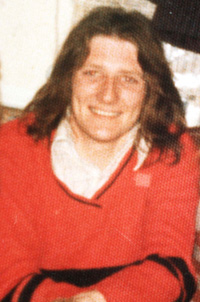
Born in Belfast on March 9, 1954, Sands is the oldest of four children born to John and Rosaleen Sands, and the couple’s first son. Sands grows up in Belfast under the cloud of nationalist and loyalist divisions. At an early age, Sands’s life is affected by the sharp divisions that shape Northern Ireland. At the age of ten, he is forced to move with his family out of their neighborhood due to repeated intimidation by loyalists.
“I was only a working-class boy from a Nationalist ghetto,” Sands later writes about his childhood. “But it is repression that creates the revolutionary spirit of freedom.” Loyalist intimidation proves to be a theme throughout Sands’ life. At the age of 18, he is forced out of his job as an apprentice car builder. Not long afterwards, he and his family have to move again, as a result of political trouble.
The steady number of conflicts pushes Sands to join the republican movement in 1972. His ties to the movement soon capture the attention of the authorities, and later that year, he is arrested and charged with possessing firearms in his house. He spends the next three years of his life in prison. Upon his release, Sands immediately returns to the Republican Movement. He signs on as a community activist in Belfast’s rough Twinbrook area, quickly becoming a popular go-to person for a range of issues affecting the neighborhood.
In late 1976, authorities arrest Sands again, this time in connection with the bombing of a large furniture company and an ensuing gun battle. After weathering a brutal interrogation and then a court proceeding that offers up questionable evidence connecting Sands and three others to the attack, a judge sentences Sands to 14 years in prison at Long Kesh Prison, a facility used to house Republican prisoners from 1971 until 2000, located just outside of Belfast.
As a prisoner, Sands’s stature only grows. He pushes hard for prison reforms, confronting authorities, and for his outspoken ways he is frequently given solitary confinement sentences. Sands contention is that he and others like him, who are serving prison sentences, are actually prisoners of war, not criminals as the British government insists.
Beginning on March 1, 1981, Sands leads nine other Republican prisoners in the H Block section of the Maze prison on a hunger strike that lasts until death. Their demands range from allowing prisoners to wear their own clothes to permitting visits and mail, all of which are central in improving the inmates’ way of life.
Unable to move authorities to give in to his requests, and unwilling himself to end his hunger strike, Sands’s health begins to deteriorate. During the first seventeen days of the strike alone, he loses 16 pounds. A hero among his fellow nationalists, Sands is elected as a Member of Parliament (MP) for Fermanagh and South Tyrone while in prison. Sands becomes the youngest MP at the time. However, he dies less than one month later without ever having taken his seat in the House of Commons.
Only days after slipping into a coma, on the morning of May 5, 1981, Sands dies from malnutrition due to starvation. He is 27 years old and has refused to eat for 66 days. He becomes so fragile over his final weeks that he spends his final days on a waterbed to protect his deteriorating and fragile body. At time of his death, Sands is married to Geraldine Noade, with whom he has one son, Gerard.
The announcement of Sands’s death prompts several days of rioting in nationalist areas of Northern Ireland. Over 100,000 people line the route of Sands’s funeral. He is buried in the ‘New Republican Plot’ alongside 76 others. Their graves are maintained by the National Graves Association, Belfast.
While loyalists dismiss Sands’s death, others are quick to recognize its significance. Over the next seven months, nine other IRA supporters die on hunger strike. Eventually, the British government gives proper political recognition to the prisoners, many of them earning their release under the 1998 Good Friday Agreement.
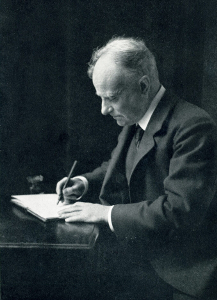
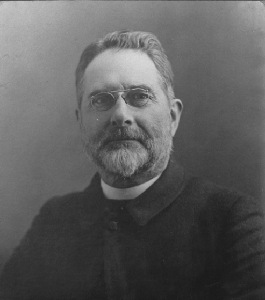
Ellison comes from a clerical family, his father Humphrey Eakins Ellison having been Dean of Ferns, County Wexford. He gains a sizarship of classics at Trinity College, Dublin in 1883, becomes a Scholar of the House in 1886 and graduates in 1887 with junior moderatorships in classics and experimental science. In 1890 he takes Holy Orders and moves to England, where he becomes the Curate of Tudhoe and Monkwearmouth. In 1894 he takes his MA and BD degrees and in the following year wins the Elrington Theological Prize.
In 1899 he returns to Ireland to become secretary of the Sunday School Society, a post which he holds for three years before accepting the incumbency of Monart, Enniscorthy, moving in 1908 to become Rector of Fethard-on-Sea with Tintern in Wexford. Ellison develops an interest in astronomy, having been introduced to practical optics by Dr. N. Alcock of Dublin and sets up his first observatory at Wexford. He becomes highly adept at making lenses and mirrors and writes several books and articles on the subject, including major contributions to the Amateur Telescope Making series, the Journal of the British Astronomical Association, and the weekly newspaper The English Mechanic. His book The Amateur’s Telescope (1920) is still considered a standard for telescope-makers and a forerunner of the more extensive series on the same topic by Albert Graham Ingalls.
On September 2, 1918 Ellison is appointed Director of the Armagh Observatory. He finds the Observatory in a state of disrepair and sets about repairing the instruments and the observatory dome. On January 3, 1919 he deeds a telescope of his own to the observatory, an 18-inch reflecting telescope, which is still there.
Ellison is a highly regarded planetary and binary star observer. Working with his son Mervyn, he makes many measurements of binary stars using the observatory’s 10-inch Grubbrefracting telescope and even discovers a new one close to Beta Lyrae, and according to Patrick Moore, is one of the few people to have observed an eclipse of Saturn’s moon Iapetus by Saturn’s outermost ring on February 28, 1919.
In 1934 Ellison becomes Canon and Prebendary of Ballymore, Armagh Cathedral. He dies on December 31, 1936, having held the office of Director of the observatory for nearly twenty years.




 Members of
 seamus dubhghaill