seamus dubhghaill

Promoting Irish Culture and History from Little Rock, Arkansas, USA


4 Comments

Founding of “The Squad” (“The Twelve Apostles”)

the-squad

The Squad, originally nicknamed the Twelve Apostles, an Irish Republican Army (IRA) unit founded by Michael Collins to counter British intelligence efforts during the Irish War of Independence, is officially established on September 19, 1919, at 46 Rutland Square although by this time it has already been in operation for two months and has already carried out two killings.

On April 10, 1919, the First Dáil announces a policy of ostracism of Royal Irish Constabulary men. At the time Sinn Féin official policy is against acts of violence. Boycotting, persuasion, and mild intimidation succeed against many officers. However, others escalate their activities against republicans and in March 1920 Collins asks Dick McKee to select a small group to form an assassination unit.

When the squad is formed, it comes directly under the control of the Director of Intelligence or his deputy and under no other authority. The Squad is commanded by Mick McDonnell.

The original ‘Twelve Apostles’ are Mick McDonnell, Tom Keogh, Jimmy Slattery, Paddy Daly, Joe Leonard, Ben Barrett, Vincent Byrne, Sean Doyle, Paddy Griffin, Eddie Byrne, Mick Reilly, and Jimmy Conroy. After some time, the Squad is strengthened with the addition of Ben Byrne, Frank Bolster, Mick Keogh, Mick Kennedy, Bill Stapleton, and Sam Robinson. They are employed full-time and receive a weekly wage.

Sometimes the squad is strengthened as occasion demands by members of the Intelligence staff, the Active Service Unit, munition workers, and members of the Dublin Brigade.

On July 30, 1919, the first assassination authorised by Michael Collins is carried out when Detective Sergeant “the Dog” Smith is shot near Drumcondra, Dublin. The Squad continues targeting plainclothes police, members of the G Division of the Dublin Metropolitan Police, and occasionally, problematic civil servants. Organisationally it operates as a subsection of Collins’ Intelligence Headquarters. Two of the executions by The Squad are the killing on January 21, 1920, of RIC Inspector William Redmond of the DMP “G” Division and on March 2, 1920, of British double agent John Charles Byrnes.

One of the Apostles’ particular targets is the Cairo Gang, a deep-cover British intelligence group, so called since it has either been largely assembled from intelligence officers serving in Cairo or from the Dublin restaurant called The Cairo, which the gang frequents. Sir Henry Wilson brings in the Cairo Gang in mid-1920, explicitly to deal with Michael Collins and his organization. Given carte blanche in its operations by Wilson, the Cairo Gang adopts the strategy of assassinating members of Sinn Féin unconnected with the military struggle, assuming that this would cause the IRA to respond and bring its leaders into the open.

The most well-known operation executed by the Apostles occurs on Bloody Sunday, November 21, 1920, when British MI5 officers, linked to the Cairo Gang and significantly involved in spying, are shot at various locations in Dublin. Fourteen are killed and six are wounded. In addition to the Twelve Apostles, a larger number of IRA personnel are involved in this operation. The only IRA man captured during the operation is Frank Teeling. In response to the killings, the Black and Tans retaliate by shooting up a Gaelic football match between Dublin and Tipperary at Croke Park, killing fourteen civilians including one of the players, Michael Hogan, and wounding sixty-eight. The Hogan stand at Croke Park is named after him.

In May 1921, after the IRA’s Dublin Brigade takes heavy casualties during the burning of the Custom House, the Squad and the Brigade’s Active Service Unit are combined into the Dublin Guard, under the direction of Paddy Daly. Under the influence of Daly and Michael Collins, most of the Guard takes the Free State side and joins the Irish Army in the Irish Civil War of 1922-23. During this conflict some of them are attached to the Criminal Investigation Department and are accused of multiple assassinations of Anti-Treaty fighters.

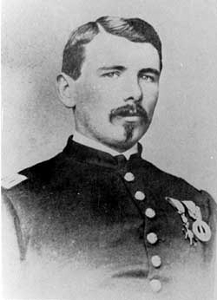
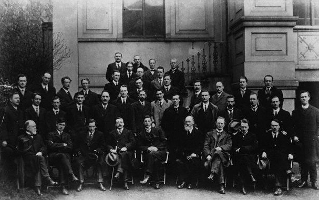
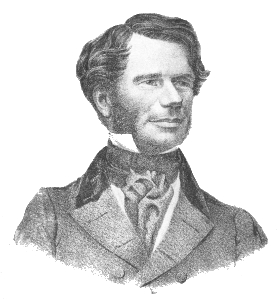
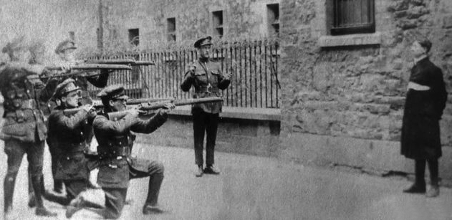
(Pictured: Squad Members Mick McDonnell, Liam Tobin, Vinny Byrne, Paddy Daly, and Jim Slattery)


Leave a comment

Death of Máel Sechnaill mac Domnaill

máel_seachnaill_II_sculpture

Máel Sechnaill mac Domnaill, King of Mide and High King of Ireland, dies on September 2, 1022, at Lough Ennell, County Westmeath. His great victory at the Battle of Tara against Amlaíb Cuarán in 980 results in Gaelic control of the Kingdom of Dublin.

Máel Sechnaill belongs to the Clann Cholmáin branch of the Uí Néill dynasty. He is the grandson of Donnchad Donn, great-grandson of Flann Sinna and great-great-grandson of the first Máel Sechnaill, Máel Sechnaill mac Máele Ruanaid. The Kings of Tara or High Kings of Ireland have for centuries alternated between the various Uí Néill branches. By Máel Sechnaill’s time this alternating succession passes between Clann Cholmáin in the south and the Cenél nEógain in the north, so that he succeeds Domnall ua Néill in 980.

In 980, Amlaíb Cuarán, King of Dublin, summons auxiliaries from Norse-ruled Scottish Isles and from Man and attacks Meath, but is defeated by Máel Sechnaill at Tara. Reginald, Olaf’s heir, is killed. Máel Sechnaill follows up his victory with a siege of Dublin which surrenders after three days and nights. When Maél Sechnaill takes Dublin in 980 he frees all the slaves then residing in the town.

In 997, at a royal meeting near Clonfert, Máel Sechnaill meets with his long-time rival Brian Boru, King of Munster. The two kings make a truce, by which Brian is granted rule over the southern half of Ireland, while Máel Sechnaill retains the northern half and high kingship. In honour of this arrangement, Máel Sechnaill hands over to Brian the hostages he has taken from Dublin and Leinster. The following year Brian hands over to Máel Sechnaill the hostages of Connacht. In the same year, Brian and Máel Sechnaill begin co-operating against the Norse of Dublin for the first time.

Late in 999, however, the Leinstermen, historically hostile to domination by either the Uí Néill overkings or the King of Munster, ally themselves with the Norse of Dublin and revolt against Brian. The Annals of the Four Masters records that Brian and Máel Sechnaill unite their forces and, according to the Annals of Ulster, they meet the Leinster-Dublin army at Glenmama on Thursday, December 30, 999. Glenmama, near Lyons Hill in Ardclough, County Kildare, is the ancient stronghold of the Kings of Leinster. The Munster-Meath army defeats the Leinster-Dublin army. Ó Corráin refers to it as a “crushing defeat” of Leinster and Dublin, while The dictionary of English history says the battle effectively “quelled” the “desperate revolt” of Leinster and Dublin. Most importantly, the defeat leaves the road to Dublin “free and unimpeded for the victorious legions of Brian and Mael Sechlainn.”

The system of alternating succession between the various Uí Néill branches is ended by Brian Boru’s so-called overthrow of Máel Sechnaill in 1002. It is a bloodless shift resulting from the failure of the Northern Uí Néill to support Máel Sechnaill against the aspirations of the extremely militarized overlord of Munster.

With the deaths of Brian Boru, his son, grandson, and many other Munster nobles at Clontarf in 1014, Máel Sechnaill succeeds in regaining the titular High Kingship, but the High Kingship, albeit with opposition, does not reappear until Diarmait mac Maíl na mBó of Leinster rises to power.

(Pictured: Sculpture of Máel Seachnaill in Trim, County Meath, by James McKenna)


Leave a comment

The Races of Castlebar

races-of-castlebar

The Battle of Castlebar occurs on August 27, 1798, near the town of Castlebar, County Mayo, during the Irish Rebellion of 1798. A combined force of 2,000 French troops and Irish rebels rout a force of 6,000 British militia in what later becomes known as the “Castlebar Races” or “Races of Castlebar.”

The long-awaited French landing to assist the Irish revolution begun by Theobald Wolfe Tone‘s Society of United Irishmen takes place five days previously on August 22, when almost 1,100 troops under the command of General Jean Joseph Amable Humbert land at Cill Chuimín Strand, County Mayo. The nearby town of Killala is quickly captured after a brief resistance by local yeomen. Following the news of the French landing, Irish volunteers began to trickle into the French camp from all over Mayo.

On August 26, leaving about 200 French regulars behind in Killala to cover his rear and line of withdrawal, Humbert takes a combined force of about 2,000 French and Irish to march on and take Castlebar. In order to avoid a head-on attack, locals advise the French of an alternative route to Castlebar through the wilds along the west of Lough Conn, which the British believe to be impassable for a modern army with attendant artillery train. When General Gerald Lake’s scouts spot the approaching enemy, the surprised British have to hurriedly change the deployment of their entire force to face the threat from this unanticipated direction.

The British have barely completed their new deployment when the Franco-Irish army appears outside the town at about 6:00 AM. The newly sited British artillery opens up on the advancing French and Irish and cut them down in droves. French officers, however, quickly identify an area of scrub and undergrowth in a defile facing the centre of the artillery line which provides some cover from the British line of fire. The French launch a bayonet charge, the ferocity and determination of which unnerve the units stationed behind the artillery. The British units begin to waver before the French reach their lines and eventually turn in panic and flee the battlefield, abandoning the gunners and artillery. A unit of cavalry and British regular infantry attempt to stand and stem the tide of panic but are quickly overwhelmed.

In the headlong flight of thousands of British militias, large quantities of guns and equipment are abandoned, among which is General Lake’s personal luggage. Although not pursued a mile or two beyond Castlebar, the British do not stop until they reach Tuam, with some units fleeing as far as Athlone in the panic. The panic is such that only the arrival of Cornwallis at Athlone prevents further flight across the River Shannon.

Although achieving a decisive victory, the losses of the French and Irish are high, with about 150 men killed, mostly to the cannonade at the start of the battle. About 80 British are killed and some 270 wounded, captured, or deserted. Following the victory, thousands of volunteers flock to join the French who also send a request to France for reinforcements and formally declare a Republic of Connacht, which lasts 3 days and collapses when the French depart.

On September 5, the British forces are again defeated at Collooney however, after that, the rebellion quickly folds. More troops gather and by the Battle of Ballinamuck on September 8, their strength is over 15,000. Ballinamuck is the end for General Humbert, who hands in his surrender. The Irish rebels fight on briefly until scattered. Killala is re-taken on September 12. More French warships sail for Ireland but are decisively defeated by the Royal Navy near Tory Island. With that the 1798 rebellion ends. The captured French soldiers are transferred to England and eventually repatriated. The French officers of Irish origin are hanged in Dublin with the Irish rebels.


Leave a comment

The Assassination of Michael Collins

michael-collins

Michael Collins, soldier and politician who is a leading figure in the struggle for Irish independence in the early 20th century, is shot and killed in ambush at Béal na Bláth, County Cork, on August 22, 1922.

In August 1922, the Irish Civil War seems to be winding down. The Irish Free State has regained control of most of the country and Collins is making frequent trips to inspect areas recently recovered from anti-Treaty forces.

His plan to travel to his native Cork on August 20 is considered particularly dangerous and he is strenuously advised against it by several trusted associates. County Cork is an Irish Republican Army (IRA) stronghold, much of it still held by anti-Treaty forces. Yet he seems determined to make the trip without delay. He has fended off a number of attempts on his life in the preceding weeks and has acknowledged more than once, in private conversation, that the Civil War might end his life at any moment. On several occasions Collins assures his advisors that they will not shoot him in his own county.

On August 22, 1922, Collins sets out from Cork City on a circuitous tour of West Cork. He passes first through Macroom then takes the Bandon road via Crookstown. This leads through Béal na Bláth, an isolated crossroads. There they stop at a local pub, now known as the The Diamond Bar, to ask a question of a man standing at the crossroad. The man turns out to be an anti-Treaty sentry. He and an associate recognise Collins in the back of the open-top car. As a result, an ambush is laid by an anti-Treaty column at that point, on the chance that the convoy might come through again on their return journey.

Shortly before 8:00 PM, Collins’ convoy approaches Béal na Bláth for the second time. By that time most of the ambush party has dispersed and gone for the day, leaving just five or six men on the scene. Two are disarming a mine in the road, while three on a laneway overlooking them, provide cover. A dray cart, placed across the road, remains at the far end of the ambush site.

Shots are exchanged. Collins, who suffers a head wound, is the only fatality. Almost every other detail of what happens is uncertain, due to conflicting reports from participants and other flaws in the record.

michael-collins-body

Some of the most disputed details include how the shooting starts, what kind of fire the convoy comes under, where the ambushers’ first shots strike, where Collins is and what he is doing when he is hit, whether anyone else is wounded, whether the armoured car’s machine gun is fully functional throughout the engagement, who moves Collins’ body, and who is nearby when Collins falls.

Many questions have been raised concerning the handling of Collins’s remains immediately following his death. Among them are the inordinately long time the convoy takes to cover the twenty miles back to Cork City, who searched his clothes, and what became of documents he is known to have been carrying on his person.

Collins’s body is transported by sea from Cork to Dublin. He lay in state for three days in Dublin City Hall where tens of thousands of mourners file past his coffin to pay their respects, including many British soldiers departing Ireland who had fought against him. His funeral mass takes place at Dublin’s Pro Cathedral where a number of foreign and Irish dignitaries are in attendance. Some 500,000 people attend his funeral, almost one fifth of the country’s population at that time.

No official inquiry is ever undertaken into Collins’s death and consequently there is no official version of what happened, nor are there any authoritative, detailed contemporary records.

An annual commemoration ceremony takes place each year in August at the ambush site at Béal na Bláth, County Cork, organised by The Béal na mBláth Commemoration Committee. There is also a remembrance ceremony in Dublin’s Glasnevin Cemetery at Collins’s grave on the anniversary of his death.


Leave a comment

The Battle of Knockdoe

battle-of-knockdoe

The Battle of Knockdoe, a battle between the forces of two Anglo-Irish lords — Gerald FitzGerald, Earl of Kildare, the Lord Deputy of Ireland, and Ulick Fionn Burke, lord of Clanricarde, takes place on August 19, 1504, at Knockdoe, County Galway.

Gerald FitzGerald becomes concerned that Ulick Burke’s attempt to gain supremacy in Connacht could simultaneously threaten the Crown’s interests in that province and his claim to be the paramount magnate in Ireland. He tries to persuade Ulick to acknowledge his authority by giving him his daughter Estacia in marriage. Ulick Burke, however, resists all attempts to have his power subordinated by the Earl of Kildare, forming an alliance with O’Brien of Thomond and the magnates of Munster. The Burkes of Mayo, on the other hand, join forces with Kildare with the aim of suppressing their dangerous neighbour.

In 1503, Ulick Burke attacks and destroys the castles of O’Kelly, Lord of Hymany, at Monivea, Garbally, and Castleblakeney. O’Kelly complains of this to the Lord Deputy.

For political and possibly for personal reasons, the Lord Deputy is eager to help O’Kelly weaken the prestige of Clanrickarde. Both sides gather a large contingent of lesser magnates and their armies. The Lord Deputy’s forces include contingents from Leinster, Ulster, and Connacht, among which are the armies of Red Hugh O’Donnell and Art Óg Ó Néill, the McDermotts and Morrisroes of Connacht, and a contingent provided by O’Kelly. Facing them are the forces of Burke and his allies – the O’Briens of Thomond, the McNamaras, the O’Kennedys, and the O’Carrolls.

The armies meet on the slopes of Knockdoe, almost a mile to the north of Lackagh Parish Church, with heavily armed Gallowglass playing a large part on both sides. It is said that firearms are employed in the course of the battle, an early instance of their use in Ireland. The battle apparently lasts all day, with the heaviest fighting taking place along the River Clare in the townland of Ballybrone. The precise number of casualties is unknown, though contemporary observers are impressed by the extent of the slaughter. Around the summit of Knockdoe are many cairns where the dead are said to have been buried, with one in particular being pointed out as the resting place of the two sons of O’Brien of Thomond.

The Lord Deputy, though victorious, has many among the slain. His army remains the night on the field as a token of victory, then marches to Galway, looting Claregalway castle en route and taking as prisoners the two sons and daughter of Ulick Burke. They remain in Galway for a few days and then travel to Athenry.

The Clanrickarde Burkes fade into obscurity for some decades, with their rivals, the Mayo Burkes, gaining influence as a consequence.


Leave a comment

Death of Father Willie Doyle

father-willie-doyle

Father Willie Doyle, an Irish Jesuit priest, is killed in action on August 16, 1917, during the World War I.

Born William Joseph Gabriel Doyle in Dalkey, County Dublin, on March 3, 1873, Doyle is the youngest of seven children of Hugh and Christine Byrne Doyle. He is educated at Ratcliffe College, Leicester. After reading St. Alphonsus’ book Instructions and Consideration on the Religious State he is inspired to enter the priesthood and is ordained a Jesuit priest in 1907. He serves for five years on the mission staff.

Doyle serves in the Royal Army Chaplains’ Department of the British Army during World War I, appointed as a chaplain to 48 Brigade of the 16th Irish Division. During the Battle of Loos Doyle is caught in a German gas attack and for his conduct is mentioned in dispatches. A recommendation for a Military Cross is rejected as “he had not been long enough at the front.” Instead, Doyle is presented with the parchment of merit of the 49th Infantry Brigade (Irish). He is killed in the Battle of Langemarck, on August 16, 1917. Father Doyle’s body is never recovered but he is commemorated at Tyne Cot Memorial in Belgium.

General William Bernard Hickie, the commander-in-chief of the 16th Irish Division, describes Doyle as “one of the bravest men who fought or served out here.” Doyle is awarded the Military Cross for his bravery during the assault on the village of Ginchy. He is recommended for a posthumous Victoria Cross and Distinguished Service Order but is awarded neither. Doyle is proposed for canonisation in 1938, but this is not followed through.

A stained-glass window dedicated to his memory is present in St. Finnian’s Church, Dromin, County Louth.


Leave a comment

The Battle of the Yellow Ford

battle-of-the-yellow-ford

The Battle of the Yellow Ford is fought in western County Armagh, near the River Blackwater on August 14, 1598, during the Nine Years War. It is fought between the Gaelic native Irish army under Hugh O’Neill, Earl of Tyrone, and Hugh Roe O’Donnell and a crown expeditionary force from Dublin under Henry Bagenal. The crown forces are marching from Armagh to resupply a besieged fort on the Blackwater when they fall into an ambush and are routed with heavy losses.

The crown forces are organized in six regiments — two forward, two centre, and two rear, and with cavalry at centre. As soon as they leave Armagh garrison, they are all harassed with gunfire from rebel forces concealed in the woods. As a result, the different regiments become separated from one another as they pause to deal with the hit and run attacks. The problem is accentuated when one of their ox-drawn artillery pieces becomes stuck in the bog with a damaged wheel and a rear regiment stays behind to guard it as it is slowly coaxed through the bog. The regiment at the front of the march encounters a mile-long trench, 4 feet wide and 5 feet deep. The regiment succeeds in crossing the trench but then comes under heavy attack from large forces and decides to retreat back across the trench, suffering significant losses during the retreat. This regiment then merges into the ranks of the other forward regiment.

At this point, Henry Bagenal is killed by a shot through the head. Command of the army is assumed by Thomas Maria Wingfield. Further demoralising the crown troops and causing chaos, their gunpowder store explodes, apparently ignited accidentally by the fuse of a matchlock musket. Daunted, Wingfield decides to retreat to Armagh. The commander of the forward part either doesn’t get the command or refuses to obey it or is unable to execute an orderly retreat and judges it necessary to maintain his forward position. Seeing their enemy in confusion, the O’Neill cavalry rushes at the head of the forward part, followed by swordsmen on foot. Crown troops in this part of the field are cut to pieces and any wounded left on the field after the battle are slain as well. The rest of the crown forces have to struggle their way back to the Armagh garrison. They reach it largely intact but are harried all the way by the Irish.

Crown forces lose approximately 1,500 men in the battle, including 18 “captains” or officers. Three hundred soldiers desert to the rebels including two English recruits. Out of 4,000 soldiers who set out from Armagh, just over 2,000 reach the town after the battle and become virtual prisoners inside. The cavalry breaks out and dashes south escaping the Irish.

After three days of negotiations, it is agreed that the crown troops can leave Armagh as long as they leave their arms and ammunition behind and that the garrison of the Blackwater Fort surrenders. O’Neill’s forces suffer perhaps 200 to 300 casualties in the battle, though sources for the number lost on O’Neill’s side are very scanty. In light of the battle’s outcome, the court at London greatly and rapidly increase its military forces in Ireland. Simultaneously, many in Ireland who have been neutral on the sidelines begin to support the rebellion. Thus, the ultimate outcome of the battle is an escalation of the war.


Leave a comment

The Second Battle of Athenry

athenry-castle

The Second Battle of Athenry takes place on August 10, 1316. The English Colonists defeat the Irish in a very bloody battle. This is one of the most decisive battles of the Bruce campaign in Ireland (1315-1318).

The numbers involved are unknown and can only be estimated. The royal army is believed to have been as much as a few thousand, while that of Athenry is probably several hundred less. While it is doubtful that there are any more than seven thousand, the list of participants on the Irish side alone indicates that an overall figure of at least three to four thousand are involved. The English claim that they take some 1,100 heads from the Irish on that day.

Unlike the First Battle of Athenry in 1249, no account is given of the battle itself in any surviving account. Even the site of the battle itself is uncertain.

Fedlim Ó Conchobair, the King of Connacht, leads a coalition of the Gaels to stop the return of William Liath de Burgh, the Anglo-Irish Lord of Connacht. He has come back from Scotland to try and regain his lost lands in the western province. He gathers together a large and well-equipped army from the colonists of Connacht and Meath. Rickard de Bermingham leads the English of Meath. Ó Conchobair also puts together a formidable army drawn from north Munster, south Connacht, and the kingdoms of Breifne and Meath.

Although details of the battle are very sketchy at best, the Irish certainly meet with catastrophe. Fedlim Ó Conchobair and Tadhg Ó Cellaigh, King of Uí Maine, are among those who are killed along with numerous other kings and chieftains of the Gaels.

(Pictured: Athenry Castle)


Leave a comment

The Siege of Limerick

cittie-of-limerick

Siege of Limerick commences on August 9, 1690, when William of Orange and his army of 25,000 men reach Limerick and occupy Ireton’s fort and Cromwell’s fort outside the city. His siege cannons are still making their way from Dublin with a light escort so all he has available is his field artillery. The siege train is intercepted by Patrick Sarsfield’s cavalry at Ballyneety in County Limerick and destroyed, along with the Williamites‘ siege guns and ammunition. This forces William to wait another ten days before he can start bombarding Limerick in earnest while another siege train is brought up from Waterford.

By this time, it is late August. Winter is approaching and William wants to finish the war in Ireland so he can return to the Netherlands and proceed with the main business of the War of the Grand Alliance against the French. For this reason, he decides on an all-out assault on Limerick.

His siege guns blast a breach in the walls of the “Irish town” section of the city and William launches his assault on August 27. The breach is stormed by Danish grenadiers, but the Jacobite’s French officer Boisseleau has built an earthwork or coupure inside the walls and has erected barricades in the streets, impeding the attackers. The Danish grenadiers, and the eight regiments who follow them into the breach, suffer terribly from musketry and cannon fire at point blank range. Jacobite soldiers without arms and the civilian population, including women, line the walls and throw stones and bottles at the attackers. A regiment of Jacobite dragoons also make a sortie and attack the Williamites in the breach from the outside. After three and a half hours of fighting, William finally calls off the assault.

William’s men suffer about 3,000 casualties, including many of their best Dutch, Danish, German, and Huguenot troops. The Jacobites lose only 400 men in the battle. Due to the worsening weather, William calls off the siege and puts his troops into winter quarters, where another 2,000 of them die of disease. William himself leaves Ireland shortly afterwards, returning to London. He subsequently leaves London to take command of Allied forces fighting in Flanders and leaves Godert de Ginkell to command in Ireland. The following year Ginkell wins a significant victory at the Battle of Aughrim.

Limerick is to remain a Jacobite stronghold until it surrenders after another Williamite siege the following year. Following the loss of this last major stronghold, Patrick Sarsfield leads the army into exile in the Flight of the Wild Geese to the Continent, where they continue to serve the cause of James II and his successors.


3 Comments

Birth of Flying Ace Thomas Falcon Hazell

thomas-falcon-hazell

Thomas Falcon Hazell, fighter pilot with the Royal Flying Corps and later the Royal Air Force during World War I, is born in Roundstone, County Galway, on August 7, 1892. Hazell scores 43 victories in 1917–1918 making him the fifth most successful British “flying ace” of the war, the third most successful Irish-born pilot behind Edward Mannock and George McElroy, and the only pilot to survive the war from both groups.

Upon the outbreak of the war in August 1914, Hazell volunteers for service as a private with the South Irish Horse. On October 10 he is commissioned as second lieutenant in the 7th Battalion, Royal Inniskilling Fusiliers. As part of the 49th Brigade in the 16th (Irish) Division, the 7th Inniskillings are initially based at Tipperary, where Hazell is promoted to lieutenant on June 4, 1915. The regiment lands in France in February 1916.

Soon afterwards Hazell transfers to the Royal Flying Corps. In April and May he is assigned to No. 5 Reserve Squadron, based at Castle Bromwich. He is appointed a flying officer on June 5 and survives a severe crash before completing his training. He eventually joins No. 1 Squadron on the Western Front. Flying Nieuport 17 Scouts, he shoots down 20 enemy aircraft between March and August 1917, being appointed a flight commander with the acting rank of captain on May 25, and is awarded the Military Cross on July 26.

After serving as an instructor at the Central Flying School in 1918, he takes command of “A” Flight, No. 24 Squadron, flying the S.E.5a. On August 22, 1918, Hazell shoots down an observation balloon despite its escort of seven Fokker D.VIIs. The escort is led by German ace Ernst Udet, who attacks and riddles Hazell’s petrol tank, propeller, and two longerons with bullets. In spite of this Hazell fights his way back, eyes full of petrol, and lands safely. Udet thinks he has forced the British pilot to crash and actually claims him as his 60th victory. Hazell finishes the war with 43 confirmed kills, the top British surviving ace of the war (excluding Dominion airmen). Hazell is twice awarded the Distinguished Flying Cross. On June 11, 1927, he returns to the RAF Depot at Uxbridge and is placed on the retired list on July 20, 1927, at his own request.

In 1944, at the age of 52, Hazell becomes the commander of “D” Company, 24th (Tettenhall) Battalion, South Staffordshire Home Guard during the later part of World War II.

Hazell dies in Newport, County Mayo, on September 4, 1946, and is buried at the Burrishoole Church of Ireland Cemetery there. In 2014 his grave, which had been largely forgotten and neglected, is restored, repaired, and re-dedicated in a ceremony on August 4, 2014, the 100th anniversary of the declaration of World War I.