seamus dubhghaill

Promoting Irish Culture and History from Little Rock, Arkansas, USA


Leave a comment

The Irish Army Mutiny

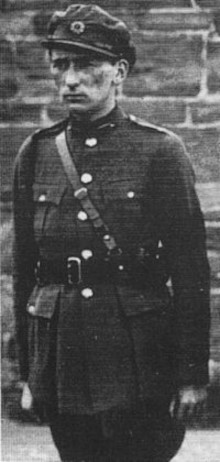
The Army Mutiny is an Irish Army crisis that begins on March 7, 1924, provoked by a proposed reduction in army numbers in the immediate post-Civil War period. A second grievance concerns the handling of the Northern Boundary problem. As the prelude to a coup d’état, the decisions made by influential politicians and soldiers at the time have continuing significance for the Government of Ireland.

In the early weeks of the Irish Civil War, the National Army is comprised of 7,000 men. These come mainly from pro-Treaty Irish Republican Army (IRA) brigades, especially the Dublin Guard, whose members have personal ties to Michael Collins. They face around 15,000 anti-Treaty IRA men and Collins recruits experienced soldiers from wherever he can. The army’s size mushrooms to 55,000 men, many of whom are Irishmen with combat experience in World War I – 20,000 National Volunteers had joined the British Army on the urgings of Nationalist leader John Redmond.

Likewise, Irishmen who had served in the British forces account for over half of the 3,500 officers. W. R. E. Murphy, second-in-command (January–May 1923), had been a lieutenant colonel in the British Army, as had Emmet Dalton. Two more of the senior generals, John T. Prout and J. J. “Ginger” O’Connell, had served in the United States Army. Collins promotes fellow members of the Irish Republican Brotherhood (IRB) but is slow to put Squad members in high positions.

In December 1922, following Collins’s death, Liam Tobin forms the Irish Republican Army Organisation (IRAO), taking in Dublin Guard and other Irish Army officers who share his view that “higher command…was not sufficiently patriotic.” President of the Executive Council of the Irish Free State W. T. Cosgrave, head of the government, attempts to appease the IRAO. He meets with them several times before the 1923 Irish general election and persuades the opposing IRB faction of generals under Richard Mulcahy to keep quiet.

With the election over, Mulcahy now ignores the IRAO as he starts the process of demobilising 37,000 men. In November, sixty IRA officers mutiny and are dismissed without pay. The IRAO now pressures the Government into establishing a committee to supervise future demobilisation. The committee, consisting of Eoin MacNeill, Ernest Blythe, and IRAO sympathiser Joseph McGrath, effectively undermines the authority of the Army Council.

On March 7, 1924, a representative of the IRAO hands a demand to end demobilisation to W. T. Cosgrave. The ultimatum is signed by senior Army officers, Major-General Liam Tobin and Colonel Charles Dalton. Tobin knows his own position is to be scrapped in the demobilisation. Frank Thornton and Tom Cullen are also involved. That morning 35 men of the 36th Infantry Battalion refuse to parade, and the preceding week officers had absconded with arms from the McCan Barracks in Templemore, Gormanston Camp in County Meath, Baldonnel Aerodrome in Baldonnel, Dublin, and Roscommon. The immediate response is an order for the arrest of the two men on a charge of mutiny. This causes alarm throughout Dublin when announced.

On March 8, General Mulcahy makes an announcement to the Army:

“Two Army officers have attempted to involve the Army in a challenge to the authority of the Government. This is an outrageous departure from the spirit of the Army. It will not be tolerated…officers and men…will stand over their posts and do their duty today in this new threat of danger in the same wonderful, determined spirit that has always been the spirit of the Army.”

Leader of the Opposition, Thomas Johnson, issues a statement of support for the Government. In contrast, Minister for Industry and Commerce, Joseph McGrath, whose home Mulcahy orders to be searched, resigns because of dissatisfaction with the government’s attitude to the IRAO officers and support for their perception that the Irish Army treats former British officers better than former IRA officers. Fearing an incendiary speech by McGrath, Cosgrave first offers the IRAO an inquiry and an amnesty before then taking sick leave thus making Minister for Justice, Kevin O’Higgins, de facto head of the Government.

(Pictured: Major General Liam Tobin, a leading figure in the Army Mutiny)

Leave a comment

Birth of Joseph O’Sullivan, Irish Republican Army Volunteer

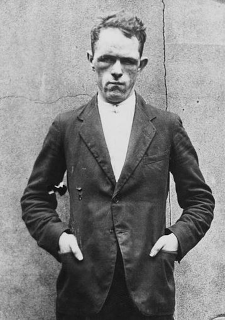
Joseph O’Sullivan, Irish Republican Army (IRA) volunteer, is born in London on January 25, 1897. Along with fellow IRA (London Battalion) volunteer Reginald Dunne, shoot dead Field Marshal Sir Henry Wilson outside Wilson’s home at 36 Eaton Place, Belgravia, London on June 22, 1922. Convicted by a jury, he is sentenced to death by Justice Montague Shearman. Despite a petition of 45,000 signatures, and a plea for clemency from many prominent figures at the time, including playwright George Bernard Shaw, O’Sullivan and Dunne are hanged for the murder on August 10, 1922, at Wandsworth Prison. The event provides the inspiration for the 1947 film Odd Man Out.

O’Sullivan’s father, John, is originally from Bantry, County Cork, and moves to London as a young man where he eventually becomes a successful tailor. His mother, Mary Ann O’Sullivan (née Murphy), is born in Inniscarra, County Cork. He is the youngest of thirteen children, all born in London, although only eleven survive to adulthood. As a boy he attends St. Edmund’s College, Ware. On January 25, 1915, his eighteenth birthday, he enlists into the Royal Munster Fusiliers, and later transfers to the London Regiment and serves with the rank of lance corporal during World War I, losing a leg at Ypres in 1917.

Upon being discharged from the army in 1918, O’Sullivan is employed by the Ministry of Munitions and, when the war ends, is transferred to the Ministry of Labour where he works as a messenger. The Ministry of Labour is located in Montagu House, adjacent to Scotland Yard, and later demolished and replaced by the present-day Ministry of Defence.

O’Sullivan becomes a member of the IRA detachment in London and is named by Rex Taylor as being responsible for the execution of Vincent Fovargue as a British spy at the Ashford Golf Links, Middlesex, on April 2, 1921. Fovargue is left with a label pinned to his body stating, “Let spies and traitors beware, IRA.” Fovargue had been an officer in the Dublin brigade of the IRA.

O’Sullivan’s brother, Patrick, is the first Vice-Commandant of the London IRA during its early days in 1919 but is seconded to the Cork No. 1 Brigade during the Irish War of Independence. Patrick also serves in the London Regiment during World War I, along with another brother, Aloysius, who is discharged from the army in 1916 suffering from shell shock. Patrick is also wounded in a gas attack during World War I. He fights with the Anti-Treaty IRA during the Irish Civil War and is wounded ten days after his brother is executed. Shortly before that, he crosses over to England to participate in an abortive attempt to rescue Dunne and his brother.

In 1923, John O’Sullivan tries to have the remains of his son and Dunne released for a funeral Mass. But it is not until after the abolition of capital punishment in the United Kingdom that Patrick O’Sullivan, with the assistance of the Irish Republican National Graves Association, is able to arrange for the bodies of O’Sullivan and Dunne to be sent to Ireland for burial. In mid-August 1929, Irish Republicans in London unveil a plaque commemorating Dunne and O’Sullivan. In 1967, after some political and diplomatic debate by the British and Irish governments, the British Government allows the bodies of Dunne and O’Sullivan to be exhumed. They are subsequently reburied in Dean’s Grange Cemetery, County Dublin.

(Pictured: Photograph of IRA member Joseph O’Sullivan taken before his 1922 execution)


Leave a comment

Death of Seán McGarry, Irish Nationalist & Politician

Seán McGarry, a 20th-century Irish nationalist and politician, dies suddenly on December 9, 1958, of a heart attack at his son’s home at 44 Richmond Avenue, Monkstown, County Dublin. A longtime senior member of the Irish Republican Brotherhood (IRB), he serves as its president from May 1917 until May 1918 when he is one of a number of nationalist leaders arrested for his alleged involvement in the so-called German Plot.

McGarry is born at 17 Pembroke Cottages, Dundrum, Dublin, on August 2, 1886. An active member of the Irish Republican Brotherhood, he is a close friend of Bulmer Hobson and is frequently arrested or imprisoned by British authorities for his activities with the IRB during the early 1900s. He participates in the 1916 Easter Rising as an aide-de-camp to Tom Clarke and is sentenced to eight years penal servitude for his role in the failed rebellion.

McGarry is sent to Frongoch internment camp in Wales but is eventually released. He assists Michael Collins in his efforts to reorganise the Irish Republican Brotherhood and, at the Volunteer Executive Meeting held in late 1917, he is elected General Secretary of the Irish Volunteers.

On the night of May 17, 1918, McGarry is arrested, along with seventy-three other Irish nationalist leaders, and deported to England, where they are held in custody without charge. The day following their arrest, he and the others are charged with conspiring “to enter into, and have entered into, treasonable communication with the German enemy.” In his absence, Harry Boland is selected for the Supreme Council and becomes his successor as president of the IRB.

McGarry is only imprisoned a short time when he takes part in the famous escape from Lincoln Jail with Seán Milroy and Éamon de Valera on February 3, 1919. He and Milroy manage to smuggle out a postcard, a comical sketch of McGarry to his wife, allowing a copy of the key to their cell to be made. They are later assisted by Harry Boland and Michael Collins who await them outside the prison.

A month later, McGarry gives a dramatic speech at a Sinn Féin concert held at the Mansion House, Dublin, before going into hiding.

Throughout the Irish War of Independence, McGarry serves as a commander and is eventually elected to Second Dáil in the 1921 Irish elections as a Sinn Féin Teachta Dála (TD) representing Dublin Mid. He, like the majority of those in the Irish Republican Brotherhood, supports the Anglo-Irish Treaty and is involved in debates against de Valera during the controversy, most especially discussing the status of Sinn Féin as a political entity.

McGarry is re-elected as a Pro-Treaty Sinn Féin TD in the 1922 Irish general election, siding with the Free State government during the Irish Civil War. Liam Lynch and other members of the anti-Treaty Irish Republican Army plan the assassination of McGarry among other TDs supporting the Public Safety Bill. As one anti-Treaty volunteer tells Ernie O’Malley, “Seán McGarry was often drunk in Amiens Street and the boys wanted to shoot him and the Staters there, but I wouldn’t let them.”

On December 10, 1922, shortly before the first meeting of the Free State parliament, a fire is deliberately set by irregulars (anti-Treatyites) at McGarry’s family home. His seven-year-old son, Emmet, is badly burned and dies as a result. McGarry is one of four targeted by anti-Treatyites during the December Free State executions. De Valera publicly denounces the attack.

McGarry is re-elected as a Cumann na nGaedheal TD in the 1923 Irish general election for Dublin North. Dissatisfied and disillusioned with Cumann na nGeadhael, he resigns from the party after the Irish Army Mutiny and joins Joseph McGrath‘s National Party. He resigns his seat in October 1924.

After retiring from politics, McGarry works for the Irish Hospitals Trust, writes articles for newspapers and journals, and engages in broadcasting. After residing from the mid-1920s at several addresses in Dún Laoghaire, from 1938 he lives at 25 Booterstown Avenue, Blackrock, Dublin. With his wife Tomasina he has two sons and one daughter. He dies suddenly on December 9, 1958, of a heart attack in his son’s home at 44 Richmond Avenue, Monkstown, County Dublin.


Leave a comment

Execution of IRA Volunteer Richard “Dick” Barrett

Richard Barrett, commonly called Dick Barrett, a prominent Irish Republican Army (IRA) volunteer, is executed by a Free State forces firing squad on December 8, 1922. He fights in the Irish War of Independence and on the Anti-Treaty side in the Irish Civil War, during which he is captured and later executed.

Barrett is born on December 17, 1889, in Knockacullen (Hollyhill), Ballineen, County Cork, the son of Richard Barrett, farmer, and Ellen Barrett (née Henigan). Educated at Knocks and Knockskagh national schools, he enters the De La Salle College, Waterford, where he trains to be a teacher. Obtaining a first-class diploma, he first teaches at Ballinamult, County Waterford but then returns to Cork in early 1914 to take up a position at the St. Patrick’s Industrial School, Upton. Within months he is appointed principal of Gurrane National School. Devoted to the Irish language and honorary secretary of Knockavilla GAA club, he does much to popularise both movements in the southern and western districts of Cork. He appears to have been a member of the Cork Young Ireland Society.

From 1917, inspired by the Easter Rising, Barrett takes a prominent part in the organisation and operation of the Irish Volunteers and Irish Republican Brotherhood (IRB). By this time, he is also involved with Sinn Féin, in which role he attends the ardfheis at the Mansion House in October 1917 and the convention of the Irish Volunteers at Croke Park immediately afterwards.

Through planning and participating in raids and gunrunning episodes, Barrett comes into close contact with many GHQ staff during the Irish War of Independence, thereby ensuring his own rapid promotion. He is an active Irish Republican Army (IRA) brigade staff officer and occasionally acts as commandant of the West Cork III Brigade. He also organises fundraising activities for the purchase of weapons and for comrades on the run. In July 1920, following the arrest of the Cork III Brigade commander Tom Hales and quartermaster Pat Harte, he is appointed its quartermaster. He is arrested on March 22, 1921, and imprisoned in Cork jail, later being sent to Spike Island, County Cork.

As one of the senior officers held in Spike Island, Barrett is involved in many of the incidents that occur during his time there. After the truce is declared on July 11, 1921, some prisoners go on hunger strike, but he calls it off after a number of days on instructions from outside as a decision had been made that able-bodied men are more important to the cause. In November, Barrett escapes by rowboat alongside Moss (Maurice) Twomey, Henry O’Mahoney, Tom Crofts, Bill Quirke, Dick Eddy and Paddy Buckley.

Following the Irish War of Independence, Barrett supports the Anti-Treaty IRA‘s refusal to submit to the authority of Dáil Éireann (civil government of the Irish Republic declared in 1919). He is opposed to the Anglo-Irish Treaty and calls for the total elimination of English influence in Ireland. In April 1922, under the command of Rory O’Connor, he, along with 200 other hardline anti-treaty men, take over the Four Courts building in the centre of Dublin in defiance of the new Irish government. They want to provoke British troops, who are still in the country, into attacking them. They hope this will restart the war with Britain and reunite the IRA against their common enemy. Michael Collins tries desperately to persuade O’Connor and his men to vacate the building. However, on June 28, 1922, after the Four Courts garrison had kidnapped J. J. O’Connell, a general in the new National Army, Collins’s soldiers shell the Four Courts with British artillery to spark off what becomes known as the Battle of Dublin. O’Connor surrenders following two days of fighting, and Barrett, with most of his comrades, is arrested and held in Mountjoy Gaol. This incident marks the official outbreak of the Irish Civil War, as fighting escalates around the country between pro- and anti-treaty factions.

After the death of Michael Collins in an ambush, a period of tit-for-tat revenge killings ensues. The government implements martial law and enacts the necessary legislation to set up military courts. In November, the government begins to execute Anti-Treaty prisoners, including Erskine Childers. In response, Liam Lynch, the Anti-Treaty Chief of Staff, gives an order that any member of the Dáil who had voted for the ‘murder legislation’ is to be shot on sight.

On December 7, 1922, Teachta Dála (TD) Sean Hales is killed by anti-Treaty IRA men as he leaves the Dáil. Another TD, Pádraic Ó Máille, is also shot and badly wounded in the incident. An emergency cabinet meeting is allegedly held the next day to discuss the assassination of Hales. It is proposed that four prominent members of the Anti-Treaty side currently held as prisoners be executed as a reprisal and deterrent. The names put forward were Barrett, O’Connor, Liam Mellows and Joe McKelvey. It is alleged that the four are chosen to represent each of the four provinces – Munster, Connacht, Leinster and Ulster respectively, but none of the four is actually from Connacht. The executions are ordered by Minister for Justice Kevin O’Higgins. At 2:00 AM on the morning of December 8, 1922, Barrett is awoken along with the other three and informed that they are all to be executed at 8:00 that morning.

Ironies stack one upon the other. Barrett is a member of the same IRA brigade as Hales during the Anglo-Irish War, and they were childhood friends. O’Connor had been best man at O’Higgins’ wedding a year earlier. The rest of Sean Hales’ family remains staunchly anti-Treaty, and publicly denounces the executions. In reprisal for O’Higgins’ role in the executions, the Anti-Treaty IRA kills his father and burns his family home in Stradbally, County Laois. O’Higgins himself dies by an assassin’s hand on July 10, 1927.

The executions stun Ireland, but in terms of halting the Anti-Treaty assassination policy, they have the desired effect. The Free State government continues to execute enemy prisoners, and 77 official executions take place by the end of the war.

Barrett is now buried in his home county, Cork, following exhumation and reinternment by a later government. A monument is erected by old comrades of the West Cork Brigade, the First Southern Division, IRA, and of the Four Courts, Dublin, garrison in 1922 which is unveiled on December 13, 1952, by the Tánaiste Seán Lemass.

A poem about the execution is written by County Galway clergyman Pádraig de Brún.


Leave a comment

Birth of Liam Tobin, Irish Army Officer

Liam Tobin, officer in the Irish Army and the instigator of the Irish Army Mutiny in March 1924, is born William Joseph Tobin at 13 Great Georges Street in Cork, County Cork, on November 15, 1895. During the Irish War of Independence, he serves as an Irish Republican Army (IRA) intelligence officer for Michael CollinsSquad.

Tobin is the eldest son of Mary Agnes (nee Butler) and David Tobin, a hardware clerk. He has two younger siblings, Katherine and Nicholas Augustine Tobin, also born in Cork. His family moves to John Street in Kilkenny and then to Dublin. He goes to school in Kilkenny and is an apprentice in a hardware shop at the time of the 1916 Easter Rising. As a participant in the Rising, he fights in the Four Courts garrison under Edward Daly. He is arrested, court martialed, and sentenced to death but his sentence is commuted to life imprisonment. He is a prisoner in Kilmainham, Mountjoy, Lewes, Dartmoor, Broadmoor and Pentonville prisons. He is released in June 1917.

In early 1919 Tobin becomes Collins’ chief executive in the Intelligence Directorate handling the many spies in Dublin Castle, including double agent David Neligan. Nancy O’Brien works for Under-Secretary for Ireland James Macmahon, decoding messages sent from London. Each day between 2:30 and 3:30 she passes any information acquired to either Tobin, Joseph McGrath, or Desmond FitzGerald. Tobin is involved in planning the assassinations of British soldiers, informants, members of the Royal Irish Constabulary, the Dublin Metropolitan Police, and operatives of MI5. He constructs detailed profiles of everyone remotely connected to the British government, often using Who’s Who, The Morning Post, and The Times, a newspaper that describes him as “one of the most formidable of [the] Twelve Apostles.”

In October 1921, Tobin travels with the Irish Treaty Delegation as part of Collins’ personal staff.

Tim Pat Coogan and James Mackay have examined Tobin’s involvement in the assassination of British Field Marshal Sir Henry Wilson. Wilson’s public tirades about Collins is evidence of mutual personal dislike between the two men. In May 1922 Collins tells Tobin “We’ll kill a member of that bunch” to the news of “bloody pogroms” in Belfast. Wilson is intimately involved with the Ulster loyalist cause, including the Curragh Mutiny and the establishment of the Ulster Special Constabulary. Just before the shooting, Coogan places Tobin in London. He meets courier Peig Ni Braonain at Euston Station collecting a document that has been sent from Dublin. Returning to Dublin before the incident, he is jubilant when he tells defence minister Richard Mulcahy about Wilson’s death. Mulcahy is appalled and threatens to resign.

Following the Anglo-Irish Treaty, Tobin is appointed deputy director of intelligence in the new state and assigned to the Criminal Investigation Department based at Oriel House. However Collins soon replaces him with Joseph McGrath. Tobin is placed on the Army Council and is Director of Intelligence from September 1922 until his appointment as Senior Aide-de-Camp to the new GovernorGeneral of the Irish Free State, Tim Healy, in November 1922. The position provides an apartment in Viceregal Lodge.

In October 1922, Tobin’s brother Nicholas, a Free State captain, is accidentally shot dead by his own troops during the raid and capture of a bomb making factory at number 8 Gardiner’s Place, Dublin.

Tobin believes in the steppingstone doctrine which sees the Treaty as a stage towards full independence. With the outbreak of the Irish Civil War he remains loyal to Collins and takes the Pro-Treaty side. He leads in the fight against the Anti-Treaty IRA in the south. Disillusioned with the continuing hostilities and in the aftermath of the death of Collins, he forms an association called the IRA Organisation (IRAO) or “Old Irish Republican Army” to distinguish themselves from the anti-treaty insurgents.

Richard Mulcahy, the new Irish defence minister, proposes to reduce the army from 55,000 to 18,000 men in the immediate post- Civil-War period. Tobin knows his own position is to be affected and shares the perception that the Irish Army treats former British officers better than former IRA officers. On March 7, 1924, Tobin, together with Colonel Charlie Dalton, sends an ultimatum to President of the Executive Council of the Irish Free State W. T. Cosgrave demanding an end to the army demobilisation. The immediate response is an order for the arrest of the two men on a charge of mutiny. The cabinet, already wary of the Irish Army, orders an inquiry and appoints Garda Commissioner Eoin O’Duffy to the army command.

On March 18, the mutineers assemble with hostile intent at a Dublin pub. An order is made to arrest the mutineers and the cabinet demands the resignation of the army council. The generals resign, affirming the subservience of the military to the civilian government of the new state.

In later years, Tobin rebuilds relations with his Civil War foes and joins Éamon de Valera‘s Anti-Treaty Fianna Fáil party. He joins up with Joseph McGrath to form the Irish Hospitals’ Sweepstake in the 1930s. Many other former army comrades find work in this lottery. He leaves the Sweep in 1938. After World War II, he becomes Superintendent of the Oireachtas for the Irish Dáil.

On October 14, 1929, Tobin marries Monica “Mona” Higgins at the Church of the Holy Family, Aughrim Street, Dublin. They have two daughters, Máire and Anne Tobin. Following the death of his father, David, in 1956, Tobin’s health declines, resulting in his death in Dublin on April 30, 1963.

Tobin is portrayed by actor Brendan Gleeson in Neil Jordan‘s biopic Michael Collins.


Leave a comment

Birth of Harry Boland, Politician & President of the Irish Republican Brotherhood

Harry Boland, Irish republican politician who serves as President of the Irish Republican Brotherhood (IRB) from 1919 to 1920, is born at 6 Dalymount Terrace, Phibsborough, Dublin, on April 27, 1887. He serves as a Teachta Dála (TD) from 1918 to 1922.

Boland is the son of Irish Republican Brotherhood member James Boland and Kate Woods. He was active in GAA circles in early life and referees the 1914 All-Ireland Senior Football Championship Final. He joins the IRB at the same time as his older brother Gerald in 1904, following in the footsteps of his father, uncle and probably grandfather. He is educated at the Synge Street CBS, but hads a personality clash with one of the brothers so he refuses to carry on his attendance at the school. He then goes to De la Salle College, County Laois, as a novice.

Boland later joins the Irish Volunteers along with Gerry and his younger brother Ned. They take an active part in the Easter Rising of 1916.

At the 1918 Irish general election, Boland is elected as an MP for South Roscommon. In line with all the Sinn Féin MPs elected at that election, he does not take his seat in the British House of Commons but withdraws to sit in the declared independent Dáil Éireann (the First Dáil) and is named by Éamon de Valera as special envoy to the United States, a role his uncle Jack had played 25 years earlier. He leaves Ireland for the United States along with de Valera as part of a campaign to raise awareness and support for their cause in America. He negotiates a loan of $20,000 from the Irish Republic to the Russian Soviet Federative Socialist Republic through the head of the Soviet Bureau, Ludwig Martens, using some Russian jewelry as collateral. These jewels are transferred to Ireland when he returns. His sister Kathleen and her mother are entrusted with the safekeeping of jewels.

During the Irish War of Independence (1919-21), Boland operates alongside Michael Collins, who is a close friend.

At the 1921 Irish elections, Boland is elected to the Second Dáil as one of the TDs for the Mayo South–Roscommon South. He opposes the Anglo-Irish Treaty. In the ensuing Irish Civil War (1922-23), he sides with the Anti-Treaty Irish Republican Army.

In the 1922 Irish general election, Boland is re-elected to the Dáil representing Mayo South–Roscommon South. Six weeks later, on July 31, he is shot by soldiers of the National Army when they attempt to arrest him at the Skerries Grand Hotel. Two officers enter his room and, although unarmed, he is shot and mortally wounded during a struggle.

The following day, August 1, 1922, Boland dies in St. Vincent’s Hospital in Dublin. As he lay dying, he refuses to give the name of his attacker to his sister, Kathleen. He is buried at Glasnevin Cemetery. The service takes place from the Whitefriar Street Carmelite Church. The hearse is followed by Cumann na mBan, Clan na Gael and the Irish Citizen Army women’s section.

Boland’s death affects Collins and possibly spurs him toward peace negotiations with Éamon de Valera.

Boland’s brother, Gerald Boland, is a prominent member of Fianna Fáil and later serves as Minister for Justice. His nephew, Kevin Boland, serves as a Minister until he resigns in solidarity with the two ministers, Charles Haughey and Neil Blaney, who are sacked from the government in May 1970 during the Arms Crisis. Kevin Boland’s resignation from Fianna Fáil and the subsequent loss of his seat marks the end of an era for the Boland political dynasty.

Boland’s nephew, Harry Boland, is a basketball player who competes in the 1948 Summer Olympics in London. He dies on December 18, 2013, at the age of 88.

In the 1991 TV movie The Treaty, Boland is portrayed by Malcolm Douglas. In the 1996 film Michael Collins, he is portrayed by American actor Aidan Quinn. The film is criticised for fictionalising both Boland’s death and Collins’ life.


Leave a comment

Birth of Andrew Cooney, Irish Republican & Medical Doctor

Andrew Cooney, Irish republican and medical doctor, is born on April 22, 1897, in Ballyphillip, Nenagh, County Tipperary.

Cooney is the second of three children of John Cooney and Mary Ann Cooney (née Gleeson), middling farmers. While his grandfather, Patrick Cooney, from nearby Garrykennedy, is reputed to have been a member of the Irish Republican Brotherhood (IRB) and an Irish National Land League activist, his father does not have any inclination towards radical politics. He is educated at Lissenhall national school and St. Joseph’s CBS, Nenagh. In October 1916, he commences studies in medicine at University College Dublin (UCD) just as the Irish War of Independence is getting underway. He plays briefly with the College’s hurling club.

In 1917, Cooney joins the Third Battalion of the Dublin Brigade of the Irish Republican Army (IRA). A year later he is jailed for two months in Mountjoy Prison and Crumlin Road Gaol, Belfast, for illegal drilling. Joining the IRB at the end of 1918, he assists in the December 1918 election by protecting candidates and acts as a guard at sittings of the First Dáil. On June 26, 1920, he plays a major role in the attack on Borrisokane Royal Irish Constabulary (RIC) barracks. He takes part in the Bloody Sunday operations of November 21, 1920, at 28 Upper Pembroke Street where a number of British agents are killed and attends Croke Park afterwards. He then goes on the run as a full-time Volunteer and serves with the Dublin Brigade active service unit (ASU).

After the Anglo-Irish truce of July 1921, Cooney is appointed Officer Commanding (O/C) of the 1st Kerry Brigade, IRA, reorganising it and forming a flying column. Opposing the Anglo-Irish Treaty of 1921, he does not immediately break with GHQ, who sends him to organise the 1st Eastern Division. Later in January 1922, the Chief of Staff, Eoin O’Duffy, asks him to become O/C of the 3rd Eastern Division, but later rescinds the appointment. In March 1922 he is appointed O/C of the 1st Eastern Division of the anti-Treaty IRA during the Irish Civil War.

That same year he is captured by Free State forces and interned in Mountjoy Prison, where he becomes O/C of the prisoners in C Wing. He accepts responsibility for an attempted escape bid on October 10, 1922, in which a fellow prisoner, Peadar Breslin, is killed and another man is wounded. After sojourns in Newbridge and Arbour Hill Prison, he is moved with the other leaders to Kilmainham Gaol, where he spends forty-one days on hunger strike. Removed to Harepark Camp, the Curragh, on January 1, 1924, he is among the last to be released on May 29, 1924.

Cooney succeeds Frank Aiken as Chief of Staff of the IRA on November 18, 1925. Central to the reorganisation scheme he puts in place is the need to secure American funds for the IRA and to combat Frank Aiken’s fundraising work in the United States since December 1925 on behalf of the embryo Fianna Fáil organisation. Receiving permission on April 21, 1926, he departs on a fund-raising trip to the United States but returns to Ireland in October. He resigns as chief of staff in favour of Maurice Twomey but retains his position as chairman of the IRA executive until November 21, 1927, when he obtains leave to complete his medical studies.

After internship in the Mater Hospital, Dublin, Cooney finds temporary employment in London, but remains in touch with GHQ. On September 27, 1929, he marries the German-educated Frances (‘Frank’) Brady, daughter of a wealthy Belfast linen family and former Cumann na mBan activist and hunger-striker. The marriage is not a success. Failing to secure employment due to police harassment and the loyalty test then in force, he and his wife are obliged to emigrate to London, where he practises as a GP, still maintaining his IRA links. Their only child, Seán, is born there in 1931. He returns to Ireland in August 1932, after Fianna Fáil’s accession to power.

An intimate friend of Maurice Twomey, who is still Chief of Staff, Cooney remains in the upper echelons of the IRA and attends its conventions. Signifying his standing in republican circles, he is chosen to unveil, inter alia, the Fenian memorial in Glasnevin Cemetery and the Seán Treacy plaque in Talbot Street, Dublin, and is a regular speaker at commemorations. In March 1940, he attempts to intercede with Éamon de Valera on behalf of hunger-striking republicans, and is later arrested, but released.

After the discovery of a German spy ring in the hospitals commission’s subsidiary, the Dublin Hospitals Bureau, Cooney is forced to resign in April 1942 on refusing to take a loyalty pledge to the state. He returns to private practice. He becomes active in the unsuccessful campaign to save Charlie Kerins, Chief of Staff, from being hanged in 1944. In anticipation of emigrating, he finally resigns from the IRA in 1944, though military and police surveillance continue until March 1945.

In August 1945, Cooney joins the United Nations Relief and Rehabilitation Administration, working with displaced persons in the American zone in Germany, and gains rapid promotion. After joining the International Refugee Organisation (UNRRA’s successor) on July 1, 1947, he becomes the chief medical officer of an area including the American sector of Berlin and containing 150,000 displaced persons. He later holds a similar post in Bavaria.

Appointed a part-time member of the hospitals commission by the inter-party government in September 1949 and in severe financial straits, Cooney emigrates alone to the United States on December 2, 1950, and never returns. While employed in a tuberculosis sanatorium in New Jersey, he obtains by examination his licence to practise medicine in Maryland on January 14, 1954. Admitted a member of the American College of Chest Physicians, again by examination, on November 23, 1954, he secures, at the age of 57, his first ever permanent post in medicine, in a similar hospital in Pikesville, Maryland. His republican activities continue through Clan na Gael during his U.S. years, and he is a frequent speaker at commemorative events.

Cooney suffers a stroke in December 1961 that confines him to a wheelchair. He dies at the age of 71 on August 4, 1968, at Carroll County General Hospital, Carroll County, Maryland. He is buried in Youghalarra, Nenagh, County Tipperary.

(Pictured: Liam Lynch with some of his Divisional Staff and Officers of the Brigades, including the 1st Southern Division, who attend as delegates to the Army Convention at the Mansion House, Dublin, on April 9, 1922. Cooney is first on the right in the 3rd row back.)


Leave a comment

Death of George Moore, Novelist, Poet & Critic

George Augustus Moore, novelist, short story writer, poet, art critic, memoirist, and dramatist, dies at his home in London on January 21, 1933. He is considered an innovator in fiction in his day.

Moore is born in Moore Hall, near Lough Carra, County Mayo on February 24, 1852. He comes from a distinguished Catholic family of Irish landholders. When he is 21, he leaves Ireland for Paris to become a painter. His Reminiscences of the Impressionist Painters (1906) vividly describes the Café Nouvelle-Athènes and the circle of Impressionist painters who frequent it. He is particularly friendly with Édouard Manet, who sketches three portraits of him. Another account of the years in Paris, in which he introduces the younger generation in England to his version of fin de siècle decadence, is his first autobiography, Confessions of a Young Man (1888).

Deciding that he has no talent for painting, Moore returns to London in 1882 to write. His first novels, A Modern Lover (1883) and A Mummer’s Wife (1885), introduce a new note of French Naturalism into the English scene, and he later adopts the realistic techniques of Gustave Flaubert and Honoré de Balzac. Esther Waters (1894), his best novel, deals with the plight of a servant girl who has a baby out of wedlock. It is a story of hardship and humiliation illumined by the novelist’s compassion. It is an immediate success, and he follows it with works in a similar vein: Evelyn Innes (1898) and Sister Teresa (1901).

In 1901 Moore moves to Dublin, partly because of his loathing for the South African War and partly because of the Irish Literary Revival spearheaded by his friend, the poet William Butler Yeats. In Dublin he contributes notably to the planning of the Abbey Theatre. He also produces The Untilled Field (1903), a volume of fine short stories reminiscent of Ivan Turgenev’s writing that focuses on the drudgery of Irish rural life, and a short poetic novel, The Lake (1905). The real fruits of his life in Ireland, however, come with the trilogy Hail and Farewell (Ave, 1911; Salve, 1912; Vale, 1914). Discursive, affectionate, and satirical by turns, it reads like a sustained monologue that is both a carefully studied piece of self-revelation and an acute, though not always reliable, portrait gallery of his Irish acquaintance, which included Yeats, George William Russell, and Lady Gregory. Above all it is a perfectly modulated display of the comic spirit.

The increasing narrowness of the Irish mind, politics, and clericalism sends Moore back to England in 1911. After Hail and Farewell, he makes another literary departure. Aiming at epic effect he produces The Brook Kerith (1916), an elaborate and stylish retelling of the Gospel story that is surprisingly effective despite some dull patches. He continues his attempts to find a prose style worthy of epic theme in Héloïse and Abélard (1921). His other works include A Story-Teller’s Holiday (1918), a blend of autobiography, anecdote, Irish legend, and satire, Conversations in Ebury Street (1924), autobiography, The Pastoral Loves of Daphnis and Chloe (1924) and Ulick and Soracha (1926), an Irish legendary romance.

George Moore dies at his home at Ebury Street in the London district of Belgravia on January 21, 1933, leaving a fortune of £70,000. He is cremated in London at a service attended by Ramsay MacDonald among others. An urn containing his ashes is interred on Castle Island in Lough Carra in view of the ruins of Moore Hall, which had been burned by anti-treaty forces in 1923, during the final months of the Irish Civil War.


Leave a comment

Birth of Oscar Traynor, Fianna Fáil Politician & Republican

Oscar Traynor, Fianna Fáil politician and republican, is born in Dublin on March 21, 1886. He serves as Minister for Justice from 1957 to 1961, Minister for Defence from 1939 to 1948 and 1951 to 1954, Minister for Posts and Telegraphs from 1936 to 1939 and Parliamentary Secretary to the Minister for Defence from June 1936 to November 1936. He serves as a Teachta Dála (TD) from 1925 to 1927 and 1932 to 1961. He is also involved with association football, being the President of the Football Association of Ireland (FAI) from 1948 until 1963.

Traynor is born into a strongly nationalist family in Dublin. He is educated by the Christian Brothers. In 1899, he is apprenticed to John Long, a famous woodcarver. As a young man he is a noted footballer and tours Europe as a goalkeeper with Belfast Celtic F.C. whom he plays with from 1910 to 1912. He rejects claims soccer is a foreign sport calling it “a Celtic game, pure and simple, having its roots in the Highlands of Scotland.”

Traynor joins the Irish Volunteers and takes part in the Easter Rising in 1916, being the leader of the Hotel Metropole garrison. Following this he is interned in Wales. During the Irish War of Independence, he is brigadier of the Dublin Brigade of the Irish Republican Army and leads the disastrous attack on the Custom House in 1921 and an ambush on the West Kent Regiment at Claude Road, Drumcondra on June 16, 1921, when the Thompson submachine gun is fired for the first time in action.

When the Irish Civil War breaks out in June 1922, Traynor takes the Anti-Treaty IRA side. The Dublin Brigade is split, however, with many of its members following Michael Collins in taking the pro-Treaty side. During the Battle of Dublin, he is in charge of the Barry’s Hotel garrison, before making their escape. He organises guerilla activity in south Dublin and County Wicklow, before being captured by Free State troops in September. He is then imprisoned for the remainder of the war.

On March 11, 1925, Traynor is elected to Dáil Éireann in a by-election as a Sinn Féin TD for the Dublin North constituency, though he does not take his seat due to the abstentionist policy of Sinn Féin. He is re-elected as one of eight members for Dublin North in the June 1927 Irish general election but just one of six Sinn Féin TDs. Once again, he does not take his seat. He does not contest the September 1927 Irish general election but declares his support for Fianna Fáil. He stands again in the 1932 Irish general election and is elected as a Fianna Fáil TD for Dublin North.

In 1936, Traynor is first appointed to the Cabinet as Minister for Posts and Telegraphs. In September 1939, he is appointed Minister for Defence and holds the portfolio to February 1948. In 1948, he becomes President of the Football Association of Ireland, a position he holds until his death. He serves as Minister for Defence in several Fianna Fáil governments and as Minister for Justice, where he is undermined by his junior minister, and later Taoiseach, Charles Haughey, before he retires in 1961.

Traynor dies in Dublin at the age of 77 on December 15, 1963. He has a road named in his memory, running from the Malahide Road through Coolock to Santry in Dublin’s northern suburbs.

(Pictured: Minister for Defence Oscar Traynor at his desk, June 1940)


Leave a comment

Birth of Richard Barrett, Irish Republican Army Volunteer

Richard Barrett, commonly called Dick Barrett, a prominent Irish Republican Army (IRA) volunteer, is born on December 17, 1889, in Knockacullen (Hollyhill), Ballineen, County Cork. He fights in the Irish War of Independence and on the Anti-Treaty side in the Irish Civil War, during which he is captured and later executed on December 8, 1922.

Barrett is the son of Richard Barrett, farmer, and Ellen Barrett (née Henigan). Educated at Knocks and Knockskagh national schools, he enters the De La Salle College, Waterford, where he trains to be a teacher. Obtaining a first-class diploma, he first teaches at Ballinamult, County Waterford but then returns to Cork in early 1914 to take up a position at the St. Patrick’s Industrial School, Upton. Within months he is appointed principal of Gurrane National School. Devoted to the Irish language and honorary secretary of Knockavilla GAA club, he does much to popularise both movements in the southern and western districts of Cork. He appears to have been a member of the Cork Young Ireland Society.

From 1917, inspired by the Easter Rising, Barrett takes a prominent part in the organisation and operation of the Irish Volunteers and Irish Republican Brotherhood (IRB). By this time, he is also involved with Sinn Féin, in which role he attends the ardfheis at the Mansion House in October 1917 and the convention of the Irish Volunteers at Croke Park immediately afterwards.

Through planning and participating in raids and gunrunning episodes, Barrett comes into close contact with many GHQ staff during the Irish War of Independence, thereby ensuring his own rapid promotion. He is an active Irish Republican Army (IRA) brigade staff officer and occasionally acts as commandant of the West Cork III Brigade. He also organises fundraising activities for the purchase of weapons and for comrades on the run. In July 1920, following the arrest of the Cork III Brigade commander Tom Hales and quartermaster Pat Harte, he is appointed its quartermaster. He is arrested on March 22, 1921, and imprisoned in Cork jail, later being sent to Spike Island, County Cork.

As one of the senior officers held in Spike Island, Barrett is involved in many of the incidents that occur during his time there. After the truce is declared on July 11, 1921, some prisoners go on hunger strike, but he calls it off after a number of days on instructions from outside as a decision had been made that able-bodied men are more important to the cause. In November, Barrett escapes by rowboat alongside Moss (Maurice) Twomey, Henry O’Mahoney, Tom Crofts, Bill Quirke, Dick Eddy and Paddy Buckley.

Following the Irish War of Independence, Barrett supports the Anti-Treaty IRA‘s refusal to submit to the authority of Dáil Éireann (civil government of the Irish Republic declared in 1919). He is opposed to the Anglo-Irish Treaty and calls for the total elimination of English influence in Ireland. In April 1922, under the command of Rory O’Connor, he, along with 200 other hardline anti-treaty men, take over the Four Courts building in the centre of Dublin in defiance of the new Irish government. They want to provoke British troops, who are still in the country, into attacking them. They hope this will restart the war with Britain and reunite the IRA against their common enemy. Michael Collins tries desperately to persuade O’Connor and his men to vacate the building. However, on June 28, 1922, after the Four Courts garrison had kidnapped J. J. O’Connell, a general in the new National Army, Collins’s soldiers shell the Four Courts with British artillery to spark off what becomes known as the Battle of Dublin. O’Connor surrenders following two days of fighting, and Barrett, with most of his comrades, is arrested and held in Mountjoy Gaol. This incident marks the official outbreak of the Irish Civil War, as fighting escalates around the country between pro- and anti-treaty factions.

After the death of Michael Collins in an ambush, a period of tit-for-tat revenge killings ensues. The government implements martial law and enacts the necessary legislation to set up military courts. In November, the government begins to execute Anti-Treaty prisoners, including Erskine Childers. In response, Liam Lynch, the Anti-Treaty Chief of Staff, gives an order that any member of the Dáil who had voted for the ‘murder legislation’ is to be shot on sight.

On December 7, 1922, Teachta Dála (TD) Sean Hales is killed by anti-Treaty IRA men as he leaves the Dáil. Another TD, Pádraic Ó Máille, is also shot and badly wounded in the incident. An emergency cabinet meeting is allegedly held the next day to discuss the assassination of Hales. It is proposed that four prominent members of the Anti-Treaty side currently held as prisoners be executed as a reprisal and deterrent. The names put forward were Barrett, O’Connor, Liam Mellows and Joe McKelvey. It is alleged that the four are chosen to represent each of the four provinces – Munster, Connacht, Leinster and Ulster respectively, but none of the four is actually from Connacht. The executions are ordered by Minister for Justice Kevin O’Higgins. At 2:00 AM on the morning of December 8, 1922, Barrett is awoken along with the other three and informed that they are all to be executed at 8:00 that morning.

Ironies stack one upon the other. Barrett is a member of the same IRA brigade as Hales during the Anglo-Irish War, and they were childhood friends. O’Connor had been best man at O’Higgins’ wedding a year earlier. The rest of Sean Hales’ family remains staunchly anti-Treaty, and publicly denounces the executions. In reprisal for O’Higgins’ role in the executions, the Anti-Treaty IRA kills his father and burns his family home in Stradbally, County Laois. O’Higgins himself dies by an assassin’s hand on July 10, 1927.

The executions stun Ireland, but in terms of halting the Anti-Treaty assassination policy, they have the desired effect. The Free State government continues to execute enemy prisoners, and 77 official executions take place by the end of the war.

Barrett is now buried in his home county, Cork, following exhumation and reinternment by a later government. A monument is erected by old comrades of the West Cork Brigade, the First Southern Division, IRA, and of the Four Courts, Dublin, garrison in 1922 which is unveiled on December 13, 1952, by the Tánaiste Seán Lemass.

A poem about the execution is written by County Galway clergyman Pádraig de Brún.