seamus dubhghaill

Promoting Irish Culture and History from Little Rock, Arkansas, USA


Leave a comment

Death of Emer Colleran, Microbiologist & Environmental Advocate

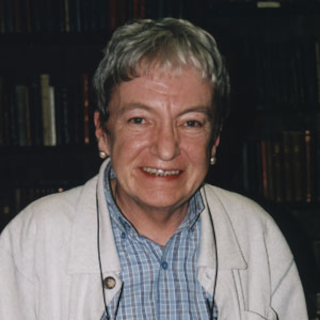
Emer Colleran, Irish microbiologist, academic and an environmental advocate, dies on June 30, 2018, at University Hospital Galway. She is professor of microbiology at the National University of Ireland, Galway, a member of the Royal Irish Academy, one of Mary Robinson‘s nominees on the Council of State, and chairwoman of An Taisce, the National Trust for Ireland.

Colleran, and her twin Noreen, are born in BallinrobeCounty Mayo, on October 12, 1945, to John and Josie Colleran. One of a family of five children, her father is a school principal and her mother, also a primary school teacher, dies when she is just 11 years old. She completes her secondary education at St. Louis secondary school in Kiltimagh. She spends a lot of time outdoors as a child, particularly fishing, which sparks her interest in the environment.

On entering higher education, Colleran has a grant from the Department of Education, which requires that she do her studies through the Irish language. Her first choice, Medicine, is not available in Irish so she chooses Science. She graduates with a first-class primary degree in Science at University College Galway (now National University of Ireland, Galway) in 1967.

Colleran specialises in anaerobic digestion as a postgraduate and in 1971 becomes a postdoctoral fellow for two years at the University of Bristol in the UK.

Colleran lectures in biology at Athlone Regional Technical College (now Athlone Institute of Technology) and Galway Regional Technical College (now Galway-Mayo Institute of Technology) before her appointment as a lecturer in microbiology at NUI Galway in 1976. She is appointed Associate Professor of Microbiology by the Senate of the National University of Ireland in 1990. She is a member of the university’s governing authority for a number of years, but steps down in May 2000 in connection with the selection procedure for the new university president. In October of that year, she is appointed professor of microbiology and chair of the department at NUI Galway.

Colleran is the first director of the Environment Change Institute at NUI Galway set up under the Higher Education Authority‘s Programme for Research in Third Level Institutions in 2000. In 2010, the Environmental Change Institute and the Martin Ryan Marine Research Institute are merged to form the current day Ryan Institute at NUI Galway.

In 1973, Colleran is elected to the committee of the Galway Association of An Taisce, part of a national voluntary organisation the aims of which are conservation in Ireland through education, publicity and positive action. She serves as membership secretary and then treasurer to the Galway branch before becoming chairman. In 1981, as chairman of the Galway branch, she hits back at claims from Galway County Council that An Taisce are “an anonymous group, wielding power unfairly.” She is involved in the compilation of a controversial planning report, published by An Taisce in 1983, which highlights abuse of planning laws by city and county councillors across Ireland, and in particular in counties Galway, Mayo, DonegalKerry and Louth.

Colleran serves as Environmental Officer for An Taisce before being elected National Chairman in 1987, the first time a chairman has come from one of the western county associations. She continues to use her position to campaign against misuse of planning laws, for a clamp down on pollution of rivers and lakes, and against a move to scrap An Foras Forbartha, a body that provides independent monitoring of pollution. During her three years as chairman, until May 1990, she is particularly involved in debates over local environmental and planning issues, in particular over gold mining in the west of Ireland, a proposed airport for Clifden, and the planned sewage treatment plant at Mutton Island, County Galway.

In 1991 plans are announced for a new visitor centre, to be located at Mullaghmore in The Burren. Colleran is among those who are part of an appeal, saying that while the plan for the national park is welcomed by An Taisce, they want the visitor centre to be located three or four miles from Mullaghmore.

President Mary Robinson appoints seven new members to her Council of State in February 1991, including Colleran. Other new members appointed at the time are Monica Barnes, Patricia O’Donovan, Quintan Oliver, Rosemarie Smith, Dónal Toolan and D. Kenneth Whitaker. The new Council of State represents a wide spectrum of Irish life and is widely welcomed, although Fine Gael is disappointed that its leader John Bruton is not included.

In 1991, Colleran is one of 15 people appointed to Taoiseach Charles Haughey‘s Green 2000 Advisory Group, to determine which problems will face the environment in the next century. The group is led by Dr. David Cabot, special advisor on environmental affairs.

Colleran is appointed a member of the National Heritage Council in 1995 by the Minister for Arts, Culture and the GaeltachtMichael D. Higgins. In the same year the Minister of State at the Department of the MarineEamon Gilmore, appoints her to the chair of the Sea Trout working group to oversee the implementation of recommendations to tackle a decline in sea trout stocks, particularly in the west of Ireland.

In 2003, Colleran is elected as a member of the Royal Irish Academy.

Colleran is recognised at the annual NUI Galway Alumni Awards in 2004 when she receives the award for Natural Science, sponsored by Seavite Bodycare Ltd., which acknowledges a graduate who has made an outstanding contribution in the field of natural science.


Leave a comment

Birth of William Joyce, Last Person Executed for Treason in the UK

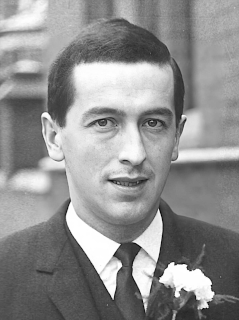
William Brooke Joyce, an American-born fascist and Nazi propaganda broadcaster during World War II, is born on Herkimer Street in Brooklyn, New York, on April 24, 1906. He has the distinction of being the last person to be executed for treason in the United Kingdom.

Joyce is the eldest of three sons of Michael Joyce, an Irish Catholic from a family of tenant farmers in Ballinrobe, County Mayo, and his wife, Gertrude (née Brooke), who although born in Shaw and Crompton, Lancashire, is from a well-off Anglican Anglo-Irish family of physicians associated with County Roscommon. The Joyces return to Ireland in 1909. William, a precocious child, attends Coláiste Iognáid SJ, a Jesuit school in County Galway, from 1915 to 1921. At the age of fourteen, he abandons Catholicism for Anglicanism, apparently after being told that all non-Catholics, including his mother, would be damned. In adult life he is nominally anglican, though his adherence to Christianity is tenuous.

The Joyces are unionists and teach their children fervent imperialism. During the Irish War of Independence, Joyce openly associates with the Black and Tans and acts as a scout for them. An acquaintance claims that his views are so extreme even loyalists dislike him. On December 9, 1921, he flees to England to join the Worcestershire Regiment and is followed to England in 1923 by the rest of the family. When he enlists, he claims to be eighteen, but after he contracts rheumatic fever, his age is discovered, and he is discharged in March 1922. For a time, he studies mathematics and chemistry at Battersea Polytechnic Institute as a pre-medical student (1922–23), but he leaves of his own accord, with a reputation for laziness and violent political views. His studies in English and history at Birkbeck College are more successful. He is a brilliant linguist and mathematician and graduates BA with first-class honours in 1927. He publishes an academic article on philology and considers progressing to an MA. He later falsely claims that his research had been plagiarised by a Jewish academic. In 1932, he enrolls at King’s College, London, for a Ph.D. in educational psychology.

Joyce is disturbed by the difference between depressed post-war Britain and the imperial ideal that he had imbibed in Galway and is mocked for his outspoken patriotism and obvious Irishness. He identifies strongly with Thomas Carlyle, an earlier angry anti-liberal from the provinces. His life is marked by repeated episodes of hero worship, followed by disillusion and bitter denunciation. In 1923, he joins the British Fascists, an organisation that has a significant Irish loyalist membership, and in 1924 he allies himself with a militant splinter group, the National Fascists. Most British fascists see themselves as Tory auxiliaries, and they often provide a security presence at conservative meetings. On October 22, 1924, while stewarding a meeting addressed by a Jewish conservative candidate, he has his face slashed and is left with a prominent scar across his right cheek. He joins the Conservative Party in 1928 and is active in the Chelsea constituency until 1930, when he is forced out because of his eccentricities and sexual misbehaviour. On April 30, 1927, he marries Hazel Kathleen Barr. They have two daughters but separate in 1935, largely because of his infidelities, heavy drinking, and temper. The marriage is dissolved in 1937.

In November 1933, Joyce abandons his Ph.D. studies to work for Sir Oswald Mosley‘s British Union of Fascists (BUF). By early 1934 he has become its paid publicity director, traveling throughout Britain to organise meetings. He is a powerful, rabble-rousing speaker, driven by an instinctive awareness that vitriolic verbal abuse gives speaker and audience a sense of power and solidarity. MI5 sees him as a compelling, though deranged, personality. On February 8, 1937, he marries Margaret Cairns White, a BUF activist from Lancashire, with whom he had cohabited since 1936.

Joyce leads a BUF faction that favours a recruitment strategy based on uncompromising ideological assertion. This is challenged by populists who prioritise marches and displays and hold that indoctrination should follow membership. In February 1937, he is BUF candidate for the London County Council in Shoreditch. The party wins 14 percent of the vote. In March 1937, he, along with many full-time BUF staff, are sacked when the BUF cuts expenses. But his dismissal also reflects Mosley’s awareness that his obsessive rhetoric repels “respectable” recruits and that he is no longer a biddable, slavish admirer of “the Leader.” He later falsely claims near-exclusive credit for the BUF’s escalating antisemitism, a view that Mosley eventually finds it convenient to adopt in order to evade his own responsibility.

In April 1937, Joyce founds the National Socialist League, helped by a wealthy patron. He supports himself as a private tutor, refusing to take Jewish pupils. He is active in various antisemitic and pro-Nazi groups such as the Right Club and engages in “peace” campaigns based on the view that British interests lay with Germany against Russia. Political marginalisation intensifies his admiration for Nazi Germany and hero worship of Adolf Hitler. By the time of the Munich crisis in 1938, he has decided that if war comes, he will go to Germany, though he also considers moving to Ireland. He renews his British passport for one-year terms in August 1938 and August 1939.

On August 26, 1939, Joyce and his wife leave London for Berlin. He is allegedly tipped off about his impending arrest and internment by an MI5 officer, to whom he had supplied information on communists. His siblings, whom he recruited into his fascist organisations, are variously penalised for his activities. At a loose end in Berlin, he is persuaded by a British associate to become a radio announcer with the English-language service of the Reichs-Rundfunk-Gesellschaft (RRG). He makes his first broadcast on September 6, 1939, and receives a contract in October. He finds in radio an outlet for his forceful style and delight in saying the unsayable, and in the early years of the war takes an exultant pride in recounting Nazi victories. His performances are admired by Joseph Goebbels, whom Joyce, to his regret, never meets. On September 26, 1940, he acquires German citizenship.

The novel experience of hearing the enemy in one’s own living room attracts wide audiences in Britain. Joyce’s practice of naming newly captured prisoners of war in his broadcasts is also a compelling motive for listening. In fact, he tries to recruit British prisoners of war as collaborators. The name “Lord Haw-Haw,” invented by the Daily Express radio critic in September 1939, initially applies to several English-language broadcasters but in time becomes associated with Joyce. He is initially a figure of fun, imitated by comedians, but there are sinister undercurrents of terrifying omnipotence, intensified by his sneering, gloating delivery and his delighted deployment of the “big lie” technique. It is widely believed that British-based fifth columnists supply him with information, that he predicts air raids, and shows minute local knowledge. In time, fear and his growing notoriety feed popular hatred of him in Britain, though his anti-British taunts allegedly win appreciative Irish audiences. He exults that he is daily committing treason and rendering himself liable to the death penalty.

In 1940, Joyce publishes a commissioned self-justifying propaganda work, Twilight over England. His representation of himself echoes that of Hitler in Mein Kampf – the provincial patriot, whose martial sacrifices are betrayed by corrupt elites, learning through poverty the hollowness of bourgeois patriotism and the need to synthesise socialism with nationalism. He shares with his hero a paranoid belief in his own ability to create an alternative reality through language and obstinacy. He dreams of becoming the English Führer.

In Berlin, the Joyces’ marriage comes under increasing strain, marked by drunken rows, domestic violence, and infidelity on both sides, though they retain a fierce mutual fascination. They divorce on August 12, 1941, but remarry on February 11, 1942, while continuing their previous behaviour. As the Axis powers begin to fail, his broadcasts become more defensive, focusing on the Soviet threat. On October 14, 1944, he is awarded the German War Merit Cross, first class. On October 22, he is sworn into the Volkssturm (territorial army) and begins drilling. The Joyces are evacuated from Berlin in March 1945, initially to Apen near the Dutch border and then to Hamburg, where he makes a last, drunken, defiant broadcast on April 30, 1945, the day of Hitler’s death. After an unsuccessful attempt to escape to Sweden, the Joyces hide at Flensburg near the Danish border. On May 28, 1945, he is shot and captured while gathering firewood.

Joyce is brought back to Britain on June 16 after Parliament passed legislation simplifying treason trial procedures. At his September 17-20 trial, he proves his American citizenship, but the court holds that his illegally acquired British passport incurred duties of allegiance. His appeals are rejected by the Court of Appeal and the House of Lords. His fate is influenced by British public opinion, and possibly by a desire to avoid antagonising the Soviet Union. In his death cell he blames the defeat of national socialism on German limitations. He also fantasises that he could have saved Hitler from his incompetent subordinates.

Joyce is hanged by Albert Pierrepoint at Wandsworth Prison on January 3, 1946. Unlike most of his fellow Nazis, he proclaims to the end his allegiance to national socialism and hatred of Jews. He corresponds cheerfully with Margaret, joking evasively about the death camps and expressing a belief that his spirit will survive, watch over her, and continue his work. To neo-Nazis he becomes a martyr. Even among those to whom his activities had been repellent, a significant body of opinion holds he should not have been condemned on a questionable and innovative technicality. The historian A. J. P. Taylor maintains that Joyce was executed for making a false declaration to obtain a passport, a misdemeanour that normally incurs a £2 fine.

In 1976, Joyce is reinterred in Galway as it is feared that a grave in England might become a fascist shrine. Thomas Kilroy‘s play Double Cross (1986) juxtaposes Joyce and Brendan Bracken as Irishmen who reinvented themselves through fantasies of Britishness. The BBC Sound Archive has recordings of some of Joyce’s broadcasts and transcripts of others, collected during the war as evidence for a future treason trial.

(From: “Joyce, William Brooke (‘Lord Haw-Haw’)” by Patrick Maume, Dictionary of Irish Biography, http://www.dib.ie, October 2009)


Leave a comment

Death of Charles Cunningham Boycott, Land Agent

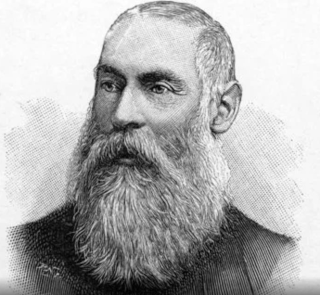
Charles Cunningham Boycott, land agent and the man who gave the English language the word “boycott,” dies in Flixton, Suffolk, England, on June 19, 1897.

Boycott is born on March 12, 1832, at Burgh St. Peter, Norfolk, England, eldest surviving son of William Boycatt (1798–1877), rector of Wheatacrebury, Norfolk, and Elizabeth Georgiana Boycatt (née Beevor). The family name is changed to Boycott by his father in 1862. Educated at a boarding school in Blackheath, London, and the Royal Military Academy, Woolwich, he is commissioned ensign in the 39th (Dorsetshire) Regiment of Foot on February 15, 1850, and serves briefly in Ireland. He sells his commission on December 17, 1852, having attained the rank of captain, marries Annie Dunne of Queen’s County (County Laois) in 1852, and leases a farm in south County Tipperary.

In 1855, Boycott leaves for Achill Island, County Mayo, where he sub-leases 2,000 acres and acts as land agent for a friend, Murray McGregor Blacker, a local magistrate. He settles initially near Keem Strand but after some years builds a fine house near Dooagh overlooking Clew Bay. He clashes with local landowners and agents and is regularly involved in litigation. Twice summonsed unsuccessfully for assault (1856, 1859), he is involved (1859–60) in a bitter dispute with a land agent over salvage rights for shipwrecks, one of the few lucrative activities on the island. Achill’s remoteness and the difficulties of wresting a living from its harsh environment adds a roughness to the island’s social relations and probably aggravates Boycott’s tendency to high-handedness.

In 1873, Boycott inherits money and moves to mainland County Mayo, leasing Lough Mask House near Ballinrobe and its surrounding 300 acres. He also becomes agent for John Crichton, 3rd Earl Erne‘s neighbouring estate of 1,500 acres, home to thirty-eight tenant farmers paying rents of £500 a year, of which he receives 10 per cent as agent. He also serves as a magistrate and is unpopular because of his brusque and authoritarian manner, and for denying locals such traditional indulgences as collecting wood from the Lough Mask estate or taking short cuts across his farm. In April 1879, he purchases the 95-acre Kildarra estate between Claremorris and Ballinlough and an adjoining wood for £1,125, taking out a mortgage of £600 which stretches his finances.

Boycott is no brutal tyrant, but he is aloof, stubborn, and pugnacious, and believes that the Irish peasantry is prone to idleness and require firm handling. Such qualities and beliefs are unremarkable enough, but in the peculiar circumstances of the land war in County Mayo, they are enough to catapult this rather ordinary man to worldwide notoriety.

In autumn 1879, concerted land agitation begins in County Mayo, and on August 1, 1879, Boycott receives a notice threatening his life unless he reduces rents. He ignores it and evicts three tenants, which embitter relations on the estate. Lough Mask House is placed under Royal Irish Constabulary (RIC) surveillance beginning in November 1879. In August 1880, his farm labourers, encouraged by the Irish National Land League, strike successfully for a wage increase from 7s. –11s. to 9s. –15s. Since the harvest is poor, Lord Erne allows a 10 per cent rent abatement. But in September 1880, when Boycott demands the rent, most tenants seek a 25 per cent abatement. Lord Erne refuses, and on September 22, Boycott attempts to serve processes against eleven defaulters. Servers and police are attacked by an angry crowd of local women and forced to take refuge in Boycott’s house. Almost immediately he is subjected to the ostracism against land grabbers advocated by Charles Stewart Parnell in his September 19 speech at Ennis, County Clare. This weapon proves as devastating against an English land agent as an Irish land-grabber. His servants leave him, labourers refuse to work his land, his walls and fences are destroyed, and local traders refuse to do business with him. He is jeered on the roads, is hissed and hustled by hostile crowds in Ballinrobe, and requires police protection.

The campaign against Boycott is largely orchestrated by Fr. John O’Malley, a local parish priest and president of the Neale branch of the Irish National Land League. It is probably O’Malley who coins the term “boycott” as an alternative to the word “ostracise,” which he believes would mean little to the local peasantry. Propagated by O’Malley’s friend, the American journalist, James Redpath, it is adopted by advocates and opponents alike.

On October 22, 1880, before his story breaks on the world, Boycott gives evidence of his treatment to the Bessborough Commission in Galway. He publicises his plight in an October 18, 1880, letter to The Times, and in a long interview with The Daily News on October 24, which is reprinted in Irish unionist newspapers and arouses considerable sympathy for him. Although he rarely uses his former military rank, he becomes universally known as “Captain Boycott,” since it suits both sides to portray him as someone of social standing. Letters of support appear in unionist papers and the Belfast News Letter sets up a “Boycott Relief Fund” and proposes a relief expedition, portraying Boycott as a peaceable English gentleman unjustly subjected to intimidation.

The prospect of hundreds of armed loyalists descending on County Mayo alarms the government, who announced on November 8 that they will provide protection for a small group of labourers to harvest Boycott’s crops. On November 12, fifty-seven loyalists from counties Cavan and Monaghan, “the Boycott Relief Expedition,” arrive at Lough Mask with an escort of almost a thousand troops. After harvesting Boycott’s crops, they leave on November 26. The entire operation costs £10,000 – about thirty times the value of the crops. Although the expedition passes off largely without incident, it focuses international media attention on the affair and establishes the word “boycott” in English and several other languages as a standard term for communal ostracism.

On November 27, Boycott and his wife go to the Hammam hotel, Dublin, where he receives death threats. On December 1, he travels to London and then to the United States (March–May 1881) to see Murray McGregor Blacker, the friend from his time on Achill Island who has since settled in Virginia. In an interview with the New York Herald, he criticises the liberal government’s weakness toward the Land League and claims that the Irish land question is an intractable problem that can only be solved in the long term by emigration and industrialisation.

Boycott returns to Lough Mask on September 19, 1881, and at an auction in Westport is mobbed and burned in effigy. This, however, is the last outburst of hostility against him, and as the land agitation wanes so does his unpopularity. Although unsuccessful in efforts to win compensation from the government, he receives a public subscription of £2,000. He remains in County Mayo as Lord Erne’s agent until February 1886, when he obtains the post of land agent for Sir Hugh Adair in Flixton, Suffolk, but he keeps the small Kildarra estate, where he continues to holiday. On December 12, 1888, he gives evidence of his treatment to the parliamentary commission on “Parnellism and crime.”

After suffering from ill-health for some years, Boycott dies at Flixton on June 19, 1897, and is buried in the churchyard of Burgh St. Peter. A British-made film, Captain Boycott (1947), stars Cecil Parker in the title role.

(From: “Boycott, Charles Cunningham” by James Quinn, Dictionary of Irish Biography, http://www.dib.ie, October 2009 | Photo credit: Granger NYC/© Granger NYC/Rue des Archives)
Leave a comment

The Execution of William Joyce

William Brooke Joyce, an American-born fascist and Nazi propaganda broadcaster during World War II, is hanged in Wandsworth Prison by Albert Pierrepoint on January 3, 1946, making him the last person to be executed for treason in the United Kingdom.

Joyce is born on April 24, 1906, in Brooklyn, New York, the eldest of three sons of Michael Joyce, an Irish Catholic from a family of tenant farmers in Ballinrobe, County Mayo, and his wife, Gertrude (née Brooke), who although born in Shaw and Crompton, Lancashire, is from a well-off Anglican Anglo-Irish family of physicians associated with County Roscommon. The Joyces return to Ireland in 1909. William, a precocious child, attends Coláiste Iognáid SJ, a Jesuit school in County Galway, from 1915 to 1921. At the age of fourteen, he abandons Catholicism for Anglicanism, apparently after being told that all non-Catholics, including his mother, would be damned. In adult life he is nominally anglican, though his adherence to Christianity is tenuous.

The Joyces are unionists and teach their children fervent imperialism. During the Irish War of Independence, Joyce openly associates with the Black and Tans and acts as a scout for them. An acquaintance claims that his views are so extreme even loyalists dislike him. On December 9, 1921, he flees to England to join the Worcestershire Regiment and is followed to England in 1923 by the rest of the family. When he enlists, he claims to be eighteen, but after he contracts rheumatic fever, his age is discovered, and he is discharged in March 1922. For a time, he studies mathematics and chemistry at Battersea Polytechnic Institute as a pre-medical student (1922–23), but he leaves of his own accord, with a reputation for laziness and violent political views. His studies in English and history at Birkbeck College are more successful. He is a brilliant linguist and mathematician and graduates BA with first-class honours in 1927. He publishes an academic article on philology and considers progressing to an MA. He later falsely claims that his research had been plagiarised by a Jewish academic. In 1932, he enrolls at King’s College, London, for a Ph.D. in educational psychology.

Joyce is disturbed by the difference between depressed post-war Britain and the imperial ideal that he had imbibed in Galway and is mocked for his outspoken patriotism and obvious Irishness. He identifies strongly with Thomas Carlyle, an earlier angry anti-liberal from the provinces. His life is marked by repeated episodes of hero worship, followed by disillusion and bitter denunciation. In 1923, he joins the British Fascists, an organisation that has a significant Irish loyalist membership, and in 1924 he allies himself with a militant splinter group, the National Fascists. Most British fascists see themselves as Tory auxiliaries, and they often provide a security presence at conservative meetings. On October 22, 1924, while stewarding a meeting addressed by a Jewish conservative candidate, he has his face slashed and is left with a prominent scar across his right cheek. He joins the Conservative Party in 1928 and is active in the Chelsea constituency until 1930, when he is forced out because of his eccentricities and sexual misbehaviour. On April 30, 1927, he marries Hazel Kathleen Barr. They have two daughters but separate in 1935, largely because of his infidelities, heavy drinking, and temper. The marriage is dissolved in 1937.

In November 1933, Joyce abandons his Ph.D. studies to work for Sir Oswald Mosley‘s British Union of Fascists (BUF). By early 1934 he has become its paid publicity director, traveling throughout Britain to organise meetings. He is a powerful, rabble-rousing speaker, driven by an instinctive awareness that vitriolic verbal abuse gives speaker and audience a sense of power and solidarity. MI5 sees him as a compelling, though deranged, personality. On February 8, 1937, he marries Margaret Cairns White, a BUF activist from Lancashire, with whom he had cohabited since 1936.

Joyce leads a BUF faction that favours a recruitment strategy based on uncompromising ideological assertion. This is challenged by populists who prioritise marches and displays and hold that indoctrination should follow membership. In February 1937, he is BUF candidate for the London County Council in Shoreditch. The party wins 14 per cent of the vote. In March 1937, he, along with many full-time BUF staff, are sacked when the BUF cuts expenses. But his dismissal also reflects Mosley’s awareness that his obsessive rhetoric repels “respectable” recruits and that he is no longer a biddable, slavish admirer of “the Leader.” He later falsely claims near-exclusive credit for the BUF’s escalating antisemitism, a view that Mosley eventually finds it convenient to adopt in order to evade his own responsibility.

In April 1937, Joyce founds the National Socialist League, helped by a wealthy patron. He supports himself as a private tutor, refusing to take Jewish pupils. He is active in various antisemitic and pro-Nazi groups such as the Right Club and engages in “peace” campaigns based on the view that British interests lay with Germany against Russia. Political marginalisation intensifies his admiration for Nazi Germany and hero worship of Adolf Hitler. By the time of the Munich crisis in 1938, he has decided that if war comes, he will go to Germany, though he also considers moving to Ireland. He renews his British passport for one-year terms in August 1938 and August 1939.

On August 26, 1939, Joyce and his wife leave London for Berlin. He is allegedly tipped off about his impending arrest and internment by an MI5 officer, to whom he had supplied information on communists. His siblings, whom he recruited into his fascist organisations, are variously penalised for his activities. At a loose end in Berlin, he is persuaded by a British associate to become a radio announcer with the English-language service of the Reichs-Rundfunk-Gesellschaft (RRG). He makes his first broadcast on September 6, 1939, and receives a contract in October. He finds in radio an outlet for his forceful style and delight in saying the unsayable, and in the early years of the war takes an exultant pride in recounting Nazi victories. His performances are admired by Joseph Goebbels, whom Joyce, to his regret, never meets. On September 26, 1940, he acquires German citizenship.

The novel experience of hearing the enemy in one’s own living room attracts wide audiences in Britain. Joyce’s practice of naming newly captured prisoners of war in his broadcasts is also a compelling motive for listening. In fact, he tries to recruit British prisoners of war as collaborators. The name “Lord Haw-Haw,” invented by the Daily Express radio critic in September 1939, initially applies to several English-language broadcasters but in time becomes associated with Joyce. He is initially a figure of fun, imitated by comedians, but there are sinister undercurrents of terrifying omnipotence, intensified by his sneering, gloating delivery and his delighted deployment of the “big lie” technique. It is widely believed that British-based fifth columnists supply him with information, that he predicts air raids, and shows minute local knowledge. In time, fear and his growing notoriety feed popular hatred of him in Britain, though his anti-British taunts allegedly win appreciative Irish audiences. He exults that he is daily committing treason and rendering himself liable to the death penalty.

In 1940, Joyce publishes a commissioned self-justifying propaganda work, Twilight over England. His representation of himself echoes that of Hitler in Mein Kampf – the provincial patriot, whose martial sacrifices are betrayed by corrupt elites, learning through poverty the hollowness of bourgeois patriotism and the need to synthesise socialism with nationalism. He shares with his hero a paranoid belief in his own ability to create an alternative reality through language and obstinacy. He dreams of becoming the English Führer.

In Berlin, the Joyces’ marriage comes under increasing strain, marked by drunken rows, domestic violence, and infidelity on both sides, though they retain a fierce mutual fascination. They divorce on August 12, 1941, but remarry on February 11, 1942, while continuing their previous behaviour. As the Axis powers begin to fail, his broadcasts become more defensive, focusing on the Soviet threat. On October 14, 1944, he is awarded the German War Merit Cross, first class. On October 22, he is sworn into the Volkssturm (territorial army) and begins drilling. The Joyces are evacuated from Berlin in March 1945, initially to Apen near the Dutch border and then to Hamburg, where he makes a last, drunken, defiant broadcast on April 30, 1945, the day of Hitler’s death. After an unsuccessful attempt to escape to Sweden, the Joyces hide at Flensburg near the Danish border. On May 28, 1945, he is shot and captured while gathering firewood.

Joyce is brought back to Britain on June 16 after Parliament passed legislation simplifying treason trial procedures. At his September 17-20 trial, he proves his American citizenship, but the court holds that his illegally acquired British passport incurred duties of allegiance. His appeals are rejected by the Court of Appeal and the House of Lords. His fate is influenced by British public opinion, and possibly by a desire to avoid antagonising the Soviet Union. In his death cell he blames the defeat of national socialism on German limitations. He also fantasises that he could have saved Hitler from his incompetent subordinates.

Joyce is hanged at Wandsworth Prison on January 3, 1946. Unlike most of his fellow Nazis, he proclaims to the end his allegiance to national socialism and hatred of Jews. He corresponds cheerfully with Margaret, joking evasively about the death camps and expressing a belief that his spirit will survive, watch over her, and continue his work. To neo-Nazis he becomes a martyr. Even among those to whom his activities had been repellent, a significant body of opinion holds he should not have been condemned on a questionable and innovative technicality. The historian A. J. P. Taylor maintains that Joyce was executed for making a false declaration to obtain a passport, a misdemeanour that normally incurs a £2 fine.

In 1976, Joyce is reinterred in Galway as it is feared that a grave in England might become a fascist shrine. Thomas Kilroy‘s play Double Cross (1986) juxtaposes Joyce and Brendan Bracken as Irishmen who reinvented themselves through fantasies of Britishness. The BBC Sound Archive has recordings of some of Joyce’s broadcasts and transcripts of others, collected during the war as evidence for a future treason trial.

(From: “Joyce, William Brooke (‘Lord Haw-Haw’)” by Patrick Maume, Dictionary of Irish Biography, http://www.dib.ie, October 2009)


Leave a comment

Birth of Noël Christopher Browne, Irish politician

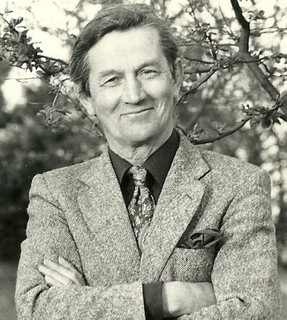
Noël Christopher Browne, Irish politician who serves as Minister for Health from 1948 to 1951 and Leader of the National Progressive Democrats from 1958 to 1963, is born at Bath Street in Waterford, County Waterford, on December 20, 1915. He holds the distinction of being one of only seven TDs to be appointed to the cabinet on the start of their first term in the Dáil.

Browne grows up in the Bogside area of Derry. The Browne family also lives in Athlone and Ballinrobe for a period of time. His mother Mary Therese (née Cooney) is born in 1885 in Hollymount, County Mayo. His father Joseph Brown, a Royal Irish Constabulary (RIC) sergeant, later works as an inspector for the National Society for the Prevention of Cruelty to Children and, partly as a result of this work, all of the Browne family becomes infected with tuberculosis. Both parents die of the disease during the 1920s. His father is the first to die, leaving only £100 behind to support a wife and seven children. Fearing that if she and the children remain in Ireland they will be forced into a workhouse, Mary sells all their possessions and takes the family to London. Within two days of their arrival, Mary is dead, later buried in a pauper’s grave. Of her seven children, six contract tuberculosis. Noël is only one of two Browne children to survive into adulthood after those bouts with TB.

In 1929, Browne is admitted free of charge to St. Anthony’s, a preparatory school in Eastbourne, England. He then wins a scholarship to Beaumont College, the Jesuit public school near Old Windsor, Berkshire, where he befriends Neville Chance, a wealthy boy from Dublin. Neville’s father, the eminent surgeon Arthur Chance, subsequently pays Browne’s way through medical school at Trinity College Dublin.

In 1940, while still a student, Browne suffers a serious relapse of tuberculosis. His treatment at a sanatorium in Midhurst, Sussex is paid for by the Chance family. He recovers, passes his medical exams in 1942, and starts his career as a medical intern at Dr. Steevens’ Hospital in Dublin, where he works under Bethel Solomons. He subsequently works in numerous sanatoria throughout Ireland and England, witnessing the ravages of the disease. He soon concludes that politics is the only way in which he can make an attack on the scourge of tuberculosis.

The poverty and tragedy that had shaped Browne’s childhood deeply affects him. He considers both his survival and his level of education a complete fluke, a stroke of random chance that saved him when he was seemingly destined to die unknown and in poverty like the rest of his family. He finds this completely distasteful and is moved to enter politics as a means to ensure no one else would suffer the same fate that had befallen his family.

Browne joins the new Irish republican party Clann na Poblachta and is elected to Dáil Éireann for the Dublin South-East constituency at the 1948 Irish general election. To the surprise of many, party leader, Seán MacBride, chooses him to be one of the party’s two ministers in the new government. He becomes one of the few TDs appointed a Minister on their first day in Dáil Éireann, when he is appointed Minister for Health.

A ‘White Paper’ on proposed healthcare reforms had been prepared by the previous government, and results in the 1947 Health Act. In February 1948, Browne becomes Minister for Health and starts the reforms advocated by the Paper and introduced by the Act.

The health reforms coincide with the development of a new vaccine and of new drugs (e.g., BCG and penicillin) that help to treat a previously untreatable group of medical conditions. Browne introduces mass free screening for tuberculosis sufferers and launches a huge construction program to build new hospitals and sanitoria, financed by the income and accumulated investments from the Department of Health-controlled Hospital Sweeps funds. This, along with the introduction of Streptomycin, helps dramatically reduce the incidence of tuberculosis in Ireland.

As Minister for Health Browne comes into conflict with the bishops of the Catholic Church and the medical profession over the Mother and Child Scheme. This plan, also introduced by the 1947 Health Act, provides for free state-funded healthcare for all mothers and children aged under 16, with no means test, a move which is regarded as radical at the time in Ireland, but not in the rest of Europe. Virtually all doctors in private practice oppose the scheme, because it would undermine the “fee for service” model on which their income depended.

The Church hierarchy, which controls many hospitals, vigorously opposes the expansion of “socialised medicine” in the Irish republic. They claim that the Mother and Child Scheme interferes with parental rights, and fear that the provision of non-religious medical advice to mothers will lead to birth control contrary to Catholic teaching. They greatly dislike Browne, seeing him as a “Trinity Catholic,” one who has defied the Church’s ruling that the faithful should not attend Trinity College Dublin, which had been founded by Protestants and for many years did not allow Catholics to study there.

Under pressure from bishops, the coalition government backs away from the Mother and Child Scheme and forces Browne’s resignation as Minister for Health. Following his departure from government, he embarrasses his opponents by arranging for The Irish Times to publish Taoiseach John A. Costello‘s and MacBride’s correspondence with the Catholic hierarchy, which details their capitulation to the bishops.

The controversy over the Mother and Child Scheme leads to the fall of the coalition government in which Browne had served as a Minister. But Church opposition to socialised medicine continues under the subsequent Fianna Fáil-led government. The hierarchy does not accept a no-means-test mother-and-infant scheme even when Fianna Fáil reduces the age limit from sixteen years to six weeks, and the government again backs down.

After his resignation as Minister for Health, Browne leaves Clann na Poblachta, but is re-elected to the Dáil as an Independent TD from Dublin South-East in the subsequent election.

Browne joins Fianna Fáil in 1953 but loses his Dáil seat at the 1954 Irish general election. He fails to be selected as a candidate for the 1957 Irish general election and he resigns from the party. He is re-elected at that election for Dublin South-East as an Independent TD.

In 1958, Browne founds the National Progressive Democrats with Jack McQuillan. He holds onto his seat at the 1961 Irish general election, but in 1963, he and McQuillan join the Labour Party, disbanding the National Progressive Democrats. However, he loses his seat at the 1965 Irish general election.

Browne is re-elected as a Labour Party TD at the 1969 Irish general election, again for Dublin South-East. He does not seek a nomination by the Labour Party for the 1973 Irish general election but instead wins a seat in Seanad Éireann for Dublin University. He remains in the Seanad until the 1977 Irish general election, when he gains the Dublin Artane seat as an Independent Labour TD, having again failed to get the Party nomination.

In 1977 Browne is the first Irish parliamentarian to call for law reforms in regard to homosexuality, which is illegal at the time, and in 1979 is one of the few Irish politicians to attend the opening of the Hirschfeld Centre, Dublin’s first full-time LGBT community space.

Upon its formation, Browne joins the new Socialist Labour Party and is briefly its only TD, securing election for Dublin North-Central at the 1981 Irish general election. He retires from politics at the February 1982 Irish general election.

In 1990, a number of left-wing representatives within the Labour Party, led by Michael D. Higgins, approach Browne and suggest that he should be the party’s candidate in the presidential election due later that year. Though in failing health, Browne agrees. However, the offer horrifies party leader Dick Spring and his close associates for two reasons. Firstly, the leadership had secretly decided to run Mary Robinson, a barrister and former senator. Secondly, many around Spring are “appalled” at the idea of running Browne, believing he has “little or no respect for the party” and is “likely in any event to self-destruct as a candidate.” When Spring informs Browne by telephone that the party’s Administrative Council has chosen Robinson over him, Browne hangs up the telephone.

Browne spends the remaining seven years of his life constantly criticising Robinson who had gone on to win the election, thus becoming the seventh President of Ireland, and who is considered highly popular during her term. During the campaign he also indicates support for the rival Fine Gael candidate, Austin Currie.

After retiring from politics, Browne moves with his wife Phyllis to Baile na hAbhann, County Galway. He dies at the age of 81 in the Regional Hospital, Galway, on May 21, 1997. He is buried in a small graveyard near Baile na hAbhann.


Leave a comment

Birth of Emer Colleran, Microbiologist & Environmental Advocate

Emer Colleran, Irish microbiologist, academic and an environmental advocate, is born in Ballinrobe, County Mayo, on October 12, 1945. She is professor of microbiology at the National University of Ireland, Galway, a member of the Royal Irish Academy, one of Mary Robinson‘s nominees on the Council of State, and chairwoman of An Taisce, the National Trust for Ireland.

Colleran, and her twin Noreen, are born to John and Josie Colleran. One of a family of five children, her father is a school principal and her mother, also a primary school teacher, dies when she is just 11 years old. She completes her secondary education at St. Louis secondary school in Kiltimagh. She spends a lot of time outdoors as a child, particularly fishing, which sparks her interest in the environment.

On entering higher education, Colleran has a grant from the Department of Education, which requires that she do her studies through the Irish language. Her first choice, Medicine, is not available in Irish so she chooses Science. She graduates with a first-class primary degree in Science at University College Galway (now National University of Ireland, Galway) in 1967.

Colleran specialises in anaerobic digestion as a postgraduate and in 1971 becomes a postdoctoral fellow for two years at the University of Bristol in the UK.

Colleran lectures in biology at Athlone Regional Technical College (now Athlone Institute of Technology) and Galway Regional Technical College (now Galway-Mayo Institute of Technology) before her appointment as a lecturer in microbiology at NUI Galway in 1976. She is appointed Associate Professor of Microbiology by the Senate of the National University of Ireland in 1990. She is a member of the university’s governing authority for a number of years, but steps down in May 2000 in connection with the selection procedure for the new university president. In October of that year, she is appointed professor of microbiology and chair of the department at NUI Galway.

Colleran is the first director of the Environment Change Institute at NUI Galway set up under the Higher Education Authority‘s Programme for Research in Third Level Institutions in 2000. In 2010, the Environmental Change Institute and the Martin Ryan Marine Research Institute are merged to form the current day Ryan Institute at NUI Galway.

In 1973 Colleran is elected to the committee of the Galway Association of An Taisce, part of a national voluntary organisation the aims of which are to conservation in Ireland through education, publicity and positive action. She serves as membership secretary and then treasurer to the Galway branch before becoming chairman. In 1981, as chairman of the Galway branch, she hits back at claims from Galway County Council that An Taisce are “an anonymous group, wielding power unfairly.” She is involved in the compilation of a controversial planning report, published by An Taisce in 1983, which highlights abuse of planning laws by city and county councillors across Ireland, and in particular in counties Galway, Mayo, Donegal, Kerry and Louth.

Colleran serves as Environmental Officer for An Taisce before being elected National Chairman in 1987, the first time a chairman has come from one of the western county associations. She continues to use her position to campaign against misuse of planning laws, for a clamp down on pollution of rivers and lakes, and against a move to scrap An Foras Forbartha, a body that provides independent monitoring of pollution. During her three years as chairman, until May 1990, she is particularly involved in debates over local environmental and planning issues, in particular over gold mining in the west of Ireland, a proposed airport for Clifden, and the planned sewage treatment plant at Mutton Island, County Galway.

In 1991 plans are announced for a new visitor centre, to be located at Mullaghmore in The Burren. Colleran is among those who are part of an appeal, saying that while the plan for the national park is welcomed by An Taisce, they want the visitor centre to be located three or four miles from Mullaghmore.

President Mary Robinson appoints seven new members to her Council of State in February 1991, including Colleran. Other new members appointed at the time are Monica Barnes, Patricia O’Donovan, Quintan Oliver, Rosemarie Smith, Dónal Toolan and D. Kenneth Whitaker. The new Council of State represents a wide spectrum of Irish life and is widely welcomed, although Fine Gael is disappointed that its leader John Bruton is not included.

In 1991, Colleran is one of 15 people appointed to Taoiseach Charles Haughey‘s Green 2000 Advisory Group, to determine which problems will face the environment in the next century. The group is led by Dr. David Cabot, special advisor on environmental affairs.

Colleran is appointed a member of the National Heritage Council in 1995 by the Minister for Arts, Culture and the Gaeltacht, Michael D. Higgins. In the same year the Minister of State at the Department of the Marine, Eamon Gilmore, appoints her to the chair of the Sea Trout working group to oversee the implementation of recommendations to tackle a decline in sea trout stocks, particularly in the west of Ireland.

In 2003 Colleran is elected as a member of the Royal Irish Academy.

Colleran is recognised at the annual NUI Galway Alumni Awards in 2004 when she receives the award for Natural Science, sponsored by Seavite Bodycare Ltd., which acknowledges a graduate who has made an outstanding contribution in the field of natural science.

Colleran dies on June 30, 2018, at University Hospital Galway.


Leave a comment

Birth of Frank Stagg, Provisional IRA Hunger Striker

Frank Stagg, Provisional Irish Republican Army (IRA) hunger striker, is born in Hollymount, County Mayo on October 4, 1941.

Stagg is the seventh child in a family of thirteen children. His father, Henry, and his uncle had both fought in the Irish War of Independence and Irish Civil War. His brother, Emmet Stagg, becomes a Labour Party politician and a Teachta Dála (TD) for Kildare North. He is educated to primary level at Newbrook Primary School and at CBS Ballinrobe to secondary level. After finishing his schooling, he works as an assistant gamekeeper with his uncle prior to emigrating to England in search of work. Once in England, he gains employment as a bus conductor in North London and later becomes a bus driver. While in England he meets and marries fellow Mayo native, Bridie Armstrong from Carnacon in 1970.

In 1972, Stagg joins the Luton cumann of Sinn Féin and soon after becomes a volunteer in the Provisional Irish Republican Army (IRA).

In April 1973, Stagg is arrested with six others alleged to comprise an IRA unit planning bombing attacks in Coventry. He is tried at Birmingham Crown Court. The jury finds three of the seven not guilty. The remaining four are all found guilty of criminal damage and conspiracy to commit arson. Stagg and English-born priest, Father Patrick Fell, are found to be the unit’s commanding officers. Stagg is given a ten-year sentence and Fell is given twelve years. Thomas Gerald Rush is given seven years and Anthony Roland Lynch, who is also found guilty of possessing articles with intent to destroy property, namely nitric acid, balloons, wax and sodium chlorate, is given ten years.

Stagg is initially sent to the top security Albany Prison on the Isle of Wight. In March 1974, having been moved to Parkhurst Prison, he and fellow Mayo man Michael Gaughan join a hunger strike begun by the sisters Marian Price and Dolours Price, Hugh Feeney and Gerry Kelly.

Following the hunger strike that results in the death of Michael Gaughan, the Price sisters, Feeney and Kelly are granted repatriation to Ireland. Stagg is denied repatriation and is transferred to Long Lartin Prison. During his time there he is subject to solitary confinement for refusing to do prison work and is also subjected, along with his wife and sisters during visits, to humiliating body searches. In protest against this, he begins a second hunger strike that lasts for thirty-four days. This ends when the prison governor agrees to an end of the strip-searches on Stagg and his visitors. He is bed-ridden for the rest of his incarceration in Long Lartin, due to a kidney complaint.

In 1975 Stagg is transferred to Wakefield Prison, where it is demanded that he again do prison work. He refuses and is placed in solitary confinement. On December 14, 1975, he embarks on a hunger strike in Wakefield, along with a number of other republican prisoners, after being refused repatriation to Ireland during the IRA/British truce. His demands are an end to solitary confinement, no prison work and repatriation to prison in Ireland. The British government refuses to meet any of these demands and Stagg dies on February 12, 1976, after 62 days on hunger strike.

Stagg’s burial causes considerable controversy. Republicans and two of his brothers seek to have him buried in the republican plot in Ballina beside the grave of Michael Gaughan, in accordance with his wishes. His widow, his brother Emmet Stagg and the Irish government wish to have him buried in the family plot in the same cemetery and to avoid republican involvement in the funeral.

In order to prevent the body from being disinterred and reburied by republicans, the grave is covered with concrete. Local Gardaí keep an armed guard by the grave for six months. However, unknown to them, the plot beside the grave is available for purchase. Stagg’s brother George purchases the plot and places a headstone over it, with it declaring that the “pro-British Irish government” had stolen Frank’s body. In November 1977, a group of republicans dig down into the plot that George had purchased, then dig sideways and recover Stagg’s coffin from the adjacent plot under cover of darkness, before reburying it in the republican plot beside the body of Michael Gaughan. The Republicans hold their own version of a funeral ceremony before disappearing back into the night.

Following the final burial, an anonymous letter is sent to Taoiseach Liam Cosgrave, Minister for Justice Patrick Cooney, Minister for Posts and Telegraphs Conor Cruise O’Brien and Minister for Foreign Affairs Garret FitzGerald, informing them each that they have been “marked out for assassination” because of their government’s involvement with Stagg’s burials. Stagg’s widow Bridie and his brother Emmett are reported to be intimidated by members of the Provisional IRA due to their opposition to his burial in a Republican plot.

The IRA swears revenge over Stagg’s death, warning the British public it is going to attack indiscriminately. They explode about 13 bombs throughout England within a month after his death.


Leave a comment

Death of Hunger Striker Frank Stagg

frank-stagg

Frank Stagg, Provisional Irish Republican Army (IRA) hunger striker from County Mayo, dies on February 12, 1976, in Wakefield Prison, West Yorkshire, England after 62 days on hunger strike.

Stagg is the seventh child in a family of thirteen children. He is born on October 4, 1942, in Hollymount, County Mayo. His brother, Emmet Stagg, is a Labour Party politician, formerly a Teachta Dála (TD) for Kildare North.

Stagg is educated to primary level at Newbrook Primary School and at CBS Ballinrobe to secondary level. After finishing his schooling, he works as an assistant gamekeeper with his uncle prior to emigrating to England in search of work.

Once in England he gains employment as a bus conductor in north London and later becomes a bus driver. Whilst in England he meets and marries fellow Mayo native, Bridie Armstrong from Carnacon. In 1972, he joins the Luton cumann of Sinn Féin and soon after becomes a volunteer in the Provisional Irish Republican Army (IRA).

In April 1973, Stagg is arrested with six others alleged to comprise an IRA unit planning bombing attacks in Coventry. He is tried at Birmingham Crown Court. The jury finds three of the seven not guilty. The remaining four are all found guilty of criminal damage and conspiracy to commit arson. Stagg and English-born priest, Father Patrick Fell, are found to be the unit’s commanding officers. Stagg is given a ten-year sentence and Fell twelve years. Thomas Gerald Rush is given seven years and Anthony Roland Lynch, who is also found guilty of possessing articles with intent to destroy property, namely nitric acid, balloons, wax, and sodium chlorate, is given ten years.

Stagg is initially sent to the top security Albany Prison on the Isle of Wight. In March 1974, having been moved to Parkhurst Prison, he and fellow Mayo man Michael Gaughan join a hunger strike begun by the sisters Marion Price and Dolours Price, Hugh Feeney, and Gerry Kelly.

Following the hunger strike that results in the death of Michael Gaughan, the Price sisters, Feeney, and Kelly are granted repatriation to Ireland. Stagg is denied repatriation and is transferred to Long Lartin Prison. During his time there he is subject to solitary confinement for refusing to do prison work and is also subjected, along with his wife and sisters during visits, to humiliating body searches. In protest against this he begins a second hunger strike that lasts for thirty-four days. This ends when the prison governor agrees to an end to the strip-searches on Stagg and his visitors. Stagg is bed-ridden for the rest of his incarceration in Long Lartin, due to a kidney complaint.

In 1975 Stagg is transferred to Wakefield Prison, where it is demanded that he again do prison work. He refuses and is placed in solitary confinement. On December 14, 1975, Stagg embarks on a hunger strike in Wakefield, along with a number of other republican prisoners, after being refused repatriation to Ireland during the IRA/British truce. Stagg’s demands are an end to solitary confinement, no prison work, and repatriation to prison in Ireland. The British government refuses to meet any of these demands. Stagg dies on February 12, 1976, after 62 days on hunger strike.

Frank Stagg’s burial causes considerable controversy in Ireland, with republicans and two of his brothers seeking to have Stagg buried in the republican plot in Ballina in accordance with his wishes, while his widow, his brother, Emmet Stagg, and the Irish government wish to have him buried in the family plot in the same cemetery and to avoid republican involvement in the funeral. As the republicans wait at Dublin Airport for the body, the Irish government orders the flight to be diverted to Shannon Airport.

His body is taken to Ballina and buried near the family plot. In order to prevent the body being disinterred and reburied by republicans, the grave is covered with concrete. In November 1976, a group of republicans tunnel under the concrete to recover the coffin under cover of darkness and rebury it in the republican plot.