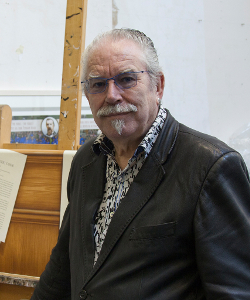
seamus dubhghaill

Promoting Irish Culture and History from Little Rock, Arkansas, USA


Leave a comment

Cathal Brugha Fatally Wounded by Sniper

cathal-brugha

Cathal Brugha, a leading figure in the Anti-Treaty Irish Republican Army (IRA), is shot by a sniper on July 5, 1922, as he appears in the doorway of the Hammam Hotel during the Irish Civil War. He dies two days later.

Brugha is born in Dublin of mixed Roman Catholic and Protestant parentage. He is the tenth of fourteen children and is educated at the Jesuit Belvedere College but is forced to leave at the age of sixteen because of the failure of his father’s business.

In 1899, Brugha joins the Gaelic League, and subsequently changes his name from Charles Burgess to Cathal Brugha. He becomes actively involved in the Irish Republican Brotherhood (IRB) and in 1913 he becomes a lieutenant in the Irish Volunteers. He leads a group of twenty Volunteers to receive the arms smuggled into Ireland in the Howth gun-running of 1914.

Brugha is second-in-command at the South Dublin Union under Commandant Éamonn Ceannt in the Easter Rising of 1916. On the Thursday of Easter Week, being badly wounded, he is unable to leave when the retreat is ordered. Brugha, weak from loss of blood, continues to fire upon the enemy and is found by Éamonn Ceannt singing God Save Ireland with his pistol still in his hands. Initially not considered likely to survive, he recovers over the next year but is left with a permanent limp.

During the War of Independence, Brugha organises an amalgamation of the Irish Volunteers and the Irish Citizen Army into the Irish Republican Army (IRA). He proposes a Republican constitution at the 1917 Sinn Féin convention which is unanimously accepted. In October 1917, he becomes Chief of Staff of the Irish Republican Army and holds that post until March 1919.

Brugha is elected speaker of Dáil Éireann at its first meeting on January 21, 1919, and he reads out the Declaration of Independence in Irish. On the following day, he is appointed president of the ministry pro tempore and retains this position until April 1, 1919, when Éamon de Valera takes his place.

In the months between the Anglo-Irish Treaty debates and the outbreak of Civil War, Brugha attempts to dissuade his fellow anti-treaty army leaders, including Rory O’Connor, Liam Mellows, and Joe McKelvey, from taking up arms against the Free State. When the IRA occupies the Four Courts, he and Oscar Traynor call on them to abandon their position. When they refuse, Traynor orders the occupation of the area around O’Connell Street in the hope of easing the pressure on the Four Courts and of forcing the Free State to negotiate.

On 28 June 1922, Brugha is appointed commandant of the forces in O’Connell Street. The outbreak of the Irish Civil War ensues in the first week of July when Free State forces commence shelling of the anti-treaty positions.

Most of the anti-Treaty fighters under Oscar Traynor escape from O’Connell Street when the buildings they were holding catch fire, leaving Brugha in command of a small rearguard. On 5 July, he orders his men to surrender but refuses to do so himself. He then approaches the Free State troops, brandishing a revolver. He sustains a bullet wound to the leg which severs a major artery, ultimately causing him to bleed to death on July 7, 1922, eleven days before his 48th birthday. He is buried in Glasnevin Cemetery.


Leave a comment

Birth of Irish Politician Henry Grattan

henry-grattan

Henry Grattan, Irish politician and member of the Irish House of Commons, who campaigns for legislative freedom for the Irish Parliament in the late 18th century, is born at Fishamble Street in Dublin on July 3, 1746.

Grattan is baptised at the church of St. John the Evangelist in Dublin. He attends Drogheda Grammar School and then goes on to become a distinguished student at Trinity College, Dublin, where he begins a lifelong study of classical literature, and is especially interested in the great orators of antiquity.

After studying at the King’s Inns, Dublin, and being called to the Irish bar in 1772, he never seriously practises law but is drawn to politics, influenced by his friend Henry Flood. He enters the Irish Parliament for Charlemont in 1775, sponsored by Lord Charlemont, just as Flood has damaged his credibility by accepting office. Grattan quickly supersedes Flood in the leadership of the national party, not least because his oratorical powers are unsurpassed among his contemporaries.

Grattan’s movement gains momentum as more and more Irish people come to sympathize with the North American colonists in their war for independence from Great Britain. By 1779, he is powerful enough to persuade the British government to remove most of its restraints on Irish trade, and in April 1780 he formally demands the repeal of Poynings’ Law, which has made all legislation passed by the Irish Parliament subject to approval by the British Parliament. Two years later the British relinquish their right to legislate for Ireland and frees the Irish Parliament from subservience to the English Privy Council. Despite these successes, Grattan soon faces rivalry from Flood, who bitterly criticizes Grattan for failing to demand that the British Parliament completely renounce all claims to control of Irish legislation. Flood succeeds in undermining Grattan’s popularity, but by 1784 Flood himself has lost much of his following.

From 1782 to 1797 Grattan makes limited progress in his struggle to reform the composition of the Irish Parliament and to win voting rights for Ireland’s Roman Catholics. The outbreak of the French Revolution in 1789 bolsters his cause by infusing democratic ideas into Ireland, but the subsequent growth of a radical Irish movement for Catholic emancipation provokes repressive measures by the British. Grattan is caught between the two sides. Ill and discouraged, he retires from Parliament in May 1797 and is in England when the Irish radicals stage an unsuccessful rebellion in 1798.

Grattan returns to Parliament for five months in 1800 and wages a vigorous but fruitless campaign against Prime Minister William Pitt’s plans for the legislative union of the Irish and British parliaments. In 1805, Grattan is elected to the British House of Commons, where for the last 15 years of his life he fights for Catholic emancipation.

In 1920, after crossing from Ireland to London while in poor health to bring forward the Irish question once more, he becomes seriously ill. On his deathbed he speaks generously of Castlereagh, and with warm eulogy of his former rival, Flood. Henry Grattan dies on June 4, 1820, and is buried in Westminster Abbey. His statue is in the Outer Lobby of the Palace of Westminster.

The building housing the faculty of Law and Government at Dublin City University has been named in his honour. Grattan Bridge crossing the River Liffey between Parliament Street on the south side of Dublin and Capel Street on the north side is also named in his honour.


Leave a comment

State Visit of U.S. President John F. Kennedy

jfk-state-visit

John F. Kennedy, an Irish American and the first Catholic to become president of the United States, arrives in Ireland on a state visit on June 26, 1963. After Air Force One touches down at Dublin airport, Kennedy’s motorcade weaves through the streets of Dublin city, the thrilled crowd, lacking ticker tape, improvises by throwing rolls of bus tickets.

Kennedy is proud of his Irish roots and makes a special visit to his ancestral home in Dunganstown, County Wexford, while in the country. There, he is greeted by a crowd waving both American and Irish flags and is serenaded by a boys’ choir that sings The Boys of Wexford. Kennedy breaks away from his bodyguards and joins the choir for the second chorus, prompting misty-eyed reactions from both observers and the press.

Kennedy meets with 15 members of his extended Irish family at the Kennedy homestead in Dunganstown. There he enjoys a cup of tea and some cake and makes a toast to “all those Kennedys who went and all those Kennedys who stayed.” His great-grandfather, Thomas Fitzgerald, had left Ireland for the United States in the middle of the Great Famine of 1848 and settled in Boston, becoming a cooper. Generations of his descendants go on to make their mark on American politics.

At the time of JFK’s visit to Ireland, the predominantly Catholic Irish Republic has been an independent nation for 41 years. The northern counties of the island, however, remain part of the largely Protestant British Empire and still suffer from long-standing sectarian violence. On the day after his arrival in Dublin, Kennedy speaks before the Irish parliament, where he openly condemns Britain’s history of persecuting Irish Catholics. Two days later, he travels to England, America’s oldest ally, to meet with British Prime Minister Harold Macmillan and his cabinet to discuss setting up a pro-democratic regime in British Guiana.

Kennedy later tells his aides that his favourite part of the trip was the wreath laying and silent funeral drill done by the Irish Army cadets at Arbour Hill military cemetery in Dublin.

Five months later, his widow, Jacqueline Kennedy, makes a special request to the Irish government. She asks that those same Irish army cadets, who so impressed the President on his visit, perform the drill again at his state funeral. Within days, those awe-stuck, trembling young men stand just inches away from foreign dignitaries from over 90 countries and perform their silent funeral drill in memory of a president that had inspired their country just a few short months earlier.


Leave a comment

Birth of Theobald Wolfe Tone

theobald-wolfe-tone

Theobald Wolfe Tone, posthumously known as Wolfe Tone, a leading Irish revolutionary figure and one of the founding members of the United Irishmen, is born on June 20, 1763, in Dublin. He is regarded as the father of Irish republicanism and leader of the Irish Rebellion of 1798.

The son of a coach maker, Tone studies law and is called to the Irish bar in 1789 but soon gives up his practice. In October 1791 he helps found the Society of United Irishmen, initially a predominantly Protestant organization that works for parliamentary reforms, such as universal suffrage and Roman Catholic emancipation. In Dublin in 1792 he organizes a Roman Catholic convention of elected delegates that force Parliament to pass the Catholic Relief Act of 1793. Tone himself, however, is anticlerical and hopes for a general revolt against religious creeds in Ireland as a sequel to the attainment of Irish political freedom.

By 1794, he and his United Irishmen friends begin to seek armed aid from Revolutionary France to help overthrow English rule. After an initial effort fails, Tone goes to the United States and obtains letters of introduction from the French minister at Philadelphia to the Committee of Public Safety in Paris. In February 1796 Tone arrives in the French capital, presents his plan for a French invasion of Ireland, and is favourably received. The Directory then appoints one of the most brilliant young French generals, Lazare Hoche, to command the expedition and makes Tone an adjutant in the French army.

On December 16, 1796, Tone sails from Brest with 43 ships and nearly 14,000 men. The ships are badly handled and, after reaching the coast of west Cork and Kerry, are dispersed by a storm. Tone again brings an Irish invasion plan to Paris in October 1797, but the principal French military leader, Napoleon Bonaparte, takes little interest. When insurrection breaks out in Ireland in May 1798, Tone can only obtain enough French forces to make small raids on different parts of the Irish coast. In September he enters Lough Swilly, County Donegal, with 3,000 men and is captured there.

At his trial in Dublin on November 10, 1798, he defiantly proclaims his undying hostility to England and his desire “in fair and open war to produce the separation of the two countries.” He is found guilty and is sentenced to be hanged on November 12. Early in the morning of the day he is to be hanged, Tone cuts his throat with a penknife.

Theobald Wolfe Tone dies of his self-inflicted wound on November 19, 1798, at the age of 35 in Provost’s Prison, Dublin, not far from where he was born. He is buried in Bodenstown, County Kildare, near his birthplace at Sallins, and his grave is in the care of the National Graves Association.


Leave a comment

Birth of Irish Novelist Maeve Binchy

maeve-binchy

Maeve Binchy Snell, known as Maeve Binchy, Irish novelist, playwright, short story writer, columnist, and speaker best known for her sympathetic and often humorous portrayal of small-town life in Ireland, is born on May 28, 1939, in Dalkey, County Dublin.

Binchy is the oldest of four children born to William and Maureen (née Blackmore) Binchy. Educated at St. Anne’s, Dún Laoghaire, and later at Holy Child Convent, Killiney, she goes on to study at University College Dublin, where she earns a bachelor’s degree in history. She works as a teacher of French, Latin, and history at various girls’ schools.

A 1963 trip to Israel profoundly affects both her career and her faith. One Sunday, attempting to find the location of the Last Supper, she climbs a mountainside to a cavern guarded by an Israeli soldier. She weeps with despair and the soldier asks, “What’ya expect ma’am – a Renaissance table set for 13?” She replies, “Yes! That’s just what I did expect.” This experience causes her to renounce her Catholic faith and eventually turn to atheism.

In 1968, Binchy joins the staff at The Irish Times, and works there as a writer, columnist, the first Women’s Page editor, and the London editor reporting for the paper from London before returning to Ireland.

Binchy, tall and rather stout, never considers herself to be attractive. She ultimately encounters the love of her life, children’s author Gordon Snell, while recording a piece for Woman’s Hour in London. Their friendship blossoms into a cross-border romance, with her in Ireland and him in London, until she eventually secures a job in London through The Irish Times. They are married in 1977 and eventually return to live in Dalkey, not far from where she had grown up.

In all, Binchy publishes 16 novels, four short-story collections, a play, and a novella. A 17th novel, A Week in Winter, is published posthumously. Her literary career begins with two books of short stories, Central Line (1978) and Victoria Line (1980). She publishes her debut novel Light a Penny Candle in 1982.

Most of Binchy’s stories are set in Ireland, dealing with the tensions between urban and rural life, the contrasts between England and Ireland, and the dramatic changes in Ireland between World War II and the present day. Her books have been translated into 37 languages.

In 2002, Binchy suffers a health crisis related to a heart condition, which inspires her to write Heart and Soul. The book about a heart failure clinic in Dublin and the people involved with it, reflects many of her own experiences and observations in the hospital.

Binchy dies on July 30, 2012, at the age of 73, in a Dublin hospital with her husband at her side. She had suffered from various maladies, including painful osteoarthritis, which results in a hip operation. A month before her death she suffers a severe spinal infection and finally succumbs to a heart attack. Just ahead of that evening’s Tonight with Vincent Browne and TV3‘s late evening news, Vincent Browne and then Alan Cantwell, who respectively anchor these shows, announce to Irish television viewers that Binchy has died earlier in the evening.

Despite being an atheist, Binchy is given a traditional Requiem Mass which takes place at the Church of the Assumption, in her hometown of Dalkey. She is later cremated at Mount Jerome Cemetery and Crematorium.


Leave a comment

Death of Saint Mo Chutu mac Fínaill

sts-carthage-catherine-patrick

Saint Mo Chutu mac Fínaill, also known as Carthach or Carthach the Younger (a name Latinized as Carthagus and Anglicized as Carthage), dies on May 14, 637. Mo Chutu is abbot of Rahan, County Offaly and subsequently, founder and first abbot of Lismore, County Waterford.

Through his father, Fínall Fíngein, Mo Chutu belongs to the Ciarraige Luachra, while his mother, Finmed, is of the Corco Duibne. Notes added to the Félire Óengusso, the Martyrology of Óengus, claim that his foster father is Carthach mac Fianáin, also known as Carthach the Elder, whose period of activity can be assigned to the late 6th century.

Mo Chutu first becomes abbot of Rahan, a monastery which lays in the territory of the southern Uí Néill. He composes a rule for his monks, an Irish metrical poem of 580 lines, divided into nine separate sections, a notable literary relic of the early Irish Church.

According to the Annals of Ulster, he is expelled from the monastery during the Easter season of 637. The incident is connected with the Easter controversy in which Irish churches are involved during the 7th century. Through his training in Munster, Mo Chutu is possibly a supporter of the Roman system of calculation, which likely brought him into conflict with adherents of the “Celtic” reckoning in Leinster.

Following his expulsion, Mo Chutu journeys to the Déisi, where he founds the great monastery of Lismore in modern day County Waterford. The Latin and Irish lives make very little of Mo Chutu’s earlier misfortune and focus instead on the saint’s resistance to the oppressive Uí Néill rulers and his joyous reception among the Déisi. He is portrayed in a heroic light in Indarba Mo Chutu a r-Raithin (The expulsion of Mo Chutu from Rahan).

His foundation at Lismore flourishes after his lifetime, eclipsing the reputation of the saint’s earlier church. It is able to withstand the Viking depredations which plague the area and benefit from the generosity of Munster kings, notably the Mac Carthaig of Desmond. In the 12th century, St. Déclán‘s foundation of Ardmore aspires to the status of episcopal see in the new diocese, but the privilege goes instead to Lismore.

His feast day in the Irish martyrologies is May 14, as well as in the Great Synaxaristes of the Orthodox Church. In the present calendar of the Catholic Church in Ireland, in which May 14 is the feast of Saint Matthias, the memorial of Saint Carthage is celebrated on May 15.

The photograph above is from an altar tomb of 1543 in St. Carthage’s cathedral in Lismore and depicts Mo Chutu along with St. Catherine and St. Patrick.


Leave a comment

Attempted Assassination of Mussolini by Violet Gibson

violet-albina-gibson

The Honourable Violet Albina Gibson, daughter of Lord Ashbourne, attempts to assassinate Benito Mussolini in Rome on April 7, 1926.

Gibson is born in Dublin in 1876. Her father, Edward Gibson, is an Irish lawyer and politician who is created Baron Ashbourne in 1886. She becomes a Roman Catholic in 1902.

In 1924, after spending two years in a mental institution, Gibson is released and goes to Rome accompanied by a nurse, Mary McGrath. They take up residence in a convent in a working-class neighborhood with a high crime rate. Her crisis of conscience grows as she becomes more convinced that killing is the sacrifice that God is asking of her. During this time, she somehow gains possession of a gun.

On February 27, 1925, Gibson goes to her room, reads the Bible, and then shoots herself in the chest. The bullet misses her heart, passes through her ribcage, and lodges in her shoulder. She tells McGrath that she wants to die for God. She recovers from the wound.

On Wednesday, April 7, 1926, Gibson leaves the convent after breakfast. In her right pocket she carries a revolver wrapped in a black veil. In her left pocket she carries a rock in case she has to break a windshield to get to Mussolini. She also clutches the address of the Fascist Party headquarters written on a scrap of envelope as she has read in the newspaper that Mussolini will be there in the afternoon.

Mussolini appears as scheduled and walks through the Palazzo del Littorio, soaking in the praise of the crowd. He stops about a foot from where Gibson is standing. Just before the gun goes off, Mussolini leans his head back to acknowledge the crowd’s adoration and the bullet grazes his nose. Gibson shoots again but the gun misfires.

Mussolini maintains his composure and consoles the crowd saying, “Don’t be afraid. This is a mere trifle.” Gibson is immediately captured and beaten by the crowd. The police gain control of the situation and take her away just before she succumbs to vigilante justice.

At the time of the assassination attempt Gibson is almost fifty years old and does not explain her reason for trying to assassinate Mussolini. It is theorised that Gibson is insane at the time of the attack and the idea of assassinating Mussolini is hers and that she worked alone. In a statement in reply to the questions of the Crown prosecutor, Gibson says she felt impelled by a “supernatural force entrusting her with a lofty mission.”

Gibson is later deported to Britain after being released without charge at the request of Mussolini. She spends the rest of her life in a mental asylum, St. Andrew’s Hospital in Northampton. She dies on May 2, 1956, and is buried in Kingsthorpe Cemetery, Northampton. No one attends her burial.


Leave a comment

First Public Unveiling of the Irish Tricolour

irish-flag

At a meeting in his native Waterford on March 7, 1848, the Young Ireland leader Thomas Francis Meagher first publicly unveils the flag from a second-floor window of the Wolfe Tone Club.

Following the Irish Rebellion of 1798, which pits the “green” United Irishmen against the Orange Order who are traditionally loyal to the British Crown, the ideal of making peace between both traditions in a self-governed Ireland is first mooted.

The oldest known reference to the use of green, white, and orange as a nationalist emblem date from September 1830 when the colours are used for rosettes and badges. Since that historical period the use of the tricolour becomes the preferred mark of a republic in national flags. However, widespread recognition is not accorded to the flag until 1848.

Presented to Meagher as a gift in 1848 by a small group of French women symathetic to the Irish cause, the flag flies proudly as Meagher addresses the Waterford crowd gathered on the street below who are celebrating news of the French Revolution. Speeches made at that time by Meagher suggest that it is regarded as an innovation and not as the revival of an older flag.

From March 1848 Irish tricolours appear side-by-side with French “tricolores” at meetings held all over the country. John Mitchel, referring to the provisional Irish banner which Meagher had presented at a meeting in Dublin on April 15, 1848, says, “I hope to see that flag one day waving as our national banner.”

Although the tricolour is not forgotten as a symbol of a free Ireland, it is rarely used between 1848 and 1916. Even up to the eve of the 1916 Easter Rising, the green flag featuring a harp holds undisputed sway. Neither the colours nor the arrangement of the early tricolours are standardised. All of the 1848 tricolours show green, white, and orange, but orange is sometimes put next to the staff, and, in at least one flag, the order is orange, green and white.

In 1850, a flag of green for the Roman Catholics, orange for the Protestants of the Established Church, and blue for the Presbyterians is proposed.

In 1883, a Parnellite tricolour of yellow, white, and green, arranged horizontally, is proposed. Down to modern times, yellow has occasionally been used instead of orange but such substitution tarnish’s the tricolour’s fundamental symbolism.

The flag is adopted by the rebels in the 1916 Easter Rising rebels and raised above the General Post Office in Dublin. This marks the first time that the tricolour is regarded as the national flag. It is subsequently adopted by the Irish Republic during the Irish War of Independence (1919–1921). Its use is continued by the Irish Free State (1922–1937) and is later given constitutional status under the 1937 Constitution of Ireland. The tricolour is used by nationalists on both sides of the border as the national flag of the whole island of Ireland since 1916.


Leave a comment

The Founding of Trinity College, Dublin

trinity-college

On March 3, 1592, a small group of Dublin citizens obtain a charter by way of letters patent from Queen Elizabeth I incorporating the College of the Holy and Undivided Trinity, later to become known as Trinity College (Coláiste na Tríonóide). It is one of the seven ancient universities of Britain and Ireland, as well as Ireland’s oldest university.

Originally established outside the city walls of Dublin in the buildings of the dissolved Augustinian Priory of All Hallows, Trinity College is set up in part to consolidate the rule of the Tudor monarchy in Ireland, and it is seen as the university of the Protestant Ascendancy for much of its history. Although Catholics and Dissenters have been permitted to enter since as early as 1793, certain restrictions on their membership to the college, such as professorships, fellowships, and scholarships, remain until 1873. From 1956 to 1970, the Catholic Church in Ireland forbids its adherents from attending Trinity College without permission from their archbishop. Women are first admitted to the college as full members in January 1904.

long-room-trinity-college

Trinity College is now surrounded by Dublin and is located on College Green, opposite the former Irish Houses of Parliament. The college proper occupies 47 acres, with many of its buildings arranged around large quadrangles and two playing fields. Academically, it is divided into three faculties comprising 25 schools, offering degree and diploma courses at both undergraduate and postgraduate levels.

In 2015, Trinity College is ranked by the Times Higher Education World University Rankings as the 160th best university in the world. The QS World University Rankings places Trinity as the 78th best. The Academic Ranking of World Universities has it within the 151–200 range. All three publications rank Trinity College as the best university in Ireland. The Library of Trinity College is a legal deposit library for Ireland and the United Kingdom, containing over 4.5 million printed volumes and significant quantities of maps, music, and manuscripts, including the Book of Kells.

On a side note, the organization of the exhibits within the main building of the William J. Clinton Presidential Center in downtown Little Rock, Arkansas was inspired by the famous Long Room in the Old Library at Trinity College, which Bill Clinton first saw when he was a Rhodes Scholar.


Leave a comment

Pope Gregory XIII Commissions the Gregorian Calendar

pope-gregory-xiii

Pope Gregory XIII commissions the new Gregorian calendar on February 24, 1582, replacing the Julian calendar introduced by Julius Caesar in 45BCE.

The reason for the reform is that the average length of the year in the Julian calendar is too long. It treats each year as 365 days, 6 hours in length, whereas calculations show that the actual mean length of a year is 365 days, 5 hours, and 49 minutes. As a result, the date of the actual vernal equinox, over the course of 13 centuries, has slowly slipped to March 10, while the calculation of the date of Easter still follows the traditional date of March 21.

These calculations are verified by the observations of mathematician and astronomer Christopher Clavius, and the new calendar is instituted when Gregory decrees on February 24, 1582, that the day after Thursday, October 4, 1582 will not be Friday, October 5, but rather Friday, October 15, 1582. The new calendar duly replaces the Julian calendar and has since come into universal use. Because of Gregory’s involvement, the reformed Julian calendar comes to be known as the Gregorian calendar.

The switchover is bitterly opposed by much of the populace, who fear it is an attempt by landlords to cheat them out of a week and a half of rent. However, the Catholic countries of Spain, Portugal, Poland, and Italy comply almost immediately. France, some states of the Dutch Republic, and various Catholic states in Germany and Switzerland follow suit within a year or two, and Hungary follows in 1587.

More than a century passes before Protestant Europe accepts the new calendar. Denmark, the remaining states of the Dutch Republic, and the Protestant states of the Holy Roman Empire and Switzerland adopt the Gregorian calendar in 1700–1701. Ireland and Great Britain, along with its American colonies, reform in 1752, where Wednesday, September 2, 1752 is immediately followed by Thursday, September 14, 1752. They are joined by the last Protestant holdout, Sweden, on March 1, 1753.

The Gregorian calendar is not accepted in eastern Christendom for several hundred years, and then only as the civil calendar. The Gregorian Calendar is instituted in Russia by the Bolsheviks in 1917. Romania accepts it in 1919 and is followed by Turkey in 1923. The last Orthodox country to accept the calendar is Greece, also in 1923.