Basil Blackshaw, Northern Irish artist, dies at the age of 83 on May 2, 2016. He is best known for his paintings of dogs, horses, landscapes and people and is regarded as one of the country’s most talented artists.
Blackshaw’s home and studio is in County Antrim by Lough Neagh. He becomes well known for his country scenes including landscapes, farm buildings and horses, painted in an expressionist style.
Blackshaw is initially acclaimed for his mastery of traditional approaches to painting. He continues to develop as an artist, becoming most highly regarded for his very loose gestural application of paint and a very distinctive and subtle use of colour. His paintings of such sports as horse racing and boxing make him particularly popular, but he is also a talented portrait painter.
Blackshaw’s paintings are often figurative in form, but with a non-naturalistic palette which re-balances the composition in an expressionist, even abstract, way. His themes are very Irish and often rural; greyhounds, Irish Travellers, and the landscape. He also produces portraits and designs posters for Derry‘s Field Day Theatre Company.
The Arts Council of Northern Ireland organises a major retrospective of Blackshaw’s work in 1995, which travels from Belfast to Dublin, Cork and many galleries in the United States. In 2001 he receives the GlenDimplex Award for a Sustained Contribution to the Visual Arts in Ireland. The Ulster Museum holds a major exhibition of his work in 2002 and a major book is published by Eamonn Mallie on the artist in 2003.
For a 2005 exhibition at the Fenton Gallery in Cork, Blackshaw works exclusively over a period of 20 months creating a dramatic collection of fifteen new paintings. His choice of arguably mundane subjects, The Studio Door, Car, Wall, Six Trees, express both an engagement with tradition and a watchful detachment.
In 2006 Blackshaw’s work is exhibited at the Irish College in Paris (French: Centre Culturel Irlandais).
Blackshaw is elected as an associate of The Royal Ulster Academy of Arts in 1977 and elected an Academician in 1981. Dublin’s Royal Hibernian Academy describes him as “one of Ireland’s greatest artists” who was “lauded by the art world and his fellow painters.”
Basil Blackshaw dies on May 2, 2016. Father to well-known artist Anya Waterworth, he is buried in a wicker coffin in a humanist funeral, the ceremony ending to Bob Dylan‘s “Mr. Tambourine Man” at Roselawn Cemetery on the outskirts of Belfast. More than 100 mourners come to pay their respects. Among them are artists Jack Pakenham and Neil Shawcross, actor Stephen Rea and boxing legend Barry McGuigan.
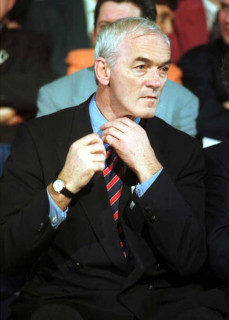
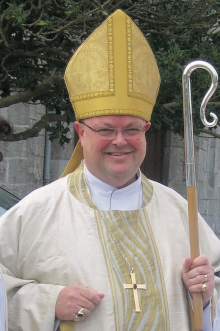
Eames spends his early years in Larne, with the family later moving to Belfast. He is educated at the city’s Belfast Royal Academy and Methodist College Belfast before going on to study at Queen’s University Belfast, graduating LL.B. (Upper Second Class Honours) in 1960 and earning a Ph.D. degree in canon law and history in 1963. During his undergraduate course at Queen’s, one of his philosophy lecturers is his future Roman Catholic counterpart, Cahal Daly.
Turning his back on legal studies for ordination in the Church of Ireland, Eames embarks on a three-year course at the divinity school of Trinity College, Dublin in 1960, but finds the course “intellectually unsatisfying.” In 1963 he is appointed curate assistant at Bangor Parish Church, becoming rector of St. Dorothea’s in Belfast in 1966, the same year he marries Christine Daly.
During his time at St. Dorothea’s, in the Braniel and Tullycarnet area of east Belfast, Eames develops a “coffee bar ministry” among young people but is interrupted by the Troubles. He turns down the opportunity to become dean of Cork and in 1974 is appointed rector of St. Mark’s in Dundela in east Belfast, a church with strong family links to C. S. Lewis.
On May 9, 1975, at the age of 38, Eames is elected bishop of the cross-border Diocese of Derry and Raphoe. Five years later, on May 30, 1980, he is translated to the Diocese of Down and Dromore. He is elected to Down and Dromore on April 23 and that election is confirmed on May 20, 1980. In 1986, he becomes the 14th Archbishop of Armagh and Primate of All Ireland since the Church of Ireland’s break with Rome. It is an appointment that causes some level of astonishment among other church leaders.
Drumcree Church, a rural parish near Portadown, becomes the site of a major political incident in 1996, when the annual Orangemen‘s march is banned by the Chief Constable of the Royal Ulster Constabulary from returning to the centre of Portadown via the nationalist Garvaghy Road after attending worship at Drumcree Church. Public unrest and violence escalate over the next three summers as other parades come under first police and later commission sanction.
Eames, as diocesan bishop and civil leader finds himself immersed in the search for a resolution to the issue. Within the wider Church of Ireland there is unease as it is a broad church in theology and politics including within its congregations nationalists in the south and unionists in the north. Eames, along with the rector of Drumcree, has to navigate this political and social controversy and seeks political assistance to diffuse tension. Some bishops in the Republic of Ireland call for Eames to close the parish church, including Bishop John Neill who later becomes Archbishop of Dublin. He refuses to do so, believing this action could precipitate greater unrest and possible bloodshed.
Eames is, for many years, a significant figure within the general Anglican Communion. In 2003, the self-styled ‘divine optimist’ is appointed Chairman of the Lambeth Commission on Communion, which examines significant challenges to unity in the Anglican Communion. The Commission publishes its report, the Windsor Report, on October 18, 2004.
At the Church of Ireland General Synod in 2006 Eames announces his intention to retire on December 31, 2006. Church law permits him to continue as primate until the age of 75 but he resigns, in good health, at the age of 69. On January 10, 2007, the eleven serving bishops of the Church of Ireland meet at St. Patrick’s Cathedral in Dublin and elect Alan Harper, Bishop of Connor, as Eames’s successor.
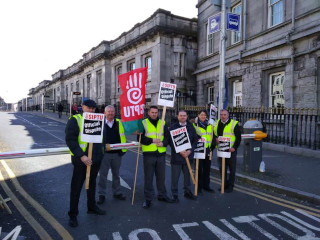
Tens of thousands of people have to make alternative travel arrangements on March 24, 2017 due to a strike at Bus Éireann over the company’s implementation of cost-reduction measures without union agreement. The bus and coach operator warns that the strike will worsen the company’s financial situation, which it describes as perilous.
Iarnród Éireann, the operator of the national railway network, says some Intercity services are affected by the dispute due to picketing. It says there is significant disruption, with some services cancelled and others curtailed. But Iarnród Éireann says special late-night trains for football fans returning from the Republic of Ireland vs. Wales match will operate to Cork, Limerick and Galway.
The Minister for TransportShane Ross says that he will “categorically” not be intervening during the strike and calls on both sides to get back to the talks. He says an industrial relations dispute is not a matter for the minister and that both parties should go to the Workplace Relations Commission and the Labour Court for talks. He adds that the only reason people are calling on him to intervene is to pay taxpayers’ money and he says he will not be doing that. He says the company needs to reform and that can be done maturely through talks by the two sides.
Dublin Bus services operate as normal. GO-BE, the joint venture company between Bus Éireann and Go-Bus, suspends its services between Cork and Dublin and the Dublin Airport. While it is not meant to be affected by the dispute, it is understood there are issues at its base in Cork and the service is suspended. Aircoach, which has a sizable part of the market for the Cork to Dublin route, contracts ten buses from a private bus operator to meet the additional demand.
The general manager of the Irish Citylink private bus service says the company has increased their departures by 25% on the Dublin to Galway route and other services around the country to meet demands. Irish Citylink usually has 100 daily departures on services that include 14 different towns on the “off motorway route” to Dublin from Galway, but has around 25 additional buses out to meet demands.
The Services, Industrial, Professional and Technical Union (SIPTU) issues a number of steps to its members to assist in ending the strike by Bus Éireann workers. Earlier, a SIPTU official says the blame for the strike must be laid at the door of management and the Minister for Transport Shane Ross.
Divisional Organiser Willie Noone says staff had “no other choice” but to strike in an attempt to protect their livelihoods, but acknowledges that it is unfortunate for commuters. He says that the unions had worked hard to keep staff at work to this point given the anger at company proposals to cut pay.
National Bus and Rail Union General Secretary Dermot O’Leary says disputes such as that at Bus Éireann are solved by discussions sitting around a table behind closed doors and that is where his union would like to be. He acknowledges the strike will exacerbate financial problems at Bus Éireann, but says his members have demanded for many weeks this action be taken in response to what the company has done since January.
Stephen Kent, Chief Commercial Officer with Bus Éireann, apologises to customers for the “highly regrettable” inconvenience caused by the strike. He says the company has run out of time and absolutely needs to implement the cost-cutting measures it has put forward. He adds that the company is doing everything it can to minimise all non-payroll costs and has eliminated all discretionary spending and that the issues at Bus Éireann can only be resolved through discussion with the workforce but they need to deliver work practice changes that will deliver urgently needed savings.
The strike represents a serious escalation of the Bus Éireann row, which could push the company over the edge. It lost €9.4m in 2016 and a further €50,000 a day in January 2017. But each strike day will cost another half a million, which the company insists is unsustainable. Management says that it had to proceed with unilateral implementation of cuts due to the financial crisis, and because unions would not agree to any reductions in take-home pay or unnecessary overtime. However, the unions have accused the company of seeking to introduce so-called yellow-pack terms and conditions in a race to the bottom, to groom the company for privatisation.
The strike affects businesses as well as disrupts the travel plans of 110,000 passengers each day, though not all are stranded. The National Transport Authority reminds passengers that there are alternative private operators on many routes. If Bus Éireann passengers defect to them, they may never return, further damaging revenue at the State-owned company. No further talks are planned as of this date.
Coveney is interested in yachting throughout most of his adult life. His yacht Golden Apple of The Sun, designed by Cork-based designer Ron Holland, is a successful competitor in the Admiral’s Cup in the 1970s. A later 50-foot yacht, Golden Apple, is used by the family for the “Sail Chernobyl” project. The family sails around the world to raise €650,000 for Chernobyl Children’s Project International, a charity which offers assistance to children affected by the 1986 Chernobyl disaster.
In March 1998 it becomes publicly known that the Moriarty Tribunal has questioned Coveney about whether he had a secret offshore account with Ansbacher Bank, a bank which had become notorious for facilitating tax evasion. Ten days later, on March 13, 1998, Coveney visits his solicitor to change his will. The following day, he dies in a fall from a seaside cliff while out walking alone. His son, Simon Coveney, insists that his father had never held an Ansbacher account. It later emerges that Hugh Coveney had $175,000 on deposit in the secret Cayman Islands-based bank. The account was closed in 1979.
The funeral of Hugh Coveney takes place at St. Michael’s Church in Blackrock, Cork on March 18, 1998. Simon Coveney is later elected to succeed his father in the resulting by-election on November 3, 1998.
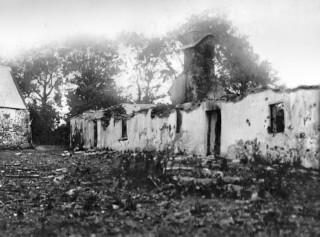
Irish Republican Army (IRA) volunteers occupying a farmhouse in Clonmult, County Cork are surrounded by a force of British Army, Royal Irish Constabulary (RIC) and Auxiliaries. In the action that follows, twelve IRA volunteers are killed, four wounded and four captured. A total of 22 people die in the ambush and subsequent executions – fourteen IRA members, two Black and Tans and six suspected informers.
The 4th battalion of the IRA First Cork Brigade, under Diarmuid O’Hurley and based around Midleton, Youghal and Cobh, had been a successful unit up until the Clonmult ambush. They had captured three RIC barracks and carried out an ambush in Midleton itself. In January 1921, the unit takes possession of a disused farmhouse overlooking the village of Clonmult. O’Hurley plans to ambush a military train at Cobh Junction on Tuesday, February 22, 1921 and at the time of the Clonmult action is scouting a suitable ambush site. However, according to historian Peter Hart, they “had become over-confident and fallen into a traceable routine.” An intelligence officer of the British Army Hampshire Regiment traces them to their billet at a farmhouse in Clonmult.
British troops, a party of the 2nd Battalion, Hampshire Regiment under the command of Lieutenant A. R. Koe, surround the house. Two IRA volunteers notice the advancing troops and open fire. Both are killed, but the shooting warns those sheltering inside the house, and a siege begins. A sortie from the house is attempted in the hope of gaining reinforcements from the local IRA company.
The acting IRA commander, Captain Jack O’Connell, manages to get away but three other volunteers are killed in the attempt. But O’Connell is unable to bring help in time. The Volunteers trapped inside make a desperate but unsuccessful attempt to escape through a narrow opening in the gable. Their hopes are dashed when British reinforcements arrive instead — regular RIC police, Black and Tans and Auxiliaries. The police also bring petrol, which an Army officer uses to set the thatched roof of the farmhouse on fire. With the farmhouse burning around them, an attempt is then made by the IRA to surrender.
What happens next is disputed. In his after-action report, Lieutenant Koe reports that at 6:30 PM six or seven rebels come out of the house with their hands up. As the Crown Forces go to meet them the remaining rebels in the house open fire. Some of the rebels outside the house are killed or wounded by the crossfire that ensues. The Crown Forces rush the house and the eight rebels inside are taken prisoner. By contrast, the surviving Volunteers claim that their men had surrendered in good faith, and had come out with their hands up, only to be shot by the police without any provocation. Opinion is divided amongst historians as to which version of the story to believe.
A total of twelve IRA Volunteers are killed in the action, with four more wounded and only four taken prisoner unscathed. Two of the IRA prisoners, Maurice Moore and Paddy O’Sullivan, are later executed in the Cork military barracks on April 28. Patrick Higgins, an IRA man who survived the killings, is sentenced to death but is reprieved due to the truce that ends the war on July 11. Hampshire Regiment historian Scott Daniell notes on the action that “like all the Irish operations, it was hateful to the British troops.”
The IRA suspects that an informer had led the British to the billet of the column wiped out at Clonmult, and over the following week, six alleged spies are executed by the IRA in the surrounding area. Mick Leahy, a local IRA officer, states that “things went to hell in the battallion” after Clonmult. Diarmuid O’Hurley, the commander of the battalion, is not at Clonmult but is later killed on May 28, 1921.
The organization is set up to take over the work of the Irish National Land League after its leadership is imprisoned. They raise money for the Land League prisoners and their dependants. They encourage women to resist eviction from their cottages. If families are evicted, the Ladies’ Land League provides wooden huts to the evicted families.
The ladies find themselves with additional work late in 1881. The Land League has started its own paper, United Ireland, in August 1881, but towards the end of the year the government tries to close it down. William O’Brien, the editor, continues to smuggle out copy from Kilmainham Gaol, but it falls to the ladies to get it printed. This is done first in London and then for a while in Paris. Eventually the ladies print and circulate it themselves from an office at 32 Lower Abbey Street.
On Sunday, March 12, 1881, just more than a month after the formation of the league, a pastoral letter of Archbishop of DublinEdward McCabe is read out in all the churches of the diocese. It condemns the league in the strongest terms, deploring that “our Catholic daughters, be they matrons or virgins, are called forth, under the flimsy pretext of charity, to take their stand in the noisy street of life.” McCabe is not representative of all bishops, particularly Archbishop of CashelThomas Croke, a strong supporter of the original league. Croke publishes a letter in the Freeman’s Journal challenging the “monstrous imputations” in McCabe’s pastoral.
The dissension is revived somewhat in the summer of 1882. McCabe, now a Cardinal, and another bishop try to have a public condemnation of the Ladies’ Land League inserted into an address by the Catholic Bishops of Ireland in June. The other bishops resist on the basis that it would probably do more harm than good. They content themselves with expressing their hope that “the women of Ireland will continue to be the glory of their sex and the noble angels of stainless modesty.” When newspapers interpret this as a condemnation of the league, Croke writes again to the Freeman’s Journal to deny that this had been the intention of the bishops.
The order banning the Irish National Land League makes no direct reference to the Ladies’ Land League, but many police officers try to insist that the ban includes the women’s group. Eventually, on December 16, 1881, Inspector General Hillier of the Royal Irish Constabulary (RIC) orders the police to stop the women’s meetings. Anna Parnell defiantly issues a notice to all Ladies’ Land League branches in the country calling on them all to hold a meeting on January 1, 1882.
The prominent resident magistrate, Major Clifford Lloyd, claims that the huts built for evicted tenants are being used as posts from which the evicted tenants can intimidate anyone who attempts to take over their vacated holdings. In April 1882, he threatens that anyone attempting to erect huts will be imprisoned. That month, Anne Kirke is sent down from Dublin to Tulla, County Clare, to oversee the erection of huts for a large number of evicted tenants. Lloyd has her arrested and imprisoned for three months.
The government does not wish to be seen to use the Coercion Act to imprison women, but another stratagem is used. In December 1881 21-year-old Hannah Reynolds is imprisoned under an ancient statute from the reign of Edward III, the original purpose of which was to keep prostitutes off the streets. The statute empowers magistrates to imprison “persons not of good fame” if they do not post bail as a guarantee of their good behavior. Since Reynolds claims her behavior is good, she refuses to pay bail and spends a month in Cork gaol. In all, thirteen women serve jail sentences under this statute.
On May 3, 1882, Parnell and other leaders are released from jail after agreeing to the Kilmainham Treaty. This includes some improvement in the 1881 Land Act. He now wishes to turn his attention more to the Home Rule question. The Irish National Land League is replaced by the Irish National League. Parnell also wants to see an end to the Ladies’ Land League. There had been increased violence while he was in jail, and he sees Anna as too radical. The organization has an overdraft of £5,000 which Parnell agrees to clear from central funds only if the organization is dissolved. At a meeting of the Central Committee on August 10, 1882, the Ladies’ Land League votes to dissolve itself. Anna Parnell herself is not in attendance at that meeting having suffered a physical and mental collapse after the sudden death of her sister Fanny the previous month.
The records of the Ladies’ Land League are lost to history in 1916. Jennie Wyse Power, who had served on the Central Committee, had kept them in her house in Henry Street, Dublin. When fire spreads from Sackville Street during the 1916 Easter Rising, her house is destroyed, and the records perish in the blaze.
(Pictured: Lady Land Leaguers at work at the Dublin office)
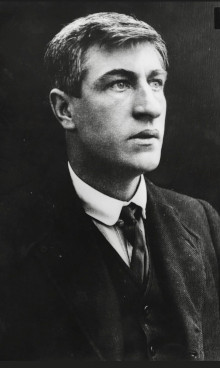
Larkin is born to Irish parents in Liverpool, England, on January 21, 1876. He and his family later move to a small cottage in Burren, County Down. Growing up in poverty, he receives little formal education and begins working in a variety of jobs while still a child.
In 1905, Larkin is one of the few foremen to take part in a strike on the Liverpool docks. He is elected to the strike committee, and although he loses his foreman’s job as a result, his performance so impresses the National Union of Dock Labourers (NUDL) that he is appointed a temporary organiser.
Larkin moves to Belfast in 1907 to organise the city’s dock workers for the NUDL. He succeeds in unionising the workforce, and as employers refuse to meet the wage demands, he calls the dockers out on strike in June. Carters and coal men soon join in, the latter settling their dispute after a month.
In 1908, Larkin moves south and organises workers in Dublin, Cork, and Waterford, with considerable success. His involvement, against union instructions, in a dispute in Dublin results in his expulsion from the NUDL. The union later prosecutes him for diverting union funds to give strike pay to Cork workers engaged in an unofficial dispute. After trial and conviction for embezzlement in 1910, he is sentenced to prison for a year. This is widely regarded as unjust, and the Lord Lieutenant of Ireland, Lord Aberdeen, pardons him after he has served three months in prison.
After his expulsion from the NUDL, Larkin founds the Irish Transport and General Workers’ Union (ITGWU) at the end of December 1908. The organisation exists today as the Services Industrial Professional & Technical Union (SIPTU). In early 1909, Larkin moves to Dublin, which becomes the main base of the ITGWU and the focus of all his future union activity in Ireland.
In June 1911, Larkin establishes a newspaper, The Irish Worker and People’s Advocate, as a pro-labour alternative to the capitalist-owned press. In 1912, in partnership with James Connolly, Larkin helps form the Irish Labour Party.
In early 1913, Larkin achieves some successes in industrial disputes in Dublin. Two major employers, Guinness and the Dublin United Tramway Company, are the main targets of Larkin’s organising ambitions. The chairman of the Dublin United Tramway Company, industrialist and newspaper proprietor William Martin Murphy, is determined not to allow the ITGWU to unionise his workforce. On August 15, he dismisses 40 workers he suspects of ITGWU membership, followed by another 300 over the next week. On August 26, 1913, the tramway workers officially go on strike.
The resulting industrial dispute is the most severe in Ireland’s history. Employers in Dublin engage in a sympathetic lockout of their workers when the latter refuses to sign the pledge, employing blackleg labour from Britain and from elsewhere in Ireland. Guinness, the largest employer in Dublin, refuses the employers’ call to lock out its workers but it sacks 15 workers who struck in sympathy.
For seven months the lockout affects tens of thousands of Dublin workers and employers, with Larkin portrayed as the villain by Murphy’s three main newspapers, the Irish Independent, the Sunday Independent, and the Evening Herald, and by other bourgeois publications in Ireland. The lockout eventually concludes in early 1914 when calls by James Connolly and Larkin for a sympathetic strike in Britain are rejected by the British Trades Union Congress (TUC). Larkin’s attacks on the TUC leadership for this stance also lead to the cessation of financial aid to the ITGWU.
Some months after the lockout ends, Larkin leaves for the United States. He intends to recuperate from the strain of the lockout and raise funds for the union. Once there he becomes a member of the Socialist Party of America and is involved in the Industrial Workers of the World union (the Wobblies). He becomes an enthusiastic supporter of the Soviet Union and is expelled from the Socialist Party of America in 1919 along with numerous other sympathisers of the Bolsheviks during the Red Scare of that year.
Upon his return to Ireland in April 1923, Larkin receives a hero’s welcome and immediately sets about touring the country meeting trade union members and appealing for an end to the Irish Civil War. In September 1923, Larkin forms the Irish Worker League (IWL), which is soon afterwards recognised by the Communist International as the Irish section of the world communist movement.
James Larkin dies in his sleep on January 30, 1947, in the Meath Hospital in Dublin. Fr. Aloysius Travers, OFM, who had administered last rites to James Connolly in 1916, also administers extreme unction to Larkin. His funeral mass is celebrated by the Catholic Archbishop of Dublin, John Charles McQuaid, who had visited him in hospital before he died, and thousands line the streets of the city as the hearse passes through on the way to Glasnevin Cemetery.
Today a statue of “Big Jim” stands on O’Connell Street in Dublin, completed by Oisín Kelly and unveiled in 1979.
In 2013 Colton completes, and is conferred with, a PhD in Law also at Cardiff University. His academic areas of interest are church law, the law of the Church of Ireland, law within Anglicanism, the interface between the laws of religious communities and the laws of States (particularly in Ireland and Europe), human rights, education law, and charity law. In 2014 he is appointed as an honorary research fellow at the Cardiff School of Law and Politics of Cardiff University, and its Centre for Law and Religion.
Colton is married to Susan Colton, who is deputy principal of a primary school, and they have two adult sons. He is the first Church of Ireland bishop to openly support same-sex marriage. He is involved in education debates and in charity work. He chairs the board of directors of Saint Luke’s Charity, Cork, which focuses on the elderly and dementia sufferers. He is also chairman of the board of governors of Midleton College.
At the episcopal ordination of Bishop Fintan Gavin as Catholic bishop of Cork and Ross in June 2019, Colton presents the crosier at Bishop Gavin’s own request.
As of June 2020, Colton is the longest-serving bishop of Cork, Cloyne and Ross since bishop William Lyon in 1617 and also the longest serving bishop still in office in the Anglican churches of Ireland, England, Scotland and Wales. He is the author of almost a dozen book chapters, mostly in the area of the interface between religion and law.
Edmund Mortimer, 3rd Earl of March and jure uxoris Earl of Ulster, is killed at Cork on December 27, 1381. His sudden death leaves the colony without effective leadership and prompts a military crisis.
Lionel’s late wife, Elizabeth, had been daughter and heiress of William Donn de Burgh, 3rd Earl of Ulster, and Lionel had himself been created Earl of Ulster before his marriage. Mortimer inherits the title Earl of Ulster on Lionel’s death. Therefore, the Earl of March not only represents one of the chief Anglo-Norman lordships in Ireland in right of his wife Philippa, but Philippa’s line is also the second most senior line of descent in the succession to the crown, after Edward the Black Prince and his son, King Richard II of England. John of Gaunt, younger brother of Prince Edward, had become the 1st Duke of Lancaster and thus the source of the House of Lancaster‘s claim to the throne.
This marriage has, therefore, far-reaching consequences in English history, ultimately giving rise to the claim of the House of York to the crown of England contested in the Wars of the Roses between the Yorks and the Lancasters; Edward IV being descended from the second adult son of Edward III as great-great-grandson of Philippa, countess of March, and in the male line from Edmund of Langley, 1st Duke of York and the fourth adult son of Edward III. Mortimer’s son, Roger Mortimer, 4th Earl of March, becomes heir presumptive to the English crown during the reign of Richard II.
Mortimer, now styled Earl of March and Ulster, becomes Earl Marshal of England in 1369, and is employed in various diplomatic missions during the following years. He is a member of the committee appointed by the Peers to confer with the Commons in 1373, the first instance of such a joint conference since the institution of representative parliaments on the question of granting supplies for John of Gaunt’s war in France.
Mortimer participates in the opposition to Edward III and the court party, which grows in strength towards the end of the reign, taking the popular side and being prominent in the Good Parliament of 1376 among the lords who support the Prince of Wales and oppose the Court Party and John of Gaunt. The Speaker of the House of Commons in this parliament is Mortimer’s steward, Peter de la Mare, who firmly withstands John of Gaunt in stating the grievances of the Commons, in supporting the impeachment of several high court officials, and in procuring the banishment of the king’s mistress, Alice Perrers. Mortimer is a member of the administrative council appointed by the same parliament after the death of Edward, the Black Prince, to attend the king and advise him in all public affairs.
Following the end of the Good Parliament its acts are reversed by John of Gaunt, Mortimer’s steward is jailed, and he himself is ordered to inspect Calais and other remote royal castles as part of his duty as Marshal of England. He instead chooses to resign the post.
On the accession of Richard II in 1377, Mortimer becomes a member of the standing council of government; though as husband of the heir-presumptive to the crown he wisely refrains from claiming any actual administrative office. The richest and most powerful person in the realm is, however, the king’s uncle John of Gaunt, whose jealousy leads Mortimer to accept the office of Lord Lieutenant of Ireland in 1379. He succeeds in asserting his authority in eastern Ulster, but fails to subdue the O’Neill dynasty farther west. Proceeding to Munster to put down the turbulent southern chieftains, he is killed at Cork on December 27, 1381. He is buried in Wigmore Abbey, of which he had been a benefactor, and where his wife Philippa is also interred.
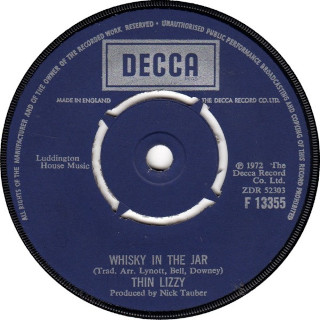
“Whiskey in the Jar” is the tale of a highwayman or footpad who, after robbing a military or government official, is betrayed by a woman; whether she is his wife or sweetheart is not made clear. Various versions of the song take place in County Kerry, Kilmoganny, Cork, Sligo and other locales throughout Ireland. It is also sometimes placed in the American South, in various places among the Ozarks or Appalachians, possibly due to Irish settlement in these places. Names in the song change, and the official can be a Captain or a Colonel, called Farrell or Pepper among other names. The protagonist’s wife or lover is sometimes called Molly, Jenny, Emzy, or Ginny among various other names. The details of the betrayal are also different, being either betraying him to the person he robbed and replacing his ammunition with sand or water, or not, resulting in his killing the person.