seamus dubhghaill

Promoting Irish Culture and History from Little Rock, Arkansas, USA


Leave a comment

Death of Novelist Edith Anna Œnone Somerville

edith-somerville

Edith Anna Œnone Somerville, Irish novelist who habitually signs herself as “E. Œ. Somerville,” dies at Castletownshend, County Cork, at the age of 91 on October 8, 1949. She writes in collaboration with her second cousin, Violet Florence Martin, who writes under the pseudonym Martin Ross. Together they publish a series of fourteen stories and novels under the pseudonym Somerville and Ross, the most popular of which are The Real Charlotte and Some Experiences of an Irish R. M., published in 1899.

The eldest of eight children, Somerville is born on the island of Corfu, then part of the United States of the Ionian Islands, a British protectorate where her father is stationed. A year later, her father retires to Drishane, Castletownshend, County Cork, where Somerville grows up. She receives her primary education at home, and then attends Alexandra College in Dublin. In 1884 she studies art in Paris, and then spends a term at the Westminster School of Art in Dean’s Yard, Westminster. At home, riding and painting are her absorbing interests.

In January 1886, she meets her second cousin, Violet Martin, and their literary partnership begins the following year. Their first book, An Irish Cousin, appears in 1889, under the names Geilles Herring (from the maiden name of her ancestor, the wife of Sir Walter de Somerville of Linton and Carnwath) and Martin Ross, though the pen names are dropped after the first edition. In 1898, Edith Somerville goes to paint at the Etaples art colony, accompanied by Violet. There they profit from their stay by conceiving together the stories later gathered in Some Experiences of an Irish R. M., completed the following year. By the time Violet dies in 1915, they have published fourteen books together. Her cousin’s death stuns Edith, who continues to write as “Somerville and Ross,” claiming that they keep in contact through spiritualist séances.

Somerville is a devoted sportswoman who in 1903 has become master of the Carbery West Foxhounds. She is also active in the suffragist movement, corresponding with Dame Ethel Smyth. She is in London still recovering from the shock of Violet’s death when the 1916 Easter Rising breaks out. On May 9 she writes a letter to The Times, blaming the British government for the state of affairs in Ireland. After that she tends towards Nationalism and, as an adept musician at parties, she specializes in Irish tunes and Nationalist songs.

She has exhibitions of her pictures in Dublin and in London between 1920 and 1938 and is active as an illustrator of children’s picture books and sporting picture books.

In 1936, her brother Henry Boyle Townsend Somerville, a retired Vice-Admiral in the Royal Navy, is killed by the Irish Republican Army (IRA) at the family home of Castletownshend. She finishes his book Will Mariner after his death.


Leave a comment

Birth of Playwright & Poet Lennox Robinson

lennox-robinson

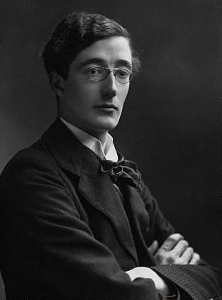
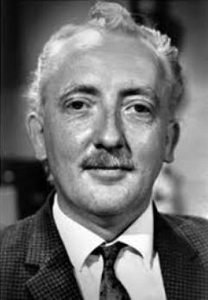
Esmé Stuart Lennox Robinson, playwright, poet, theatre producer, and director who is involved with the Abbey Theatre, is born in Westgrove, Douglas, County Cork, on October 4, 1886.

Robinson is raised in a Protestant and Unionist family in which he is the youngest of seven children. His father, Andrew Robinson, is a middle-class stockbroker who in 1892 decides to become a clergyman in the Church of Ireland in the small Ballymoney parish, near Ballineen in West Cork. A sickly child, Robinson is educated by private tutor and at Bandon Grammar School. In August 1907, his interest in the theatre begins after he goes to see an Abbey production of plays by W.B. Yeats and Lady Gregory at the Cork Opera House. He publishes his first poem that same year. His first play, The Cross Roads, is performed in the Abbey in 1909 and he becomes manager of the theatre towards the end of that year. He resigns in 1914 as a result of a disastrous tour of the United States but returns in 1919. He is appointed to the board of the theatre in 1923 and continues to serve in that capacity until his death. His Abbey career and production involvement can be found in the Abbey archives.

As a playwright, Robinson shows himself as a nationalist with plays like Patriots (1912) and Dreamers (1915). On the other hand, he belongs to a part of Irish society which is not seen as fully Irish. This division between the majority native Irish (Roman Catholics) on one side and the Anglo-Irish (Protestants) on the other can be seen in a play such as The Big House (1926), which depicts the burning of a Protestant manor home by the Irish Republican Army (IRA). Robinson’s most popular play is The Whiteheaded Boy (1916).

Other plays include Crabbed Youth and Age (1924), The Far Off Hills (1928), Drama at Inish (1933), and Church Street (1935). Drama at Inish, which is presented in London and on Broadway as Is Life Worth Living?, is revived as part of the 2011 season at the Shaw Festival at Niagara-on-the-Lake, Ontario, Canada, with Mary Haney in the role of Lizzie Twohig. Robinson’s fiction includes Eight Short Stories (1919). In 1931 he publishes a biography of Bryan Cooper, who had recently died. In 1951, he publishes Ireland’s Abbey Theatre, the first full-length history of the company.

He publishes an edited edition of Lady Gregory’s diaries in 1947. In 1958 he co-edits with Donagh MacDonagh The Oxford Book of Irish Verse. He is also a director and producer, in 1930 producing a play by Irish playwright Teresa Deevy called The Reapers. In 1931 he is co-director of A Disciple along with W.B. Yeats and Walter Starkie.

Melancholic and alcoholic in later years, Lennox Robinson dies in Monkstown, County Dublin, on October 15, 1958. He is buried St. Patrick’s Cathedral.


Leave a comment

The Great Dublin Lockout

great-dublin-lockout

The Great Dublin Lockout, a major industrial dispute between approximately 20,000 workers and 300 employers, begins in Dublin on August 26, 1913, and lasts until January 18, 1914. It is often viewed as the most severe and significant industrial dispute in Irish history.

Irish workers live in terrible conditions in tenements. The infant mortality rate among the poor is 142 per 1,000 births, extraordinarily high for a European city. Poverty is perpetuated in Dublin by the lack of work for unskilled workers, who lack any form of representation before trade unions are founded.

James Larkin, the main protagonist on the side of the workers in the dispute, is a docker in Liverpool and a union organiser. In 1907 he is sent to Belfast as local organiser of the British-based National Union of Dock Labourers (NUDL). His tactic of the sympathetic strike is deemed highly controversial and as a result Larkin is transferred to Dublin.

Larkin sets about organising the unskilled workers of Dublin, which is a cause of concern for the NUDL, who are reluctant to engage in a full-scale industrial dispute with the powerful Dublin employers. They suspended Larkin from the NUDL in 1908. Larkin then leaves the NUDL and sets up the Irish Transport and General Workers’ Union (ITGWU), the first Irish trade union to cater for both skilled and unskilled workers.

Another important figure in the rise of an organised workers’ movement in Ireland at this time is James Connolly, an Edinburgh-born Marxist of Irish parentage. In 1911, Connolly is appointed the ITGWU’s Belfast organiser. In 1912, Connolly and Larkin form the Irish Labour Party to represent workers in the imminent Home Rule Bill debate in Parliament.

Foremost among employers opposed to trade unionism in Ireland is William Martin Murphy, Ireland’s most prominent capitalist, born in Castletownbere, County Cork. In 1913, Murphy is chairman of the Dublin United Tramway Company and owns Clery’s department store. Murphy is vehemently opposed to trade unions, which he sees as an attempt to interfere with his business. In particular, he is opposed to Larkin, whom he sees as a dangerous revolutionary.

The resulting industrial dispute is the most severe in Ireland’s history. Employers in Dublin lock out their workers and employ blackleg labour from Britain and elsewhere in Ireland. Dublin’s workers apply for help and are sent £150,000 by the British Trades Union Congress (TUC) and other sources in Ireland, doled out dutifully by the ITGWU.

The “Kiddies’ Scheme,” allowing for the starving children of Irish strikers to be temporarily looked after by British trade unionists, is blocked by the Roman Catholic Church and especially the Ancient Order of Hibernians, who claim that Catholic children will be subject to Protestant or atheist influences when in Britain. The Church supports the employers during the dispute, condemning Larkin as a socialist revolutionary.

Guinness, the largest employer and biggest exporter in Dublin, refuses to lock out its workforce. It has a policy against sympathetic strikes and expects its workers, whose conditions are far better than the norm in Ireland, not to strike in sympathy. Six who do strike are dismissed.

Strikers use mass pickets and intimidation against strike breakers, who are also violent towards strikers. The Dublin Metropolitan Police baton charge worker’s rallies, including a rally on Sackville Street which results in two deaths and over 300 injuries. James Connolly, Larkin, and ex-British Army Captain Jack White form a worker’s militia, the Irish Citizen Army, to protect workers’ demonstrations.

For seven months, the lockout affects tens of thousands of Dublin families. The lock-out eventually concludes in January 1914, when the Trades Union Congress (TUC) in Britain rejects Larkin and Connolly’s request for a sympathetic strike. Most workers, many of whom are on the brink of starvation, go back to work and sign pledges not to join a union. The ITGWU is badly damaged by its defeat in the Lockout and is further hit by the departure of Larkin to the United States in 1914 and the execution of Connolly, one of the leaders of the Easter Rising in 1916.

Although the actions of the ITGWU are unsuccessful in achieving substantially better pay and conditions for workers, they mark a watershed in Irish labour history. The principle of union action and workers’ solidarity has been firmly established. No future employer would ever try to “break” a union in the way that Murphy attempted with the ITGWU.


Leave a comment

The Assassination of Michael Collins

michael-collins

Michael Collins, soldier and politician who is a leading figure in the struggle for Irish independence in the early 20th century, is shot and killed in ambush at Béal na Bláth, County Cork, on August 22, 1922.

In August 1922, the Irish Civil War seems to be winding down. The Irish Free State has regained control of most of the country and Collins is making frequent trips to inspect areas recently recovered from anti-Treaty forces.

His plan to travel to his native Cork on August 20 is considered particularly dangerous and he is strenuously advised against it by several trusted associates. County Cork is an Irish Republican Army (IRA) stronghold, much of it still held by anti-Treaty forces. Yet he seems determined to make the trip without delay. He has fended off a number of attempts on his life in the preceding weeks and has acknowledged more than once, in private conversation, that the Civil War might end his life at any moment. On several occasions Collins assures his advisors that they will not shoot him in his own county.

On August 22, 1922, Collins sets out from Cork City on a circuitous tour of West Cork. He passes first through Macroom then takes the Bandon road via Crookstown. This leads through Béal na Bláth, an isolated crossroads. There they stop at a local pub, now known as the The Diamond Bar, to ask a question of a man standing at the crossroad. The man turns out to be an anti-Treaty sentry. He and an associate recognise Collins in the back of the open-top car. As a result, an ambush is laid by an anti-Treaty column at that point, on the chance that the convoy might come through again on their return journey.

Shortly before 8:00 PM, Collins’ convoy approaches Béal na Bláth for the second time. By that time most of the ambush party has dispersed and gone for the day, leaving just five or six men on the scene. Two are disarming a mine in the road, while three on a laneway overlooking them, provide cover. A dray cart, placed across the road, remains at the far end of the ambush site.

Shots are exchanged. Collins, who suffers a head wound, is the only fatality. Almost every other detail of what happens is uncertain, due to conflicting reports from participants and other flaws in the record.

michael-collins-body

Some of the most disputed details include how the shooting starts, what kind of fire the convoy comes under, where the ambushers’ first shots strike, where Collins is and what he is doing when he is hit, whether anyone else is wounded, whether the armoured car’s machine gun is fully functional throughout the engagement, who moves Collins’ body, and who is nearby when Collins falls.

Many questions have been raised concerning the handling of Collins’s remains immediately following his death. Among them are the inordinately long time the convoy takes to cover the twenty miles back to Cork City, who searched his clothes, and what became of documents he is known to have been carrying on his person.

Collins’s body is transported by sea from Cork to Dublin. He lay in state for three days in Dublin City Hall where tens of thousands of mourners file past his coffin to pay their respects, including many British soldiers departing Ireland who had fought against him. His funeral mass takes place at Dublin’s Pro Cathedral where a number of foreign and Irish dignitaries are in attendance. Some 500,000 people attend his funeral, almost one fifth of the country’s population at that time.

No official inquiry is ever undertaken into Collins’s death and consequently there is no official version of what happened, nor are there any authoritative, detailed contemporary records.

An annual commemoration ceremony takes place each year in August at the ambush site at Béal na Bláth, County Cork, organised by The Béal na mBláth Commemoration Committee. There is also a remembrance ceremony in Dublin’s Glasnevin Cemetery at Collins’s grave on the anniversary of his death.


Leave a comment

Birth of Seán Ó Riada, Composer of Irish Traditional Music

seán-o-riada

Seán Ó Riada, Irish composer and arranger of Irish traditional music, is born John Reidy in Cork City on August 1, 1931. Through his incorporation of modern and traditional techniques he becomes the single most influential figure in the revival of Irish traditional music during the 1960s.

Ó Riada receives his primary education at St. Finbarr’s College, Farranferris. He moves to St. Munchin’s College in Limerick where he completes his Leaving Certificate in 1948. He plays violin, piano, and organ, and studies Greek and Latin classics at University College Cork, with Aloys Fleischmann and graduates in 1952. While at College, Ó Riada is the auditor of the UCC Philosophical Society.

Ó Riada’s career begins in 1954 as a music director at Radio Éireann, after which he works at the Abbey Theatre from 1955 to 1962. He lectures in music at University College Cork from 1963 until his death in 1971. He leaves a lasting influence as founder and director of the ensemble Ceoltóirí Chualann beginning in 1961. Ó Riada becomes a household name in Ireland through his participation in Ceoltóirí Chualann, compositions, writings, and broadcasts. His best-known pieces in the classical tradition include Nomos No. 1: Hercules Dux Ferrariae (1957), but he becomes particularly famous for his film scores Mise Éire (1959) and Saoirse? (1960).

In 1963 Ó Riada is appointed lecturer in music at University College Cork. He moves to Cúil Aodha in West Cork, an Irish-speaking area, where he establishes Cór Chúil Aodha, a male voice choir.

He becomes involved in Irish politics and is a friend of several influential leaders. Ó Riada drinks regularly at a local pub which still advertises itself as being his local. He develops cirrhosis of the liver. He is flown to King’s College Hospital in London for treatment and dies there on October 3, 1971, two months after his 40th birthday. He is buried in St. Gobnait‘s graveyard, Baile Bhuirne, County Cork. Willie Clancy played at his funeral.

Two schools are named “Scoil Uí Riada” after him – a Gaelscoil in Kilcock, County Kildare, and another in Bishopstown, Cork City. In 2008, a life-sized statue is erected in the grounds of Sépéil Naomh Gobnait, Cúil Aodha.


Leave a comment

Death of Jeremiah O’Donovan Rossa

jeremiah-odonovan-rossa

Jeremiah O’Donovan Rossa, Irish Fenian leader and prominent member of the Irish Republican Brotherhood, dies suddenly in Staten Island, New York, on June 29, 1915.

Jeremiah O’Donovan Rossa is born Jeremiah O’Donovan at Reenascreena, Rosscarbery, County Cork, on September 10, 1831. Rossa becomes a shopkeeper in Skibbereen where, in 1856, he establishes the Phoenix National and Literary Society, the aim of which is “the liberation of Ireland by force of arms.” This organisation later merges with the Irish Republican Brotherhood (IRB), founded two years later in Dublin.

In December 1858, Roosa is arrested and jailed without trial until July 1859. He is charged with plotting a Fenian rising in 1865, put on trial for high treason, and sentenced to penal servitude for life due to previous convictions. He serves his time in Pentonville, Portland, and Chatham prisons in England.

In an 1869 by-election, Roosa is returned to the British House of Commons for the Tipperary constituency, defeating the Liberal Catholic Denis Caulfield Heron by 1054 to 898 votes. The election is declared invalid because Rossa is an imprisoned felon.

After giving an understanding that he will not return to Ireland, Rossa is released as part of the Fenian Amnesty of 1870. Boarding the S.S. Cuba, he leaves for the United States with his friend John Devoy and three other exiles. Together they were dubbed “The Cuba Five.”

Rossa takes up residence in New York City, where he joins Clan na Gael and the Fenian Brotherhood. He organises the first ever bombings by Irish republicans of English cities in what is called the “dynamite campaign.” The campaign lasts through the 1880s and makes him infamous in Britain. The British government demands his extradition from America but without success.

In 1885, Rossa is shot outside his office near Broadway by an Englishwoman, Yseult Dudley, but his wounds are not life-threatening. He is allowed to visit Ireland in 1894, and again in 1904. On the latter visit, he is made a “Freeman of the City of Cork.”

Rossa is seriously ill in his later years and is finally confined to a hospital bed in St. Vincent’s Hospital, Staten Island, where he dies at the age of 83 on June 29, 1915. His body is returned to Ireland for burial and a hero’s welcome. The funeral at Glasnevin Cemetery on August 1, 1915, is a huge affair, garnering substantial publicity for the Irish Volunteers and the IRB at time when a rebellion, later to emerge as the Easter Rising, is being actively planned. The graveside oration given by Patrick Pearse remains one of the most famous speeches of the Irish independence movement stirring his audience to a call to arms.


Leave a comment

The Bombing of Air India Flight 182

air-india-182

Air India Flight 182, an Air India flight operating on the Montreal, CanadaLondon, U.K.Delhi, India route, is destroyed by a bomb on June 23, 1985, at an altitude of 31,000 feet and crashes into the Atlantic Ocean while in Irish airspace.

It is the first bombing of a 747 jumbo jetliner. A total of 329 people are killed, including 268 Canadian citizens, 27 Britons, and 24 Indians. The majority of the victims were Canadian citizens of Indian ancestry. The incident is the largest mass murder in Canadian history. It is the deadliest terrorist attack involving an airplane until the September 11, 2001, attacks in the United States in 2001. The bombing of Air India 182 occurs at the same time as the Narita Airport bombing in Japan. Investigators believe that the two plots are linked, and that those responsible are aiming for a double bombing. However, the bomb at Narita explodes before it can be loaded onto a plane.

At 07:14:01 GMT, the crew of Air India 182 “squawked 2005,” a routine activation of its aviation transponder, as requested by Shannon International Airport Air Traffic Control (ATC). The plane then disappears from radar. A bomb in a Sanyo tuner in a suitcase in the forward cargo hold explodes while the plane is at 31,000 feet at 51°3.6′N 12°49′W. It causes rapid decompression and the break-up of the aircraft in mid-air. The wreckage settles in 6,700-feet deep water off the southwest coast of Ireland, 120 miles offshore of County Cork. No “mayday” call is received by Shannon ATC. ATC asks aircraft in the area to try to contact Air India, to no avail. By 07:30:00 GMT, ATC has declared an emergency and requests nearby cargo ships and the Irish Naval Service vessel Aisling to begin searching for the aircraft.

The bomb kills all 22 crew and 307 passengers. One hundred thirty-two bodies are recovered. The remaining 197 are lost at sea. Eight bodies exhibit “flail pattern” injuries, indicating that they had exited the aircraft before it hit the water. This is a sign that the aircraft had broken up in mid-air. Twenty-six bodies show signs of hypoxia (lack of oxygen). Twenty-five, mostly victims who were seated near windows, show signs of explosive decompression. Twenty-three have signs of “injuries from a vertical force.” Twenty-one passengers are found with little or no clothing.

Canadian law enforcement determines that the main suspects in the bombing are members of the Sikh militant group Babbar Khalsa. The attack is thought to be a retaliation against India for the operation carried out by the Indian Army Operation Blue Star to flush out several hundred Sikh militants who were within the premises of the Golden temple and the surrounding structures ordered by the Indian government, headed by Prime Minister Indira Gandhi. Though a handful of members are arrested and tried, Inderjit Singh Reyat, a Canadian national, remains the only person convicted of involvement in the bombing. Singh pleads guilty in 2003 to manslaughter. He is sentenced to 15 years in prison for building the bombs that exploded aboard Flight 182 and at Narita.

The subsequent investigation and prosecution lasts almost twenty years and is the most expensive trial in Canadian history, costing nearly CAD 130 million. The Governor General-in-Council in 2006 appoints the former Supreme Court Justice John C. Major to conduct a commission of inquiry. His report is completed and released on June 17, 2010. It concludes that a “cascading series of errors” by the government of Canada, the Royal Canadian Mounted Police (RCMP), and the Canadian Security Intelligence Service (CSIS) had allowed the terrorist attack to take place.


Leave a comment

Birth of Theobald Wolfe Tone

theobald-wolfe-tone

Theobald Wolfe Tone, posthumously known as Wolfe Tone, a leading Irish revolutionary figure and one of the founding members of the United Irishmen, is born on June 20, 1763, in Dublin. He is regarded as the father of Irish republicanism and leader of the Irish Rebellion of 1798.

The son of a coach maker, Tone studies law and is called to the Irish bar in 1789 but soon gives up his practice. In October 1791 he helps found the Society of United Irishmen, initially a predominantly Protestant organization that works for parliamentary reforms, such as universal suffrage and Roman Catholic emancipation. In Dublin in 1792 he organizes a Roman Catholic convention of elected delegates that force Parliament to pass the Catholic Relief Act of 1793. Tone himself, however, is anticlerical and hopes for a general revolt against religious creeds in Ireland as a sequel to the attainment of Irish political freedom.

By 1794, he and his United Irishmen friends begin to seek armed aid from Revolutionary France to help overthrow English rule. After an initial effort fails, Tone goes to the United States and obtains letters of introduction from the French minister at Philadelphia to the Committee of Public Safety in Paris. In February 1796 Tone arrives in the French capital, presents his plan for a French invasion of Ireland, and is favourably received. The Directory then appoints one of the most brilliant young French generals, Lazare Hoche, to command the expedition and makes Tone an adjutant in the French army.

On December 16, 1796, Tone sails from Brest with 43 ships and nearly 14,000 men. The ships are badly handled and, after reaching the coast of west Cork and Kerry, are dispersed by a storm. Tone again brings an Irish invasion plan to Paris in October 1797, but the principal French military leader, Napoleon Bonaparte, takes little interest. When insurrection breaks out in Ireland in May 1798, Tone can only obtain enough French forces to make small raids on different parts of the Irish coast. In September he enters Lough Swilly, County Donegal, with 3,000 men and is captured there.

At his trial in Dublin on November 10, 1798, he defiantly proclaims his undying hostility to England and his desire “in fair and open war to produce the separation of the two countries.” He is found guilty and is sentenced to be hanged on November 12. Early in the morning of the day he is to be hanged, Tone cuts his throat with a penknife.

Theobald Wolfe Tone dies of his self-inflicted wound on November 19, 1798, at the age of 35 in Provost’s Prison, Dublin, not far from where he was born. He is buried in Bodenstown, County Kildare, near his birthplace at Sallins, and his grave is in the care of the National Graves Association.


Leave a comment

Inaugural Aer Lingus Flight

aer-lingus-iolarFive days after being registered as an airline, the inaugural Aer Lingus flight takes off from Baldonnel Airfield just outside of Dublin on May 27,1936. Five passengers are on the six-seater De Havilland 84 Dragon, named Iolar, bound for Bristol (Whitchurch) Airport, United Kingdom.

Aer Lingus, the flag carrier airline of Ireland and the second-largest airline in Ireland, is founded on April 15, 1936, with a capital of £100,000. Its first chairman is Seán Ó hUadhaigh. Pending legislation for Government investment through a parent company, Aer Lingus is associated with Blackpool and West Coast Air Services which advance the money for the first aircraft, and operate with Aer Lingus under the common title Irish Sea Airways. Aer Lingus Teoranta is registered as an airline on May 22, 1936. The name Aer Lingus is an anglicisation of the Irish form Aer Loingeas, which means Air Fleet. The name is proposed by Richard F. O’Connor, who is County Cork Surveyor, as well as an aviation enthusiast.

Later that year, the airline acquires its second aircraft, a four-engined biplane De Havilland 86 Express named “Éire”, with a capacity of 14 passengers. This aircraft provides the first air link between Dublin and London by extending the Bristol service to Croydon. At the same time, the DH84 Dragon is used to inaugurate an Aer Lingus service on the Dublin-Liverpool route.

Aer Lingus currently operates an all-Airbus aircraft fleet serving Europe, North Africa, Turkey, and North America. The airline’s head office is on the grounds of Dublin Airport in Collinstown, County Fingal, Ireland.


Leave a comment

Birth of Activist & Feminist Hanna Sheehy-Skeffington

hanna-sheehy-skeffington

Johanna Mary “Hanna” Sheehy-Skeffington, Republican activist and feminist, is born in Kanturk, County Cork, on May 24, 1877.

Sheehy is the eldest daughter of Elizabeth McCoy and David Sheehy, an ex-Fenian and Member of Parliament (MP) for the Irish Parliamentary Party, representing South Galway. One of her uncles, Father Eugene Sheehy, is known as the Land League Priest, and his activities land him in prison. He is also one of Éamon de Valera‘s teachers in Limerick. When Hanna’s father becomes an MP in 1887, the family moves to Drumcondra, Dublin.

Sheehy is educated at the Dominican Convent on Eccles Street, where she is a prize-winning pupil. She then enrolls at St. Mary’s University College, a third level college for women established by the Dominicans in 1893, to study modern French and German. She sits for examinations at Royal University of Ireland and receives a Bachelor of Arts degree in 1899, and a Master of Arts Degree with first-class honours in 1902. This leads to a career as a teacher in Eccles Street and an examiner in the Intermediate Certificate examination.

Sheehy marries Francis Skeffington in 1903, and they both take the surname Sheehy Skeffington, which they do not hyphenate but use as a double name. In 1908, they found the Irish Women’s Franchise League, a group aiming for women’s voting rights.

Sheehy-Skeffington gets into numerous scuffles with the law. She is jailed in 1912 for breaking windows of government buildings in support of suffrage as part of an IWFL campaign. That same year she also throws a hatchet at visiting British Prime Minister Herbert Asquith. She loses her teaching job in 1913 when she is arrested and imprisoned for three months after throwing stones at Dublin Castle and assaulting a police officer in a feminist action. While in jail she goes on hunger strike and is released under the Prisoner’s Temporary Discharge of Ill Health Act but is soon rearrested.

Being free from her teaching job enables Sheehy-Skeffington to devote more time to the fight for suffrage. She is influenced by James Connolly and during the 1913 lock-out works with other suffragists in Liberty Hall, providing food for the families of the strikers.

She strongly opposes participation in World War I which breaks out in August 1914 and is prevented by the British government from attending the International Congress of Women held in The Hague in April 1915. The following June her husband is imprisoned for anti-recruiting activities. He is later shot dead during the 1916 Easter Rising after having been arrested by British soldiers.

Sheehy-Skeffington refuses compensation for her husband’s death, which is offered on condition of her ceasing to speak and write about the murder. Rather, she travels to the United States to publicise the political situation in Ireland. In October 1917, she is the sole Irish representative to League for Small and Subject Nationalities where, along with several other contributors, she is accused of pro-German sympathies. She publishes British Militarism as I Have Known It, which is banned in the United Kingdom until after the World War I. Upon her return to Britain she is once again imprisoned, this time in Holloway prison. After release, Sheehy-Skeffington attends the 1918 Irish Race Convention in New York City and later supports the anti-Treaty Irish Republican Army (IRA) during the Irish Civil War.

In 1926, Sheehy-Skeffington becomes a founding member of Fianna Fáil and is elected to the party’s Ard Comhairle. During the 1930s, she is assistant editor of An Phoblacht. In January 1933, she is arrested in Newry for breaching an exclusion order banning her from Northern Ireland. At her trial she says, “I recognize no partition. I recognize it as no crime to be in my own country. I would be ashamed of my own name and my murdered husband’s name if I did…Long live the Republic!” She is sentenced to a month’s imprisonment.

Sheehy-Skeffington is a founding member of the Irish Women Workers’ Union and an author whose works deeply oppose British imperialism in Ireland. Her son, Owen Sheehy-Skeffington, becomes a politician and Irish Senator.

Hanna Sheehy-Skeffington dies in Dublin on April 20, 1946, at the age of 68 and is buried with her husband in Glasnevin Cemetery, Dublin.