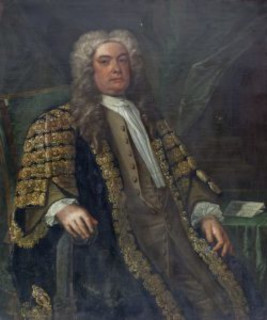
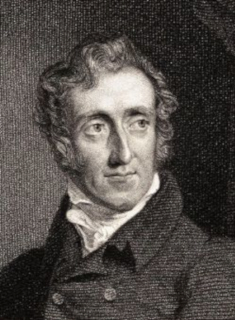
Agar is the second son of Henry Agar, a former Member of Parliament (MP) for Gowran, and Anne Ellis. On March 20, 1760, he marries Lucia Martin, daughter of Colonel John Martin, of Dublin and widow of Henry Boyle-Walsingham. Together they have three children, Henry Welbore Agar-Ellis (b. January 22, 1761), John Ellis (b. December 31, 1763), and Charles Bagnell (b. August 13, 1765).
In addition to being a Member of Parliament (MP) for Gowran, for which he sits three times, from 1753 to 1761, again from 1768 to 1769 and finally from 1776 to 1777, he controls three other borough seats through the strength of his family holdings. Between 1761 and 1776, he represents Kilkenny County and between 1768 and 1769 Thomastown. He holds the post of joint Postmaster General of Ireland between 1784 until 1789 with William Ponsonby, 1st Baron Ponsonby.
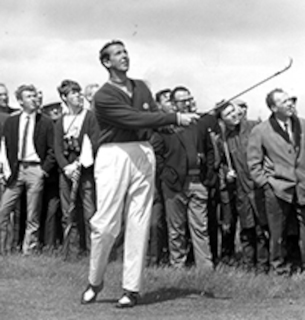
Carr is the fifth of seven children born to George and Margaret Mary “Missie” Waters. At ten days old, he is adopted by his maternal aunt, Kathleen, and her husband, James Carr, who are childless and have recently returned home from India. The Carrs have just been appointed steward and stewardess of the Portmarnock Golf Club, allowing young Joe to play golf from a very early age.
Carr wins his first major tournament, the East of Ireland Amateur, at the age of 19 in 1941, which starts one of Ireland’s greatest golfing careers. He goes on to win twelve East of Ireland titles, twelve West of Ireland titles, six Irish Amateur Close Championships, four Irish Amateur Opens, and three South of Ireland titles.
Carr wins The Amateur Championship three times, in 1953, 1958, and 1960, and is runner-up in 1968. He is a semi-finalist at the United States Amateur Championship in 1961, and is low amateur at The Open Championship in both 1956 and 1958 and finishes 8th overall in 1960. In 1967, he becomes the first Irishman to play in the Masters Tournament, making the cut. He receives the Bob Jones Award in 1961, the USGA‘s highest honour, which is given for “distinguished sportsmanship in golf.” He is the first non-American to win the award.
Internationally, Carr represents Ireland in numerous amateur golfing events. He is a member of a record eleven Walker Cup teams from 1947 to 1967, including non-playing captain in 1965 and playing captain in 1967, amassing a record of 5–14–1. After several years of playing against the United States’ top-ranked players, he is moved down in the order for the 1961 event, only to be paired against Jack Nicklaus who wins the match. He plays and captains on multiple Eisenhower Trophy teams, and represents Ireland in the Men’s Home Internationals every year from 1947 to 1969. He retires from competitive golf in 1971, after his son Roddy plays for the winning Great Britain & Ireland Walker Cup team.
From 1992 until his death on June 3, 2004, Carr is president of Mount Juliet Golf Club in Thomastown, County Kilkenny. Mount Juliet still hosts the annual J.B. Carr Trophy for its members.
Coghill is the son of John Coghill of Knaresborough, North Yorkshire, judge of the prerogative court and one of the masters in chancery. His mother is the daughter of Tobias Cramer, of Ballyfoyle, County Kilkenny. Two elder sisters and a younger brother, James, survive infancy. He spends his childhood in Dublin.
Coghill occupies a prominent place in the life of Dublin, and is remarkable for his early display of ability. At the age of fourteen he enters the University of Dublin, graduating at the age of eighteen as a Bachelor of Laws. At the age of nineteen he is returned to Parliament and at the age of 26 he becomes judge of the prerogative court.
In Parliament, from 1692 to 1713 Coghill is a representative of the borough of Armagh, and from 1713 until his death in 1739, a representative of the University of Dublin. He is politically close to William Conolly, speaker of the Irish House of Commons, who dies in 1729. Upon Conolly’s death he succeeds him as a commissioner of the revenue. Over the following years he plays a prominent role in parliament, particularly on financial matters. He also builds up a close relationship with John Perceval, the British Prime Minister‘s chief advisor on Irish affairs.
Coghill becomes Chancellor of the Exchequer in 1735 and is regarded as an honest and able supporter of Irish interests. Outside parliament he is very active on boards, commissions and trusts, takes a hand in the building of Dr. Steevens’ Hospital and is pro-vice-chancellor of Trinity College Dublin. He lives in Belvedere House, now in the grounds of St. Patrick’s College, Dublin. He suffers from gout for a large part of his life.
From his father, Coghill, who never married, had inherited a lease from the Corporation of lands in Clonturk, where he erects a house which is afterwards known as Drumcondra House. He moves into Drumcondra House and lives there with his unmarried sister Mary until his death in 1738. He is buried in the family vault in St. Andrew’s Church, Dublin.
Upon Coghill’s death Mary is left, for her lifetime, his lands in the barony of Coolock, rents from his properties in Clonturk, all his household goods, and his coach, chariot and horses. In 1743, she erects the parish church of Clonturk, now Drumcondra Church, and places in it a statue of her brother by the Dutch sculptor Peter Scheemakers.
Michelle Smith, married name Michelle Smith de Bruin, lawyer and retired Irish swimmer who wins four medals at the 1996 Summer Olympics in Atlanta, is born in Rathcoole, County Dublin on December 16, 1969. As a result of the medals captured in Atlanta, she becomes the most successful Olympian in Ireland and the country’s first woman to capture a gold medal.
Smith begins swimming competitively at age thirteen. Though she develops into one of Ireland’s premier junior swimmers, she realizes that without more advanced facilities and training techniques, she will never be able to compete at the international level. She goes to the United States to attend school and swim at the University of Houston, where she graduates with a degree in communications. Her times steadily improve and she makes the Irish Olympic teams for the 1988 Summer Olympics in Seoul, South Korea and the 1992 Summer Olympics in Barcelona, Spain. At both of those Games, however, she is eliminated in the preliminary rounds.
In 1994 Smith moves to the Netherlands with her coach and future husband, Erik de Bruin, to prepare for the 1996 Games. The next year she emerges as an elite athlete, winning the 200-metre butterfly and the 200-metre individual medley at the 1995 European Aquatics Championships. She continues to improve in 1996, taking 19 seconds off her best time in the 400-metre freestyle. In response to questions about her sudden turnaround, she credits more sophisticated training techniques and a single-minded focus on swimming. She also points out that she is probably the most tested athlete in Irish history and that she had never tested positive for banned substances.
Prior to the Atlanta Games, Ireland had won only five Olympic gold medals, and no medal — gold, silver, or bronze — had been won by Irish women. In one week, however, Smith rewrites the Irish record books. The 26-year-old swimmer wins the gold in three events — the 200-metre individual medley, the 400-metre individual medley, and the 400-metre freestyle — and captures the bronze medal in the 200-metre butterfly. Her triumph, however, is somewhat tarnished by unsubstantiated rumours that she had used performance-enhancing drugs. Some observers question her dramatic improvements in time and point to her marriage to de Bruin, a Dutchdiscus thrower who had been suspended from international competition for steroid use. Smith passes all the pre- and post-Olympic drug tests, however.
Smith’s success continues at the 1997 European Aquatic Championships, where she wins gold medals in the 200-metre butterfly and the 200-metre individual medley. In 1998, however, she receives a four-year ban for tampering with a urine sample during a drug test. She maintains her innocence, but her appeal of the ban before the Court of Arbitration for Sport (CAS) fails. She is 28 at the time, and the ban effectively ends her competitive swimming career. She is not stripped of her Olympic medals, as she has never tested positive for any banned substances.
Smith’s experiences at the CAS has an effect beyond her swimming career. It is there that she develops an interest in the law. After officially announcing her retirement from swimming in 1999, she returns to university, graduating from University College Dublin with a degree in law. In July 2005 she is conferred with the degree of Barrister at Law of King’s Inns, Dublin. While a student at the King’s Inns she wins the highly prestigious internal Brian WalshMoot Court competition. Her book, Transnational Litigation: Jurisdiction and Procedure is published in 2008 by Thomson Round Hall.
In 1996, Smith releases her autobiography, Gold, co-written with Cathal Dervan. She lives in Kells, County Kilkenny with her husband and their two children.
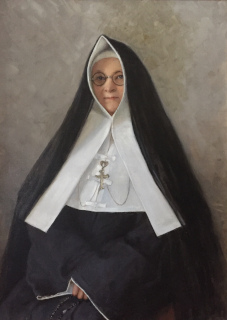
Butler is the seventh child of John Butler, gentleman farmer, and Ellen (née Forrestal). She attends the Sisters of Mercy school in New Ross, County Wexford, entering the Congregation of the Sacred Heart of Mary in Béziers, France in 1876. She takes the name Marie Joseph when she is sent to Porto, Portugal in 1879, professing in 1880. From 1880 to 1903 she teaches in Porto and Braga, becoming superior of the school in 1893.
In 1903 Butler is appointed head of the congregation’s school at Sag Harbor, Long Island, New York, with the responsibility to extend the influence of the order in there. Her cousin, James Butler, gives her a site in Tarrytown, New York in 1907 where she founds the first Marymount school that year, and then the first Marymount college in 1918. She acts as president of the college, with the institution being granted a charter from the University of the State of New York to award bachelor’s degrees in 1924. She is elected Mother General of her order in 1926 and serves until her death, being the first American superior elected to the international congregation of the Catholic Church. She introduces a unique educational system incorporating high religious and academic standards with the aim of preparing young women for a changing society. She becomes a citizen of the United States in 1927.
Under her influence, the order founds fourteen schools, including a novitiate in New York, three Marymount schools and three colleges, and 23 foundations internationally with Marymount schools in Rome, Paris, and Quebec, and a novitiate in Ferrybank, Waterford, County Waterford.
Butler dies on April 23, 1940, in Tarrytown and is buried there. In 1954 her spiritual writings are published as As an eagle: the spiritual writings of Mother Butler R.S.H.M. by J.K. Leahy. She is put forward as a candidate for canonisation in 1948.
MacManus begins writing while still teaching, first publishing a trilogy set in Penal times and concerning the life of the Gaelic poet Donncha Rua Mac Conmara comprising the novels Stand and Give Challenge (1934), Candle for the Proud (1936) and Men Withering (1939). A second trilogy follows which turns its attention to contemporary Ireland: This House Was Mine (1937), Flow On, Lovely River (1941), and Watergate (1942). The location is the fictional “Dombridge,” based on Kilkenny, and deals with established themes of Irish rural life including obsessions with land, sexual frustration, and the trials of emigration and return. Other major works include the novel The Greatest of These (1943), concerning religious conflict in nineteenth-century Kilkenny, and the biographies Boccaccio (1947) and Saint Columban (1963). In his last two novels, he descends into the depths of theological debate: The Fire in the Dust (1950) is followed by American Son (1959), a remarkable dialogue between conflicting modes of belief which reveals the strong influence of Roman Catholicism on the author.
Francis MacManus dies of a heart attack at the age of 56 in Dublin on November 27, 1965.
The RTÉ Francis MacManus Short Story Award is established in his memory in 1985. The competition is run by RTÉ, Ireland’s national broadcaster, and is open to entries written in Irish or English from authors born or resident in Ireland. The total prize fund is €6000, out of which the winning author receives €3,000. Sums of €2,000 and €1,000 are awarded to the second and third prize winners.
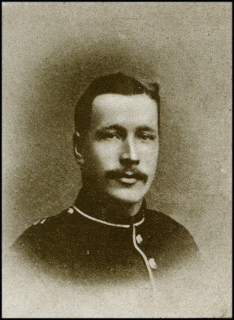
John Barry is born on February 1, 1873, in St. Mary’s Parish, Kilkenny, County Kilkenny. He is by birth an Irish recipient of the Victoria Cross (VC), the highest and most prestigious award for gallantry in the face of the enemy that can be awarded to British and Commonwealth forces.
Little is known of Barry’s early life prior to his enlistment with the 1st Battalion, Royal Irish Regiment of the British Army. Shortly after his enlistment, he finds himself sailing to South Africa for the outbreak of the Second Boer War, a conflict which ultimately leads to the award of the Victoria Cross, albeit tragically posthumously.
During the night attack on Monument Hill on January 7-8, 1901, Private Barry, although surrounded and threatened by the Boers at the time, smashes the breach of the Maxim gun, thus rendering it useless to its captors. It is in doing this splendid act for his country that he meets his death.
Barry dies of wounds received during his VC action at Monument Hill, South Africa. At the time, no posthumous awards of the VC can be made. However, as so often in the history of the Victoria Cross it is an individual, the mother of Alfred Atkinson, that brings about a decisive move to investigate those servicemen who would have been recommended for the award of the VC if they had not died beforehand. The outcome of the War Office investigation results in an announcement being published in The London Gazette on August 8, 1902. In fact, Barry’s family had already received his medal via registered post on April 30, 1902.
Barry is buried in Belfast Cemetery, east of Johannesburg, South Africa. His medals are sold at auction on September 22, 2000, and purchased at a hammer price of £85,000 by the Ashcroft Trust and displayed in the Lord Ashcroft Gallery in the Imperial War Museum, London.
In 1793 Agar is elected to the House of Commons of the United Kingdom as one of two representatives for Heytesbury. He succeeds his great-uncle Lord Mendip as second Baron Mendip in 1802 according to a special remainder in the letters patent. This is an English peerage and forces him to resign from the House of Commons and enter the House of Lords. Two years later he assumes by Royal licence the surname of Ellis in lieu of Agar.
Lord Clifden marries Lady Caroline , daughter of George Spencer, 4th Duke of Marlborough, in 1792. His only son, George, becomes a successful politician and is created Baron Dover in his father’s lifetime, but predeceases his father. Lady Clifden dies at the age of 50 at Blenheim Palace in November 1813. Lord Clifden remains a widower until his death at the age of 75 at Hanover Square, Mayfair, London, on July 13, 1836. He is succeeded in his titles by his grandson Henry, the eldest son of Lord Dover.
Henry Flood, Anglo-Irishstatesman and founder of the Patriot movement that in 1782 wins legislative independence for Ireland, dies on December 2, 1791.
Flood enters the Irish Parliament in 1759 as member for Kilkenny County. Irish Protestants are becoming impatient with the British Parliament’s right to legislate for Ireland over the wishes of the Irish Parliament. Moreover, the British government controls a majority in Ireland’s House of Commons through the distribution of crown patronage by the owners of parliamentary boroughs.
Flood’s outstanding oratorical powers soon enable him to create a small but effective opposition inside the Irish Parliament that agitates for political reforms. They demand provisions for new Irish parliamentary elections every eight years, instead of merely at the start of a new British king’s reign. Their long-range goal is legislative independence. In 1768 his Patriots engineer passage of a bill limiting the duration of Parliament to eight years, and in 1769 and 1771 they defeat measures to grant funds for the British administration in Ireland.
Although Flood had become the first independent Irish statesman, he sacrifices this position in 1775 by accepting the office of vice treasurer under the British viceroy, Lord Simon Harcourt, 1st Earl Harcourt. Henry Grattan, an even greater orator than Flood and who describes Flood as a man “with a metaphor in his mouth and a bribe in his pocket,” replaces him as leader of the Patriots.
Flood, however, leaves the Patriot cause at the wrong time. The movement grows rapidly as more and more Irish people are influenced by the North American colonists who are rebelling against the British in the American Revolution. In 1779 he rejoins his old party, and two years later he is officially dismissed from his government post. Although he has lost his following, he helps Grattan force the British government to renounce its restrictions on Irish trade (1779) and grant legislative independence to Ireland (1782).
Flood then decides to challenge Grattan’s leadership. Charging that Grattan has not gone far enough in his reforms, he obtains passage of a measure requiring the British Parliament to renounce all claims to control of Irish legislation. Nevertheless, his newly acquired popularity is destroyed upon the defeat of his attempt to reform the Irish Parliament in 1784.
Flood is a member of both the British and Irish parliaments from 1783 until he loses his seat in both parliaments in 1790, although in England he fails to achieve the kind of political successes that characterize his Irish parliamentary career.
Following the loss of his seats in parliament, Flood retires to Farmley, his residence in County Kilkenny, where he remains until his death on December 2, 1791. He and his wife Lady Frances Beresford, daughter of Marcus Beresford, 1st Earl of Tyrone, who survives until 1815, have no children, and his property passes to a cousin, John Flood. A large bequest to Trinity College Dublin is declared invalid.
(Pictured: Portrait of Henry Flood (1732 – 1791) by Bartholomew Stoker (1763-1788). John Comerford later makes a sketch of the portrait, from which James Heath makes an engraving.)
Charles Bianconi, Italo-Irish passenger car entrepreneur, is born Carlo Bianconi in Tregolo, Costa Masnaga, Italy on September 24, 1786.
Bianconi moves from an area poised to fall to Napoleon and travels to Ireland in 1802, by way of England, just four years after the Irish Rebellion of 1798. At the time, British fear of continental invasion results in an acute sense of insecurity and additional restrictions on the admission of foreigners. He is christened Carlo but anglicises his name to Charles when he arrives in Ireland.
Bianconi works as an engraver and printseller in Dublin, near Essex Street, under his sponsor, Andrea Faroni, when he is 16. In 1806 he sets up an engraving and print shop in Carrick-on-Suir, County Tipperary, moving to Clonmel in 1815.
Bianconi eventually becomes famous for his innovations in transport and is twice elected mayor of Clonmel.
Bianconi is the founder of public transportation in Ireland, at a time preceding railways. He establishes regular horse-drawn carriage services on various routes from about 1815 onward. These are known as “Bianconi coaches” and the first service, Clonmel to Cahir, takes five to eight hours by boat but only two hours by Bianconi’s carriage. Travel on one of his carriages cost one penny farthing a mile.
In 1832 Bianconi marries Eliza Hayes, the daughter of a wealthy Dublin stockbroker. They have three children – Charles Thomas Bianconi, Catherine Henrietta Bianconi and Mary Anne Bianconi, who marries Morgan O’Connell and is the mother of his grandson John O’Connell Bianconi.
Bianconi’s transport services continue into the 1850s and later, by which time there are a number of railway services in the country. The Bianconi coaches continue to be well-patronised, by offering connections from various termini, one of the first and few examples of an integrated transport system in Ireland. By 1865 Bianconi’s annual income was about £35,000.
Charles Bianconi dies on September 22, 1875 at Longfield House, Boherlahan, County Tipperary. Having donated land to the parish of Boherlahan for the construction of a parish church, he wishes to be buried on the Church grounds. He, and his family, are buried in a side chapel, separate from the parish church in Boherlahan, approximately 5 miles from Cashel, County Tipperary.