Patrick Kavanagh, Irish poet and novelist whose best-known works include the novel Tarry Flynn, and the poems “On Raglan Road” and “The Great Hunger,” is born in rural Inniskeen, County Monaghan, on October 21, 1904. He is known for his accounts of Irish life through reference to the everyday and commonplace.
Kavanagh is the fourth of ten children of James Kavanagh, a cobbler and farmer, and Bridget Quinn. He is a pupil at Kednaminsha National School from 1909 to 1916, leaving in the sixth year at the age of 13. He becomes apprenticed to his father as a shoemaker and works on his farm. He is also goalkeeper for the Inniskeen Gaelic football team.
Kavanagh’s first collection, Ploughman and Other Poems, is published in 1936. It is notable for its realistic portrayal of Irish country life, free of the romantic sentiment often seen at the time in rural poems, a trait he abhors. Two years after his first collection is published, he has yet to make a significant impression. The Times Literary Supplement describes him as “a young Irish poet of promise rather than of achievement.”
In 1938 Kavanagh goes to London and remains there for about five months. The Green Fool, a loosely autobiographical novel, is published in 1938 and Kavanagh is accused of libel by Oliver St. John Gogarty who sues Kavanagh for his description of mistaking Gogarty’s “white-robed maid for his wife or his mistress.” Gogarty is awarded £100 in damages. The book, which recounts Kavanagh’s rural childhood and his attempts to become a writer, receives international recognition and good reviews.
Patrick Kavanagh dies on November 30, 1967, from an attack of bronchitis, bringing to a close the life of one of Ireland’s most controversial and colorful literary figures. Kavanagh’s reputation as a poet is based on the lyrical quality of his work, his mastery of language and form and his ability to transform the ordinary into something of significance.
Together with Kevin Gildea and Barry Murphy, O’Hanlon founds the International Comedy Cellar, upstairs in the International Bar on Dublin’s South Wicklow Street. Dublin has no comedy scene at the time. As a stand up, he wins the Hackney Empire New Act of the Year competition in 1994. For a time, he is the presenter of The Stand Up Show.
O’Hanlon moves into straight acting alongside Emma Fielding and Beth Goddard in the ITV comedy-drama Big Bad World, which airs for two series in summer 1999 and winter 2001. He also plays a minor role in The Butcher Boy and appears in an episode of the original Whose Line is it Anyway?.
In 2000, O’Hanlon stars in the comedy series My Hero, in which he plays a very naive superhero from the planet Ultron. His character juggles world-saving heroics with life in suburbia. He stays in the role until the first episode of series 6 in July 2006 where he is replaced by James Dreyfus during the same episode.
O’Hanlon also provides the voice of the lead character in the three Christmas television cartoon specials of Robbie the Reindeer. He appears in the 2005 BBC One sitcom Blessed, written by Ben Elton. Towards the end of 2005, he plays an eccentric Scottish character, Coconut Tam, in the family-based film, The Adventures of Greyfriars Bobby. Although more commonly on television, he also appears on radio. In 2015 he appears as incompetent angel Smallbone in the sitcom The Best Laid Plans, also on BBC Radio 4.
In 2006, O’Hanlon writes and presents an RTÉ television series called Leagues Apart, which sees him investigate the biggest and most passionate football rivalries in a number of European countries. He follows this with another RTÉ show, So You Want To Be Taoiseach? in 2007. It is a political series where he gives tongue-in-cheek advice on how to go about becoming Taoiseach of Ireland.
O’Hanlon appears in the Doctor Who episode “Gridlock“, broadcast on April 14, 2007, in which he plays a cat-like creature named Thomas Kincade Brannigan. He appears in Series 3 of the TV show Skins, playing Naomi Campbell’s Politics teacher named Kieran. He then goes on to form a relationship with Naomi’s mother, played by Olivia Colman. He plays the lead role in Irish comedy television programme Val Falvey, TD on RTÉ One.
O’Hanlon has written a novel, The Talk of the Town, which is published in 1998. The novel is about a teenage boy, Patrick Scully, and his friends.
In February 2015 O’Hanlon officially launches the 2015 Sky Cat Laughs Comedy Festival which takes place in Kilkenny from May 28–June 1. In 2015 he plays the role of Peter the Milkman in the Sky One sitcom After Hours.
On February 2, 2017, it is announced O’Hanlon will play the lead role in the BBC crime drama Death in Paradise taking the role of DI Jack Mooney following Kris Marshall‘s departure the same day.
Walton is the son of a Methodist minister, Rev John Walton (1874–1936), and Anna Sinton (1874–1906). In those days a general clergyman’s family moves once every three years, and this practice carries him and his family, while he is a small child, to Rathkeale, County Limerick, where his mother dies, and to County Monaghan. He attends day schools in counties Down and Tyrone, and at Wesley College in Dublin before becoming a boarder at Methodist College Belfast in 1915, where he excels in science and mathematics. He obtains degrees in mathematics and experimental science from Trinity College Dublin in 1926.
Walton goes to Trinity College, Cambridge in 1927 where he works with Cockcroft in the Cavendish Laboratory under Ernest Rutherford until 1934. In 1928 he attempts two methods of high-energy particle acceleration. Both fail, mainly because the available power sources could not generate the necessary energies, but his methods are later developed and used in the betatron and the linear particle accelerator. In 1929 Cockcroft and Walton devise an accelerator that generates large numbers of particles at lower energies. With this device in 1932 they disintegrate lithium nuclei with protons, the first artificial nuclear reaction not utilizing radioactive substances and so becomes the first person in history to split the atom.
Although he retires from Trinity College Dublin in 1974, he retains his association with the Physics Department at Trinity up to his final illness. His is a familiar face in the tea-room. Shortly before his death he marks his lifelong devotion to Trinity by presenting his Nobel medal and citation to the college. Ernest Walton dies at the age of 91 in Belfast on June 25, 1995. He is buried in Deans Grange Cemetery in Dublin.
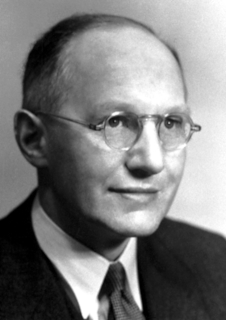
(Pictured: Ernest T.S. Walton, 1951, by Nobel foundation)
William Carleton, Irish writer and novelist, is born in Clogher, County Tyrone on February 20, 1794. He is best known for his Traits and Stories of the Irish Peasantry, a collection of ethnic sketches of the stereotypical Irishman.
Carleton receives a basic education at various hedge schools. Most of his learning is gained from a curate, Father Keenan, who teaches at a classical school at Donagh, County Monaghan which he attends from 1814 to 1816. He studies for the priesthood at St. Patrick’s Pontifical University, Maynooth, but leaves after two years. Around the age of 19 he undertakes one of the religious pilgrimages then common in Ireland. His experiences as a pilgrim make him give up the thought of entering the church.
Carleton’s vacillating ideas as to a mode of life are determined by reading the picaresque novelGil Blas by Alain-René Lesage. He decides to try what fortune has in store for him, and he goes to Killanny, County Louth. For six months he serves as tutor to the family of a farmer named Piers Murphy. After some other experiments he sets out for Dublin, arriving with two shillings and sixpence in his pocket.
Carleton first seeks occupation as a bird-stuffer, but a proposal to use potatoes and meal as stuffing fails to recommend him. He then tries to become a soldier, but the colonel of the regiment dissuades him. After staying in a number of cheap lodgings, he eventually finds a place in a house on Francis Street which contains a circulating library. The landlady allows him to read from 12 to 16 hours a day. He obtains some teaching and a clerkship in a Sunday School office, begins to contribute to journals. “The Pilgrimage to Lough Derg,” which is published in the Christian Examiner, attracts great attention.
In 1830 Carleton publishes his first full-length book, Traits and Stories of the Irish Peasantry (2 volumes), which is considered his best achievement. A second series (3 volumes) appears in 1833, and Tales of Ireland in 1834. From that time until a few years prior to his death he writes constantly. “Fardorougha the Miser, or the Convicts of Lisnamona” appears in 1837–1838 in the Dublin University Magazine.
Carleton remained active publishing in Dublin magazines through the 1830s and 1840s writing many ethnic stories often drawn from the south Tyrone locality. He also writes a lot of fiction. During the last months of his life, he begins an autobiography which he brings down to the beginning of his literary career. This forms the first part of The Life of William Carleton by David James O’Donoghue, which contains full information about his life, and a list of his scattered writings.
Carleton’s later years are characterised by drunkenness and poverty. In spite of his considerable literary production, he remains poor but receives a pension in 1848 of £200 a year granted by Lord John Russell in response to a memorial on Carleton’s behalf signed by numbers of distinguished persons in Ireland.
William Carleton dies at his home at Woodville, Sandford Road, in Ranelagh, Dublin on January 30, 1869, and is interred at Mount Jerome Cemetery, Harold’s Cross, Dublin. The house, now demolished, is close to the entrance to the Jesuit residence at Milltown Park. Despite his conversion to Protestantism, Carleton remains on friendly terms with one of the priests there, Reverend Robert Carbery, who offers to give him the Last Rites of the Catholic Church. In the final weeks before his death, Carleton politely declines the offer, stating he had not been a Roman Catholic “for half a century and more.”
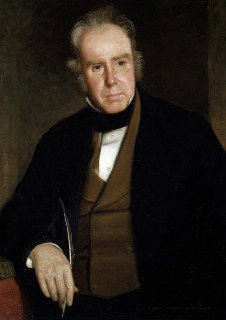
(Pictured: Portrait of Irish author William Carleton (1794-1869) by John Slattery (fl. 1850s))
On February 11, 1922, Irish Republican Army (IRA) volunteers stop a group of Ulster Special Constabulary (USC) constables on a train at Clones, County Monaghan, a short distance into Southern territory in an event recorded in history as the “Clones Ambush.” A gunfight begins in which one IRA officer and four USC constables are killed. The remaining USC constables are captured.
On January 22, the UlsterGaelic Football Final is played in Derry. The previous evening six cars leave Monaghan to bring the Monaghan players to Derry, many of the members of the team being members of the IRA. They are stopped by a B Specials (Ulster Special Constabulary) check point at Dromore station. After a search the Specials discover weapons in the cars and arrest ten of the men. The IRA men are led by Dan Hogan O/C of the Fifth Northern Division. The men are taken to Omagh and interned.
The IRA waits impatiently for a chance at reprisal and on February 11, a group of Irish Republican Army volunteers attempt to ambush a party of Ulster Special Constabulary policemen travelling on a train through Clones. The volunteers enter a carriage of a train and order the Specials to put their hands up. IRA Commandant Matthew Fitzpatrick is shot and killed in the ensuing fight and five members of the Specials, Doherty, McMahon, McCullough, Lewis and McFarland are shot and killed. Several members of the Specials run down the track and cross the border into Fermanagh. The few remaining B Specials on the train decide to surrender and are arrested.
The IRA lifts the body of the Commandant Fitzpatrick and it is attended to by Monsignor E.C. Ward who gives him his Last Rites.
The Clones railway station is on the Dundalk and Enniskillen Railway. The Dundalk and Enniskillen Railway opens the station on June 26, 1858. The station closes on October 1, 1957.
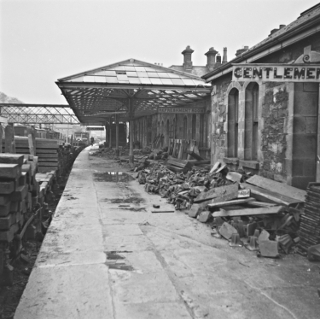
(Photo: Clones Train Station, Co Monaghan, caught in mid-demolition by photographer James O’Dea on November 22, 1960)
Irish singer Margo, born Margeret Catherine O’Donnell, is born on February 6, 1951 in County Donegal. She rises to prominence during the 1960s in the Irish country music scene and has had an extensive career since.
Margo is brought up in the small village of Kincasslagh, in The Rosses area of County Donegal. She grows up in a Catholic family, with her parents Francis and Julia (née McGonagle) O’Donnell, and her siblings: John, Kathleen, James, and Daniel, who is also a singer. Her father dies of a heart attack when she is a young woman.
Margo starts performing country music at a very young age in 1964 with a local showband, The Keynotes. She records her first single in 1968, Bonny Irish Boy/Dear God, which is a success as is her second single, If I Could See the World Through the Eyes of a Child/Road By the River, released in 1969. She has been a successful singer for five decades and has sold more than 1,000,000 records to date. She has performed with Johnny Cash, Loretta Lynn and Dolly Parton. She presents numerous TV shows for RTÉ in the 1970s and has collected many awards during her career.
Margo is sister to Irish singer Daniel O’Donnell, who got his start with Margo’s band in the early 1980s while attending college in Galway. Margo is named “2007 Donegal Person Of The Year” and spends most of 2007 traveling Ireland acting as an ambassador to her native county. She makes her home in Castleblayney, County Monaghan, where she has lived for several decades along with her partner.
Since 1977, Margo has been active in the search for Mary Boyle, a distant relative from Kincasslagh, who went missing at age six near Ballyshannon, County Donegal.
In 2000, McBride undergoes a vocal cord nodule operation on his throat. On July 8, 2005, a plaque is erected by the local community in his home village of Castleblayney. In November 2006, he suffered a sudden heart attack at the age of 70, which puts doubt into whether he will ever tour again with his band.
On February 1, 2008, McBride begins a 12-date tour of Ireland after doctors give him the all clear. On March 24, he performs at Castlebar‘s TF Ballroom’s final farewell night but reportedly takes ill on stage during the performance.
On 25 May, McBride performs for the closure night of the Galtymore dance hall in Cricklewood, London. He is the headline act at London’s Irish Festival on July 27 and headlines the Claremorris Dance Festival weekend on November 23.
In July 2009, K-MAC Records announces more dates in Ireland for Big Tom and the Mainliners which commences in August. From August 14 to September 13, McBride runs a successful tour of Ireland with large attendances to venues. The highlight is the Glencarn Hotel in his hometown Castleblayney where the concert is packed to capacity. The tour ends in Ennis, County Clare, with fans travelling many miles to see McBride and the band. Two days after the end of the tour the band’s trombone player and vocalist Cyril McKevitt dies of a heart attack.
In 2010, McBride announces an extensive series of tour dates. From 2011 until his death in Drogheda, County Louth on April 17, 2018, McBride and his band continue to perform with sporadic appearances.
In June 2016, McBride becomes the inaugural artist to be inducted into the Irish Country Music Hall of Fame.
Gregg is the youngest child of Robert and Margaret Gregg. They move to Rockcorry in 1872. Robert Gregg, who is of Scottish ancestry, is stationmaster at the Bushford railway station in Rockcorry. He and his wife raise their children as strict Presbyterians and send their children to the village school in Rockcorry. On Gregg’s second day of class, he is caught whispering to a schoolmate, which prompts the schoolmaster to hit the two children’s heads together. This incident profoundly damages Gregg’s hearing for the rest of his life, rendering him unable to participate fully in school, unable to understand his teacher. This ultimately leads to him unnecessarily being perceived as dull or mentally challenged by his peers, teachers, and family.
In 1877, one of Robert Gregg’s friends, a journalist named Annesley, visits the village for a weekend. He is versed in Pitman Shorthand and takes verbatim notes of the sermon at the village church. This causes the preacher to sweat and stutter out of fear that his sermon, which he has plagiarized from a famous preacher, would be made public through Annesley’s notes. That day, Robert Gregg sees the shorthand skill as a powerful asset, so he makes it mandatory for his children to learn Pitman shorthand, with the exception of John, who is considered by his family too “simple” to learn it. None of the children succeed in fully learning the system. On his own, John Robert learns a different shorthand system, that of Samuel Taylor, published in a small book by Odell. He teaches himself the system fully since he does not require the ability to hear in order to learn from the book.
Due to hardships on the family, Gregg has to leave school before the age of 13 in order to support his family’s income. He works in a law office, earning five shillings a week.
Gregg professes he initially set out to improve the English adaptation by John Matthew Sloan of the French Prévost Duployan shorthand, while working with one of Sloan’s sales agents, Thomas Malone. Malone publishes a system called Script Phonography, of which Gregg asserts a share in authorship is owed to him. Angered by Malone, Gregg resigns from working with him and encouraged by his older brother Samuel, publishes and copyrights his own system of shorthand in 1888. It is put forth in a brochure entitled Light-Line Phonography: The Phonetic Handwriting which he publishes in Liverpool, England.
In 1893, he emigrates to the United States, where he publishes in the same year Gregg Shorthand. The method meets with great success in the new country, and Gregg settles in Chicago where he authors numerous books for the Gregg Publishing Company on the subjects of shorthand and contemporary business practices.
John Robert Gregg dies in New York City, at the age of 80, on February 23, 1948.
Mary Colum (née Maguire), literary critic and author, is born in Collooney, County Sligo on June 14, 1884, the daughter of Charles Maguire and Catherine Gunning. She is the author of several books, including the autobiographical Life and the Dream (1947), and From These Roots: The Ideas that Have Made Modern Literature (1937), a collection of her criticism.
Maguire’s mother dies in 1895, leaving her to be reared by her grandmother, Catherine, in Ballysadare, County Sligo. She attends boarding school in St. Louis’ Convent in Monaghan, County Monaghan.
Educated at Royal University of Ireland Maguire is founder of the Twilight Literary Society which leads her to meet William Butler Yeats. She regularly attends the Abbey Theatre and is a frequent visitor amongst the salons, readings and debates there. After graduation in 1909 she teaches with Louise Gavan Duffy at St. Ita’s, a companion school to Patrick Pearse‘s St. Enda’s School. She is active with Thomas MacDonagh and others in national and cultural causes and co-founds The Irish Review (1911–14) with David Houston, MacDonagh and others. She, along with her husband, Padraic Colum, whom she marries in July 1912, edit the magazine for some months of its four-year run. She is encouraged by Yeats to specialise in French literary criticism and to translate Paul Claudel.
Colum associates with James Joyce in Paris and discourages him from duping enquirers about the origins of the interior monologue in the example of Édouard Dujardin. She accepts Joyce’s very ill daughter, Lucia, for a week in their Paris flat at the height of her “hebephrenic” attack, while herself preparing for an operation in May 1932. She serves as the literary editor of The Forum magazine from 1933–1941 and commences teaching comparative literature with Padraic at Columbia University in 1941.
She rebuts Oliver St. John Gogarty‘s intemperate remarks about Joyce in The Saturday Review of Literature in 1941.
Colum’s publications become increasingly sparse in the 1950s as her arthritis and neuralgia grow more and more severe. She dies in New York City on October 22, 1957. At the time of her death, she is working on Our Friend James Joyce with her husband, each writing various chapters. It is assembled posthumously by Padraic Colum and is published by Doubleday on August 22, 1958.
Billy Fox, Protestant Irish politician and a Fine Gael member of Dáil Éireann from 1969 to 1973, and of Seanad Éireann from 1973 until his death, is assassinated on March 12, 1974, by Irish Republican Army (IRA) gunmen who are carrying out a raid on his girlfriend’s farmhouse. Five members of the Provisional IRA are convicted of involvement in his murder.
Late on the night of Monday, March 11, 1974, about a dozen gunmen arrive at the home of Fox’s girlfriend, Marjorie Coulson. She lives there with her parents and brother, and Fox regularly visits on Monday evenings. The farmhouse is in the rural townland of Tircooney in County Monaghan, near the border with Northern Ireland. The gunmen search the farmhouse and demand the occupants hand over weapons. Shortly after midnight, as this is taking place, Fox drives down the laneway and is stopped by some of the gunmen who are outside. He runs but is shot and killed by a single gunshot through the upper torso. The gunmen then order everyone out of the house, set it on fire, and escape.
The next day, the Ulster Freedom Fighters claim that it had killed Fox because he had links to the Provisional IRA. The IRA issues a statement saying that it is not involved. However, shortly after the shooting, five men from County Monaghan are charged with Fox’s murder and IRA membership. They are convicted in May 1974 and sentenced to penal servitude for life. One of those convicted tells the court they had raided the farm because they received a tip-off that Ulster Volunteer Force (UVF) weapons were being stored there. He says there was an agreement that no shots were to be fired. His understanding is that Fox had taken some of the men by surprise and they had shot to wound, not recognizing him.
It is reported that the tip-off had come from another local family and was the result of a grudge. IRA members are already suspicious that the UVF is receiving local help, following an incident in November 1973. Loyalist gunmen had bombed a house at nearby Legnakelly and shot one of the occupants, a republican activist. In its statement on Fox’s killing, the IRA says, “We have repeatedly drawn attention to the murderous acts of a group of former B Specials from County Fermanagh…led by serving officers of the British Army.” The author, Tim Pat Coogan, however, suggests that members of the Official IRA are responsible for killing Fox.
The Seanad adjourns for a week as a mark of respect. About 500 people attend Fox’s funeral at Aughnamullen, including TaoiseachLiam Cosgrave and the Irish president, Erskine Childers. Fox is the first member of the Oireachtas to be killed since Minister for JusticeKevin O’Higgins by the anti-Treaty Irish Republican Army in 1927. When John Bruton first becomes a Teachta Dála (TD) in 1969 he shares an office with Fox. He says that he is still angry at the murder. The RTÉ documentary Rumours from Monaghan report in detail on the circumstances of Fox’s killing. Because Fox is a Protestant, some suggest that the motive for the killing was sectarian.





 seamus dubhghaill