seamus dubhghaill

Promoting Irish Culture and History from Little Rock, Arkansas, USA


Leave a comment

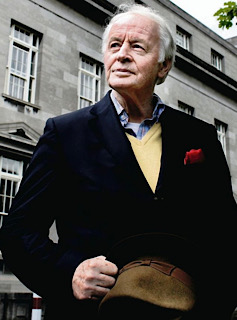
Death of Ulick O’Connor, Writer, Historian & Critic

Ulick O’Connor, Irish writer, historian and critic, dies on October 7, 2019, in Rathgar, County Dublin.

Born in Rathgar on October 12, 1928, to Matthew O’Connor, the Dean of the Royal College of Surgeons, O’Connor attends Garbally CollegeBallinasloeSt. Mary’s College, Rathmines, and later University College Dublin (UCD), where he studies law and philosophy, becoming known as a keen sporting participant, especially in boxingrugby and cricket, as well as a distinguished debater. During his time at UCD he is an active member of the Literary and Historical Society. He subsequently studies at Loyola University, New Orleans. He was called to the bar in 1951.

After practising at the Irish Bar in Dublin, O’Connor spends time as a critic before turning to writing. His work spans areas such as biographypoetryIrish historydrama, diary, and literary criticism. He is a sports correspondent for The Observer from 1955 to 1961.

O’Connor is a well-known intellectual figure in contemporary Irish affairs and expresses strong opinions against censorship and the war on drugs. He contributes a regular poetry column to the Irish daily, the Evening Herald, also writes a column for the Sunday Mirror and a sporting column for The Sunday Times, as well as broadcasting on RTÉ.

O’Connor’s best-known writing is his biographies of Oliver St. John GogartyBrendan Behan, his studies of the early 20th-century Irish troubles and the Irish Literary Revival.

O’Connor is also known for the autobiographical The Ulick O’Connor Diaries 1970-1981: A Cavalier Irishman (2001), which details his encounters with well-known Irish and international figures, ranging from political (Jack Lynch and Paddy Devlin) to the artistic (Christy Brown and Peter Sellers). It also documents the progress of the Northern Ireland peace process during the same time, and the progress of the Northern Ireland Assembly. Although he travels extensively, he lives in his parental home in Dublin’s Rathgar. He is a member of Aosdána.

O’Connor’s great-grandfather is Matthew HarrisLand LeaguerFenian, and Irish Parliamentary Party (IPP) Member of Parliament. He is related to American actor Carroll O’Connor. He dies in Rathgar on October 7, 2019, five days short of his 91st birthday. He is buried at Dean’s Grange Cemetery, Deansgrange, County Dublin.


Leave a comment

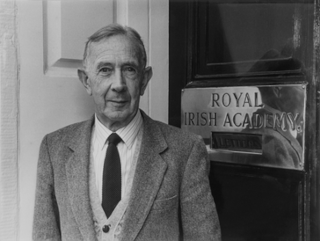
Birth of Tomás de Bhaldraithe, Irish Language Scholar

Tomás Mac Donnchadha de Bhaldraithe, Irish scholar notable for his work on the Irish language, particularly in the field of lexicography, is born on December 14, 1916, in Ballincurra, County Limerick. He is best known for his English-Irish Dictionary, published in 1959.

De Bhaldraithe is born Thomas MacDonagh Waldron, one of five children of Pádraig de Bhaldraithe, civil servant from Nenagh, County Tipperary, and Eilís Nic Conmara from near Kilkee, County Clare. He is named after Thomas MacDonagh, one of the signatories of the Proclamation of the Irish Republic, who had been executed after the Easter Rising earlier that year. He moves to Donnybrook, Dublin, with his family at the age of five. He is enrolled in Muckross Park school in 1923. He receives his secondary education at Belvedere College in Dublin (1926-34). He adopts the use of the Irish language version of his name in both Irish and English.

De Bhaldraithe’s stance on standard forms and spellings is supported by Éamon de Valera despite opposition from traditionalists in the Department of Education, and the work is widely seen as an important benchmark in Irish scholarship.

In 1942, de Bhaldraithe is appointed a professor at the Dublin Institute for Advanced Studies (DIAS) in the department of Celtic Studies. In 1960 he is appointed professor of modern Irish language and literature at University College Dublin (UCD), where he develops an impressive archive of material on Irish dialects. Much of the material in this archive is later used as the basis of Niall Ó Dónaill‘s Foclóir Gaeilge-Béarla, published in 1978, for which he is consulting editor. Also, during the 1970s, de Bhaldraithe translates the Irish language diary of Amhlaoibh Ó Súilleabháin, Cín Lae Amhlaoibh, into English. It is then published by Mercier Press as The Diary of an Irish Countryman.

The language laboratory which de Bhaldraithe sets up in UCD is the first of its kind in any university in Ireland. His interest in seanchas (folklore) leads to his publication of Seanchas Thomáis Laighléis in 1977, while his earlier work includes the ground-breaking study of the Cois Fharraige dialect (a variety of Connacht Irish), Gaeilge Chois Fharraige: Deilbhíocht. In later years he works extensively on the definitive Irish dictionary, Foclóir Stairiúil na Nua-Ghaeilge, which remains unfinished at the time of his death, but which is still in progress today.

De Bhaldraithe dies in Dublin on April 24, 1996, after launching a collection of a friend’s writings entitled The words we use. He marries Vivienne Ní Thoirdhealbhaigh in 1943 and they have nine children.


Leave a comment

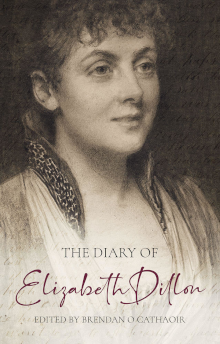
Birth of Elizabeth Dillon, Diarist and Nationalist

Elizabeth Dillon, an Irish diarist and nationalist, is born Elizabeth Mathew in England on March 2, 1865.

Dillon is the eldest of five children of Sir James Charles Mathew and Elizabeth Blackmore Mathew. Her family is related to the Butler family, but she does not visit Ireland until 1886. Living in Queen’s Gate Gardens, Kensington, London, she is educated at home. From a young age she attends the ladies’ gallery of the House of Commons, while mixing a busy social life with charitable works.

Dillon begins keeping a diary in 1879, which she continues to write until her death. Her ancestor, Mary Mathew, is also a diarist and keeps the diary for the discipline of the daily activity. She soon begins to write for the love of it, and some have surmised she wrote with the intention her diaries would be read by others. She attends lectures in Old English and literature at King’s College, London from late 1882 to 1884, and begins to learn Irish in 1893.

Dillon’s father supports land reform in Ireland, chairs the evicted tenants commission in 1892, and is a huge influence on her politics. She makes her first political reference on February 25, 1883, when she notes the arrest of the Invincibles, and she then regularly comments on land reform. She travels to Ireland for the first time in August 1886, staying in Killiney, County Dublin. In October 1886, she meets John Dillon and begins to follow the Plan of Campaign so that she can discuss it with him during his visits to the Mathew house in London.

During this time, John Dillon is deeply immersed in politics and is imprisoned on a number of occasions. Being a careful follower of Irish politics, she becomes an anti-Parnellite. She confronts John Dillon in autumn 1895 about their relationship, saying that they can no longer meet as they had become the subject of gossip. He proposes within two weeks, and they are married on November 21, 1895, in Brompton Oratory. They are busy and often apart, with Dillon spending time in a warm climate due to his ill health. She tries to accompany him when she can, but the couple’s large family makes that difficult. They have one daughter and five sons, John Dillon (1896-1970), Anne Elizabeth Dillon (born October 29, 1897), Theobald Wolfe Tone (1898-1946), Myles, James, and Brian.

Finances are strained until John’s uncle Charles bequeaths him his house, 2 North Great George’s Street, Dublin in 1898, and a business in Ballaghaderreen, County Mayo is bequeathed him by a cousin, Anne Deane, in 1905. Dillon runs the business successfully, while also carrying out duties as a politician’s wife such as opening the Belfast ladies’ branch of the United Irish League in June 1905. Her busy life results in her neglecting her diary.

Dillon dies on May 14, 1907, in Dublin, having given birth to a stillborn daughter that morning. Pneumonia is given as the cause of death, but it could have been medical incompetence. She is buried in the family vault in Glasnevin Cemetery. Her husband writes of her death in June 1907, A short narrative of the illness and death of my dearest love. Trinity College Dublin holds her diary and correspondence. Her diaries, edited by Brendan Ó Cathaoir, are published in 2019.


Leave a comment

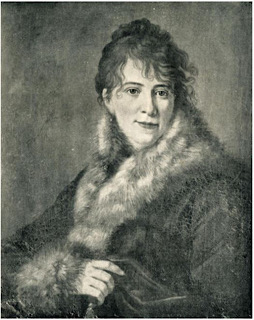
Death of John Bourke, U.S. Army Captain

File source: http://en.wikipedia.org/wiki/File:John_Bourke.jpg

John Gregory Bourke, a captain in the United States Army and a prolific diarist and postbellum author, dies in Philadelphia, Pennsylvania on June 8, 1896. He writes several books about the American Old West, including ethnologies of its indigenous peoples.

Bourke is born in Philadelphia on June 23, 1846, to Irish immigrant parents, Edward Joseph and Anna (Morton) Bourke. His early education is extensive and includes Latin, Greek, and Gaelic. When the American Civil War begins, Bourke is fourteen. At sixteen he runs away from home. Claiming to be nineteen, he enlists in the 15th Regiment Pennsylvania Volunteer Cavalry, in which he serves until July 1865. He receives a Medal of Honor for “gallantry in action” at the Battle of Stones River, Tennessee, in December 1862. He later sees action at the Battle of Chickamauga.

Based on his service during the war, Bourke’s commander, Major General George Henry Thomas, nominates him for the United States Military Academy at West Point, New York. He is appointed cadet in the Academy on October 17, 1865. He graduates on June 15, 1869, and is assigned as a second lieutenant in the 3rd Cavalry Regiment. He serves with his regiment at Fort Craig, New Mexico Territory, from September 29, 1869, to February 19, 1870.

Bourke serves as an aide to General George Crook in the Apache Wars from 1872 to 1883. As Crook’s aide, he has the opportunity to witness every facet of life in the Old West — the battles, wildlife, the internal squabbling among the military, the Indian Agency, settlers, and Native Americans.

During his time as aide to General Crook during the Apache Wars, Bourke keeps journals of his observations that are later published as On the Border with Crook. This book is considered one of the best firsthand accounts of frontier army life, as Bourke gives equal time to both the soldier and the Native American. Within it, he describes the landscape, Army life on long campaigns, and his observations of the Native Americans. His passages recount General Crook’s meetings with Sitting Bull, Crazy Horse, and Geronimo as the General attempts to sign peace treaties and relocate tribes to reservations. He provides considerable detail of towns and their citizens in the Southwest, specifically the Arizona Territory.

In 1881 Bourke is a guest of the Zuni tribe, where he is allowed to attend the ceremony of a Newekwe priest. His report of this experience is published in 1888 as The use of human odure and human urine in rites of a religious or semi religious character among various nations.

Bourke marries Mary F. Horbach of Omaha, Nebraska, on July 25, 1883. They have three daughters together.

John Bourke dies in the Polyclinic Hospital in Philadelphia on June 8, 1896, and is buried at Arlington National Cemetery. His wife is buried beside him after her death.