seamus dubhghaill

Promoting Irish Culture and History from Little Rock, Arkansas, USA


Leave a comment

Nelson Mandela Awarded the Freedom of the City of Dublin

nelson-mandela-freedom-of-dublin

Nelson Rolihlahla Mandela, the first president of South Africa to be elected in a fully representative democratic election, is awarded the Freedom of the City of Dublin on his 70th birthday, July 18, 1988. Mandela is not available to receive his award on the date it is conferred, however, as he is a prisoner in South Africa at the time. On July 1, 1990, after his release from prison, Mandela  finally receives the Freedom of the City of Dublin at a ceremony in the Mansion House Dublin.

The Freedom of the City of Dublin is awarded by Dublin City Council after approving a person nominated by the Lord Mayor of Dublin. Eighty people have been honoured under the current process introduced in 1876. Most honourees have made a contribution to the life of the city or of Ireland in general, including politicians, public servants, humanitarians, artists, and entertainers. Others have been distinguished members of the Irish diaspora and foreign leaders, honoured visiting Dublin. Honourees sign the roll of freedmen in a ceremony at City Hall or the Mansion House and are presented with an illuminated scroll by the Lord Mayor.

Mandela is honoured with the Freedom of Dublin city for his contribution to society and commitment to the study and promotion of Human Rights and also his work in the area of development and social inclusion, which has enhanced the lives of local communities in Ireland and fostered global links with institutions and organisations.

Among the notable recipients of this award are American presidents John F. Kennedy and Bill ClintonMikhail Gorbachev, Éamon de Valera, Mother Teresa, Pope John Paul II, Aung San Suu Kyi, all four members of U2, Bob Geldof, and Ronnie Delaney.

Holders of this award have some ancient privileges and duties such as the right to bring goods into Dublin through the city gates without paying customs duties, the right to pasture sheep on common ground within the city boundaries including College Green and St. Stephen’s Green (this right is exercised as a publicity stunt by U2 members the day after their 2000 conferring), and the right to vote in municipal and parliamentary elections. Some of the ancient duties are that freemen/women must be ready to defend the city of Dublin from attack and, at short notice, can be called up to join a city militia. Also a law which was passed in 1454 states that freemen/women must own a bow, a coat of mail, a helmet, and a sword.


Leave a comment

The Abbey Theatre Destroyed by Fire

abbey-theatre-fire-1951

Fire destroys the Abbey Theatre in Dublin on July 17, 1951, with only the Peacock, a small experimental theatre in the ground floor of the main theatre surviving intact. The play earlier in the evening closes with soldiers on stage singing Keep the Home Fires Burning.

In February 1961, the ruins of the Abbey are demolished. The board has plans for rebuilding with a design by the Irish architect Michael Scott. On September 3, 1963, the President of Ireland, Éamon de Valera, lays the foundation stone for the new theatre. The Abbey reopens on July 18, 1966, at its new location at 26 Lower Abbey Street, Dublin 1.

The Abbey Theatre first opens its doors to the public on December 27, 1904. Despite the loss of the original building to the 1951 fire, it has remained active to the present day. The Abbey is the first state-subsidized theatre in the English-speaking world. From 1925 onwards it receives an annual subsidy from the Irish Free State.

In its early years, the theatre is closely associated with the writers of the Irish Literary Revival, many of whom are involved in its founding and most of whom have plays staged there. The Abbey serves as a nursery for many of the leading Irish playwrights and actors of the 20th century, including William Butler Yeats, Lady Gregory, Seán O’Casey, and John Millington Synge. In addition, through its extensive programme of touring abroad and its high visibility to foreign, particularly American, audiences, it has become an important part of the Irish tourist industry.


Leave a comment

Death of Countess Constance Georgine Markievicz

markievicz-funeral-procession

Countess Constance Georgine Markievicz, née Gore-Booth, Irish politician, revolutionary nationalist, and suffragette, dies on July 15, 1927, in Sir Patrick Dun’s Hospital, Dublin, of complications related to appendicitis.

Constance Gore-Booth is born into the Anglo-Irish aristocracy and grows up at her family’s estate, Lissadell House, in County Sligo. Constance enrolls at London’s Slade School of Fine Art in 1893. In the late 1890s she travels to Paris, where she meets Count Casimir Dunin-Markievicz of Poland. They are married in 1900.

In 1903 the Markieviczes move to Dublin, where Constance’s interests soon turn from art to Irish politics. At age 40, in 1908, she embraces Irish nationalism, joining the revolutionary women’s group Inghinidhe na hÉireann (Daughters of Ireland) and the Sinn Féin political party. The following year she forms Na Fianna Éireann (Soldiers of Ireland), a republican organization loosely based on the Boy Scouts, in which young boys are trained to be nationalist soldiers.

In 1911 she is arrested for demonstrating against King George V’s visit to Ireland. This is just the first of several arrests and imprisonments for Markievicz, whose political activism results in jail time intermittently for the remainder of her life. In 1913–14 she provides food for workers and their families during a labour dispute in which thousands of people are locked out of their workplaces for refusing to reject union membership.

In April 1916 Markievicz takes part in the Easter Rising, the republican insurrection in Dublin against British government in Ireland. After the general surrender, she is arrested and imprisoned. Though many women participate in the uprising, Markievicz is the only one to be court-martialed. She is sentenced to death, but the sentence is commuted to a lifetime of penal servitude on account of her gender. The following year, under a general amnesty, Markievicz is released, but soon finds herself back in jail for supposed participation in a plot against the British government. In December 1918, while still carrying out a prison sentence, Markievicz is elected to the House of Commons as the representative for Dublin’s St. Patrick’s division. Along with the other members of Sinn Féin, she refuses to swear an oath of allegiance to the king and, thus, does not take her seat. Instead, under the leadership of Éamon de Valera, the Irish republicans set up their own provisional government, Dáil Éireann.

After her release from prison, Markievicz serves in the first Dáil Éireann as the minister of labour, a post she holds from 1919 until she is defeated in the 1922 elections. That same year the Irish Free State is established, and Dáil Éireann is incorporated as the lower house of the Oireachtas (Irish parliament). Markievicz is elected to the Dáil in the 1923 general election but, along with the other members of Sinn Féin, she again refuses to swear allegiance to the king and does not take her seat. Instead, she devotes herself to charity work. Markievicz joins de Valera’s Fianna Fáil party on its founding in 1926 and is again elected to the Dáil in 1927 but dies a month later without having taken her seat.

Refused a state funeral by the Free State government, Markievicz is buried at Glasnevin Cemetery, Dublin, and de Valera gives the funeral oration.


Leave a comment

Reopening of General Post Office, Dublin

general-post-office

The restored General Post Office, Dublin, which had been destroyed during the 1916 Easter Rising, is opened by President W. T. Cosgrave on July 11, 1929.

The General Post Office (GPO) is the headquarters of the Irish postal service. The offices are first located at College Green, but in August 1814, construction of a purpose-built headquarters begins. The building on Sackville Street is completed in January 1818 at a cost of £50,000.

According to An Post “The statues on the roof are of Hibernia, a classical representation in female form of the island of Ireland, with Fidelity to one side and Mercury, the messenger of the gods, to the other.”

Five members of the Provisional GovernmentPatrick Pearse, James Connolly, Tom Clarke, Seán MacDiarmada, and Joseph Plunkett — are located at the GPO during the Easter Rising in a 350-strong garrison which also includes Cumann na mBan and Irish Citizen Army members. James Connolly is in charge of the defence of the GPO and directs operations. The GPO garrison barricades surrounding streets and occupies adjoining buildings.

On Monday afternoon the garrison repulses a cavalry attack while, with the breakdown of law and order, many of the stores in Sackville Street are looted. From Wednesday, the GPO and other buildings in Sackville Street come under artillery fire, mostly from the Helga gunboat at anchor in the River Liffey. Connolly believes the British will not use artillery in city areas. By Friday night the GPO is on fire, at which point it is evacuated.

At a Dublin Corporation meeting in 1884 a motion is called to change the name of Sackville Street to O’Connell Street. After forty years of argument, it is changed to O’Connell Street in May 1924.


2 Comments

Viking Settlement That Becomes Dublin is Founded

founding-of-dublin

A Viking settlement that would later become the city of Dublin is founded on the banks of the River Liffey on July 10, 988.

The first documented history of Dublin begins with the Viking raids in the 8th and 9th century. These lead to the establishment of a settlement on the south side of the mouth of the Liffey, named Dubh Linn (Black Pool) after the dark tidal pool where the River Poddle enters the Liffey which is where the Danes first moor their boats.

The Vikings, or Ostmen as they call themselves, rule Dublin for almost three centuries, although they are expelled in 902 only to return in 917 and notwithstanding their defeat by the Irish High King Brian Boru at the Battle of Clontarf in 1014. From that date, the Norse are a minor political force in Ireland, firmly opting for a commercial life. Viking rule of Dublin ends completely in 1171 when the city is captured by King Dermot MacMurrough of Leinster, with the aid of Anglo-Norman mercenaries. An attempt is made by the last Norse King of Dublin, Ascall mac Ragnaill, to recapture the city with an army he raises among his relations in the Scottish Highlands, where he is forced to flee after the city is taken, but the attempted reconquest fails and Ascall is killed.

Dublin becomes the centre of English power in Ireland after the Norman invasion of the southern half of Ireland (Munster and Leinster) in 1169-1171, replacing Tara in Meath, seat of the Gaelic High Kings of Ireland, as the focal point of Ireland’s polity. On May 15, 1192, Dublin’s first written Charter of Liberties is granted by John, Lord of Ireland, and is addressed to all his “French, English, Irish and Welsh subjects and friends.” On June 15, 1229, his son Henry grants the citizens the right to elect a mayor who is to be assisted by two provosts. By 1400, however, many of the Anglo-Norman conquerors are absorbed into the Gaelic culture, adopting the Irish language and customs, leaving only a small area of Leinster around Dublin, known as the Pale, under direct English control.


Leave a comment

Birth of Francis Fowke, Engineer & Architect

francis-fowke

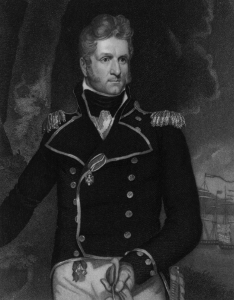
Francis Fowke, engineer, architect, and a Captain in the Corps of Royal Engineers, is born in Ballysillan, Belfast, on July 7, 1823. Most of his architectural work is executed in the Renaissance style, although he makes use of relatively new technologies to create iron framed buildings, with large open galleries and spaces.

Fowke studies at The Royal School Dungannon, County Tyrone, and the Royal Military Academy, Woolwich. He obtains a commission in the Royal Engineers and serves with distinction in Bermuda and Paris. On his return to England, he is appointed architect and engineer in charge of the construction of several government buildings.

Among his projects are the Prince Consort’s Library in Aldershot, the Royal Albert Hall and parts of the Victoria and Albert Museum in London, the Royal Museum in Edinburgh, and the National Gallery of Ireland in Dublin. He is also responsible for planning the 1862 International Exhibition in London. The Crystal Palace at the Great Exhibition of 1851 being a hard act to follow, the International Exhibition building is described as “a wretched shed” by The Art Journal. Parliament declines the Government’s proposal to purchase the building. The materials are sold and used for the construction of Alexandra Palace.

Before his sudden death from a burst blood vessel on December 4, 1865, Fowke wins the competition for the design of the Natural History Museum, although he does not live to see it executed. His renaissance designs for the museum are altered and realised in the 1870s by Alfred Waterhouse, on the site of Fowke’s Exhibition building.

Francis Fowke is buried in Brompton Cemetery, London.

A medal is issued by the Royal Engineers in 1865, as a memorial prize for architectural works carried out by members of the corps. With the demise of great architectural works, the prize has transformed into the prize awarded to the top student on the Royal Engineers Clerks of Works course.


Leave a comment

Cathal Brugha Fatally Wounded by Sniper

cathal-brugha

Cathal Brugha, a leading figure in the Anti-Treaty Irish Republican Army (IRA), is shot by a sniper on July 5, 1922, as he appears in the doorway of the Hammam Hotel during the Irish Civil War. He dies two days later.

Brugha is born in Dublin of mixed Roman Catholic and Protestant parentage. He is the tenth of fourteen children and is educated at the Jesuit Belvedere College but is forced to leave at the age of sixteen because of the failure of his father’s business.

In 1899, Brugha joins the Gaelic League, and subsequently changes his name from Charles Burgess to Cathal Brugha. He becomes actively involved in the Irish Republican Brotherhood (IRB) and in 1913 he becomes a lieutenant in the Irish Volunteers. He leads a group of twenty Volunteers to receive the arms smuggled into Ireland in the Howth gun-running of 1914.

Brugha is second-in-command at the South Dublin Union under Commandant Éamonn Ceannt in the Easter Rising of 1916. On the Thursday of Easter Week, being badly wounded, he is unable to leave when the retreat is ordered. Brugha, weak from loss of blood, continues to fire upon the enemy and is found by Éamonn Ceannt singing God Save Ireland with his pistol still in his hands. Initially not considered likely to survive, he recovers over the next year but is left with a permanent limp.

During the War of Independence, Brugha organises an amalgamation of the Irish Volunteers and the Irish Citizen Army into the Irish Republican Army (IRA). He proposes a Republican constitution at the 1917 Sinn Féin convention which is unanimously accepted. In October 1917, he becomes Chief of Staff of the Irish Republican Army and holds that post until March 1919.

Brugha is elected speaker of Dáil Éireann at its first meeting on January 21, 1919, and he reads out the Declaration of Independence in Irish. On the following day, he is appointed president of the ministry pro tempore and retains this position until April 1, 1919, when Éamon de Valera takes his place.

In the months between the Anglo-Irish Treaty debates and the outbreak of Civil War, Brugha attempts to dissuade his fellow anti-treaty army leaders, including Rory O’Connor, Liam Mellows, and Joe McKelvey, from taking up arms against the Free State. When the IRA occupies the Four Courts, he and Oscar Traynor call on them to abandon their position. When they refuse, Traynor orders the occupation of the area around O’Connell Street in the hope of easing the pressure on the Four Courts and of forcing the Free State to negotiate.

On 28 June 1922, Brugha is appointed commandant of the forces in O’Connell Street. The outbreak of the Irish Civil War ensues in the first week of July when Free State forces commence shelling of the anti-treaty positions.

Most of the anti-Treaty fighters under Oscar Traynor escape from O’Connell Street when the buildings they were holding catch fire, leaving Brugha in command of a small rearguard. On 5 July, he orders his men to surrender but refuses to do so himself. He then approaches the Free State troops, brandishing a revolver. He sustains a bullet wound to the leg which severs a major artery, ultimately causing him to bleed to death on July 7, 1922, eleven days before his 48th birthday. He is buried in Glasnevin Cemetery.


Leave a comment

Birth of Irish Politician Henry Grattan

henry-grattan

Henry Grattan, Irish politician and member of the Irish House of Commons, who campaigns for legislative freedom for the Irish Parliament in the late 18th century, is born at Fishamble Street in Dublin on July 3, 1746.

Grattan is baptised at the church of St. John the Evangelist in Dublin. He attends Drogheda Grammar School and then goes on to become a distinguished student at Trinity College, Dublin, where he begins a lifelong study of classical literature, and is especially interested in the great orators of antiquity.

After studying at the King’s Inns, Dublin, and being called to the Irish bar in 1772, he never seriously practises law but is drawn to politics, influenced by his friend Henry Flood. He enters the Irish Parliament for Charlemont in 1775, sponsored by Lord Charlemont, just as Flood has damaged his credibility by accepting office. Grattan quickly supersedes Flood in the leadership of the national party, not least because his oratorical powers are unsurpassed among his contemporaries.

Grattan’s movement gains momentum as more and more Irish people come to sympathize with the North American colonists in their war for independence from Great Britain. By 1779, he is powerful enough to persuade the British government to remove most of its restraints on Irish trade, and in April 1780 he formally demands the repeal of Poynings’ Law, which has made all legislation passed by the Irish Parliament subject to approval by the British Parliament. Two years later the British relinquish their right to legislate for Ireland and frees the Irish Parliament from subservience to the English Privy Council. Despite these successes, Grattan soon faces rivalry from Flood, who bitterly criticizes Grattan for failing to demand that the British Parliament completely renounce all claims to control of Irish legislation. Flood succeeds in undermining Grattan’s popularity, but by 1784 Flood himself has lost much of his following.

From 1782 to 1797 Grattan makes limited progress in his struggle to reform the composition of the Irish Parliament and to win voting rights for Ireland’s Roman Catholics. The outbreak of the French Revolution in 1789 bolsters his cause by infusing democratic ideas into Ireland, but the subsequent growth of a radical Irish movement for Catholic emancipation provokes repressive measures by the British. Grattan is caught between the two sides. Ill and discouraged, he retires from Parliament in May 1797 and is in England when the Irish radicals stage an unsuccessful rebellion in 1798.

Grattan returns to Parliament for five months in 1800 and wages a vigorous but fruitless campaign against Prime Minister William Pitt’s plans for the legislative union of the Irish and British parliaments. In 1805, Grattan is elected to the British House of Commons, where for the last 15 years of his life he fights for Catholic emancipation.

In 1920, after crossing from Ireland to London while in poor health to bring forward the Irish question once more, he becomes seriously ill. On his deathbed he speaks generously of Castlereagh, and with warm eulogy of his former rival, Flood. Henry Grattan dies on June 4, 1820, and is buried in Westminster Abbey. His statue is in the Outer Lobby of the Palace of Westminster.

The building housing the faculty of Law and Government at Dublin City University has been named in his honour. Grattan Bridge crossing the River Liffey between Parliament Street on the south side of Dublin and Capel Street on the north side is also named in his honour.


Leave a comment

Birth of Katie Taylor, Olympic Boxing Champion

katie-taylor

Katie Taylor, Irish sportswoman who has represented Ireland in both boxing and association football, is born in Bray, County Wicklow, on July 2, 1986. As of this writing, she is the Irish, European, World, and Olympic boxing champion in the 60 kg division. Regarded as the outstanding Irish athlete of her generation, she is the flag bearer for Ireland at the 2012 London Olympics opening ceremony before going on to win an Olympic gold medal in the lightweight division.

Taylor first begins boxing in 1998 at the age of eleven. Her father coaches her and her two older brothers, Lee and Peter, at St. Fergal’s Boxing Club, which operates out of a former boathouse in Bray. At 15, she fights the first officially sanctioned female boxing match in Ireland at the National Stadium and defeats Alanna Audley from Belfast.

Between 1999 and 2005 Taylor attends St. Kilian’s Community School in Bray with her three older siblings. In addition to boxing and playing association football, Taylor also plays Gaelic football and camogie with her local GAA clubs, Bray Emmets and Fergal Ógs. Several American colleges reportedly offer her athletic scholarships while she is still a pupil at St. Killian’s. She opts, however, to attend University College Dublin. Although UCD is well known for sports scholarships, Taylor qualifies via her Leaving Cert results. As her sporting career begins to take off, however, she chooses not to complete her studies at UCD.

Taylor qualifies for the 2012 Summer Olympics in London, the first time women’s boxing has been considered for inclusion. Crowds gather on the streets of her hometown to watch her progress on giant screens erected especially for the occasion.

Taylor’s first appearance at the 2012 Summer Olympics comes on August 6, after a first-round bye. She achieves an impressive 26-15 victory over Great Britain‘s Natasha Jonas, booking her place in the semi-final and guaranteeing her, at least, an Olympic bronze medal.

In the semi-final on August 8, 2012, she proves far too good for Tajikistan‘s Mavzuna Chorieva and wins in a 17-9 victory, booking her place in the final and guaranteeing her of at least a silver medal.

Taylor defeats Russia‘s Sofya Ochigava in the final bout by 10-8 on August 9, 2012, winning the Olympic gold medal and becoming the first ever Olympic female lightweight champion.

On her return to Dublin with the rest of the Olympic squad she gets into the cockpit of the plane and leans out the window waving an Irish flag.


Leave a comment

Anti-Treaty Forces Abandon The Four Courts

free-state-troops-fire-on-the-four-courtsAnti-Treaty forces abandon The Four Courts in Dublin on June 30, 1922, after two days of bombardment under the orders of Michael Collins.

The occupation of the Four Courts by Anti-Treaty forces in April 1922 makes real the threat of violence that has existed only as a subtext to the treaty debates. That real fighting does not break out until the subsequent decision by the Pro-Treaty forces to forcibly retake the position in June 1922 shows just how reluctant the parties are to engage in more violence.

However, once the decision to fight is made neither side show much restraint. The shelling of the Four Courts and the ferocity of the fighting around the rest of Dublin during the initial phase of the war shows that neither side will balk at killing former friends if that is what is required.

Tragically, on the morning of June 30, a massive explosion destroys the western wing of the Four Courts and the Irish Public Records Office which houses official documents, archives, and artifacts from almost 1,000 years of Irish history. The explosion is thought to have been caused by fires from the artillery bombardment setting off munitions stored there. Free State troops, however, claim that the building is mined.

After two days of heavy fighting that sees the complex more or less destroyed, the Anti-Treaty forces, at this point under the command of Ernie O’Malley after Paddy O’Brien is wounded by shrapnel, surrenders. Their surrender is at the order of the senior commander of Anti-Treaty forces in the city, Oscar Traynor, who sends word that he cannot break through to help them.

They march out of a burning and wrecked Four Courts a compelling symbol for the damage the Civil War is to bring to the young state over the upcoming months and years. Members of the Irish Republican Army (IRA) Army Executive Liam Mellows, Rory O’Connor, Joe McKelvey, and Dick Barret are among the prisoners, but O’Malley himself escapes.