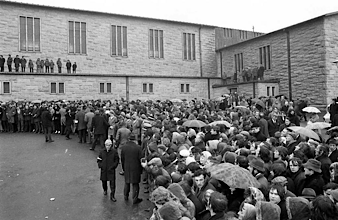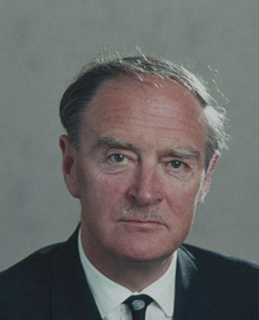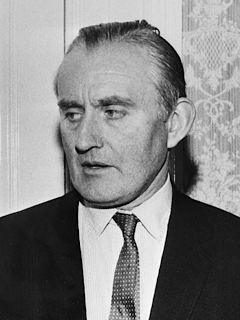
On November 24, 1972, the Fianna Fáil government fires the RTÉ Authority after it broadcast a recorded radio interview on November 19 by Kevin O’Kelly with Seán Mac Stíofáin, then Chief of Staff of the Provisional Irish Republican Army, on the RTÉ This Week radio programme. Mac Stíofáin is arrested on the same day, charged with IRA membership, and the interview is used as evidence against him. He is sentenced to six months imprisonment on November 25 by the Special Criminal Court in Dublin.
The announcement of dismissal comes shortly before 10:00 p.m. in a statement from Gerry Collins, Minister for Posts and Telegraphs. It is an abrupt but not unexpected climax to a week of conflict and speculation after the broadcast of the Mac Stíofáin interview.
Collins reads the announcement on RTÉ but does not make any further comments. He also announces the appointment of the new Authority. The Taoiseach, Jack Lynch, who is in London for his meeting with British Prime MinisterEdward Heath, is kept fully informed of developments during the day.
Lynch says at the London airport before his departure for Dublin that the dismissal is an exercise in democracy. The action is taken because the Government sees the need for “protecting our community.”
Lynch speaks to reporters just after midnight after arriving at the airport from his dinner with the Prime Minister at 10 Downing Street. He says that the Cabinet had decided its course of action in regard to RTÉ on Tuesday, November 21, and that he had been in touch by phone throughout the day with his colleagues in Dublin.
The RTÉ Authority, the Taoiseach says, is controlled by Acts of Parliament and is subject to the democratic process.
It is the obligation of the Government to ensure that their terms of reference are adhered to. The Authority breached a directive given under the Broadcasting Act, ordering them “not to project people who put forward violent means for achieving their purpose.”
In the opinion of the Government, the interview with Mac Stíofáin is a breach of that directive. When Lynch is asked by a reporter how the Government knew that the RTÉ interview with Mac Stíofáin was taking place, he says that they have their own way of knowing things.
The comments of the members of the dismissed Authority reflect indignation, hurt and relief.
Phyllis O’Kelly, widow of the late Seán T. O’Kelly, former President of Ireland, says that it was “a strange thing to happen.” She does not accept that the station was deliberately trying to outwit the Government. The interviewer, Kevin O’Kelly, had listed various people that he wished to interview, and they seemed all right to her.
The Authority’s letter to the Minister makes it abundantly clear that the Authority appreciates his right to issue the direction. It also makes clear its anxiety to abide by that direction.
The meeting is held under conditions of tight secrecy. Each man has only one assistant with him and there is no briefing for the press afterward. No one expects a firm agreement on any issue of substance. The British appear to be satisfied with a promise to meet again and to keep the communication lines open.
The meeting, the first such tripartite conference since the partition of Ireland 50 years earlier, is itself a considerable accomplishment politically. Even six weeks earlier, it is considered an impossibility by most observers.
At that time, Faulkner is widely regarded as being under such heavy pressure from the right-wing of his Ulster Unionist Party (UUP) that he cannot talk with the Taoiseach. Lynch has been saying that he can meet with Faulkner only as the leader of the Unionist party, not as the Prime Minister of Northern Ireland. That is consistent with Dublin‘s view that the six counties of Ulster are part of the Republic of Ireland.
Heath also seems to have retreated from his previous position. In an angry exchange of telegrams in August, he suggests that the situation in Northern Ireland is a British affair and none of Lynch’s business. The exchange follows the decision to intern suspected members of the Irish Republican Army (IRA) in Ulster without trial. Faulkner, backed by the Heath government, begin arrests of suspects on August 9.
The interment policy arouses a bitter reaction among the Roman Catholics of Ulster, where they make up a third of the population. Lynch denounces the policy. The Catholic opposition members in the Ulster Parliament at Stormont say they will boycott all Government matters until the interned men are released.
What has softened the attitudes of the three leaders is the appalling extent of violence in Belfast and other towns in Northern Ireland since the internments began. In those seven weeks, 17 British soldiers, 36 civilians and one policeman are killed, most of them by IRA bullets and bombs.
The British Government and Faulkner offer broad changes in the constitutional setup of the Ulster regime. They talk about bringing Catholics — non‐Unionists — into the Government for the first time. But internment without trial remains an obstacle even to talking about those ideas with the main opposition group, the Social Democratic and Labor Party (SDLP). The SDLP refuses to join in a proposed conference on political reform while internment goes on.
Ideally, the British would like Lynch to use his influence with the opposition leaders. They want him to urge them to talk about political reform in return for some concession on internment, perhaps the release of some of those currently held. But any such concession might get Faulkner in trouble with his own party or arouse Protestant violence. That is always the trouble in Northern Ireland – any gesture toward one side antagonizes the other.
A new and serious problem for Heath is an apparent waning of the British public’s willingness to bear the military and social burden of Northern Ireland. A poll just before the meeting at Chequers shows that 59% want to bring all British troops home from Ulster at once.
Even Lynch, though he is pledged to the principle of a United Ireland, does not want the hasty withdrawal of British troops. That would almost certainly mean an enlargement of the present terror into civil war.
(From: 3 Prime Ministers Confer on Ulster, The New York Times, September 28, 1971)
Cosgrave succeeds James Dillon as leader of the Fine Gael party in 1965. Eight years later, as leader of a coalition government in which Fine Gael combines forces with the Labour Party, he becomes Taoiseach. He and British Prime MinisterEdward Heath are the main participants in the intergovernmental conference at Sunningdale in December 1973 that gives birth to Northern Ireland’s first, though short-lived, power-sharing executive (1973–74). A devout Roman Catholic, he is intensely conservative on social issues and shocks his cabinet colleagues by voting against his own government’s bill on liberalizing the sale of contraceptives in 1974. The National Coalition is defeated in the 1977 Irish general election, largely on the economic issues of inflation and unemployment.
Cosgrave retires at the 1981 Irish general election. In 1981, he retires as Dáil Deputy for Dún Laoghaire to be replaced by his son, Liam T. Cosgrave. He reduces his involvement in public life but makes occasional appearances and speeches.
Liam Cosgrave dies at the age of 97 on October 4, 2017, of natural causes. He had been at Tallaght Hospital for several months prior to his death there. His funeral is held on October 7, 2017, after which he is interred alongside his father at Inchicore‘s Goldenbridge Cemetery. He is the longest-lived Taoiseach, dying at the age of 97 years, 174 days.
Faulkner is the elder of two sons of James, owner of the Belfast Collar Company, and Nora Faulkner. His younger brother is Colonel Sir Dennis Faulkner. He is educated initially at Elm Park preparatory school, Killylea, County Armagh, but at 14, preferring to stay in Ireland, is sent to the Church of Ireland-affiliated St. Columba’s College at Whitechurch, County Dublin, although he is Presbyterian. His best friend at the school is Michael Yeats, son of W. B. Yeats. He enters Queen’s University Belfast in 1939 to study law, but, with the advent of World War II, he quits his studies to work full-time in the family shirt-making business. He is the only Prime Minister of Northern Ireland to have been educated in the Irish Free State and one of only two to have been educated in Ireland.
Faulkner becomes involved in unionist politics, the first of his family to do so, and is elected to the Parliament of Northern Ireland as the Ulster Unionist Party (UUP) Member of Parliament (MP) for the constituency of East Down in 1949. His vociferous traditional unionist approach to politics ensures him a prominent backbench position. He is, at the time, the youngest ever MP in the Northern Irish Parliament. He is also the first Chairman of the Ulster Young Unionist Council in 1949. In 1956 he is offered and accepts the job of Parliamentary Secretary to the Ministry of Finance, or Government Chief Whip.
When Terence O’Neill becomes Prime Minister in 1963, he appoints Faulkner, his chief rival for the job, as Minister of Commerce. He resigns in 1969 over the technicalities of how and when to bring in the local government reforms which the British Labour government is pushing for. This is a factor in the resignation of O’Neill, who resigns as Prime Minister in the aftermath of his failure to achieve a good enough result in the 1969 Northern Ireland general election.
In the ensuing leadership contest, Faulkner loses out again when O’Neill gives his casting vote to his cousin, James Chichester-Clark. In 1970, he becomes the Father of the House. He comes back into government as Minister of Development under Chichester-Clark and in a sharp turn-around, begins the implementation of the political reforms that were the main cause of his resignation from O’Neill’s cabinet. Chichester-Clark himself resigns in 1971 as the political and security situation and the more intensive British interest proves difficult.
Faulkner is elected leader of the Ulster Unionist Party and Prime Minister. In his initial innovative approach to government, he gives a non-unionist, David Bleakley, a former Northern Ireland Labour Party (NILP) MP, a position in his cabinet as Minister for Community Relations. In June 1971, he proposes three new powerful committees at Stormont which would give the opposition salaried chairmanships of two of them.
However, this initiative (radical at the time) is overtaken by events. A shooting by soldiers of two nationalist youths in Derry causes the Social Democratic and Labour Party (SDLP), the main opposition, to boycott the Stormont parliament. The political climate deteriorates further when, in answer to a worsening security situation, Faulkner introduces internment on August 9, 1971. This is a disaster and causes the situation to worsen.
Despite this, Faulkner continues his radical approach to Northern Irish politics and, following Bleakley’s resignation in September 1971 over the internment issue, appointes Dr. G. B. Newe, a prominent lay Catholic, as Minister of State in the Cabinet Office. His administration staggers on through the rest of 1971, insisting that security is the paramount issue.
In January 1972, an incident occurs during a Northern Ireland Civil Rights Association march in Derry, during which paratroopers shoot and killed thirteen unarmed civilians. A fourteenth civilian dies later. What history has come to know as Bloody Sunday is, in essence, the end of Faulkner’s government. In March 1972, he refuses to maintain a government without security powers which the British government under Edward Heath decides to take back. The Stormont parliament is subsequently prorogued, initially for a period of one year, and following the appointment of a Secretary of State for Northern Ireland, William Whitelaw, direct rule is introduced.
In June 1973, elections are held to a new devolved parliament, the Northern Ireland Assembly. The elections split the UUP. Faulkner becomes chief executive in a power-sharing executive with the SDLP and the centre-ground Alliance Party, a political alliance cemented at the Sunningdale Conference that year. The power-sharing Executive lasts only six months and is brought down by a loyalistUlster Workers’ Council strike in May 1974. In 1974, he loses the leadership of the UUP to anti-Sunningdale elements led by Harry West. He subsequently resigns from the Ulster Unionist Party and forms the Unionist Party of Northern Ireland (UPNI).
The UPNI fares badly in the Northern Ireland Constitutional Convention elections of 1975, winning only five out of the 78 seats contested. Faulkner wins the final seat. In 1976 he announces that he is quitting active politics. He is elevated to the House of Lords in the 1977 New Year Honours list, being created Baron Faulkner of Downpatrick on February 7, 1977.
Faulkner, a keen huntsman, dies on March 3, 1977, following a riding accident while hunting with the County Down Staghounds at the Ballyagherty/Station Road junction near Saintfield, County Down. He is riding at full gallop along a narrow country road when his horse slips, throwing him off and killing him instantly. He is laid to rest at Magherahamlet Presbyterian Church near Spa, County Down where he had been a regular member of the congregation. His twenty-four-day life peerage is thus the shortest-lived until the death of Lord Heywood of Whitehall in 2018 just nine days after ennoblement.
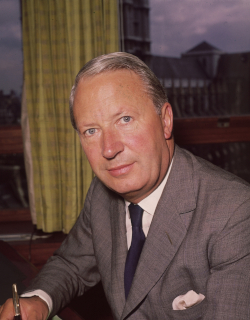
The London home of the Conservative leader and former Prime Minister of the United KingdomEdward Heath is damaged from the impact of a bomb planted by the Irish Republican Army (IRA) on December 22, 1974. The attack comes just hours before a Christmas ceasefire is due to come into effect. Heath is not at home at the time of the blast but arrives ten minutes later. His housekeeper, Mrs. Crawford, and her daughter are both in the house at the time but are not injured.
The 21-pound bomb breaks glass, smashes the front door and damages the front room. The only damage to anything valuable is to a painting done in the south of France by Sir Winston Churchill. No one initially admits carrying out the attack, but the IRA is immediately suspected.
Witnesses describe seeing a man emerging from a Ford Cortina and throwing what is believed to have been the bomb onto the first-floor balcony of the house. Two policemen and a patrol car chase the vehicle as it drives off. The Cortina crashes a few minutes later in Chelsea and several men flee from the vehicle.
The police are fearful that the explosion is a “come‐on” tactic where an initial smaller bomb is followed by a larger one after the first has attracted crowds. They seal off all streets around the house for several hours. Heath’s home is about half a mile from Harrods, in Knightsbridge, where a more powerful bomb had gone off the previous night as Christmas shoppers were being evacuated.
Heath tells waiting reporters that Prime Minister Harold Wilson had sent him a message which was “very much appreciated.” Addressed “Dear Ted,” Wilson says, “This attack will only strengthen our united resolve to bring these things to justice.”
Heath, who had been conducting a carol service at his hometown of Broadstairs, Kent, carrying an overnight bag is driven off by police to an undisclosed location after his arrival at home. He returns later to inspect the damage with bomb squad chief, Commander Robert Huntley.
Heath says the attack will not deter him from traveling to Ulster the following day for talks with security forces and Ulster political leaders as previously scheduled. As Leader of the Opposition, Heath has a Special Branch police bodyguard with him at all times. The house is under “short” police patrol which means there are extra cars and foot patrols in the area but not directly outside the building.
Childers is educated at Gresham’s School, Holt, and the University of Cambridge, hence his striking British upper-class accent. On November 24, 1922, when he is sixteen, his father, Robert Erskine Childers, is executed by the new Irish Free State on politically inspired charges of gun-possession. The pistol he had been found with had been given to him by Michael Collins. Before his execution, in a spirit of reconciliation, the elder Childers obtains a promise from his son to seek out and shake the hand of every man who had signed his death warrant.
Following his father’s funeral, he returns to Gresham’s, then two years later he goes on to Trinity College, Cambridge. He returns to Ireland in 1932 and becomes advertising manager of The Irish Press, the newly founded newspaper owned by the family of Éamon de Valera.
Childers is nominated as the presidential candidate of Fianna Fáil at the behest of de Valera, who pressures Jack Lynch in the selection of the presidential candidate. He is a controversial nominee, owing not only to his British birth and upbringing but to his Protestantism. However, on the campaign trail his personal popularity proved enormous, and in a political upset at the 1973 Irish presidential election, he is elected the fourth President of Ireland on May 30, 1973, defeating Tom O’Higgins by 635,867 (52%) votes to 578,771 (48%). He becomes the second Protestant to hold the office, the first being Douglas Hyde (1938–1945).
Prevented from transforming the presidency as he desires, Childers instead throws his energy into a busy schedule of official visits and speeches, which is physically taxing.
Liam Cosgrave, politician who serves as Taoiseach from February 1973 to July 1977, dies at the age of 97 in Tallaght, Dublin on October 4, 2017. He is the longest-lived Taoiseach, dying at the age of 97 years, 174 days.
Cosgrave succeeds James Dillon as leader of the Fine Gael party in 1965. Eight years later, as leader of a coalition government in which Fine Gael combines forces with the Labour Party, he becomes Taoiseach. He and British Prime MinisterEdward Heath are the main participants in the intergovernmental conference at Sunningdale in December 1973 that gives birth to Northern Ireland’s first, though short-lived, power-sharing executive (1973–74). A devout Roman Catholic, he is intensely conservative on social issues and shocks his cabinet colleagues by voting against his own government’s bill on liberalizing the sale of contraceptives in 1974. The National Coalition is defeated in the 1977 Irish general election, largely on the economic issues of inflation and unemployment.
Cosgrave retires at the 1981 Irish general election. In 1981, he retires as Dáil Deputy for Dún Laoghaire to be replaced by his son, Liam T. Cosgrave. He reduces his involvement in public life but makes occasional appearances and speeches.
Liam Cosgrave dies on October 4, 2017, at the age of 97 of natural causes. He had been at Tallaght Hospital for several months prior to his death there. His funeral is held on October 7, 2017, after which he is interred alongside his father at Inchicore‘s Goldenbridge Cemetery.
The operation sparks four days of violence in which 20 civilians, two IRA members and two British soldiers are killed. All of those arrested are Irish nationalists, the vast majority of them Catholic. Due to faulty intelligence, many have no links with the IRA. Ulster loyalistparamilitaries are also carrying out acts of violence, which are mainly directed against Catholics and Irish nationalists, but no loyalists are included in the sweep.
The introduction of internment, the way the arrests are carried out, and the abuse of those arrested, lead to mass protests and a sharp increase in violence. Amid the violence, about 7,000 people flee or are forced out of their homes. The interrogation techniques used on some of the internees are described by the European Commission of Human Rights in 1976 as torture, but the superior court, the European Court of Human Rights (ECHR), rules on appeal in 1978 that, although the techniques are “inhuman and degrading”, they do not, in this instance, constitute torture. It is later revealed that the British government had withheld information from the ECHR and that the policy had been authorized by British government ministers. In December 2014, in light of the new evidence, the Irish government asks the ECHR to revise its 1978 judgement. The ECHR declines the request in 2018.
Following the suspension of the Northern Ireland Government and Parliament, internment is continued by the direct rule administration until December 5, 1975. During this time 1,981 people are interned, 1,874 are nationalist while 107 are loyalist. The first loyalist internees are detained in February 1973.
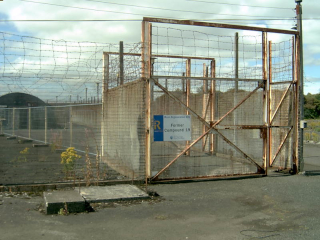
(Pictured: The entrance to Compound 19, one of the sections of Long Kesh internment camp)
In 1948, when the first inter-party government replaces Éamon de Valera’s Fianna Fáil regime, which had been in power for the previous 16 years, Cosgrave becomes parliamentary secretary to the Taoiseach and to the Minister for Industry and Commerce. It is a short-lived administration, going out of power in 1951 after three years of rule. But in a second inter-party government (1954–57), he becomes Minister for External Affairs and leads the first Irish delegation to the United Nations General Assembly in 1956.
Cosgrave succeeds James Dillon as leader of the Fine Gael party in 1965. Eight years later, as leader of a coalition government in which Fine Gael combines forces with the Labour Party, he becomes Taoiseach. He and British Prime MinisterEdward Heath are the main participants in the intergovernmental conference at Sunningdale in December 1973 that gives birth to Northern Ireland’s first, though short-lived, power-sharing executive (1973–74).
A devout Roman Catholic, Cosgrave is intensely conservative on social issues and shocks his cabinet colleagues by voting against his own government’s bill on liberalizing the sale of contraceptives in 1974. The National Coalition is defeated in the general election of June 1977, largely on the economic issues of inflation and unemployment.
In 1981, Cosgrave retires as Dáil Deputy for Dún Laoghaire to be replaced by his son, Liam T. Cosgrave. He reduces his involvement in public life, but he makes occasional appearances and speeches. In October 2010 he attends the launch of The Reluctant Taoiseach, a book about former Taoiseach John A. Costello written by David McCullagh. He also appears in public for the Centenary of the Easter Rising in 2016, watching from a car as the military parade marches through Dublin. On May 8, 2016, in a joint appearance with the grandsons of Éamonn Ceannt and Cathal Brugha, he unveils a plaque commemorating the 1916 Rising at St. James’s Hospital, the former site of the South Dublin Union.
Liam Cosgrave dies on October 4, 2017, at the age of 97 of natural causes. He had been at Tallaght Hospital for several months prior to his death there. His funeral is held on October 7, 2017, after which he is interred alongside his father at Inchicore‘s Goldenbridge Cemetery.
Taoiseach Leo Varadkar says “Liam Cosgrave was someone who devoted his life to public service; a grateful country thanks and honours him for that and for always putting the nation first. Throughout his life he worked to protect and defend the democratic institutions of our State and showed great courage and determination in doing so. He always believed in peaceful co-operation as the only way of achieving a genuine union between the people on this island, and in the 1970s he celebrated that this country had embarked, in his own words, ‘on a new career of progress and development in the context of Europe’. I had the honour on a few occasions to meet and be in the presence of Liam Cosgrave, and I was always struck by his commanding presence and great humility, which in him were complementary characteristics.”
The Anglo-Irish Agreement, an accord that gives the government of Ireland an official consultative role in the affairs of Northern Ireland, is signed by TaoiseachGarret FitzGerald and British Prime MinisterMargaret Thatcher on November 15, 1985, at Hillsborough Castle in County Down, Northern Ireland. Considered one of the most significant developments in British-Irish relations since the establishment of the Irish Free State in 1922, the agreement provides for regular meetings between ministers in the Irish and British governments on matters affecting Northern Ireland. It outlines cooperation in four areas: political matters, security and related issues, legal matters, including the administration of justice, and the promotion of cross-border cooperation.
The agreement is negotiated as a move toward easing long-standing tension between Britain and Ireland on the subject of Northern Ireland, although Northern Irish unionists, who are in favour of remaining part of the United Kingdom, are themselves strongly opposed to giving their southern neighbour a say in domestic matters. Many political leaders, including Thatcher, who has been strongly committed to British sovereignty in Northern Ireland, have come to believe that a solution to years of sectarian violence in Northern Ireland can only be achieved by means of an all-Ireland arrangement.
Such an attempt had previously been made in 1973. A power-sharing executive, composed of Irish nationalists as well as unionists, was set up in Northern Ireland, and Taoiseach Liam Cosgrave participated in talks with British Prime Minister Edward Heath that resulted in the Sunningdale Agreement. That accord recognized that Northern Ireland’s relationship with Britain could not be changed without the agreement of a majority of its population, and it provided for the establishment of a Council of Ireland composed of members from both the Dáil Éireann (the lower chamber of the Oireachtas) and the Northern Ireland Assembly. That agreement collapsed in May 1974 because of a general strike inspired by unionist opponents of power sharing.
In 1981 FitzGerald launches a constitutional crusade to make the reunification of Ireland more attractive to Northern Ireland’s Protestants. At the end of the year, the Irish and British governments set up an Anglo-Irish intergovernmental council to discuss matters of common concern, especially security. In 1984 the report of the New Ireland Forum, a discussion group that includes representatives of political parties in Ireland and Northern Ireland, sets out three possible frameworks for political development in Ireland: a unitary state, a federal state, and joint sovereignty. Of Ireland’s major political parties, Fianna Fáil prefers a unitary state, which Fine Gael and the Irish Labour Party regard as unrealistic. They prefer the federal option.
In the improved political climate between Britain and Ireland, leaders of the two countries sit down to negotiations. Ireland and Britain agree that any change in the status of Northern Ireland would come about only with the consent of the majority of the people of Northern Ireland, and an intergovernmental conference is established to deal with political, security, and legal relations between the two parts of the island. The agreement is a blow to Northern Ireland’s unionists, because it establishes a consultative role for the government of Ireland in the affairs of Northern Ireland through the Anglo-Irish Secretariat. The Ulster Unionist Party (UUP) and other unionists denounce the agreement, and UUP members of Parliament resign their seats over the issue, although 14 are returned in by-elections in 1986. The party organizes mass protests and boycotts of local councils and files a lawsuit challenging the legality of the agreement. However, these efforts, which are joined by the Democratic Unionist Party, fail to force abrogation of the agreement.
Contacts between the Irish and British governments continue after February 1987 within the formal structure of the intergovernmental conference. Fears that the violence in Northern Ireland would spill into Ireland as a consequence of closer Anglo-Irish cooperation in the wake of the agreement proves unfounded, and the UUP decides to participate in new negotiations on the constitutional future of Northern Ireland in 1990–93. After republican and unionist forces declare cease-fires in 1994, the UUP reluctantly joins discussions with the British and Irish governments and other political parties of Northern Ireland. No deal accepted by all sides is reached until the Good Friday Agreement in April 1998, which creates the Northern Ireland Assembly and new cross-border institutions.