After an episode of The IT Crowd is criticised as transphobic, Linehan becomes involved in anti-transgender activism. He argues that transgender activism endangers women, and likens the use of puberty blockers to Nazi eugenics. He says his views have lost him work and ended his marriage.
Linehan attends Catholic University School, a Roman Catholic secondary school for boys. In the 1980s, he joins the staff of the Dublin politics and music magazine Hot Press, where he meets his future writing partner, Arthur Mathews. In their early collaborations, they create segments in sketch shows including Alas Smith and Jones, Harry Enfield & Chums, The All New Alexei Sayle Show, The Day Today and the Ted and Ralph characters in The Fast Show. They continue their collaboration with Paris (one series, 1994), Father Ted (three series, 1995–1998), and the first series of the sketch show Big Train. They also write the “Dearth of a Salesman” episode for the series Coogan’s Run, which features the character Gareth Cheeseman. In late 2003, he and Mathews are named one of the 50 funniest acts to work in television by The Observer. Father Ted wins BAFTA awards for Best Comedy in 1996 and 1999.
Linehan writes for the satirical series Brass Eye (1997), Blue Jam (1997–1999) and Jam (2000). With the actor Dylan Moran, he creates the sitcom Black Books (2000–2004). He writes and directs the 2006 Channel 4 sitcom The IT Crowd, in which he seeks to move away from the British trend towards mockumentary comedies. Unlike many series of the time, it is recorded before a studio audience. In November 2008, he is awarded an International Emmy for The IT Crowd. In 2013, he writes and directs the sitcom The Walshes. He co-writes the first series of the BBC sitcom Motherland and directs its pilot episode. In 2014, he wins his fifth BAFTA, for Best Writer, Comedy, for his work on The IT Crowd. He is also nominated for Count Arthur Strong.
In 2018, Linehan and Mathews announce plans for a Father Ted musical. Lineham says it will finish the series as they had planned it before the death of the lead actor, Dermot Morgan. The musical is cancelled by producers following the controversy over Linehan’s views on transgender rights. In December 2024, he announces plans to move to Arizona to work on a sitcom and create a production company with the comedians Rob Schneider and Andrew Doyle.
Gleeson is the son of Frank and Pat Gleeson. He has described himself as having been an avid reader as a child. He receives his second-level education at St. Joseph’s CBS in Fairview, Dublin, where he is a member of the school drama group. He receives his Bachelor of Arts at University College Dublin (UCD), majoring in English and Irish. After training as an actor, he works for several years as a secondary school teacher of Irish and English at the now defunct CatholicBelcamp College in north County Dublin. He works simultaneously as an actor while teaching, doing semi-professional and professional productions in Dublin and surrounding areas. He leaves the teaching profession to commit full-time to acting in 1991. In an NPR interview to promote Calvary in 2014, he states he was molested as a child by a Christian Brother in primary school but was in “no way traumatised by the incident.”
As a member of the Dublin-based Passion Machine Theatre company, Gleeson appears in several of the theatre company’s early and highly successful plays such as Brownbread (1987), written by Roddy Doyle and directed by Paul Mercier, Wasters (1985) and Home (1988), written and directed by Paul Mercier. He also writes three plays for Passion Machine: The Birdtable (1987) and Breaking Up (1988), both of which he directs, and Babies and Bathwater (1994) in which he acts. Among his other Dublin theatre work are Patrick Süskind‘s one-man play The Double Bass and John B. Keane‘s The Year of the Hiker.
In 2003, Gleeson is the voice of Hugh the Miller in an episode of the Channel 4 animated series Wilde Stories. While he portrays Irish statesman Michael Collins in The Treaty, he later portrays Collins’ close collaborator Liam Tobin in the film Michael Collins with Liam Neeson taking the role of Collins. He later goes on to portray Winston Churchill in Into the Storm, winning a Primetime Emmy Award for his performance. He plays Barty Crouch, Jr. impersonating Hogwarts professor Alastor “Mad-Eye” Moody in the fourth, and Alastor Moody himself in fifth and seventhHarry Potter films. His son Domhnall plays Bill Weasley in the seventh and eighth films.
Gleeson provides the voice of Abbot Cellach in The Secret of Kells, an animated film co-directed by Tomm Moore and Nora Twomey of Cartoon Saloon, which premieres in February 2009 at the JamesonDublin International Film Festival. He stars in the short film Six Shooter in 2006, written and directed by Martin McDonagh, which wins an Academy Award for Best Live Action Short Film. In 2008, he stars in the comedy crime film In Bruges, also written and directed by McDonagh. The film, and his performance, enjoy huge critical acclaim, earning him several award nominations, including his first Golden Globe nomination. In the movie, he plays a mentor-like figure for Colin Farrell‘s hitman. In his review of In Bruges, Roger Ebert describes the elder Gleeson as having a “noble shambles of a face and the heft of a boxer gone to seed.”
Gleeson has been married to Mary Weldon since 1982. They have four sons: Domhnall, Fergus, Brían, and Rory. Domhnall and Brían are also actors. He speaks fluent Irish and is an advocate of the promotion of the Irish language. He is a fan of the English football club Aston Villa, as is his son Domhnall.
O’Toole makes his motion picture debut in Kidnapped in 1960 and two years later becomes an international star for his portrayal of T.E. Lawrence in David Lean’s epic Lawrence of Arabia (1962). In 1964 he plays Henry II of England in Becket, and he has the title role in Lord Jim (1965). He appears as Henry II again in The Lion in Winter (1968), a film notable for the witty verbal sparring matches between O’Toole and costar Katharine Hepburn. The Ruling Class (1972), a controversial black comedy that has become a cult classic, casts O’Toole as a schizophrenic English earl with a messiah complex.
Personal problems contribute to a decline in his popularity during the 1970s, but he makes a strong comeback in the early 1980s with three well-received efforts. He portrays a duplicitous and domineering movie director in The Stunt Man (1980), and his performance as the Roman commander Lucius Flavius Silva in the acclaimed television miniseries Masada (1981) is hailed as one of the finest of his career. His most popular vehicle during this period is My Favorite Year (1982), an affectionate satire on the early days of television, in which he plays Alan Swann, a faded Errol Flynn-type swashbuckling screen star with a penchant for tippling and troublemaking.
O’Toole subsequently maintains his status with fine performances in such films as the Oscar-winning The Last Emperor (1987), the cult favourite Wings of Fame (1989), and Fairy Tale: A True Story (1997), in which he portrays Sir Arthur Conan Doyle. Notable screen roles in the 21st century included King Priam in the historical epic Troy (2004), an aging romantic in Venus (2006), the voice of a haughty food critic in the animated Ratatouille (2007), and a priest in the historical drama For Greater Glory (2012). In addition, in 2008 he portrays Pope Paul III in the TV series The Tudors.
In 1992 O’Toole publishes a lively memoir, Loitering with Intent: The Child. A second volume, Loitering with Intent: The Apprentice, appears in 1996. He is nominated for an Academy Award eight times — for Lawrence of Arabia, Becket, The Lion in Winter, Goodbye, Mr. Chips (1969), The Ruling Class, The Stunt Man, My Favorite Year, and Venus — but never wins. In 2003 he is awarded an honorary Oscar. He receives an Emmy Award for his performance as Bishop Pierre Cauchon in the television miniseries Joan of Arc (1999).
O’Toole dies on December 14, 2013, at Wellington Hospital in St. John’s Wood, London, at the age of 81. His funeral is held at Golders Green Crematorium in London on December 21, 2013, where his body is cremated in a wicker coffin. His ashes are planned to be taken to Connemara, Ireland. They are kept at the residence of the President of Ireland, Áras an Uachtaráin, by President Michael D. Higgins, an old friend of O’Toole. His family has stated their intention to fulfill his wishes and take his ashes to the west of Ireland.
Downey attends Thornhill College, a Catholic girls school. Her mother, Maureen O’Reilly Downey, a homemaker with an interest in the performing arts, dies of a heart attack at age 48 when Downey is 10 years old. Her father, Patrick Downey, is a schoolteacher by training but works as a mortgage broker. He dies when Downey is 20. Originally, she plans to be a painter and earns a Bachelor of Arts at Brighton College of Art. She studies BA(Hons) Expressive Arts at Brighton Polytechnic, which later becomes the University of Brighton. Based at the Falmer campus she combines Art and Drama for her degree.
Downey joins the Abbey Players in Dublin and tours the United States in a production of The Playboy of the Western World. She moves to New York after an agent, whom she met during the tour of The Playboy of the Western World, suggests she has potential for success there. She takes a job as a coat checker at an Upper West Side restaurant before getting cast in Broadway shows. The production leads to a nomination during the Broadway run for the Helen Hayes Award for Best Actress in 1991. She also stars on Broadway in The Circle with Rex Harrison and also at the Roundabout Theater and The Public Theater in New York City.
Downey stars in and is executive producer for a number of hit television movies for the CBS network. She is an ambassador for Operation Smile, a nonprofit medical service organization. On August 11, 2016, she is honored for her work as an actress and producer with a star on the Hollywood Walk of Fame. In her acceptance speech, she dedicates her star to the people of Derry and anyone who ever “walked Hollywood Boulevard with a dream in their hearts.”
Variety recognizes Downey and Burnett as “Trailblazers” and lists Downey as one of Variety’s “100 Most Powerful Women in Hollywood.” The Hollywood Reporter includes the couple in their “Most Influential People of 2013” and Downey as one of the “100 Women in Entertainment Power” in 2014. She is honored on Variety‘s “Women of Impact in 2014.” Downey and Burnett also produce The Dovekeepers (2015) based on the bestselling book by Alice Hoffman for CBS and A.D. The Bible Continues (2015) for NBC, Women of the Bible for Lifetime, and Answered Prayers (2015) for TLC. Downey is the executive producer of the documentary “Faithkeepers” about the persecution of Christians in the Middle East.
Downey is the author of two books, Love Is a Family (2001) and Box of Butterflies: Discovering the Unexpected Blessing All Around Us (2018).
Boyle is born to Alice (Lewis) and Francis Xavier Boyle. His paternal grandparents are Irish immigrants, and his mother is of mostly French and British Isles descent. He eventually moves to Philadelphia, where his father is a sought-after local TV personality and children’s show host. Following a solid Catholic upbringing, he is a sensitive youth and joins the Christian Brothers religious order at one point while attending La Salle University in Philadelphia. He leaves the monastery after only a few years when he “lost” his calling.
Bent on an acting career, Boyle initially studies with guru Uta Hagen in New York. The tall, hulking, prematurely bald actor wannabe struggles through a variety of odd jobs as a postal worker, waiter and bouncer while simultaneously building up his credits on stage and waiting for that first big break. Things start progressing for him after appearing in the national company of The Odd Couple in 1965 and landing TV commercials on the sly. In the late 1960s Boyle joins Chicago‘s The Second City improv group and makes his Broadway debut as a replacement for Peter Bonerz in Paul Sills’ Story Theatre (1971).
Boyle gains acclaim for his first starring role, playing the title character, a bigoted New York City factory worker, in the 1970 movie Joe, directed by John G. Avildsen. The film’s release is surrounded by controversy over its violence and language. The role leads to major notoriety, however, and some daunting supporting parts in T.R. Baskin (1971), Slither (1973) and as Robert Redford‘s calculating campaign manager in The Candidate (1972). During this time his political radicalism finds a visible platform after joining Jane Fonda and Donald Sutherland on anti-war crusades, which also includes the anti-establishment picture Steelyard Blues (1973). This period also sees the forging of a strong friendship with former BeatleJohn Lennon.
Destined to be cast as monstrous undesirables throughout much of his career, Boyle plays a monster of another sort in his early film days, and thus avoids a complete stereotype as a film abhorrent. His hilarious, sexually potent Frankenstein’s Monster in the cult Mel Brooks spoof Young Frankenstein (1974) sees him in a sympathetic and certainly more humorous vein. His creature’s first public viewing, in which Boyle shares an adroit tap-dancing scene with “creator” Gene Wilder in full Fred Astaire regalia, is a show-stopping audience pleaser. Late 1970s filmgoers continue to witness him in seamy, urban settings with brutish roles in Taxi Driver (1976) and Hardcore (1979). At the same time, he addresses several TV mini-movie roles with the same brilliant darkness such as his Senator Joe McCarthy in Tail Gunner Joe (1977), for which he receives an Emmy nomination, and his murderous, knife-wielding Fatso in the miniseries remake of From Here to Eternity (1979).
While the following decade finds Boyle in predominantly less noteworthy filming and a short-lived TV series lead as remote cop Joe Bash (1986), the 1990s bring him Emmy glory for a guest role in an episode of The X-Files (1993). Despite a blood clot-induced stroke in 1990 that impairs his speech for six months, he ventures on and caps his enviable career on TV wielding funny but crass one-liners in the “Archie Bunker” mold on the long-running sitcom Everybody Loves Raymond (1996). A major Emmy blunder has him earning seven nominations for his Frank Barone character without a win, the only prime player on the show unhonored. He survives a heart attack while on the set of Everybody Loves Raymond in 1999 but manages to return full time for the remainder of the series’ run through 2005.
Peter Seamus O’Toole, British stage and film actor of Irish descent, is born on August 2, 1932, in Leeds, Yorkshire, England. Some sources give his birthplace as Connemara, County Galway. Records from the General Registry Office in Leeds confirm that O’Toole is born in the north England town in 1932.
O’Toole grows up in Leeds and is educated at the Royal Academy of Dramatic Art in London. He is a reporter for the Yorkshire Evening Post in his teens and makes his amateur stage debut at Leeds Civic Theatre. After serving two years in the Royal Navy, he acts with the Bristol Old Vic Company from 1955 to 1958 and makes his London debut as Peter Shirley in George Bernard Shaw’s Major Barbara (1956). He appears with the Shakespeare Memorial Company at Stratford-upon-Avon, Warwickshire, England, in 1960 in highly praised performances as Shylock in The Merchant of Venice and as Petruchio in The Taming of the Shrew, and he plays the lead in Hamlet for the inaugural production of the Royal National Theatre in London in 1963. A prominent film star by this point in his career, he continues to appear on stages throughout the world to great acclaim. He is named associate director of the Old Vic in 1980.
O’Toole makes his motion picture debut in Kidnapped in 1960 and two years later becomes an international star for his portrayal of T.E. Lawrence in David Lean’s epic Lawrence of Arabia (1962). In 1964 he plays Henry II of England in Becket, and he has the title role in Lord Jim (1965). He appears as Henry II again in The Lion in Winter (1968), a film notable for the witty verbal sparring matches between O’Toole and costar Katharine Hepburn. The Ruling Class (1972), a controversial black comedy that has become a cult classic, casts O’Toole as a schizophrenic English earl with a messiah complex.
Personal problems contribute to a decline in his popularity during the 1970s, but he makes a strong comeback in the early 1980s with three well-received efforts. He portrays a duplicitous and domineering movie director in The Stunt Man (1980), and his performance as the Roman commander Lucius Flavius Silva in the acclaimed television miniseries Masada (1981) is hailed as one of the finest of his career. His most popular vehicle during this period is My Favorite Year (1982), an affectionate satire on the early days of television, in which he plays Alan Swann, a faded Errol Flynn-type swashbuckling screen star with a penchant for tippling and troublemaking.
O’Toole subsequently maintains his status with fine performances in such films as the Oscar-winning The Last Emperor (1987), the cult favourite Wings of Fame (1989), and Fairy Tale: A True Story (1997), in which he portrays Sir Arthur Conan Doyle. Notable screen roles in the 21st century included King Priam in the historical epic Troy (2004), an aging romantic in Venus (2006), the voice of a haughty food critic in the animated Ratatouille (2007), and a priest in the historical drama For Greater Glory (2012). In addition, in 2008 he portrays Pope Paul III in the TV series The Tudors.
In 1992 O’Toole publishes a lively memoir, Loitering with Intent: The Child. A second volume, Loitering with Intent: The Apprentice, appears in 1996. He is nominated for an Academy Award eight times — for Lawrence of Arabia, Becket, The Lion in Winter, Goodbye, Mr. Chips (1969), The Ruling Class, The Stunt Man, My Favorite Year, and Venus — but never wins. In 2003 he is awarded an honorary Oscar. He receives an Emmy Award for his performance as Bishop Pierre Cauchon in the television miniseries Joan of Arc (1999).
O’Toole dies on December 14, 2013, at Wellington Hospital in St. John’s Wood, London, at the age of 81. His funeral is held at Golders Green Crematorium in London on December 21, 2013, where his body is cremated in a wicker coffin. His ashes are planned to be taken to Connemara, Ireland. They are being kept at the residence of the President of Ireland, Áras an Uachtaráin, by President Michael D. Higgins, an old friend of O’Toole. His family has stated their intention to fulfill his wishes and take his ashes to the west of Ireland.
McGoohan is the son of Rose (Fitzpatrick) and Thomas McGoohan, who are living in the United States after emigrating from Ireland to seek work. He is brought up as a Catholic. Shortly after he is born, his parents move back to Mullaghmore, County Leitrim. Seven years later they emigrate to Sheffield, England.
McGoohan attends St. Vincent’s School and De La Salle College in Sheffield. During World War II, he is evacuated to Loughborough, Leicestershire. There he attends Ratcliffe College, where he excels in mathematics and boxing. He leaves school at the age of 16 and returns to Sheffield, where he works as a chicken farmer, a bank clerk, and a lorry driver before getting a job as a stage manager at Sheffield Repertory Theatre. When one of the actors becomes ill, McGoohan is substituted for him, launching his acting career.
McGoohan is most closely identified with two 1960s British television series, Danger Man and The Prisoner. The espionage drama Danger Man, which runs in the United States as Secret Agent, runs for 86 episodes during 1960–1961 and 1964–1967. The cult hit The Prisoner runs for 17 episodes in 1967–1968.
In Danger Man McGoohan puts a new spin on the secret agent formula by refusing to allow his character, John Drake, to carry a gun or indulge in sexual dalliances. The show’s success makes him Britain’s highest-paid TV actor.
McGoohan is one of several actors considered for the role of James Bond in Dr. No. While McGoohan turns down the role on moral grounds, the success of the Bond films is generally cited as the reason for Danger Man being revived in 1964. He is later considered for the Bond role in Live and Let Die but again turns it down.
The success of Danger Man provides McGoohan the leverage he needs to produce The Prisoner, an allegorical Kafkaesque series in which he portrays Number Six, an unnamed agent, thought by many to represent Drake, who angrily resigns and is then held captive in a superficially banal place called The Village, where the mysterious unseen Number One, the ever-changing Number Two, and others try to overcome the fiercely individualistic Number Six’s escape attempts and pry information from him.
McGoohan’s later works include the short-lived medical mystery series Rafferty (1977), such films as Ice Station Zebra (1968), Escape from Alcatraz (1979), and Braveheart (1995), the Broadway spy drama Pack of Lies (1985), and a record four guest-villain appearances on the American detective series Columbo, two of which earned him Emmy Awards. He also directs and writes several episodes of The Prisoner and Columbo. One of his last roles is as Number Six in a 2000 episode of the animated TV comedy The Simpsons.
Rickman is born into a working-class family of Irish and Welsh descent in Hammersmith, London, on February 21, 1946. Rickman attends Derwentwater Primary School in Acton, and then Latymer Upper School in London through the Direct Grant system, where he becomes involved in drama. After leaving Latymer, he attends Chelsea College of Art and Design and then the Royal College of Art. After graduation, Rickman and several friends open a graphic design studio called Graphiti, but after three years of successful business, he decides that he is going to pursue acting professionally. He writes to request an audition with the Royal Academy of Dramatic Art (RADA), which he attends from 1972 until 1974.
Upon leaving the Royal Academy of Dramatic Art, Rickman becomes a member of the Royal Shakespeare Company, performing in modern and classical theatre productions. His first big television role comes in 1982, but his big break is as the Vicomte de Valmont in the stage production of Les Liaisons Dangereuses in 1985, for which he is nominated for a Tony Award.
In August 2015, Rickman suffers a minor stroke, which leads to the diagnosis of pancreatic cancer. He reveals the fact that he has terminal cancer to only his closest confidants. He dies of pancreatic cancer on January 14, 2016, at the age of 69. His remains are cremated on February 3, 2016, in the West London Crematorium in Kensal Green. His ashes are given to his wife, Rima Horton. His final two films, Eye in the Sky and Alice Through the Looking Glass, are dedicated to his memory.
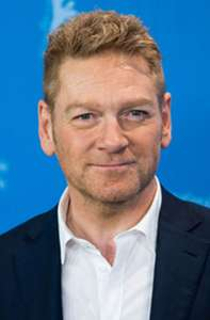
Branagh is the middle of three children of working-class Protestant parents Frances (née Harper) and William Branagh, a plumber and joiner who runs a company that specialises in fitting partitions and suspended ceilings. He lives in the Tiger’s Bay area of the city and is educated at Grove Primary School.
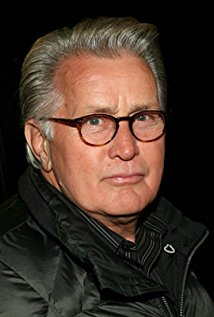
Ramón Gerard Antonio Estévez, known professionally as Martin Sheen, American actor of Spanish/Irish descent, is born in Dayton, Ohio on August 3, 1940. He first becomes known for his roles in the films The Subject Was Roses (1968) and Badlands (1973), and later achieves wide recognition for his leading role in Apocalypse Now (1979) and as President Josiah Bartlet in the television series The West Wing (1999-2006).
Sheen is born to immigrant parents, a first-generation Irish mother, Mary-Anne Phelan from Borrisokane, County Tipperary, and a Galician father, Francisco Estévez from Vigo in Galicia (Spain). He adopts the stage name Martin Sheen to help him gain acting parts from a combination of the CBS casting director Robert Dale Martin, who gives him his first big break, and the televangelistarchbishop, Fulton J. Sheen. He is the father of four children (Emilio, Ramón, Carlos and Renée), all of whom are actors.
Although known as an actor, Sheen also has directed one film, Cadence (1990), appearing alongside sons Charlie and Ramón. He has narrated, produced, and directed documentary television, earning two Daytime Emmy Awards in the 1980s. In addition to film and television, he has been active in liberal politics.



 seamus dubhghaill