seamus dubhghaill

Promoting Irish Culture and History from Little Rock, Arkansas, USA


Leave a comment

Death of Dave Allen, Comedian, Satirist & Actor

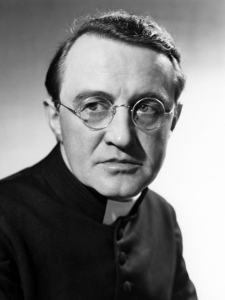
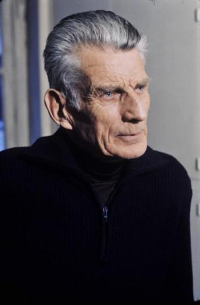
David Edward Tynan O’Mahony, comedian, satirist and actor professionally known as Dave Allen, dies from emphysema in Kensington, London, on March 10, 2005.

Allen is born on July 6, 1936, in a nursing home at 37 Lower Leeson Street, Dublin, the youngest of three sons of (Gerard John) Cullen Tynan Allen, journalist, manager of The Irish Times, and raconteur, and his wife Jean Ballantyne (née Archer), an English-born nurse. His paternal grandmother, Nora Tynan O’Mahony, is the first women’s features editor of the Freeman’s Journal, and the poet Katharine Tynan is his great-aunt. Allen loses half a finger on his left hand in a childhood accident which becomes a favourite theme (and occasional prop) in his shows.

After initially attending Beaumont convent school, Allen goes to Firhouse national school, County Dublin, near the family residence outside Templeogue. For a period during World War II, he lives with his mother and brothers at Keenagh, County Longford, where they had moved for fear that Dublin might be targeted by air raids. On returning to Dublin, he goes to Terenure College, run by the Carmelite fathers. His reminiscences in later life often centre on memories of frequent and sadistic corporal punishment, and warnings from priests that adolescent male sexuality is a device of Satan leading straight to hell. His resentment is formative in his lifelong and outspoken atheism.

Allen, who is close to his father, is severely affected emotionally by his death in 1948, after which his relations with the school deteriorate further. The discovery that his father’s drinking and gambling had left the family heavily indebted means that, notwithstanding assistance from journalistic friends, his elder brothers are obliged to leave school and work as journalists to support the family. Restless and even more discontented at school than previously, he often plays truant to visit museums and art galleries. Expelled from Terenure College, he briefly attends the Catholic University School before leaving school at the age of 16. After working as a clerk for the Irish Independent, in 1954 he becomes a journalist on the Drogheda Argus, reporting weddings and gymkhanas. He later attributes this career path to the contemporary tradition of following a family profession.

Moving to London but failing to secure a job on a Fleet Street newspaper, Allen follows his brother John by becoming a “redcoat” attendant at Butlin’s holiday camps in Filey (Yorkshire), Skegness, Margate, and Brighton, performing various functions and telling jokes and stories during intervals between stage acts. In the winters he sells educational toys in Sheffield. Acquiring an agent, he becomes a professional comedian, adopting the stage name Dave Allen. He initially works the declining club and variety circuit, later claiming that he had toured with the last old-style nude tableaux show. In 1959, he makes his first television appearance on the BBC talent show New Faces and realises that television is the medium of the future. He tours with pop singer Helen Shapiro in 1963 and 1964, joined in the latter year by an emerging support band, the Beatles. At this period, he models himself on American stand-up comedians such as Jerry Lewis, focusing his act on discrete gags leading up to a punchline.

While performing in support of the singer Helen Traubel in Australian nightclubs, Allen often reminisces to her off stage about his early life. Traubel suggests that he incorporate such material into his act. Such is the genesis of his mature style of rambling absurdist monologues, which he describes as influenced by the Irish storytelling tradition in general, and his father’s stories in particular. After appearing in Melbourne and Sydney, he becomes the host of a ninety-minute chat show, Tonight with Dave Allen, on Sydney-based Channel 9. Eighty-four episodes are recorded of what becomes one of Australian television’s most successful programmes ever, its popularity boosted by the rumour that he is having an affair with singer Eartha Kitt, his hilarious interviews with eccentrics, and the frequent deployment of dangerous animals onstage.

Allen marries the English actress Judith Stott in Australia on March 9, 1964, a divorcée with one son. They have two children, including the comedian Ed Allen (Edward James Allen). After separating in 1980, the couple divorces in 1983. Returning to England in December 1964 to be with his wife, he establishes a reputation there through well-received performances as a compère at the televised Sunday Night at the London Palladium (1967) and The Blackpool Show (1966). After a slot as resident comedian on The Val Doonican Show (1965–67), he obtains his first stand-alone show, Tonight with Dave Allen, in 1967 on ITV, a mixture of sketches with the monologues for which he becomes best known. He usually performs seated on a barstool, smoking a cigarette, and sipping from a presumed glass of whiskey (actually ginger ale), while musing on the oddities of life, often expressing his suspicion of authority figures. His signature farewell phrase is “Goodnight, and may your God go with you.”

On BBC television Allen headlines two programmes: The Dave Allen Show (1968–69), and Dave Allen at Large (1971–79). He writes much of his own material, compulsively scouring newspapers for items that he can work into his act. He resists suggestions that he should move to an early evening slot, as this would entail restrictions on his material. In the 1970s and 1980s he tours widely with a one-man stage show, “An evening with Dave Allen,” containing more “adult” material than would be allowed on television at the time. His stage performances are less well-received in the United States than elsewhere.

Allen’s treatment of sex and religion involves him in frequent controversies. Priests and the confessional are frequent targets. In 1975, he provokes widespread protests from Catholics over a sketch in which the pope, played by Allen himself, and his cardinals perform a striptease on the steps of St. Peter’s Basilica. In 1977, his shows are banned from RTÉ. In 1984, the British anti-indecency campaigner Mary Whitehouse formally complains about his televised act, with particular reference to a simulated post-coital conversation. As with many stage comedians, his angry and outspoken stage persona contrasts with a reserved offstage life. He keeps his stage persona distinct from his private life and does not allow his children to attend his shows.

Allen gives occasional straight performances, notably in Edna O’Brien‘s plays A Pagan Place (1972) and Flesh and Blood (1985); in the dual roles of Captain Hook and Mr. Darling in a production of Peter Pan (1973); and in Alan Bennett‘s television play One Fine Day (1979). He has a supporting role in the Australian comedy film Squeeze a Flower (1970). He also presents several documentaries, notably Dave Allen in the Melting Pot (1969); surveying life in New York City, he discusses racism and drug addiction and conducts one of the first television interviews with openly gay men. Other documentaries for ITV include Dave Allen in Search of the Great English Eccentric (1974), and Dave Allen (1978), which deals with American eccentrics. Long fascinated with ghost stories, he publishes an anthology of horror stories, A Little Night Reading (1974).

In the 1980s, Allen is regarded by many fans of the new, politically engaged “alternative comedians” as old-fashioned. His leisurely style contrasts with their quick-fire delivery, and some of his references to the Irish and other ethnic groups are seen as demeaning. He makes a partial television comeback with a six-part BBC One series, Dave Allen (1990), using considerably more outspoken material than he had previously deployed on television.

In 1993, Allen appears in a six-part series for the new ITV London franchise, Carlton Television. Thereafter he moves into semi-retirement, partly because of health problems, while continuing to make guest television appearances. At the British Comedy Awards he is named best comedy performer (1993) and is granted a lifetime achievement award (1996). He occasionally releases videos of older material “to keep myself in the style to which I had become accustomed – a bit of an Irish retirement, actually.” He maintains tight editorial control over his recordings, having been annoyed when his first television shows were chopped and changed when re-broadcast by American networks. They are released on DVD after his death. He presents a six-part BBC series based on his old material, The Unique Dave Allen (1998). After giving his last performance on BBC Radio 4 in 1999, he retires and devotes himself to his hobby as an amateur painter.

After a seventeen-year relationship, Allen marries secondly Karin Stark, a theatrical producer, on December 9, 2003. Their one son is born three weeks after Allen dies peacefully in his sleep as a result of sudden arrhythmic death syndrome on March 10, 2005, in Kensington, London.

A selection of his routines, edited by Graham McCann, is published as The Essential Dave Allen (2005). His obituarists see him as prefiguring the aggressive mocking of authority by the alternative comedians who had once criticised him, and as paving the way for such irreverent and anti-deferential satire of political and religious authority as Not the Nine O’Clock News and Father Ted. The widespread use of the monologue by Irish dramatists such as Conor McPherson in the first decade of the twenty-first century also owes something to his influence.

(From: “Allen, Dave” by Patrick Maume, Dictionary of Irish Biography, http://www.dib.ie, June 2011)

Leave a comment

Birth of Mick Lally, Stage, Film & Television Actor

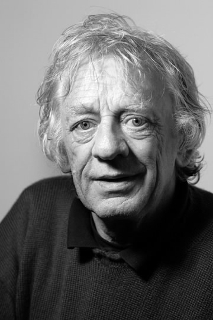
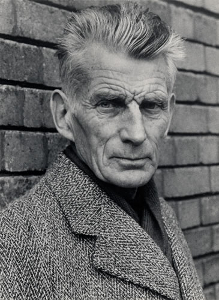
Michael “Mick” Lally, Irish stage, film and television actor, is born in the Gaeltacht village of Toormakeady, County Mayo, on November 10, 1945. He departs from a teaching career for acting during the 1970s. Though best known in Ireland for his role as Miley Byrne in the television soap Glenroe, his stage career spans several decades, and he is involved in feature films such as Alexander and the Academy Award-nominated The Secret of Kells. Many reports cite him as one of Ireland’s finest and most recognisable actors.

Lally is the eldest of a family of seven children. He goes to the local national school in Toormakeady and then to St. Mary’s College, Galway. After studying at University College Galway, he teaches history and the Irish language for six years in Archbishop McHale College in Tuam from 1969 to 1975 but quits teaching to pursue his career as a stage actor.

Lally begins his acting career with Taibhdhearc na Gaillimhe, Ireland’s national Irish language theatre, and is a founding member of the Druid Theatre Company. He receives an Irish Times/ESB Theatre Award Nomination for Best Actor for his role in Druid’s production of The Dead School. He also becomes a member of the Field Day Theatre Company, and stars in the company’s 1980 premiere of Brian Friel‘s play Translations. He first plays at the Abbey Theatre in 1977 in a production of Wild Oats and goes on to perform in many other Abbey productions.

In 1982, Lally stars in the TV series The Ballroom of Romance alongside Brenda Fricker. From 1983 he plays the role of Miley Byrne in the RTÉ soap Glenroe, reprising the character that he played earlier in Bracken in 1978. In 1979, he wins a Jacob’s Award for his performance as Miley in Bracken. He also has some musical success when “The By-road to Glenroe” goes to the top of the Irish charts in 1990. He is also involved in voice-over work, including a noted advertisement for Kilmeaden Cheese during the 1990s. Other TV appearances include roles in Tales of Kinvarna, The Year of the French and Ballykissangel.

In 1994, Lally plays the character Hugh in The Secret of Roan Inish, and in 1995 portrays Dan Hogan in the film adaptation of Maeve Binchy‘s Circle of Friends. Other film roles included Poitín, Our Boys, The Outcasts, A Man of No Importance and others. In later years, he provides the voice of Brother Aidan in the Academy Award-nominated The Secret of Kells, an animated film directed by Tomm Moore.

Lally appears in several TV advertisements encouraging elderly people to “release the equity tied up in their homes” during the Celtic Tiger.

Mick Lally dies in Dublin on the morning of August 31, 2010, after a short stay in the hospital. The cause of death is reported as heart failure, arising from an underlying emphysema condition. His funeral takes place in Dublin on September 2, 2010. The Irish Examiner comments that the “nation has lost one of its favourite uncles.” Personalities from TV, film, theatre and politics attend, while President of Ireland Mary McAleese sends a letter and Lally receives a standing ovation at the end.


Leave a comment

Death of John McCormack, Renowned Irish Tenor

Papal Count John Francis McCormack, KSG, KSS, KHS, Irish tenor celebrated for his performances of the operatic and popular song repertoires, and renowned for his diction and breath control, dies in Booterstown, Dublin, on September 16, 1945.

McCormack is born on June 14, 1884, in Athlone, County Westmeath, the second son and fifth of the 11 children of Andrew McCormack and his wife Hannah Watson. His parents are both from Galashiels, Scotland, and work at the Athlone Woolen Mills, where his father is a foreman. He is baptised in St. Mary’s Church, Athlone, on June 23, 1884.

McCormack receives his early education from the Marist Brothers in Athlone and later attends Summerhill College, Sligo. He sings in the choir of the old St. Peter’s Church in Athlone under his choirmaster Michael Kilkelly. When the family moves to Dublin, he sings in the choir of St. Mary’s Pro-Cathedral where he is discovered by Vincent O’Brien. In 1903 he wins the coveted gold medal of the Dublin Feis Ceoil. He marries Lily Foley in 1906 and they have two children, Cyril and Gwen.

In March 1904, McCormack becomes associated with James Joyce, who at the time has singing ambitions himself. He persuades Joyce to enter the Feis Ceoil that year, where the not yet famous writer is awarded the Bronze Medal.

Fundraising activities on his behalf enable McCormack to travel to Italy in 1905 to receive voice training by Vincenzo Sabatini, father of the novelist Rafael Sabatini, in Milan. Sabatini finds McCormack’s voice naturally tuned and concentrates on perfecting his breath control, an element that becomes part of the basis of his renown as a vocalist.

In 1906, McCormack makes his operatic début at the Teatro Chiabrera, Savona. The next year, he begins his first important operatic performance at Covent Garden in Pietro Mascagni‘s Cavalleria rusticana, becoming the theatre’s youngest principal tenor. In 1909, he begins his career in the United States.

In February 1911, McCormack plays Lieutenant Paul Merrill in the world premiere of Victor Herbert‘s opera Natoma with Mary Garden in the title role. Later that year, he tours Australia after Dame Nellie Melba engages him, then at the height of his operatic career, aged 27, as a star tenor for the Melba Grand Opera Season. He returns for concert tours in subsequent years.

By 1912, McCormack is beginning to become involved increasingly with concert performances, where his voice quality and charisma ensures that he becomes the most celebrated lyric tenor of his time. He does not, however, retire from the operatic stage until after his performance of 1923 in Monte Carlo, although by then the top notes of his voice have contracted. Famous for his extraordinary breath control, he can sing 64 notes on one breath in Mozart‘s “Il mio tesoro” from Don Giovanni, and his Handelian singing is just as impressive in this regard.

McCormack makes hundreds of recordings, his best-known and most commercially successful series of records being those for the Victor Talking Machine Company during the 1910s and 1920s. He is Victor’s most popular Red Seal recording artist after tenor Enrico Caruso. In the 1920s, he sings regularly on radio and later appears in two sound films, Song o’ My Heart (1930), playing an Irish tenor, and as himself appearing in a party scene in Wings of the Morning (1937), the first British three-strip Technicolor feature.

McCormack is one of the first artists to record the popular ballad “I Hear You Calling Me” written in 1908 by Harold Harford and Charles Marshall. He records it twice for Odeon Records starting in 1908 and a further four times for Victor between 1910 and 1927, becoming his best seller. He is the first artist to record the famous World War I song “It’s a Long Way to Tipperary” in 1914. He also records a best-selling version of another popular World War I tune, “Keep the Home Fires Burning,” in 1917. He also sings songs expressive of Irish nationalism and endorses the Irish Nationalist estrangement from the United Kingdom. He is associated particularly with the songs of Thomas Moore, notably “The Harp That Once Through Tara’s Halls,” “The Minstrel Boy,” “Believe Me If All (Those Endearing Young Charms),” and “The Last Rose of Summer.” Between 1914 and 1922, he records almost two dozen songs with violin accompaniment provided by Fritz Kreisler, with whom he also tours. He records songs of Hugo Wolf for the Hugo Wolf Society in German. In 1918, he records the song “Calling Me Home to You.”

In 1917, McCormack becomes a naturalised citizen of the United States. In June 1918, he donates $11,458 toward the U.S. World War I effort. By then, his career is a huge financial success, earning millions in his lifetime from record sales and appearances.

By 1920, Edwin Schneider has become McCormack’s accompanist and the two are “inseparable.” When Schneider retires, Gerald Moore takes over as accompanist from 1939 to 1943.

In 1927, McCormack moves into Moore Abbey, Monasterevin, County Kildare, and adopts a very opulent lifestyle by Irish standards. He also owns apartments in London and New York. He hopes that one of his racehorses, such as Golden Lullaby, would win The Derby, but this never occurs.

McCormack also purchases Runyon Canyon in Hollywood in 1930 from Carman Runyon. He sees and likes the estate while there filming Song o’ My Heart (1930), an early all-talking, all-singing picture. He uses his salary for this movie to purchase the estate and builds a mansion he calls ‘San Patrizio,’ after Saint Patrick. He and his wife live in the mansion until they return to England in 1938.

McCormack tours often, and in his absence, the mansion is often let to celebrities such as Janet Gaynor and Charles Boyer. The McCormacks make many friends in Hollywood, among them Errol Flynn, Will Rogers, John Barrymore, Basil Rathbone, Ronald Colman, Charles E. Toberman and the Dohenys. After his farewell tour of America in 1937, the McCormacks deed the estate back to Carman Runyon expecting to return to the estate at a later date. World War II intervenes and he does not return.

McCormack originally ends his career at the Royal Albert Hall in London, during 1938. However, one year after that farewell concert, he is back singing for the Red Cross and in support of the war effort. He gives concerts, tours, broadcasts and records in this capacity until 1943 when poor health finally forces him to retire permanently.

Ill with emphysema, McCormack purchases a house near the sea, “Glena,” Booterstown, Dublin. After years of increasingly poor health, and a series of infectious illnesses, including influenza and pneumonia, he dies at his home in Booterstown on September 16, 1945. He is buried in Deans Grange Cemetery, St. Patrick’s section, plot reference E/120.


Leave a comment

Death of Samuel Beckett, Playwright & Poet

Samuel Barclay Beckett, avant-garde novelist, playwright, theatre director, and poet, dies in ParisFrance on December 22, 1989.

Beckett is born on Good Friday, April 13, 1906, in FoxrockDublin. His father, William Frank Beckett, works in the construction business and his mother, Maria Jones Roe, is a nurse. Beckett attends Earlsfort House School in Dublin and then, at age 14, he goes to Portora Royal School, the same school attended by Oscar Wilde. He receives his bachelor’s degree from Trinity College, Dublin in 1927. In his youth he periodically experiences severe depression keeping him in bed until mid-day. This experience later influences his writing.

In 1928, Beckett finds a welcome home in Paris where he meets and becomes a devoted student of James Joyce. In 1931, he embarks on a restless sojourn through Great Britain, France and Germany. He writes poems and stories and does odd jobs to support himself. On his journey, he comes across many individuals who inspire some of his most interesting characters.

In 1937, Beckett settles in Paris. Shortly thereafter, he is stabbed by a pimp after refusing his solicitations. While recovering in the hospital, he meets Suzanne Dechevaux-Dumesnuil, a piano student in Paris. The two become life-long companions and eventually marry. After meeting with his attacker, Beckett drops the charges, partly to avoid the publicity.

During World War II, Beckett’s Irish citizenship allows him to remain in Paris as a citizen of a neutral country. He fights in the resistance movement until 1942 when members of his group are arrested by the Gestapo. He and Suzanne flee to the unoccupied zone until the end of the war.

After the war, Beckett is awarded the Croix de Guerre for bravery during his time in the French resistance. He settles in Paris and begins his most prolific period as a writer. In five years, he writes EleutheriaWaiting for GodotEndgame, the novels MolloyMalone DiesThe Unnamable, and Mercier et Camier, two books of short stories, and a book of criticism.

Beckett’s first publication, Molloy, enjoys modest sales, but more importantly praise from French critics. Soon, Waiting for Godot, achieves quick success at the small Theatre de Babylone putting Beckett in the international spotlight. The play runs for 400 performances and enjoys critical praise.

Beckett writes in both French and English, but his most well-known works, written between World War II and the 1960s, are written in French. Early on he realizes his writing has to be subjective and come from his own thoughts and experiences. His works are filled with allusions to other writers such as Dante AlighieriRené Descartes, and James Joyce. Beckett’s plays are not written along traditional lines with conventional plot and time and place references. Instead, he focuses on essential elements of the human condition in dark humorous ways. This style of writing has been called “Theater of the Absurd” by Martin Esslin, referring to poet Albert Camus’ concept of “the absurd.” The plays focus on human despair and the will to survive in a hopeless world that offers no help in understanding.

The 1960s are a period of change for Beckett. He finds great success with his plays across the world. Invitations come to attend rehearsals and performances which lead to a career as a theater director. In 1961, he secretly marries Suzanne Dechevaux-Dumesnuil who takes care of his business affairs. A commission from the BBC in 1956 leads to offers to write for radio and cinema through the 1960s.

Beckett continues to write throughout the 1970s and 1980s, mostly in a small house outside Paris. There he can give total dedication to his art of evading publicity. In 1969, he is awarded the Nobel Prize in Literature, though he declines accepting it personally to avoid making a speech at the ceremonies. However, he should not be considered a recluse. He often times meets with other artists, scholars and admirers to talk about his work.

By the late 1980s, Beckett is in failing health and is moved to a small nursing home. His wife Suzanne dies on July 17, 1989. His life is confined to a small room where he receives visitors and writes. Suffering from emphysema and possibly Parkinson’s disease, he dies on December 22, 1989.


Leave a comment

Death of Joe Heaney, Traditional Irish Singer

joe-heaney

Joe Heaney, traditional Irish singer also known as Joe Éinniú or Seosamh Ó hÉanaí, dies in Seattle, Washington on May 1, 1984. He spends most of his adult life abroad, living in England, Scotland and New York City, in the course of which he records hundreds of songs.

Heaney is born Carna, a remote village in the Irish-speaking district of Connemara, County Galway, along the west coast of Ireland on October 15, 1919. He starts singing at the age of five, but his shyness keeps him from singing in public until he is 20. He learns English at school in Carna. When he is 16 years old, he wins a scholarship to attend school in Dublin. While there he wins first and second prizes at a national singing competition. Most of his repertoire, estimated to exceed 500 songs, is learned while growing up in Carna.

In 1949, Heaney goes to London where he works on building sites and becomes involved in the folk-music scene. He records for the Topic Records and Gael Linn Records labels. He is married for six years until his wife dies of tuberculosis.

Heaney is recorded by Pádraic Ó Raghallaigh for Raidió Teilifís Éireann, and by Peter Kennedy for the BBC in 1959. The BBC recordings are assembled on a BBC LP, not commercially issued, as BBC LP 22570.

Heaney comes to the United States in 1965 at the invitation of the Newport Folk Festival. After singing at Newport, he decides to move to America and settles in New York City. From 1982 until 1984, Heaney is an artist-in-residence at the University of Washington in Seattle after previously having taught at Wesleyan University in Middletown, Connecticut.

Joe Heaney dies of emphysema in Seattle on May 1, 1984. The Joe Heaney Collection of the University of Washington Ethnomusicology Archives is established after his death. The Féile Chomórtha Joe Éinniú (Joe Heaney Commemorative Festival) is held every year in Carna. An Irish-language biography of him has been written by Liam Mac Con Iomaire, and a biography that discusses his work in the larger context of Ireland and the United States was published in 2011 by Sean Williams and Lillis Ó Laoire.


Leave a comment

Death of Mick Lally, Stage, Film & Television Actor

mick-lally

Michael “Mick” Lally, Irish stage, film and television actor, dies in Dublin on August 31, 2010. He departs from a teaching career for acting during the 1970s. Though best known in Ireland for his role as Miley Byrne in the television soap Glenroe, his stage career spans several decades, and he is involved in feature films such as Alexander and the Academy Award-nominated The Secret of Kells. Many reports cite him as one of Ireland’s finest and most recognisable actors.

Born on November 10, 1945, and reared in the Gaeltacht village of Toormakeady, County Mayo, Lally is the eldest of a family of seven children. He goes to the local national school in Toormakeady and then to St. Mary’s College, Galway. After studying at University College Galway, he teaches history and Irish for six years in Archbishop McHale College in Tuam from 1969 to 1975 but quits teaching to pursue his career as a stage actor.

Lally begins his acting career with Taibhdhearc na Gaillimhe, Ireland’s national Irish language theatre, and is a founding member of the Druid Theatre Company. He receives an Irish Times/ESB Theatre Award Nomination for Best Actor for his role in Druid’s production of The Dead School. He also becomes a member of the Field Day Theatre Company, and stars in the company’s 1980 premiere of Brian Friel‘s play Translations. He first plays at the Abbey Theatre in 1977 in a production of Wild Oats and goes on to perform in many other Abbey productions.

In 1982, Lally stars in the TV series The Ballroom of Romance alongside Brenda Fricker. From 1983 he plays the role of Miley Byrne in the RTÉ soap Glenroe, reprising the character that he played earlier in Bracken in 1978. In 1979, he wins a Jacob’s Award for his performance as Miley in Bracken. He also has some musical success when “The By-road to Glenroe” goes to the top of the Irish charts in 1990. He is also involved in voice-over work, including a noted advertisement for Kilmeaden Cheese during the 1990s. Other TV appearances include roles in Tales of Kinvarna, The Year of the French and Ballykissangel.

In 1994, Lally plays the character Hugh in The Secret of Roan Inish, and in 1995 portrays Dan Hogan in the film adaptation of Maeve Binchy‘s Circle of Friends. Other film roles included Poitín, Our Boys, The Outcasts, A Man of No Importance and others. In later years, he provides the voice of Brother Aidan in the Academy Award-nominated The Secret of Kells, an animated film directed by Tomm Moore.

Lally appears in several TV advertisements encouraging elderly people to “release the equity tied up in their homes” during the Celtic Tiger.

Mick Lally dies on the morning of August 31, 2010, after a short stay in the hospital. The cause of death is reported as heart failure, arising from an underlying emphysema condition. His funeral takes place in Dublin on September 2, 2010. The Irish Examiner comments that the “nation has lost one of its favourite uncles.” Personalities from TV, film, theatre and politics attend, while President of Ireland Mary McAleese sends a letter and Lally receives a standing ovation at the end.


Leave a comment

Birth of George Brent, Irish-Born Actor

george-brent

George Brent, Irish-born American stage, film, and television actor in American cinema, is born on March 15, 1904 in Ballinasloe, County Galway.

Brent was born George Patrick Nolan to John J. and Mary (née McGuinness) Nolan. His mother is a native of Clonfad, Moore, County Roscommon. During the Irish War of Independence, Brent is part of the Irish Republican Army (IRA). He flees Ireland with a bounty set on his head by the British government, although he later claims only to have been a courier for guerrilla leader and tactician Michael Collins.

Brent arrives in the United States in 1921. Some time later he tours with a production of Abie’s Irish Rose. During the next five years, he acts in stock companies in Colorado, Rhode Island, Florida, and Massachusetts. In 1930, he appears on Broadway in Love, Honor, and Betray, alongside Clark Gable.

He eventually moves to Hollywood, and makes his first film, Under Suspicion, in 1930. Over the next two years, he appears in a number of minor films produced by Universal Studios and 20th Century Fox, before being signed to contract by Warner Bros. in 1932. He remains at Warner Bros. for the next 20 years, carving out a successful career as a top-flight leading man during the late 1930s and 1940s.

Highly regarded by Bette Davis, Brent becomes her most frequent male co-star, appearing with her in 13 films, including Front Page Woman (1935), Special Agent (1935), The Golden Arrow (1936), Jezebel (1938), The Old Maid (1939), Dark Victory (1939), and The Great Lie (1941). Brent also plays opposite Ruby Keeler in 42nd Street (1933), Greta Garbo in The Painted Veil (1934), Ginger Rogers in In Person (1935), Madeleine Carroll in The Case Against Mrs. Ames (1936), Jean Arthur in More Than a Secretary (1936), Myrna Loy in Stamboul Quest (1934) and The Rains Came (1939), Merle Oberon in ‘Til We Meet Again (1940), Ann Sheridan in Honeymoon for Three (1941), Joan Fontaine in The Affairs of Susan (1945), Barbara Stanwyck in So Big! (1932), The Purchase Price (1932), Baby Face (1933), The Gay Sisters (1942), and My Reputation (1946), Claudette Colbert in Tomorrow Is Forever (1946), Dorothy McGuire in The Spiral Staircase (1946), Lucille Ball in Lover Come Back (1946), and Yvonne De Carlo in Slave Girl (1947).

Brent drifts into “B” pictures from the late 1940s and retires from film in 1953. He continues to appear on television until 1960, having appeared on the religion anthology series, Crossroads. He is cast in the lead in the 1956 television series, Wire Service. In 1978, he makes one last film, the made-for-television production Born Again.

George Brent receives two stars on the Hollywood Walk of Fame, the first, at 1709 Vine St., for his film contributions, the second star, at 1614 Vine St., for his work in television.

Brent is married five times: Helen Louise Campbell (1925–1927), Ruth Chatterton (1932–1934), Constance Worth (1937), Ann Sheridan (1942–1943), and Janet Michaels (1947-1974). His final marriage to Janet Michaels, a former model and dress designer, lasts 27 years until her death in 1974. They have a son and a daughter.

Brent also carries on a lengthy relationship with his frequent Warner Bros. co-star, actress Bette Davis, who describes her last meeting with Brent after many years of estrangement. He is suffering from advanced emphysema, and she expresses great sadness at his ill health and deterioration. George Brent dies on May 26, 1979 in Solana Beach, California.


Leave a comment

Birth of Actor Arthur Shields

arthur-shields

Arthur Shields, Irish actor on television, stage, and film, is born on February 15, 1896, into an Irish Protestant family in Portobello, Dublin. Shields starts acting in the Abbey Theatre when he is 17 years old. He is the younger brother of Oscar-winning actor Barry Fitzgerald. They are the sons of Adolphus Shields, who is well-known in Dublin as a labor organizer although the 1901 census lists his occupation as “press reader,” and Fanny Sophia Sheilds.

An Irish nationalist, Shields fights in the Easter Rising of 1916. He is captured and held for six months in the Frongoch internment camp in Frongoch, Wales. His obituary in the San Mateo County Times of San Mateo, California, reports, “upon his release he was decorated by the Republic of Eire.”

Shields returns to the Abbey Theatre and has a varied career there from 1914-1939 as actor, assistant director, director, and stage manager. He appears in more than 300 roles in 350 plays while he is at the Abbey. Three of the productions he appears in are by Irish playwright Teresa DeevyThe Reapers, Temporal Powers, and Katie Roche. Three times he brings the Abbey Company to the United States.

In 1936, John Ford brings him to the United States to act in a film version of The Plough and the Stars in the role of Patrick Pearse. Some of his memorable roles are in Ford films. Shields portrays the Reverend Playfair in Ford’s The Quiet Man, opposite John Wayne, Maureen O’Hara, and his brother, Barry Fitzgerald. He plays Dr. Laughlin in She Wore a Yellow Ribbon with Wayne and Joanne Dru and appears yet again with Wayne and Barry Fitzgerald in Ford’s The Long Voyage Home. His other films include Little Nellie Kelly, The Keys of the Kingdom, The Fabulous Dorseys, Gallant Journey, The Shocking Miss Pilgrim, Drums Along the Mohawk, Lady Godiva, National Velvet, and The River. He also makes television appearances including a 1958 role on Perry Mason as Dr. George Barnes in “The Case of the Screaming Woman.”

Shields dies of complications related to emphysema on April 27, 1970, in Santa Barbara, California. He is survived by his wife, actress Laurie Bailey, a daughter, a son, and four great-grandchildren. His body is cremated, with the ashes taken to Dublin, where a burial with full military honors takes place.


Leave a comment

Samuel Beckett Awarded the 1969 Nobel Prize for Literature

samuel-beckett

Samuel Barclay Beckett, Irish avant-garde novelist, playwright, theatre director, and poet, is awarded the Nobel Prize in Literature on October 23, 1969. Beckett lives in Paris for most of his adult life and writes in both English and French. He is widely regarded as among the most influential writers of the 20th century. He is elected Saoi of Aosdána in 1984.

Beckett’s work offers a bleak, tragicomic outlook on human existence, often coupled with black comedy and gallows humour, and becomes increasingly minimalist in his later career. He is considered one of the last modernist writers, and one of the key figures in what Martin Esslin calls the “Theatre of the Absurd.” Waiting for Godot is generally regarded as his best-known play.

In October 1969 while on holiday in Tunis with his wife Suzanne, Beckett hears that he has won the Nobel Prize for Literature. Anticipating that her intensely private husband would be saddled with fame from that moment on, Suzanne calls the award a “catastrophe.” In true ascetic fashion, he gives away all of the prize money. While Beckett does not devote much time to interviews, he sometimes meets the artists, scholars, and admirers who seek him out in the anonymous lobby of the Hotel PLM St. Jacques in Paris near his Montparnasse home. Although Beckett is an intensely private man, a review of the second volume of his letters by Roy Foster in the December 15, 2011 issue of The New Republic reveals Beckett to be not only unexpectedly amiable but frequently prepared to talk about his work and the process behind it.

Confined to a nursing home and suffering from emphysema and possibly Parkinson’s disease, Beckett dies on 22 December 22, 1989, just five months after the passing of Suzanne. The two are interred together in the Cimetière du Montparnasse in Paris and share a simple granite gravestone that follows Beckett’s directive that it should be “any colour, so long as it’s grey.”

Of all the English-language modernists, Beckett’s work represents the most sustained attack on the realist tradition. He opens up the possibility of theatre and fiction that dispense with conventional plot and the unities of time and place in order to focus on essential components of the human condition.

On December 10, 2009, a new bridge across the River Liffey in Dublin is opened and named the Samuel Beckett Bridge in his honour. Reminiscent of a harp on its side, it is designed by the celebrated Spanish architect Santiago Calatrava, who also designed the James Joyce Bridge further upstream. The newest ship of the Irish Naval Service, the LÉ Samuel Beckett (P61), is named for Beckett. An Ulster History Circle blue plaque in his memory is located at Portora Royal School, Enniskillen, County Fermanagh.