seamus dubhghaill

Promoting Irish Culture and History from Little Rock, Arkansas, USA


Leave a comment

Death of John O’Donovan, Irish Language Scholar

john-odonovanJohn O’Donovan, Irish language scholar, dies at his residence at 36 Upper Buckingham Street in Dublin on December 10, 1861.

O’Donovan is born in County Kilkenny on July 25, 1806 and is the fourth son of Edmond O’Donovan and Eleanor Hoberlin of Rochestown. His early career is likely inspired by his uncle, Parick O’Donovan. He works for antiquarian James Hardiman researching state papers and traditional sources at the Public Records Office. He also teaches Irish to Thomas Larcom for a short period in 1828 and works for Myles John O’Reilly, a collector of Irish manuscripts.

Following the death of Edward O’Reilly in August 1830, O’Donovan is recruited to the Topographical Department of the first Ordnance Survey Ireland under George Petrie in October 1830. Apart from a brief period in 1833, he works steadily for the Survey on place-name researches until 1842, unearthing and preserving many manuscripts. After that date, O’Donovan’s work with the Survey tails off, although he is called upon from time to time to undertake place-name research on a day-to-day basis. He researches maps and manuscripts at many libraries and archives in Ireland and England, with the intent to establish the correct origin of as many of Ireland’s 63,000 townland names as possible. His letters to Larcom are regarded as an important record of the ancient lore of Ireland for those counties he documents during his years of travel throughout much of Ireland.

By 1845, O’Donovan is corresponding with the younger scholar William Reeves, and much of their correspondence to 1860 survives.

O’Donovan becomes professor of Celtic Languages at Queen’s University Belfast, and is called to the Bar in 1847. His work on linguistics is recognised in 1848 by the Royal Irish Academy, who award him their prestigious Cunningham Medal. On the recommendation of German philologist Jacob Grimm, he is elected a corresponding member of the Royal Academy of Prussia in 1856.

Never in great health, he dies shortly after midnight on December 10, 1861 at his residence in Dublin. He is buried on December 13, 1861 in Glasnevin Cemetery, where his tombstone inscription has slightly incorrect dates of both birth and death.


Leave a comment

Birth of Irish Rebel Leader John Devoy

john-devoy

John Devoy, one of the most devoted revolutionaries the world has ever seen, is born in Kill, County Kildare, on September 3, 1842. Dedicating over 60 years of his life to the cause of Irish freedom, he is one of the few people to have played a leading role in the Fenian Rising of 1867, the 1916 Easter Rising, and the Irish War of Independence (1919 – 1921).

After the Great Famine, the family moves to Dublin where Devoy’s father obtains at job at Watkins’ brewery. Devoy attends night school at the Catholic University before joining the Fenians. In 1861 he travels to France with an introduction from Timothy Daniel Sullivan to John Mitchel. Devoy joins the French Foreign Legion and serves in Algeria for a year before returning to Ireland to become a Fenian organiser in Naas, County Kildare.

In 1865, when many Fenians are arrested, James Stephens, founder of the Irish Republican Brotherhood (IRB), appoints Devoy Chief Organiser of Fenians in the British Army in Ireland. His duty is to enlist Irish soldiers in the British Army into the IRB. In November 1865 Devoy orchestrates Stephens’ escape from Richmond Prison in Dublin.

In February 1866 an IRB Council of War calls for an immediate uprising but Stephens refuses, much to Devoy’s annoyance, as he calculated the Fenian force in the British Army to number 80,000. The British get wind of the plan through informers and move the regiments abroad, replacing them with regiments from Britain. Devoy is arrested in February 1866 and interned in Mountjoy Gaol, then tried for treason and sentenced to fifteen years penal servitude. In Portland Prison Devoy organises prison strikes and, as a result, is moved to Millbank Prison in Pimlico, London.

In January 1871, he is released and exiled to the United States as one of the “Cuba Five.” He receives an address of welcome from the House of Representatives. Devoy becomes a journalist for the New York Herald and is active in Clan na Gael. Under Devoy’s leadership, Clan na Gael becomes the central Irish republican organisation in the United States. In 1877 he aligns the organisation with the Irish Republican Brotherhood in Ireland.

In 1875, Devoy and John Boyle O’Reilly organise the escape of six Fenians from Fremantle Prison in Western Australia aboard the ship Catalpa. Devoy returns to Ireland in 1879 to inspect Fenian centres and meets Charles Kickham, John O’Leary, and Michael Davitt en route in Paris. He convinces Davitt and Charles Stewart Parnell to co-operate in the “New Departure” during the growing Land War.

Devoy’s fundraising efforts and work to sway Irish Americans to physical force nationalism makes possible the Easter Rising in 1916. In 1914, Patrick Pearse visits the elderly Devoy in America, and later the same year Roger Casement works with Devoy in raising money for guns to arm the Irish Volunteers. Though he is skeptical of the endeavor, he finances and supports Casement’s expedition to Germany to enlist German aid in the struggle to free Ireland from English rule. Also, before and during World War I, Devoy is also identified closely with the Ghadar Party, and is accepted to have played a major role in supporting Indian Nationalists, as well as playing a key role in the Hindu-German Conspiracy which leads to the trial that is the longest and most expensive trial in the United States at the time.

In 1916 Devoy plays an important role in the formation of the Clan-dominated Friends of Irish Freedom, a propaganda organization whose membership totals 275,000 at one point. The Friends fail in their efforts to defeat Woodrow Wilson for the presidency in 1916. Fearful of accusations of disloyalty for their cooperation with Germans and opposition to the United States’ entering the war on the side of Great Britain, the Friends significantly lower their profile after April 1917. Sinn Féin‘s election victories and the British government’s intentions to conscript in Ireland in April 1917 help to revitalize the Friends.

With the end of the war, Devoy plays a key role in the Friends’ advocacy for not the United States’ recognition of the Irish Republic but, in keeping with President Wilson’s war aims, self-determination for Ireland. The latter does not guarantee recognition of the Republic as declared in 1916 and reaffirmed in popular election in 1918. American Irish republicans challenge the Friends’ refusal to campaign for American recognition of the Irish Republic. Not surprisingly, Devoy and the Friends’ Daniel F. Cohalan become the key players in a trans-Atlantic dispute with de facto Irish president Éamon de Valera, touring the United States in 1919 and 1920 in hopes of gaining U.S. recognition of the Republic and American funds. Believing that the Americans should follow Irish policy, de Valera forms the American Association for the Recognition of the Irish Republic in 1920 with help from the Philadelphia Clan na Gael.

Devoy returns to Ireland and in 1919 addresses Dáil Éireann. He later supports the Anglo-Irish Treaty of 1921. Devoy is editor of The Gaelic American from 1903 until his death in Atlantic City on September 29, 1928. His body is returned to Ireland and buried in Glasnevin Cemetery. A large memorial to him stands on the road between his native Kill and Johnstown.


Leave a comment

Death of Éamon de Valera

eamon-de-valera-dead

Éamon de Valera, prominent politician in twentieth-century Ireland, dies at the age of 92 in Linden Convalescent Home, Blackrock, County Dublin on August 29, 1975. His wife, Sinéad de Valera, four years his senior, had died the previous January, on the eve of their 65th wedding anniversary.

De Valera’s political career spans over half a century, from 1917 to 1973. He serves several terms as head of government and head of state. He also leads the introduction of the Constitution of Ireland.

De Valera is a leader in the Irish War of Independence and of the anti-Treaty opposition in the ensuing Irish Civil War (1922–1923). After leaving Sinn Féin in 1926 due to its policy of abstentionism, he founds Fianna Fáil, and is head of government from 1932 to 1948, 1951 to 1954, and 1957 to 1959, serving as President of the Executive Council and later Taoiseach. He resigns after being elected President of Ireland. His political creed evolves from militant republicanism to social and cultural conservatism.

Assessments of de Valera’s career are varied. He has often been characterised as a stern, unbending, devious, and divisive Irish politician. Biographer Tim Pat Coogan sees his time in power as being characterised by economic and cultural stagnation, while Diarmaid Ferriter argues that the stereotype of de Valera as an austere, cold and even backward figure is largely manufactured in the 1960s and is misguided.

On September 2, 1975, Éamon de Valera makes his final journey through the streets of Dublin to his final resting place at Glasnevin Cemetery. De Valera’s body is taken from St. Patrick’s Hall in Dublin Castle, where it has lain in state, to the the St. Mary’s Pro-Cathedral, where a requiem Mass is celebrated by his grandson, Father Seán Ó Cuív, and then on to Glasnevin Cemetery.

On a day of national mourning, over 200,000 people pay tribute to the statesman along the three-mile funeral route from Dublin city centre to Glasnevin. The Army No. 1 Band plays Wrap the Green Flag Round Me as de Valera is carried into Glasnevin Cemetery.

In attendance at the funeral are family, friends, colleagues, politicians, dignitaries, diplomats, veterans of the 1916 Easter Rising, and citizens who want to pay their respect. The final prayers are recited at the graveside by Father Ó Cuív. The firing party of young cadets from the Curragh fire a final volley in tribute over the grave.


Leave a comment

The Assassination of Michael Collins

michael-collins

Michael Collins, soldier and politician who is a leading figure in the struggle for Irish independence in the early 20th century, is shot and killed in ambush at Béal na Bláth, County Cork, on August 22, 1922.

In August 1922, the Irish Civil War seems to be winding down. The Irish Free State has regained control of most of the country and Collins is making frequent trips to inspect areas recently recovered from anti-Treaty forces.

His plan to travel to his native Cork on August 20 is considered particularly dangerous and he is strenuously advised against it by several trusted associates. County Cork is an Irish Republican Army (IRA) stronghold, much of it still held by anti-Treaty forces. Yet he seems determined to make the trip without delay. He has fended off a number of attempts on his life in the preceding weeks and has acknowledged more than once, in private conversation, that the Civil War might end his life at any moment. On several occasions Collins assures his advisors that they will not shoot him in his own county.

On August 22, 1922, Collins sets out from Cork City on a circuitous tour of West Cork. He passes first through Macroom then takes the Bandon road via Crookstown. This leads through Béal na Bláth, an isolated crossroads. There they stop at a local pub, now known as the The Diamond Bar, to ask a question of a man standing at the crossroad. The man turns out to be an anti-Treaty sentry. He and an associate recognise Collins in the back of the open-top car. As a result, an ambush is laid by an anti-Treaty column at that point, on the chance that the convoy might come through again on their return journey.

Shortly before 8:00 PM, Collins’ convoy approaches Béal na Bláth for the second time. By that time most of the ambush party has dispersed and gone for the day, leaving just five or six men on the scene. Two are disarming a mine in the road, while three on a laneway overlooking them, provide cover. A dray cart, placed across the road, remains at the far end of the ambush site.

Shots are exchanged. Collins, who suffers a head wound, is the only fatality. Almost every other detail of what happens is uncertain, due to conflicting reports from participants and other flaws in the record.

michael-collins-body

Some of the most disputed details include how the shooting starts, what kind of fire the convoy comes under, where the ambushers’ first shots strike, where Collins is and what he is doing when he is hit, whether anyone else is wounded, whether the armoured car’s machine gun is fully functional throughout the engagement, who moves Collins’ body, and who is nearby when Collins falls.

Many questions have been raised concerning the handling of Collins’s remains immediately following his death. Among them are the inordinately long time the convoy takes to cover the twenty miles back to Cork City, who searched his clothes, and what became of documents he is known to have been carrying on his person.

Collins’s body is transported by sea from Cork to Dublin. He lay in state for three days in Dublin City Hall where tens of thousands of mourners file past his coffin to pay their respects, including many British soldiers departing Ireland who had fought against him. His funeral mass takes place at Dublin’s Pro Cathedral where a number of foreign and Irish dignitaries are in attendance. Some 500,000 people attend his funeral, almost one fifth of the country’s population at that time.

No official inquiry is ever undertaken into Collins’s death and consequently there is no official version of what happened, nor are there any authoritative, detailed contemporary records.

An annual commemoration ceremony takes place each year in August at the ambush site at Béal na Bláth, County Cork, organised by The Béal na mBláth Commemoration Committee. There is also a remembrance ceremony in Dublin’s Glasnevin Cemetery at Collins’s grave on the anniversary of his death.


Leave a comment

Birth of the Liberator, Daniel O’Connell

daniel-oconnell

Daniel O’Connell, Irish political leader often referred to as The Liberator or The Emancipator, is born on August 6, 1775, at Carhan near Cahersiveen, County Kerry, to the O’Connells of Derrynane, a once-wealthy Roman Catholic family, that has been dispossessed of its lands.

Raised by his uncle, Daniel learns the Irish language and Irish lore in Kerry. O’Connell does part of his schooling in France during the revolution. On May 19, 1798, O’Connell is called to the Irish Bar and becomes a barrister. Four days later, the United Irishmen stage their rebellion which is put down by the British with great bloodshed. O’Connell does not support the rebellion. He believes that the Irish need to assert themselves politically rather than by force. The violent excesses he witnesses in France, the slaughter of the 1798 Rising, and finally his own killing of a man in a duel in 1815 leads him to renounce violence forever.

Moving into politics, O’Connell founds the Catholic Association in 1823, creating one of the first massive political movements in Europe or the Americas. The Catholic Association embraces other aims to better Irish Catholics, such as electoral reform, reform of the Church of Ireland, tenants’ rights, and economic development.

When he is elected to Parliament in 1828, he is unable to take his seat as members of parliament have to take the Oath of Supremacy, which is incompatible with Catholicism.  Fear of the reaction of his millions of followers leads to the passage of the Roman Catholic Relief Act 1829. O’Connell works for Home Rule for Ireland for the rest of his days but never achieves it. The British ban his mass Repeal of the Union rallies in 1843 and jail him for a time. The movement loses momentum at that point and the long years of hard work wear “The Liberator” down.

O’Connell dies at the age of 71 of cerebral softening on May15, 1847, in Genoa, Italy, while on a pilgrimage to Rome. His time in prison seriously weakens him and the appallingly cold weather he has to endure on his journey is likely the final blow. According to his dying wish, his heart is buried in Rome at Sant’Agata dei Goti, then the chapel of the Irish College, and the remainder of his body in Glasnevin Cemetery in Dublin, beneath a round tower.


Leave a comment

Death of Countess Constance Georgine Markievicz

markievicz-funeral-procession

Countess Constance Georgine Markievicz, née Gore-Booth, Irish politician, revolutionary nationalist, and suffragette, dies on July 15, 1927, in Sir Patrick Dun’s Hospital, Dublin, of complications related to appendicitis.

Constance Gore-Booth is born into the Anglo-Irish aristocracy and grows up at her family’s estate, Lissadell House, in County Sligo. Constance enrolls at London’s Slade School of Fine Art in 1893. In the late 1890s she travels to Paris, where she meets Count Casimir Dunin-Markievicz of Poland. They are married in 1900.

In 1903 the Markieviczes move to Dublin, where Constance’s interests soon turn from art to Irish politics. At age 40, in 1908, she embraces Irish nationalism, joining the revolutionary women’s group Inghinidhe na hÉireann (Daughters of Ireland) and the Sinn Féin political party. The following year she forms Na Fianna Éireann (Soldiers of Ireland), a republican organization loosely based on the Boy Scouts, in which young boys are trained to be nationalist soldiers.

In 1911 she is arrested for demonstrating against King George V’s visit to Ireland. This is just the first of several arrests and imprisonments for Markievicz, whose political activism results in jail time intermittently for the remainder of her life. In 1913–14 she provides food for workers and their families during a labour dispute in which thousands of people are locked out of their workplaces for refusing to reject union membership.

In April 1916 Markievicz takes part in the Easter Rising, the republican insurrection in Dublin against British government in Ireland. After the general surrender, she is arrested and imprisoned. Though many women participate in the uprising, Markievicz is the only one to be court-martialed. She is sentenced to death, but the sentence is commuted to a lifetime of penal servitude on account of her gender. The following year, under a general amnesty, Markievicz is released, but soon finds herself back in jail for supposed participation in a plot against the British government. In December 1918, while still carrying out a prison sentence, Markievicz is elected to the House of Commons as the representative for Dublin’s St. Patrick’s division. Along with the other members of Sinn Féin, she refuses to swear an oath of allegiance to the king and, thus, does not take her seat. Instead, under the leadership of Éamon de Valera, the Irish republicans set up their own provisional government, Dáil Éireann.

After her release from prison, Markievicz serves in the first Dáil Éireann as the minister of labour, a post she holds from 1919 until she is defeated in the 1922 elections. That same year the Irish Free State is established, and Dáil Éireann is incorporated as the lower house of the Oireachtas (Irish parliament). Markievicz is elected to the Dáil in the 1923 general election but, along with the other members of Sinn Féin, she again refuses to swear allegiance to the king and does not take her seat. Instead, she devotes herself to charity work. Markievicz joins de Valera’s Fianna Fáil party on its founding in 1926 and is again elected to the Dáil in 1927 but dies a month later without having taken her seat.

Refused a state funeral by the Free State government, Markievicz is buried at Glasnevin Cemetery, Dublin, and de Valera gives the funeral oration.


Leave a comment

Cathal Brugha Fatally Wounded by Sniper

cathal-brugha

Cathal Brugha, a leading figure in the Anti-Treaty Irish Republican Army (IRA), is shot by a sniper on July 5, 1922, as he appears in the doorway of the Hammam Hotel during the Irish Civil War. He dies two days later.

Brugha is born in Dublin of mixed Roman Catholic and Protestant parentage. He is the tenth of fourteen children and is educated at the Jesuit Belvedere College but is forced to leave at the age of sixteen because of the failure of his father’s business.

In 1899, Brugha joins the Gaelic League, and subsequently changes his name from Charles Burgess to Cathal Brugha. He becomes actively involved in the Irish Republican Brotherhood (IRB) and in 1913 he becomes a lieutenant in the Irish Volunteers. He leads a group of twenty Volunteers to receive the arms smuggled into Ireland in the Howth gun-running of 1914.

Brugha is second-in-command at the South Dublin Union under Commandant Éamonn Ceannt in the Easter Rising of 1916. On the Thursday of Easter Week, being badly wounded, he is unable to leave when the retreat is ordered. Brugha, weak from loss of blood, continues to fire upon the enemy and is found by Éamonn Ceannt singing God Save Ireland with his pistol still in his hands. Initially not considered likely to survive, he recovers over the next year but is left with a permanent limp.

During the War of Independence, Brugha organises an amalgamation of the Irish Volunteers and the Irish Citizen Army into the Irish Republican Army (IRA). He proposes a Republican constitution at the 1917 Sinn Féin convention which is unanimously accepted. In October 1917, he becomes Chief of Staff of the Irish Republican Army and holds that post until March 1919.

Brugha is elected speaker of Dáil Éireann at its first meeting on January 21, 1919, and he reads out the Declaration of Independence in Irish. On the following day, he is appointed president of the ministry pro tempore and retains this position until April 1, 1919, when Éamon de Valera takes his place.

In the months between the Anglo-Irish Treaty debates and the outbreak of Civil War, Brugha attempts to dissuade his fellow anti-treaty army leaders, including Rory O’Connor, Liam Mellows, and Joe McKelvey, from taking up arms against the Free State. When the IRA occupies the Four Courts, he and Oscar Traynor call on them to abandon their position. When they refuse, Traynor orders the occupation of the area around O’Connell Street in the hope of easing the pressure on the Four Courts and of forcing the Free State to negotiate.

On 28 June 1922, Brugha is appointed commandant of the forces in O’Connell Street. The outbreak of the Irish Civil War ensues in the first week of July when Free State forces commence shelling of the anti-treaty positions.

Most of the anti-Treaty fighters under Oscar Traynor escape from O’Connell Street when the buildings they were holding catch fire, leaving Brugha in command of a small rearguard. On 5 July, he orders his men to surrender but refuses to do so himself. He then approaches the Free State troops, brandishing a revolver. He sustains a bullet wound to the leg which severs a major artery, ultimately causing him to bleed to death on July 7, 1922, eleven days before his 48th birthday. He is buried in Glasnevin Cemetery.


Leave a comment

Death of Jeremiah O’Donovan Rossa

jeremiah-odonovan-rossa

Jeremiah O’Donovan Rossa, Irish Fenian leader and prominent member of the Irish Republican Brotherhood, dies suddenly in Staten Island, New York, on June 29, 1915.

Jeremiah O’Donovan Rossa is born Jeremiah O’Donovan at Reenascreena, Rosscarbery, County Cork, on September 10, 1831. Rossa becomes a shopkeeper in Skibbereen where, in 1856, he establishes the Phoenix National and Literary Society, the aim of which is “the liberation of Ireland by force of arms.” This organisation later merges with the Irish Republican Brotherhood (IRB), founded two years later in Dublin.

In December 1858, Roosa is arrested and jailed without trial until July 1859. He is charged with plotting a Fenian rising in 1865, put on trial for high treason, and sentenced to penal servitude for life due to previous convictions. He serves his time in Pentonville, Portland, and Chatham prisons in England.

In an 1869 by-election, Roosa is returned to the British House of Commons for the Tipperary constituency, defeating the Liberal Catholic Denis Caulfield Heron by 1054 to 898 votes. The election is declared invalid because Rossa is an imprisoned felon.

After giving an understanding that he will not return to Ireland, Rossa is released as part of the Fenian Amnesty of 1870. Boarding the S.S. Cuba, he leaves for the United States with his friend John Devoy and three other exiles. Together they were dubbed “The Cuba Five.”

Rossa takes up residence in New York City, where he joins Clan na Gael and the Fenian Brotherhood. He organises the first ever bombings by Irish republicans of English cities in what is called the “dynamite campaign.” The campaign lasts through the 1880s and makes him infamous in Britain. The British government demands his extradition from America but without success.

In 1885, Rossa is shot outside his office near Broadway by an Englishwoman, Yseult Dudley, but his wounds are not life-threatening. He is allowed to visit Ireland in 1894, and again in 1904. On the latter visit, he is made a “Freeman of the City of Cork.”

Rossa is seriously ill in his later years and is finally confined to a hospital bed in St. Vincent’s Hospital, Staten Island, where he dies at the age of 83 on June 29, 1915. His body is returned to Ireland for burial and a hero’s welcome. The funeral at Glasnevin Cemetery on August 1, 1915, is a huge affair, garnering substantial publicity for the Irish Volunteers and the IRB at time when a rebellion, later to emerge as the Easter Rising, is being actively planned. The graveside oration given by Patrick Pearse remains one of the most famous speeches of the Irish independence movement stirring his audience to a call to arms.


Leave a comment

Birth of Charles Stewart Parnell

charles-stewart-parnell

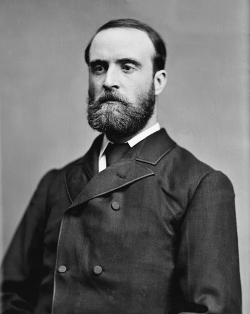
Charles Stewart Parnell, Irish nationalist politician and one of the most powerful figures in the British House of Commons in the 1880s, is born on June 27, 1846, in County Wicklow.

Born into a wealthy and powerful Anglo-Irish Protestant landowning family, Parnell enters the House of Commons in 1875. He is a land reform agitator and becomes leader of the Home Rule League in 1880, insisting on operating independently of the Liberals, and winning great influence by his balancing of constitutional, radical, and economic issues, and by his skillful use of parliamentary procedure. He is imprisoned in Kilmainham Gaol in 1882 but, being a very capable negotiator, is released when he renounces violent extra-Parliamentary action in an informal agreement, the Kilmainham Treaty, with British Prime Minister William Ewart Gladstone. That same year he reforms the Home Rule League as the Irish Parliamentary Party, which he controls minutely as Britain’s first disciplined democratic party.

The hung Parliament of 1885 sees him hold the balance of power between Gladstone’s Liberals and Lord Salisbury‘s Conservatives. His power is one factor in Gladstone’s adoption of Home Rule as the central tenet of the Liberal Party. His reputation peaks in 1889-1890 when letters published in The Times linking him to the Phoenix Park murders of 1882 are shown to have been forged by Richard Pigott. However, the Irish Parliamentary Party splits in 1890 after the revelation of Parnell’s long adulterous love affair, causing many English Liberals, many of them nonconformists, to refuse to work with him, and strong opposition from Catholic bishops. He heads a small minority faction until his death in 1891.

parnell-marker

In describing Parnell, Gladstone says, “I do not say the ablest man; I say the most remarkable and the most interesting. He was an intellectual phenomenon.” Liberal leader H. H. Asquith calls him as one of the three or four greatest men of the 19th century, while Lord Haldane describes him as the strongest man the House of Commons has seen in 150 years. Historian A.J.P. Taylor says, “More than any other man he gave Ireland the sense of being an independent nation.”

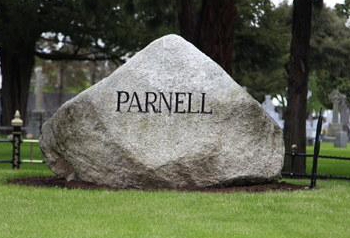
Charles Stewart Parnell dies of pneumonia at age 45 in his home at 10 Walsingham Terrace, Hove, England on October 6, 1891, in the arms of his wife Katharine. Though an Anglican, his funeral on October 11 is at the Irish National nondenominational Glasnevin Cemetery in Dublin and is attended by more than 200,000 people. His notability is such that his gravestone of unhewn Wicklow granite, erected in 1940, reads only “Parnell.”


Leave a comment

Birth of Christy Brown, Author of “My Left Foot”

christy-brown

Christy Brown, writer and painter who has cerebral palsy and is able to write or type only with the toes of one foot, is born into a working-class Irish family at the Rotunda Hospital in Dublin on June 5, 1932. His most recognized work is his autobiography, My Left Foot, which is later made into a 1989 Academy Award-winning film of the same name, starring Daniel-Day Lewis as Brown.

After his birth, doctors discovered that he has severe cerebral palsy, a neurological disorder which leaves him almost entirely spastic in his limbs. Though urged to commit him to a hospital, Brown’s parents are unswayed and subsequently determined to raise him at home with their other children. During Brown’s adolescence, social worker Katriona Delahunt becomes aware of his story and begins to visit the Brown family regularly. She brings Christy books and painting materials as, over the years, he has shown a keen interest in the arts and literature. He has also demonstrated extremely impressive physical dexterity since, soon after discovering several household books, Christy learns to both write and draw himself using his left leg, the only limb over which he had unequivocal control.

Brown quickly matures into a serious artist. Although Brown famously receives almost no formal schooling during his youth, he does attend St. Brendan’s School-Clinic in Sandymount intermittently. At St. Brendan’s he comes in contact with Dr. Robert Collis, a noted author. Collis discovers that Brown is also a natural novelist and later uses his own connections to publish My Left Foot, by then a long-gestating autobiographical account of Brown’s struggle with everyday life amidst the vibrant culture of Dublin.

In 1965, after My Left Foot has become a literary sensation, Brown meets and begins corresponding with Beth Moore, a married American woman, and they begin an affair. She helps push Brown to complete his book Down All the Days, which is published in 1970 and includes a dedication to Moore.

During this time, Brown’s fame continues to spread internationally, and he becomes a prominent celebrity. Upon his return to Ireland, he is able to use proceeds from the sales of his books to design and move into a specially constructed home outside Dublin with his sister’s family. It is around this time that Brown begins an affair with Englishwoman Mary Carr, whom he marries in 1972 at the Registry Office in Dublin. He continues to paint, write novels, poetry, and plays. His 1974 novel, A Shadow on Summer, is based on his relationship with Moore, whom he still considers a friend.

Brown’s health deteriorates after marrying Carr. He becomes a recluse in his final years, which is thought to be a direct result of Carr’s influence and perhaps abusive nature. Brown dies in Parbrook, Somerset, England on September 7, 1981, at the age of 49 after choking during a lamb chop dinner. His body is found to have significant bruising, which leads many to believe that Carr has physically abused him. Further suspicions arise after Georgina Hambleton’s biography, The Life That Inspired My Left Foot, reveals a supposedly more accurate and unhealthier version of their relationship. The book portrays Carr as an abusive alcoholic and habitually unfaithful. Brown is buried in Dublin’s Glasnevin Cemetery.