seamus dubhghaill

Promoting Irish Culture and History from Little Rock, Arkansas, USA


Leave a comment

Birth of Nora Twomey, Animator, Director & Screenwriter

Nora Twomey, Irish animator, director, screenwriter, producer and voice actress, is born on October 31, 1971, in Cork, County Cork. She is best known as the co-founder of Cartoon Saloon, alongside Tomm Moore and Paul Young, an animation studio and production company, based in Kilkenny, County Kilkenny.

Twomey is educated at St. Mary’s Secondary School in Midleton, County Cork but leaves before completing the Leaving Certificate at the age of fifteen. She does manual labor at a local factory but continues to draw and briefly studies fine art before she is admitted to Ballyfermot Senior College in Dublin to their School of Animation program on the basis of her portfolio. In the factory she operates a conveyor belt for up to twelve hours on end during the night shift. She credits this period of her life to much of her success, as she wears headphones to drown out the loud noise of machinery, the silence combined with the monotony of the task she performs allows her to ponder concepts and generate ideas, many of which are put to film later in her life.

After graduating from Ballyfermot Senior College in 1995, Twomey begins to work for Brown Bags Film, an animation studio in Dublin. In 1999, she helps found Cartoon Saloon, along with Tomm Moore, Paul Young and Ross Murray. In 2002, she directs the award-winning short animated film From Darkness. The short film has no dialogue and is based on an Inuit folk tale where a man helps a woman with only a skeleton for a body to regenerate. She also works on the successful animated TV series Skunk Fu!.

Twomey goes on to write and direct the animated short Cúilín Dualach (Backwards Boy), released in 2004. Based on a story by Jackie Mac Donacha, a boy with his head on backwards finds only love and acceptance in his mother and has to work to gain that from the rest of his community but most of all his father.

Twomey co-directs, with Tomm Moore, The Secret of Kells, an animated feature film as well as doing additional voice acting for the film. The film is set in 9th century Ireland, at the time when the Book of Kells is written. In it, a 12-year-old orphan boy living at a monastery has the task of finishing a book with the art of illumination. The film premieres at the Berlin International Film Festival in February 2009. The Secret of Kells is nominated in the category of Best Animated Feature Film at the 82nd Academy Awards.

Twomey continues to work on feature films with Cartoon Saloon with 2014’s Song of the Sea directed by Tomm Moore. She works as the film’s head of story and voice director.

Twomey next directs the animated film The Breadwinner, released in 2017. Based on the best-selling young adult novel by Deborah Ellis, an 11-year-old girl named Parvana must dress as a boy and become the titular breadwinner for her family when her father is wrongfully arrested by the Taliban. It premieres at the Toronto International Film Festival in September 2017 with a wide release in November 2017. It is the first feature-length film she has sole director credit on. She works on the project with actress Angelina Jolie, who helps fund the project and works as an executive producer. The project is a huge success for Twomey, as she is recognized as a solo female filmmaker, and given accolades as well as being lauded by many as a source of female empowerment, all while battling cancer during production. During the development of The Breadwinner, she is named in Variety‘s “2017 10 Animators to Watch.”

Twomey is a member of the Academy of Motion Picture Arts and Sciences.

Twomey becomes the seventh graduate of Ballyfermot Senior College to be nominated for an Academy Award with her work on The Breadwinner when it is nominated for Best Animated Feature at the 90th Academy Awards. She is also nominated for an award at the Golden Globe Awards.

The Breadwinner earns ten nominations at the 45th Annie Awards, including Outstanding Achievement for Directing in an Animated Feature Production for Twomey. It wins the award for best animated feature for an independent film. This marks the first time a sole female director directs the film that wins the award. It also wins the Cinema for Peace award for Justice in 2018.

Twomey’s work also has a heavy presence at the Emile Awards, an annual event held by the European Animation Awards Association that honors European creators of animation. During the awards of 2018, which are hosted in Lile, France, her film The Breadwinner wins awards in five categories: Best Direction, Best Storyboarding, Best Character Animation, Best Background, and Best Character Design.

Twomey has won several awards according to the Screen Directors Guild of Ireland (SDGI). These awards include the best New Irish Short Animation at the Galway Film Fleadh (2002), Best Short at the Boston Irish Film Festival (2003), Best Animation at the Kerry Film Festival (2003), and the Silver Award at the Kalamazoo Animation Festival International (2003) for her film From Darkness. Her film Cúilín Dualach (Backwards Boy) also wins the Best Animated Short from the Irish Film & Television Academy (2005), Best Short Film at Cartoons on the Bay (2005), Best Animation for Children at Animadrid (2005) and the Best Animation at the Celtic Film Festival (2005). Among other awards, the 2018 Cinema for Peace Award for Justice for her movie The Breadwinner can be included.

Cartoon Saloon, the studio Twomey co-founds with contemporaries Paul Young and Tom Moore in Kilkenny, has been nominated for five Academy Awards, a British Academy of Film and Television Arts (BAFTA) award and several Emmy Awards.

Leave a comment

Birth of Brendan Gleeson, Actor & Film Director

Brendan Gleeson, Irish actor and film director, is born in Dublin on March 29, 1955. He is the recipient of three Irish Film & Television Academy (IFTA) Awards, two British Independent Film Awards (BIFA), and a Primetime Emmy Award and has been nominated twice for a BAFTA Award, five times for a Golden Globe Award and once for an Academy Award. In 2020, he is listed at number 18 on The Irish Times list of Ireland’s greatest film actors. He is the father of actors Domhnall Gleeson and Brian Gleeson.

Gleeson is the son of Frank and Pat Gleeson. He has described himself as having been an avid reader as a child. He receives his second-level education at St. Joseph’s CBS in Fairview, Dublin, where he is a member of the school drama group. He receives his Bachelor of Arts at University College Dublin (UCD), majoring in English and Irish. After training as an actor, he works for several years as a secondary school teacher of Irish and English at the now defunct Catholic Belcamp College in north County Dublin. He works simultaneously as an actor while teaching, doing semi-professional and professional productions in Dublin and surrounding areas. He leaves the teaching profession to commit full-time to acting in 1991. In an NPR interview to promote Calvary in 2014, he states he was molested as a child by a Christian Brother in primary school but was in “no way traumatised by the incident.”

As a member of the Dublin-based Passion Machine Theatre company, Gleeson appears in several of the theatre company’s early and highly successful plays such as Brownbread (1987), written by Roddy Doyle and directed by Paul Mercier, Wasters (1985) and Home (1988), written and directed by Paul Mercier. He also writes three plays for Passion Machine: The Birdtable (1987) and Breaking Up (1988), both of which he directs, and Babies and Bathwater (1994) in which he acts. Among his other Dublin theatre work are Patrick Süskind‘s one-man play The Double Bass and John B. Keane‘s The Year of the Hiker.

Gleeson starts his film career at the age of 34. He first comes to prominence in Ireland for his role as Michael Collins in The Treaty, a television film broadcast on RTÉ One, and for which he wins a Jacob’s Award in 1992. He acts in such films as Braveheart, I Went Down, Michael Collins, Gangs of New York, Cold Mountain, 28 Days Later, Troy, Kingdom of Heaven, Lake Placid, A.I. Artificial Intelligence, Mission: Impossible 2, and The Village. He wins critical acclaim for his performance as Irish gangster Martin Cahill in John Boorman‘s 1998 film The General.

In 2003, Gleeson is the voice of Hugh the Miller in an episode of the Channel 4 animated series Wilde Stories. While he portrays Irish statesman Michael Collins in The Treaty, he later portrays Collins’ close collaborator Liam Tobin in the film Michael Collins with Liam Neeson taking the role of Collins. He later goes on to portray Winston Churchill in Into the Storm, winning a Primetime Emmy Award for his performance. He plays Barty Crouch, Jr. impersonating Hogwarts professor Alastor “Mad-Eye” Moody in the fourth, and Alastor Moody himself in fifth and seventh Harry Potter films. His son Domhnall plays Bill Weasley in the seventh and eighth films.

Gleeson provides the voice of Abbot Cellach in The Secret of Kells, an animated film co-directed by Tomm Moore and Nora Twomey of Cartoon Saloon, which premieres in February 2009 at the Jameson Dublin International Film Festival. He stars in the short film Six Shooter in 2006, written and directed by Martin McDonagh, which wins an Academy Award for Best Live Action Short Film. In 2008, he stars in the comedy crime film In Bruges, also written and directed by McDonagh. The film, and his performance, enjoy huge critical acclaim, earning him several award nominations, including his first Golden Globe nomination. In the movie, he plays a mentor-like figure for Colin Farrell‘s hitman. In his review of In Bruges, Roger Ebert describes the elder Gleeson as having a “noble shambles of a face and the heft of a boxer gone to seed.”

In July 2012, Gleeson starts filming The Grand Seduction, with Taylor Kitsch, a remake of Jean-François Pouliot‘s French-Canadian La Grande Séduction (2003) directed by Don McKellar. The film is released in 2013. In 2016, he appears in the video game adaptation Assassin’s Creed and Ben Affleck‘s crime drama Live by Night. In 2017, he finishes Psychic, a short in which he directs and stars. From 2017 to 2019 he stars in the crime series Mr. Mercedes. He receives a Golden Globe Award nomination for his performance as Donald Trump in the Showtime series The Comey Rule (2020). In 2022, he reunites with Martin McDonagh in the tragic comedy The Banshees of Inisherin starring opposite Colin Farrell. For his performance as Colm Doherty, he receives numerous awards nominations, including the Academy Award, Golden Globe, and Critics’ Choice Movie Award for Best Supporting Actor. He receives an Emmy Award nomination for Stephen Frears‘s Sundance TV series State of the Union (2022).

Gleeson is a fiddle and mandolin player, with an interest in Irish folklore. He plays the fiddle during his roles in Cold Mountain, Michael Collins, The Grand Seduction, and The Banshees of Inisherin, and also features on Altan‘s 2009 live album. In the Coen brothersThe Ballad of Buster Scruggs (2018), he sings “The Unfortunate Rake.” He also makes a contribution in 2019 to the album by Irish folk group Dervish with a version of “Rocky Road to Dublin.”

Gleeson has been married to Mary Weldon since 1982. They have four sons: Domhnall, Fergus, Brían, and Rory. Domhnall and Brían are also actors. He speaks fluent Irish and is an advocate of the promotion of the Irish language. He is a fan of the English football club Aston Villa, as is his son Domhnall.


Leave a comment

Death of Irish American Actor Gregory Peck

Actor Gregory Peck dies at his home in Los Angeles, California, from bronchopneumonia at the age of 87 on June 12, 2003.

Peck is born in La Jolla, California on April 5, 1916, to Bernice Mary (Ayres) and Gregory Pearl Peck, a chemist and pharmacist in San Diego. Through his Irish-born paternal grandmother, Catherine Ashe, Peck is related to Thomas Ashe, who takes part in the Easter Rising fewer than three weeks after Peck’s birth and dies while on hunger strike in 1917.

Peck’s parents divorce when he is five years old. An only child, he is sent to live with his grandmother. He never feels as though he has a stable childhood. His fondest memories are of his grandmother taking him to the movies every week and of his dog, which follows him everywhere.

At the age of ten Peck is sent to a Catholic military school, St. John’s Military Academy in Los Angeles. While he is a student there, his grandmother dies. At 14, he moves back to San Diego to live with his father and attends San Diego High School. After graduating he enrolls for one year at San Diego State Teacher’s College (now known as San Diego State University).

Peck studies pre-med at the University of California, Berkeley and while there is bitten by the acting bug and decides to change the focus of his studies. He enrolls in the Neighborhood Playhouse School of the Theatre in New York City and debuts on Broadway after graduation. His debut is in Emlyn Williams‘ play The Morning Star (1942). By 1943, he is in Hollywood, where he debuts in the RKO Pictures film Days of Glory (1944).

Stardom comes with Peck’s next film, The Keys of the Kingdom (1944), for which he is nominated for an Academy Award. Peck’s screen presence displays the qualities for which he becomes well known. He is tall, rugged and heroic, with a basic decency that transcends his roles. He appears in Alfred Hitchcock‘s Spellbound (1945) as an amnesia victim accused of murder. In The Yearling (1946), he is again nominated for an Academy Award and wins the Golden Globe Award. He is especially effective in westerns and appears in such varied fare as David O. Selznick‘s critically blasted Duel in the Sun (1946), the somewhat better received Yellow Sky (1948) and the acclaimed The Gunfighter (1950). He is nominated again for the Academy Award for his roles in Gentleman’s Agreement (1947), which deals with antisemitism, and Twelve O’Clock High (1949), a story of high-level stress in an Air Force bomber unit in World War II.

With a string of hits to his credit, Peck makes the decision to only work in films that interest him. He continues to appear as the heroic, larger-than-life figures in such films as Captain Horatio Hornblower R.N. (1951) and Moby Dick (1956). He works with Audrey Hepburn in her debut film, Roman Holiday (1953).

Peck finally wins the Oscar, after four nominations, for his performance as lawyer Atticus Finch in To Kill a Mockingbird (1962). In the early 1960s, he appears in two darker films than he usually makes, Cape Fear (1962) and Captain Newman, M.D. (1963), which deal with the way people live. He also gives a powerful performance as Captain Keith Mallory in The Guns of Navarone (1961), one of the biggest box-office hits of that year.

In the early 1970s, Peck produces two films, The Trial of the Catonsville Nine (1972) and The Dove (1974), when his film career stalled. He makes a comeback playing, somewhat woodenly, Robert Thorn in the horror film The Omen (1976). After that, he returns to the bigger-than-life roles he is best known for, such as MacArthur (1977) and the monstrous Nazi Dr. Josef Mengele in the huge hit The Boys from Brazil (1978). In the 1980s, he moves into television with the miniseries The Blue and the Gray (1982) and The Scarlet and the Black (1983). In 1991, he appears in the remake of his 1962 film, playing a different role, in Martin Scorsese‘s Cape Fear (1991). He is also cast as the progressive-thinking owner of a wire and cable business in Other People’s Money (1991).

In 1967, Peck receives the Academy’s Jean Hersholt Humanitarian Award. He has also been awarded the Presidential Medal of Freedom. Always politically progressive, he is active in such causes as anti-war protests, workers’ rights and civil rights. In 2003, Peck’s portrayal of Atticus Finch is named the greatest film hero of the past 100 years by the American Film Institute.

Peck dies in his sleep at his home in Los Angeles, California from bronchopneumonia at the age of 87 on June 12, 2003. He is entombed in the Cathedral of Our Lady of the Angels mausoleum in Los Angeles. His eulogy is read by Brock Peters, whose character, Tom Robinson, was defended by Peck’s Atticus Finch in To Kill a Mockingbird.


Leave a comment

Birth of Roma Downey, Actress, Producer & Author

Roma Downey, actress, producer, and author, is born in the Bogside district of Derry, County Londonderry, Northern Ireland, on May 6, 1960.

Downey attends Thornhill College, a Catholic girls school. Her mother, Maureen O’Reilly Downey, a homemaker with an interest in the performing arts, dies of a heart attack at age 48 when Downey is 10 years old. Her father, Patrick Downey, is a schoolteacher by training but works as a mortgage broker. He dies when Downey is 20. Originally, she plans to be a painter and earns a Bachelor of Arts at Brighton College of Art. She studies BA(Hons) Expressive Arts at Brighton Polytechnic, which later becomes the University of Brighton. Based at the Falmer campus she combines Art and Drama for her degree.

Downey joins the Abbey Players in Dublin and tours the United States in a production of The Playboy of the Western World. She moves to New York after an agent, whom she met during the tour of The Playboy of the Western World, suggests she has potential for success there. She takes a job as a coat checker at an Upper West Side restaurant before getting cast in Broadway shows. The production leads to a nomination during the Broadway run for the Helen Hayes Award for Best Actress in 1991. She also stars on Broadway in The Circle with Rex Harrison and also at the Roundabout Theater and The Public Theater in New York City.

For nine seasons Downey plays Monica, the tender-hearted angel and employee of Tess (played by Della Reese), on the CBS television series Touched by an Angel (1994-2003), for which she earns multiple Emmy and Golden Globe Best Actress nominations. She plays the leading role of Jacqueline Kennedy Onassis in the miniseries A Woman Named Jackie for NBC.

Downey stars in and is executive producer for a number of hit television movies for the CBS network. She is an ambassador for Operation Smile, a nonprofit medical service organization. On August 11, 2016, she is honored for her work as an actress and producer with a star on the Hollywood Walk of Fame. In her acceptance speech, she dedicates her star to the people of Derry and anyone who ever “walked Hollywood Boulevard with a dream in their hearts.”

As President of Lightworkers Media, the family and faith division of MGM, Downey and her husband, Mark Burnett, produce the Emmy-nominated miniseries The Bible for History channel, which airs in 2013 and is watched by over 100 million people in the United States. She also stars in the miniseries in the role of Mary, mother of Jesus. They also executive-produce the feature films Son of God (2014), Little Boy (2015), Woodlawn (2015), and Ben-Hur (2016) starring Jack Huston, Toby Kebbell and Morgan Freeman.

Variety recognizes Downey and Burnett as “Trailblazers” and lists Downey as one of Variety’s “100 Most Powerful Women in Hollywood.” The Hollywood Reporter includes the couple in their “Most Influential People of 2013” and Downey as one of the “100 Women in Entertainment Power” in 2014. She is honored on Variety‘s “Women of Impact in 2014.” Downey and Burnett also produce The Dovekeepers (2015) based on the bestselling book by Alice Hoffman for CBS and A.D. The Bible Continues (2015) for NBC, Women of the Bible for Lifetime, and Answered Prayers (2015) for TLC. Downey is the executive producer of the documentary “Faithkeepers” about the persecution of Christians in the Middle East.

Downey is the author of two books, Love Is a Family (2001) and Box of Butterflies: Discovering the Unexpected Blessing All Around Us (2018).


Leave a comment

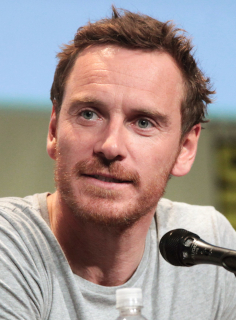
Birth of Irish-German Actor, Michael Fassbender

michael-fassbender

Michael Fassbender, Irish-German actor, is born in Heidelberg, Baden-Württemberg, West Germany on April 2, 1977.

Fassbender’s mother, Adele, is from Larne, County Antrim, while his father, Josef Fassbender, is German. According to Fassbender family lore, his mother is the great-grand-niece of Michael Collins, the Irish leader during the Irish War of Independence. When he is two years old, his parents move to Killarney, County Kerry, where they run the West End House, a restaurant where his father works as a chef. His parents move to Kerry as they want their children to grow up in the countryside rather than the industrial backdrop of their previous residence in Germany. He is raised Catholic and serves as an altar boy at the church his family attends. He has an older sister, Catherine, who is a neuropsychologist.

Fassbender attends Fossa National School and St. Brendan’s College, both in Killarney. He decides that he wants to be an actor at age 17 when he is cast in a play by Donal Courtney. At 19, he moves to London to study at the Drama Centre London, a constituent school of Central Saint Martins. In 1999, he drops out of the Drama Centre and tours with the Oxford Stage Company to perform the play Three Sisters. Before he finds work as an actor, he works as a bartender and postman. Other jobs include labour work, market research for the Royal Mail and working for Dell computers.

Fassbender’s feature film debut is in the fantasy war epic 300 (2007) as a Spartan warrior. His earlier roles include various stage productions, as well as starring roles on television such as in the HBO miniseries Band of Brothers (2001) and the Sky One fantasy drama Hex (2004–05). He first comes to prominence for his role as Provisional Irish Republican Army (IRA) activist Bobby Sands in Hunger (2008), for which he wins a British Independent Film Award. Subsequent roles include in the independent film Fish Tank (2009), as a Royal Marines lieutenant in Inglourious Basterds (2009), as Edward Rochester in the 2011 film adaptation of Jane Eyre, as Carl Jung in A Dangerous Method (2011), as the sentient android David 8 in Prometheus (2012) and its sequel, Alien: Covenant (2017), and in the musical comedy-drama Frank (2014) as an eccentric musician loosely inspired by Frank Sidebottom.

In 2011, Fassbender debuts as the Marvel Comics supervillain Magneto in X-Men: First Class and goes on to share the role with Ian McKellen in X-Men: Days of Future Past (2014), before reprising it again in X-Men: Apocalypse (2016) and Dark Phoenix (2019). Also in 2011, his performance as a sex addict in Shame earns him the Volpi Cup for Best Actor at the Venice International Film Festival and is nominated for Golden Globe and BAFTA Awards. In 2013, his role as slave owner Edwin Epps in the slavery epic 12 Years a Slave is similarly praised, earning him his first Oscar nomination for Best Supporting Actor. In 2013, he appears in another Ridley Scott film, The Counselor. In 2015, he portrays the title role in the Danny Boyle-directed biopic Steve Jobs (2015) and played Macbeth in Justin Kurzel‘s adaptation of William Shakespeare‘s play. For the former, he receives Academy Award, BAFTA, Golden Globe and SAG nominations. In 2015, he produces the western Slow West, in which he also stars.

In December 2014, Fassbender begins dating Swedish actress Alicia Vikander, whom he met on the set of The Light Between Oceans. The two marry in a private ceremony on October 14, 2017, in Ibiza, Spain. As of 2017, they reside in Lisbon, Portugal.


Leave a comment

Birth of Irish American Actor Gregory Peck

gregory-peck

Actor Gregory Peck is born in La Jolla, California on April 5, 1916, to Bernice Mary (Ayres) and Gregory Pearl Peck, a chemist and pharmacist in San Diego. Through his Irish-born paternal grandmother, Catherine Ashe, Peck is related to Thomas Ashe, who takes part in the Easter Rising fewer than three weeks after Peck’s birth and dies while on hunger strike in 1917.

Peck’s parents divorce when he is five years old. An only child, he is sent to live with his grandmother. He never feels as though he has a stable childhood. His fondest memories are of his grandmother taking him to the movies every week and of his dog, which follows him everywhere.

At the age of ten Peck is sent to a Catholic military school, St. John’s Military Academy in Los Angeles. While he is a student there, his grandmother dies. At 14, he moves back to San Diego to live with his father and attends San Diego High School. After graduating he enrolls for one year at San Diego State Teacher’s College (now known as San Diego State University).

Peck studies pre-med at the University of California, Berkeley and while there is bitten by the acting bug and decides to change the focus of his studies. He enrolls in the Neighborhood Playhouse School of the Theatre in New York City and debuts on Broadway after graduation. His debut is in Emlyn Williams‘ play The Morning Star (1942). By 1943, he is in Hollywood, where he debuts in the RKO Pictures film Days of Glory (1944).

Stardom comes with Peck’s next film, The Keys of the Kingdom (1944), for which he is nominated for an Academy Award. Peck’s screen presence displays the qualities for which he becomes well known. He is tall, rugged and heroic, with a basic decency that transcends his roles. He appears in Alfred Hitchcock‘s Spellbound (1945) as an amnesia victim accused of murder. In The Yearling (1946), he is again nominated for an Academy Award and wins the Golden Globe Award. He is especially effective in westerns and appears in such varied fare as David O. Selznick‘s critically blasted Duel in the Sun (1946), the somewhat better received Yellow Sky (1948) and the acclaimed The Gunfighter (1950). He is nominated again for the Academy Award for his roles in Gentleman’s Agreement (1947), which deals with antisemitism, and Twelve O’Clock High (1949), a story of high-level stress in an Air Force bomber unit in World War II.

With a string of hits to his credit, Peck makes the decision to only work in films that interest him. He continues to appear as the heroic, larger-than-life figures in such films as Captain Horatio Hornblower R.N. (1951) and Moby Dick (1956). He works with Audrey Hepburn in her debut film, Roman Holiday (1953).

Peck finally wins the Oscar, after four nominations, for his performance as lawyer Atticus Finch in To Kill a Mockingbird (1962). In the early 1960s, he appears in two darker films than he usually makes, Cape Fear (1962) and Captain Newman, M.D. (1963), which deal with the way people live. He also gives a powerful performance as Captain Keith Mallory in The Guns of Navarone (1961), one of the biggest box-office hits of that year.

In the early 1970s, Peck produces two films, The Trial of the Catonsville Nine (1972) and The Dove (1974), when his film career stalled. He makes a comeback playing, somewhat woodenly, Robert Thorn in the horror film The Omen (1976). After that, he returns to the bigger-than-life roles he is best known for, such as MacArthur (1977) and the monstrous Nazi Dr. Josef Mengele in the huge hit The Boys from Brazil (1978). In the 1980s, he moves into television with the miniseries The Blue and the Gray (1982) and The Scarlet and the Black (1983). In 1991, he appears in the remake of his 1962 film, playing a different role, in Martin Scorsese‘s Cape Fear (1991). He is also cast as the progressive-thinking owner of a wire and cable business in Other People’s Money (1991).

In 1967, Peck receives the Academy’s Jean Hersholt Humanitarian Award. He has also been awarded the Presidential Medal of Freedom. Always politically progressive, he is active in such causes as anti-war protests, workers’ rights and civil rights. In 2003, Peck’s portrayal of Atticus Finch is named the greatest film hero of the past 100 years by the American Film Institute.

Gregory Peck dies in his sleep at his home in Los Angeles, California from bronchopneumonia at the age of 87 on June 12, 2003. He is entombed in the Cathedral of Our Lady of the Angels mausoleum in Los Angeles. His eulogy is read by Brock Peters, whose character, Tom Robinson, was defended by Peck’s Atticus Finch in To Kill a Mockingbird.


Leave a comment

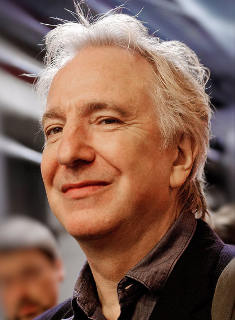
Death of Alan Rickman, Actor & Director

alan-rickman

Alan Sidney Patrick Rickman, English actor and director, dies in London on January 14, 2016.

Rickman is born into a working-class family of Irish and Welsh descent in Hammersmith, London, on February 21, 1946. Rickman attends Derwentwater Primary School in Acton, and then Latymer Upper School in London through the Direct Grant system, where he becomes involved in drama. After leaving Latymer, he attends Chelsea College of Art and Design and then the Royal College of Art. After graduation, Rickman and several friends open a graphic design studio called Graphiti, but after three years of successful business, he decides that he is going to pursue acting professionally. He writes to request an audition with the Royal Academy of Dramatic Art (RADA), which he attends from 1972 until 1974.

Upon leaving the Royal Academy of Dramatic Art, Rickman becomes a member of the Royal Shakespeare Company, performing in modern and classical theatre productions. His first big television role comes in 1982, but his big break is as the Vicomte de Valmont in the stage production of Les Liaisons Dangereuses in 1985, for which he is nominated for a Tony Award.

Rickman’s first film role is as the German terrorist leader Hans Gruber in Die Hard (1988). His other film roles include the Sheriff of Nottingham in Robin Hood: Prince of Thieves (1991), for which he receives the BAFTA Award for Best Actor in a Supporting Role, Elliott Marston in Quigley Down Under (1990), Jamie in Truly, Madly, Deeply (1990), P.L. O’Hara in An Awfully Big Adventure (1995), Colonel Brandon in Sense and Sensibility (1995), Éamon de Valera in Neil Jordan‘s Michael Collins (1996), Alexander Dane in Galaxy Quest (1999), Harry in Love Actually (2003) and Judge Turpin in the film adaptation of Stephen Sondheim‘s musical of Sweeney Todd: The Demon Barber of Fleet Street (2007). He gains further notice for his film performances as Severus Snape in the Harry Potter series. He also stars in television films, playing the title character in Rasputin: Dark Servant of Destiny (1996), which wins him a Golden Globe Award, an Emmy Award and a Screen Actors Guild Award, and Dr. Alfred Blalock in the Emmy-winning Something the Lord Made (2004). His final film roles are as Lieutenant General Frank Benson in the thriller Eye in the Sky (2015), and the voice of Absolem, the caterpillar in Alice Through the Looking Glass (2016).

In August 2015, Rickman suffers a minor stroke, which leads to the diagnosis of pancreatic cancer. He reveals the fact that he has terminal cancer to only his closest confidants. He dies of pancreatic cancer on January 14, 2016, at the age of 69. His remains are cremated on February 3, 2016, in the West London Crematorium in Kensal Green. His ashes are given to his wife, Rima Horton. His final two films, Eye in the Sky and Alice Through the Looking Glass, are dedicated to his memory.


Leave a comment

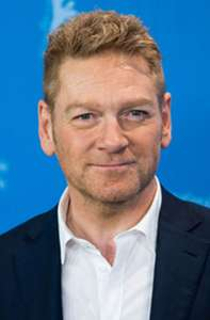
Birth of Kenneth Branagh, Actor, Director & Producer

kenneth-branagh

Sir Kenneth Charles Branagh, British actor, director, producer, and screenwriter, is born in Belfast on December 10, 1960.

Branagh is the middle of three children of working-class Protestant parents Frances (née Harper) and William Branagh, a plumber and joiner who runs a company that specialises in fitting partitions and suspended ceilings. He lives in the Tiger’s Bay area of the city and is educated at Grove Primary School.

At the age of nine, Branagh moves with his family to Reading, Berkshire, England, to escape the Troubles. He is educated at Whiteknights Primary School, then Meadway School, Tilehurst, where he appears in school productions such as Toad of Toad Hall and Oh, What a Lovely War!. He attends the amateur Reading Cine & Video Society (now called Reading Film & Video Makers) as a member and is a keen member of Progress Theatre for whom he is now the patron. He goes on to train at the Royal Academy of Dramatic Art in London and in 2015 succeeds Richard Attenborough as its president.

Branagh has both directed and starred in several film adaptations of William Shakespeare‘s plays, including Henry V (1989) (for which he was nominated for the Academy Award for Best Actor and Academy Award for Best Director), Much Ado About Nothing (1993), Othello (1995), Hamlet (1996) (for which he was nominated for the Academy Award for Best Adapted Screenplay), Love’s Labour’s Lost (2000), and As You Like It (2006).

Branagh stars in numerous other films and television series including Fortunes of War (1987), Woody Allen‘s Celebrity (1998), Wild Wild West (1999), The Road to El Dorado (2000), Conspiracy (2001), Harry Potter and the Chamber of Secrets (2002), Warm Springs (2005), as Major General Henning von Tresckow in Valkyrie (2008), The Boat That Rocked (2009), Wallander (2008–2016), My Week with Marilyn (2011) as Sir Laurence Olivier (nominated for Academy Award for Best Supporting Actor), and as Royal Navy Commander Bolton in the action-thriller Dunkirk (2017). He directs such films as Dead Again (1991), in which he also stars, Swan Song (1992) (nominated for Academy Award for Best Live Action Short Film), Mary Shelley’s Frankenstein (1994) in which he also stars, The Magic Flute (2006), Sleuth (2007), the blockbuster superhero film Thor (2011), the action thriller Jack Ryan: Shadow Recruit (2014) in which he also co-stars, the live-action film Cinderella (2015), and the mystery drama adaptation of Agatha Christie‘s Murder on the Orient Express (2017), in which he also stars as Hercule Poirot.

Branagh narrates the series Cold War (1998), the BBC documentary miniseries Walking with Dinosaurs (1999), Walking with Beasts (2001) and Walking with Monsters (2005). He has been nominated for five Academy Awards, five Golden Globe Awards, and has won three BAFTAs, and an Emmy Award. He is appointed a Knight Bachelor in the 2012 Birthday Honours and is knighted on November 9, 2012. He is awarded the Freedom of the City of his native city of Belfast in January 2018.


Leave a comment

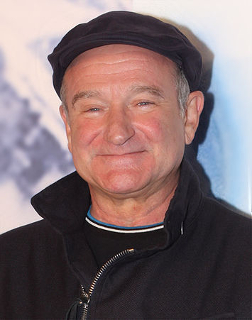
Death of Robin Williams, Actor & Comedian

robin-williams

Robin McLaurin Williams, American actor and comedian, is found dead in his home in Paradise Cay, California on August 11, 2014, in what is believed to be suicide via asphyxiation.

Williams is born at St. Luke’s Hospital in Chicago, Illinois on July 21, 1951, the son of Robert Fitzgerald Williams, an Irish American and a senior executive in Ford Motor Company‘s Lincoln-Mercury Division. He had English, Irish, Scottish, Welsh, German, and French ancestry.

He starts as a stand-up comedian in San Francisco and Los Angeles in the mid-1970s. He is credited with leading San Francisco’s comedy renaissance. After rising to fame as an alien called Mork in the TV sci-fi sitcom series Mork & Mindy, he establishes a career in both stand-up comedy and feature film acting. He is known for his improvisational skills.

After his first starring film role in Popeye (1980), Williams stars or co-stars in various films that achieve both critical acclaim and financial success, including Good Morning, Vietnam (1987), Dead Poets Society (1989), Aladdin (1992), The Birdcage (1996), and Good Will Hunting (1997). He also stars in widely acclaimed films such as The World According to Garp (1982), Moscow on the Hudson (1984), Awakenings (1990), The Fisher King (1991), One Hour Photo (2002), and World’s Greatest Dad (2009), as well as box office hits such as Hook (1991), Mrs. Doubtfire (1993), Jumanji (1995) and Night at the Museum (2006).

Williams wins the 1997 Academy Award for Best Supporting Actor for his performance as psychologist Sean Maguire in Good Will Hunting. He also receives two Primetime Emmy Awards, seven Golden Globe Awards, two Screen Actors Guild Awards, and four Grammy Awards throughout his career.

On August 11, 2014, Williams commits suicide at his home in Paradise Cay, California, at the age of 63. His wife attributes his suicide to his struggle with diffuse Lewy body dementia. His body is cremated at Montes Chapel of the Hills in San Anselmo and his ashes are scattered in San Francisco Bay on August 21.

Williams’s death instantly becomes global news. The entertainment world, friends, and fans respond to his death through social and other media outlets. U.S. President Barack Obama said of Williams, “He was one of a kind. He arrived in our lives as an alien—but he ended up touching every element of the human spirit.”


Leave a comment

Birth of Actor Martin Sheen

martin-sheen

Ramón Gerard Antonio Estévez, known professionally as Martin Sheen, American actor of Spanish/Irish descent, is born in Dayton, Ohio on August 3, 1940. He first becomes known for his roles in the films The Subject Was Roses (1968) and Badlands (1973), and later achieves wide recognition for his leading role in Apocalypse Now (1979) and as President Josiah Bartlet in the television series The West Wing (1999-2006).

Sheen is born to immigrant parents, a first-generation Irish mother, Mary-Anne Phelan from Borrisokane, County Tipperary, and a Galician father, Francisco Estévez from Vigo in Galicia (Spain). He adopts the stage name Martin Sheen to help him gain acting parts from a combination of the CBS casting director Robert Dale Martin, who gives him his first big break, and the televangelist archbishop, Fulton J. Sheen. He is the father of four children (Emilio, Ramón, Carlos and Renée), all of whom are actors.

In film, Sheen has won the Best Actor award at the San Sebastián International Film Festival for his performance as Kit Carruthers in Badlands. Sheen’s portrayal of Capt. Willard in Apocalypse Now earns a nomination for the BAFTA Award for Best Actor in a Leading Role.

Sheen has worked with a wide variety of film directors, including Richard Attenborough, Francis Ford Coppola, Terrence Malick, David Cronenberg, Mike Nichols, Martin Scorsese, Steven Spielberg and Oliver Stone. He receives a star on the Hollywood Walk of Fame in 1989. In television, he has won a Golden Globe Award and two Screen Actors Guild Awards for playing the role of President Josiah Bartlet in The West Wing, and an Emmy Award for guest starring in the sitcom Murphy Brown.

Although known as an actor, Sheen also has directed one film, Cadence (1990), appearing alongside sons Charlie and Ramón. He has narrated, produced, and directed documentary television, earning two Daytime Emmy Awards in the 1980s. In addition to film and television, he has been active in liberal politics.