seamus dubhghaill

Promoting Irish Culture and History from Little Rock, Arkansas, USA


Leave a comment

Founding of the Royal University of Ireland

The Royal University of Ireland is founded by Royal Charter on April 27, 1880, in accordance with the University Education (Ireland) Act 1879 as an examining and degree-awarding university based on the model of the University of London. The first chancellor is the Irish chemist, Robert Kane.

The university becomes the first university in Ireland that can grant degrees to women on a par with those granted to men, granting its first degree to a woman on October 22, 1882. In 1888 Letitia Alice Walkington has the distinction of becoming the first woman in Great Britain or Ireland to receive a degree of Bachelor of Laws. Among the honorary degree recipients of the university is Douglas Hyde, founder of the Gaelic League and later President of Ireland, who is awarded a DLitt in 1906.

The Royal University of Ireland is the successor to the Queen’s University of Ireland, dissolved in 1882, and the graduates, professors, students and colleges of that predecessor are transferred to the new university. In addition to the Queen’s Colleges, Magee CollegeUniversity College Dublin, Cecillia St. Medical School, St. Patrick’s College, Maynooth and Blackrock College present students for examinations as well, and no special status is accorded to the colleges of the former Queen’s University. After the 1880 reforms Catholic Colleges such as St. Patrick’s, Carlow CollegeHoly Cross College and Blackrock College come under the Catholic University, and with a number of other seminaries present students for examination by the RUI.

External students not of approved colleges can sit examinations of the Royal University although they are seen as being at a disadvantage to those of designated colleges whose professors are part of the university. In fact, many schools, including convent schools prepare students for the examinations of the Royal University.

Like the Queen’s University, the Royal University is entitled to grant any degree, similar to that of any other university in the United Kingdom of Great Britain and Ireland, except in theology. The colleges themselves award degrees in theology and divinity.

The professorships and Senate of the Royal University are shared equally between Roman Catholics and Protestants. However, colleges of the university maintain full independence except in the awarding of degrees, and the compilation and enforcement of academic regulations and standards.

The members of the senate of the Royal University included Gerald MolloyWilliam Joseph WalshJohn Healy, the Marquess of Dufferin and AvaGeorge Arthur Hastings Forbes, 7th Earl of GranardDaniel MannixGeorge Johnston Allman.

(Pictured: Coat of Arms of the Royal University of Ireland)


Leave a comment

Birth of Playwright & Poet Samuel Barclay Beckett

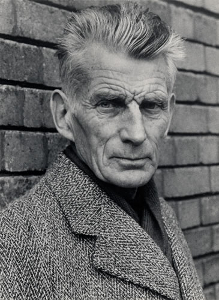
Samuel Barclay Beckett, avant-garde novelist, playwright, theatre director, and poet, is born on Good Friday, April 13, 1906, in FoxrockDublin. His father, William Frank Beckett, works in the construction business and his mother, Maria Jones Roe, is a nurse. Beckett attends Earlsfort House School in Dublin and then, at age 14, he goes to Portora Royal School, the same school attended by Oscar Wilde. He receives his bachelor’s degree from Trinity College, Dublin in 1927. In his youth he periodically experiences severe depression keeping him in bed until mid-day. This experience later influences his writing.

In 1928, Beckett finds a welcome home in Paris where he meets and becomes a devoted student of James Joyce. In 1931, he embarks on a restless sojourn through Great BritainFrance and Germany. He writes poems and stories and does odd jobs to support himself. On his journey, he comes across many individuals who inspire some of his most interesting characters.

In 1937, Beckett settles in Paris. Shortly thereafter, he is stabbed by a pimp after refusing his solicitations. While recovering in the hospital, he meets Suzanne Dechevaux-Dumesnuil, a piano student in Paris. The two become life-long companions and eventually marry. After meeting with his attacker, Beckett drops the charges, partly to avoid the publicity.

During World War II, Beckett’s Irish citizenship allows him to remain in Paris as a citizen of a neutral country. He fights in the resistance movement until 1942 when members of his group are arrested by the Gestapo. He and Suzanne flee to the unoccupied zone until the end of the war.

After the war, Beckett is awarded the Croix de Guerre for bravery during his time in the French resistance. He settles in Paris and begins his most prolific period as a writer. In five years, he writes EleutheriaWaiting for GodotEndgame, the novels MolloyMalone DiesThe Unnamable, and Mercier et Camier, two books of short stories, and a book of criticism.

Beckett’s first publication, Molloy, enjoys modest sales, but more importantly praise from French critics. Soon, Waiting for Godot, achieves quick success at the small Theatre de Babylone putting Beckett in the international spotlight. The play runs for 400 performances and enjoys critical praise.

Beckett writes in both French and English, but his most well-known works, written between World War II and the 1960s, are written in French. Early on he realizes his writing has to be subjective and come from his own thoughts and experiences. His works are filled with allusions to other writers such as Dante AlighieriRené Descartes, and James Joyce. Beckett’s plays are not written along traditional lines with conventional plot and time and place references. Instead, he focuses on essential elements of the human condition in dark humorous ways. This style of writing has been called “Theater of the Absurd” by Martin Esslin, referring to poet Albert Camus’ concept of “the absurd.” The plays focus on human despair and the will to survive in a hopeless world that offers no help in understanding.

The 1960s are a period of change for Beckett. He finds great success with his plays across the world. Invitations come to attend rehearsals and performances which lead to a career as a theater director. In 1961, he secretly marries Suzanne Dechevaux-Dumesnuil who takes care of his business affairs. A commission from the BBC in 1956 leads to offers to write for radio and cinema through the 1960s.

Beckett continues to write throughout the 1970s and 1980s, mostly in a small house outside Paris. There he can give total dedication to his art evading publicity. In 1969, he is awarded the Nobel Prize in Literature, though he declines accepting it personally to avoid making a speech at the ceremonies. However, he should not be considered a recluse. He often times meets with other artists, scholars and admirers to talk about his work.

By the late 1980s, Beckett is in failing health and is moved to a small nursing home. His wife Suzanne dies in July 1989. His life is confined to a small room where he receives visitors and writes. He dies on December 22, 1989, in a hospital of respiratory problems just months after his wife.


Leave a comment

Dáil Éireann Declares War with Great Britain

first-dail

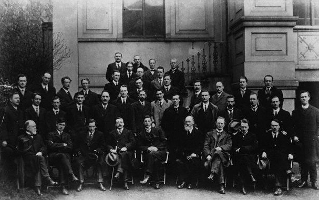
The President of the Dáil Éireann, Éamon de Valera, secures on March 11th, 1921, the chamber’s support for a formal declaration of war with Great Britain.

In January 1921, at his first Dáil meeting after his return to a country gripped by the War of Independence, de Valera introduces a motion calling on the Irish Republican Army (IRA) to desist from ambushes and other tactics that are allowing the British to successfully portray it as a terrorist group, and to take on the British forces with conventional military methods. This they strongly oppose, and de Valera relents, issuing a statement expressing support for the IRA, and claims it is fully under the control of the Dáil. He then, along with Cathal Brugha and Austin Stack, bring pressure to bear on Michael Collins to undertake a journey to the United States himself, on the pretext that only he can take up where de Valera had left off. Collins successfully resists this move and stays in Ireland.

The British government’s proposal of a Truce and negotiations over Ireland’s future is a result of both domestic and international factors. The British have been unable to defeat the Irish struggle for independence and there is a danger that the longer it continues the more radicalised it is becoming. In March 1921 Southern Unionist leader Lord Midleton also points to the strengthening of the independence movement, telling David Lloyd George and Hamar Greenwood that the resistance is now three times stronger than in July 1920. The following month Greenwood himself is talking of pacification taking years rather than months. British government policy in Ireland is also creating problems for it both internationally (especially in the United States) and in Britain itself. At the same time Britain is facing growing independence struggles in Egypt and India. It also faces an increasingly difficult financial situation. British foreign trade suffers a substantial collapse in 1921 as its exports fall by 48 percent over a twelve-month period, its imports drop by 44 percent, and unemployment rapidly increases. The Economist describes 1921 as one of the worst years of depression since the industrial revolution began.

There is a substantial debate in the British Cabinet about whether or not to proceed along these lines. An example of this is the May 12, 1921 Cabinet meeting. Greenwood appears to have revised his view about how long pacification will take. He is opposed to the Truce proposal at this stage, feeling that the republicans are being worn down. Health Minister Christopher Addison disagrees and favours a truce. Winston Churchill, who has been in favour of the substantial escalation of coercion, now supports a truce partly because things are getting “very unpleasant as regards the interests of this country all over the world; we are getting an odious reputation; poisoning our relations with the United States.” Herbert Fisher, who is a historian and head of the Board of Education as well as a politician, also worries, “the present situation is degrading to the moral life of the whole country; a truce would mean a clear moral and political gain” and that if the IRA accepts the truce it will be hard for them to start up again, it will also “create a big rift in Sinn Féin ranks, the moderate Sinn Féin would have to come out into the open.” This meeting rejects the idea of a truce. In June, however, a memorandum from Nevil Macready states that beating the republicans will require coercion being carried out to the maximum and if this is done the cabinet will have to stand by 100 executions a week. Such a policy is a political impossibility. In this situation, Lloyd George proposes an Anglo-Irish conference and negotiations.


4 Comments

Birth of Major General Thomas Conway

thomas-conway

Thomas Conway, a major general in the American Continental Army during the American Revolutionary War, is born in Cloghane, County Kerry, on February 27, 1735. He becomes involved with the alleged Conway Cabal with Horatio Gates and later serves with Émigré forces during the French Revolutionary War.

Conway is born to James Conway and his wife Julieanne Conway. As a child, he immigrates to France with his parents. At 14, he enrolls in the Irish Brigade of the French Army and rises rapidly to the rank of colonel by 1772.

Following the outbreak of the American Revolutionary War he volunteers to the Continental Congress for service with the American rebels in 1777. Based on an introduction from Silas Deane, the Congress appoints him a brigadier general on May 13, and sends him on to George Washington.

Conway commands the leading brigade on the American right flank at the Battle of Germantown and is justly praised for his actions. However, Washington opposes his promotion to major general, believing that many American-born officers with longer and valuable service deserve the rank. This, and Conway’s condescending attitude, lead to continued friction between the men. Congress appoints Conway a major general anyway in December 1777 and makes him inspector general of the army.

When his name is used politically, it is used to describe the infighting known as the Conway Cabal. During the affair, he has written a letter to General Horatio Gates in which he refers to Washington as a “weak general.” The letter is intercepted by Washington and his backers after its delivery is botched by Brigadier General James Wilkinson and is brought before the Congress for inquiry. When the contents of the letter are made public, Conway loses his command as a result. He tries a ploy that had worked before his promotion and submits his resignation to Congress in March 1778. This time, however, it is accepted, so he is forced to leave the Continental Army. John Cadwalader shoots him in a duel on July 4, 1778. When he recovers, he writes an apology to Washington and returns to France.

Conway later returns to the French Army. In 1787 he receives promotion to Maréchal-de-camp (Major General) and an appointment as Governor of French colonies in India.

In 1793 he fights with royalist forces in opposition to French Revolution in southern France. Their loss forces him to become an exile from his adopted country.

During the French Revolution he is condemned to death. He is saved only by an appeal to Great Britain, against which he had fought in the American Revolution, but is compelled to flee from France for his life. He supposedly returns to Ireland and remains there until his death.

After that Conway disappears from history. He is believed to have died about 1800 in poverty and exile.


Leave a comment

The Good Friday Agreement Comes Into Operation

good-friday-agreement-signing

The Good Friday Agreement, a major political development in the Northern Ireland peace process, comes into operation on December 2, 1999, as the British and Irish governments formally notify each other that all the necessary arrangements are in place.

The notification ceremony takes place at Iveagh House, St. Stephen’s Green, headquarters of the Department of Foreign Affairs and Trade, at a joint signing by Minister for Foreign Affairs and Trade David Andrews and Secretary of State for Northern Ireland Peter Mandelson.

Northern Ireland‘s present devolved system of government is based on the agreement. The agreement also creates a number of institutions between Northern Ireland and the Republic of Ireland, and between the Republic of Ireland and the United Kingdom.

The agreement is made up of two inter-related documents, both agreed upon in Belfast on Good Friday, April 10, 1998. The first is a multi-party agreement by most of Northern Ireland’s political parties. The second is an international agreement between the British and Irish governments, known as the British-Irish Agreement.

The agreement sets out a complex series of provisions, or strands, relating to a number of areas:

Strand 1 addresses the status and system of government of Northern Ireland within the United Kingdom and establishes two major institutions – the Northern Ireland Assembly and the Northern Ireland Executive.

Strand 2 addresses the relationship between Northern Ireland and the Republic of Ireland and the institutions to be created between them – the North/South Ministerial Council, the North/South Inter-Parliamentary Association, and the North/South Consultative Forum.

Strand 3 addresses the relationship between the Republic of Ireland and the United Kingdom and institutions to be created between Ireland and Great Britain – the British/Irish Intergovernmental Conference, the British-Irish Council, and an expanded British-Irish Parliamentary Assembly.

Issues relating to sovereignty, civil and cultural rights, decommissioning of weapons, justice, and policing are central to the agreement.

The agreement is approved by voters across the island of Ireland in two referendums held on May 22, 1998. In Northern Ireland, voters are asked whether they support the multi-party agreement. In the Republic of Ireland, voters are asked whether they will allow the state to sign the agreement and allow necessary constitutional changes to facilitate it. The people of both jurisdictions need to approve the agreement in order to give effect to it.

The Good Friday Agreement comes into force on December 2, 1999. The Democratic Unionist Party (DUP) is the only major political group in Northern Ireland to oppose the Good Friday Agreement.

(Pictured: British Prime Minister Tony Blair and Irish Taoiseach Bertie Ahern sign the Good Friday Agreement)


Leave a comment

Birth of Irish Rebel Leader John Devoy

john-devoy

John Devoy, one of the most devoted revolutionaries the world has ever seen, is born in Kill, County Kildare, on September 3, 1842. Dedicating over 60 years of his life to the cause of Irish freedom, he is one of the few people to have played a leading role in the Fenian Rising of 1867, the 1916 Easter Rising, and the Irish War of Independence (1919 – 1921).

After the Great Famine, the family moves to Dublin where Devoy’s father obtains at job at Watkins’ brewery. Devoy attends night school at the Catholic University before joining the Fenians. In 1861 he travels to France with an introduction from Timothy Daniel Sullivan to John Mitchel. Devoy joins the French Foreign Legion and serves in Algeria for a year before returning to Ireland to become a Fenian organiser in Naas, County Kildare.

In 1865, when many Fenians are arrested, James Stephens, founder of the Irish Republican Brotherhood (IRB), appoints Devoy Chief Organiser of Fenians in the British Army in Ireland. His duty is to enlist Irish soldiers in the British Army into the IRB. In November 1865 Devoy orchestrates Stephens’ escape from Richmond Prison in Dublin.

In February 1866 an IRB Council of War calls for an immediate uprising but Stephens refuses, much to Devoy’s annoyance, as he calculated the Fenian force in the British Army to number 80,000. The British get wind of the plan through informers and move the regiments abroad, replacing them with regiments from Britain. Devoy is arrested in February 1866 and interned in Mountjoy Gaol, then tried for treason and sentenced to fifteen years penal servitude. In Portland Prison Devoy organises prison strikes and, as a result, is moved to Millbank Prison in Pimlico, London.

In January 1871, he is released and exiled to the United States as one of the “Cuba Five.” He receives an address of welcome from the House of Representatives. Devoy becomes a journalist for the New York Herald and is active in Clan na Gael. Under Devoy’s leadership, Clan na Gael becomes the central Irish republican organisation in the United States. In 1877 he aligns the organisation with the Irish Republican Brotherhood in Ireland.

In 1875, Devoy and John Boyle O’Reilly organise the escape of six Fenians from Fremantle Prison in Western Australia aboard the ship Catalpa. Devoy returns to Ireland in 1879 to inspect Fenian centres and meets Charles Kickham, John O’Leary, and Michael Davitt en route in Paris. He convinces Davitt and Charles Stewart Parnell to co-operate in the “New Departure” during the growing Land War.

Devoy’s fundraising efforts and work to sway Irish Americans to physical force nationalism makes possible the Easter Rising in 1916. In 1914, Patrick Pearse visits the elderly Devoy in America, and later the same year Roger Casement works with Devoy in raising money for guns to arm the Irish Volunteers. Though he is skeptical of the endeavor, he finances and supports Casement’s expedition to Germany to enlist German aid in the struggle to free Ireland from English rule. Also, before and during World War I, Devoy is also identified closely with the Ghadar Party, and is accepted to have played a major role in supporting Indian Nationalists, as well as playing a key role in the Hindu-German Conspiracy which leads to the trial that is the longest and most expensive trial in the United States at the time.

In 1916 Devoy plays an important role in the formation of the Clan-dominated Friends of Irish Freedom, a propaganda organization whose membership totals 275,000 at one point. The Friends fail in their efforts to defeat Woodrow Wilson for the presidency in 1916. Fearful of accusations of disloyalty for their cooperation with Germans and opposition to the United States’ entering the war on the side of Great Britain, the Friends significantly lower their profile after April 1917. Sinn Féin‘s election victories and the British government’s intentions to conscript in Ireland in April 1917 help to revitalize the Friends.

With the end of the war, Devoy plays a key role in the Friends’ advocacy for not the United States’ recognition of the Irish Republic but, in keeping with President Wilson’s war aims, self-determination for Ireland. The latter does not guarantee recognition of the Republic as declared in 1916 and reaffirmed in popular election in 1918. American Irish republicans challenge the Friends’ refusal to campaign for American recognition of the Irish Republic. Not surprisingly, Devoy and the Friends’ Daniel F. Cohalan become the key players in a trans-Atlantic dispute with de facto Irish president Éamon de Valera, touring the United States in 1919 and 1920 in hopes of gaining U.S. recognition of the Republic and American funds. Believing that the Americans should follow Irish policy, de Valera forms the American Association for the Recognition of the Irish Republic in 1920 with help from the Philadelphia Clan na Gael.

Devoy returns to Ireland and in 1919 addresses Dáil Éireann. He later supports the Anglo-Irish Treaty of 1921. Devoy is editor of The Gaelic American from 1903 until his death in Atlantic City on September 29, 1928. His body is returned to Ireland and buried in Glasnevin Cemetery. A large memorial to him stands on the road between his native Kill and Johnstown.


Leave a comment

Roger Casement Hanged for Treason

roger-casement

Sir Roger David Casement, Irish diplomat who is knighted by King George V in 1911, is executed on August 3, 1916, for his role in the 1916 Easter Rising.

Casement is an Irish Protestant who serves as a British diplomat during the early part of the 20th century. He wins international acclaim after exposing the illegal practice of slavery in the Congo and parts of South America. Despite his Ulster Protestant roots, he becomes an ardent supporter of the Irish independence movement and, after the outbreak of World War I, travels to the United States and then to Germany to secure aid for an Irish uprising against the British.

Germany, which is at war with Great Britain, promises limited aid, and Casement is transported back to Ireland in a German submarine. On April 21, 1916, just a few days before the outbreak of the Easter Rising in Dublin, he lands in County Kerry and is picked up by British authorities almost immediately. By the end of the month, the Easter Rising has been suppressed and a majority of its leaders executed.

Casement is tried separately because of his illustrious past but nevertheless is found guilty of treason on June 29. On August 3, he is hanged by John Ellis and his assistants at Pentonville Prison in London. Casement is the last to be executed as a result of the Easter Rebellion.


Leave a comment

Birth of Irish Politician Henry Grattan

henry-grattan

Henry Grattan, Irish politician and member of the Irish House of Commons, who campaigns for legislative freedom for the Irish Parliament in the late 18th century, is born at Fishamble Street in Dublin on July 3, 1746.

Grattan is baptised at the church of St. John the Evangelist in Dublin. He attends Drogheda Grammar School and then goes on to become a distinguished student at Trinity College, Dublin, where he begins a lifelong study of classical literature, and is especially interested in the great orators of antiquity.

After studying at the King’s Inns, Dublin, and being called to the Irish bar in 1772, he never seriously practises law but is drawn to politics, influenced by his friend Henry Flood. He enters the Irish Parliament for Charlemont in 1775, sponsored by Lord Charlemont, just as Flood has damaged his credibility by accepting office. Grattan quickly supersedes Flood in the leadership of the national party, not least because his oratorical powers are unsurpassed among his contemporaries.

Grattan’s movement gains momentum as more and more Irish people come to sympathize with the North American colonists in their war for independence from Great Britain. By 1779, he is powerful enough to persuade the British government to remove most of its restraints on Irish trade, and in April 1780 he formally demands the repeal of Poynings’ Law, which has made all legislation passed by the Irish Parliament subject to approval by the British Parliament. Two years later the British relinquish their right to legislate for Ireland and frees the Irish Parliament from subservience to the English Privy Council. Despite these successes, Grattan soon faces rivalry from Flood, who bitterly criticizes Grattan for failing to demand that the British Parliament completely renounce all claims to control of Irish legislation. Flood succeeds in undermining Grattan’s popularity, but by 1784 Flood himself has lost much of his following.

From 1782 to 1797 Grattan makes limited progress in his struggle to reform the composition of the Irish Parliament and to win voting rights for Ireland’s Roman Catholics. The outbreak of the French Revolution in 1789 bolsters his cause by infusing democratic ideas into Ireland, but the subsequent growth of a radical Irish movement for Catholic emancipation provokes repressive measures by the British. Grattan is caught between the two sides. Ill and discouraged, he retires from Parliament in May 1797 and is in England when the Irish radicals stage an unsuccessful rebellion in 1798.

Grattan returns to Parliament for five months in 1800 and wages a vigorous but fruitless campaign against Prime Minister William Pitt’s plans for the legislative union of the Irish and British parliaments. In 1805, Grattan is elected to the British House of Commons, where for the last 15 years of his life he fights for Catholic emancipation.

In 1920, after crossing from Ireland to London while in poor health to bring forward the Irish question once more, he becomes seriously ill. On his deathbed he speaks generously of Castlereagh, and with warm eulogy of his former rival, Flood. Henry Grattan dies on June 4, 1820, and is buried in Westminster Abbey. His statue is in the Outer Lobby of the Palace of Westminster.

The building housing the faculty of Law and Government at Dublin City University has been named in his honour. Grattan Bridge crossing the River Liffey between Parliament Street on the south side of Dublin and Capel Street on the north side is also named in his honour.


Leave a comment

Birth of Katie Taylor, Olympic Boxing Champion

katie-taylor

Katie Taylor, Irish sportswoman who has represented Ireland in both boxing and association football, is born in Bray, County Wicklow, on July 2, 1986. As of this writing, she is the Irish, European, World, and Olympic boxing champion in the 60 kg division. Regarded as the outstanding Irish athlete of her generation, she is the flag bearer for Ireland at the 2012 London Olympics opening ceremony before going on to win an Olympic gold medal in the lightweight division.

Taylor first begins boxing in 1998 at the age of eleven. Her father coaches her and her two older brothers, Lee and Peter, at St. Fergal’s Boxing Club, which operates out of a former boathouse in Bray. At 15, she fights the first officially sanctioned female boxing match in Ireland at the National Stadium and defeats Alanna Audley from Belfast.

Between 1999 and 2005 Taylor attends St. Kilian’s Community School in Bray with her three older siblings. In addition to boxing and playing association football, Taylor also plays Gaelic football and camogie with her local GAA clubs, Bray Emmets and Fergal Ógs. Several American colleges reportedly offer her athletic scholarships while she is still a pupil at St. Killian’s. She opts, however, to attend University College Dublin. Although UCD is well known for sports scholarships, Taylor qualifies via her Leaving Cert results. As her sporting career begins to take off, however, she chooses not to complete her studies at UCD.

Taylor qualifies for the 2012 Summer Olympics in London, the first time women’s boxing has been considered for inclusion. Crowds gather on the streets of her hometown to watch her progress on giant screens erected especially for the occasion.

Taylor’s first appearance at the 2012 Summer Olympics comes on August 6, after a first-round bye. She achieves an impressive 26-15 victory over Great Britain‘s Natasha Jonas, booking her place in the semi-final and guaranteeing her, at least, an Olympic bronze medal.

In the semi-final on August 8, 2012, she proves far too good for Tajikistan‘s Mavzuna Chorieva and wins in a 17-9 victory, booking her place in the final and guaranteeing her of at least a silver medal.

Taylor defeats Russia‘s Sofya Ochigava in the final bout by 10-8 on August 9, 2012, winning the Olympic gold medal and becoming the first ever Olympic female lightweight champion.

On her return to Dublin with the rest of the Olympic squad she gets into the cockpit of the plane and leans out the window waving an Irish flag.


Leave a comment

The 1996 Manchester Bombing

manchester-bombing-1996

The Provisional Irish Republican Army (IRA) detonates a powerful 3,300-pound truck bomb on Corporation Street in the centre of Manchester, England, at 11:17 AM on June 15, 1996. The biggest bomb detonated in Great Britain since World War II, it targets the city’s infrastructure and economy and causes widespread damage, estimated by insurers at £700 million.

The IRA sends telephone warnings about 90 minutes before the bomb is detonated. The area is evacuated but the bomb squad, using a remote-controlled device, is unable to defuse the bomb in time. More than 200 people are injured, but there are no fatalities. At the time, England is hosting the UEFA Euro ’96 football championships and a match between Russia and Germany is to take place in Manchester the following day.

The Marks & Spencer store, the sky bridge connecting it with the Arndale Centre, and neighbouring buildings are destroyed. The blast creates a mushroom cloud which rises 1,000 feet into the sky. Glass and masonry are thrown into the air and people are showered by falling debris behind the police cordon a half mile away. A search of the area for casualties is confused by mannequins blasted from shop windows, which are sometimes mistaken for bodies.

Since 1970 the Provisional IRA has been waging a campaign aimed at forcing the British government to negotiate a withdrawal from Northern Ireland. Although Manchester has been the target of IRA bombs before 1996, it has not been subjected to an attack of this scale. The IRA had ended its seventeen-month ceasefire in February 1996 with a similarly large truck bomb attack on the London Docklands.

The bombing is condemned by John Major‘s government, the opposition, and by individual members of parliament (MPs) as a “sickening”, “callous,” and “barbaric” terrorist attack. Early on, Major states that, “This explosion looks like the work of the IRA. It is the work of a few fanatics and…causes absolute revulsion in Ireland as it does here.” Sinn Féin is criticised by Taoiseach John Bruton for being “struck mute” on the issue in the immediate aftermath. The President of the United States, Bill Clinton, states he is “deeply outraged by the bomb explosion” and joins Bruton and Major in “utterly condemning this brutal and cowardly act of terrorism.” On June 20, 1996, the IRA claims responsibility for the bombing and states that it “sincerely regretted” causing injury to civilians.

Several buildings near the explosion are damaged beyond repair and have to be demolished, while many more are closed for months for structural repairs. Most of the rebuilding work is completed by the end of 1999, at a cost of £1.2 billion, although redevelopment continues until 2005. The perpetrators of the attack have not been caught and Greater Manchester Police concede it is unlikely that anyone will ever be charged in connection with the bombing.