seamus dubhghaill

Promoting Irish Culture and History from Little Rock, Arkansas, USA


Leave a comment

Death of Donal McCann, Stage, Film & Television Actor

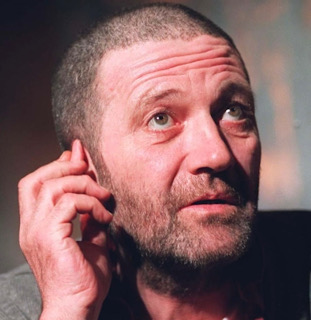
Donal McCann, Irish stage, film, and television actor, dies from pancreatic cancer in Dublin on July 17, 1999. He is best known for his roles in the works of Brian Friel and for his lead role in John Huston‘s last film, The Dead (1987). In 2020, he is listed as number 45 on The Irish Times list of Ireland’s greatest film actors.

McCann is born on May 7, 1943, in Terenure, Dublin. His father is John J. McCann, a playwright and politician who serves twice as Lord Mayor of Dublin. Although he acts in a production of his father’s Give Me a Bed of Roses at Terenure College in 1962, he briefly studies architecture before taking a job as a trainee sub-editor at the Evening Press which allows him to pursue part-time acting classes at the Abbey School of Acting at the same time. He joins the Abbey Players in the late 1960s.

Among his most important early roles are Cú Chulainn in W. B. Yeats‘s On Baile Strand (1966), and as Estragon in a seminal production of Samuel Beckett‘s Waiting for Godot, partnering with Peter O’Toole as Vladimir (1969).

McCann’s career includes parts in many plays from the Irish literary canon, including Tarry FlynnThe Shaughran, and the Gate Theatre‘s highly acclaimed production of Seán O’Casey‘s classic Juno and the Paycock in the 1980s (McCann plays the “Paycock” (Captain Boyle) opposite Geraldine Plunkett as Juno and John Kavanagh as Joxer Daly) as well as a subsequent production of O’Casey’s The Plough and the Stars.

McCann develops a particularly fruitful relationship with the playwright Brian Friel. He plays the role of Gar O’Donnell, the public figure, in a film adaptation of Philadelphia, Here I Come! in 1970 and, despite popular belief, he never plays either public or private Gar on stage. He gives a landmark performance as Frank Hardy, the title character, in Faith Healer in 1980 (a role he reprised in 1994), continuing his relationship with Friel through productions of Translations (1988) and Wonderful Tennessee (1993).

Friel says that McCann’s work “contains extraordinary characteristics that go beyond acting … it is deeply spiritual.” Perhaps McCann’s most renowned role is as Thomas Dunne in Sebastian Barry‘s The Steward of Christendom. He wins the London Critics’ Circle Theatre Award (Drama Theatre) as best actor for this role in 1995. He reprises this role in a 1996 production at the Gate Theatre, Dublin and, following a twelve-week run at the Brooklyn Academy of Music in 1997, his “performance of unarguable greatness” (The New York Observer) had Newsweek hailing him as “a world-class star,” and The New York Times referring to this “astonishing Irish actor…widely regarded as the finest of them all.”

On the London stage, McCann plays in Prayer for My Daughter opposite Antony Sher (1978), and is Jean to Dame Helen Mirren‘s Julie in Miss Julie (1971). This is filmed for the BBC, and he much later plays Judge Brack with Fiona Shaw in the title role of Henrik Ibsen‘s Hedda Gabler, a production filmed for the BBC in 1993.

McCann begins his film career early, in 1966, in Walt Disney Pictures’s The Fighting Prince of Donegal (this later becomes a TV series). More significant roles include the title character’s father Shamie in Cal and one of the feuding brothers in Thaddeus O’Sullivan‘s December Bride (1990). He works a number of times with Neil Jordan (in AngelThe Miracle and High Spirits).

His best-known film role is as Gabriel Conroy in The Dead (1987), starring opposite Anjelica Huston and directed by her father, John Huston. Significant late roles include Bernardo Bertolucci‘s Stealing Beauty (1996) and in John Turturro‘s Illuminata (released in 1999, after McCann’s death).

McCann’s television work includes the featured role of Phineas Finn in the BBC’s serialised adaptation of Anthony Trollope‘s The Pallisers, Willie Burke in RTÉ‘s Prix Italia drama entry The Burke Enigma (1979) and Barney Mulhall in RTÉ’s Strumpet City (1980), as well as many one-off parts.

McCann plays in Bob Quinn‘s Irish language film Poitín (1979) and in Quinn’s somewhat experimental The Bishop’s Story (1995). After hearing that McCann is ill, Tom Collins asks Quinn to make a TV documentary about McCann for RTÉ called It Must Be Done Right (1999), after a remark by McCann on his craft. The film airs on RTÉ a week before McCann’s death.

In his private life, McCann is a quiet and unassuming man, but he battles both depression and alcoholism all his life. He has many friends in Irish theatre and artistic circles but also across all strata of life. His hobbies include sketching and he is passionate about horse racing.

Remembering McCann on the 25th anniversary of his death, Gerald Smyth writes, “In the melancholy of that life-worn voice could be heard the cadences of a lyric heart.”


Leave a comment

Death of Rose Maynard Barton, Watercolour Artist

Rose Maynard Barton RWS, Anglo-Irish artist, dies on October 10, 1929, at her house at 79 Park Mansions, Knightsbridge, London. A watercolourist, she paints landscape, street scenes, gardens, child portraiture and illustrations of the townscape of Britain and Ireland.

Barton exhibits with a number of different painting societies, most notably the Water Colour Society of Ireland (WCSI), the Royal Academy of Arts (RA), the Royal Hibernian Academy (RHA), the Society of Women Artists (SWA) and the Royal Watercolour Society (RWS). She becomes a full member of the RWS in 1911.

Barton is born in Dublin on April 21, 1856. Her father is a lawyer from Rochestown, County Tipperary, and her mother’s family is from County Galway. Educated privately, she is a liberal in social affairs. Her interests include horse racing. She is cousins with sisters Eva Henrietta and Letitia Marion Hamilton. She begins exhibiting her broad-wash watercolour paintings with the Water Colour Society of Ireland (WCSI) in 1872. She and her sister Emily visit Brussels in 1875, where they receive drawing tuition in drawing and fine art painting under the French artist Henri Gervex. There, along with her close friend Mildred Anne Butler, she begins to study figure painting and figure drawing.

In 1879, Barton joins the local committee of the Irish Fine Art Society. Afterward she trains at Paul Jacob Naftel‘s art studio in London. She, like Butler, studies under Naftel. In 1882, she exhibits her painting Dead Game, at the Royal Hibernian Academy (RHA). In 1884, she exhibits at the Royal Academy of Arts (RA). Later, she shows at the Japanese Gallery, the Dudley Museum and Art Gallery and the Grosvenor Gallery in London. In 1893, she becomes an associate member of the Society of Painters in Water Colours, attaining full membership in 1911.

Barton’s watercolours and townscapes become well known in both Dublin and London. This is helped by her illustrations in books of both cities including Picturesque Dublin, Old and New by Francis Farmer and her own book Familiar London.

Barton’s paintings can be found in public collections of Irish painting in both Ireland and Britain, including the National Gallery of Ireland and Dublin City Gallery The Hugh Lane in Dublin, and the Ulster Museum in Belfast.

(Pictured: “A rest in rotten row” – 1892 watercolour by Rose Maynard Barton. The painting shows a nurse and child resting on Rotten Row, Hyde Park, London.)


Leave a comment

Birth of Frank Clarke, Former Chief Justice of Ireland

George Bernard Francis Clarke, Irish barrister who is Chief Justice of Ireland from July 2017 to October 2021, is born on October 10, 1951, in Walkinstown, Dublin. He has a successful career as a barrister for many years, with a broad practice in commercial law and public law. He is the chair of the Bar Council of Ireland between 1993 and 1995. He is appointed to the High Court in 2004 and becomes a judge of the Supreme Court of Ireland in February 2012. Following his retirement from the bench, he returns to work as a barrister. Across his career as a barrister and a judge, he is involved in many seminal cases in Irish legal history.

Clarke is the son of a customs officer who dies when he is aged eleven. His mother is a secretary. He is educated at Drimnagh Castle Secondary School, a Christian Brothers secondary school in Dublin. He wins the Dublin Junior High Jump Championship in 1969. He studies Economics and Maths at undergraduate level at University College Dublin (UCD), while concurrently studying to become a barrister at King’s Inns. He is the first of his family to attend third level education and is able to attend university by receiving grants. While attending UCD, he loses an election to Adrian Hardiman to become auditor of the Literary and Historical Society (L&H).

Clarke joins Fine Gael after leaving school. He is a speechwriter for Taoiseach Garret FitzGerald and election agent for George Birmingham. He then subsequently, himself, runs for election to Seanad Éireann. He campaigns against the Eighth Amendment of the Constitution of Ireland in 1983 and in favour of the unsuccessful Tenth Amendment of the Constitution Bill 1986. He chairs a meeting of family lawyers in 1995 supporting the successful second referendum on divorce.

Clarke is called to the Bar in 1973 and to the Inner Bar in 1985. He has a practice in commercial, constitutional and family law. Two years after commencing practice he appears as junior counsel for the applicant in State (Healy) v Donoghue before the Supreme Court, which establishes a constitutional right to legal aid in criminal cases.

Clarke represents Michael McGimpsey and his brother Christopher in a challenge against the constitutionality of the Anglo-Irish Agreement, which is ultimately unsuccessful in the Supreme Court in 1988.

Clarke appears for the plaintiff with Michael McDowell and Gerard Hogan in Cox v Ireland in 1990, where the Supreme Court first introduces proportionality into Irish constitutional law and discovers the right to earn a livelihood. He represents Seán Ardagh and the Oireachtas Subcommittee formed after the death of John Carthy in a constitutional case which limits the powers of investigation of the Oireachtas, which leads to the unsuccessful Thirtieth Amendment of the Constitution. In an action taken by tobacco companies to challenge the legality of bans on tobacco advertising, he appears for the State.

Clarke is twice appointed by the Supreme Court for the purpose of Article 26 references. He argues on behalf of the Law Society of Ireland in a referral regarding the Adoption (No. 2) Bill 1987. He is appointed by the Supreme Court to appear to argue on behalf of the rights of the mother in In re Article 26 and the Regulation of Information (Services outside the State for Termination of Pregnancies) Bill 1995. In 1994, President Mary Robinson requests him to provide her with legal advice on the presidential prerogative to refuse to dissolve Dáil Éireann.

Clarke is external counsel to the Commission to Inquire into Child Abuse and represents the Flood Tribunal in its case against Liam Lawlor and the State in Charles Haughey‘s challenge to the legality of the Moriarty Tribunal. He and George Birmingham also appear for Fine Gael at the Flood Tribunal, and he represents the public interest at the Moriarty Tribunal. He is a legal advisor to an inquiry into the deposit interest retention tax (DIRT) conducted by the Public Accounts Committee, along with future judicial colleagues Paul Gilligan and Mary Irvine.

Clarke is Chairman of the Bar Council of Ireland from 1993 to 1995. Between 1999 and 2004, he acts as chair of Council of King’s Inns. He is a professor at the Kings’s Inns between 1978 and 1985 and is appointed an adjunct professor at University College Cork (UCC) in 2014. He also serves as an adjunct professor at Trinity College Dublin (TCD).

Clarke acts as a chair of the Employment Appeals Tribunal while still in practice. He is also a steward of the Turf Club and the chairman of Leopardstown Racecourse. He was due to take over as senior steward of the Turf Club but does not do so due to his appointment to the High Court.

Clarke is appointed as a High Court judge in 2004. He is chairman of the Referendum Commission for the second Lisbon Treaty referendum in 2009. As a High Court judge he gives a ruling on the Leas Cross nursing home case against RTÉ, that the public interest justifies the broadcasting of material that otherwise would have been protected by the right to privacy. He frequently presides over the Commercial Court during his time at the High Court. He is involved in the establishment of two High Court lists in Cork, Chancery and a Non-Jury List.

Clarke is appointed to the Supreme Court on February 9, 2012, and serves as Chief Justice from October 2017 until his retirement on October 10, 2021, required by law on his 70th birthday. In March 2021, the Cabinet begins the process of identifying his successor. Donal O’Donnell is selected to replace him. His final day in court is October 8, 2021, where judges, lawyers and civil servants make a large number of tributes to him. Mary Carolan of The Irish Times says that under his leadership the Supreme Court is “perhaps the most collegial it had been in some time.”

Following his retirement from the judiciary, Clarke resumes his practice as a barrister and rejoins the Bar of Ireland. Under the rules of the Bar of Ireland, he cannot appear before a court of equal or lesser jurisdiction to that on which he sat as a judge. Given that he was the most senior judge in Ireland, he cannot appear in any court in Ireland. He can appear in the European Union (EU) courts. However, he indicates his intention to focus on mediation and arbitration work.

In June 2022, Clarke is sworn in as judge of the court of appeal of the Dubai International Financial Centre (DIFC) courts but resigns a few days later following criticism from barrister and Labour Party leader, Ivana Bacik.

Clarke has been married to Dr. Jacqueline Hayden since 1977. They have a son and a daughter. He is interested in rugby and horse racing, at one point owning several horses.


Leave a comment

Establishment of the Irish Hospitals’ Sweepstake

The Irish Hospitals’ Sweepstake is established in the Irish Free State on November 17, 1920. The lottery is established to finance hospitals.

The Sweepstake is generally referred to as the Irish Sweepstake or Irish Sweepstakes, frequently abbreviated to Irish Sweep or Irish Sweeps. The Public Charitable Hospitals (Temporary Provisions) Act, 1930 is the act that establishes the lottery. This act expires in 1934, in accordance with its terms, and the Public Hospitals Acts are the legislative basis for the scheme thereafter. The main organisers are Richard Duggan, Captain Spencer Freeman and Joseph McGrath. Duggan is a well known Dublin bookmaker who has organised a number of sweepstakes in the decade prior to setting up the Hospitals’ Sweepstake. Captain Freeman is a Welsh-born engineer and former captain in the British Army. After the Constitution of Ireland is enacted in 1937, the name Irish Hospitals’ Sweepstake is adopted.

The sweepstake is established because there is a need for investment in hospitals and medical services and the public finances are unable to meet this expense at the time. As the people of Ireland are unable to raise sufficient funds, because of the low population, a significant amount of the funds are raised in the United Kingdom and United States, often among the emigrant Irish. Potentially winning tickets are drawn from rotating drums, usually by nurses in uniform. Each such ticket is assigned to a horse expected to run in one of several horse races, including the Cambridgeshire Handicap, Epsom Derby and the Grand National. Tickets that draw the favourite horses thus stand a higher likelihood of winning and a series of winning horses have to be chosen on the accumulator system, allowing for enormous prizes.

The original sweepstake draws are held at the Mansion House, Dublin on May 19, 1939 under the supervision of the Chief Commissioner of Police, and are moved to a more permanent fixture at the Royal Dublin Society (RDS) in Ballsbridge later in 1940.

The Adelaide Hospital in Dublin is the only hospital at the time to not accept money from the Hospitals Trust, as the governors disapprove of sweepstakes.

From the 1960s onwards, revenues decline. The offices are moved to Lotamore House in County Cork. Although giving the appearance of a public charitable lottery, with nurses featured prominently in the advertising and drawings, the Sweepstake is in fact a private for-profit lottery company, and the owners are paid substantial dividends from the profits. Fortune magazine describes it as “a private company run for profit and its handful of stockholders have used their earnings from the sweepstakes to build a group of industrial enterprises that loom quite large in the modest Irish economy. Waterford Glassworks, Irish Glass Bottle Company and many other new Irish companies are financed by money from this enterprise and up to 5,000 people are given jobs.” At the time of his death in 1966, Joe McGrath has interests in the racing industry, and holds the Renault dealership for Ireland in addition to large financial and property assets. He is notorious throughout Ireland for his ruthless business attitude and his actions during the Irish Civil War.

In 1986, the Irish government creates a new public lottery, the National Lottery, and the company fails to secure the new contract to manage it. The final sweepstake is held in January 1986 and the company is unsuccessful for a licence bid for the National Lottery, which is won by An Post later that year. The company goes into voluntary liquidation in March 1987. The majority of workers do not have a pension scheme but the sweepstake has fed many families during lean times and is regarded as a safe job. The Public Hospitals (Amendment) Act, 1990 is enacted for the orderly winding up of the scheme, which has by then almost £500,000 in unclaimed prizes and accrued interest.

A collection of advertising material relating to the Irish Hospitals’ Sweepstakes is among the Special Collections of National Irish Visual Arts Library.


Leave a comment

Birth of Sir Peter O’Sullevan, Horse Racing Commentator

Sir Peter O’Sullevan, Irish-British horse racing commentator for the BBC, and a correspondent for the Press Association, the Daily Express, and Today, is born Newcastle, County Down on March 3, 1918. He is the BBC’s leading horse racing commentator from 1947 to 1997, during which time he describes some of the greatest moments in the history of the Grand National.

O’Sullevan is the son of Colonel John Joseph O’Sullevan DSO, resident magistrate at Killarney, and Vera (née Henry). As an infant, the family returns to his parents’ home at Kenmare, County Kerry and he is raised in Surrey, England. He is educated at Hawtreys Preparatory School, Charterhouse School, and later at Collège Alpin International Beau Soleil in Switzerland.

In the late 1940s O’Sullevan is involved in some of the earliest television commentaries on any sport and makes many radio commentaries in his earlier years (including the Grand National before it is televised for the first time in 1960). On television, he commentates on many of the major events of the racing year, including the Cheltenham Festival until 1994, The Derby until 1979, and the Grand National, Royal Ascot and Glorious Goodwood until he retires in 1997. During his career, he commentates on around 30 runnings of the Prix de l’Arc de Triomphe in Paris and racing from the United States and Ireland as well as trotting from Rome during the 1960s.

During his 50 years of commentating on the Grand National, O’Sullevan commentates on numerous historic victories. These include Bob Champion‘s run on Aldaniti in 1981 after recovering from cancer, 100/1 outsider Foinavon‘s win in 1967, and the three-times winner Red Rum in 1973, 1974 and 1977. He also commentates on the 1993 Grand National, which is declared void after 30 of the 39 runners fail to realise there had been a false start, and seven go on to complete the course. As the runners approach the second-last fence in the so-called “race that never was,” O’Sullevan declares it “the greatest disaster in the history of the Grand National.”

O’Sullevan becomes known as the “Voice of Racing.” In a television interview before his 50th and last Grand National in 1997, he reveals that his commentary binoculars came from a German submarine. He is knighted the same year – the only sports broadcaster at the time to have been bestowed that honour. He is also a racehorse owner, including of Be Friendly, who wins the King’s Stand Stakes at Ascot, and Prix de l’Abbaye de Longchamp. He is twice successful in the Haydock Sprint Cup (then Vernons Sprint) in 1966 and 1967. Another horse he owns is Attivo, whose victory in the 1974 Triumph Hurdle at the Cheltenham Festival is described by O’Sullevan as the most difficult race to call.

Attivo also wins the Chester Cup and the Northumberland Plate during the 1970s. O’Sullevan’s final race commentary comes at Newbury Racecourse for the 1997 Hennessy Gold Cup, and he visits the winners’ enclosure as a winning owner in the race which follows courtesy of Sounds Fyne’s victory in the Fulke Walwyn Chase. He is succeeded as the BBC’s lead commentator by Jim McGrath.

After his retirement, O’Sullevan is actively involved in charity work, fundraising for causes which revolve around the protection of horses and farm animals, including the International League for the Protection of Horses (ILPH), the Thoroughbred Rehabilitation Centre and Compassion in World Farming. The National Hunt Challenge Chase Cup (run at the Cheltenham Festival) is named after him in 2008 to celebrate his 90th birthday. In 2010, Aintree Racecourse names O’Sullevan as one of the eight inaugural “Grand National Legends.” His name is inscribed on a commemorative plaque at the course, alongside the likes of Ginger McCain and Captain Martin Becher.

O’Sullevan meets his wife Patricia, daughter of Frank Duckworth of Manitoba, Canada, at a ball in Manchester in 1947. She dies of Alzheimer’s disease in 2010.

O’Sullevan dies of cancer at his home in London on July 29, 2015.


1 Comment

Birth of Michael James O’Hehir, Commentator & Journalist

michael-james-ohehirMichael James O’Hehir, hurling, Gaelic football and horse racing commentator and journalist, is born on June 2, 1920, in Glasnevin, County Dublin. Between 1938 and 1985 his enthusiasm and a memorable turn of phrase endears him to many. He is credited with being the “Voice of the Gaelic Athletic Association.”

His father, Jim O’Hehir, is active in Gaelic games, having trained his native county to win the 1914 All-Ireland Senior Hurling Championship title in hurling. He subsequently trains the Leitrim football team that secures the Connacht Senior Football Championship title in 1927 and he also serves as an official with the Dublin Junior Board.

O’Hehir is educated at St. Patrick’s National School in Drumcondra before later attending the O’Connell School. He later studies electrical engineering at University College Dublin, however, he abandons his studies after just one year to pursue a full-time career in broadcasting.

At the age of eighteen O’Hehir writes to Radio Éireann asking to do a test commentary. He is accepted and is asked to do a five-minute microphone test for a National Football League game between Wexford and Louth. His microphone test impresses the director of broadcasting so much that he is invited to commentate on the entire second half of the match.

Two months later, in August 1938, O’Hehir makes his first broadcast – the All-Ireland football semi-final between Monaghan and Galway. The following year he covers his first hurling final – the famous “thunder and lightning final” between Cork and Kilkenny.

By the mid-1940s O’Hehir is recognised as one of Ireland’s leading sports broadcasters. In 1947 he faces his most challenging broadcast to date when he has to commentate on the All-Ireland Football Final from the Polo Grounds in New York City with over 1,000,000 people listening to the broadcast back in Ireland.

In 1944 O’Hehir joins the staff of Independent Newspapers as a sports sub-editor, before beginning a seventeen-year career as racing correspondent in 1947.

In 1961 Ireland’s first national television station, Telefís Éireann, is founded and O’Hehir is appointed head of sports programmes. In addition to his new role O’Hehir continues to keep up a hectic schedule of commentaries.

O’Hehir’s skills do not just confine him to sports broadcasting and, in November 1963, he faces his toughest broadcast. By coincidence he is on holidays with his wife Molly in New York City when U.S. President John F. Kennedy is assassinated. O’Hehir is asked by Telefís Éireann to provide the commentary for the funeral. The live five-hour broadcast proves a huge challenge for him, as he has had no association with political or current affairs broadcasting up to that point and lacks the resources available to more established television stations. O’Hehir’s commentary, however, wins widespread acclaim in Ireland and shows a different side of his nature.

In August 1985 O’Hehir is preparing to commentate on the All-Ireland hurling final between Offaly and Galway. It would be a special occasion as it would mark his 100th commentary on an All-Ireland final. Two weeks before the game he suffers a stroke which leaves him in a wheelchair and with some speaking difficulties. This denies him the chance to reach the century milestone. He hopes to return to broadcasting one day to complete his 100th final, however, this never happens.

In 1987, the centenary All-Ireland football final takes place Croke Park. The biggest cheer of the day is reserved for O’Hehir when he is pushed onto the field in a wheelchair by his son Peter. Nobody expects the standing ovation and the huge outpouring of emotion from the thousands of fans present and from O’Hehir himself.

Over the next few years O’Hehir withdraws from public life. He returns briefly in 1996 when his autobiography, My Life and Times, is published. Michael O’Hehir dies in Dublin on November 24, 1996.