seamus dubhghaill

Promoting Irish Culture and History from Little Rock, Arkansas, USA


Leave a comment

Death of John Daly, Leading Member of the Irish Republican Brotherhood

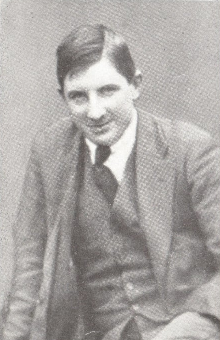
John Daly, Irish republican and a leading member of the Irish Republican Brotherhood (IRB), dies in Limerick, County Limerick, on June 30, 1916. He is uncle to Kathleen Clarke, wife of Tom Clarke who is executed for his part in the 1916 Easter Rising and who is a leading member of the IRB, and her brother Edward “Ned” Daly who is also executed in 1916. Daly briefly serves as a member of the British Parliament but is resented for having previously been convicted for treason against the British state. He also serves as Mayor of Limerick for three years at the turn of the century.

Daly is born in Limerick on October 18, 1845. His father works in James Harvey & Son’s Timber Yard. At the age of sixteen, he joins his father working as a lath splitter. At eighteen he is sworn in as a member of the IRB, also known as the Fenians, and becomes fully involved in Republican activities. When he is refused absolution in confession because he admits to being a Fenian, he decides that from then on, his loyalty will no longer be to “faith and Fatherland” but to “God and Fatherland.”

On November 22, 1866, Daly and his brother Edward are arrested at their family home having been betrayed by an informer, for running a munitions factory in the Pennywell district close to their home. He is released on bail in February 1867 toughened and more dedicated by the experience.

On March 5, 1867, the ill-prepared Fenian Rising takes place. Daly takes charge of the Limerick detachment of the IRB. Limerick is one of the few areas where the Fenians are able to make some show of force, however weak. Through lack of numbers, they fail to make a significant impact on the vastly superior forces arrayed against them. Moving out of the city, he moves his men into the country and joins up with other Fenians in an attack on the Royal Irish Constabulary (RIC) barracks at Kilmallock. The attack is repelled, and Daly disperse his men.

After this Daly flees the country by stowing away first on a boat, the Hollywood, to England, and from London then on board the Cornelius Grenfel to the United States.

Life in America for working class immigrants is particularly tough and Daly’s first job on leaving the ship is digging a cellar. He then obtains work in a white lead factory and works for a while as a mason’s helper before getting a reasonably good job as a brakeman on a tram system. He is to recall these experiences in his Recollections of Fenians and Fenianism.

In 1869, Daly return to Ireland and takes up his old job in the timber yard, and also his Republican activities. He begins to help reorganise the IRB and takes part in a number of agitations to keep the IRB agenda in the public view. He becomes a leading voice in the Amnesty Association to help in the release of those Fenians still in jail.

In November 1869, a major tenants’ right meeting takes place in the city. The IRB objects to the meeting because the issue of the prisoners is not on the agenda. In what comes to be known as “The Battle of the Markets,” the IRB charges the platform and succeeds in dismantling it. Though the organisers of the meeting attempt to hold some form of gathering, Daly and the IRB refuse to relent. It is Daly’s opinion that “it was one of the greatest moral victories ever achieved.” The issue of the political prisoners is to keep him occupied for much of the 1870s. In 1876, he is again arrested for disturbing another home rule gathering, though on being brought before the court he is acquitted.

During the Land War Daly is a member of the Supreme Council of the IRB and becomes organiser for Connacht and Ulster.

In the summer of 1883, Daly moved to Birmingham, England, and settles in the home of James Egan, an old friend from Limerick and a generally inactive IRB man. E.G. Jenkinson, head of Special Branch, is informed that Daly is on his way to Britain from the United States. He has been asked by the Supreme Council to deliver the graveside oration at the funeral of Charles J. Kickham while in the United States. When he arrives, a plain-clothes detective is assigned to follow him at all times. As a result of this, Special Branch are alerted to the importance of John Torley in Glasgow, Robert Johnston in Belfast and Mark Ryan in London of the IRB.

Jenkinson uses agent provocateurs in his attempts to convict Republicans. One such recruit is a publican and local IRB man named Dan O’Neill. Both Jenkinson and a Major Nicholas Gosselin persuade O’Neill to betray Daly. O’Neill then asks Daly to deliver sealed cases to some associates in London, and on April 11, he is arrested as he is about to board the train for London, and explosives are found in the case he is carrying. The police then raid the home of James Egan where explosives are “allegedly found buried” in Egan’s garden in addition to some documents.

In Chatham prison Daly becomes friends with Tom Clarke, who would later marry his niece Kathleen and who was a leader of the 1916 Easter Rising. While in prison he claims that he is being poisoned with belladonna which causes an investigation by a commission of inquiry in 1890. It is admitted by prison officials as an error by a warder. A series of articles in the Daily Chronicle in 1894 analyse prison methods. Daly gives an interview to the Chronicle which appears on September 12, 1896.

Daly is elected unopposed as a member of parliament (MP) for Limerick City at the 1895 United Kingdom general election in Ireland, as a member of the Parnellite Irish National League (INL). However, he is disqualified on August 19, 1895, as a treason-felon. In August 1896, he goes on a lecture tour of England with Maud Gonne and in 1897 on a tour of the United States which is organised by John Devoy. He later founds a prosperous bakery business in Limerick and goes on to become Mayor of his native city.

Daly is elected three times as Mayor of Limerick City, from 1899 to 1901. He jointly finances with Patrick McCartan the IRB newspaper Irish Freedom in 1910.

Daly dies on June 30, 1916, at his home, 15 Barrington Street, Limerick. He never marries. A tall, energetic, and gregarious man, he is a simple but often effective propagandist for the separatist cause.

In 1928, Madge Daly, a niece of Daly, presents the Daly cup to William P. Clifford, the then-chairman of the Limerick GAA county board. Since then, the Daly cup is presented to the winners of the Limerick Senior Hurling Championship.

(Pictured: Irish Republican and Fenian John Daly in the ceremonial garb of the Mayor of Limerick, circa 1900)


Leave a comment

Founding of the Irish White Cross

The Irish White Cross is established during a meeting in Dublin’s Mansion House on February 1, 1921, as a mechanism for distributing funds raised by the American Committee for Relief in Ireland for the purpose of assisting with relief and reconstruction in the country.

It is envisaged that the Irish White Cross will act in cooperation with similar relief committees that have been established in the United States.

The meeting, presided over by the Lord Mayor of Dublin, Laurence O’Neill, hears that the Society of Friends in New York has already contributed $50,000 to help launch the initiative.

Among those to welcome the new organisation is Sinn Féin President, Éamon de Valera, who promises all the support he can offer. Cardinal Michael Logue, Catholic Primate of Ireland, also offers his assistance: “Even if peace were restored, of which there seems little prospect at present, all the help which can be obtained shall be necessary, to restore the country from the wreck to which it has been reduced, and to help those who have been left destitute by the murder of those on whom they depended, or ruined by the destruction of their property.”

Cardinal Logue becomes president of the new organisation, the trustees of which include William Walsh, Archbishop of Dublin, Arthur Griffith, Sinn Féin TD, Molly Childers, Jennie Wyse Power and Tom Johnston. The Executive Committee includes Hanna Sheehy Skeffington, Kathleen Clarke and Mary Kettle.

Barry Egan, deputy Lord Mayor of Cork, says that the moral effect of the organisation will be incalculable.

The Irish White Cross is managed by the Quaker businessman, and later Irish Free State senator, James G. Douglas. The organisation continues to operate until the Irish Civil War and its books are officially closed in 1928. From 1922, its activities are essentially wound down and remaining funds divested to subsidiary organisations. The longest running of these aid committees is the Children’s Relief Association which distributes aid to child victims of this troubled period, north and south of the border, until 1947. The head of the Children’s Relief Association is Áine Ceannt, the widow of Éamonn Ceannt who is perhaps one of the least known signatories of the 1916 Proclamation of the Irish Republic.


Leave a comment

Death of Diarmuid O’Hegarty, Civil Servant & Revolutionary

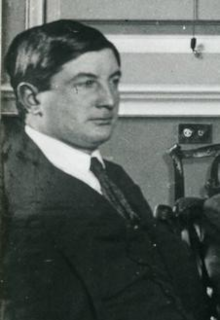
Diarmuid O’Hegarty (Irish: Ó hÉigeartuigh), civil servant and revolutionary, dies in Dublin on March 14, 1958.

O’Hegarty is born Jeremiah Stephen Hegarty on December 26, 1892, in Lowertown, Skibbereen, County Cork, the eldest of seven children of Jeremiah Hegarty (1856–1934) and his wife Eileen (née Barry), both teachers. He is educated at the Christian Brothers school, St. Patrick’s Place, Cork, joins the Dublin civil service in 1910 and is posted to the Department of Agriculture and Technical Instruction, acquiring invaluable administrative experience as private secretary to T. P. Gill, secretary of the department.

O’Hegarty is a member of the Keating branch of the Gaelic League and the closely associated Teeling circle of the Irish Republican Brotherhood (IRB). In 1913 he becomes secretary and stage manager of a troupe of Gaelic players, Na hAisteoirí, which includes several who later become prominent revolutionaries: Piaras Béaslaí, Gearóid O’Sullivan, Fionán Lynch, and Con Collins. As second lieutenant of F Company, 1st Battalion, Dublin Brigade, Irish Volunteers, during the Easter Rising, he is in charge of barricades in Church Street, Mary Lane, Mary’s Abbey, and Jameson Distillery, an area which sees fierce fighting. Imprisoned in Knutsford (May 1-18), he is released in error and returns to his post in the civil service. On his return he is a key figure in the reorganisation of the Volunteers and IRB, becoming a member of the executive of the IRB’s supreme council along with Michael Collins and Seán Ó Murthuile. He also becomes a central figure in Kathleen Clarke‘s prisoner support group, the Irish Volunteer Dependents Fund, and when it amalgamates with the more moderate Irish National Aid Association to form the INA&VDF in August 1916, he helps to ensure that it is dominated by republicans.

O’Hegarty is very close to Michael Collins and Harry Boland and in 1918 this IRB triumvirate exercises considerable control in the nomination of Sinn Féin candidates for the 1918 Irish general election. In the same year he is dismissed from the civil service for refusing to take the oath of allegiance, but his administrative talents find ample outlet in the secretariat of the revolutionary Dáil and later in the service of the Irish Free State to such an extent that he has been called ‘the civil servant of the revolution’ and ‘the Grey Eminence of the Free State Government.’ As clerk of the First Dáil and secretary to the Dáil cabinet (1919–21), he is largely responsible for its success, organising meetings of the clandestine parliament and coordinating the work of various departments from his offices on the corner of O’Connell Street and Abbey Street and later in Middle Abbey Street. He is determined that the Dáil will demonstrate its worth by ‘functioning as any progressive government would be expected to function.’ He records the minutes and handles all correspondence of the Dáil cabinet. As the conduit through which the Dáil’s ministers communicate, his role is central to the effective operation of government on the run. The influence this gives him within the revolutionary movement is bolstered by his senior role within the IRB and the positions of military significance which he occupies. He is a member of the Volunteer Executive (Jun 1916–Nov 1921), Irish Republican Army (IRA) Director of Communications (Jul 1918–Mar 1920), and Director of Organisation (Mar 1920–Apr 1921). When convicted of illegal assembly and jailed in Mountjoy Prison (Nov 1919–Feb 1920), he immediately wields power within the prison, ordering Noel Lemass off a hunger strike.

O’Hegarty resigns his military duties in April 1921 to concentrate on his work in the Dáil secretariat and serves as secretary to the Irish delegation during the Anglo–Irish Treaty negotiations in London (Oct–Dec 1921). He is a vital voice for the Treaty within the IRB and is appointed secretary to the cabinet of the Provisional Government in 1922, participating in the unsuccessful army unification talks of May 1922. During the Irish Civil War, he is briefly seconded from his civil service post to serve as military governor of Mountjoy Prison (Jul-Aug 1922), where he threatens that prisoners who persist in leaning out of windows and talking to the public outside the prison will be shot. Peadar O’Donnell, who is a prisoner there at the time, remembers him as the focus of much “republican bitterness.” A member of the army council during the Irish Civil War, he serves as Director of Organisation (Jul–Dec 1922) and Director of Intelligence (Dec 1922–May 1923), leaving the army with the rank of lieutenant general on May 1, 1923, to resume his civil service career.

O’Hegarty is secretary to the Executive Council of the Irish Free State (1923–32) and principal private secretary to its president, W. T. Cosgrave. Again, he records the cabinet minutes and is the administrative pivot upon which government turns. He serves as secretary to numerous governmental delegations and is widely praised for his work in this role at the 1926 Imperial Conference and the 1930 Imperial Conference. In 1927 he goes to New York to represent the government at a hearing into the fate of republican funds in the United States. His career is the prime example of the influence of revolutionary veterans within the higher civil service in the early years of the state. After the change of government following the 1932 Irish general election, he is one of the very few senior civil servants who is effectively removed from his position. He is appointed to be a commissioner of public works, becoming chairman in 1949, a position he holds until his retirement in 1957. In 1939–40 he serves on the Economy Committee established by the government to advise on wartime spending, and in 1941 is a member of a tribunal of inquiry into public transport, which is principally concerned with the poor financial state of Great Southern Railways.

On April 27, 1922, with Michael Collins as his best man, O’Hegarty marries Claire Archer, daughter of Edward Archer, a post office telegraph inspector from Dublin, and Susan Archer (née Matthews). Her brother is William (Liam) Archer. They live at 9 Brendan Road, Donnybrook, Dublin.

O’Hegarty dies on March 14, 1958, in Dublin, leaving an estate of £5,441. His papers are in the University College Dublin (UCD) Archives.


Leave a comment

Birth of Diarmuid O’Hegarty, Civil Servant & Revolutionary

Diarmuid O’Hegarty (Ó hÉigeartuigh), civil servant and revolutionary, is born Jeremiah Stephen Hegarty on December 26, 1892, in Lowertown, Skibbereen, County Cork, the eldest of seven children of Jeremiah Hegarty (1856–1934) and his wife Eileen (née Barry), both teachers. He is educated at the Christian Brothers school, St. Patrick’s Place, Cork, joins the civil service in 1910 and is posted to the Department of Agriculture and Technical Instruction, acquiring invaluable administrative experience as private secretary to T. P. Gill, secretary of the department.

O’Hegarty is a member of the Keating branch of the Gaelic League and the closely associated Teeling circle of the Irish Republican Brotherhood (IRB). In 1913 he becomes secretary and stage manager of a troupe of Gaelic players, Na hAisteoirí, which includes several who later become prominent revolutionaries: Piaras Béaslaí, Gearóid O’Sullivan, Fionán Lynch, and Con Collins. As second lieutenant of F Company, 1st Battalion, Dublin Brigade, Irish Volunteers, during the Easter Rising, he is in charge of barricades in Church Street, Mary Lane, Mary’s Abbey, and Jameson Distillery, an area which sees fierce fighting. Imprisoned in Knutsford (May 1-18), he is released in error and returns to his post in the civil service. On his return he is a key figure in the reorganisation of the Volunteers and IRB, becoming a member of the executive of the IRB’s supreme council along with Michael Collins and Seán Ó Murthuile. He also becomes a central figure in Kathleen Clarke‘s prisoner support group, the Irish Volunteer Dependents Fund, and when it amalgamates with the more moderate Irish National Aid Association to form the INA&VDF in August 1916, he helps to ensure that it is dominated by republicans.

O’Hegarty is very close to Michael Collins and Harry Boland and in 1918 this IRB triumvirate exercises considerable control in the nomination of Sinn Féin candidates for the 1918 Irish general election. In the same year he is dismissed from the civil service for refusing to take the oath of allegiance, but his administrative talents find ample outlet in the secretariat of the revolutionary Dáil and later in the service of the Irish Free State to such an extent that he has been called ‘the civil servant of the revolution’ and ‘the Grey Eminence of the Free State Government.’ As clerk of the First Dáil and secretary to the Dáil cabinet (1919–21), he is largely responsible for its success, organising meetings of the clandestine parliament and coordinating the work of various departments from his offices on the corner of O’Connell Street and Abbey Street and later in Middle Abbey Street. He is determined that the Dáil will demonstrate its worth by ‘functioning as any progressive government would be expected to function.’ He records the minutes and handles all correspondence of the Dáil cabinet. As the conduit through which the Dáil’s ministers communicate, his role is central to the effective operation of government on the run. The influence this gives him within the revolutionary movement is bolstered by his senior role within the IRB and the positions of military significance which he occupies. He is a member of the Volunteer Executive (Jun 1916–Nov 1921), Irish Republican Army (IRA) Director of Communications (Jul 1918–Mar 1920), and Director of Organisation (Mar 1920–Apr 1921). When convicted of illegal assembly and jailed in Mountjoy Prison (Nov 1919–Feb 1920), he immediately wields power within the prison, ordering Noel Lemass off a hunger strike.

O’Hegarty resigns his military duties in April 1921 to concentrate on his work in the Dáil secretariat and serves as secretary to the Irish delegation during the Anglo–Irish Treaty negotiations in London (Oct–Dec 1921). He is a vital voice for the Treaty within the IRB and is appointed secretary to the cabinet of the Provisional Government in 1922, participating in the unsuccessful army unification talks of May 1922. During the Irish Civil War, he is briefly seconded from his civil service post to serve as military governor of Mountjoy Prison (Jul-Aug 1922), where he threatens that prisoners who persist in leaning out of windows and talking to the public outside the prison will be shot. Peadar O’Donnell, who is a prisoner there at the time, remembers him as the focus of much ‘republican bitterness.’ A member of the army council during the Irish Civil War, he serves as Director of Organisation (Jul–Dec 1922) and Director of Intelligence (Dec 1922–May 1923), leaving the army with the rank of lieutenant general on May 1, 1923, to resume his civil service career.

O’Hegarty is secretary to the Executive Council of the Irish Free State (1923–32) and principal private secretary to its president, W. T. Cosgrave. Again, he records the cabinet minutes and is the administrative pivot upon which government turns. He serves as secretary to numerous governmental delegations and is widely praised for his work in this role at the 1926 Imperial Conference and the 1930 Imperial Conference. In 1927 he goes to New York to represent the government at a hearing into the fate of republican funds in the United States. His career is the prime example of the influence of revolutionary veterans within the higher civil service in the early years of the state. After the change of government following the 1932 Irish general election, he is one of the very few senior civil servants who is effectively removed from his position. He is appointed to be a commissioner of public works, becoming chairman in 1949, a position he holds until his retirement in 1957. In 1939–40 he serves on the Economy Committee established by the government to advise on wartime spending, and in 1941 is a member of a tribunal of inquiry into public transport, which is principally concerned with the poor financial state of Great Southern Railways.

On April 27, 1922, with Michael Collins as his best man, O’Hegarty marries Claire Archer, daughter of Edward Archer, a post office telegraph inspector from Dublin, and Susan Archer (née Matthews). Her brother is William (Liam) Archer. They live at 9 Brendan Road, Donnybrook, Dublin.

O’Hegarty dies on March 14, 1958, in Dublin, leaving an estate of £5,441. His papers are in the University College Dublin (UCD) Archives.


Leave a comment

Birth of Kathleen Clarke, Founder Member of Cumann na mBan

kathleen-clarke-1

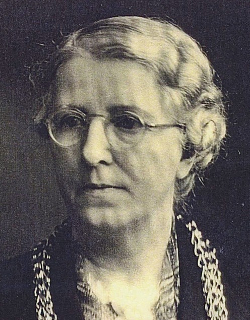
Kathleen Clarke (née Daly), a founder member of Cumann na mBan, and one of very few privy to the plans of the Easter Rising in 1916, is born in Limerick, County Limerick on April 11, 1878. She is the wife of Tom Clarke and sister of Edward “Ned” Daly, both of whom are executed for their part in the Rising. She is subsequently a Teachta Dála (TD) and senator with both Sinn Féin and Fianna Fáil, and the first female Lord Mayor of Dublin (1939–41).

Kathleen Daly is born into a prominent Fenian family, the third daughter of Edward and Catherine Daly. Her paternal uncle, John Daly, is at the time imprisoned for his political activities in Chatham and Portland Prisons in England. He is released in 1896 and returns home to Limerick. When Tom Clarke, who had been imprisoned with her uncle, is released in 1898 he travels to Limerick to receive the Freedom of the City and stays with the Daly family.

In 1901 Daly decides to emigrate to the United States to join Tom, who had been there since 1900, having secured work through his Fenian contacts. They marry on July 16, 1901, in New York City. Through his contacts in the Clan na Gael and the Irish Republican Brotherhood (IRB), Tom Clarke continues to be involved in nationalist activity. Kathleen joins the Gaelic League while in the United States and they return to Ireland in November 1907.

In 1914 Clarke becomes a founder member of Cumann na mBan. Her husband forbids her permission to take an active part in the 1916 Easter Rising as she has orders regardless of how the events pan out. As Tom Clarke is the first signatory of the Proclamation of the Irish Republic, he is chosen to be executed for his part in the Easter Rising. Her younger brother, Ned Daly, is also executed for taking part in the rising. She visits both of them before they are executed. After the Rising, Michael Collins establishes contact with her while in prison in his attempts to re-build the IRB network. She also sets up the Irish National Aid Fund to aid those who had family members killed or imprisoned as a result of the Easter Rising, closely aided by Sorcha MacMahon.

Clarke becomes a member of Sinn Féin and in 1917 is elected a member of the party’s Executive. During the German Plot she is arrested and imprisoned in Holloway Prison for eleven months. During the Irish War of Independence, she serves as a District Judge on the Republican Courts in Dublin. In 1919 she is elected as an Alderman for the Wood Quay and Mountjoy Wards of Dublin Corporation and serves until the Corporation is abolished in 1925.

Clarke is elected unopposed as a Sinn Féin TD to the Second Dáil at the 1921 elections for the Dublin Mid constituency. She is not re-elected at the 1922 general election, however, and supports the Anti-Treaty forces during the Irish Civil War. In 1926 she becomes a founder member of Fianna Fáil and has to resign from Cumann na mBan. She is re-elected to the short-lived 5th Dáil at the June 1927 election as a Fianna Fáil member for the Dublin Mid constituency but loses her seat at the September 1927 election and does not regain it. She is elected as one of six Fianna Fáil Senators to the Free State Seanad for nine years at the 1928 Seanad election under the leadership of Joseph Connolly. She remains a member of the Seanad until it is abolished in 1936.

In 1930 Clarke is elected to the re-constituted Dublin Corporation for Fianna Fáil along with Robert Briscoe, Seán T. O’Kelly, Thomas Kelly and Oscar Traynor. She serves as the first Fianna Fáil Lord Mayor of Dublin as well as the first female Lord Mayor, from 1939 to 1941. She opposes the Constitution of Ireland as she feels that several of its sections would place women in a lower position that they had been afforded in the Proclamation of the Irish Republic. She is criticised by many in the Fianna Fáil organisation as a result and, while she resigns from the Thomas Clarke Cumann, she remains a member of the Fianna Fáil Ard Chomhairle.

While Clarke does not support the Irish Republican Army (IRA) bombing in England during World War II, she appeals for those sentenced to death by the Irish Government to be given clemency. Ultimately this leads to her breaking with the party completely after her term as Lord Mayor finishes in 1941. She declines to stand as a Fianna Fáil candidate at the 1943 general election.

In 1966, as part of the celebrations of the Easter Rising, Clarke and other surviving relatives are awarded honorary Doctor of Law by the National University of Ireland. Following her death in Dublin on September 29, 1972, she receives the rare honour of a state funeral. She is buried at Deans Grange Cemetery, Dublin.


Leave a comment

Death of Kathleen Clarke, Founder of Cumann na mBan

kathleen-clarke

Kathleen Clarke (née Daly), a founder member of Cumann na mBan, and one of very few privy to the plans of the Easter Rising in 1916, dies in Dublin on September 29, 1972. She is the wife of Tom Clarke and sister of Edward “Ned” Daly, both of whom are executed for their part in the Rising. She is subsequently a Teachta Dála (TD) and senator with both Sinn Féin and Fianna Fáil, and the first female Lord Mayor of Dublin (1939–41).

Kathleen Daly is born into a prominent Fenian family in Limerick on April 11, 1878, the third daughter of Edward and Catherine Daly. Her paternal uncle, John Daly, is at the time imprisoned for his political activities in Chatham and Portland Prisons in England. He is released in 1896 and returns home to Limerick. When Tom Clarke, who had been imprisoned with her uncle, is released in 1898 he travels to Limerick to receive the Freedom of the City and stays with the Daly family.

In 1901 Daly decides to emigrate to the United States to join Tom, who had been there since 1900, having secured work through his Fenian contacts. They marry on July 16, 1901, in New York City. Through his contacts in the Clan na Gael and the Irish Republican Brotherhood (IRB), Tom Clarke continues to be involved in nationalist activity. Kathleen joins the Gaelic League while in the United States and they return to Ireland in November 1907.

In 1914 Clarke becomes a founder member of Cumann na mBan. Her husband forbids her permission to take an active part in the 1916 Easter Rising as she has orders regardless of how the events pan out. As Tom Clarke is the first signatory of the Proclamation of the Irish Republic, he is chosen to be executed for his part in the Easter Rising. Her younger brother, Ned Daly, is also executed for taking part in the rising. She visits both of them before they are executed. After the Rising, Michael Collins establishes contact with her while in prison in his attempts to re-build the IRB network. She also sets up the Irish National Aid Fund to aid those who had family members killed or imprisoned as a result of the Easter Rising, closely aided by Sorcha MacMahon.

Clarke becomes a member of Sinn Féin and in 1917 is elected a member of the party’s Executive. During the German Plot she is arrested and imprisoned in Holloway Prison for eleven months. During the Irish War of Independence, she serves as a District Judge on the Republican Courts in Dublin. In 1919 she is elected as an Alderman for the Wood Quay and Mountjoy Wards of Dublin Corporation and serves until the Corporation is abolished in 1925.

Clarke is elected unopposed as a Sinn Féin TD to the Second Dáil at the 1921 elections for the Dublin Mid constituency. She is not re-elected at the 1922 Irish general election, however, and supports the Anti-Treaty forces during the Irish Civil War. In 1926 she becomes a founder member of Fianna Fáil and has to resign from Cumann na mBan. She is re-elected to the short-lived 5th Dáil at the June 1927 Irish general election as a Fianna Fáil member for the Dublin Mid constituency but loses her seat at the September 1927 Irish general election and does not regain it. She is elected as one of six Fianna Fáil Senators to the Free State Seanad for nine years at the 1928 Seanad election under the leadership of Joseph Connolly. She remains a member of the Seanad until it is abolished in 1936.

In 1930 Clarke is elected to the re-constituted Dublin Corporation for Fianna Fáil along with Robert Briscoe, Seán T. O’Kelly, Thomas Kelly and Oscar Traynor. She serves as the first Fianna Fáil Lord Mayor of Dublin as well as the first female Lord Mayor, from 1939 to 1941. She opposes the Constitution of Ireland as she feels that several of its sections would place women in a lower position that they had been afforded in the Proclamation of the Irish Republic. She is criticised by many in the Fianna Fáil organisation as a result and, while she resigns from the Thomas Clarke Cumann, she remains a member of the Fianna Fáil Ard Chomhairle.

While Clarke does not support the Irish Republican Army (IRA) bombing in England during World War II, she appeals for those sentenced to death by the Irish Government to be given clemency. Ultimately this leads to her breaking with the party completely after her term as Lord Mayor finishes in 1941. She declines to stand as a Fianna Fáil candidate at the 1943 Irish general election.

In 1966, as part of the celebrations of the Easter Rising, Clarke and other surviving relatives are awarded honorary Doctor of Law by the National University of Ireland. Following her death on September 29, 1972, she receives the rare honour of a state funeral. She is buried at Deans Grange Cemetery, Dublin.


Leave a comment

Birth of Edward “Ned” Daly in Limerick

edward-ned-daly

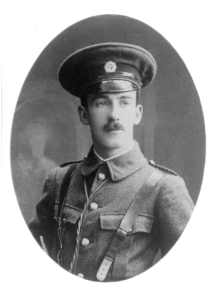
Edward “Ned” Daly, commandant of Dublin’s 1st battalion during the Easter Rising of 1916, is born on February 25, 1891, at 26 Frederick Street in Limerick.

Daly is the only son among the ten children born to Edward and Catherine Daly (née O’Mara). He is the younger brother of Kathleen Clarke whose husband, Tom Clarke, an active member of the Irish Republican Brotherhood. Daly’s father, Edward, a Fenian, dies five months before his son’s birth at the age of forty-one. His uncle, John Daly, is a prominent republican who had taken part in the Fenian Rising. It is through John Daly that Clarke meets his future wife.

Daly is educated by the Presentation Sisters at Sexton Street, the Congregation of Christian Brothers at Roxboro Road, and at Leamy’s commercial college. He spends a short time as an apprentice baker in Glasgow before returning to Limerick to work in Spaight’s timber yard. He later moves to Dublin where he eventually takes up a position with a wholesale chemist. He lives in Fairview with Kathleen and Tom Clarke.

Daly joins the membership of the Irish Republican Brotherhood, although the exact date is not known. In November 1913, Daly joins the newly founded Irish Volunteers and soon reaches the rank of captain. He is assiduous in his study of military manuals and the professionalism of his company gains the admiration of senior officers in actions such as the Howth gun-running of 1914. In March 1915, he is promoted to the rank of commandant of the 1st Battalion.

During the Easter Rising of 1916, Daly’s battalion is stationed in the Four Courts and areas to the west and north of the centre of Dublin. His battalion sees the most intense fighting of the rising. He surrenders his battalion on Saturday, April 29 after Patrick Pearse orders the surrender. He is held at Kilmainham Gaol.

Daly is given the same quick sham court-martial at Richmond Barracks as the other leaders of the Rising. In his trial, he claims that he was just following orders. Daly is convicted and is executed by firing squad on May 4, 1916, at the age of 25.

Bray railway station was renamed Bray Daly railway station in his honour in 1966.