Christian is considered one of the best Irish lawyers of his time, but as a judge, he regularly courts controversy. His bitter and sarcastic temper and open contempt for most of his colleagues leads to frequent clashes both in Court and in the Press. Though he is rebuked for misconduct several times by the House of Commons, no serious thought is given to removing him from office.
Christian’s early years at the Bar are not successful, and he admits to being near to despair at times about his prospects. His practice lays in the Court of Chancery, with procedures that are extremely complex and he finds at first almost unintelligible. Gradually he masters the intricacies of Chancery practice becoming a leader of the Bar, and took silk in 1841. It is said that his expertise in Chancery procedures leave even the Lord Chancellor himself quite unable to argue with him.
Christian is appointed Law Adviser to the Lord Lieutenant of Ireland, an influential post which involves assisting the Attorney-General and Solicitor-General in advising the Crown in 1850, but resigns after only a few months on the grounds that it interferes with his private practice. He is appointed Third Sergeant later the same year but resigns in 1855, allegedly because he is disappointed at not receiving further promotion. Promotion does in time come his way. He is appointed Solicitor-General the following year and a judge of the Court of Common Pleas in 1858. He is unusual in having no strong political loyalty; it is said that his political allegiance is known only to himself.
As a judge of the Court of Common Pleas, Christian gets on well with his colleagues, and any dissenting judgements he writes are short and courteous. It is after his appointment as a Lord Justice of Appeal in Chancery in 1867 that his behaviour begins to attract unfavourable comment, as he goes out of his way to court controversy on a wide variety of topics.
His criticisms of legal rulings and arguments are invariably delivered in the form of a personal attack. Such exchanges are frequently continued through the letters page of The Times. Conservative in politics, he objects to the appointment of Thomas O’Hagan as Lord Chancellor in December 1868, dismissing him as a liberal “political necessity.” He goes to great lengths to point out legal flaws in the Landlord and Tenant (Ireland) Act 187, to the great annoyance of the Prime Minister, William Ewart Gladstone. His final public diatribe comes in 1877 when he launches an attack on the quality of law reporting, dismissing the contents of the Irish Reports as “a mass of utterly worthless rubbish.” He is vilified in the legal press and is the subject of cartoons in Dublin satirical journals. Pleading deafness, he retires in December 1878.
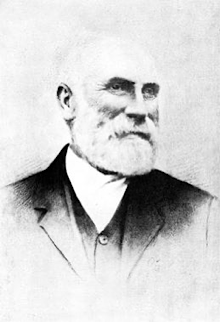
Kettle is one among six children of Thomas Kettle, a prosperous farmer, and his wife, Alice (née Kavanagh). His maternal grandmother, Mary O’Brien, had smuggled arms to United Irishmen in the district in 1798, while her future husband, Billy Kavanagh, had been a senior figure in the movement. He is educated at Ireland’s most prestigious Catholicboarding school, Clongowes Wood College. His education is cut short when he is called to help full-time on the farm. Though an autodidact and always a forceful writer, he is beset later by an exaggerated sense of his “defective education and want of talking powers.” Fascinated by politics, he enjoys the repeal excitement of 1841–44 and in his late teens speaks once or twice at Tenant Right League meetings in Swords. Through the 1850s and most of the 1860s he sets about expanding the family farm into a composite of fertile holdings in Swords, St. Margaret’s, Artane, and Malahide (c.150 acres). Getting on well with the Russell-Cruise family of Swords, his first landlords, he benefits from a favourable leasehold arrangement on their demesne in the early 1860s. The farm is mostly in tillage, though Kettle also raises some fat cattle and Clydesdale horses, which he eventually sells to Guinness’s.
Kettle first enters politics in 1867, when he disagrees with John Paul Byrne of Dublin Corporation in public and in print over the right of graziers to state aid during an outbreak of cattle distemper. In 1868, he joins an agricultural reform group initiated by Isaac Butt. He becomes friendly with Butt and later claims to have converted him to support tenant-right. His memoirs, which are somewhat egocentric, contain a number of such questionable claims. It is, however, the case that he habitually writes up, for his own use, cogent summaries of the direction of current political tendencies, which sometimes become useful confidential briefs for Butt and later Charles Stewart Parnell. He is among the published list of subscribers to the Home Rule League in July 1870.
In 1872, disappointed by the Landlord and Tenant (Ireland) Act 1870, Kettle organises a Tenants’ Defence Association (TDA) in north County Dublin, soon sensing the need for a central body to coordinate the grievances of similar groups around the country. The Dublin TDA effectively acts as this central body, under his guidance as honorary secretary. At the 1874 United Kingdom general election in Ireland, the Dublin TDA decides to challenge the electoral control of certain corporation interests in County Dublin. Kettle secures the cautious approval of CardinalPaul Cullen for any candidate supporting the principle of denominational education. He is also one of a deputation to ask Parnell to fight the constituency, which the latter loses. He becomes closely acquainted with Parnell, who frequently attends Dublin TDA meetings after his election for Meath in April 1875.
Taking a sombre view of the threat of famine in the west of Ireland after evidence of crop failure appears in early summer 1879, Kettle calls a conference of TDA delegates at the European Hotel in Bolton Street, Dublin, in late May. After a heated debate in which a proposal for a rent strike is greatly modified, Parnell comes to seek Kettle’s advice on whether to become involved in the evolving land agitation in County Mayo. Kettle urges him to go to the Westport meeting set for June 8, 1879, and claims later to have stressed in passing that “if you keep in the open you can scarcely go too far or be too extreme on the land question.” If the incident is correctly recounted, this is a most important statement, which virtually defines Parnell’s oratorical strategy throughout the land war. In October 1879, Kettle agrees to merge the TDA with a new Irish National Land League, set up at a meeting in the Imperial Hotel, Dublin, chaired by Kettle. As honorary secretary of the Land League, Kettle frankly admits that he is able to attend meetings without “the necessity of working.” His attendance is, however, among the most regular of all League officers, with him taking part in 73 of 107 meetings scheduled between December 1879 and October 1881.
In March 1880, Kettle disputes Michael Davitt‘s reluctance to use League funds in the general election. He canvasses vigorously together with Parnell in Kildare, Carlow, and Wicklow and is later pressed by his party leader into standing for election in County Cork, though aware that the local tenant movement has already prepared their own candidates. His association with Parnell antagonises the catholic hierarchy in Munster, who issues a condemnation of his candidacy. The hurly-burly of this election creates the persistent impression that Kettle is anti-clerical in politics, and he is defeated by 151 votes.
On a train journey to Ballinasloe in early April 1880, Kettle confides to Parnell his idea that land purchase can be facilitated by the recovery of tax allegedly charged in excess on Ireland by the British government since the act of union. At League meetings in June and July 1880, he advances his “catastrophist” plan: to cease attempts to prevent the development of an irresistible crisis among the Irish smallholding population, by diverting the application of League funds from general relief solely to the aid of evicted tenants, who might be temporarily housed “encamped like gypsies and the land lying idle,” in the belief that the British government will thereby be compelled to introduce radical remedial legislation. Smallholders do not have enough faith in either League or parliamentary politicians to listen.
At a meeting of the League executive in London and in Paris, before and after Davitt’s arrest on February 3, 1881, Kettle presents his plan that the parliamentary party should, if faced with coercive legislation, withdraw from Westminster, “concentrate” in Ireland, and call a general rent strike. Republicans on the League executive continually find themselves embarrassed by Kettle’s radical calls to action motivated solely by the project of agrarian reform. Parnell is later supposed to have lamented party failure to execute the plan at this juncture.
Kettle is arrested in June 1881 for calling for a collective refusal of rent. After two weeks in Naas jail he is transferred to Kilmainham Gaol, where in October he is, with some misgivings, one of the signatories to the No Rent Manifesto. Discharged from Kilmainham in late December 1881 owing to poor health, he returns principally to work on the family farm for most of the 1880s, though he claims to have formulated a draft solution for the plight of the agricultural labourer and “pushed it through” in correspondence with Parnell. He reemerges in 1890 to defend Parnell after the divorce scandal breaks. Attempting to establish a new ”centre” party independent of extreme Catholic and Protestant interests, he stands for election as a Parnellite at the 1891 County Carlow by-election, where he is comprehensively beaten, having endured weeks of insinuating harangues by Tim Healy, and raucous mob insults to the din of tin kettles bashed by women and children at meetings around the county. He is intermittently involved in County Dublin politics in the 1890s and 1900s and maintains a brusque correspondence on matters of the day in the national press.
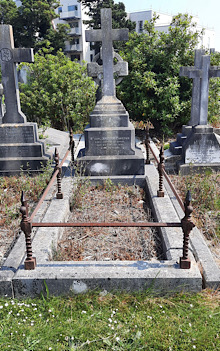
Kettle dies on September 22, 1916, at his residence, St. Margaret’s, County Dublin, anguished by the death on September 9 of his brilliant son, Tom Kettle, near the village of Ginchy during the Battle of the Somme. He is buried at St. Colmcille’s cemetery, Swords.
Kettle marries Margaret McCourt, daughter of Laurence McCourt of Newtown, St. Margaret’s, County Dublin, farmer and agricultural commodity factor. They have five sons and six daughters.
The Irish National Land League is an Irish political organisation of the late 19th century which organises tenant farmers in their resistance to exactions of landowners. Its primary aim is to abolish landlordism in Ireland and enable tenant farmers to own the land they work on. The period of the Land League’s agitation is known as the Land War.
The Irish National Land League is founded at the Imperial Hotel in Castlebar, County Mayo, on October 21, 1879. At that meeting Charles Stewart Parnell, the prominent Home RuleMember of Parliament, is elected president of the league. Andrew Kettle, Michael Davitt and Thomas Brennan are appointed as honorary secretaries. This unites practically in a single organisation all the different strands of land agitation and tenant rights movements on the nationalist side of the increasingly frozen sectarian-political divide in Ireland.
The government had introduced the Landlord and Tenant (Ireland) Act 1870, the first Land Act, which proves largely ineffective. It is followed by further marginally more effective Irish Land Acts of 1880 and 1881. These establish the Irish Land Commission that starts to reduce some rents. The passage of the second Land Act in 1881 fails to mollify many of the leaders of the Land League, mainly due to the fact that close to 300,000 tenants behind in their rents are excluded from its benefits. Parnell together with all of his party lieutenants, including Father Eugene Sheehy, known as “the Land League priest,” go into a bitter verbal offensive.
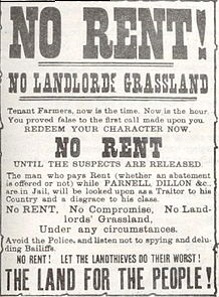
William Ewart Gladstone has them arrested and imprisoned in Kilmainham Gaol in October 1881 under the Irish Coercion Act for “sabotaging the Land Act,” from where the No Rent Manifesto is issued, calling for a national tenant farmer rent strike until “constitutional liberties” are restored, and the prisoners freed. It has a modest success In Ireland and mobilizes financial and political support from the Irish diaspora. Many other leaders of the League, including Michael Davitt, whose name is added to the bottom of the document by others, and other moderate elements in Ireland oppose this move.
Perhaps sensing weakness in the League organization, the government outlaws the League on October 20, 1881, but the work of the League is then continued by the Ladies’ Land League, which had been founded earlier by Parnell’s sister Anna. In 1882, Parnell is released from jail after reaching a written compact with the government, which extends the benefits of the Land Act to those excluded earlier, while Parnell pledges to help end land-agitation violence in Ireland and cooperate with Gladstone’s Liberal party.
In October 1882, Parnell forms the Irish National League, replacing the Land League. The Land League passes into history, but it has helped show Irish peasants that if they all stand together there is strength in numbers.
(Pictured: Irish land League poster dating from the 1880s)
Gray is the third son of John and Elizabeth Gray of Mount Street. He is educated at Trinity College Dublin and obtains the degree of M.D. and Master of Surgery at the University of Glasgow in 1839. Shortly before his marriage in the same year, he settles in Dublin and takes up a post at a hospital in North Cumberland Street. He is admitted as a licentiate of the Royal College of Physicians in due course.
Gray is publicly minded and contributes to periodicals and the newspaper press. In 1841, he becomes joint proprietor of the Freeman’s Journal, a nationalist paper which is then published daily and weekly. He acts as political editor of the Journal for a time, before becoming sole proprietor in 1850. As owner, he increases the newspaper’s size, reduces its price and extends its circulation.
Gray enters politics at a relatively young age and attaches himself to Daniel O’Connell‘s Repeal Association. As a Protestant Nationalist, he supports the movement for the repeal of the Acts of Union with Britain. In October 1843, he is indicted with O’Connell and others in the Court of the Queen’s Bench in Dublin on a charge of sedition and “conspiracy against the queen.” The following February, he, together with O’Connell, is condemned to nine months imprisonment, but in early September 1844 the sentence is remitted on appeal. The trial has a strong element of farce, as the hot-tempered Attorney-General for Ireland, Sir Thomas Cusack-Smith, challenges Gray’s counsel, Gerald Fitzgibbon, to a duel, for which he is sternly reprimanded by the judges. From then on Gray is careful to distance himself from the advocacy of violence in the national cause, though he is sympathetic to the Young Ireland movement without being involved in its 1848 rebellion. Through the growing influence of the Freeman’s Journal, he becomes a significant figure in Dublin municipal politics. He is also active in national politics during an otherwise quiet period of Irish politics up until 1860. With the resurgence of nationalism after the famine, he helps to organise the Tenant’s League founding conference in 1850, standing unsuccessfully as the League’s candidate for Monaghan in the 1852 United Kingdom general election.
Later Gray originates and organises the “courts of arbitration” which O’Connell endeavours to substitute for the existing legal tribunals of the country. Following O’Connell’s death, in 1862 he inaugurates an appeal for subscriptions to build a monument to O’Connell on Sackville Street (now O’Connell Street). Independent from O’Connell, he continues to take a prominent part in Irish politics and in local affairs.
In municipal politics, Gray is elected councillor in 1852 and alderman of Dublin Corporation and takes an interest in the improvement of the city. As chairman of the committee for a new water supply to Dublin, he actively promotes what becomes the “Vartry scheme.” The Vartry Reservoir scheme involves the partial redirection and damming of the River Vartry in County Wicklow, and the building of a series of water piping and filtering systems (and related public works) to carry fresh water to the city. This work is particularly important in the improvement of conditions in the city, and to public health, as it improves sanitation and helps reduce outbreaks of cholera, typhus and other diseases associated with contaminated water. On the opening of the works on June 30, 1863, he is knighted by the Earl of Carlisle, then Lord Lieutenant of Ireland. Partially in recognition of these efforts, he is later be nominated for the position of Lord Mayor of Dublin for the years 1868–69, but he declines to serve.
In national politics, the Liberal government at the time is keen to conciliate an influential representative of the moderate nationalists to support British Liberalism and who will resume O’Connell’s constitutional agitation. In an unusual alliance with the CatholicArchbishop of Dublin, Paul Cullen, a man devoted to O’Connell’s memory, Gray’s newspaper exploits this shift in government policy. It supports the archbishop’s creation, the National Association of Ireland, established in 1864 with the intention of providing a moderate alternative to the revolutionary nationalism of the Fenians. The Freeman’s Journal adopts the aims of the Association as its own: it advocates the disestablishment of the AnglicanChurch of Ireland, reform of the land laws, educational aspirations of Irish Catholicism and free denominal education.
In the 1865 United Kingdom general election Gray is elected MP for Kilkenny City as a Liberal candidate. In this capacity he campaigns successfully at Westminster and in Ireland for the reforms also advocated in his paper. His newspaper’s inquiry into the anomalous wealth of the established church amidst a predominately Catholic population contributes considerably to William Ewert Gladstone‘s Irish Church Act 1869. He helps to furnish the proof that Irish demands are not to be satisfied by anything other than by radical legislation. He fights for the provision in the new Landlord & Tenant (Ireland) Act 1870 for fixity of tenure, which Gladstone eventually concedes. The Act’s other weaknesses, however, result in its failure to resolve the “land question,” the accompanying coercion, the disappointment with Gladstone’s handling of the university question and national education, causing Gray to deflect from the Liberals and become mistrusted in Britain. In the 1874 United Kingdom general election he is re-elected as a Home Rule League MP for Kilkenny, joining its Home Rule majority in the House of Commons, and holds his seat until his death the following year.
Gray dies at Bath, Somerset, England, on April 9, 1875. His remains are returned to Ireland, and he is honoured with a public funeral at Glasnevin Cemetery. Almost immediately afterwards public subscriptions are sought for the erection in O’Connell Street, of a monument to Gray. The monument is completed in 1879 and is dedicated to the “appreciation of his many services to his country, and of the splendid supply of pure water which he secured for Dublin.” His legacy also includes his contributions to the passage of the Irish Church and Land Bills, his advocacy for tenant’s rights and his support of the Home Rule movement.
(Pictured: Statue to Sir John Gray on Dublin’s O’Connell Street, designed by Thomas Farrell and unveiled on June 24, 1879. Photo credit: Graham Hickey)
Kavanagh’s mother insists that he be brought up and have opportunities like any other child and places him in the care of the doctor Francis Boxwell, who believes that an armless and legless child can live a productive life. Kavanagh learns to ride horses at the age of three by being strapped to a special saddle and managing the horse with the stumps of his arms. With the help of the surgeon Sir Philip Crampton, Lady Harriet has a mechanical wheelchair constructed for her son, and encourages him to ride horses and engage in other outdoor activities. He also goes fishing, hunting, draws pictures and writes stories, using mechanical devices supplementing his physical capacities. His mother teaches him how to write and paint holding pens and brushes in his mouth.
In 1846, Lady Harriet takes three of her children, Thomas, Harriet and Arthur, traveling to the Middle East for two years. Kavanagh nearly drowns in the Nile when he falls in while fishing and is rescued by a local antiquities salesman who dives in to pull him out.
In 1849, Kavanagh’s mother discovers that he has been having affairs with girls on the family estate, so she sends him into exile to Uppsala, and then to Moscow with his brother and a clergyman, whom he comes to hate. He travels extensively in Egypt, Anatolia, Persia, and India between 1846 and 1853. In India, his letter of credit from his mother is cancelled when she discovers that he has spent two weeks in a harem, so he persuades the East India Company to hire him as a despatch rider. Other sources say that this is due to the death of his eldest brother, Charles, of tuberculosis in December 1851, which leaves him with only 30 shillings.
Kavanagh dies of pneumonia in London at the age of 58 on December 25, 1889. He is buried in Ballicopagan cemetery. He is succeeded in the title of The MacMurrough by his son, Walter MacMurrough Kavanagh, who also serves as MP for County Carlow from 1908 to 1910. The 1901 novel The History of Sir Richard Calmady, written by Lucas Malet (pseudonym of Mary St. Leger Kingsley), is based on his life.
Kavanagh marries his cousin, Mary Frances Forde-Leathley, in 1855. Assisted by his wife, he is a philanthropic landlord, active county magistrate, and chairman of the board of guardians. Together, they have seven children.
Christian is considered one of the best Irish lawyers of his time, but as a judge, he regularly courts controversy. His bitter and sarcastic temper and open contempt for most of his colleagues leads to frequent clashes both in Court and in the Press. Though he is rebuked for misconduct several times by the House of Commons, no serious thought seems to be given to removing him from office.
Christian is the third son of George Christian, a solicitor, and his wife Margaret Cormack. He is educated at the Trinity College Dublin, enters Gray’s Inn in 1831 and is called to the Bar of Ireland in 1834. He marries Mary Thomas in 1859 and they have four sons and four daughters. He lives at Ravenswell, Bray, County Wicklow.
Christian’s early years at the Bar are not successful, and he admits to being near to despair at times about his prospects. His practice lays in the Court of Chancery (Ireland). Chancery procedures are extremely complex, and he finds them at first almost unintelligible. Gradually he masters the intricacies of Chancery practice and becomes a leader of the Bar, taking silk in 1841. It is said that his expertise in Chancery procedures leaves even the Lord Chancellor himself quite unable to argue with him.
Christian is appointed Law Adviser to the Lord Lieutenant of Ireland, an influential post which involves assisting the Attorney General and Solicitor General in advising the Crown in 1850, but resigns after only a few months, on the ground that it interferes with his private practice. He is appointed Third Sergeant later the same year but resigns in 1855, allegedly because he is disappointed at not receiving further promotion. Promotion does in time come his way. He is appointed Solicitor General the following year and a judge of the Court of Common Pleas in 1858. He is unusual in having no strong political loyalty. It is said that his political allegiance is known only to himself.
As a judge of the Court of Common Pleas, Christian gets on well with his colleagues, and any dissenting judgements he writes are short and courteous. It is after his appointment as a Lord Justice of Appeal in Chancery in 1867 that his behaviour begins to attract unfavourable comment, as he goes out of his way to court controversy on a wide variety of topics.
Christian develops a deep contempt for the Irish Reports, castigating them in open Court as “nonsense,” “worthless rubbish” and “disjointed twaddle.” All attempts by colleagues to get him to moderate his language fail. He threatens to refuse to let his judgements be reported, and in his last years, his relations with the law reporters are so bad that they simply publish their uncorrected notes of his decisions rather than sending them to the judge for revision.
In 1867 a new office of Vice-Chancellor for Ireland is created. It is filled throughout its existence by one man, Hedges Eyre Chatterton, who retires in 1904. Despite his length of service, he is not considered a judge of the first rank, and Christian evidently combines feelings of professional contempt with a personal dislike for him. Christian usually votes on appeals to overturn his judgments, and frequently adds personal attacks on Chatterton, despite protests from his colleagues. The feud between the two judges reaches the Press in 1870 when The Irish Times, without naming them, quotes one judge’s opinion that another is “lazy, stupid, conceited and dogmatic.” Although Christian denies it, it is universally believed that he is the author of the remarks, which are aimed at Chatterton. Chatterton is fortunate in enjoying the support of the Lord Chancellor of Ireland, Thomas O’Hagan, 1st Baron O’Hagan, who is also on bad terms with Christian.
Christian had worked well with Abraham Brewster, O’Hagan’s predecessor, whom he respected. For O’Hagan on the other hand, he feels the same dislike and contempt which he felt for Chatterton. Although they served together in the Court of Common Pleas without any obvious conflict, Christian considers O’Hagan’s appointment as Lord Chancellor to be a purely political act, and that he is unfit to be either head of the judiciary or an appeal judge in Chancery. He also complains of what he sees as O’Hagan’s laziness, which puts an extra burden on him. During O’Hagan’s first term as Chancellor, Christian subjects him to constant criticism. Unwisely he does not confine these attacks to the Courtroom but publishes numerous pamphlets, which is widely seen as improper conduct in a judge. When O’Hagan becomes Chancellor for the second time, a friend congratulates him on escaping from “the misnamed Christian” who had retired two years earlier.
It is probably Christian’s feud with O’Hagan which leads to his extraordinary decision to publicly attack the House of Lords for reversing, by a majority including O’Hagan, his judgment in O’Rorke v Bolingbroke. In a letter to The Times in 1877, whose content has been described as “astounding,” he questions the Law Lords knowledge of equity. While he singles out Lord Blackburn for criticism, it is likely that he also intends to harm O’Hagan’s reputation.
A major source of contention between Christian and O’Hagan is the Landlord and Tenant (Ireland) Act 1870, which O’Hagan steers through Parliament. The Act provides for compensation for tenants in the event of eviction. Christian, though he is not a landowner and is not as a rule much interested in politics, objects strongly to the policy of the Act, which he believes to be most unjust to landlords. His attacks from the Bench on the Act lead to serious rebukes both from the House of Commons and from the Press, which comment on the impropriety of a judge attacking an Act of Parliament, which it is his duty to enforce.
O’Hagan’s retirement does nothing to lessen Christian’s ill-temper. Other judges come in for attack, including Lord Chief Justice of IrelandJames Whiteside, whom he accuses of speaking constantly on matters of which he is ignorant. In his later years, he seems to be a lonely and isolated figure. His vigorous opposition to the Supreme Court of Judicature (Ireland) Act 1877 is entirely unsuccessful. A feeling of isolation may partly explain his decision to retire, though certainly his increasing deafness also plays a part.
V.T.H. Delaney praises Christian as a great master of equity, a man of great learning and a judge with a great desire to see justice done, but he does not deny that Christian loved controversy. Even his supporters spoke of “arrows too sharply pointed.” Critics spoke of his “spirit of personal sarcasm, cold, keen and cynical.” No doubt Christian was genuinely concerned to uphold high standards of judicial conduct, but as Daire Hogan points out, his own conduct struck most observers as far more improper than anything he complained of in others.
The Irish National Land League, one of the most important political organizations in Irish history which seeks to help poor tenant farmers, is founded at the Imperial Hotel in Castlebar, County Mayo, on October 21, 1879. Its primary aim is to abolish landlordism in Ireland and enable tenant farmers to own the land they work on. The national organization is modeled on the Land League of Mayo, which Michael Davitt had helped found earlier in the year.
At the founding meeting Charles Stewart Parnell is elected president of the league. Davitt, Andrew Kettle, and Thomas Brennan are appointed as honorary secretaries. This unites practically all the different strands of land agitation and tenant rights movements under a single organisation.
Parnell, Davitt, John Dillon, and others including Cal Lynn then go to the United States to raise funds for the League with spectacular results. Branches are also set up in Scotland, where the Crofters Party imitates the League and secures a reforming Act in 1886.
The government introduces the Landlord and Tenant (Ireland) Act 1870, which proves largely ineffective. It is followed by the marginally more effective Land Acts of 1880 and 1881. These establish a Land Commission that starts to reduce some rents. Parnell together with all of his party lieutenants including Father Eugene Sheehy, known as “the Land League priest,” go into a bitter verbal offensive and are imprisoned in October 1881 under the Protection of Person and Property Act 1881 in Kilmainham Gaol for “sabotaging the Land Act.” It is from here that the No-Rent Manifesto is issued, calling for a national tenant farmer rent strike until “constitutional liberties” are restored and the prisoners freed. It has a modest success In Ireland and mobilizes financial and political support from the Irish Diaspora.
Although the League discourages violence, agrarian crimes increase widely. Typically, a rent strike is followed by eviction by the police and the bailiffs. Tenants who continue to pay the rent can be subject to a boycott by local League members. Where cases go to court, witnesses would change their stories, resulting in an unworkable legal system. This in turn leads on to stronger criminal laws being passed that are described by the League as “Coercion Acts.”
The bitterness that develops helps Parnell later in his Home Rule campaign. Davitt’s views as seen in his famous slogan: “The land of Ireland for the people of Ireland” is aimed at strengthening the hold on the land by the peasant Irish at the expense of the alien landowners. Parnell aims to harness the emotive element, but he and his party are strictly constitutional. He envisions tenant farmers as potential freeholders of the land they have rented.
The Bill, like his Landlord and Tenant (Ireland) Act 1870, is very much the work of Gladstone, who excludes both the Irish MPs and his own ministers from participation in the drafting.
If passed, the 1886 Bill would create a unicameral assembly consisting of two Orders which could meet either together or separately. The first Order would consist of the 28 Irish representative peers plus 75 members elected through a highly restricted franchise. It could delay the passage of legislation for up to 3 years. The second Order would consist of either 204 or 206 members. All Irish MPs would be excluded from Westminster altogether.
Executive power would be possessed by the Lord Lieutenant of Ireland whose executive would not be responsible to either Order.
Britain would still retain control over a range of issues including peace, war, defence, treaties with foreign states, trade, and coinage. No special provision would be made for Ulster. Britain would retain control of the Royal Irish Constabulary (RIC) until it deems it safe for control to pass to Dublin. The Dublin Metropolitan Police would pass to Irish control.
When the bill is introduced, Charles Stewart Parnell has mixed reactions. He says that it has great faults but is prepared to vote for it. In his famous Irish Home Rule speech, Gladstone beseeches Parliament to pass it and grant Home Rule to Ireland in honour rather than being compelled to one day in humiliation. Unionists and the Orange Order are fierce in their resistance. For them, any measure of Home Rule is denounced as nothing other than Rome Rule.
The vote on the Bill takes place on 8 June 1886, after two months of debate. The Government of Ireland Bill is defeated by a vote of 341-311. In the staunchly loyalist town of Portadown, the so-called “Orange Citadel” where the Orange Order is founded in 1795, Orangemen and their supporters celebrate the Bill’s defeat by “Storming the Tunnel.”
Parliament is dissolved on June 26 and the U.K. general election of 1886 is called. Historians have suggested that the 1886 Home Rule Bill was fatally flawed by the secretive manner of its drafting, with Gladstone alienating Liberal figures like Joseph Chamberlain who, along with a colleague, resigned in protest from the ministry, while producing a Bill viewed privately by the Irish as badly drafted and deeply flawed.




 seamus dubhghaill