seamus dubhghaill

Promoting Irish Culture and History from Little Rock, Arkansas, USA


Leave a comment

The Funeral of Joe B. O’Hagan, Founding Member of the Provisional IRA

Leading Sinn Féin members are among the 5,000 people who attend the funeral of Joe B. O’Hagan, a founding member of the Provisional Irish Republican Army (PIRA), on April 26, 2001. Party president Gerry Adams gives the oration at the graveside when the leading republican figure is buried in Lurgan, County Armagh, Northern Ireland.

O’Hagan, known to all and sundry simply as JB, dies on Monday, April 23, 2001, in the town in which he was born almost 79 years previously and from which he and his wife Bernadette had been exiled for 25 years during the current phase of the conflict. As befitted a soldier of Óglaigh na hÉireann, a uniformed IRA Guard of Honour attends O’Hagan’s body in the wake house and it is six of his comrades who carry the coffin, bedecked in the Irish Tricolour and beret and gloves, from the family home on the first section of its journey to St. Paul’s Chapel for the Funeral Mass.

Up to 2,000 people attend the funeral and businesses in the bustling North Armagh town close along the route as a mark of respect. At St. Colman’s Cemetery just outside the town, Sinn Féin President Gerry Adams pays fulsome tribute to a republican who had been active from the 1940s into the 1990s and right up to his sudden death. Adams notes O’Hagan’s strong faith and welcomes the tribute paid during the Funeral Mass to JB’s republican beliefs and exploits. He adds, however, that it is high time the Catholic hierarchy reverses its directive banning the Tricolour from republican funerals in church premises. “Our National Flag should be allowed to stay on the coffin for the entire ceremony,” he says.

“I have always associated JB with Bernadette,” he tells those gathered at the graveside, “even though they were apart for so many years. They were married for 52 years, and Bernadette told me yesterday that she wouldn’t change a day of it, that she was proud of him and of his life.”

“In many ways he died the way he had lived, very quietly, modestly, not complaining, unassuming to the end. He was one of the most respected republicans of our time. There is no greater tribute that can be paid to any man or woman than to be known as a decent human being and Joe B. was that and more.”

Adams goes on to briefly record the extraordinary history of O’Hagan’s involvement in the republican struggle, as soldier and political activist, since he first joined the IRA in 1940, including that famous 1973 escape from Mountjoy Jail by helicopter, accompanied by Kevin Mallon and the late Seamus Twomey.

“JB grew up in the 1920s in a state abandoned by the Irish Government, where nationalists were subjected to the B-Specials and the Special Powers Act. He stood up at a time when standing up was a very very dangerous thing to do,” says Adams. “It is a wonder to me that he was active in every decade from the 1940s on. There is a mighty man!”

“He also personifies why Irish republicanism has never been defeated. He was an example of a physical force republican who was prepared to support and exhaust other means of struggle. He saw armed struggle as a means rather than as an end, but he never ceased to be an unrepentant republican and to work always for the establishment of an Irish Republic based on national rights for the people of this island. He supported the Good Friday Agreement not as an end but as an effort to build a new accord with our opponents and enemies. Political unionism has found it very difficult to deal with this strategy.”

“Joe B was very philosophical and very wise. He is representative of that republican element who never broke a promise in their lives.”

“Those who seek to defeat the republican struggle by blaming the IRA for everything need to know that none of this will work. That is because of the work that JB and people like him put into this struggle. We won’t be worn down or accept anything less than our full rights. The message for David Trimble and Tony Blair is that it is impossible for us to accept inequality, injustice and second-class citizenship. That is the past. We are looking to the future.”

“Joe B’s passing has left a huge gap, but we should celebrate his life. He touched so many of us. Joe B kept us right. The flame he kept flickering in the lean times is burning brightly now because of his contribution.”

Adams extends his solidarity and sympathy and that of all those present to Bernadette, to O’Hagan’s children, Barry, Kevin, Fintan, Siobhán, Felim and Dara, to his eleven grandchildren and four great-grandchildren, his sisters and entire family circle.

At the end of the Funeral Mass for O’Hagan, the O’Hagan family lead by Joe’s son Fintan place the Irish Tricolour on the coffin before the remains are taken from the chapel. This act is borne out of anger and frustration.

O’Hagan was a republican, an honourable man and a religious man who went to Mass every day. So, his family feels that the Catholic Church, that was as much an influence on O’Hagan’s life as was his republicanism, should respect his wish and allow his coffin to be draped in the Tricolour. The family appeals to the Catholic Church authorities and Adams intercedes on their behalf, but they are refused the right to grant O’Hagan his wish that the Flag not be removed from his coffin.

Dara O’Hagan, the Sinn Féin Northern Ireland Assembly member for Upper Bann, tells the bishop that by sticking to their old policy the Catholic Church is criminalising republicanism and indeed criminalising her father.

Also, the Catholic hierarchy misses a great opportunity to heal a hurt that has existed for over 20 years, when the remains of IRA Volunteer Kevin `Dee’ Delaney were refused entry into Corpus Christi Church in Springhill while bearing the Irish Tricolour. The rancour and hurt felt by republicans over this slight, coming as it does, in conjunction with the British Government’s attempts to criminalise republicanism, has long been an insult that republicans have resented. After all, churches are the people’s property as it is their money and effort that build them. The people of Springhill and the Greater Ballymurphy area paid £5 a brick for the Corpus Christi building and the Delaney family no doubt contributed to that fund.

By taking matters into their own hands, the O’Hagan family claims back some ground for republicans and sends a message to the bishops that they have a part to play in this new political era and that they need to look at their attitude to republicanism.

O’Hagan’s wife Bernadette says that as Fintan draped the Irish Trocolour on Joe’s coffin and the church burst into spontaneous applause, her heart was lifted. “I was so glad, and I walked down the aisle with a smile on my face,” said Bernadette.

(From: “Unassuming and mighty man laid to rest” by Martin Spain, An Phoblacht Republican News, May 3, 2001)


Leave a comment

Birth of George William Russell, Writer, Poet & Nationalist

George William Russell, Irish writer, editor, critic, poet, painter and Irish nationalist, is born on April 10, 1867, in Lurgan, County Armagh, in what is now Northern Ireland. He writes with the pseudonym Æ (often written AE or A.E.). He is also a writer on mysticism, and a central figure in the group of devotees of theosophy which meets in Dublin for many years. He takes his pseudonym from a proofreader’s query about his earlier pseudonym, “AEon.”

Russell is the second son of Thomas Russell and Mary Armstrong. His father, the son of a small farmer, becomes an employee of Thomas Bell and Co., a prosperous firm of linen drapers. The family relocates to Dublin, where his father has a new offer of employment, when he is eleven years old.

Russell is educated at Rathmines School and the Metropolitan School of Art, where he begins a lifelong, if sometimes contentious, friendship with W. B. Yeats. In the 1880s, he lives at the Theosophical Society lodge at 3 Upper Ely Place, sharing rooms with Hamilton Malcolm Magee, the brother of William Kirkpatrick Magee.

Following his time at the Metropolitan School of Art, Russell becomes an accounts clerk in a drapery store but leaves in 1897 to organize agricultural cooperatives. Eventually he becomes editor of the periodicals Irish Homestead (1905–23) and The Irish Statesman (1923–30). In 1894 he publishes the first of many books of verse, Homeward: Songs by the Way, which establishes him in what is known as the Irish Literary Revival. His first volume of Collected Poems appears in 1913 and a second in 1926. He maintains a lifelong interest in theosophy, the origins of religion, and mystical experience. Candle of Vision: Autobiography of a Mystic (1918) is the best guide to his religious beliefs.

At the turn of the 20th century, Russell is considered by many to be the equal of Yeats, but he does not continue to grow and develop as Yeats does. He is prolific and versatile, but many critics find his poetry facile, vague, and monotonous, with “rather too much of the Celtic Twilight” in it.

Russell designs the famous Starry Plough flag for the Irish Citizen Army, which is unveiled on April 5, 1914, and flown during the Easter Rising in April 1916.

Russell, who had become increasingly unhappy in the Irish Free State which, according to Yeats, he called “a country given over to the Devil,” moves to England soon after his wife’s death in 1932. Despite his failing health he goes on a final lecture tour in the United States but returns home utterly exhausted. He dies of cancer in Bournemouth, England, on July 17, 1935. His body is brought back to Ireland, and he is interred in Mount Jerome Cemetery, Dublin.


Leave a comment

Birth of James Logan, 14th Mayor of Philadelphia

James Logan, a Scotch-Irish colonial American statesman, administrator, and scholar who serves as the fourteenth mayor of Philadelphia and holds a number of other public offices, is born in Lurgan, County Armagh, in what is now Northern Ireland, on October 20, 1674. He serves as colonial secretary to William Penn and is a founding trustee of the College of Philadelphia, the predecessor of the University of Pennsylvania.

Logan is born to Ulster Scots Quaker parents Patrick Logan (1640–1700) and Isabella, Lady Hume (1647–1722), who marry in early 1671 in Midlothian, Scotland. His father has a Master of Arts degree from the University of Edinburgh, and originally is an Anglican clergyman before converting to Quakerism, or the Society of Friends. Although apprenticed to a Dublin linen-draper, he receives a good classical and mathematical education, and acquires a knowledge of modern languages not common at the period. The Williamite War in Ireland (1688–1691) obliges him to follow his parents, first to Edinburgh, and then to London and Bristol, England where, in 1693, he replaces his father as schoolmaster. In 1699, he comes to the colony of Pennsylvania aboard the Canterbury as William Penn’s secretary.

Later, Logan supports proprietary rights in Pennsylvania and becomes a major landowner in the growing colony. After advancing through several political offices, including commissioner of property (1701), receiver general (1703), clerk (1701), and member (1703) of the provincial council, he is elected mayor of Philadelphia in 1722. During his tenure as mayor, he allows Irish Catholic immigrants to participate in the city’s first public Mass. He later serves as the colony’s chief justice from 1731 to 1739, and in the absence of a governor of Pennsylvania, becomes acting governor from 1736 to 1738.

As acting governor, Logan opposes Quaker pacifism and war tax resistance, and encourages pacifist Quakers to give up their seats in the Pennsylvania General Assembly so that it can make war requisitions. On October 9, 1736, he responds to requests from Native American leaders to control the sale of alcohol, which is creating serious social problems, by prohibiting the sale of rum in indigenous communities, but as the penalty 1s only a fine of ten pounds and the law is poorly enforced, it does not have a significant effect.

During his tenure as acting governor, Logan plays an active role in the territorial expansion of the colony. Whereas William Penn and his immediate successors had pursued a policy of friendly relations with the Leni Lenape (Delaware) peoples, Logan and other colony proprietors (notably the indebted brothers John, Richard and Thomas Penn) pursue a policy of land acquisition. Such efforts to expand are spurred by increased immigration to the colony and fears that the New York Colony is infringing on Pennsylvania’s northern borders in the Upper Delaware river valley. In addition, many proprietors (including Logan and the Penn brothers) had engaged in extensive land speculation, selling off lands occupied by the Lenape to new colonists before concluding an official treaty with the tribe.

As part of his efforts to expand Pennsylvania, Logan signs the Walking Treaty of 1737, commonly referred to as the Walker Purchase, with the Lenape, forcing the tribe to vacate lands in the Upper Delaware and Lehigh valleys under the auspices of the tribe having sold the lands to William Penn in 1686, a treaty whose ratifying document is considered by some sources to have been a fabrication. Under the terms of the treaty, the Lenape agree to cede as much territory as a man could walk in one and one-half days to the Pennsylvania colony. However, Logan uses the treaty’s vague wording, the Lenape’s unclear diplomatic status, and a heavily influenced “walk” to claim a much larger territory than is originally expected by the Lenape. In addition, he negotiates with the powerful Iroquois Confederacy to allow for the treaty to take place. As a result, the Iroquois (nominally the diplomatic overlords and protectors of the Lenape people) rebuff Lenape attempts to have the Iroquois intervene on their behalf. The net result of the Walker Treaty increases the colony’s borders by over 1,200,000 acres but leads to the diplomatic isolation of the Lenape people and a breakdown in relations between the Pennsylvania colony and the tribe.

Meanwhile, Logan engages in various mercantile pursuits, especially fur trading, with such success that he becomes one of the wealthiest men in the colonies. He writes numerous scholarly papers published by the American Philosophical Society and European journals. He is also a natural scientist whose primary contribution to the emerging field of botany is a treatise that describes experiments on the impregnation of plant seeds, especially corn. He tutors John Bartram, the American botanist, in Latin and introduces him to Carl Linnaeus.

Logan’s mother comes to live with him in Philadelphia in 1717. She dies on January 17, 1722, at Stenton, Logan’s country home. His daughter, Sarah, marries merchant and statesman Isaac Norris. Logan dies at the age of 77 on October 31, 1751, at Stenton, near Germantown, at the age of 77, and is buried at the site of Arch Street Friends Meeting House (built in 1804).

In Philadelphia, the Logan neighborhood and the landmark Logan Circle are named for him. His 1730 estate “Stenton” (now a National Historic Landmark, operated as a museum) is located in Logan area.


Leave a comment

The Drumcree Conflict of 1998

orangemen-drumcree-march

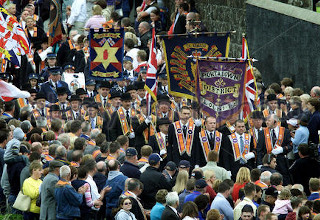
The Drumcree conflict or Drumcree standoff is a dispute over yearly Orange Order parades in the town of Portadown, County Armagh, Northern Ireland. The town is mainly Protestant and hosts numerous Protestant/loyalists marches each summer but has a significant Catholic minority. The Orange Order, a Protestant unionist organization, insists that it should be allowed to march its traditional route to and from Drumcree Church on the Sunday before The Twelfth. However, most of the route is through the mainly Catholic/Irish nationalist section of town. The residents, who see the march as sectarian, triumphalist and supremacist, seek to ban it from their area. The Orangemen see this as an attack on their traditions as they have marched the route since 1807, when the area was mostly farmland.

In 1995 and 1996, residents succeed in stopping the march. This leads to a standoff at Drumcree between the security forces and thousands of Orangemen/loyalists. Following a wave of loyalist violence, police allow the march through. In 1997, security forces lock down the Catholic area and let the march through, citing loyalist threats to kill Catholics if they are stopped. This sparks widespread protests and violence by Irish nationalists. From 1998 onward, the march is banned from Garvaghy Road and the army seals off the Catholic area with large steel, concrete and barbed wire barricades. Each year there is a major standoff at Drumcree and widespread loyalist violence. Since 2001 things have been relatively calm but moves to get the two sides into face-to-face talks have failed.

Early in 1998 the Public Processions (Northern Ireland) Act 1998 is passed, establishing the Parades Commission. The Commission is responsible for deciding what route contentious marches should take. On June 29, 1998, the Parades Commission decides to ban the march from Garvaghy Road.

On Friday, July 3, about 1,000 soldiers and 1,000 police are deployed in Portadown. The soldiers build large barricades made of steel, concrete and barbed wire across all roads leading into the nationalist area. In the fields between Drumcree Church and the nationalist area they dig a trench, fourteen feet wide, which is then lined with rows of barbed wire. Soldiers also occupy the Catholic Drumcree College, St. John the Baptist Primary School and some properties near the barricades.

On Sunday, July 5, the Orangemen march to Drumcree Church and state that they will remain there until they are allowed to proceed. About 10,000 Orangemen and loyalists arrive at Drumcree from across Northern Ireland. A loyalist group calling itself “Portadown Action Command” issues a statement which reads, “As from midnight on Friday 10 July 1998, any driver of any vehicle supplying any goods of any kind to the Gavaghy Road will be summarily executed.”

Over the next ten days, there are loyalist protests and violence across Northern Ireland in response to the ban. Loyalists block roads and attack the security forces as well as Catholic homes, businesses, schools and churches. On July 7, the mainly Catholic village of Dunloy is “besieged” by over 1,000 Orangemen. The County Antrim Grand Lodge says that its members have “taken up positions” and “held” the village. On July 8, eight blast bombs are thrown at Catholic homes in the Collingwood area of Lurgan. There are also sustained attacks on the security forces at Drumcree and attempts to break through the blockade. On July 9, the security forces at Drumcree are attacked with gunfire and blast bombs. They respond with plastic bullets. The police recorded 2,561 “public order incidents” throughout Northern Ireland.

On Sunday, July 12, brothers Jason (aged 8), Mark (aged 9) and Richard Quinn (aged 10) are burned to death when their home is petrol bombed by loyalists. The boys’ mother is a Catholic and their home is in a mainly-Protestant section of Ballymoney. Following the murders, William Bingham, County Grand Chaplain of Armagh and member of the Orange Order negotiating team, says that “walking down the Garvaghy Road would be a hollow victory, because it would be in the shadow of three coffins of little boys who wouldn’t even know what the Orange Order is about.” He says that the Order has lost control of the situation and that “no road is worth a life.” However, he later apologizes for implying that the Order is responsible for the deaths. The murders provoke widespread anger and calls for the Order to end its protest at Drumcree. Although the number of protesters at Drumcree drops considerably, the Portadown lodges vote unanimously to continue their standoff.

On Wednesday, July 15, the police begin a search operation in the fields at Drumcree. A number of loyalist weapons are found, including a homemade machine gun, spent and live ammunition, explosive devices, and two crossbows with more than a dozen homemade explosive arrows.


Leave a comment

The Funeral of Rosemary Nelson, Human Rights Lawyer

rosemary-nelson

The funeral of murdered human rights lawyer, Rosemary Nelson, takes place at St. Peter’s Church in Lurgan, County Armagh, Northern Ireland on March 18, 1999.

Rosemary Nelson, née Magee, obtains her law degree at Queens University Belfast. She works with other solicitors for a number of years before opening her own practice. She represents clients in a number of high-profile cases, including Michael Caraher, one of the South Armagh Snipers, as well as a republican paramilitary accused of killing two Royal Ulster Constabulary (RUC) officers. She also represents the Garvaghy Road Residents’ Coalition in nearby Portadown in the long-running Drumcree conflict against the Orange Order and RUC.

Nelson claims she has received death threats from members of the RUC as a result of her legal work. Some RUC officers make abusive and threatening remarks about her to her clients, which become publicly known. In 1998, the United Nations Special Rapporteur on the Independence of Judges and Solicitors, Param Cumaraswamy, notes these threats in his annual report, and states in a television interview that he believes her life could be in danger. He makes recommendations to the British government concerning threats from police against Solicitors, which are not acted upon. Later that year, Nelson testifies before a committee of the United States Congress investigating human rights in Northern Ireland, confirming that death threats have been made against her and her three children.

Nelson is assassinated, at the age of 40, by a car bomb outside her home in Lurgan on March 15, 1999. A loyalist paramilitary group calling itself the Red Hand Defenders claim responsibility for the killing. She is survived by her husband and their three children.

In 2004, the Cory Collusion Inquiry recommends that the UK Government hold an inquiry into the circumstances of Nelson’s death. She is posthumously awarded the Train Foundation‘s Civil Courage Prize, which recognises “extraordinary heroes of conscience.”

The resulting inquiry into her assassination opens at the Craigavon Civic Centre, Craigavon, County Armagh, in April 2005. In September 2006 the British Security Service MI5 announces it would be represented at the inquiry. This move provokes criticism from Nelson’s family, who reportedly express concerns that MI5 would remove sensitive or classified information.

The results of the inquiry are published on May 23, 2011. The inquiry finds no evidence that state agencies (the RUC, British Army and MI5) had “directly facilitated” her murder, but “could not exclude the possibility” that individual members had helped the perpetrators. It finds that state agencies had failed to protect her and that some RUC intelligence about her had been leaked. Both of these, it says, increased the danger to her life. The report also states that RUC officers had publicly abused and assaulted her in 1997, and made threatening remarks about her to her clients, which became publicly known. It concludes that this helped “legitimise her as a target in the eyes of loyalist terrorists.”


Leave a comment

Birth of UUP Politician Harold McCusker

harold-mccusker

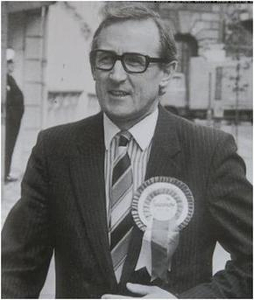
James Harold McCusker, Northern Ireland Ulster Unionist Party (UUP) politician who serves as the Deputy Leader of the UUP Assembly Group from 1982–1986, is born on February 7, 1940.

The youngest son of Jim and Lily McCusker, McCusker is born and raised in the heart of Lurgan, County Armagh, Northern Ireland. He is educated at Lurgan Model Primary School, Lurgan College and Stranmillis University College, before qualifying as a teacher. Before entering politics he works in industry, latterly with Goodyear, in their Craigavon Plant.

McCusker represents the Armagh constituency, and is first returned to the House of Commons of the United Kingdom at the February 1974 general election. He is returned again in October 1974 and in the 1979 election. In 1982 he tops the poll in Armagh in the Assembly election.

At the 1983 general election, McCusker is returned for the new seat of Upper Bann. Alongside other Unionist MPs, he resigns his seat in protest at the Anglo-Irish Agreement in 1985, in order to contest his seat again at the ensuing by-election. He is returned again at the 1987 general election, which proves to be his last as he dies of cancer in 1990, causing another by-election, which is won by future Ulster Unionist leader David Trimble.

McCusker is an Orangeman and staunch Unionist. Prior to his death in Portadown, County Armagh, Northern Ireland on February 12, 1990, five days after his 50th birthday, McCusker is expected to rise further in the Ulster Unionist Party and British political scenes, due to his ability and popularity among his peers and the wider public. He is a member of the Methodist Church in Ireland (Lurgan circuit).


Leave a comment

Death of Winston Dugan, 1st Baron Dugan of Victoria

Winston Joseph Dugan, 1st Baron Dugan of Victoria and known as Sir Winston Dugan between 1934 and 1949, dies in Marylebone, London, England, on August 17, 1951. He is a British administrator and a career British Army officer. He serves as Governor of South Australia from 1934 to 1939, then Governor of Victoria until 1949.

Dugan is the son of Charles Winston Dugan, of Oxmantown Mall, Birr, County Offaly, an inspector of schools, and Esther Elizabeth Rogers. He attends Lurgan College in Craigavon from 1887 to 1889, and Wimbledon College, Wimbledon, London.

Dugan is a sergeant in the Royal Sussex Regiment but transfers to the Royal Lincolnshire Regiment as a second lieutenant on January 24, 1900. He fights with the 2nd battalion of his regiment in the Second Boer War and receives the Queen’s South Africa Medal with three clasps. Following the war, he is appointed adjutant of his battalion on June 28, 1901, and is promoted to lieutenant on November 1, 1901. He later fights with distinction in World War I, where he is wounded and mentioned in despatches six times. He is awarded the Distinguished Service Order (DSO) in 1915 and appointed a Companion of the Order of St. Michael and St. George (CMG) in 1918. In 1929 he is made a Companion of the Order of the Bath (CB) and the following year is promoted to major general. From 1931 to 1934 he commands the 56th (1st London) Division, Territorial Army.

In 1934, Dugan is appointed Governor of South Australia. He is appointed a Knight Commander of the Order of St. Michael and St. George (KCMG), retires from the Army and moves to Adelaide with his wife. They become an extremely popular and glamorous vice-regal couple. Sir Winston and Lady Dugan are both excellent public speakers and travel widely in order to bring problems to the attention of the ministers of the day. Upon the expiration of his term, there is bipartisan parliamentary support for him to serve a second term, but he has already accepted an appointment to be Governor of Victoria.

Sir Winston and Lady Dugan arrive in Melbourne on July 17, 1939. They continue their active role in community affairs, promoting unemployment reduction and making the ballroom of Government House available for the Australian Red Cross.

Dugan has an active role stabilising state politics during the tumultuous 1940s. Upon the disintegration of Albert Dunstan‘s Country Party in 1943, he installs Australian Labor Party leader John Cain as Premier. Four days later, Dunstan forms a coalition with the United Australia Party. Following the collapse of that ministry in 1945, Dugan dissolves parliament and calls a general election for November, which results in the balance of power being held by independents. Dugan commissions Cain to form the ministry of a minority government.

Dugan’s term as Governor is extended five times. He returns to England in February 1949. On July 7, 1949, he is raised to the peerage as Baron Dugan of Victoria, of Lurgan in County Armagh.

Winston Dugan dies at Marylebone, London, on August 17, 1951, at the age of 74. As there are no children from his marriage, the barony becomes extinct.


Leave a comment

Twelfth of July

the-twelfth

The Orange Order holds its first “Twelfth of July” marches in Portadown, Lurgan and Waringstown on July 12, 1796. The Twelfth marches celebrate the Glorious Revolution (1688) and victory of Protestant king William of Orange over Catholic king James II at the Battle of the Boyne (1690), which begins the Protestant Ascendancy in Ireland.

On and around the Twelfth, large parades are held by the Orange Order and Ulster loyalist marching bands, streets are bedecked with British flags and bunting, and large, towering bonfires are lit. Today the Twelfth is mainly celebrated in Northern Ireland, where it is a public holiday, but smaller celebrations are held in other parts of the world where Orange lodges have been set up, including the Canadian province of Newfoundland where it is a provincial holiday. The Twelfth involves thousands of participants and spectators, although not all Protestants celebrate it.

In Northern Ireland, where almost half the population is from an Irish Catholic background, The Twelfth is a tense time. Orange marches through Irish Catholic and Irish nationalist neighbourhoods are usually met with opposition from residents, sometimes leading to violence. Public disorder during The Twelfth parades of the early 19th century led to them being banned in the 1830s and 1840s.

Many Catholics and Irish nationalists see the Orange Order and its marches as sectarian, triumphalist, and supremacist. The Order is also politically a unionist/loyalist organization. Violence related to the Twelfth in Northern Ireland worsens during the 30-year ethno-political conflict known as The Troubles. The Drumcree conflict is the most well-known dispute involving Orange marches.

Attempts have recently been made to downplay the political aspects of the marches and present the Twelfth as a cultural, family-friendly event at which tourists are welcome. Although most events pass off peacefully, some continue to result in violence.