O’Connor releases four solo albums and his third one, titled No Place Like Home, is named by The Irish Times as Number 1 Traditional/Folk album of the year in 2004. After the sudden death of banjo player Barney McKenna on April 5, 2012, he joins The Dubliners to complete their planned tour, until the final shows at Vicar Street in Dublin, on December 28-30. McKenna himself says about Gerry O’Connor: “He’s my best pupil ever.” Together with Eamonn Campbell, Patsy Watchorn and Seán Cannon, O’Connor keeps touring in 2013 as The Dublin Legends.
O’Connor is one of four musicians brought together by blues rock singer/guitar player Joe Bonamassa to perform on a variety of instruments in an acoustic concert at the Vienna State Opera on July 3, 2012. None of the five had ever worked together nor even met until they arrive in Vienna, where three days later they put on a live performance. The event is released on March 12, 2013, on CD and DVD/Blu-Ray, titled An Acoustic Evening At The Vienna Opera House, and in 2014 is broadcast as a PBS special.
O’Connor mainly plays CGDA tuned tenor banjo, instead of the usual Irish tuning GDAE. He plays a David Boyle banjo on almost every tour since 1996, but usually records with an Epiphone Recording A banjo.
Gleeson is the son of Frank and Pat Gleeson. He has described himself as having been an avid reader as a child. He receives his second-level education at St. Joseph’s CBS in Fairview, Dublin, where he is a member of the school drama group. He receives his Bachelor of Arts at University College Dublin (UCD), majoring in English and Irish. After training as an actor, he works for several years as a secondary school teacher of Irish and English at the now defunct CatholicBelcamp College in north County Dublin. He works simultaneously as an actor while teaching, doing semi-professional and professional productions in Dublin and surrounding areas. He leaves the teaching profession to commit full-time to acting in 1991. In an NPR interview to promote Calvary in 2014, he states he was molested as a child by a Christian Brother in primary school but was in “no way traumatised by the incident.”
As a member of the Dublin-based Passion Machine Theatre company, Gleeson appears in several of the theatre company’s early and highly successful plays such as Brownbread (1987), written by Roddy Doyle and directed by Paul Mercier, Wasters (1985) and Home (1988), written and directed by Paul Mercier. He also writes three plays for Passion Machine: The Birdtable (1987) and Breaking Up (1988), both of which he directs, and Babies and Bathwater (1994) in which he acts. Among his other Dublin theatre work are Patrick Süskind‘s one-man play The Double Bass and John B. Keane‘s The Year of the Hiker.
In 2003, Gleeson is the voice of Hugh the Miller in an episode of the Channel 4 animated series Wilde Stories. While he portrays Irish statesman Michael Collins in The Treaty, he later portrays Collins’ close collaborator Liam Tobin in the film Michael Collins with Liam Neeson taking the role of Collins. He later goes on to portray Winston Churchill in Into the Storm, winning a Primetime Emmy Award for his performance. He plays Barty Crouch, Jr. impersonating Hogwarts professor Alastor “Mad-Eye” Moody in the fourth, and Alastor Moody himself in fifth and seventhHarry Potter films. His son Domhnall plays Bill Weasley in the seventh and eighth films.
Gleeson provides the voice of Abbot Cellach in The Secret of Kells, an animated film co-directed by Tomm Moore and Nora Twomey of Cartoon Saloon, which premieres in February 2009 at the JamesonDublin International Film Festival. He stars in the short film Six Shooter in 2006, written and directed by Martin McDonagh, which wins an Academy Award for Best Live Action Short Film. In 2008, he stars in the comedy crime film In Bruges, also written and directed by McDonagh. The film, and his performance, enjoy huge critical acclaim, earning him several award nominations, including his first Golden Globe nomination. In the movie, he plays a mentor-like figure for Colin Farrell‘s hitman. In his review of In Bruges, Roger Ebert describes the elder Gleeson as having a “noble shambles of a face and the heft of a boxer gone to seed.”
Gleeson has been married to Mary Weldon since 1982. They have four sons: Domhnall, Fergus, Brían, and Rory. Domhnall and Brían are also actors. He speaks fluent Irish and is an advocate of the promotion of the Irish language. He is a fan of the English football club Aston Villa, as is his son Domhnall.
Warfield is a singer, songwriter, mandolin player and a founding member of The Wolfe Tones, performing with the band for nearly thirty-seven years, writing and recording over 60 songs. As a founding member, he is featured on every album recorded by the band from 1965’s debut album The Foggy Dew through to 1989’s 25th Anniversary.
In 1989, a contract is signed by Warfield, signing rights to an American distributor, Shanachie Records. The contents of this contract are apparently misrepresented to the other members of The Wolfe Tones, resulting in a clause that prevents them from recording any new material. Unable to reverse this agreement, they continue to tour, albeit without any new material. As of July 2017, Warfield has not spoken to his brother and former bandmate Brian Warfield since he left The Wolfe Tones in 2001.
A solo album, Legacy, is released in 1995 as he is still eligible to record under his own name. With Warfield on vocals and mandolin, the music on this album is performed by a new band, although he is still touring with The Wolfe Tones. Legacy is followed by Liberte’ ’98, Sons of Erin, Take Me Home To Mayo and Clear The Way. He also has a video Legacy and two books, The Songs and Ballads of 1798 and The Irish Songster of the American Civil War.
In 2001, after a show played in Limerick, Warfield leaves The Wolfe Tones to concentrate on his own career. Calling themselves “Brian Warfield, Tommy Byrne and Noel Nagle, formerly of The Wolfe Tones,” the remaining three go on to release You’ll Never Beat the Irish (2001) and the subsequent album Child of Destiny (2011).
Warfield has performed his music and songs at American Civil War events and commemorations at such sites as Gettysburg, Sharpsburg and Harrisburg with his band, The Sons of Erin. His 2002 release, Clear the Way, is the second in his Irish Songs in the Civil War series.
The ballad “Take Me Home to Mayo,” written by Belfastman Seamus Robinson as a tribute to Michael Gaughan, is recorded as a duet with Irish American Andy Cooney and is the title track of another 2002 Warfield release.
In 2003, following a complaint by an Ulster Unionist Party (UUP) politician, Roy Beggs, Jr., a radio channel dedicated to the music of Derek Warfield is removed from the in-flight entertainment of Aer Lingus. Beggs complains of the “Blatant promotion of militant, armed republicanism” by the playing of this music, saying it is the same as “the speeches of Osama bin Laden being played on a trans-Atlantic Arabian airline.” Aer Lingus removes the material from their flights stating: “It is something that should not have been on board and we removed it immediately we became aware of it.”
In March 2006, Warfield releases his ninth solo album, a 36-song double CD of Irish songs. On March 1, 2006, his wife Nuala dies, followed by the death of his eldest daughter on September 28, 2007.
Warfield now tours with his new band, Derek Warfield and The Young Wolfe Tones.
A biography of Robert Emmet in two volumes, although not written by Warfield, has been published by him, and a collaboration with Raymond Daly of Tullamore has resulted in the publishing of a critically acclaimed book of lyrics and histories of Irish songs called Celtic and Ireland in Song and Story.
Seóirse Bodley, Irish composer and former associate professor of music at University College Dublin (UCD), is born George Pascal Bodley in Dublin on April 4, 1933. In 2008, he is the first composer to become a Saoi of Aosdána. He is widely regarded as one of the most important composers of twentieth-century art music in Ireland, having been “integral to Irish musical life since the second half of the twentieth century, not just as a composer, but also as a teacher, arranger, accompanist, adjudicator, broadcaster, and conductor.”
Bodley’s father is George James Bodley (1879–1956), an employee in the Dublin office of the London Midland & Scottish Railway Company, and later of the Ports and Docks Board. His mother, Mary (née Gough, 1891–1977), works for the Guinness Brewery. He attends schools in the Dublin suburbs of Phibsborough and Glasnevin before he moves at the age of nine to an Irish-speakingChristian Brothers school at Parnell Square. He later studies at the School of Commerce in Rathmines, where he obtains his Leaving Certificate.
Music is encouraged in his parents’ home, and Bodley receives initial lessons on the mandolin from his father and on the piano from his mother. He studies the piano, harmony and counterpoint at the Royal Irish Academy of Music and obtains a Licentiate in piano from Trinity College London (TCL). From the age of 13, he also enrolls for a time at the Brendan Smith Academy of Acting. While he is still at school, he receives his first lessons in composition privately from the Dublin-based German choral conductor Hans Waldemar Rosen (1904–94), which continues, on and off, until 1956. From his student days he performs as an accompanist to singers and takes part in chamber music performances. An important element in his musical education is the twice-weekly free concerts given by the Radio Éireann Symphony Orchestra in the Phoenix Hall, Dame Court, where he has the opportunity to hear leading Irish and international performers and conductors presenting both classics and modern repertory.
From 1952 Bodley studies for a Bachelor of Music degree from University College Dublin, mainly with Anthony Hughes. He obtains the degree in 1955. From 1957 to 1959 he studies composition (with Johann Nepomuk David) and conducting at the Württembergische Hochschule für Musik in Stuttgart, Germany, and a year later he obtains a Doctorate in Music from UCD. He also takes classes in conducting with Hans Müller-Kray and Karl Maria Zwißler, and in piano with Alfred Kreutz. He returns to Germany several times in the early 1960s to participate in courses at the Darmstädter Ferienkurse, which significantly expands his knowledge of avant-garde techniques.
From 1959 until his retirement in 1998, Bodley lectures at the university’s music department, becoming associate professor in 1984. During the 1960s, he is conductor of the Culwick Choral Society.
Bodley’s development as a composer sees several distinct phases. In the 1970s he merges avant-garde styles with elements from Irish traditional music and becomes a figure of national importance. He receives several prestigious commissions for large-scale works, such as Symphony No. 3 (1981), written for the opening of the National Concert Hall.
In 1982 Bodley becomes a founder-member of Aosdána and PresidentMary McAleese confers the distinction of Saoi on him in November 2008. McAleese says that Bodley “has helped us to recast what it means to be an artist in Ireland.”
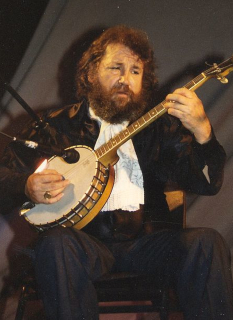
McKenna plays the banjo from an early age, initially because he cannot afford to buy the instrument of his choice, a mandolin. He is a member of The Dubliners from 1962 and is the only living member of the original formation at the time of his death. Prior to joining the Dubliners, he spends a few months in The Chieftains. In addition to his work on traditional Irish music, he also plays jazz on occasion.
McKenna uses GDAE tuning on a 19-fret tenor banjo, an octave below fiddle/mandolin and, according to musician Mick Moloney, is single-handedly responsible for making the GDAE-tuned tenor banjo the standard banjo in Irish music.
McKenna remains a great favourite with live audiences, and some of the loudest and most affectionate applause follows the tunes and songs on which he is the featured performer. He is well known for his unaccompanied renditions of songs such as “South Australia” and “I Wish I Had Someone to Love Me.” His banjo solos on tunes such as “The Maid Behind the Bar,” “The High Reel” and “The Mason’s Apron,” where he is usually accompanied by Eamonn Campbell on guitar, are often performed to cries of “C’mon Barney!” from audience or band members. Another featured spot in Dubliners performances is the mandolin duet that he plays with John Sheahan, again with Eamonn Campbell providing guitar accompaniment. As he often points out to the audience, “It’s an Irish duet, so there’s three of us going to play it.”
McKenna’s tendency to relate funny, and often only marginally believable, stories is legendary amongst Dubliners fans and friends. These anecdotes become known as Barneyisms, and his friend and former Dubliners bandmate Jim McCann collects them for the book An Obstacle Confusion: The Wonderful World of Barney McKenna.
McKenna dies unexpectedly on the morning of April 5, 2012 after collapsing in the kitchen of his home in Howth, County Dublin. He is buried at St. Loman’s Cemetery in Trim, County Meath, on April 9, 2012. Initially it is unclear whether The Dubliners will continue their 50th Anniversary Tour in the wake of McKenna’s death. However they soon confirm that they would “do their best to honour all the concert dates for the rest of the year [2012].”
Irvine has been influential in folk music for over five decades, during which he records a large repertoire of songs and tunes he assembles from books, old recordings and folk-song collectors rooted in the Irish, English, Scottish, Eastern European, Australian and American old-time and folk traditions. He sets these songs to new music and also writes songs about his personal experiences or the lives and struggles of his heroes, including Tom Barker, Michael Davitt, Mother Jones, Douglas Mawson, Raoul Wallenberg, and Emiliano Zapata.
Imbued with a sense of social justice, Irvine often selects or writes songs that are based on historical events and presented from the victim’s perspective. Some of these songs chronicle the abject living and working conditions imposed on groups of people such as the emigrants, the brutalized migrant workers, the exploited textile strikers or coalminers. Other songs recall the archetypal experiences of single individuals – the woman seduced by an unfaithful man or disowned by her father, the destitute young man ostracized or murdered on the order of his sweetheart’s rich father, the down-on-his-luck farmer or the unemployed worker, the young man inveigled by the army’s recruiting sergeant, the scapegoats. Irvine’s songs also denounce worker deaths and industrial diseases, and lament the plight of hunted animals. His repertoire includes humorous songs, but also bittersweet ones of unrequited love, or of lovers cruelly separated or dramatically reunited. He also sings about famous racehorses, men or women masquerading in various disguises, a fantastical fox preying on young maidens, and the violent lives of outlaws.
As a child actor, Irvine hones his performing talent from an early age and learns the classical guitar. He switches to folk music after discovering Woody Guthrie, also adopting the latter’s other instruments, the harmonica and mandolin. While extending Guthrie’s guitar picking technique to the mandolin, he further develops his playing of this instrument and, later, of the mandola and the bouzouki, into a decorative, harmonic style and embraces the modes and rhythms of Bulgarian folk music. Along with Johnny Moynihan and Dónal Lunny, Irvine is one of the pioneers who adapts the Greek bouzouki into an Irish instrument. He contributes to advancing the design of his instruments in cooperation with English luthier Stefan Sobell, and he occasionally plays a hurdy-gurdy made for him in 1972 by Peter Abnett, another English luthier.
Although touring mainly as a soloist, Irvine has also enjoyed great success in pursuing collaborations through many projects that have influenced contemporary folk music. He continues to tour and perform extensively in Ireland, Great Britain, Europe, North and South America, Japan, Australia and New Zealand.



 seamus dubhghaill