seamus dubhghaill

Promoting Irish Culture and History from Little Rock, Arkansas, USA


Leave a comment

Death of Joseph Cooper Walker, Irish Antiquarian & Writer

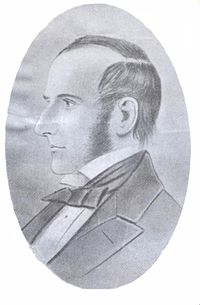
Joseph Cooper Walker, Irish antiquarian and writer, dies on April 12, 1810, in Enniskerry, County Wicklow.

Walker is born in Dublin, son of Cooper Walker, merchant, and educated by Thomas Ball. He suffers from asthma, which prevents him from attending college. Instead he travels to Italy, where he possibly receives some private tuition in Latin, Greek, French, Italian, and Spanish. He takes a special interest in Italian literature and Irish antiquities, and on his return to Ireland (where he is employed in the Irish treasury as third clerk in the upper department) resides in an Italianate villa, St. Valerie, on the road from Bray to Enniskerry.

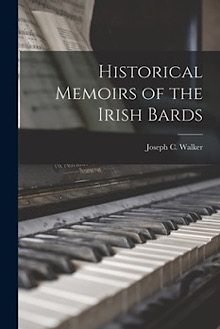
In 1785, Walker is elected one of the original members of the Royal Irish Academy (RIA) and on March 17, 1786, is requested to sit on its committee of antiquities. In this capacity he submits several essays to the Academy’s Transactions. However, his best-known work is Historical Memoirs of the Irish Bards (1786). His interest in poetry, and in eighteenth-century vernacular survivals of the ancient bardic tradition, suggests important new contemporary and literary dimensions for what had previously been antiquarian and scholarly pursuits. He also breaks new ground by considering modern as well as historical Irish culture, and introduces it to an Anglo-Irish audience by providing English translations of Gaelic songs and poems.

The authorities Walker cites covers the entire range of Irish and Anglo-Irish scholarship on Irish antiquities. He includes excerpts from his correspondence with Charles O’ConorCharles Vallancey, and Sylvester O’Halloran and carries out an extensive correspondence with Thomas Percy after he becomes Bishop of Dromore in 1782. He focuses on both poetry and music, which according to the popular eighteenth-century view has been the two traditional pursuits of the Irish bards. He presents a historical outline of their progress from the earliest times to the eighteenth century and ends with nine appendices, which are almost as lengthy as the main text. In these, his appreciation of what he considers to be the contemporary survivals of the ancient Irish bardic tradition is apparent in his including an account of Cormac Common, a blind eighteenth-century poet from Mayo, as well as a lengthy biographical notice of Turlough O’Carolan, together with translations of several of his songs. The book brings together many of the literary, scholarly, popular, Celtic, antiquarian, political, and musical dimensions of eighteenth-century Irish culture and prefigures the synthesis of literary modes, cultural theories, and musical styles that would occur in the literary productions of the United Irishmen.

Despite his linguistic skills, Walker has little knowledge of the Irish language, yet he (a member of the Anglo-Irish elite) is consistent in his praise of Gaelic culture, portraying it as sophisticated and literate and, although he highly romanticises his work, he does help to challenge negative appraisals of the Irish character. By the standards of the time it is a work of great erudition. However, today the book is judged to be of limited academic merit as Walker is severely hampered by a shortage of primary documents and by his limited grasp of the Irish language. This is illustrated by his ambiguous use of James Macpherson‘s volumes of Ossianic poems, published in the 1760s, which he quotes as authentic in the text while hinting in the footnotes that they are unreliable.

Charlotte Brooke translates three poems, and in return Walker encourages her to produce her Reliques of Irish Poetry (1789). Her work reflects Walker’s influence and she thanks him in the preface for affording her “every assistance which zeal, judgment and extensive knowledge, could give” as well as for prevailing on people to subscribe to her work and for being a subscriber himself. He is part of a literary circle that includes Edward Ledwich, Charles O’Conor, Edward BerwickJohn Philpot Curran, and Henry Grattan. He also writes Historical essay on the dress of the ancient and modern Irish (1788), dedicated to his friend James Caulfeild, 1st Earl of Charlemont, for which he interviews the older generation, consults manuscripts, and even visits tombs to examine the clothing of corpses, and admits he has received copious aid from Elizabeth Rawdon, Countess of Moira. The English Review receives it warmly but Richard Gough, the reviewer for The Gentleman’s Magazine, states he is “much disappointed in the perusal of this high priced history.” Other works by Walker include “an historical essay on the Irish stage,” RIA Trans., ii (1788), Historical Memoir on Italian Tragedy (1799) and contributions to Vallancey’s Collectanea de rebus Hibernicis (Dublin, 1770–1804). In the 1790s he subscribes to Anthologia Hibernica: a monthly collection of science, belles lettres and history and in December 1794 submits an “Historical essay on the Irish stage” which surveys Irish drama from bardic times through to contemporary folk plays.

Walker dies on April 12, 1810, in Enniskerry, County Wicklow, leaving a fine gallery of pictures, a library containing Irish manuscripts, and a collection of antiquities. He is buried on April 14 in St. Mary’s Churchyard, Dublin. His memoirs of Alessandro Tassoni are published posthumously in London in 1815 (with a lengthy preface by his brother Samuel), as is the second edition of Historical Memoirs of the Irish Bards (2 vols., Dublin, 1818).

(From: “Walker, Joseph Cooper” by Rosemary Ritchie, Dictionary of Irish Biography, http://www.dib.ie, October 2009)

Leave a comment

Birth of Peadar O’Donnell, Irish Republican Politician & Writer

Peadar O’Donnell, Irish republican, socialist activist, politician, writer and one of the foremost radicals of 20th-century Ireland, is born on February 22, 1893, in Meenmore, near Dungloe, County Donegal.

O’Donnell is the youngest among six sons and three daughters of Biddy and James O’Donnell. He is greatly influenced by his upbringing in the Rosses, in northwest Donegal, one of the poorest and most remote parts of Ireland. His father, a popular local fiddler, earns a living through his smallholding, seasonal labouring in Scotland, and winter work in a local corn mill. His mother, who comes from a radical labour and nationalist political background, works in a local cooperative store. He attends Rampart national school and Roshine national school, near Burtonport, where he is a monitor for four years. In 1911 he wins a scholarship to attend St. Patrick’s College in Drumcondra, Dublin, and returns in 1913 to the Rosses, where he spends two years teaching on the islands of Inishfree. In 1915 he is appointed head of Derryhenny national school, near Dungloe, and the following year becomes principal of a national school on the island of Arranmore, where he begins to write.

O’Donnell had long been concerned by the poor conditions of the local ‘tatie-hokers’ (potato pickers) who migrate annually to Scotland. In the summer of 1918, he travels there to help organise the Scottish Farm Servants’ Union. While there he is influenced by left-wing radicals such as Willie Gallacher, later a communist Member of Parliament (MP), and Emanuel ‘Manny’ Shinwell, later Baron Shinwell. In September 1918, against a background of rising labour militancy, he leaves teaching to become a full-time organiser for the Irish Transport and General Workers’ Union (ITGWU) in the west Ulster area. The following year he organises one of Ireland’s first “soviets” when the attendants and nurses of the Monaghan District Lunatic Asylum occupy the grounds and appoint O’Donnell as governor until their demands are met.

In early 1919 O’Donnell joins the Irish Republican Army (IRA) in Monaghan, resigning from the ITGWU for full-time IRA service in late 1920. He leads the 2nd Battalion, Donegal IRA, from the summer of 1920. In December 1920 he goes “on the run” and leads a flying column in west Donegal until May 1921, when he is wounded. Regarded as insubordinate and militarily inexperienced, he is unpopular among the other senior officers of the 1st Northern Division. He, in turn, is disappointed by the lack of social radicalism among the nationalist leadership. He opposes the Anglo-Irish Treaty, is placed in command of the minority anti-treaty 1st Northern Division and is a member of the IRA executive that occupies the Four Courts in Dublin in defiance of the provisional government.

Arrested in June 1922, O’Donnell shares a prison cell with Liam Mellows and influences his radical “Notes from Mountjoy,” an important document for subsequent left-wing republicans. He spends the next two years in various prisons and internment camps. His execution is widely expected to follow those of December 8, 1922. In August 1923, he is elected as a Sinn Féin Teachta Dála (TD) for Donegal in the general election called after the end of the Irish Civil War. He goes on hunger strike for forty-one days in late 1923 and succeeds in escaping from the Curragh in March 1924. In June 1924, while on the run, he marries Lile O’Donel, a wealthy Cumann na mBan activist who had smuggled communications for republican prisoners. O’Donel, a radical and member of the Communist Party, is the daughter of Ignatius O’Donel, a prominent landowner from Mayo. They have no children but raise their nephew, Peadar Joe, as their own son after the death in New York of O’Donnell’s brother Joe.

O’Donnell begins writing seriously while in jail and remains a prolific writer, journalist, and editor until the 1960s. His first novel, Storm, set in the Irish War of Independence, is published in 1925. One of his most highly regarded books, Islanders, is published in 1928. Adrigoole, like Islanders a story of poverty and starvation in rural Ireland, is published the following year. The Knife (1930) and On the Edge of the Stream (1934) soon follow. The most significant of his later novels is probably The Big Windows (1954). Foremost among his qualities as a writer is his empathy for the people, life, and landscape of rural Ireland. But his novels have been criticised for their slow pace, excessive detail, and didactic nature. He claims his writing is incidental to his political activism. His trilogy of autobiographical non-fiction, The Gates flew Open (1932), Salud! An Irishman in Spain (1936), and There Will Be Another Day (1963), which respectively concern the Irish Civil War, his activism during the Spanish Civil War, and his role in the land annuities agitation, remain highly regarded. His other important literary achievement is with The Bell, an innovative literary and political magazine which plays a useful dissenting role in an insular and conservative period. He founds The Bell with the writer Seán Ó Faoláin in 1940 and edits it from 1946 until it ceases publication in 1954.

O’Donnell exercises an influential role in the interwar IRA, particularly through his editorship of An Phoblacht (1926–29), which he attempts to divert from militarism to socialist agitation. His ultimate aim is for a thirty-two-county socialist republic. His most successful campaign is organising small farmers against the payment of land annuities to the government in the late 1920s and early 1930s. This campaign is later adopted by Fianna Fáil and contributes to their electoral success in 1932. He is less successful in radicalising the IRA. After the failure of Saor Éire, a left-wing IRA front which provokes clerical and popular hostility against the IRA, increasing tensions between the IRA’s left-wing and the leadership lead O’Donnell, along with Frank Ryan and George Gilmore, to split from the IRA to establish the short-lived Republican Congress in 1934.

Although O’Donnell claims he was never a Communist Party member, he plays a central role in forging links between republicans and the revolutionary left both in Ireland and internationally and invariably supports the communist party line at critical junctures. After the failure of Republican Congress, he takes up the cause of the Spanish republic. His championing of unpopular causes such as communism and Spain entail a good deal of frustration. He is physically attacked at political meetings and in 1932, despite having never visited the Soviet Union, loses a high-profile libel action against the Dominican Irish Rosary, which claim he had studied in Moscow‘s Lenin College. He is banned from entering the United States for several decades, although he maintains: “My relations with all the great powers continue to be friendly.”

O’Donnell continues to support radical campaigns until his death. He is an outspoken advocate of Irish emigrants. He is prominent in the Irish Campaign for Nuclear Disarmament and serves as its president in the early 1960s. He is a leading protester against the Vietnam War and a supporter of African anti-colonial movements such as that against apartheid. In later years he is involved in the “Save the west” campaign, highlighting the problems of the west of Ireland.

After several months of ill-health following a heart attack, O’Donnell dies in Dublin, aged 93, on May 13, 1986. He leaves instructions that there are to be “no priests, no politicians and no pomp” at his funeral, and those wishes are granted. He is cremated in Glasnevin Cemetery and his ashes are buried at his wife’s home in Swinford, County Mayo. Although he once remarked that every cause he fought for was a failure, he is now regarded as one of the most influential socialist republican theorists and an important voice of dissent in twentieth-century Ireland.

(From: “O’Donnell, Peadar” by Fearghal McGarry, Dictionary of Irish Biography, http://www.dib.ie)


Leave a comment

Death of Peadar O’Donnell, Irish Republican & Socialist Activist

Peadar O’Donnell, Irish republican, socialist activist, politician, writer and one of the foremost radicals of 20th-century Ireland, dies in Dublin on May 13, 1986.

O’Donnell is born on February 22, 1893, in Meenmore, near Dungloe, County Donegal, youngest among six sons and three daughters of Biddy and James O’Donnell. He is greatly influenced by his upbringing in the Rosses, in northwest Donegal, one of the poorest and most remote parts of Ireland. His father, a popular local fiddler, earns a living through his smallholding, seasonal labouring in Scotland, and winter work in a local corn mill. His mother, who comes from a radical labour and nationalist political background, works in a local cooperative store. He attends Rampart national school and Roshine national school, near Burtonport, where he is a monitor for four years. In 1911 he wins a scholarship to attend St. Patrick’s College in Drumcondra, Dublin, and returns in 1913 to the Rosses, where he spends two years teaching on the islands of Inishfree. In 1915 he is appointed head of Derryhenny national school, near Dungloe, and the following year becomes principal of a national school on the island of Arranmore, where he begins to write.

O’Donnell had long been concerned by the poor conditions of the local ‘tatie-hokers’ (potato pickers) who migrate annually to Scotland. In the summer of 1918, he travels there to help organise the Scottish Farm Servants’ Union. While there he is influenced by left-wing radicals such as Willie Gallacher, later a communist Member of Parliament (MP), and Emanuel ‘Manny’ Shinwell, later Baron Shinwell. In September 1918, against a background of rising labour militancy, he leaves teaching to become a full-time organiser for the Irish Transport and General Workers’ Union (ITGWU) in the west Ulster area. The following year he organises one of Ireland’s first “soviets” when the attendants and nurses of the Monaghan District Lunatic Asylum occupy the grounds and appoint O’Donnell as governor until their demands are met.

In early 1919 O’Donnell joins the Irish Republican Army (IRA) in Monaghan, resigning from the ITGWU for full-time IRA service in late 1920. He leads the 2nd Battalion, Donegal IRA, from the summer of 1920. In December 1920 he goes “on the run” and leads a flying column in west Donegal until May 1921, when he is wounded. Regarded as insubordinate and militarily inexperienced, he is unpopular among the other senior officers of the 1st Northern Division. He, in turn, is disappointed by the lack of social radicalism among the nationalist leadership. He opposes the Anglo-Irish Treaty, is placed in command of the minority anti-treaty 1st Northern Division and is a member of the IRA executive that occupies the Four Courts in Dublin in defiance of the provisional government.

Arrested in June 1922, O’Donnell shares a prison cell with Liam Mellows and influences his radical “Notes from Mountjoy,” an important document for subsequent left-wing republicans. He spends the next two years in various prisons and internment camps. His execution is widely expected to follow those of December 8, 1922. In August 1923, he is elected as a Sinn Féin Teachta Dála (TD) for Donegal in the general election called after the end of the Irish Civil War. He goes on hunger strike for forty-one days in late 1923 and succeeds in escaping from the Curragh in March 1924. In June 1924, while on the run, he marries Lile O’Donel, a wealthy Cumann na mBan activist who had smuggled communications for republican prisoners. O’Donel, a radical and member of the Communist Party, is the daughter of Ignatius O’Donel, a prominent landowner from Mayo. They have no children but raise their nephew, Peadar Joe, as their own son after the death in New York of O’Donnell’s brother Joe.

O’Donnell begins writing seriously while in jail and remains a prolific writer, journalist, and editor until the 1960s. His first novel, Storm, set in the Irish War of Independence, is published in 1925. One of his most highly regarded books, Islanders, is published in 1928. Adrigoole, like Islanders a story of poverty and starvation in rural Ireland, is published the following year. The Knife (1930) and On the Edge of the Stream (1934) soon follow. The most significant of his later novels is probably The Big Windows (1954). Foremost among his qualities as a writer is his empathy for the people, life, and landscape of rural Ireland. But his novels have been criticised for their slow pace, excessive detail, and didactic nature. He claims his writing is incidental to his political activism. His trilogy of autobiographical non-fiction, The Gates flew Open (1932), Salud! An Irishman in Spain (1936), and There Will Be Another Day (1963), which respectively concern the Irish Civil War, his activism during the Spanish Civil War, and his role in the land annuities agitation, remain highly regarded. His other important literary achievement is with The Bell, an innovative literary and political magazine which plays a useful dissenting role in an insular and conservative period. He founds The Bell with the writer Seán Ó Faoláin in 1940 and edits it from 1946 until it ceases publication in 1954.

O’Donnell exercises an influential role in the interwar IRA, particularly through his editorship of An Phoblacht (1926–29), which he attempts to divert from militarism to socialist agitation. His ultimate aim is for a thirty-two-county socialist republic. His most successful campaign is organising small farmers against the payment of land annuities to the government in the late 1920s and early 1930s. This campaign is later adopted by Fianna Fáil and contributes to their electoral success in 1932. He is less successful in radicalising the IRA. After the failure of Saor Éire, a left-wing IRA front which provokes clerical and popular hostility against the IRA, increasing tensions between the IRA’s left-wing and the leadership lead O’Donnell, along with Frank Ryan and George Gilmore, to split from the IRA to establish the short-lived Republican Congress in 1934.

Although O’Donnell claims he was never a Communist Party member, he plays a central role in forging links between republicans and the revolutionary left both in Ireland and internationally and invariably supports the communist party line at critical junctures. After the failure of Republican Congress, he takes up the cause of the Spanish republic. His championing of unpopular causes such as communism and Spain entail a good deal of frustration. He is physically attacked at political meetings and in 1932, despite having never visited the Soviet Union, loses a high-profile libel action against the Dominican Irish Rosary, which claim he had studied in Moscow‘s Lenin College. He is banned from entering the United States for several decades, although he maintains: “My relations with all the great powers continue to be friendly.”

O’Donnell continues to support radical campaigns until his death. He is an outspoken advocate of Irish emigrants. He is prominent in the Irish Campaign for Nuclear Disarmament and serves as its president in the early 1960s. He is a leading protester against the Vietnam War and a supporter of African anti-colonial movements such as that against apartheid. In later years he is involved in the “Save the west” campaign, highlighting the problems of the west of Ireland.

After several months of ill-health following a heart attack, O’Donnell dies in Dublin, aged 93, on May 13, 1986. He leaves instructions that there are to be “no priests, no politicians and no pomp” at his funeral, and those wishes are granted. He is cremated in Glasnevin Cemetery and his ashes are buried at his wife’s home in Swinford, County Mayo. Although he once remarked that every cause he fought for was a failure, he is now regarded as one of the most influential socialist republican theorists and an important voice of dissent in twentieth-century Ireland.

(From: “O’Donnell, Peadar” by Fearghal McGarry, Dictionary of Irish Biography, http://www.dib.ie)


Leave a comment

Death of James Fintan Lalor, Revolutionary & Journalist

James Fintan Lalor, Irish revolutionary, journalist, and one of the most powerful writers of his day, dies at the age of 43 on December 27, 1849. A leading member of the Irish Confederation (Young Ireland), he plays an active part in both the Rebellion in July 1848 and the attempted Rising in September of that same year. His writings exert a seminal influence on later Irish leaders such as Michael Davitt, James Connolly, Pádraig Pearse, and Arthur Griffith.

Lalor is born on March 10, 1807, in Tinnakill House, Raheen, County Laois, the first son of twelve children of Patrick “Patt” Lalor and Anne Dillon, the daughter of Patrick Dillon of Sheane near Maryborough. His father is an extensive farmer and is the first Catholic MP for Laois (1832–1835). The household is a very political one where active discussion on national issues is encouraged.

Because of an accident when he is young, Lalor is semi-crippled all his life. He is not a very healthy young man and consequently is educated at home. In February 1825 he goes to St. Patrick’s, Carlow College. He studies chemistry under a Mr. Holt and the classics under Father Andrew Fitzgerald. While in college he becomes a member of the Apollo Society, where literature and music are studied, his favourite author at the time being Henry St. John, 1st Viscount Bolingbroke. He suffers greatly through ill health during his time in college, and in February 1826, being ill and very weak he has to return home.

Lalor’s father is passionately opposed to the payment of tithes and urges Catholics not to pay. He supports this stand, but it is the land question and the power of the landlords to evict tenants that exercises him in particular. His father is also a great supporter of Daniel O’Connell and the Repeal movement. However, Lalor does not support the Repeal movement as he considers it to be flawed. As a result, a rift occurs between him and his father on this question. Such is the rift that he leaves home and spends time in Belfast and Dublin. He finally returns home due to ill health and heals his differences with his father.

It is while writing from home that Lalor achieves national prominence. He contributes articles to The Nation and The Felon. He advocates rent strikes and active resistance to any wrongdoings. His central theme is the rights of the tenant farmer to his own land. In his opinion, land reform is the biggest issue of the time. He writes articles such as “What must be done,” “The Faith of a felon,” “Resistance,” and “Clearing Decks.” It is he who says it is time for revolution and active resistance. This is especially evident during the famine years when tenants are being evicted for nonpayment of rent. As a result, he is arrested and imprisoned. Upon his release he continues to write. He is now a nationally acclaimed writer, revolutionary, and reformer.

Ill health once again curtails his efforts. An attack of bronchitis eventually brings about his early death on December 27, 1849, at his lodgings in Great Britain Street (now Parnell Street) at the age of 43. He is buried in Glasnevin Cemetery in Dublin.

The James Fintan Lawlor Commemorative Committee, chaired by David Lawlor is formed in August 2005 to erect a memorial to mark the 200th anniversary of the birth of James Fintan Lalor. Laois County Council provides the site; Irish Life and Permanent sponsors the project; the Department of the Environment provides half the cost. The bronze statue of Lalor holding a pamphlet aloft is sculpted by Mayo-based artist Rory Breslin. The inscription on the limestone plinth reads: “Ireland her own, and all therein, from the sod to the sky. The soil of Ireland for the people of Ireland.”

Michael Davitt considered Lalor “the only real Irish revolutionary mind in the ’48 period.” His ideas were the ideological underpinning of the Irish National League during the Land War.


Leave a comment

Death of Saint Colmán, Bishop of Lindisfarne

saint-colman

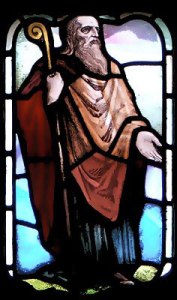
Colmán of Lindisfarne, also known as Saint Colmán, the Bishop of Lindisfarne from 661 until 664, dies on February 18, 675, of natural causes on the island of Inishbofin.

Colman is believed to have been born in Connacht, in the west of Ireland and receives his education on Iona. He is likely a nobleman of Canmaicne. He succeeds Aidan and Finan as bishop of Lindisfarne but resigns the Bishopric of Lindisfarne after the Synod of Whitby called by King Oswiu of Northumbria decides to calculate Easter using the method of the First Ecumenical Council instead of his preferred Celtic method.

Later tradition states that between the years 665 and 667 St. Colman founds several churches in Scotland before returning to Iona, but there are no seventh-century records to validate such activity by him. From Iona he sails for Ireland, settling at Inishbofin in 668 where he founds a monastery. When Colman comes to Mayo he brings with him half the relics of Lindisfarne, including bones of St. Aidan, and a part of the true cross which is reputed to be in Mayo Abbey until the Reformation in 1537, when it vanishes.

The Saxon monks are industrious and, during spring and summer, they till the land and grow the corn necessary for the survival of the community. Meanwhile, the Irish visit their kinsfolk on the mainland, returning to the island in winter where they help to consume the fruits of the Saxons’ labours. This situation inevitably leads to tensions within the community and disputes soon arise between the Saxon and Irish monks. Colman brings his Saxon followers onto the mainland and founds a monastery for them at “Magh Eó” – the Plain of Yew Trees, subsequently known as “Mayo of the Saxons.”

Colman’s last days are spent on the island of Inishbofin, where he dies in 675. His feast is celebrated on August 8.