seamus dubhghaill

Promoting Irish Culture and History from Little Rock, Arkansas, USA


Leave a comment

Birth of Stephen Lucius Gwynn, Writer & Politician

stephen-lucius-gwynn

Stephen Lucius Gwynn, journalist, biographer, author, poet, Protestant Nationalist politician, and Member of Parliament (MP) in the House of Commons of the United Kingdom of Great Britain and Ireland, is born on February 13, 1864, in St. Columba’s College, Rathfarnham, Dublin, where his father John Gwynn, a biblical scholar and Church of Ireland clergyman, is a warden.

Gwynn spends his early childhood in rural County Donegal, which shapes his later view of Ireland. He is educated at St. Columba’s College and goes on to Brasenose College, Oxford, where, as scholar, in 1884 he is awarded first-class honours in classical moderations and in 1886 literae humaniores. During term holidays he returns to Dublin, where he meets several of the political and literary figures of the day.

After graduating Gwynn moves to France where he works as a schoolmaster for ten years. In December 1889 he marries his cousin Mary Louisa Gwynn. They have four sons and two daughters. Having dabbled in journalism since his student days, he moves to London in 1896 to pursue a career as a writer. He soon becomes a prominent figure in literary and journalistic circles.

In 1904 the Gwynns return to Ireland to live in Raheny, County Dublin. In November 1906 he wins a seat for Galway Borough, which he represents as a member of the Irish Parliamentary Party until 1918. During this time, he also becomes active with the Gaelic League and the Irish Literary Revival.

At the outbreak of World War I, Gwynn gives his support to John Redmond that Irishmen should enlist in the British forces. At the age of fifty-one he enlists as a private in the 7th Leinster Regiment and is later commissioned lieutenant in the 6th Battalion Connaught Rangers, attached to the 16th (Irish) Division. He is promoted to captain in 1915 and serves with his battalion at the battles of Ginchy and Guillemont during the Somme offensive and also at Messines in 1917, leaving the front line shortly afterwards.

Gwynn is appointed to the Dardanelles Commission in 1916, an investigation into the unsuccessful 1915 Gallipoli Campaign.

After the war Gwynn continues with his writing and political life. He receives honorary doctorates from the National University of Ireland in 1940 and the University of Dublin in 1945. He dies on June 11, 1950, at his home in Terenure, Dublin and is buried at Tallaght cemetery.


Leave a comment

Death of Robert Hobart, 4th Earl of Buckinghamshire

robert-hobart-4th-earl-of-buckinghamshire

Robert Hobart, 4th Earl of Buckinghamshire and former Member of Parliament (MP) for Portarlington and Armagh Borough, dies from a fall from his horse in St. James’s Park, London on February 4, 1816. He is styled Lord Hobart from 1793 to 1804.

Hobart is born at Hampden House on May 6, 1760, the son of George Hobart, 3rd Earl of Buckinghamshire and Albinia, daughter of Lord Vere Bertie, younger son of Robert Bertie, 1st Duke of Ancaster and Kesteven. He is educated at Westminster School, London, and later serves in the American Revolutionary War. He acts as aide-de-camp to successive lord lieutenants of Ireland from 1784 onwards.

Hobart is a Member of Parliament (MP) in the Irish House of Commons for Portarlington from 1784 to 1790 and thereafter for Armagh Borough from 1790 to 1797. He sits also in the House of Commons of the United Kingdom for the rotten borough of Bramber in 1788, a seat he holds until 1790, and then for Lincoln from 1790 to 1796. In 1793 he is invested a member of the Privy Council, and appointed Governor of Madras. In 1798 he is recalled to England by the President of the Board of Control responsible for Indian affairs, Henry Dundas, and summoned to the House of Lords through a writ of acceleration in his father’s junior title of Baron Hobart.

Hobart later serves as Secretary of State for War and the Colonies from 1801 to 1804 when it is said he had “a better grasp of the local or colonial conditions, and a more active spirit than did some of his successors.” He is Chancellor of the Duchy of Lancaster in 1805 and again in 1812, Postmaster General from 1806 to 1807 and President of the Board of Control from 1812 to 1816. Hobart, the capital of Tasmania, is named after him.

Hobart marries firstly Margaretta, daughter of Edmund Bourke, in 1792. They have one son, who dies in infancy, and a daughter, Lady Sarah, who marries Prime Minister Lord Goderich and is the mother of George Robinson, 1st Marquess of Ripon. After Margaretta’s death in 1796 he marries secondly the Hon. Eleanor Agnes, daughter of William Eden, 1st Baron Auckland, in 1799. There are no children from this marriage.

Robert Hobart dies at Hamilton Place, London, on February 4, 1816 at the age of 55, after falling from his horse. He is succeeded in the earldom by his nephew, George. Lady Buckinghamshire dies in October 1851, at the age of 74.


Leave a comment

Laying of the Foundation Stone of Parliament House

parliament-house

The foundation stone of Parliament House in College Green is laid on February 3, 1729, by Thomas Wyndham, 1st Baron Wyndham, the Lord Chancellor of Ireland. Parliament House is initially home to the Parliament of Ireland and later houses the Bank of Ireland. It is the world’s first purpose-built bicameral parliament house. The current parliament building is Leinster House.

The building is home to the two Houses of Parliament, serving as the seat of both chambers, the House of Lords and House of Commons, of the Parliament of the Kingdom of Ireland for most of the 18th century until that parliament is abolished by the Acts of Union 1800, when Ireland becomes part of the United Kingdom of Great Britain and Ireland.

In the 17th century, parliament settles at Chichester House, a town house in Hoggen Green (later College Green) formerly owned by Sir George Carew, Lord President of Munster and Lord High Treasurer of Ireland, which had been built on the site of a nunnery disbanded by King Henry VIII at the time of the dissolution of the monasteries. Carew’s house, named Chichester House after its later owner Sir Arthur Chichester, is a building of sufficient importance to have become the temporary home of the Kingdom of Ireland’s law courts during the Michaelmas law term in 1605. Most famously, the legal documentation facilitating the Plantation of Ulster is signed there on November 16, 1612.

Chichester House is in a dilapidated state, allegedly haunted and unfit for official use. In 1727 parliament votes to spend £6,000 on a new building on the site. It is to be the world’s first purpose-built two-chamber parliament building.

The then ancient Palace of Westminster, the seat of the English before 1707 and, later, British Parliament, is a converted building. The House of Commons‘s odd seating arrangements is due to the chamber’s previous existence as a chapel. Hence MPs face each other from former pews.

The design of the new building, one of two purpose-built Irish parliamentary buildings (along with Parliament Buildings, Stormont), is entrusted to an architect, Edward Lovett Pearce, who is a member of parliament and a protégé of the Speaker of the Irish House of Commons, William Conolly of Castletown House. During construction, Parliament moves into the Blue Coat Hospital on Dublin‘s Northside.

The original, domed House of Commons chamber is destroyed by fire in the 1790s, and a less elaborate new chamber, without a dome, is rebuilt in the same location and opened in 1796, four years before the Parliament’s ultimate abolition.

Pearce’s designs come to be studied and copied both at home and abroad. The Viceregal Apartments in Dublin Castle imitate his top-lit corridors. The British Museum in Bloomsbury in London copies his colonnaded main entrance. His impact reaches Washington, D.C., where his building, and in particular his octagonal House of Commons chamber, is studied as plans are made for the United States Capitol building. While the shape of the chamber is not replicated, some of its decorative motifs are, with the ceiling structure in the Old Senate Chamber and old House of Representatives chamber (now the National Statuary Hall) bearing a striking resemblance to Pearce’s ceiling in the House of Commons.

(Pictured: Architectural drawing of the front of Parliament House by Peter Mazell based on the drawing by Rowland Omer, 1767)


1 Comment

Birth of Sir Arthur Philip du Cros

arthur-du-cros

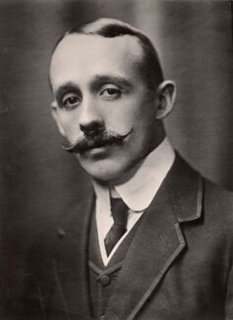
Sir Arthur Philip du Cros, British industrialist and politician, is born in Dublin on January 26, 1871.

Du Cros is the third of seven sons of Harvey du Cros. He is brought up in modest circumstances. His father, later a well-known manufacturer, is at the time only a bookkeeper with an income of £170 a year. He attends a national school in Dublin and then enters the civil service at the lowest grade. In 1892 he joins the Pneumatic Tyre and Booth’s Cycle Agency Ltd, of which his father is now the chairman, and is made a joint managing director in 1896 when it is floated as a public company.

In 1895 du Cros marries Maude Gooding, the daughter of a Coventry watch manufacturer. They have two sons and two daughters before a divorce in 1923.

In 1901 du Cros founds the Dunlop Rubber Company, converting 400 acres of land in Birmingham to produce and manufacture tires, with the area henceforth being known as Fort Dunlop. The firm eventually diversifies into making other rubber products as well as tires, and du Cros selects plantations in Malaya and Sri Lanka for the company, which by 1917 owns 60,000 acres of rubber-producing land.

In 1906 du Cros enters politics, unsuccessfully contesting the seat of Bow & Bromley as a Conservative Party candidate, a seat his brother is elected to in 1910. In 1908 he is elected Member of Parliament for Hastings, a position his father had held immediately before.

In 1909 du Cros forms, and is director of, the Parliamentary Aerial Defence Committee to ensure funding for military aeronautical development, of which he is a strong proponent. During World War I he works for the Ministry of Munitions on an honorary basis, buying two motorised ambulance convoys out of his own money and helping raise an infantry battalion, being a former captain of the Royal Warwickshires and for some years being the honorary colonel of the 8th battalion of the Royal Warwickshire Regiment. In 1916 he is created a baronet. He continues to represent Hastings until 1918, when he is elected as a Member of Parliament for Clapham, a position he resigns four years later.

His later career is awash with financial impropriety. He finds it difficult to distinguish between personal and company assets, using company funds to sponsor family investments and appointing family members to senior position with no regard for merit. He also participates in financial manipulation, being a close associate of James White, a financial expert who specialises in share rigging and whose actions leave Dunlop, had already lost influence within the company, close to collapse in 1921. He is quietly removed after the 1921 crash.

Arthur du Cros dies at home near Watford, Hertfordshire on October 28, 1955, at the age of 84. He is interred in Finstock, Oxfordshire.


1 Comment

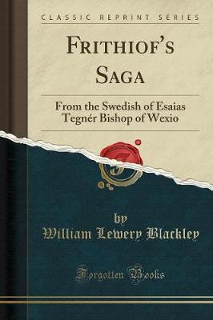
Birth of William Lewery Blackley, Divine & Social Reformer

william-lewery-blackley

William Lewery Blackley, divine and social reformer, is born at Dundalk, County Louth on December 30, 1830.

Blackley is the second son of Travers Robert Blackley of Ashtown Lodge, County Dublin and Eliza, daughter of Colonel Lewery, who is taken prisoner by the French at Verdun. His maternal grandfather is Travers Hartley, MP for Dublin (1776-1790) and governor of the Bank of Ireland.

In boyhood Blackley is sent with his brother John to a school at Brussels kept by Dr. Carl Martin Friedlander, a Polish political refugee, whose daughter, Amelia Jeanne Josephine, he subsequently marries on July 24, 1855. There he acquires proficiency in French, German, and other foreign languages. In 1847 he returns to Ireland, entered Trinity College, Dublin, graduating B.A. in 1850, M.A. in 1854, and takes holy orders. In 1854 he becomes curate of St. Peter’s, Southwark, but an attack of cholera compels his retirement from London. From 1855 to 1867 he has charge of two churches at Frensham, near Farnham, Surrey. He is rector of North Waltham, Hampshire (1867-1883), and King’s Somborne (1883-1889). In 1883 he is made honorary canon of Winchester.

Blackley, who is an energetic parish priest and is keenly interested in social questions, carefully elaborates a scheme for the cure of pauperism by a statutory enforcement of thrift which has far-reaching results at home and abroad. In November 1878 he contributes to the Nineteenth Century an essay entitled National Insurance a Cheap, Practical, and Popular Way of Preventing Pauperism, and thenceforth strenuously advocates a scheme of compulsory insurance, which the National Providence League, with the Earl of Shaftesbury as president, is formed in 1880 to carry into effect. At the same time he recommends temperance as a means of social regeneration. His views reach a wide public through his writings, which include How to teach Domestic Economy (1879), Collected Essays on the Prevention of Pauperism (1880), Social Economy Reading Book, adapted to the New Code (1881), Thrift and Independence; a Word for Working-men (1884).

Blackley’s scheme provides that all persons between eighteen and twenty should subscribe to a national fund, and should receive in return a week in time of sickness, and a week after the age of seventy. The plan is urged on the House of Lords by the Earl of Carnarvon in 1880, and is the subject of inquiry by a select committee of the House of Commons from 1885 to 1887. The majority of the boards of guardians in England and Wales support the proposals, but the commons’ committee, while acknowledging Blackley’s ingenuity and knowledge, reports adversely on administrative and actuarial grounds. At the same time the friendly societies, which Blackley has censured in his Thrift and Independence, regards the principle of compulsion as a menace to their own growth, and their historian and champion, the Rev. John Frome Wilkinson, sharply criticises Blackley’s plan in The Blackley National Providence Insurance Scheme; a Protest and Appeal (1887). Blackley’s plan, although rejected for the time, stimulates kindred movements in the colonies and in foreign countries, and leads directly to the adoption of old age pensions in England by legislation in 1908, while the national insurance scheme which receives parliamentary sanction in 1911 bears some trace of Blackley’s persistent agitation.

In 1887 Blackley, who is director of the Clergy Mutual Insurance Company, makes proposals to the church congress which lead to the formation of the “Clergy Pension Scheme” and of a society for ecclesiastical fire insurance. In the autumn of 1889 Blackley, whose active propagandism brings him constantly to London, becomes vicar of St. James the Less, Vauxhall Bridge Road. There he enlarges the schools and builds a parish hall and a vicarage.

William Lewery Blackley dies after a brief illness at 79 St. George’s Square, on July 25, 1902. Brasses are put up in Blackley’s memory in the churches of St. James the Less, North Waltham, and Frensham.


Leave a comment

Birth of Charles Monck, 1st Governor General of Canada

charles-stanley-monck

Charles Stanley Monck, 4th Viscount Monck GCMG PC, the last Governor-General of the Province of Canada and the first Governor General of Canada after Canadian Confederation, is born on October 10, 1819 in Templemore, County Tipperary. Prior to Confederation he is concurrently Lieutenant Governor of both Canada West and Canada East. He is the son of Charles Monck, 3rd Viscount Monck, and his wife Bridget née Willington.

Monck obtains a law degree from Trinity College, Dublin. He marries his first cousin Lady Elizabeth Louise Mary Monck on July 24, 1844, and in 1849 he inherits his father’s title of Viscount Monck. In 1852 he is elected MP for Portsmouth, and from 1855 to 1858 he serves as Lord of the Treasury under Henry John Temple, 3rd Viscount Palmerston.

In 1861 Monck is appointed Governor General of British North America as well as Governor of the Province of Canada. During this time, the Canadian colonies are beginning to organise themselves into a confederation. The American Civil War has just broken out, and the Trent Affair causes diplomatic tension between the United States and Britain. The Canadian government is eager to gain some measure of independence during this turbulent period. The Quebec Conference, the Charlottetown Conference, and the London Conference, at which the details of confederation are discussed, all take place during Monck’s time as governor. Monck supports the idea, and works closely with John A. Macdonald, George Brown, George-Étienne Cartier, and Étienne-Paschal Taché, who form the “Great Coalition” in 1864.

In 1866 Monck becomes a peer with the title Baron Monck. When the Canadian colonies become a semi-independent confederation the next year, he becomes the country’s first Governor General. He is also responsible for establishing Rideau Hall as the residence of the Governor General in Ottawa.

In 1869 Monck is succeeded by John Young, 1st Baron Lisgar. He returns home to Ireland, where he becomes Lord Lieutenant of Dublin in 1874. He dies in Enniskerry, County Wicklow on November 29, 1894.


Leave a comment

Charles Stewart Parnell’s Last Public Appearance

charles-stewart-parnell

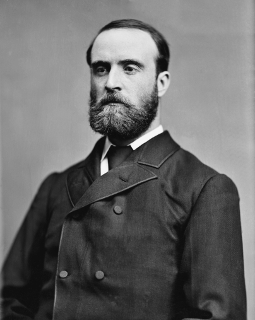
Charles Stewart Parnell makes his last public appearance at Creggs, County Galway on September 27, 1891.

After the split caused by the controversy over his relationship with Katharine O’Shea, Parnell tours the country seeking support. Already ill, his last public meeting is in Creggs, where he attacks his critics at length during heavy rain. He returns to his home in England and dies just over a week later, on October 6, at the age of 45.

Parnell, who is accompanied by J. P. Quinn, travels overnight from Dublin by the night mail train, is seen off by a considerable crowd at the Broadstone terminus and to them he makes a brief speech, expressing the hope that those who listen will give all support in their power to the new Nationalist paper it is intended to produce within a month. Parnell, who did not look at all well the previous night, wears his arm in a sling in consequence of his suffering from a severe attack of rheumatism.

When Parnell reaches Roscommon, he is met by a large crowd of people, who cheer him most enthusiastically. When he arrives at Mitchell’s Hotel, where he remains for the night, he is greeted with much enthusiasm, and, in response to repeated calls for a speech, he says a few words, explaining that on his arrival in Dublin he had been ordered by his doctor to go to bed and to remain there. But he disobeys those orders because of his desire to again meet with the men of Roscommon and Galway.

Parnell starts from Roscommon shortly after noon on September 27 and, in the company of Quinn and Luke Hayden, MP, travels to the meeting place in Creggs where he is met by a very large concourse of people. In fact, considering all the conditions of the district, its desolate character, and the smallness of the village, it is really surprising to find a gathering of between three and four thousand persons assembled.

As Parnell takes to the platform which is erected outside a pub in the village, sprinklings of rain begin to fall. Halfway through his speech the Heavens open and pour down upon the rally. Parnell, who is wearing light clothes and no hat, swats away an umbrella someone on the platform puts over him.

The crowd dwindles as the rain proves too hard to stand under, but Parnell perseveres and does not leave the platform until he has finished his entire speech. When he eventually finishes, he changes into dry clothes but finds such a mundane task difficult as his joints are so stiff and sore. He then joins twelve members of the organising committee for supper. Afterwards, on the train back to Dublin, he states how he regretted sitting at a table for thirteen as it is an extremely unlucky number.


Leave a comment

Drowning of Anna Catherine Parnell

anna-catherine-parnell

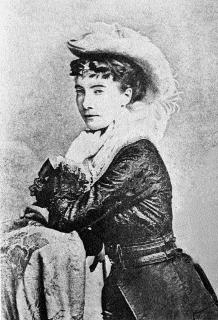
Anna Catherine Parnell, Irish nationalist and younger sister of Irish Nationalist leader Charles Stewart Parnell, drowns at Ilfracombe, Devon, England on September 20, 1911.

Parnell is born at Avondale House near Rathdrum, County Wicklow, the tenth of eleven children of John Henry Parnell, a landlord, and Delia Tudor Stewart Parnell, an Irish American and daughter of Admiral Charles Stewart of the United States Navy. She has very little formal education as a child, but the family has an extensive library which she is encouraged to read by her mother. After her father dies in 1859, she moves with the family to Dublin. Delia Parnell is an active socialite while in Dublin and exposes her children to a wide variety of political views.

In 1865 the family moves to Paris, but Parnell feels stifled by upper class society rules imposed upon her. She is in Paris when the Franco-Prussian War breaks out in 1870 and is active in the American Ladies’ Committee fundrasing and setting up hospitals. She returns alone to Dublin in 1870 to study art.

Parnell moves to London in 1875 to continue studying art. When her brother Charles is elected as a Member of Parliament (MP) for Meath, she becomes increasingly political. She frequently visits Parliament during debates, sitting in the Ladies’ Gallery. She writes articles about the debates in a column titled Notes From the Ladies’ Cage in the Celtic Monthly. In 1879 she joins her sister, Fanny Parnell, a poet, in New York City where they raise money in support of the Irish National Land League. The sisters work closely with their brother Charles and Michael Davitt but are critical of how the funds raised in America are being used in Ireland. In October 1880 the sisters found the New York Ladies’ Land League with their mother as president. They raised thousands of dollars sent to Ireland.

Parnell returns in Dublin in late 1880. When it seems that the Land League men are likely to be arrested, it is suggested that a women’s league in Ireland could take over the work in their absence. Public opinion at the time is against women in politics, but the Ladies’ Land League is founded on January 31, 1881, with Parnell as its effective leader.

When Charles Parnell and other leaders are imprisoned in 1881, as predicted, the Ladies’ Land League takes over their work. Though it is envisioned as a place holder until the men are released, Parnell organises branches throughout Ireland, encouraging women to play an active role in Land League activities. Offices are given to the ladies but little help. They raise funds for the League and for the support of prisoners and their families. They distribute Land League wooden huts to shelter evicted tenant families and by the beginning of 1882 they have 500 branches, thousands of women members and considerable publicity. They distribute £60,000 in relief aid.

This puts the Ladies’ Land League in serious debt. Parnell approaches her brother Charles, requesting money to settle the debts. Charles, who distrusts her understanding of politics, agrees to provide the money under the condition that the Ladies’ Land League is disbanded. She agrees, disbanding in 1882, but she never forgives Charles.

After her brother’s death in 1891 Parnell lives the rest of her life in the south of England under the assumed name Cerisa Palmer. She writes an angry account of her Land League experiences in Tale of a Great Sham, which is not published until 1986. She makes one last political appearance when she campaigns for a Sinn Féin candidate in a 1907 by-election.

By the summer of 1911, the 59-year-old Parnell is staying in lodgings at Ilfracombe in Devon. An enthusiastic swimmer since childhood, she bathes every day, and on September 20, disregarding a warning of dangerous seas, she goes swimming as usual. She is seen to be in difficulties and the alarm is raised, but by the time rescuers reached her, she is dead. Unlike her brother, whose funeral in Dublin had been the occasion for a massive outpouring of grief and remorse, Anna Parnell was buried quietly in the churchyard of Holy Trinity Church in Ilfracombe, in the presence of just seven strangers, and far away from the scenes of her greatest efforts and notoriety.


2 Comments

Birth of Sir Lucius O’Brien, 3rd Baronet

lucius-obrien-3rd-baronet

Sir Lucius Henry O’Brien, 3rd Baronet PC (Ire), Irish baronet and politician for 34 years, is born on September 2, 1731.

O’Brien is the son of Sir Edward O’Brien, 2nd Baronet and his wife Mary Hickman, inheriting the baronetcy upon the death of his father in 1765. He is educated at Trinity College, Dublin and enters the Middle Temple in 1753, later becoming a barrister.

In 1761, O’Brien enters the Irish House of Commons as the member for Ennis, sitting until 1768. Subsequently he successfully runs for Clare, a seat previously held by his father, holding it until 1776. He is then again elected for Ennis, but following the unseating of Hugh Dillon Massy as Member of Parliament for Clare, he returns to represent that constituency in 1778. In the election of 1783, he becomes the representative for Tuam. He is sworn of the Privy Council of Ireland in 1786. He serves for the latter constituency until 1790, when he is re-elected for Ennis. He holds this seat finally until his death on January 15, 1795.

O’Brien is elected a Fellow of the Royal Society in 1773.

O’Brien marries Anne French, the daughter of Robert French, in 1768 and has by her seven children, three sons and four daughters. He is succeeded in the baronetcy as well as in the constituency of Ennis by his oldest son Edward.

O’Brien’s grandson James FitzGerald (1818–1896) is a prominent politician in New Zealand.


Leave a comment

The Completion of the “Annals of the Four Masters”

annals-of-the-four-masters

The Annals of the Kingdom of Ireland or the Annals of the Four Masters, chronicles of medieval Irish history, are completed on August 10, 1636. The entries span from the Deluge, dated as 2,242 years after creation to 1616 AD.

The annals are mainly a compilation of earlier annals, although there is some original work, and are one of the principal Irish language sources for Irish history up to 1616. They are compiled between 1632 and 1636 at a Franciscan friary near the Drowes River in County Leitrim, on the border with County Donegal and County Sligo. The patron of the project is Fearghal Ó Gadhra, MP, a Gaelic lord in Coolavin, County Sligo. While many of the early chapters are essentially lists of names and dates, the later chapters, dealing with events of which the authors have first-hand accounts, are much more detailed.

The chief compiler of the annals is Brother Mícheál Ó Cléirigh from Ballyshannon, who is assisted by, among others, Cú Choigcríche Ó Cléirigh, Fearfeasa Ó Maol Chonaire and Peregrine Ó Duibhgeannain. Although only one of the authors, Mícheál Ó Cléirigh, is a Franciscan friar, they become known as “The Four Friars” or in the original Irish, Na Ceithre Máistrí. The Anglicized version of this is “The Four Masters,” the name that has become associated with the annals themselves.

Due to the criticisms by Irish historian Tuileagna Ó Maol Chonaire, the text is not published during the lifetime of any of the participants. The first substantial English translation (starting at 1171 AD) is published by Owen Connellan in 1846. The Connellan translation includes the annals from the eleventh to the seventeenth centuries. The only version to have a four-colour frontispiece, it includes a large folding map showing the location of families in Ireland. This edition, neglected for over 150 years, is republished in the early twenty-first century. The original Connellan translation is followed several years later by a full translation by the historian John O’Donovan. The translation is funded by a government grant of £1,000 obtained by the notable mathematician Sir William Rowan Hamilton while he is president of the Royal Irish Academy.

The reliability and usefulness of the Annals as a historical source has sometimes been questioned on the grounds that they are limited to accounts of the births, deaths and activities of the Gaelic nobility of Ireland and often ignore wider social trends or events. On the other hand, the Annals, as one of the few prose sources in Irish from this period, also provide a valuable insight into events such as the Desmond Rebellions and the Nine Years’ War from a Gaelic Irish perspective.

The early part of this work is based upon the Lebor Gabála Érenn. Today, most scholars regard the Lebor Gabála Érenn as primarily myth rather than history. It appears to be mostly based on medieval Christian pseudo-histories, but it also incorporates some of Ireland’s native pagan mythology. Scholars believe the goal of its writers was to provide an epic history for Ireland that could compare to that of the Israelites or the Romans, and which reconciled native myth with the Christian view of history.

The several manuscript copies are held at Trinity College, Dublin, the Royal Irish Academy, University College Dublin and the National Library of Ireland.

(Pictured: Illustration of “the four masters” by B. H. Holbrooke, 1846)