seamus dubhghaill

Promoting Irish Culture and History from Little Rock, Arkansas, USA


Leave a comment

The Copley Street Riot

The Copley Street riot occurs on August 13, 1934, at the Copley Street Repository, Cork, County Cork, after Blueshirts opposed to the collection of annuities from auctioned cattle ram a truck through the gate of an ongoing cattle auction. The Broy Harriers open fire and one man, 22 year old Michael Lynch, is killed and several others injured.

Following the Irish War of Independence (1919–21), Britain relinquishes its control over much of Ireland. However, aspects of the Anglo-Irish Treaty, which had marked the end of the war, lead to the Irish Civil War (1922–23). The aftermath leaves Ireland with damaged infrastructure and hinders its early development.

Éamon de Valera, who had voted against the Anglo-Irish treaty and headed the Anti-Treaty movement during the civil war, comes to power following the 1932 Irish general election and is re-elected in 1933. While the treaty stipulates that the Irish Free State should pay £3.1 million in land annuities to Great Britain, and despite advice that an economic war with Britain could have catastrophic consequences for Ireland (as 96% of exports are to Britain), de Valera’s new Irish government refuses to pay these annuities – though they continue to collect and retain them in the Irish exchequer.

This refusal leads to the Anglo-Irish trade war (also known as the “Economic War”), which persists until 1935, when a new treaty, the Anglo-Irish Trade Agreement, is negotiated in 1938. During this period, a 20% duty is imposed on animals and agricultural goods, resulting in significant losses for Ireland. Specifically, poultry trade declines by 80%, butter trade by 50% and cattle prices drop by 50%. Some farmers are forced to kill and bury animals because they cannot afford to maintain them.

In 1933, Fine Gael emerges as a political party—a merger of Cumann na nGaedheal and the National Centre Party. Fine Gael garners substantial support from rural farmers who are particularly affected by the Economic War. They strongly object to the collection of land annuities by the Fianna Fáil government. The Blueshirts, a paramilitary organisation founded as the Army Comrades Association in 1932 and led by former Garda Commissioner Eoin O’Duffy, transforms into an agrarian protest organisation, mobilising against seizures, cattle auctions, and those tasked with collecting annuities.

O’Duffy, a key figure in Irish politics, encourages farmers to withhold payment of land annuities to the government. Arising from this stance, Gardaí start to seize animals and farm equipment, auctioning them to recover the outstanding funds. While seized cattle are auctioned, local farmers rarely participate. Instead, Northern Ireland dealers, often associated with the name O’Neill, are the primary buyers. These auctions are protected by the Broy Harriers, an armed auxiliary group linked to the police.

By 1934, tensions escalate, and a series of anti-establishment incidents are attributed to the Blueshirts. These incidents range from minor acts of violence, such as breaking windows, to more serious offenses like assault and shootings.

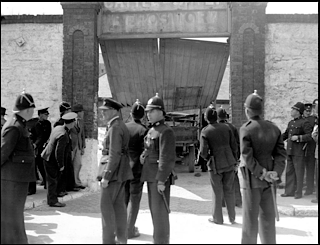
On August 13, 1934, an auction takes place at Marsh’s Yard on Copley Street in Cork, featuring cattle seized from farms in Bishopstown and Ballincollig. The police establish a cordon by 10:00 a.m., with 300 officers on duty. Lorries arrived at 11:00 a.m.

Around noon, three thousand protestors assemble. Within twenty-five minutes, an attempt is made to breach the yard gate by ramming it with a truck. According to Oireachtas records, there are approximately 20 men in the truck which they run against the gate. The Minister for Justice P. J. Ruttledge, says that the truck “with those people in it charged through those cordons of Guards; that several Guards jumped on to the lorry and tried to divert the driver by catching hold of the steering wheel and trying to twist it.” Some contemporary news sources suggest that the ramming truck knocked down the surrounding police cordon “like ninepins and crush[ed] a police inspector against a gate.” Later sources suggest that the senior officer (a superintendent) was injured in a fall, while attempting to avoid being struck, rather than being hit directly by the truck.

A man named Michael Lynch, wearing the distinctive blue shirt, and approximately 20 others reportedly manage to enter the yard. As soon as they enter the yard they are fired upon by armed “special branch” police detectives who are in the yard. Lynch later succumbs to his injuries at the South Infirmary. Thirty-six others are wounded. Despite the violence, the auction proceeds after a one-hour delay.

Following the shooting, a riot ensues, but when news of Lynch’s death reaches the participants, they cease rioting, kneel, and recited a Rosary.

The funeral of Michael Lynch occurs on August 15, 1934. The funeral procession is planned to depart from Saints Peter and Paul’s Church, Cork at 2:30 PM.

The occasion allows for a significant show of force for Eoin O’Duffy and the Blueshirts, and features Roman salutes and military drills. Farmers in Munster reportedly stop work for an hour, and Blueshirt members ask shopkeepers to close their businesses, as a show of respect for the “martyr.” Lynch is afforded a “full Blueshirt burial,” and the coffin is adorned with the flag of the Blueshirts (the Army Comrades Association).

According to the  Minister for Justice, at the funeral W. T. Cosgrave stands beside O’Duffy as the Blueshirt leader gives an oration saying, “We are going to carry on until our mission is accomplished […] those 20 brave men, whose deed will live for ever, not only in Cork but in every county in Ireland, broke through in the lorry […] all Blueshirts should try to emulate his bravery and nobleness. Every Blueshirt is prepared to go the way of Michael for his principles.”

The court grants the family £300 in 1935. This is appealed to the High Court, followed by the Supreme Court, which dismisses the case. In the Supreme Court, Henry Hanna describes the Broy Harriers as “an excrescence” upon the Garda Síochána.

When the matter is discussed in the Seanad in September 1934, and before a vote is taken to “[condemn] the action of the members of the special branch of the Gárda Síochána […] on Monday, the 13th August 1934,” the senators who support Éamon de Valera’s government walk out.

In August 1940, a memorial is unveiled on the tomb of Lynch in Dunbulloge Cemetery in Carrignavar, County Cork, consisting of a limestone Celtic cross and pedestal. The pedestal is engraved with a quote from the American orator, William Jennings Bryan: “The humblest citizen of all the land, when clad in the armour of a righteous cause is stronger than all the hosts of error.”

(Pictured: Aftermath of the ramming of Marsh’s Yard, Copley Street, that leads to the death of Michael Lynch and the Copley Street Riot on August 13, 1934)

Leave a comment

Birth of Pierce McCan

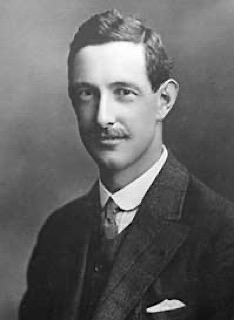
Pierce McCan, Sinn Féin politician, is born at Prospect Lodge, Ballyanne Desmesne, County Wexford, on August 2, 1882. 

McCan is the son of Francis McCan, a land agent, and Jane Power. He is the nephew of Patrick Joseph Power, MP for East Waterford from 1885 to 1913. He attends Clongowes Wood College and Downside School. He resides at Ballyowen House, Dualla, Cashel, County Tipperary, and is an “extensive farmer” and is a member of the Tipperary Hunt.

McCan is a founder member of Sinn Féin in 1905. He joins the Gaelic League in 1909 and is a member of the Irish Volunteers from 1914 onward.

After more than 2,000 German and Austrian prisoners are imprisoned at Richmond BarracksTemplemore, County Tipperary, following the first battles of World War I in 1914, he plots to engineer a mass escape but is thwarted when the prisoners are removed to Leigh, Lancashire in 1915. He is interned in 1916 after the Easter Rising for several months in Richmond Barracks, Dublin, and KnutsfordEngland. In May 1918, he is arrested under the German Plot and detained in Gloucester Gaol.

McCan is president of the East Tipperary executive of Sinn Féin. While incarcerated, he is elected as a Sinn Féin MP for the East Tipperary constituency at the 1918 United Kingdom general election in Ireland.

In January 1919, Sinn Féin MPs refuse to recognise the Parliament of the United Kingdom and instead assembles in the Mansion House, Dublin as a revolutionary parliament called Dáil Éireann. McCan never sits in Dáil Éireann, dying in prison on March 6, 1919, during the Spanish flu pandemic. On March 9, 1919, he is buried in Dualla, Cashel, County Tipperary.

No by-election is called to replace him in the UK constituency. After April 1, 1922, the Irish Free State (Agreement) Act 1922 prohibits any by-election, and the constituency is abolished when parliament is dissolved on October 26, 1922, for the general election on November 15.

The First Dáil also considers how to fill the vacancy. A select committee in April recommends that the local Sinn Féin organisation which nominated him should nominate his replacement. A June proposal to postpone action, either for six months or until a Westminster by-election is held, is referred to another committee, which recommends that “in view of the circumstances which occasioned the vacancy, it was due to the memory of the late Pierce McCann that his place should not be filled at present.”

On April 10, 1919, Cathal Brugha tells the First Dáil: “Before I formally move the motion, as I have mentioned the name of Pierce McCan, I would ask the Members of the Dáil to stand up as a mark of our respect to the first man of our body to die for Ireland, and of our sympathy with his relatives. We are sure that their sorrow is lightened by the fact that his death was for the cause for which he would have lived, and that his memory will ever be cherished in the hearts of the comrades who knew him, and will be honoured by succeeding generations of his countrymen with that of the other martyrs of our holy cause.” The McCan Barracks in Templemore, County Tipperary, is named after him.

In the 1933 Irish general election, McCan’s brother, Joseph, a member of the National Farmers’ and Ratepayers’ Association, stands unsuccessfully for the National Centre Party in the Tipperary constituency.


Leave a comment

Birth of James Matthew Dillon, Fine Gael Politician

James Matthew Dillon, Fine Gael politician who serves as Leader of the Opposition and Leader of Fine Gael from 1959 to 1965 and Minister for Agriculture from 1948 to 1951 and 1954 to 1957, is born in Drumcondra, Dublin on September 26, 1902. He also serves as a Teachta Dála (TD) from 1932 to 1969.

Dillon is the son of John Dillon, the last leader of the Irish Parliamentary Party, and Elizabeth Mathew. He is educated at Mount St. Benedict’s, in Gorey, County Wexford, University College Galway and King’s Inns. He qualifies as a barrister and is called to the Bar of Ireland in 1931. He studies business methods at Selfridges in London. After some time at Marshall Field’s in Chicago he returns to Ireland where he becomes manager of the family business known as Monica Duff’s in Ballaghaderreen, County Roscommon.

Between 1932 and 1937, Dillon serves as a TD for the Donegal constituency for the National Centre Party and after its merger with Cumann na nGaedheal, for the new party of Fine Gael. He plays a key role in instigating the creation of Fine Gael and becomes a key member of the party in later years. He remains as TD for Monaghan from 1937 to 1969. He becomes deputy leader of Fine Gael under W. T. Cosgrave.

Dillon temporarily resigns from Fine Gael in 1942 over its stance on Irish neutrality during World War II. While Fine Gael supports the government’s decision to stay out of the war, he urges the government to side with the Allies. A passionate anti-Nazi, he describes the Nazi creed as “the devil himself with twentieth-century efficiency.” His zeal against Adolf Hitler draws him the ire of the German Minister to Ireland Eduard Hempel, who denounces him as a “Jew” and “German-hater.” Even Éamon de Valera, then Taoiseach, is not spared the fierceness of Dillon’s rhetoric. When the Taoiseach ridicules his stark support for the Allies, noting this means he has to adopt a Pro-British stance, Dillon defiantly retorts, “My ancestors fought for Ireland down the centuries on the continent of Europe while yours were banging banjos and bartering budgies in the backstreets of Barcelona.”

In 1942, while holidaying in Carna, County Galway, Dillon meets Maura Phelan of Clonmel on a Friday. By that Monday the two are engaged and six weeks after that the pair are married. He is 40 and Maura is 22 years of age.

Dillon is one of the independents who supports the first inter-party government (1948–1951) and is appointed Minister for Agriculture. As Minister, he is responsible for huge improvements in Irish agriculture. Money is spent on land reclamation projects in the areas of less fertile land while the overall quality of Irish agricultural produce increases.

Dillon rejoins Fine Gael in 1953. He becomes Minister for Agriculture again in the second inter-party government (1954–1957). In 1959, he becomes leader of Fine Gael, succeeding Richard Mulcahy. He becomes president of the party in 1960. In 1965, Fine Gael loses the general election to Seán Lemass and Fianna Fáil. The non-Fianna Fáil parties win 69 seats to Fianna Fáil’s 72. Had the other parties won four more seats between them, they would have been able to form a government. Having narrowly failed to become Taoiseach, Dillon stands down as Fine Gael leader after the election.

On Northern Ireland, while Dillon stands against Partition, he equally opposes any “armed solution” or militant nationalist policy, stating, “We have got to win, not only the barren acres of Ulster, but the hearts of the people who live in it.”

Dillon is a colourful contributor to Dáil proceedings and is noted for his high standard of oratory. He remains a TD until 1969, when he retires from politics. He dies in Malahide, Dublin on February 10, 1986, at the age of 83.


Leave a comment

Birth of John Dillon, Last Leader of the Irish Parliamentary Party

John Dillon, a Member of Parliament (MP) for over 35 years and the last leader of the Irish Parliamentary Party (IPP) in the struggle to secure Home Rule by parliamentary means, is born in Blackrock, Dublin on September 4, 1851. Through the 1880s he is perhaps the most important ally of the greatest 19th-century Irish nationalist, Charles Stewart Parnell, but, following Parnell’s involvement as co-respondent in a divorce case, he repudiates Parnell for reasons of political prudence.

Dillon is the son of the former “Young IrelanderJohn Blake Dillon (1814–1866). Following the premature death of both his parents, he is partly raised by his father’s niece, Anne Deane. He is educated at Catholic University School, at Trinity College, Dublin and at the Catholic University of Leuven in Belgium. He afterwards studies medicine at the Royal College of Surgeons in Dublin, then ceases active involvement in medicine after he joins Isaac Butt‘s Home Rule League in 1873

Dillon is a member of the British House of Commons during 1880–1883 and 1885–1918. For his vigorous work in the Irish National Land League, which seeks fixed tenure, fair rents, and free sale of Irish land, he is imprisoned twice between May 1881 and May 1882. He is Parnell’s fellow inmate in Kilmainham Gaol in Dublin from October 1881. For six months in 1888 he is imprisoned for aiding William O’Brien, author of the “plan of campaign” against high rent charges by English absentee landlords in Irish farming districts.

When Parnell is named co-respondent in Captain William Henry O’Shea’s divorce suit in 1890, Dillon and O’Brien at first affirm their support of him, but they finally decide that he will thenceforth be a liability as party leader. The party then splits, the anti-Parnellite majority forming the Irish National Federation, of which Dillon serves as chairman from 1896. In 1900, however, he agrees to join a reunited party under the Parnellite John Redmond.

During the prime ministry of Arthur James Balfour (1902–1905), Dillon comes to believe that the British Conservative government intends to grant Irish reforms without independence, thereby “killing Home Rule by kindness.” In 1905 he advises Irishmen to vote for Liberal Party candidates for Parliament, and, after the Liberals had taken office that year, he supports their reform program.

Throughout World War I Dillon vehemently opposes the extension of British military conscription to Ireland, both because that measure would strengthen the agitation by the more extreme nationalist Sinn Féin party and because he never accepted the view that British imperial interests necessarily coincided with those of Ireland. After the Easter Rising in Dublin in 1916, he protests against the harsh measures that ensue and, in the House of Commons, makes a passionate speech in defense of the Irish rebels.

Upon Redmond’s death on March 6, 1918, Dillon, who had broken with him over Irish support for the British war effort, succeeds him as Irish Parliamentary Party leader. By that time, however, the party has been discredited and in the 1918 Irish general election Sinn Féin wins easily. On losing his House of Commons seat to Éamon de Valera, the future president of the Republic of Ireland, he retires from politics.

Dillon dies in a London nursing home at the age of 76, on August 4, 1927. He is buried four days later in Glasnevin Cemetery in Dublin. There is a street named after him in Dublin’s Liberties area, beside the old Iveagh Markets. One of his six children is James Mathew Dillon (1902–1986), a prominent Irish politician and leader of the National Centre Party and of Fine Gael (1957–1966) and also serves as Minister for Agriculture (1954-1957).


Leave a comment

The Founding of Fine Gael

fine-gael-logo

Fine Gael, a liberal-conservative political party in Ireland, is founded on September 8, 1933, following the merger of its parent party Cumann na nGaedheal, the National Centre Party and the National Guard, popularly known as the “Blueshirts.” The party’s origins lie in the struggle for Irish independence and the pro-Treaty side in the Irish Civil War. Michael Collins, in particular, is often identified as the founder of the movement.

Fine Gael is currently the third-largest party in Ireland in terms of members of Dáil Éireann and largest in terms of Irish members of the European Parliament. The party has a membership of 21,000 in 2017. Leo Varadkar succeeds Enda Kenny as party leader on June 2, 2017, and as Taoiseach on June 14. Kenny had been leader since 2002, and Taoiseach since 2011.

Fine Gael is generally considered to be more of a proponent of market liberalism than its traditional rival, Fianna Fáil. Apart from brief minority governments, Fine Gael has rarely governed Ireland without a coalition that also includes the Labour Party, a social-democratic, centre-left party. Fine Gael describes itself as a “party of the progressive centre” which it defines as acting “in a way that is right for Ireland, regardless of dogma or ideology.” The party lists its core values as “equality of opportunity, free enterprise and reward, security, integrity and hope.”

In international politics, Fine Gael is highly supportive of the European Union, along with generally supporting strengthened relations with the United Kingdom and opposition to physical force Irish republicanism. The party’s youth wing, Young Fine Gael, is formed in 1977, and has approximately four thousand members. Fine Gael is a founding member of the European People’s Party.

Having governed in coalition with the Labour Party between 2011 and 2016, and in a minority government along with Independent TDs from 2016 to 2020, Fine Gael currently forms part of an historic coalition government with its traditional rival, Fianna Fáil, and the Green Party. On June 27, 2020, Micheál Martin of Fianna Fáil is appointed as Taoiseach and forms a new government. Leo Varadkar serves as Tánaiste with both parties agreeing that in December 2022, Varadkar will serve again as Taoiseach.


Leave a comment

Death of John Dillon, Irish Parliamentary Party Leader

john-dillon

John Dillon, a Member of Parliament (MP) for over 35 years and the last leader of the Irish Parliamentary Party in the struggle to secure Home Rule by parliamentary means, dies in a London nursing home on August 4, 1927. Through the 1880s he is perhaps the most important ally of the greatest 19th-century Irish nationalist, Charles Stewart Parnell, but, following Parnell’s involvement as co-respondent in a divorce case, he repudiates Parnell for reasons of political prudence.

Dillon is born in Blackrock, Dublin, a son of the former “Young IrelanderJohn Blake Dillon (1814–1866). Following the premature death of both his parents, he is partly raised by his father’s niece, Anne Deane. He is educated at Catholic University School, at Trinity College, Dublin and at the Catholic University of Leuven in Belgium. He afterwards studies medicine at the Royal College of Surgeons in Dublin, then ceases active involvement in medicine after he joins Isaac Butt‘s Home Rule League in 1873

Dillon is a member of the British House of Commons during 1880–1883 and 1885–1918. For his vigorous work in the Irish National Land League, which seeks fixed tenure, fair rents, and free sale of Irish land, he is imprisoned twice between May 1881 and May 1882. He is Parnell’s fellow inmate in Kilmainham Gaol in Dublin from October 1881. For six months in 1888 he is imprisoned for aiding William O’Brien, author of the “plan of campaign” against high rent charges by English absentee landlords in Irish farming districts.

When Parnell is named co-respondent in Captain William Henry O’Shea’s divorce suit in 1890, Dillon and O’Brien at first affirm their support of him, but they finally decide that he will thenceforth be a liability as party leader. The party then splits, the anti-Parnellite majority forming the Irish National Federation, of which Dillon serves as chairman from 1896. In 1900, however, he agrees to join a reunited party under the Parnellite John Redmond.

During the prime ministry of Arthur James Balfour (1902–1905), Dillon comes to believe that the British Conservative government intends to grant Irish reforms without independence, thereby “killing Home Rule by kindness.” In 1905 he advises Irishmen to vote for Liberal Party candidates for Parliament, and, after the Liberals had taken office that year, he supports their reform program.

Throughout World War I Dillon vehemently opposes the extension of British military conscription to Ireland, both because that measure would strengthen the agitation by the more extreme nationalist Sinn Féin party and because he never accepted the view that British imperial interests necessarily coincided with those of Ireland. After the Easter Rising in Dublin in 1916, he protests against the harsh measures that ensue and, in the House of Commons, makes a passionate speech in defense of the Irish rebels.

Upon Redmond’s death on March 6, 1918, Dillon, who had broken with him over Irish support for the British war effort, succeeds him as Irish Parliamentary Party leader. By that time, however, the party has been discredited and in the 1918 Irish general election Sinn Féin wins easily. On losing his House of Commons seat to Éamon de Valera, the future president of the Republic of Ireland, he retires from politics.

Dillon dies in a London nursing home at the age of 76, on August 4, 1927. He is buried four days later in Glasnevin Cemetery in Dublin. There is a street named after him in Dublin’s Liberties area, beside the old Iveagh Markets. One of his six children is James Mathew Dillon (1902–1986), a prominent Irish politician and leader of the National Centre Party and of Fine Gael (1957–1966) and also serves as Minister for Agriculture (1954-1957).


Leave a comment

Birth of James Dillon, Fine Gael Leader

james-dillon

James Matthew Dillon, politician and Fine Gael leader, is born in Drumcondra, Dublin on September 26, 1902. He serves as Leader of the Opposition and Leader of Fine Gael from 1959 to 1965 and Minister for Agriculture from 1948 to 1951 and from 1954 to 1957. He serves as a Teachta Dála (TD) from 1932 to 1969.

Dillon is the son of John Dillon, the last leader of the Irish Parliamentary Party, which had been swept away by Sinn Féin at the 1918 general election. He is educated at Mount St. Benedict’s, in Gorey, County Wexford, University College Galway and King’s Inns. He qualifies as a barrister and is called to the Bar in 1931. He studies business methods at Selfridges in London. After some time at Marshall Field’s in Chicago he returns to Ireland where he becomes manager of the family business known as Monica Duff’s in Ballaghaderreen, County Roscommon.

Between 1932 and 1937 Dillon serves as Teachta Dála (TD) for the Donegal constituency for the National Centre Party and after its merger with Cumann na nGaedheal, for the new party of Fine Gael. He plays a key role in instigating the creation of Fine Gael and becomes a key member of the party in later years. He remains as TD for Monaghan from 1937 to 1969. He becomes deputy leader of Fine Gael under W. T. Cosgrave.

Dillon resigns from Fine Gael in 1942 over its stance on Irish neutrality during World War II. While Fine Gael supports the government’s decision to stay out of the war, he urges the government to side with the Allies. He is a rabid anti-Nazi, proclaiming the Nazi ideology is “the devil himself with twentieth-century efficiency.” His zealousness against the Nazis draws him the ire of the German minister to Ireland, Eduard Hempel, who denounces him as a “Jew” and “German-hater.”

Dillon has a personally eventful 1942. While holidaying in Carna, County Galway he meets Maura Phelan of Clonmel on a Friday. By that Monday the two are engaged and six weeks after that they are married.

Dillon is one of the independents who supports the first inter-party government (1948–1951) and is appointed Minister for Agriculture. As Minister, he is responsible for huge improvements in Irish agriculture. Money is spent on land reclamation projects in the areas of less fertile land while the overall quality of Irish agricultural produce increases.

Dillon rejoins Fine Gael in 1953. He becomes Minister for Agriculture again in the second inter-party government (1954–1957). In 1959 he becomes leader of Fine Gael, succeeding Richard Mulcahy. He becomes president of the party in 1960. In 1965 Fine Gael loses the general election to Seán Lemass and Fianna Fáil. The non-Fianna Fáil parties win 69 seats to Fianna Fáil’s 72. Had the other parties been able to win four more seats between them, they would have been able to form a government. Having narrowly failed to become Taoiseach, Dillon stands down as Fine Gael leader after the election.

Dillon is a colourful contributor to Dáil proceedings and is noted for his high standard of oratory. He remains a TD until 1969, when he retires from politics. He died in Malahide, Dublin on February 10, 1986, at the age of 83.


Leave a comment

Birth of Bartholomew “Batt” O’Connor

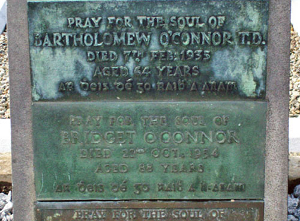
Bartholomew “Batt” O’Connor, Cumann na nGaedheal and Fine Gael politician, is born in Brosna, County Kerry, on July 4, 1870. He serves as a Teachta Dála (TD) for Dublin County from 1924 to 1935.

At seventeen O’Connor leaves school to become a stonemason. In October 1893, at the age of 23, he goes to Boston, where he stays five years. On his return to Ireland, he moves to Dublin, where he soon establishes himself as a “speculative builder” constructing houses in Anglesea Road, Dolphin’s Barn, Eglington Road, Brendan Road, and Donnybrook.

O’Connor joins the Gaelic League in 1900, through which he comes into contact with many of the future leaders of the Independence movement, including Tom Clarke and Seán Mac Diarmada. He is sworn into the Irish Republican Brotherhood (IRB) in 1909 and enrolls in the Irish Volunteers in 1913, the same night as Éamon de Valera.

While not directly involved during the Easter Rising, O’Connor is recognised and arrested on his return to Dublin and sent to Kilmainham Gaol, then to Richmond Barracks, Wandsworth Prison, and finally to Frongoch internment camp, in North Wales.

On his release in September 1916, O’Connor re-establishes his business and takes up his political activities. He reconnects with members of the Keating Branch of the Gaelic League at 46 Parnell Square and takes part in the re-organising of the fragmented IRB. He canvasses for by-elections in Kilkenny and Armagh on behalf of Sinn Féin candidates W. T. Cosgrave and Patrick McCartan.

O’Connor is involved with the revolutionary Sinn Féin party during the time of the First Dáil, handling money and hiding documents for Michael Collins. He purchases 76 Harcourt Street for Michael Collins, following a raid on the Sinn Féin Office at No. 6. There he installs a secret recess for private papers and means of escape through the skylight. When the recess escapes discovery following a raid, he goes on to construct hiding places in many of the other houses used by the movement. He is one of the shareholders of the National Land Bank which is set up in March 1920 at 68 Lower Leeson Street.

O’Connor plays a role in the “National Loan,” raised by Collins to fund the fledgling Dáil Éireann. The loan, which had been declared illegal, is lodged in the individual bank accounts of the trustees. The gold is kept under the floor of O’Connor’s house until 1922.

O’Connor takes the pro-Treaty side during the subsequent split over the Anglo-Irish Treaty. He is an unsuccessful candidate for Dáil Éireann at the 1923 Irish general election, in the Dublin County constituency.

After the death in November 1923 of Cumann na nGaedheal TD Michael Derham, O’Connor is the Cumann na nGaedheal candidate at the Dublin County by-election on March 19, 1924, when he is elected to the 4th Dáil ahead of Seán MacEntee. He retains his seat at the next four general elections, joining Fine Gael when Cumann na nGaedheal merges in 1933 with the National Centre Party and the Blueshirts. He serves as a Trustee of Cumann na nGaedheal.

After his death on February 7, 1935, the 1935 Dublin County by-election is won by Cecil Lavery of Fine Gael.