seamus dubhghaill

Promoting Irish Culture and History from Little Rock, Arkansas, USA


Leave a comment

Killing of Gangster & Bootlegger Jack “Legs” Diamond

jack-legs-diamond

Jack “Legs” Diamond, gangster, bootlegger, and associate of Arnold Rothstein, is gunned down in Albany, New York on December 18, 1931, while in a drunken stupor following a court case acquittal.

Born to an Irish immigrant family on July 10, 1897, in Philadelphia, Diamond becomes a leading figure in organized crime during the Prohibition era. He establishes liquor-smuggling enterprises in New York City and upstate New York, where he lives for a time after shooting and killing men in his Hotsy Totsy club.

After his mother’s death, Diamond moves with his father and brother to Brooklyn, New York. Growing up impoverished, he turns to street gangs and becomes involved in theft and violent crime as a teen. He later begins to work for gangsters Arnold Rothstein and Jacob “Little Augie” Orgen.

The Prohibition era begins in 1920. With alcohol smuggling a profitable underworld enterprise, Diamond organizes truck heists to seize liquor for his speakeasies. In 1923, he orders the murder of mob boss Nathan “Kid Dropper” Kaplan and usurps power in the world of organized crime for himself, aligning himself with mobsters like Lucky Luciano and Dutch Schultz. Diamond and Schultz would later become rivals.

Diamond sets up shop as an extremely violent and murderous figure. He earns his “Legs” nickname either due to his quickness when running from a scene of larceny or because of his prodigious dancing skills. He also marries Alice Schiffer in 1926. She remains devoted to him through his strings of crime and mistresses, which includes a notable affair with Ziegfeld Follies showgirl Kiki Roberts.

After a 1929 incident where Diamond publicly kills men in his Hotsy Totsy nightclub, authorities are unable to make the case stick due to the harassment and murder of witnesses. Looking to lie low, Diamond moves to Acra in upstate New York, where he sets up a huge beer-smuggling business.

During the course of his mob career, Diamond is shot on many occasions, receiving hospital treatment and recovering each time, earning the nickname “Clay Pigeon.”

In April 1931, near Catskill, New York, Diamond and colleagues hijack a truck with applejack liquor driven by Gordon Parks, whom they kidnap and torture. Parks survives and manages to reach the police. Diamond is arrested for the attack but later is acquitted in a December trial.

Diamond celebrates his acquittal days later with Roberts and returns drunk to his Albany residence. Early that morning, on December 18, 1931, he is shot and killed. He is buried at Mt. Olivet Cemetery in Maspeth, Queens on December 23. There is no church service or graveside ceremony. Two hundred family and spectators attend Diamond’s interment; however, no criminal figures are spotted.

The mystery remains as to who is behind the killing. Biographer William Kennedy speculates that Diamond was taken out by Albany police via an order from political leader Dan O’Connell. Others say rival gangsters were behind the murder.

On July 1, 1933, Diamond’s widow, Alice Kenny Diamond, is found shot to death in her Brooklyn apartment. It is speculated that she is shot by Diamond’s enemies to keep her quiet.

(From: “Jack ‘Legs’ Diamond Biography” by the Editors of Biography.com, April 2, 2014)


Leave a comment

Birth of Edna O’Brien, Novelist, Playwright & Poet

edna-o-brien

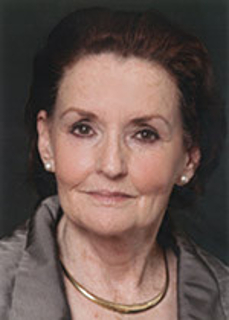
Edna O’Brien, novelist, memoirist, playwright, poet and short story writer, is born in Tuamgraney, County Clare on December 15, 1930. Philip Roth describes her as “the most gifted woman now writing in English,” while the former President of Ireland Mary Robinson cites her as “one of the great creative writers of her generation.” Her works often revolve around the inner feelings of women, and their problems in relating to men, and to society as a whole.

O’Brien is the youngest child of “a strict, religious family.” From 1941 to 1946 she is educated by the Sisters of Mercy, a circumstance that contributes to a “suffocating” childhood. “I rebelled against the coercive and stifling religion into which I was born and bred. It was very frightening and all pervasive. I’m glad it has gone.” She is fond of a nun as she deeply misses her mum and tries to identify the nun with her mother.

In 1950, O’Brien is awarded a licence as a pharmacist. In Ireland, she reads such writers as Leo Tolstoy, William Makepeace Thackeray, and F. Scott Fitzgerald. In 1954, she marries, against her parents’ wishes, the Irish writer Ernest Gébler and the couple moves to London. They have two sons, but the marriage is dissolved in 1964. Gébler dies in 1998.

In London, O’Brien purchases Introducing James Joyce, with an introduction written by T. S. Eliot. When she learns that James Joyce‘s A Portrait of the Artist as a Young Man is autobiographical, it makes her realise where she might turn, should she decide to write herself. In London she starts work as a reader for Hutchinson, where on the basis of her reports she is commissioned, for £50, to write a novel. Her first novel, The Country Girls (1960), is often credited with breaking silence on sexual matters and social issues during a repressive period in Ireland following World War II.

This novel is the first part of a trilogy of novels which includes The Lonely Girl (1962) and Girls in Their Married Bliss (1964). Shortly after their publication, these books are banned and, in some cases burned, in her native country due to their frank portrayals of the sex lives of their characters. Her novel A Pagan Place (1970) is about her repressive childhood. Her parents are vehemently against all things related to literature and her mother strongly disapproves of her daughter’s career as a writer.

O’Brien is a panel member for the first edition of the BBC‘s Question Time in 1979. In 2017, she becomes the sole surviving member.

In 1980, she writes a play, Virginia, about Virginia Woolf, and it is staged originally in June 1980 at the Stratford Festival, Ontario, Canada and subsequently in the West End of London at the Theatre Royal Haymarket with Maggie Smith and directed by Robin Phillips. It is staged at The Public Theater in New York City in 1985.

Other works include a biography of James Joyce, published in 1999, and one of the poet Lord Byron, Byron in Love (2009). House of Splendid Isolation (1994), her novel about a terrorist who goes on the run, marks a new phase in her writing career. Down by the River (1996) concerns an under-age rape victim who seeks an abortion in England, the “Miss X case.” In the Forest (2002) deals with the real-life case of Brendan O’Donnell, who abducts and murders a woman, her three-year-old son, and a priest, in rural Ireland.

O’Brien now lives in London. She receives the Irish PEN Award in 2001. Saints and Sinners wins the 2011 Frank O’Connor International Short Story Award, the world’s richest prize for a short story collection. Faber and Faber publish her memoir, Country Girl, in 2012. In 2015, she is bestowed Saoi by Aosdána.


Leave a comment

Birth of American-Irish Writer Morgan Llywelyn

morgan-llywelyn

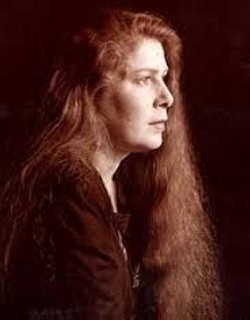
Morgan Llywelyn, American-Irish historical fantasy, historical fiction, and historical non-fiction writer, is born Sally Snyder in New York City on December 3, 1937. Her fiction has received several awards and has sold more than 40 million copies, and she herself is recipient of the 1999 Exceptional Celtic Woman of the Year Award from Celtic Women International.

In her teens, Llywelyn moves to the Dallas area, where she develops a love of horses. By the age of 16, she is competing in professional horse shows across the United States. By age 18, she models for Neiman Marcus and Arthur Murray. After 15 years of experience as a horse trainer and instructor, she tries out for and narrowly misses making the 1976 United States Olympic Team in Dressage. She is instead shortlisted, missing the cut off score by .05 percent.

With her mother’s encouragement and a successfully published article on horse training, she refocuses her efforts in tracing the Llywelyn family history and eventually makes a career out of writing historical novels that allow the exploration of her Celtic roots. In reference to this career change, Llywelyn has this to say:

“I have a strong strain of Welsh on my mother’s side, which does indeed go back to Llywelyn ap Iorwerth. And Llywelyn the Great! (We have the proven genealogy from the College of Heralds.) She was very proud of her royal Welsh connection. That is why she was so interested in genealogy in the first place, and inspired me to get involved as well … leading in turn to “The Wind from Hastings.” But both my parents were predominantly Irish – my father totally so – and I spent half the years of my childhood here. So I have always been much more interested in Ireland and its history and legends.”

Llywelyn has received several awards for her works. She receives the Novel of the Year Award from the National League of American Pen Women for her novel, The Horse Goddess, as well as the Woman of the Year Award from the Irish-American Heritage Committee for Bard: The Odyssey of the Irish. The latter award is presented to her by Ed Koch, then-mayor of New York City.

Although Llywelyn’s grandparents have their roots in Ireland, it is only after the death of her parents and her husband in 1985 that she relocates to Ireland. Llywelyn now lives outside Dublin and has become an Irish citizen.

In 1990, Llywelyn begins her focus on writing books geared for younger readers. These works start with Brian Boru: Emperor of the Irish, for which she wins an Irish Children’s Book Trust Bisto Award in 1991, and includes other titles, such as Strongbow: The Story of Richard and Aoife, for which she wins a Bisto Award in the Historical Fiction category, 1993 and the Reading Association of Ireland Award, 1993, and Star Dancer which departs from her usual Celtic topic and is centered on her experiences with Dressage. Further works include The Vikings in Ireland, an exploration of when the Norsemen arrived in Ireland and Pirate Queen, a younger reader’s version of the story of Grace O’Malley, told through letters from Granuaile to her beloved son.


Leave a comment

Birth of Charlotte Grace O’Brien

charlotte-grace-obrien

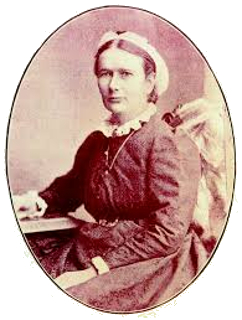
Charlotte Grace O’Brien, author, philanthropist, plant collector, and activist in nationalist causes and the protection of female emigrants, is born on November 23, 1845, at Cahirmoyle, County Limerick.

O’Brien is the younger daughter in a family of five sons and two daughters of William Smith O’Brien, Irish nationalist, and his wife Lucy Caroline, eldest daughter of Joseph Gabbett, of High Park, County Limerick. Upon her father’s return in 1854 from the penal colony in Tasmania, she rejoins him in Brussels and stays there until his removal to Cahirmoyle in 1856. Upon her mother’s death in 1861 she moves with her father to Killiney, near Dublin, and is his constant companion until his death at Bangor, Gwynedd in 1864.

From 1864 O’Brien lives at Cahirmoyle with her brother Edward, tending his motherless children, until his remarriage in 1880. She then goes to live at Foynes on the River Shannon and there devotes herself to literary pursuits. She has already published in 1878 her first novel, Light and Shade, a tale of the Fenian rising of 1867, the material for which had been gathered from Fenian leaders. A Tale of Venice, a drama, and Lyrics appear in 1880.

By 1881 her interests and pen are absorbed in Irish political affairs, in which she shares her father’s opinions. She contributes articles to the Nineteenth Century on The Irish Poor Man (December 1880) and Eighty Years (March 1881). In the spring of 1881, the attitude of the liberal government towards Ireland leads her to address many fiery letters to The Pall Mall Gazette, then edited by John Morley.

Another interest, however, soon absorbs O’Brien’s activities. The disastrous harvest in Ireland in 1879, combined with Irish political turmoil, leads to much emigration to the United States. At Queenstown, the port of embarkation, female emigrants suffer much from overcrowded lodgings and robbery. She not only induces the board of trade to exercise greater vigilance but also founds in 1881 a large boarding-house at Queenstown for the reception and protection of girls on the point of emigrating.

In order to improve the steamship accommodations for female emigrants, and to study their prospects in America, O’Brien makes several steerage passages to America. She also establishes in New York a similar institution to that in Queenstown for the protection of girls. Many experiences during this period find expression in her Lyrics (Dublin, 1886), a small volume of poems, which gives simple pictures of the emigrants and contains some stirring nationalist ballads.

On her retirement from active public work in 1886, O’Brien returns to Ardanoir, Foynes, on the bank of the Shannon, devoting her leisure to writing and to study of plant life. She contributes much on the flora of the Shannon district to the Irish Naturalist and joins the Roman communion in 1887.

Charlotte Grace O’Brien dies on June 3, 1909, at Foynes, and is buried at Knockpatrick. Selections from her Writings and Correspondence is published at Dublin in 1909. Her verses have dignity and grace, her polemical essays are vigorous and direct, and her essays on nature charm by their simple style.


Leave a comment

Death of Composer Michael William Balfe

michael-william-balfe

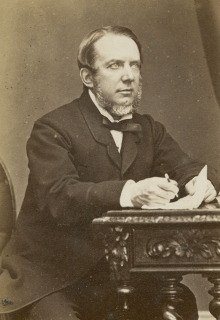
Michael William Balfe, Irish composer best remembered for his opera The Bohemian Girl, dies in Dublin on October 20, 1870.

Balfe is born in Dublin on May 15, 1808, where his musical gifts become apparent at an early age. He receives instruction from his father, a dancing master and violinist, and the composer William Rooke. His family moves to Wexford when he is a child.

In 1817, Balfe appears as a violinist in public, and in this year composes a ballad, first called “Young Fanny” and afterwards, when sung in Paul Pry by Lucia Elizabeth Vestris, “The Lovers’ Mistake”. In 1823, upon the death of his father, he moves to London and is engaged as a violinist in the orchestra of the Theatre Royal, Drury Lane. He eventually becomes the leader of that orchestra. While there, he studies violin with Charles Edward Horn and composition with Charles Frederick Horn.

While still playing the violin, Balfe pursues a career as an opera singer. He debuts unsuccessfully at Norwich in Carl Maria von Weber‘s Der Freischütz. In 1825, Count Mazzara takes him to Rome for vocal and musical studies and introduces him to Luigi Cherubini. In Italy, he also pursues composing, writing his first dramatic work, a ballet, La Perouse. He becomes a protégée of Gioachino Rossini‘s, and at the close of 1827, he appears as Figaro in The Barber of Seville at the Italian opera in Paris.

Balfe soon returns to Italy, where he is based for the next eight years, singing and composing several operas. In 1829 in Bologna, he composes his first cantata for the soprano Giulia Grisi, then 18 years old. He produces his first complete opera, I rivali di se stessi, at Palermo in the carnival season of 1829—1830.

Balfe returned to London in May 1835. His initial success takes place some months later with the premiere of The Siege of Rochelle on October 29, 1835, at Drury Lane. Encouraged by his success, he produces The Maid of Artois in 1836, which is followed by more operas in English. In July 1838, Balfe composes a new opera, Falstaff, for The Italian Opera House, based on The Merry Wives of Windsor, with an Italian libretto by S. Manfredo Maggione.

In 1841, Balfe founds the National Opera at the Lyceum Theatre, but the venture is a failure. The same year, he premieres his opera, Keolanthe. He then moves to Paris, presenting Le Puits d’amour in early 1843, followed by his opera based on Les quatre fils Aymon for the Opéra-Comique and L’étoile de Seville for the Paris Opera. Meanwhile, in 1843, he returns to London where he produces his most successful work, The Bohemian Girl, on November 27, 1843, at the Theatre Royal, Drury Lane. The piece runs for over 100 nights, and productions are soon mounted in New York, Dublin, Philadelphia, Vienna, Sydney, and throughout Europe and elsewhere.

From 1846 to 1852, Balfe is appointed musical director and principal conductor for the Italian Opera at Her Majesty’s Theatre. There he first produces several of Giuseppe Verdi‘s operas for London audiences. He conducts for Jenny Lind at her opera debut and on many occasions thereafter.

In 1851, in anticipation of The Great Exhibition in London, Balfe composes an innovative cantata, Inno Delle Nazioni, sung by nine female singers, each representing a country. He continues to compose new operas in English, including The Armourer of Nantes (1863), and writes hundreds of songs. His last opera, nearly completed when he dies, is The Knight of the Leopard and achieves considerable success in Italian as Il Talismano.

Balfe retires in 1864 to Hertfordshire, where he rents a country estate. He dies at his home in Rowney Abbey, Ware, Hertfordshire, on October 20, 1870, and is buried at Kensal Green Cemetery in London, next to fellow Irish composer William Vincent Wallace. In 1882, a medallion portrait of him is unveiled in Westminster Abbey.

In all, Balfe composes at least 29 operas. He also writes several cantatas and a symphony. His only large-scale piece that is still performed regularly today is The Bohemian Girl.


Leave a comment

Death of Ed Sullivan,Television Personality

ed-sullivan

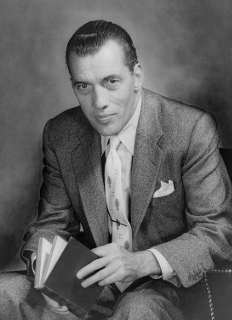
Edward Vincent Sullivan, Irish American television personality, sports and entertainment reporter, and syndicated columnist for the New York Daily News and the Chicago Tribune New York News Syndicate, dies in Manhattan, New York on October 13, 1974. He is principally remembered as the creator and host of the television variety show The Toast of the Town, later popularly and officially renamed The Ed Sullivan Show. Broadcast for 23 years from 1948 to 1971, it sets a record as the longest-running variety show in United States broadcast history.

Sullivan is born on September 28, 1901, in Harlem, New York City, the son of Elizabeth F. (née Smith) and Peter Arthur Sullivan, a customs house employee, and grows up in Port Chester, New York. He is a gifted athlete in high school, earning 12 athletic letters at Port Chester High School.

Sullivan lands his first job at The Port Chester Daily Item, a local newspaper for which he had written sports news while in high school and then joins the paper full-time after graduation. In 1919, he joins The Hartford Post. The newspaper folds in his first week there but he lands another job on The New York Evening Mail as a sports reporter. After The Evening Mail closes in 1923, he bounced through a series of news jobs. In 1927, he joins The Evening Graphic as sportswriter and eventually sports editor. In 1929, when Walter Winchell moves to the New York Daily Mirror, he is made Broadway columnist.

Throughout his career as a columnist, Sullivan dabbles in entertainment, producing vaudeville shows with which he appears as master of ceremonies in the 1920s and 1930s, directing a radio program over the original WABC (now WCBS) and organizing benefit reviews for various causes. In 1941, he is host of the Summer Silver Theater, a variety program on CBS radio, with Will Bradley as bandleader and a guest star featured each week.

In 1948, producer Marlo Lewis gets the CBS network to hire Sullivan to do a weekly Sunday night TV variety show, Toast of the Town, which later becomes The Ed Sullivan Show. Debuting in June 1948, the show is originally broadcast from the Maxine Elliott’s Theatre on West 39th Street in New York City. In January 1953, it moves to CBS-TV Studio 50, at 1697 Broadway in New York City, which in 1967 is renamed the Ed Sullivan Theater. The theater is later the home of the Late Show with David Letterman and The Late Show with Stephen Colbert. Television critics initially give the new show and its host poor reviews.

In the 1950s and 1960s, Sullivan is a respected starmaker because of the number of performers who become household names after appearing on the show, including Elvis Presley, The Beatles, The Dave Clark Five, B.J. Thomas and the Jackson Five. He has a knack for identifying and promoting top talent and pays a great deal of money to secure that talent for his show.

By 1971, the show’s ratings have plummeted. In an effort to refresh its lineup, CBS cancels the program along with some of its other longtime shows. Sullivan is angered and refuses to do a final show, although he remains with the network in various other capacities and hosts a 25th anniversary special in June 1973.

In early September 1974, X-rays reveal that Sullivan has an advanced growth of esophageal cancer. Doctors give him very little time to live, and the family chooses to keep the diagnosis secret from him. Sullivan, still believing his ailment to be yet another complication from a long-standing battle with gastric ulcers, dies five weeks later on October 13, 1974, at New York’s Lenox Hill Hospital. His funeral is attended by 3,000 at St. Patrick’s Cathedral, New York, on a cold, rainy day. He is interred in a crypt at the Ferncliff Cemetery in Hartsdale, New York.

Sullivan has a star on the Hollywood Walk of Fame at 6101 Hollywood Blvd.


Leave a comment

Death of Kathleen Clarke, Founder of Cumann na mBan

kathleen-clarke

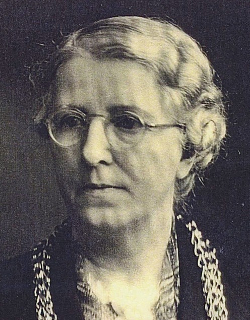
Kathleen Clarke (née Daly), a founder member of Cumann na mBan, and one of very few privy to the plans of the Easter Rising in 1916, dies in Dublin on September 29, 1972. She is the wife of Tom Clarke and sister of Edward “Ned” Daly, both of whom are executed for their part in the Rising. She is subsequently a Teachta Dála (TD) and senator with both Sinn Féin and Fianna Fáil, and the first female Lord Mayor of Dublin (1939–41).

Kathleen Daly is born into a prominent Fenian family in Limerick on April 11, 1878, the third daughter of Edward and Catherine Daly. Her paternal uncle, John Daly, is at the time imprisoned for his political activities in Chatham and Portland Prisons in England. He is released in 1896 and returns home to Limerick. When Tom Clarke, who had been imprisoned with her uncle, is released in 1898 he travels to Limerick to receive the Freedom of the City and stays with the Daly family.

In 1901 Daly decides to emigrate to the United States to join Tom, who had been there since 1900, having secured work through his Fenian contacts. They marry on July 16, 1901, in New York City. Through his contacts in the Clan na Gael and the Irish Republican Brotherhood (IRB), Tom Clarke continues to be involved in nationalist activity. Kathleen joins the Gaelic League while in the United States and they return to Ireland in November 1907.

In 1914 Clarke becomes a founder member of Cumann na mBan. Her husband forbids her permission to take an active part in the 1916 Easter Rising as she has orders regardless of how the events pan out. As Tom Clarke is the first signatory of the Proclamation of the Irish Republic, he is chosen to be executed for his part in the Easter Rising. Her younger brother, Ned Daly, is also executed for taking part in the rising. She visits both of them before they are executed. After the Rising, Michael Collins establishes contact with her while in prison in his attempts to re-build the IRB network. She also sets up the Irish National Aid Fund to aid those who had family members killed or imprisoned as a result of the Easter Rising, closely aided by Sorcha MacMahon.

Clarke becomes a member of Sinn Féin and in 1917 is elected a member of the party’s Executive. During the German Plot she is arrested and imprisoned in Holloway Prison for eleven months. During the Irish War of Independence, she serves as a District Judge on the Republican Courts in Dublin. In 1919 she is elected as an Alderman for the Wood Quay and Mountjoy Wards of Dublin Corporation and serves until the Corporation is abolished in 1925.

Clarke is elected unopposed as a Sinn Féin TD to the Second Dáil at the 1921 elections for the Dublin Mid constituency. She is not re-elected at the 1922 Irish general election, however, and supports the Anti-Treaty forces during the Irish Civil War. In 1926 she becomes a founder member of Fianna Fáil and has to resign from Cumann na mBan. She is re-elected to the short-lived 5th Dáil at the June 1927 Irish general election as a Fianna Fáil member for the Dublin Mid constituency but loses her seat at the September 1927 Irish general election and does not regain it. She is elected as one of six Fianna Fáil Senators to the Free State Seanad for nine years at the 1928 Seanad election under the leadership of Joseph Connolly. She remains a member of the Seanad until it is abolished in 1936.

In 1930 Clarke is elected to the re-constituted Dublin Corporation for Fianna Fáil along with Robert Briscoe, Seán T. O’Kelly, Thomas Kelly and Oscar Traynor. She serves as the first Fianna Fáil Lord Mayor of Dublin as well as the first female Lord Mayor, from 1939 to 1941. She opposes the Constitution of Ireland as she feels that several of its sections would place women in a lower position that they had been afforded in the Proclamation of the Irish Republic. She is criticised by many in the Fianna Fáil organisation as a result and, while she resigns from the Thomas Clarke Cumann, she remains a member of the Fianna Fáil Ard Chomhairle.

While Clarke does not support the Irish Republican Army (IRA) bombing in England during World War II, she appeals for those sentenced to death by the Irish Government to be given clemency. Ultimately this leads to her breaking with the party completely after her term as Lord Mayor finishes in 1941. She declines to stand as a Fianna Fáil candidate at the 1943 Irish general election.

In 1966, as part of the celebrations of the Easter Rising, Clarke and other surviving relatives are awarded honorary Doctor of Law by the National University of Ireland. Following her death on September 29, 1972, she receives the rare honour of a state funeral. She is buried at Deans Grange Cemetery, Dublin.


Leave a comment

Birth of Dolores Keane, Folk Singer & Actress

dolores-keane

Dolores Keane, folk singer and occasional actress, is born on September 26, 1953, in the small village of Sylane, near Tuam, in rural County Galway. She is a founding member of the successful group De Dannan and has since embarked on a very successful solo career, establishing herself as one of the most loved interpreters of Irish song.

Keane is raised from the age of four by her aunts Rita and Sarah Keane, who are also well-known sean-nós singers. She starts her singing at a very young age, due to the influence of her musical aunts. She makes her first recording for Radio Éireann in 1958 at the age of five. This early start sets her on the path to a career in music. Her brother, Seán, also goes on to enjoy a successful music career.

In 1975, Keane co-founds the traditional Irish band De Dannan, and they release their debut album Dé Danann in that same year. The group gains international recognition and enjoys major success in the late 1970s in the United States. She tours with the band and their single “The Rambling Irishman” is a big hit in Ireland. In early 1976, after a short two-year spell, she leaves De Dannan and is replaced by Andy Irvine, who records live with the band on April 30, 1976, during the 3rd Irish Folk Festival in Germany. Soon thereafter, she marries multi-instrumentalist John Faulkner, with whom she subsequently records three albums of folk music.

Keane lives and works in London for several years with Faulkner before they move to Ireland in the early 1980s. They work on a series of film scores and programmes for the BBC and form two successful bands, The Reel Union and Kinvara. During this period, she records her first solo album, There Was a Maid in 1978. This is followed by two other releases, Broken Hearted I’ll Wander (1979) and Farewell to Eirinn (1980), which gives credit to Faulkner. In the mid-1980s she rejoins De Dannan and records the albums Anthem and Ballroom with them.

Keane turns her attention, once again, to her solo career in 1988. It sees the release of the eponymous Dolores Keane album. Her follow-up album, A Lion in a Cage (1989), features a song written by Faulkner called “Lion in a Cage” protesting the imprisonment of Nelson Mandela. It serves as Keane’s second Irish number one, and she performs the hit at the celebration of his release. This exposure expands her reputation and popularity worldwide. A new facet is added to her career when she plays the female lead in the Dublin production of Brendan Behan‘s The Hostage. The opening night is attended by Mary Robinson, the President of Ireland at the time.

In 1992, Keane is among the many female Irish singers to lend their music to the record-smashing anthology A Woman’s Heart. The album goes on to become the biggest-selling album in Irish history. A Woman’s Heart Vol.2 is released in late 1994 and emulates its predecessor in album charts the world over. Also in 1994, a solo album, Solid Ground, is released on the Shanachie Records label and receives critical acclaim in Europe and America.

In August 1995, Keane is awarded the prestigious Fiddler’s Green Hall of Fame award in Rostrevor, County Down, for her “significant contribution to the cause of Irish music and culture.” In that same year, she takes to the stage in the Dublin production of John Millington Synge‘s The Playboy of the Western World. She contributes to the RTÉ/BBC television production “Bringing It All Back Home,” a series of programmes illustrating the movement of Irish music to America.

In August 1997, Keane goes to number one again in the Irish album charts with a compilation album with her most loved songs. And another studio album, Night Owl, is released in 1998. It sees her returning to her traditional Irish roots and it does well in Europe and America. Despite a healthy solo career, she goes on tour with De Dannan again in the late 1990s, where she plays to packed audiences in venues such as Birmingham, Alabama and New York City.

Keane puts an end to recording and touring in the late 1990s, due to depression and alcoholism, for which she receives extensive treatment. As of June 2014, she is given the all clear after suffering from cancer.


4 Comments

Birth of Philip Embury, Methodist Preacher

Philip Embury

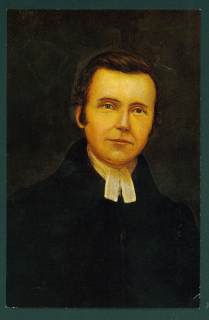
Philip Embury, Methodist preacher and a leader of one of the earliest Methodist congregations in the United States, is born in Ballingrane, County Limerick on September 21, 1729.

Embury’s parents are members of the colony of Germans that emigrate from the Palatinate to Ireland early in the eighteenth century, and in which Methodism co-founder John Wesley labors with great success. The colony forms from refugees from the War of the Spanish Succession. Embury is educated at a school near Ballingrane and learns the carpentry trade. He is converted on Christmas day 1752, becomes a local preacher at Court-Matrix in 1758 and marries Margaret Switzer that fall.

In 1760, due to rising rents and scarce land, he goes to New York City and works as a schoolteacher. In common with his fellow emigrants, he begins to lose interest in religious matters and does not preach in New York until 1766 when, moved by the reproaches of his cousin Barbara Heck, sometimes called the “mother of American Methodism,” he begins to hold services first in his own house on Barrack Street, now Park Place, and then in a rigging loft on what is now William Street. The congregation thus forms what is probably the first Methodist congregation in the United States, though it is a disputed question whether precedence should not be given to Robert Strawbridge, who begins laboring in Maryland about this time. Before this, he and Barbara Heck worship along with other Irish Palatines at Trinity Church in Manhattan, where three of his children are baptized.

The first Methodist church is built under Embury’s charge in 1768, in association with Thomas Webb and others, on the site of the present John Street United Methodist Church. He himself works on the building as a carpenter and afterward preaches there gratuitously. In 1769, preachers sent out by John Wesley arrive in New York City, and Embury goes to work in the vicinity of Albany at Camden Valley, New York, where he continues to work at his trade during the week and preaches every Sunday. He and several others receive a grant of 8,000 acres to develop for the manufacture of linen. He organizes among Irish emigrants at Ashgrove, near Camden Valley, the first Methodist society within the bounds of what becomes the flourishing and influential Troy Conference.

Philip Embury dies suddenly in Camden, New York in August 1775, in consequence of an accident in mowing. He is buried on a neighboring farm but in 1832 his remains are removed to Ashgrove churchyard and in 1866 to Woodland cemetery, Cambridge, New York, where a monument to him is unveiled in 1873, with an address by Bishop Matthew Simpson.

(Pictured: Portrait of Philip Embury by John Barnes, Salem, 1773)


Leave a comment

Drowning of Anna Catherine Parnell

anna-catherine-parnell

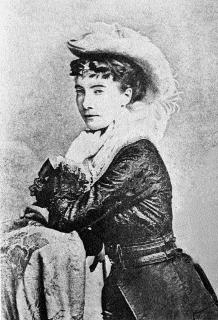
Anna Catherine Parnell, Irish nationalist and younger sister of Irish Nationalist leader Charles Stewart Parnell, drowns at Ilfracombe, Devon, England on September 20, 1911.

Parnell is born at Avondale House near Rathdrum, County Wicklow, the tenth of eleven children of John Henry Parnell, a landlord, and Delia Tudor Stewart Parnell, an Irish American and daughter of Admiral Charles Stewart of the United States Navy. She has very little formal education as a child, but the family has an extensive library which she is encouraged to read by her mother. After her father dies in 1859, she moves with the family to Dublin. Delia Parnell is an active socialite while in Dublin and exposes her children to a wide variety of political views.

In 1865 the family moves to Paris, but Parnell feels stifled by upper class society rules imposed upon her. She is in Paris when the Franco-Prussian War breaks out in 1870 and is active in the American Ladies’ Committee fundrasing and setting up hospitals. She returns alone to Dublin in 1870 to study art.

Parnell moves to London in 1875 to continue studying art. When her brother Charles is elected as a Member of Parliament (MP) for Meath, she becomes increasingly political. She frequently visits Parliament during debates, sitting in the Ladies’ Gallery. She writes articles about the debates in a column titled Notes From the Ladies’ Cage in the Celtic Monthly. In 1879 she joins her sister, Fanny Parnell, a poet, in New York City where they raise money in support of the Irish National Land League. The sisters work closely with their brother Charles and Michael Davitt but are critical of how the funds raised in America are being used in Ireland. In October 1880 the sisters found the New York Ladies’ Land League with their mother as president. They raised thousands of dollars sent to Ireland.

Parnell returns in Dublin in late 1880. When it seems that the Land League men are likely to be arrested, it is suggested that a women’s league in Ireland could take over the work in their absence. Public opinion at the time is against women in politics, but the Ladies’ Land League is founded on January 31, 1881, with Parnell as its effective leader.

When Charles Parnell and other leaders are imprisoned in 1881, as predicted, the Ladies’ Land League takes over their work. Though it is envisioned as a place holder until the men are released, Parnell organises branches throughout Ireland, encouraging women to play an active role in Land League activities. Offices are given to the ladies but little help. They raise funds for the League and for the support of prisoners and their families. They distribute Land League wooden huts to shelter evicted tenant families and by the beginning of 1882 they have 500 branches, thousands of women members and considerable publicity. They distribute £60,000 in relief aid.

This puts the Ladies’ Land League in serious debt. Parnell approaches her brother Charles, requesting money to settle the debts. Charles, who distrusts her understanding of politics, agrees to provide the money under the condition that the Ladies’ Land League is disbanded. She agrees, disbanding in 1882, but she never forgives Charles.

After her brother’s death in 1891 Parnell lives the rest of her life in the south of England under the assumed name Cerisa Palmer. She writes an angry account of her Land League experiences in Tale of a Great Sham, which is not published until 1986. She makes one last political appearance when she campaigns for a Sinn Féin candidate in a 1907 by-election.

By the summer of 1911, the 59-year-old Parnell is staying in lodgings at Ilfracombe in Devon. An enthusiastic swimmer since childhood, she bathes every day, and on September 20, disregarding a warning of dangerous seas, she goes swimming as usual. She is seen to be in difficulties and the alarm is raised, but by the time rescuers reached her, she is dead. Unlike her brother, whose funeral in Dublin had been the occasion for a massive outpouring of grief and remorse, Anna Parnell was buried quietly in the churchyard of Holy Trinity Church in Ilfracombe, in the presence of just seven strangers, and far away from the scenes of her greatest efforts and notoriety.