seamus dubhghaill

Promoting Irish Culture and History from Little Rock, Arkansas, USA


Leave a comment

Birth of Dolores Keane, Folk Singer & Actress

dolores-keane

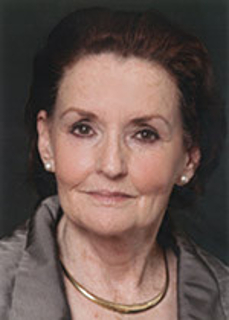
Dolores Keane, folk singer and occasional actress, is born on September 26, 1953, in the small village of Sylane, near Tuam, in rural County Galway. She is a founding member of the successful group De Dannan and has since embarked on a very successful solo career, establishing herself as one of the most loved interpreters of Irish song.

Keane is raised from the age of four by her aunts Rita and Sarah Keane, who are also well-known sean-nós singers. She starts her singing at a very young age, due to the influence of her musical aunts. She makes her first recording for Radio Éireann in 1958 at the age of five. This early start sets her on the path to a career in music. Her brother, Seán, also goes on to enjoy a successful music career.

In 1975, Keane co-founds the traditional Irish band De Dannan, and they release their debut album Dé Danann in that same year. The group gains international recognition and enjoys major success in the late 1970s in the United States. She tours with the band and their single “The Rambling Irishman” is a big hit in Ireland. In early 1976, after a short two-year spell, she leaves De Dannan and is replaced by Andy Irvine, who records live with the band on April 30, 1976, during the 3rd Irish Folk Festival in Germany. Soon thereafter, she marries multi-instrumentalist John Faulkner, with whom she subsequently records three albums of folk music.

Keane lives and works in London for several years with Faulkner before they move to Ireland in the early 1980s. They work on a series of film scores and programmes for the BBC and form two successful bands, The Reel Union and Kinvara. During this period, she records her first solo album, There Was a Maid in 1978. This is followed by two other releases, Broken Hearted I’ll Wander (1979) and Farewell to Eirinn (1980), which gives credit to Faulkner. In the mid-1980s she rejoins De Dannan and records the albums Anthem and Ballroom with them.

Keane turns her attention, once again, to her solo career in 1988. It sees the release of the eponymous Dolores Keane album. Her follow-up album, A Lion in a Cage (1989), features a song written by Faulkner called “Lion in a Cage” protesting the imprisonment of Nelson Mandela. It serves as Keane’s second Irish number one, and she performs the hit at the celebration of his release. This exposure expands her reputation and popularity worldwide. A new facet is added to her career when she plays the female lead in the Dublin production of Brendan Behan‘s The Hostage. The opening night is attended by Mary Robinson, the President of Ireland at the time.

In 1992, Keane is among the many female Irish singers to lend their music to the record-smashing anthology A Woman’s Heart. The album goes on to become the biggest-selling album in Irish history. A Woman’s Heart Vol.2 is released in late 1994 and emulates its predecessor in album charts the world over. Also in 1994, a solo album, Solid Ground, is released on the Shanachie Records label and receives critical acclaim in Europe and America.

In August 1995, Keane is awarded the prestigious Fiddler’s Green Hall of Fame award in Rostrevor, County Down, for her “significant contribution to the cause of Irish music and culture.” In that same year, she takes to the stage in the Dublin production of John Millington Synge‘s The Playboy of the Western World. She contributes to the RTÉ/BBC television production “Bringing It All Back Home,” a series of programmes illustrating the movement of Irish music to America.

In August 1997, Keane goes to number one again in the Irish album charts with a compilation album with her most loved songs. And another studio album, Night Owl, is released in 1998. It sees her returning to her traditional Irish roots and it does well in Europe and America. Despite a healthy solo career, she goes on tour with De Dannan again in the late 1990s, where she plays to packed audiences in venues such as Birmingham, Alabama and New York City.

Keane puts an end to recording and touring in the late 1990s, due to depression and alcoholism, for which she receives extensive treatment. As of June 2014, she is given the all clear after suffering from cancer.


4 Comments

Birth of Philip Embury, Methodist Preacher

Philip Embury

Philip Embury, Methodist preacher and a leader of one of the earliest Methodist congregations in the United States, is born in Ballingrane, County Limerick on September 21, 1729.

Embury’s parents are members of the colony of Germans that emigrate from the Palatinate to Ireland early in the eighteenth century, and in which Methodism co-founder John Wesley labors with great success. The colony forms from refugees from the War of the Spanish Succession. Embury is educated at a school near Ballingrane and learns the carpentry trade. He is converted on Christmas day 1752, becomes a local preacher at Court-Matrix in 1758 and marries Margaret Switzer that fall.

In 1760, due to rising rents and scarce land, he goes to New York City and works as a schoolteacher. In common with his fellow emigrants, he begins to lose interest in religious matters and does not preach in New York until 1766 when, moved by the reproaches of his cousin Barbara Heck, sometimes called the “mother of American Methodism,” he begins to hold services first in his own house on Barrack Street, now Park Place, and then in a rigging loft on what is now William Street. The congregation thus forms what is probably the first Methodist congregation in the United States, though it is a disputed question whether precedence should not be given to Robert Strawbridge, who begins laboring in Maryland about this time. Before this, he and Barbara Heck worship along with other Irish Palatines at Trinity Church in Manhattan, where three of his children are baptized.

The first Methodist church is built under Embury’s charge in 1768, in association with Thomas Webb and others, on the site of the present John Street United Methodist Church. He himself works on the building as a carpenter and afterward preaches there gratuitously. In 1769, preachers sent out by John Wesley arrive in New York City, and Embury goes to work in the vicinity of Albany at Camden Valley, New York, where he continues to work at his trade during the week and preaches every Sunday. He and several others receive a grant of 8,000 acres to develop for the manufacture of linen. He organizes among Irish emigrants at Ashgrove, near Camden Valley, the first Methodist society within the bounds of what becomes the flourishing and influential Troy Conference.

Philip Embury dies suddenly in Camden, New York in August 1775, in consequence of an accident in mowing. He is buried on a neighboring farm but in 1832 his remains are removed to Ashgrove churchyard and in 1866 to Woodland cemetery, Cambridge, New York, where a monument to him is unveiled in 1873, with an address by Bishop Matthew Simpson.

(Pictured: Portrait of Philip Embury by John Barnes, Salem, 1773)


Leave a comment

Drowning of Anna Catherine Parnell

anna-catherine-parnell

Anna Catherine Parnell, Irish nationalist and younger sister of Irish Nationalist leader Charles Stewart Parnell, drowns at Ilfracombe, Devon, England on September 20, 1911.

Parnell is born at Avondale House near Rathdrum, County Wicklow, the tenth of eleven children of John Henry Parnell, a landlord, and Delia Tudor Stewart Parnell, an Irish American and daughter of Admiral Charles Stewart of the United States Navy. She has very little formal education as a child, but the family has an extensive library which she is encouraged to read by her mother. After her father dies in 1859, she moves with the family to Dublin. Delia Parnell is an active socialite while in Dublin and exposes her children to a wide variety of political views.

In 1865 the family moves to Paris, but Parnell feels stifled by upper class society rules imposed upon her. She is in Paris when the Franco-Prussian War breaks out in 1870 and is active in the American Ladies’ Committee fundrasing and setting up hospitals. She returns alone to Dublin in 1870 to study art.

Parnell moves to London in 1875 to continue studying art. When her brother Charles is elected as a Member of Parliament (MP) for Meath, she becomes increasingly political. She frequently visits Parliament during debates, sitting in the Ladies’ Gallery. She writes articles about the debates in a column titled Notes From the Ladies’ Cage in the Celtic Monthly. In 1879 she joins her sister, Fanny Parnell, a poet, in New York City where they raise money in support of the Irish National Land League. The sisters work closely with their brother Charles and Michael Davitt but are critical of how the funds raised in America are being used in Ireland. In October 1880 the sisters found the New York Ladies’ Land League with their mother as president. They raised thousands of dollars sent to Ireland.

Parnell returns in Dublin in late 1880. When it seems that the Land League men are likely to be arrested, it is suggested that a women’s league in Ireland could take over the work in their absence. Public opinion at the time is against women in politics, but the Ladies’ Land League is founded on January 31, 1881, with Parnell as its effective leader.

When Charles Parnell and other leaders are imprisoned in 1881, as predicted, the Ladies’ Land League takes over their work. Though it is envisioned as a place holder until the men are released, Parnell organises branches throughout Ireland, encouraging women to play an active role in Land League activities. Offices are given to the ladies but little help. They raise funds for the League and for the support of prisoners and their families. They distribute Land League wooden huts to shelter evicted tenant families and by the beginning of 1882 they have 500 branches, thousands of women members and considerable publicity. They distribute £60,000 in relief aid.

This puts the Ladies’ Land League in serious debt. Parnell approaches her brother Charles, requesting money to settle the debts. Charles, who distrusts her understanding of politics, agrees to provide the money under the condition that the Ladies’ Land League is disbanded. She agrees, disbanding in 1882, but she never forgives Charles.

After her brother’s death in 1891 Parnell lives the rest of her life in the south of England under the assumed name Cerisa Palmer. She writes an angry account of her Land League experiences in Tale of a Great Sham, which is not published until 1986. She makes one last political appearance when she campaigns for a Sinn Féin candidate in a 1907 by-election.

By the summer of 1911, the 59-year-old Parnell is staying in lodgings at Ilfracombe in Devon. An enthusiastic swimmer since childhood, she bathes every day, and on September 20, disregarding a warning of dangerous seas, she goes swimming as usual. She is seen to be in difficulties and the alarm is raised, but by the time rescuers reached her, she is dead. Unlike her brother, whose funeral in Dublin had been the occasion for a massive outpouring of grief and remorse, Anna Parnell was buried quietly in the churchyard of Holy Trinity Church in Ilfracombe, in the presence of just seven strangers, and far away from the scenes of her greatest efforts and notoriety.


Leave a comment

Alleged Marriage of Catherine Coll & Juan Vivion de Valera

catherine-and-eamon-de-valera

Allegedly, Catherine Coll and Juan Vivion de Valera are married in St. Patrick’s Church, Greenville, New Jersey on September 19, 1881. They are the parents of Irish statesman and politician Éamon de Valera, who serves as the 3rd President of Ireland and Taoiseach.

Catherine Coll is born on December 21, 1856, in Bruree, County Limerick and emigrates to New York City in 1879. She first takes a job with a wealthy French family that is living in Manhattan. This is where she allegedly meets Juan Vivion de Valera (born 1854), a Spanish sculptor who comes to the home of her employers to give music lessons to the children.

It is alleged that Vivion de Valera, always in poor health, leaves his young family behind in 1885 and travels to Colorado, hoping that perhaps the healthier air will help him out only to die within a few months.

Though Éamon de Valera’s official biography (Longford/O’Neill, Hutchinson, London, 1970) states that his parents were married at St. Patrick’s Church on September 19, 1881, the parish records show no record of any Coll–de Valera wedding either at St. Patrick’s or any church, nor were any civil records found, in the vicinity during the period from 1875 to 1887. Also, initially de Valera is not registered in his father’s name.

However, not merely is there no record of the wedding. No record exists of the existence of a “Juan Vivion de Valera” anywhere in the United States: no birth certificate, no baptismal certificate (if he was a Catholic), no marriage certificate and no death certificate. While it is possible that he was born abroad and so either had a foreign birth certificate or was not registered, the absence of a death certificate for someone stated definitely in Éamon de Valera’s family history to have died in the United States has puzzled researchers. Some scholars have questioned whether Juan Vivion de Valera ever existed.

There has been a mischievous suggestion that he was related to the French painter Achille Devéria as Éamon de Valera “was known to be particularly fond of his works.” This claim is hardly likely given that Devéria was a painter of erotica, and de Valera nothing if not a prude. It should also be noted that Devéria died in 1857, at least 20 years before Éamon de Valera was born.

It has also been alleged by some that Catherine Coll invented Juan de Valera to give her son legitimacy.

(Pictured: Irish republican leader and founder of Fianna Fail, Éamon de Valera, with his mother Catherine Coll, April 01, 1927)


Leave a comment

Birth of James Joseph Quinlan, Union Army Officer

james-joseph-quinlan

James Joseph Quinlan, Union Army officer during the American Civil War, is born in Clonmel, County Tipperary on September 13, 1833.

Quinlan is appointed as Major of the 88th New York Infantry in December 1861. He becomes the regiment’s Lieutenant Colonel in October 1862 and is discharged in February 1863.

Quinlan receives America’s highest military decoration, the Medal of Honor, on February 18, 1891, for his actions at the Battle of Savage’s Station in Henrico County, Virginia, the fourth of the Seven Days Battles (Peninsula Campaign). His citation states he “led his regiment on the enemy’s battery, silenced the guns, held the position against overwhelming numbers, and covered the retreat of the Second Army Corps.”

James Joseph Quinlan dies on August 29, 1906, in Queens, New York and is buried at Calvary Cemetery, Woodside, Queens County, New York.


Leave a comment

Death of J.P. Donleavy, Novelist & Playwright

jp-donleavy

James Patrick Donleavy, Irish American novelist and playwright, dies in Mullingar, County Westmeath on September 11, 2017. His best-known work is the novel The Ginger Man, which is initially banned for obscenity.

Born in New York City on April 23, 1926, to Irish immigrants Margaret and Patrick Donleavy, Donleavy receives his education at various schools in the United States. He declares himself to be an atheist at the age of 14. He serves in the United States Navy during World War II. After the war ends, he moves to Ireland. In 1946 he begins studying at Trinity College, Dublin, but leaves in 1949 before taking a degree. Also in 1946, he marries Valerie Heron, and the couple has two children: Philip (born 1951) and Karen (born 1955). They divorce in 1969 and he remarries in 1970 to Mary Wilson Price. That union also ends in divorce in 1989.

Donleavy’s first published work is a short story entitled A Party on Saturday Afternoon, which appears in the Dublin literary periodical, Envoy, A Review of Literature and Art in 1950. He gains critical acclaim with his first novel, The Ginger Man (1955), which is one of the Modern Library 100 best novels. The novel, of which his friend and fellow writer Brendan Behan is the first person to read the completed manuscript, is banned in Ireland and the United States by reason of obscenity. Lead character Sebastian Dangerfield is in part based on Trinity College companion Gainor Crist, an American Navy veteran also studying at Trinity College on the G.I. Bill, whom Donleavy once describes in an interview as a “saint,” though of a Rabelaisian kind.

Correctly or incorrectly, his initial works are sometimes grouped with the Kitchen Sink artists as well as the “angry young men.” Another novel, A Fairy Tale of New York, provides the title of The Pogues hit song “Fairytale of New York.”

In March 2007, Donleavy is the castaway on BBC Radio 4‘s Desert Island Discs. In 2015, he is the recipient of the Bob Hughes Lifetime Achievement Award at the Bord Gáis Energy Irish Book Awards.

In 2011, it is reported that Donleavy had not fathered his two children with Mary Wilson Price. A DNA test in the early 1990s confirms that Rebecca is the daughter of brewing scion Kieran Guinness, and Rory is the son of Kieran’s older brother Finn, whom Price marries after her divorce from Donleavy. “My interest is only to look after the welfare of the child,” Donleavy tells The Times, “And after a certain stage, you can’t worry about their parentage.”

J.P. Donleavy dies of an apparent stroke in Mullingar, County Westmeath on September 11, 2017, at the aged of 91.


Leave a comment

Birth of Thomas Burke, Irish Dominican Preacher

thomas-nicholas-burke-statue

Thomas Nicholas Burke, Irish Dominican preacher, is born in Galway, County Galway on September 8, 1830.

Burke’s parents, though in moderate circumstances, gave him a good education. He studies at first under the care of the Patrician Brothers and is afterwards sent to a private school. An attack of typhoid fever when he is fourteen years old, and the famine year of 1847 have a sobering effect. Toward the end of that year, he asks to be received into the Order of Preachers and is sent to Perugia in Italy to make his novitiate. On December 29, he is clothed there in the habit of St. Dominic and receives the name of Thomas.

Shortly afterward Burke is sent to Rome to begin his studies at the College of St. Thomas, the future Pontifical University of Saint Thomas Aquinas, where he is a student of philosophy and theology. He passes thence to the Roman convent of Santa Sabina. His superiors send him, while yet a student, as novice-master to Woodchester, the novitiate of the resuscitated English Province. He is ordained into the priesthood on March 26, 1853. On August 3, 1854, he defends publicly the theses in universâ theologiâ. He is made lector at the College of St. Thomas in 1854.

Early in the following year Burke is recalled to Ireland to found the novitiate of the Irish Province at Tallaght, near Dublin. In 1859 he preaches his first notable sermon on “Church Music.” It immediately lifts him into fame.

Elected Prior of Tallaght in 1863, Burke goes to Rome the following year as Rector of the Dominican Convent of San Clemente and attracts great attention by his preaching. He returns to Ireland in 1867 and delivers his oration on Daniel O’Connell at Glasnevin before fifty thousand people.

Bishop Leahy takes him as his theologian to the First Vatican Council in 1870, and the following year he is sent as Visitor to the Dominican convents in America. He is besieged with invitations to preach and lecture. The seats are filled hours before he appears, and his audiences overflow the churches and halls in which he lectures. In New York City he delivers the discourses in refutation of the English historian James Anthony Froude.

In an eighteen-month period Burke gives four hundred lectures, exclusive of sermons, with the proceeds amounting to nearly $400,000. His mission is a triumph, but the triumph is dearly won. When he arrives in Ireland on March 7, 1873, he is spent and broken.

During the next decade Burke preaches in Ireland, England, and Scotland. He begins the erection of the church in Tallaght in 1883, and the following May preaches a series of sermons in the new Dominican church, London. In June he returns to Tallaght in a dying condition and preaches his last sermon in the Jesuit church, Dublin, in aid of the starving children of Donegal. A few days afterwards, on July 2, 1882, he dies. He is buried in the church of Tallaght, now a memorial to him.

(Pictured: Statue of Thomas Nicholas Burke by John Francis Kavanagh by Nimmo’s Pier in Galway)


Leave a comment

Birth of Dolores O’Riordan, Singer & Songwriter

dolores-o-riordan

Dolores Mary Eileen O’Riordan, Irish musician, singer and songwriter, is born in Ballybricken, County Limerick on September 6, 1971. She leads the rock band The Cranberries from 1990 until their break-up in 2003. They reunite in 2009. She is known for her lilting mezzo-soprano voice, her emphasised use of yodeling, and her strong Limerick accent.

O’Riordan is the youngest of nine children, two of whom die in infancy. Her father, Terence Patrick “Terry” O’Riordan (1937–2011), is a farm labourer who is left unable to work due to brain damage caused by a motorbike accident in 1968. Her mother, Eileen, is a school caterer. She attends Laurel Hill Coláiste FCJ school in Limerick. She leaves school without any qualifications.

In 1989, brothers Mike and Noel Hogan form The Cranberry Saw Us with drummer Fergal Lawler and singer Niall Quinn, in Limerick. Less than a year later, Quinn leaves the band. The remaining band members then place an advertisement for a female singer. O’Riordan responds to the advertisement and auditions by writing lyrics and melodies to some existing demos. When she returns with a rough version of “Linger,” she is hired, and they record Nothing Left At All, a three-track EP released on tape by local record label Xeric Records, which sells 300 copies. The group changes their name to “The Cranberries.” The owner of Xeric Studios, Pearse Gilmore, becomes their manager and provides the group with studio time to complete another demo tape, which he produces. It features early versions of “Linger” and “Dreams,” which are sent to record companies throughout the United Kingdom (UK).

This demo earns the attention of both the UK press and record industry and sparks a bidding war between major British record labels. Eventually, the group signs with Island Records. As part of The Cranberries she releases along with them five albums: Everybody Else Is Doing It, So Why Can’t We? (1993), No Need to Argue (1994), To the Faithful Departed (1996), Bury the Hatchet (1999), and Wake Up and Smell the Coffee (2001), and a greatest-hits compilation, Stars: The Best of 1992–2002. In 2003, the band decides to take a temporary time-out to experiment on solo projects.

In 2003, O’Riordan embarks on a solo career which includes an appearance with the Italian artist Zucchero Fornaciari on the album Zu & Co., with the song “Pure Love.” The album also features other artists such as Sting, Sheryl Crow, Luciano Pavarotti, Miles Davis, John Lee Hooker, Macy Gray, and Eric Clapton.

In 2005, O’Riordan appears on the Jam & Spoon‘s album Tripomatic Fairytales 3003 as a guest vocalist on the track “Mirror Lover.” She makes a cameo appearance in the 2006 Adam Sandler comedy Click as a wedding singer performing an alternate version of The Cranberries’ “Linger” set to strings. Her first single, “Ordinary Day,” is produced by BRIT Awards winner Youth, whose previous credits include The Verve, Embrace, Primal Scream, U2, and Paul McCartney.

Are You Listening? is released in Ireland on May 4, 2007, in Europe on May 7, and in North America on May 15. In 2008, O’Riordan wins a European Border Breakers Award (EBBA) which is presented annually to recognize the success of ten emerging artists or groups who reach audiences outside their own countries with their first internationally released album in the past year. Her second album, No Baggage, featuring eleven tracks, is released in August 2009.

In January 2009, the University Philosophical Society at Trinity College, Dublin invites The Cranberries to reunite for a concert celebrating O’Riordan’s appointment as an honorary member of the Society, which leads the band members to consider reuniting for a tour and a recording session. On August 25, 2009, while promoting her solo album No Baggage in New York City on 101.9 RXP radio, O’Riordan announces the reunion of the Cranberries for a world tour. The tour begins in North America in mid-November, followed by South America in mid-January 2010 and Europe in March 2010. She remains in the band until her unexpected death.

She appears as a judge on RTÉ‘s The Voice of Ireland during the 2013–2014 season. In April 2014, O’Riordan joins and begins recording new material with the trio D.A.R.K.

On January 15, 2018, at the age of 46, while in London for a recording session, O’Riordan dies suddenly at the London Hilton on Park Lane hotel in Mayfair. The cause of death is not immediately made public. Police say it is not being treated as suspicious. The coroner’s office says the results of its inquiry would not be released until April 3 at the earliest. On April 3 the inquest is cancelled with no new date announced.

A three-day memorial in her hometown, with O’Riordan lying in repose, lasts from January 20-22 at St. Joseph’s church. On January 23, she is buried after a service at Saint Ailbe’s Roman Catholic Church, Ballybricken, County Limerick. It begins with the studio recording of “Ave Maria” as sung by O’Riordan and Luciano Pavarotti. She is buried alongside her father.


Leave a comment

First Edition of the “Irish Press” Published

irish-press-may-25-1995

The first edition of the Irish Press, a Dublin daily newspaper founded by Éamon de Valera as a platform for Fianna Fáil, is published on September 5, 1931.

Irish Press Ltd. is officially registered on September 4, 1928, three years before the paper is first published, to create a newspaper independent of the existing media where the Independent Newspapers group is seen as supporting Cumann na nGaedheal/Fine Gael, and The Irish Times being pro-union, and with a mainly middle-class or Protestant readership.

The paper’s first issue is published on the eve of the 1931 All-Ireland Senior Hurling Championship Final between Cork and Kilkenny. Other newspapers do not cover GAA sports in any detail at the time. Margaret Pearse, the mother of Patrick and Willie Pearse, presses the button to start the printing presses. The initial aim of its publisher is to achieve a circulation of 100,000 which it quickly accomplishes. It goes on to list 200,000 subscribers at its peak.

The money to launch the Irish Press is raised in the United States during the Irish War of Independence by a bond drive to finance the First Dáil. Five million dollars is raised; however, 60 percent of this money is left in various banks in New York City. No one knows why de Valera ordered the bulk of the money to be left in New York when he returned to Ireland in late 1920.

In 1927, as a result of legal action between the Irish Free State government and de Valera, a court in New York orders that the bond holders be paid back outstanding money due to them. However, de Valera’s legal team has anticipated the ruling and has prepared for the outcome. A number of circulars are sent to the bond holders asking them to sign over their holdings to de Valera. The bond holders are paid 58 cents to the dollar. This money is then used as startup capital to launch the Irish Press. Following the 1933 Irish General Election, de Valera uses his Dáil Éireann majority to pass a measure allowing the bond holders to be paid the remaining 42 percent of the money still owed.

In December 1931, editor Frank Gallagher is prosecuted by an Irish Free State military tribunal for publishing articles alleging that Garda Síochána had mistreated the Anti-Treaty republicans of the Irish Free State government. This is facilitated by Amendment 17 of the Constitution of the Irish Free State and Gallagher is convicted and fined £50. An example of animosity from those who support Independent Newspapers and the Free State government is that the Irish Press is excluded from the special train which delivers newspapers from Dublin to the countryside. As a result, it is circulated throughout Ireland by a specially rented train.

The Irish Press sustains itself with its own resources until The Sunday Press is founded in 1949. In its heyday, the Irish Press has a number of first-rate reporters and columnists. One notable section, New Irish Writing is edited by David Marcus.

In the 1970s, the Minister for Posts and Telegraphs, Conor Cruise O’Brien, tries to use and amend The Emergency Powers Act and Section 31 of the Broadcasting Authority Act, to censor coverage of the Troubles in Northern Ireland. The Irish Press editor, Tim Pat Coogan, publishes editorials attacking the Bill. The Fine Gael/Labour Coalition Government tries to prosecute the Irish Press for its coverage of the maltreatment of republican prisoners by the Garda “Heavy Gang,” with the paper winning the case.

The Irish Press starts two further newspapers, the Evening Press (1954), and The Sunday Press. The Evening Press is aimed at an urban readership and achieves a daily circulation of 100,000. The new newspapers subsidise the Irish Press when its circulation sags. Its adoption of a tabloid format does not rescue its declining circulation.

The final issue of the Irish Press and Evening Press is on Thursday, May 25, 1995. The newspapers close because of a bizarre industrial dispute over the sacking of the group business editor, Colm Rapple. The group has not been in a healthy financial state for several years. When it eventually closes, with indebtedness of £20 million, 600 people lose their jobs.

(Pictured: Cover of last ever edition of the Irish Press from May 25, 1995)


Leave a comment

Birth of Francis O,Neill, Music Collector & Police Officer

francis-oneill

Francis O’Neill, Irish-born American police officer and collector of Irish traditional music, is born in Tralibane, near Bantry, County Cork on August 28, 1848. His biographer Nicholas Carolan refers to him as “the greatest individual influence on the evolution of Irish traditional dance music in the twentieth century.”

At an early age O’Neill hears the music of local musicians, among them Peter Hagarty, Cormac Murphy and Timothy Dowling. At the age of 16, he becomes a cabin boy on an English merchant vessel. On a voyage to New York, he meets Anna Rogers, a young emigrant whom he later marries in Bloomington, Illinois. The O’Neills move to Chicago, and in 1873 he becomes a policeman with the Chicago Police Department. He rises through the ranks quickly, eventually serving as the Chief of Police from 1901 to 1905. He has the rare distinction, in a time when political “pull” counts for more than competence, of being re-appointed twice to the position by two different mayors.

O’Neill is a flautist, fiddler and piper and is part of the vibrant Irish community in Chicago at the time. During his time as chief, he recruits many traditional Irish musicians into the police force, including Patrick O’Mahony, James O’Neill, Bernard Delaney, John McFadden and James Early. He also collects tunes from some of the major performers of the time including Patsy Touhey, who regularly sends him wax cylinders and visits him in Chicago. He also collects tunes from a wide variety of printed sources.

O’Neill retires from the police force in 1905. After that, he devotes much of his energy to publishing the music he has collected. He dies in Chicago, at the age of 87, on January 28, 1936.

In 2000, a life-size monument of Francis O’Neill playing a flute is unveiled next to the O’Neill family homestead in Tralibane, County Cork. The monument, and a commemorative wall are erected through the efforts of the Captain Francis O’Neill Memorial Company.

In 2008, Northwestern University Press issues Captain O’Neill’s Sketchy Recollections of an Eventful Life in Chicago, a non-musical memoir edited by Ellen Skerrett and Mary Lesch, O’Neill’s great-granddaughter, with a foreword by Nicholas Carolan of the Irish Traditional Music Archive. Carolan himself writes a musical biography of O’Neill, A Harvest Saved: Francis O’Neill and Irish Music in Chicago, which is published in Ireland by Ossian in 1997.

In August 2013, the inaugural Chief O’Neill Traditional Music Festival takes place in Bantry, County Cork, just a few miles from Tralibane. The 2013 event marks the centenary of the publication of O’Neill’s Irish Minstrels and Musicians. The event has taken place annually since.