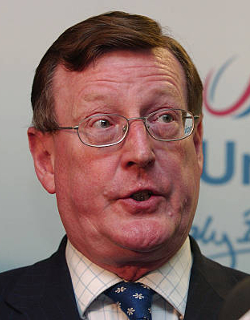
In the hours leading up to Trimble’s midnight resignation, there are minor clashes between the two sides as the Protestant “marching season,” an annual flashpoint for trouble, starts in Belfast.
Trimble, recipient of the Nobel Peace Prize with Catholic leader John Hume for their part in the 1998 Good Friday Agreement, precipitates the crisis by submitting a post-dated resignation letter several weeks earlier in protest of the Irish Republican Army‘s (IRA) refusal to disarm as part of the deal.
Under the landmark Good Friday Agreement, the power-sharing government of Catholics and Protestants that Trimble has headed has a six-week period to either re-install Trimble or replace him before the Northern Irish Assembly and Northern Ireland Executive are suspended. If such steps fail, Britain can call new provincial elections or re-impose direct rule from London.
As Trimble leaves the province, police and British troops mount a strong presence to head off trouble during a parade by the Protestant Orange Order institution. There are only minor scuffles between police and residents as a concrete and steel barrier is put up by security forces to seal off the Catholic enclave ahead of the march.
A spokesman for Trimble’s UUP says Empey’s appointment is intended to “shore up the political institutions and ensure its representation in the government.” Empey says his role is to perform the functions of First Minister but not take the title or salary. He says his party will not share power with the Irish Republican Army’s (IRA) political arm Sinn Féin unless the guerrilla group starts to disarm.
Sinn Fein leaders denounce Trimble’s resignation as an evasion of responsibility for peace in the province. The IRA says it wants a permanent peace and security sources say there is no sign of a return-to-war mood in the ranks of the guerrilla group. It has twice opened up arms dumps for international inspection to prove that the weapons have not been used, but Protestant politicians say that is not enough.
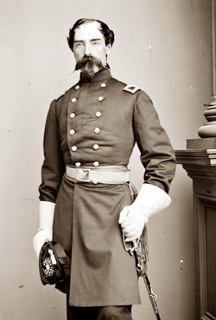
When the unit is originally mustered out of service, the 90-day enlistment terms having expired, Nugent accepts a commission as a captain in the regular army. He is immediately assigned to the 13th Infantry Regiment whose commanding officer, Colonel William Tecumseh Sherman, personally requests. Taking a leave of absence to return to New York, he assists Thomas Francis Meagher in organizing the Irish Brigade. The newly reformed 69th Infantry Regiment is the first unit assigned to the Irish Brigade and, with Nugent as its colonel, he leads the “Fighting 69th” at the Battles of Fair Oaks, Gaines’ Mill, Savage’s Station, White Oak Swamp, Glendale and Malvern Hill.
Nugent is shot in the stomach at the Battle of Fredericksburg and is eventually forced to resign his command. He is appointed acting assistant provost marshal for the southern district of New York, which includes New York City and Long Island, by the United States War Department. An Irishman and Democrat, his appointment is thought to assure the Irish American population that conscription efforts would be carried out fairly. The Irish American, a popular Irish language newspaper, writes that the selection is a “wise and deservedly popular one.” He encounters resistance from city officials wanting to remain uninvolved, however by mid-June reports to his superior officer and provost marshal general Colonel James Barnet Fry that conscription efforts are “nearing completion without serious incident.”
Understanding the seriousness of the situation, Nugent attempts to keep the draft selections quiet and in isolated parts of the city. In Manhattan however, lotteries are placed in the heart of Irish tenement and shanty neighborhoods where the draft is most opposed.
In the ensuing New York City draft riots, Nugent takes command of troops and attempts to defend the city against the rioters. Despite issuing the cancellation of the draft, the riots continue for almost a week. His home on West 86th Street is looted and burned by the rioters during that time, his wife and children barely escaping from their home. Upon breaking into his house, furniture is destroyed, and paintings of Nugent and Meagher are slashed, although a painting of Brigadier General Michael Corcoran is reportedly left untouched.
Nugent is brevetted Brigadier General for distinguished leadership of the 69th Regiment on March 13, 1865. The veterans of the Irish Brigade are honorably discharged and mustered out three months later. Nugent remains in the regular U.S. Army for the next twenty years, a formidable “Indian fighter” during the American Indian Wars with the 13th and 24th Infantry Regiments. In 1879, he retires at the rank of major and resides in New York where he is involved in the Grand Army of the Republic, the War Veterans’ Association of the 7th Regiment and an honorary member of The Old Guard.
Nugent becomes ill in his old age, complications arising from his wounds suffered at Fredericksburg, and remains bedridden for two months before his death at his McDonough Street home in Brooklyn on June 20, 1901. In accordance with his last wishes, he is buried at Cypress Hills National Cemetery.
Hughes is the third of seven children of Patrick and Margaret (née McKenna) Hughes. He and his family suffer religious persecution in their native land. He is sent with his elder brothers to a day school in the nearby village of Augher, and afterwards attends a grammar school in Aughnacloy. The family emigrates to the United States in 1816 and settles in Chambersburg, Pennsylvania. Hughes joins them there the following year.
After several unsuccessful applications to Mount St. Mary’s College in Emmitsburg, Maryland, he is eventually hired as a gardener at the college. During this time, he befriends Mother Elizabeth Ann Seton, who is impressed by Hughes and persuades the Rector to reconsider his admission. Hughes is subsequently admitted as a regular student of Mount St. Mary’s in September 1820.
Hughes campaigns actively on behalf of Irish immigrants and attempts to secure state support for parochial schools. Although this attempt fails, he founds an independent Catholic school system which becomes an integral part of the Catholic Church’s structure at the Third Plenary Council of Baltimore (1884), which mandates that all parishes have a school and that all Catholic children be sent to those schools. In 1841, Hughes founds St. John’s College in New York City which is now Fordham University.
Hughes is appointed Apostolic Administrator of the diocese due to Bishop Dubois’ failing health. As coadjutor, he automatically succeeds Dubois upon the bishop’s death on December 20, 1842, taking over a diocese which covers the entire state of New York and northern New Jersey. He is a staunch opponent of Abolitionism and the Free-Soil movement, whose proponents often express anti-Catholic attitudes. Hughes also founds the Ultramontane newspaper New York Freeman to express his ideas.
Hughes becomes an archbishop on July 19, 1850, when the diocese is elevated to the status of archdiocese by Pope Pius IX. As archbishop, he becomes the metropolitan for the Catholic bishops serving all the dioceses established in the entire Northeastern United States. To the dismay of many in New York’s Protestant upper-class, Hughes foresees the uptown expansion of the city and begins construction of the current St. Patrick’s Cathedral on Fifth Avenue between 50th and 51st Street, laying its cornerstone on August 15, 1858. At the request of President Abraham Lincoln, Hughes serves as semiofficial envoy to the Vatican and to France in late 1861 and early 1862. Lincoln also seeks Hughes’ advice on the appointment of hospital chaplains.
Hughes serves as archbishop until his death. He is originally buried in St. Patrick’s Old Cathedral, but his remains are exhumed in 1882 and re-interred in the crypt under the altar of the new cathedral he had begun.
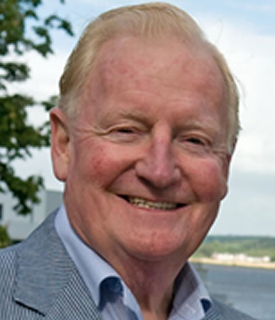
Brown is born in Larne, County Antrim in Northern Ireland. While studying at the Belfast College of Art he joins Billy McFarland’s Showband. Later he forms The Freshmen with some friends. Through Brown’s skillful arrangements, the band is able to reproduce sophisticated vocal harmonies in their covers of songs such as “Papa-Oom-Mow-Mow,” “The Little Old Lady from Pasadena,” and “Carpet Man.”
Brown leaves The Freshmen in the mid-1970s to pursue other musical challenges, albeit with limited success. He later rejoins the band and, in 1977, they have one of their biggest hits with his composition, “Cinderella.” Following the breakup of The Freshmen, he has a minor solo hit in 1980 with his own song, “Look What Jerry Lee Did To Me.”
In his latter years, Brown develops his interest in wildlife, becoming a successful painter of nature scenes, as well as contributing his insights into the natural world on RTÉ 2fm‘s children’s show, Poporama.
Billy Brown dies of a heart attack on June 6, 1999, at his home in Johnstown, County Kildare. In its obituary, the Irish Independent refers to him as “one of the most gifted musicians of his generation.”
In a tribute to Brown following his death, Freshmen founder-member, Maurice Henry, describes his late friend’s pivotal role in the band:
“You could say Billy was The Freshmen and without his talent and innovative musical skills we would certainly not have achieved as much, either as a showband or in our recordings.”
The hull of the RMS Titanic, is launched at 12:15 PM on May 31, 1911 at the Harland & Wolff shipyard in Belfast, Northern Ireland in the presence of Lord William Pirrie, J. Pierpoint Morgan, J. Bruce Ismay and 100,000 onlookers. Twenty-two tons of soap and tallow are spread on the slipway to lubricate the ship’s passage into the River Lagan. In keeping with the White Star Line‘s traditional policy, the ship is not formally named or christened with champagne. The ship is towed to a fitting-out berth where, over the course of the next year, her engines, funnels and superstructure are installed and her interior is fitted out.
The construction of RMS Olympic and RMS Titanic take place virtually in parallel. The sheer size of the RMS Titanic and her sister ships pose a major engineering challenge for Harland and Wolff. No shipbuilder has ever before attempted to construct vessels this size. RMS Titanic‘s keel is laid down on March 31, 1909. The 2,000 hull plates are single pieces of rolled steel plate, mostly up to 6 feet wide and 30 feet long and weigh between 2.5 and 3 tons.
Some of the last items to be fitted on RMS Titanic before the ship’s launch are her two side anchors and one centre anchor. The anchors themselves are a challenge to make with the centre anchor being the largest ever forged by hand and weighing nearly 16 tons. Twenty Clydesdale draught horses are needed to haul the centre anchor by wagon from the N. Hingley & Sons Ltd. forge shop in Netherton, near Dudley, United Kingdom to the Dudley railway station two miles away. From there it is shipped by rail to Fleetwood in Lancashire before being loaded aboard a ship and sent to Belfast.
The work of constructing the ships is difficult and dangerous. For the 15,000 men who work at Harland and Wolff at the time, safety precautions are rudimentary at best. Much of the work is dangerous and is carried out without any safety equipment like hard hats or hand guards on machinery. As a result, deaths and injuries are to be expected. During RMS Titanic‘s construction, 246 injuries are recorded, 28 of them “severe,” such as arms severed by machines or legs crushed under falling pieces of steel. Six people die on the ship herself while she is being constructed and fitted out, and another two die in the shipyard workshops and sheds. Just before the launch a worker is killed when a piece of wood falls on him.
(Pictured: Launch of the hull of the RMS Titanic with an unfinished superstructure in 1911)
Lynch is tried, convicted and sentenced to ten years for stealing shotguns, taking part in a punishment shooting and conspiring to take arms from the security forces. He is sent to the Maze Prison in County Down, Northern Ireland in December 1977. He becomes involved with the blanket protest and joins the 1981 hunger strike at the Maze on May 23, 1981. Kevin Lynch dies at Maze Prison 71 days later on August 1, 1981.
Duddy runs a fish and chip shop in the late 1960s which is supplied with beef burgers from a supplier whose van driver is Martin McGuinness. He is first approached by MI6 officer Frank Steele in the early 1970s but turns the approach down.
In light of the dissolution of Stormont in 1972, Duddy’s role as an intermediary starts in January 1972, when asked by friend and Derry’s Chief Police Office Frank Lagan to persuade the Official Irish Republican Army and the Provisional Irish Republican Army to remove their weapons from the Bogside. Both sides comply, but the Official IRA retains a few weapons for defensive purposes. After thirteen unarmed civil rights marchers are shot dead by British Parachute Regiment troops in what becomes known as Bloody Sunday, Duddy warns Lagan, “This is absolutely catastrophic. We’re going to have a war on our hands.”
In the aftermath of the events and repercussions of Bloody Sunday, MI6 agent Michael Oatley arrives in Belfast in 1973 seeking to understand the situation in Northern Ireland and hopefully create a communications channel between the IRA and the British Government. Duddy becomes the go-between for the communications, and this leads to the IRA ceasefire of 1975/76.
Duddy and Oatley are the main channel of communications between the British Government and the IRA leadership during the 1981 Irish hunger strike. Duddy is codenamed “Soon” by the British. Over the period of July 4-6, 1981, they exchange many telephone calls, with Duddy urging the “utmost haste” on the part of the British because “the situation would be irreparably damaged if a hunger striker died.” He suggests steps which could be taken to give the Provisional IRA a way of ending the strike. British Prime MinisterMargaret Thatcher personally amends the text of an offer which is conveyed to the IRA through Duddy, but the British consider the reply unsatisfactory and do not continue to negotiate through Duddy. Hunger striker Joe McDonnell dies the following day.
In November 1991, as his now friend Oatley is about to retire from MI6 service, Duddy calls Oatley to a diner in Derry. When dinner has finished, McGuinness enters the property. During the meeting, McGuinness and Oatley discuss options for moving the situation forward. A few weeks later, Duddy is pursued by a British businessman who wants to create jobs in Derry. In the first meeting, the businessman produces a letter from then Secretary of State for Northern IrelandPeter Brooke, introducing the “businessman” as Oatley’s MI6 successor. Duddy calls the MI6 agent “Fred,” and acting as the go-between they successfully negotiate a ceasefire. Talks between McGuinness and representatives of the British government are held secretly in his house.
On March 26, 2008, the BBC broadcasts a documentary entitled The Secret Peacemaker about Duddy, directed by Peter Norrey, and presented by Peter Taylor, a journalist who has known Duddy is “the link” for ten years.
In the spring of 2009, Duddy donates his private archives to the James Hardiman Library, NUI Galway, where they are now available to researchers. They chart his involvement in the peace process from 1972 to 1993, and his ongoing interest, and correspondence relating to Northern Ireland, until 2007. The Brendan Duddy Archive is opened in 2011.
At the age of 80, Brendan Duddy dies at Altnagelvin Area Hospital in Derry, Northern Ireland on May 12, 2017.
Patrick John Hillery, Irish politician and the sixth President of Ireland, is born in Spanish Point, County Clare on May 2, 1923. He serves two terms in the presidency and, though widely seen as a somewhat lacklustre President, is credited with bringing stability and dignity to the office. He also wins widespread admiration when it emerges that he has withstood political pressure from his own Fianna Fáil party during a political crisis in 1982.
Hillery is educated locally at Milltown MalbayNational school before later attending Rockwell College. At third level he attends University College Dublin where he qualifies with a degree in medicine. Upon his conferral in 1947 he returns to his native town where he follows in his father’s footsteps as a doctor.
Following Ireland’s successful entry into the European Economic Community in 1973, Hillery is rewarded by becoming the first Irishman to serve on the European Commission, serving until 1976 when he becomes President. In 1976 the Fine Gael–Labour Party National Coalition under Liam Cosgrave informs him that he is not being re-appointed to the Commission. He considers returning to medicine; however, fate takes a turn when Minister for DefencePaddy Donegan launches a ferocious verbal attack on President Cearbhall Ó Dálaigh, calling him “a thundering disgrace” for referring anti-terrorist legislation to the courts to test its constitutionality. When a furious President Ó Dálaigh resigns, a deeply reluctant Hillery agrees to become the Fianna Fáil candidate for the presidency. Fine Gael and Labour decide it is unwise to put up a candidate in light of the row over Ó Dálaigh’s resignation. As a result, Hillery is elected unopposed, becoming President of Ireland on December 3, 1976.
When Hillery’s term of office ends in September 1983, he indicates that he does not intend to seek a second term, but he changes his mind when all three political parties plead with him to reconsider. He is returned for a further seven years without an electoral contest. After leaving office in 1990, he retires from politics.
Hillery’s two terms as president, from 1976 to 1990, end before the 1998 Good Friday Agreement, which sets terms for an end to violence in Northern Ireland. But he acts at crucial moments as an emollient influence on the republic’s policies toward the north and sets a tone that helps pave the way for eventual peace.
Patrick Hillery dies on April 12, 2008, in his Dublin home following a short illness. His family agrees to a full state funeral for the former president. He is buried at St. Fintan’s Cemetery, Sutton, Dublin. In the graveside oration, TánaisteBrian Cowen says Hillery was “A humble man of simple tastes, he has been variously described as honourable, decent, intelligent, courteous, warm and engaging. He was all of those things and more.”
O’Hanlon spends several years in exile as an officer with the French army and is awarded the title of Count of the French Empire. He returns to Ireland around 1660, after the Restoration of King Charles II of England. After realizing there will be no restitution of his family’s lands, he takes to the hills around Slieve Gullion and becomes a notorious highwayman.
Although O’Hanlon is often compared to a real-life Robin Hood, the truth is more complex. Protestant landlords, militia officers, and even Anglican and Catholic priests work as informal members of the O’Hanlon gang, giving him information and scouting sites for him to rob. He also forces the landlords and merchants of northern Ireland to pay protection money. It is stated that the criminal activities of O’Hanlon are bringing in more money than the King’s revenue collectors.
In 1674 the colonial authorities in Dublin put a price on O’Hanlon’s head with posters advertising for his capture, dead or alive. The Anglo-Irish landowner Henry St. John, who had been granted the traditional lands of the O’Hanlon clan, receives O’Hanlon’s undying hatred when he begins evicting his clansmen in large numbers. St. John responds by waging a private war against the O’Hanlon Gang. The loss of his 19-year-old son while pursuing O’Hanlon only makes Henry St. John increasingly brutal toward anyone suspected of aiding Redmond O’Hanlon. On September 9, 1679, St. John is riding on his estate with a manservant and the Reverend Lawrence Power, the Church of Ireland Rector of Tandragee. A party of O’Hanlon’s associates ride into view and seize him, warning that he would be killed if a rescue is attempted. Then, a group of the family’s retainers ride into view and open fire on the kidnappers. As a result, Henry St. John receives two pistol balls in the forehead.
At the landlord’s funeral, an outraged Reverend Power denounces the outlaws and the landowners who do business with them. Outraged, James Butler, 1st Duke of Ormond, the Lord Deputy of Ireland, orders the assassination of O’Hanlon.
Count Redmond O’Hanlon is murdered in his sleep by his foster brother and close associate Art MacCall O’Hanlon at Eight Mile Bridge near Hilltown, County Down, on April 25, 1681. Art receives a full pardon and two hundred pounds from the Duke of Ormond for murdering his leader. William Lucas, the militia officer who had recruited Art and arranges the killing, receives a Lieutenant’s commission in the British Army.
As is the custom of the day, there are gruesome displays of his body parts including his head which is placed on a spike over Downpatrick jail. His remains are eventually removed to lie in a family plot in Conwal Parish Church cemetery in Letterkenny, County Donegal, where his parents had fled from Henry St. John. His bones, however, are not left to rest in peace there and his grave is constantly desecrated by the duke’s supporters. His remains are finally removed by his family and interred in his final secret resting place, somewhere within Lurgan Parish.
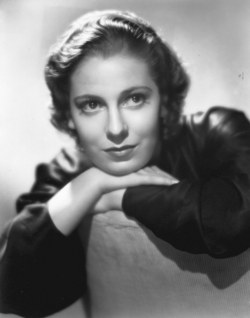
Valerie Hobson, Irish-born actress who appears in a number of films during the 1930s, 1940s and 1950s, is born Babette Valerie Louise Hobson in Larne, County Antrim, Northern Ireland on April 14, 1917. Her second husband is John Profumo, 5th Baron Profumo, a government minister who becomes the subject of a sensational sex scandal in 1963.
In 1952 she divorces her first husband, film producer Sir Anthony Havelock-Allan. In 1954, she marries Brigadier John, 5th Baron Profumo, an MP, giving up acting shortly afterwards. Baron Profumo is a prominent politician of Italian descent. Hobson’s last starring role is in the original London production of Rodgers and Hammerstein‘s musical play The King and I, which opens at the Theatre Royal, Drury Lane, on October 8, 1953. She plays Mrs. Anna Leonowens opposite Herbert Lom‘s King. The show runs for 926 performances.
After Profumo’s ministerial career ends in disgrace in 1963, following revelations he had lied to the House of Commons about his affair with Christine Keeler, Hobson stands by him. They worked together for charity for the remainder of her life, though she does miss their more public personas.
Hobson’s eldest son, Simon Anthony Clerveaux Havelock-Allan, is born in May 1944 with Down syndrome. Her middle child, Mark Havelock-Allan, is born on April 4, 1951, and becomes a judge. Her youngest child is the author David Profumo, who writes Bringing the House Down: A Family Memoir (2006) about the scandal. In it, he writes his parents told him nothing of the scandal and that he learned of it from another boy at school.
Valerie Hobson dies on November 13, 1998, at the age of 81 at a Westminster, London Hospital following a heart attack. After her death, her body is cremated in accordance with her wishes. Half her ashes are interred in the family vault in Hersham. The rest are scattered on January 1, 1999, by her sons David Profumo and Mark Havelock-Allan, near the family’s farm in Scotland.





 seamus dubhghaill