The Arts Council (An Chomhairle Ealaíon), sometimes called the Arts Council of Ireland, is established on May 8, 1951, by the Government of Ireland. The Council’s purpose is to encourage interest in Irish art, including visual art, music, performance, and literature, and to channel funding from the state to Irish artists and arts organisations. This includes encouragement of traditional Irish arts, support for contemporary Irish arts, and finance for international arts events in Ireland. The council is modeled on the Arts Council of Great Britain, founded in 1946, and works closely with the Arts Council of Northern Ireland, formed by the British government in Northern Ireland in 1962 to fulfil a similar role.
The Arts Council consists of twelve members and a chair, each appointed for a five-year term by the Minister for Arts, Heritage, Regional, Rural and Gaeltacht Affairs. The Chair of the Arts Council is entitled to an annual fee of €8,978 and ordinary members are entitled to a fee of €5,985, although some members choose to waive this fee.
The ongoing work of the Arts Council is delivered by the executive. In addition to the Director, a staff of 41 full-time equivalents carries out the daily functions of the organisation. Arts advisers, who provide additional expertise and strategic advice on different aspects of the arts, are retained on a consultancy basis.
Born in Belfast on March 9, 1954, Sands is the oldest of four children born to John and Rosaleen Sands, and the couple’s first son. Sands grows up in Belfast under the cloud of nationalist and loyalist divisions. At an early age, Sands’s life is affected by the sharp divisions that shape Northern Ireland. At the age of ten, he is forced to move with his family out of their neighborhood due to repeated intimidation by loyalists.
“I was only a working-class boy from a Nationalist ghetto,” Sands later writes about his childhood. “But it is repression that creates the revolutionary spirit of freedom.” Loyalist intimidation proves to be a theme throughout Sands’ life. At the age of 18, he is forced out of his job as an apprentice car builder. Not long afterwards, he and his family have to move again, as a result of political trouble.
The steady number of conflicts pushes Sands to join the republican movement in 1972. His ties to the movement soon capture the attention of the authorities, and later that year, he is arrested and charged with possessing firearms in his house. He spends the next three years of his life in prison. Upon his release, Sands immediately returns to the Republican Movement. He signs on as a community activist in Belfast’s rough Twinbrook area, quickly becoming a popular go-to person for a range of issues affecting the neighborhood.
In late 1976, authorities arrest Sands again, this time in connection with the bombing of a large furniture company and an ensuing gun battle. After weathering a brutal interrogation and then a court proceeding that offers up questionable evidence connecting Sands and three others to the attack, a judge sentences Sands to 14 years in prison at Long Kesh Prison, a facility used to house Republican prisoners from 1971 until 2000, located just outside of Belfast.
As a prisoner, Sands’s stature only grows. He pushes hard for prison reforms, confronting authorities, and for his outspoken ways he is frequently given solitary confinement sentences. Sands contention is that he and others like him, who are serving prison sentences, are actually prisoners of war, not criminals as the British government insists.
Beginning on March 1, 1981, Sands leads nine other Republican prisoners in the H Block section of the Maze prison on a hunger strike that lasts until death. Their demands range from allowing prisoners to wear their own clothes to permitting visits and mail, all of which are central in improving the inmates’ way of life.
Unable to move authorities to give in to his requests, and unwilling himself to end his hunger strike, Sands’s health begins to deteriorate. During the first seventeen days of the strike alone, he loses 16 pounds. A hero among his fellow nationalists, Sands is elected as a Member of Parliament (MP) for Fermanagh and South Tyrone while in prison. Sands becomes the youngest MP at the time. However, he dies less than one month later without ever having taken his seat in the House of Commons.
Only days after slipping into a coma, on the morning of May 5, 1981, Sands dies from malnutrition due to starvation. He is 27 years old and has refused to eat for 66 days. He becomes so fragile over his final weeks that he spends his final days on a waterbed to protect his deteriorating and fragile body. At time of his death, Sands is married to Geraldine Noade, with whom he has one son, Gerard.
The announcement of Sands’s death prompts several days of rioting in nationalist areas of Northern Ireland. Over 100,000 people line the route of Sands’s funeral. He is buried in the ‘New Republican Plot’ alongside 76 others. Their graves are maintained by the National Graves Association, Belfast.
While loyalists dismiss Sands’s death, others are quick to recognize its significance. Over the next seven months, nine other IRA supporters die on hunger strike. Eventually, the British government gives proper political recognition to the prisoners, many of them earning their release under the 1998 Good Friday Agreement.
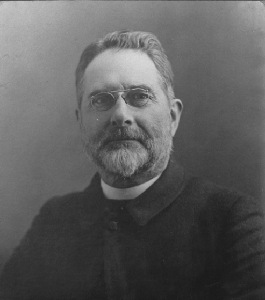
Ellison comes from a clerical family, his father Humphrey Eakins Ellison having been Dean of Ferns, County Wexford. He gains a sizarship of classics at Trinity College, Dublin in 1883, becomes a Scholar of the House in 1886 and graduates in 1887 with junior moderatorships in classics and experimental science. In 1890 he takes Holy Orders and moves to England, where he becomes the Curate of Tudhoe and Monkwearmouth. In 1894 he takes his MA and BD degrees and in the following year wins the Elrington Theological Prize.
In 1899 he returns to Ireland to become secretary of the Sunday School Society, a post which he holds for three years before accepting the incumbency of Monart, Enniscorthy, moving in 1908 to become Rector of Fethard-on-Sea with Tintern in Wexford. Ellison develops an interest in astronomy, having been introduced to practical optics by Dr. N. Alcock of Dublin and sets up his first observatory at Wexford. He becomes highly adept at making lenses and mirrors and writes several books and articles on the subject, including major contributions to the Amateur Telescope Making series, the Journal of the British Astronomical Association, and the weekly newspaper The English Mechanic. His book The Amateur’s Telescope (1920) is still considered a standard for telescope-makers and a forerunner of the more extensive series on the same topic by Albert Graham Ingalls.
On September 2, 1918 Ellison is appointed Director of the Armagh Observatory. He finds the Observatory in a state of disrepair and sets about repairing the instruments and the observatory dome. On January 3, 1919 he deeds a telescope of his own to the observatory, an 18-inch reflecting telescope, which is still there.
Ellison is a highly regarded planetary and binary star observer. Working with his son Mervyn, he makes many measurements of binary stars using the observatory’s 10-inch Grubbrefracting telescope and even discovers a new one close to Beta Lyrae, and according to Patrick Moore, is one of the few people to have observed an eclipse of Saturn’s moon Iapetus by Saturn’s outermost ring on February 28, 1919.
In 1934 Ellison becomes Canon and Prebendary of Ballymore, Armagh Cathedral. He dies on December 31, 1936, having held the office of Director of the observatory for nearly twenty years.
The Bushmills Old Distillery Company itself is not established until 1784 by Hugh Anderson. Bushmills suffers many lean years with numerous periods of closure with no record of the distillery being in operation in the official records both in 1802 and in 1822. In 1860 a Belfast spirit merchant named Jame McColgan and Patrick Corrigan purchase the distillery and in 1880 they form a limited company. In 1885, the original Bushmills buildings are destroyed by fire but the distillery is quickly rebuilt. In 1890, the steamship SS Bushmills, owned and operated by the distillery, makes its maiden voyage across the Atlantic to deliver Bushmills whiskey to America. It calls at Philadelphia and New York City before heading on to Singapore, Hong Kong, Shanghai and Yokohama.
In the early 20th century, the United States is a very important market for Bushmills, as well as for other Irish Whiskeyproducers. American Prohibition in 1920 comes as a large blow to the Irish Whiskey industry, but Bushmills manages to survive. Wilson Boyd, Bushmills’ director at the time, predicts the end of prohibition and has large stores of whiskey ready to export. After the World War II, the distillery is purchased by Isaac Wolfson and, in 1972, it is taken over by Irish Distillers, meaning that Irish Distillers controls the production of all Irish whiskey at the time. In June 1988, Irish Distillers is bought by French liquor group Pernod Ricard.
In June 2005, the distillery is bought by Diageo for £200 million. Diageo announces a large advertising campaign in order to regain market share for Bushmills.
In November 2014 it is announced that Diageo is to trade the Bushmills brand with Jose Cuervo in exchange for the 50% of the Don Julio brand of tequila that Diageo does not already own.
Some Bushmills offerings have performed well at international Spirits ratings competitions. In particular, its Black Bush Finest Blended Whiskey receives double gold medals at the 2007 and 2010 San Francisco World Spirits Competitions. It also receives a well-above-average score of 93 from the Beverage Testing Institute in 2008 and 2011.
At age five Higgins is separated from his parents, whose struggle to make ends meet is partly the product of his father’s ill health. He is raised in modest means by relatives in County Clare and starts his working life as a clerk in a bank. With a loan from a benefactor, he enters University College Galway, now National University of Ireland, Galway, at age 20 and continues his study with the benefit of scholarships. He serves as president of the student council and becomes involved with the Fianna Fáil party. Under the influence of politician Noël Browne, he soon switches allegiance to socialism and the Labour Party. An unashamed intellectual, Higgins continues his studies at Indiana University Bloomington and the University of Manchester. Before beginning a career in politics, he lectures in sociology and political science at Galway and is a visiting professor at Southern Illinois University Carbondale.
Twice Higgins runs unsuccessfully for a seat in the Dáil Éireann, the lower house of the Oireachtas, before being appointed to Seanad Éireann, the upper house, by TaoiseachLiam Cosgrave in 1973. Higgins is then elected to represent Galway West in the Dáil (1981–82) and serves another term in the Seanad (1983–87), representing the National University of Ireland, before becoming a fixture in the Dáil in the seat for Galway West (1987–2011). He also serves two terms as the mayor of Galway (1982–83, 1991–92). Early on he earns a reputation as a leftist firebrand who opposes participation in coalition government. His radical commitment to human rights and to peace and justice in places such as Nicaragua, El Salvador, and Cambodia, as well as his advocacy of progressive issues such as equal pay for women and the rights of people with disabilities, remain constant, but he mellows over the years to accept coalition rule.
In 1993, in the Fianna Fáil–Labour coalition government led by Albert Reynolds, Higgins becomes the minister for arts, culture, and the Gaeltacht (the districts in which the Irish language and the traditional national culture are best preserved). In that capacity he champions the Irish film industry and is responsible for the creation of the first Irish-language television station, Teilifís na Gaeilge (TG4). A poet who publishes four books of poetry before his election as president, Higgins earns a reputation as an impassioned and eloquent orator in both Irish and English.
By 2003, when he takes over the leadership of the Labour Party, the diminutive Higgins has become something of a national icon, known to most people simply as “Michael D.” He seeks Labour’s nomination for the presidency in 2004 unsuccessfully, but in 2011 he is elected the ninth president of Ireland with some 40 percent of the first-preference votes. In the process he bests heavily favoured independent Seán Gallagher, who stumbles badly in a televised debate just before the election, as well as Martin McGuinness, a former Irish Republican Army (IRA) leader who steps down temporarily as the deputy first minister of Northern Ireland to run.
Having joined the Civil Service in 1952, Bloomfield is appointed Permanent Secretary to the power sharing executive in 1974. After the collapse of the executive, he goes on to become Permanent Secretary for the Department of the Environment and the Department of Economic Development, and finally Head of the Northern Ireland Civil Service on December 1, 1984. In that capacity he is the most senior advisor to successive Secretaries of State for Northern Ireland and other Ministers on a wide range of issues. He retires from the post in April 1991.
Since retiring from the Civil Service, Bloomfield has embarked on a life of involvement in a diverse range of organisations. He has taken up roles such as Chairman for the Northern Ireland Legal Services Commission and his alma mater, the Royal Belfast Academical Institution. He has also been involved in the political reform of the States of Jersey and spearheaded the Association for Quality Education, which is fighting to retain academic selection in the Northern Ireland education system. In December 1997 he is asked by the Secretary of State for Northern Ireland, Mo Mowlam, to become the Northern Ireland Victims Commissioner for a fixed term. His role is to produce a report on the way forward for Victims issues in Northern Ireland. His report entitled We Will Remember Them is published in April 1998. From 1991 to 1999 he serves as the BBC‘s National Governor for Northern Ireland.
Keenan is born into a working-class family in East Belfast on September 28, 1950. He leaves Orangefield High Schoolearly and begins work as a heating engineer. However, he continues an interest in literature by attending night classes and in 1970 gains a place at the University of Ulster in Coleraine. Other writers there at the time include Gerald Dawe and Brendan Hamill. In the mid-1980s Keenan returns to the Magee College campus of the university for postgraduate study. Afterwards he accepts a teaching position at the American University of Beirut, where he works for about four months.
On the morning of April 11, 1986 Keenan is kidnapped by Islamic Jihad. After spending two months in isolation, he is moved to a cell shared with the British journalist John McCarthy. He is kept blindfolded throughout most of his ordeal, and is chained by his hands and feet when taken out of solitary.
The British and American governments at the time have a policy that they will not negotiate with terrorists and Keenan is considered by some to have been ignored. Because he is travelling on both British and Irish passports, the Irish government makes numerous diplomatic representations for his release, working closely with the Iranian government. Throughout the kidnap the government also provides support to Keenan’s two sisters, Elaine Spence and Brenda Gillham, who are spearheading the campaign for his release.
Keenan is released from captivity to Syrian military forces on August 24, 1990 and is driven to Damascus. There he is handed over by the Syrian Foreign Ministry to the care of Irish Ambassador, Declan Connolly. His sisters are flown by Irish Government executive jet to Damascus to meet him and bring him home to Northern Ireland.
An Evil Cradling is an autobiographical book by Keenan about his four years as a hostage in Beirut. The book revolves heavily around the great friendship he experiences with fellow hostage John McCarthy, and the brutality that is inflicted upon them by their captors. It is the 1991 winner of The Irish Times Literature Prize for Non-fiction and the Christopher Ewart-Biggs Memorial Prize.
Keenan returns to Beirut in 2007 for the first time since being released 17 years earlier, and describes “falling in love” with the city. He now lives in Dublin.
(Pictured: Brian Keenan arrives at Dublin Airport after his release from captivity in Beirut in August 1990)
Living in the nationalist Beechmount neighbourhood of the Falls, he stands for the Falls as a candidate for the Dock Labour Party in a city council by-election in 1956, but loses to Paddy Devlin of the Irish Labour Party, who later becomes his close ally. In 1958, he is elected to Belfast City Council as a member of the Irish Labour Party.
Many sympathetic British Members of Parliament (MPs) are present at a civil rights march in Derry on October 5, 1968, when Fitt and others are beaten by the Royal Ulster Constabulary. Fitt also supports the 1969 candidacy of Bernadette Devlin in the Mid Ulster by-election who runs as an anti-abstentionist ‘Unity‘ candidate. Devlin’s success greatly increases the authority of Fitt in the eyes of many British commentators, particularly as it produces a second voice on the floor of the British House of Commons who challenge the Unionist viewpoint at a time when Harold Wilson and other British ministers are beginning to take notice.
In August 1970, Fitt becomes the first leader of a coalition of civil rights and nationalist leaders who create the Social Democratic and Labour Party (SDLP). By this time Northern Ireland is charging headlong towards near-civil war and the majority of unionists remain hostile.
After the collapse of Stormont in 1972 and the establishment of the Northern Ireland Assembly in 1973 Fitt becomes deputy chief executive of the short-lived Power-Sharing Executive created by the Sunningdale Agreement.
Fitt becomes increasingly detached from both his own party and also becomes more outspoken in his condemnation of the Provisional Irish Republican Army. He becomes a target for republican sympathisers in 1976 when they attack his home. He becomes disillusioned with the handling of Northern Ireland by the British government. In 1979, he abstains from a crucial vote in the House of Commons which brings down the Labour government, citing the way that the government had failed to help the nationalist population and tried to form a deal with the Ulster Unionist Party.
In 1979, Fitt is replaced by John Hume as leader of the SDLP and he leaves the party altogether after he agrees to constitutional talks with British Secretary of StateHumphrey Atkins without any provision for an ‘Irish dimension’ and then sees his decision overturned by the SDLP party conference. Like Paddy Devlin before him, he claims the SDLP has ceased to be a socialist force.
In 1981, he opposes the hunger strikes in the Maze prison in Belfast. His seat in Westminster is targeted by Sinn Féin as well as by the SDLP. In June 1983, he loses his seat in Belfast West to Gerry Adams, in part due to competition from an SDLP candidate. The following month, on October 14, 1983, he is created a UK life peer as Baron Fitt, of Bell’s Hill in County Down. His Belfast home is firebombed a month later and he moves to London.
Gerry Fitt dies in London on August 26, 2005, at the age of 79, after a long history of heart disease.
The Act is bitterly resented by nationalists who see it as being deliberately designed to suppress their identity. Although it does not refer explicitly to the Irish tricolour, it does the Union Flag. The Act gives the Royal Ulster Constabulary a positive duty to remove any flag or emblem from public or private property which is considered to be likely to cause a breach of the peace, but legally exempts the Union Flag from ever being considered a breach of the peace. As a result, of all the flags likely to be displayed in Northern Ireland, almost exclusively the Irish tricolour would be deemed a breach of the peace. However, the Act is not a wholesale ban on the Irish flag, and it is often allowed to remain flying, especially at Gaelic Athletic Association (GAA) grounds.
The Act is introduced at a time of some turmoil within unionism in Northern Ireland, dissent that is viewed with alarm by the Ulster Unionist government, and the legislation is initiated amid the pressure emanating from that dissent. Hard line unionists accuse the government of appeasing nationalists. A more lenient approach by government to some nationalist parades leads to an increase in the flying of the Irish Tricolour. Likewise, the Coronation celebrations lead to the erection of Union Flags, not only in unionist enclaves, but in nationalist areas where disputes erupt and where some Union Flags are taken down and replaced with the Tricolour. Nationalists also organise boycotts of shops which openly celebrate the coronation with the display of the Union Flag, increasing tension and unionist fears. The Act takes over some of the powers of the Civil Authorities (Special Powers) Act (Northern Ireland) 1922.
Violations of the Act are punishable by a fine of up to £500 or up to five years in prison. The enforcement of the Act on occasion leads to rioting, most notoriously during the UK General Election of 1964 on the lower Falls Road in Belfast.
(Pictured: Coat of Arms of the Parliament of Northern Ireland)
On September 18, 1920, the Mayo Brigade of the IRA is reorganized and spilt up into four separate brigades. Tom Maguire is appointed commander of the South Mayo brigade.
Maguire leads an ambush on a Royal Irish Constabulary (RIC) patrol in Toormakeady, County Mayo, on May 3, 1921, killing four. Maguire’s flying column then heads for the Partry Mountains. According to one account, the column is surrounded by many soldiers and policemen guided by aeroplanes. Maguire is wounded and his adjutant is killed, but the column manages to escape with no further casualties. Maguire is involved in numerous other engagements including the Kilfall ambush.
Maguire is a member of the anti-Treaty IRA executive which commands rebel troops during the Irish Civil War. Maguire is captured by the National Army while in bed and is told that he would be executed, but his life is spared. While in prison his brother, Sean Maguire, aged 17, is executed by the government.
Maguire remains a TD until 1927. He initially indicates a willingness to contest the June 1927 Irish general election as a Sinn Féin candidate but withdraws after the IRA threatens to court-martial any member under IRA General Army Order 28, which forbids its members from standing in elections.
Maguire subsequently drifts out of the IRA. In 1932, a Mayo IRA officer reports that Maguire, now firmly aligned with Sinn Féin, refuses to call on men to join the IRA when speaking at republican commemorations. When challenged on this, Maguire claims that, as the IRA “were no longer the same as they used to be,” he disagrees with the organisation.
In December 1938, Maguire is one of a group of seven people, who had been elected to the Second Dáil in 1921, who meet with the IRA Army Council under Seán Russell. At this meeting, the seven sign over what they contend is the authority of the Government of Dáil Éireann to the Army Council. Henceforth, the IRA Army Council perceives itself to be the legitimate government of the Irish Republic and, on this basis, the IRA and Sinn Féin justify their rejection of the states of the Republic of Ireland and Northern Ireland and political abstentionism from their parliamentary institutions.
When the majority of IRA and Sinn Féin decide to abandon abstentionism in the 1969–1970 split, Ruairí Ó Brádaigh and Dáithí Ó Conaill seek and secure Maguire’s recognition of the Provisional IRA as the legitimate successor to the 1938 Army Council. Of the seven 1938 signatories, Maguire is the only one still alive at the time.
Likewise, in the aftermath of the 1986 split in the Republican Movement, both the Provisional IRA and the Continuity IRA seek Maguire’s support. Maguire signs a statement which is issued posthumously in 1996. In it, he confers legitimacy on the Army Council of the Continuity IRA. In The Irish Troubles, J. Bowyer Bell describes Maguire’s opinion in 1986, “abstentionism was a basic tenet of republicanism, a moral issue of principle. Abstentionism gave the movement legitimacy, the right to wage war, to speak for a Republic all but established in the hearts of the people.”

 The Arts Council (An Chomhairle Ealaíon), sometimes called the Arts Council of Ireland, is established on May 8, 1951, by the Government of Ireland. The Council’s purpose is to encourage interest in Irish art, including visual art, music, performance, and literature, and to channel funding from the state to Irish artists and arts organisations. This includes encouragement of traditional Irish arts, support for contemporary Irish arts, and finance for international arts events in Ireland. The council is modeled on the Arts Council of Great Britain, founded in 1946, and works closely with the Arts Council of Northern Ireland, formed by the British government in Northern Ireland in 1962 to fulfil a similar role.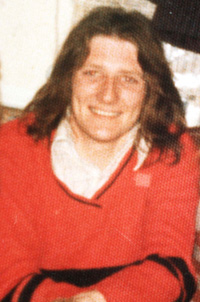


 seamus dubhghaill