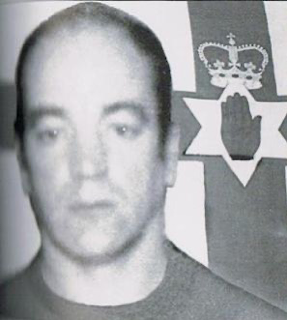
Jackson is one of seven children of John Jackson, farmhand, and his wife Eileen. As a teenager he participates in Paisleyite demonstrations against the Northern Ireland civil rights movement. He is already a local “hard man” who cultivates an air of menace. After a brief period in Australia, he returns home and serves in the Ulster Defence Regiment (UDR) from 1972 to 1975. He also joins the Ulster Volunteer Force (UVF) and is alleged to have committed his first murders in 1973. He is arrested in 1973 after the doorstep killing of a BanbridgeCatholic who works in the shoe factory that employs Jackson. The victim’s wife identifies Jackson as the murderer, but the charge is withdrawn after she admits to a degree of prompting by the police.
Jackson is a leading member of a UVF gang linked to about 100 murders carried out at random against Catholic civilians between 1973 and 1979, earning for the north Armagh and east Tyrone area the nickname “the murder triangle.” He also allegedly helps to plan the Dublin and Monaghan car bombings of May 17, 1974, killing thirty-three civilians, and orchestrates the attack on the Miami Showband on July 31, 1975. He becomes UVF Mid-Ulster Brigade commander in 1975. Never convicted of any of the numerous murders attributed to him, he is however jailed between 1979 and 1983 for arms possession.
Jackson marries Eileen Maxwell in the late 1960s. They have a son and two daughters. The marriage does not survive his imprisonment and after his release he moves to Donaghcloney, County Down, where he lives with a much younger girlfriend. He remains active in loyalist paramilitarism but takes a less prominent role. He survives several Irish Republican Army (IRA) attempts on his life, including the detonation of a car bomb outside his house. In 1984, the editor of the Belfast edition of the Sunday World is shot and wounded after publishing articles denouncing “the Jackal,” the nickname by which the press calls Jackson during his lifetime.
After the Anglo–Irish Agreement of 1985, Jackson is briefly linked to Ulster Resistance (UR), a paramilitary group founded by associates of Ian Paisley. He allegedly assists the rearming and reorganisation of the Mid-Ulster UVF under Billy Wright after the killing of his brother-in-law and alleged accomplice, Roy Metcalf, by the IRA in 1988. Relations between Wright and Jackson cool after the killing of a Catholic in Donaghcloney by Wright’s men leads to Jackson being called in for questioning, and he supports the UVF leadership in its 1996–97 dispute with Wright. He is also the focus of recurring allegations about collusion between loyalist paramilitaries and elements of the security forces in mid-Ulster, including claims that he operated on behalf of British military intelligence who shielded him from prosecution.
Jackson dies of lung cancer at the age of 49 at his Donaghcloney home on May 30, 1998. He is buried on June 1 in a private ceremony in the St. Bartholomew Church of Ireland churchyard in his native Donaghmore, County Down. His grave, close to that of his parents, is unmarked apart from a steel poppy cross. His father had died in 1985 and his mother outlives him by five years.
Considerable uncertainty surrounds his involvement in many of the crimes attributed to him, but there is no doubt that he is a cold-blooded multiple murderer and one of the most sinister “hard men” of loyalist paramilitarism.
(From: “Jackson, Robin” by Patrick Maume, Dictionary of Irish Biography, http://www.dib.ie, October 2009)
McGeown joins the IRA’s youth wing, Fianna Éireann, in 1970. He is first arrested at the age of 14, and in 1973 he is again arrested and interned in Long Kesh Detention Centre until 1974. In November 1975, he is arrested and charged with possession of explosives, bombing the Europa Hotel, and IRA membership. At his trial in 1976 he is convicted and receives a five-year sentence for IRA membership and two concurrent fifteen-year sentences for the bombing and possession of explosives, and is imprisoned at Long Kesh with Special Category Status.
In March 1978, McGeown attempts to escape along with Brendan McFarlane and Larry Marley. The three have wire cutters and dress as prison officers, complete with wooden guns. The escape is unsuccessful, and results in McGeown receiving an additional six-month sentence and the loss of his Special Category Status.
McGeown is transferred into the Long Kesh Detention Centre’s H-Blocks where he joins the blanket protest and dirty protest, attempting to secure the return of Special Category Status for convicted paramilitary prisoners.He describes the conditions inside the prison during the dirty protest in a 1985 interview:
“There were times when you would vomit. There were times when you were so run down that you would lie for days and not do anything with the maggots crawling all over you. The rain would be coming in the window and you would be lying there with the maggots all over the place.“
In late 1980, the protest escalates and seven prisoners take part in a fifty-three-day hunger strike, aimed at restoring political status by securing what are known as the “Five Demands:”
The right not to wear a prison uniform.
The right not to do prison work.
The right of free association with other prisoners, and to organise educational and recreational pursuits.
The right to one visit, one letter and one parcel per week.
Full restoration of remission lost through the protest.
The strike ends before any prisoners die and without political status being secured. A second hunger strike begins on March 1, 1981, led by Bobby Sands, the IRA’s former Officer Commanding (OC) in the prison. McGeown joins the strike on July 9, after Sands and four other prisoners have starved themselves to death. Following the deaths of five other prisoners, his family authorises medical intervention to save his life after he lapses into a coma on August 20, the 42nd day of his hunger strike.
McGeown is released from prison in 1985, resuming his active role in the IRA’s campaign and also working for Sinn Féin, the republican movement’s political wing. In 1988, he is charged with organising the Corporals killings, an incident where two plain-clothes British Army soldiers are killed by the IRA. At an early stage of the trial his solicitor, Pat Finucane, argues there is insufficient evidence against McGeown, and the charges are dropped in November 1988. McGeown and Finucane are photographed together outside Crumlin Road Courthouse, a contributing factor to Finucane being killed by the Ulster Defence Association (UDA) in February 1989. Despite suffering from heart disease as a result of his participation in the hunger strike, McGeown is a member of Sinn Féin’s Ard Chomhairle and is active in its Prisoner of War Department. In 1993, he is elected to Belfast City Council.
McGeown is found dead in his home on October 1, 1996, after suffering a heart attack. Sinn Féin chairman Mitchel McLaughlin says his death is “a great loss to Sinn Féin and the republican struggle.” McGeown is buried in the republican plot at Belfast’s Milltown Cemetery. His death is often referred to as the “11th hunger striker.” In 1998, the Pat McGeown Community Endeavour Award is launched by Sinn Féin president Gerry Adams, with Adams describing McGeown as “a modest man with a quiet, but total dedication to equality and raising the standard of life for all the people of the city.” A plaque in memory of McGeown is unveiled outside the Sinn Féin headquarters on the Falls Road on November 24, 2001, and a memorial plot on Beechmount Avenue is dedicated to the memory of McGeown, Kieran Nugent and Alec Comerford on March 3, 2002.
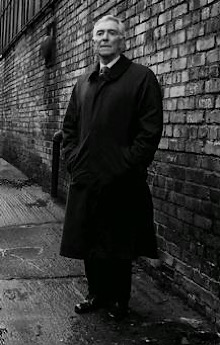
James NesbittMBE, a Royal Ulster Constabulary (RUC) Detective Chief Inspector who is best known for heading the Murder Squad team investigating the notorious Shankill Butchers‘ killings in the mid-1970s, dies on August 27, 2014, following a brief illness.
Nesbitt is born on September 29, 1934, in Belfast, Northern Ireland, the son of James, an electrician, and Ellen. He is brought up in the Church of Ireland religion and lives with his parents and elder sister, Maureen, in a terraced house in Cavehill Road, North Belfast, which is considered to be a middle class area at the time. Having first attended the Model Primary School in Ballysillan Road, in 1946 he moves on to Belfast Technical High School where he excels as a pupil. From an early age, he is fascinated by detective stories and dreams about becoming a detective himself.
As a child, Nesbitt avidly reads about all the celebrated murder trials in the newspapers. At the age of 16, he opts to leave school and goes to work as a sales representative for a linen company where he remains for seven years.
At the age of 23, Nesbitt seeks a more exciting career and realises his childhood dream by joining the Royal Ulster Constabulary as a uniformed constable. He applies at the York Road station in Belfast and passes his entry exams. His first duty station is at Swatragh, County Londonderry. During this period, the Irish Republican Army‘s Border Campaign is being waged. He earns two commendations during the twelve months he spends at the Swatragh station, having fought off two separate IRA gun attacks which had seen an Ulster Special Constabulary man shot. In 1958, he is transferred to the Coleraine RUC station where his superiors grant him the opportunity to assist in detective work. Three years later he is promoted to the rank of detective.
Nesbitt marries Marion Wilson in 1967 and begins to raise a family. By 1971 he is back in his native Belfast and holds the rank of Detective Sergeant. He enters the RUC’s Criminal Investigation Department (CID) section and is based at Musgrave Street station. Many members of the RUC find themselves targeted by both republican and loyalistparamilitaries as the conflict known as The Troubles grows in intensity during the late 1960s and early 1970s.
In September 1973, Nesbitt is promoted to Detective Inspector and moves to head up the RUC’s C or “Charlie” Division based in Tennent Street, off the Shankill Road, the heartland of loyalism and home of many loyalist paramilitaries. C Division covers not only the Shankill but also the republican Ardoyne and “The Bone” areas. Although he encounters considerable suspicion from his subordinates when he arrives at Tennent Street, he manages to eventually create much camaraderie within the ranks of those under his command when before there had been rivalry and discord. C Division loses a total of twelve men as a result of IRA attacks. During his tenure as Detective Chief Inspector at Tennent Street, he and his team investigate a total of 311 killings and solve around 250 of the cases.
By 1975, Nesbitt is encountering death and serious injury on a daily basis as the violence in Northern Ireland shows no signs of abating. However, toward the end of the year, he is faced with the first of a series of brutal killings that add a new dimension to the relentless tit-for-tat killings between Catholics and Protestants that has already made 1975 “one of the bloodiest years of the conflict.”
The Shankill Butchers are an Ulster loyalist paramilitary gang, many of whom are members of the Ulster Volunteer Force (UVF), that is active between 1975 and 1982 in Belfast. It is based in the Shankill area and is responsible for the deaths of at least 23 people, most of whom are killed in sectarian attacks.
The gang kidnaps, tortures and murders random civilians suspected of being Catholics. Each is beaten ferociously and has their throat slashed with a butcher knife. Some are also tortured and attacked with a hatchet. The gang also kills six Ulster Protestants over personal disputes and two other Protestants mistaken for Catholics.
Most of the gang are eventually caught by Nesbitt and his Murder Squad and, in February 1979, receive the longest combined prison sentences in United Kingdom legal history.
In 1991, after Channel 4 broadcasts a documentary claiming that the Ulster Loyalist Central Co-ordinating Committee had been reorganised as an alliance between loyalist paramilitaries, senior RUC members and leader figures in Northern Irish business and finance, Nesbitt and Detective Inspector Chris Webster are appointed by Chief Constable Hugh Annesley to head up an internal inquiry into the collusion allegations. The investigation delivers its verdict in February 1993 and exonerates all those named as Committee members who did not have previous terrorist convictions arguing that they are “respectable members of the community” and in some cases “the aristocracy of the country.”
Prior to his retirement, Nesbitt has received a total of 67 commendations, which is the highest number ever given to a policeman in the history of the United Kingdom. In 1980, he is awarded the MBE “in recognition of his courage and success in combating terrorism.”
Nesbitt dies on August 27, 2014, after a brief illness.
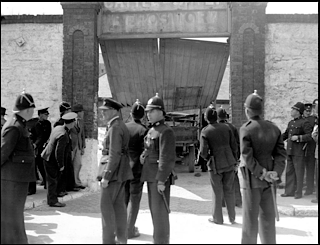
The Copley Street riot occurs on August 13, 1934, at the Copley Street Repository, Cork, County Cork, after Blueshirts opposed to the collection of annuities from auctioned cattle ram a truck through the gate of an ongoing cattle auction. The Broy Harriers open fire and one man, 22 year old Michael Lynch, is killed and several others injured.
Following the Irish War of Independence (1919–21), Britain relinquishes its control over much of Ireland. However, aspects of the Anglo-Irish Treaty, which had marked the end of the war, lead to the Irish Civil War (1922–23). The aftermath leaves Ireland with damaged infrastructure and hinders its early development.
Éamon de Valera, who had voted against the Anglo-Irish treaty and headed the Anti-Treaty movement during the civil war, comes to power following the 1932 Irish general election and is re-elected in 1933. While the treaty stipulates that the Irish Free State should pay £3.1 million in land annuities to Great Britain, and despite advice that an economic war with Britain could have catastrophic consequences for Ireland (as 96% of exports are to Britain), de Valera’s new Irish government refuses to pay these annuities – though they continue to collect and retain them in the Irish exchequer.
This refusal leads to the Anglo-Irish trade war (also known as the “Economic War”), which persists until 1935, when a new treaty, the Anglo-Irish Trade Agreement, is negotiated in 1938. During this period, a 20% duty is imposed on animals and agricultural goods, resulting in significant losses for Ireland. Specifically, poultry trade declines by 80%, butter trade by 50% and cattle prices drop by 50%. Some farmers are forced to kill and bury animals because they cannot afford to maintain them.
In 1933, Fine Gael emerges as a political party—a merger of Cumann na nGaedheal and the National Centre Party. Fine Gael garners substantial support from rural farmers who are particularly affected by the Economic War. They strongly object to the collection of land annuities by the Fianna Fáil government. The Blueshirts, a paramilitary organisation founded as the Army Comrades Association in 1932 and led by former Garda CommissionerEoin O’Duffy, transforms into an agrarian protest organisation, mobilising against seizures, cattle auctions, and those tasked with collecting annuities.
O’Duffy, a key figure in Irish politics, encourages farmers to withhold payment of land annuities to the government. Arising from this stance, Gardaí start to seize animals and farm equipment, auctioning them to recover the outstanding funds. While seized cattle are auctioned, local farmers rarely participate. Instead, Northern Ireland dealers, often associated with the name O’Neill, are the primary buyers. These auctions are protected by the Broy Harriers, an armed auxiliary group linked to the police.
By 1934, tensions escalate, and a series of anti-establishment incidents are attributed to the Blueshirts. These incidents range from minor acts of violence, such as breaking windows, to more serious offenses like assault and shootings.
On August 13, 1934, an auction takes place at Marsh’s Yard on Copley Street in Cork, featuring cattle seized from farms in Bishopstown and Ballincollig. The police establish a cordon by 10:00 a.m., with 300 officers on duty. Lorries arrived at 11:00 a.m.
Around noon, three thousand protestors assemble. Within twenty-five minutes, an attempt is made to breach the yard gate by ramming it with a truck. According to Oireachtas records, there are approximately 20 men in the truck which they run against the gate. The Minister for JusticeP. J. Ruttledge, says that the truck “with those people in it charged through those cordons of Guards; that several Guards jumped on to the lorry and tried to divert the driver by catching hold of the steering wheel and trying to twist it.” Some contemporary news sources suggest that the ramming truck knocked down the surrounding police cordon “like ninepins and crush[ed] a police inspector against a gate.” Later sources suggest that the senior officer (a superintendent) was injured in a fall, while attempting to avoid being struck, rather than being hit directly by the truck.
A man named Michael Lynch, wearing the distinctive blue shirt, and approximately 20 others reportedly manage to enter the yard. As soon as they enter the yard they are fired upon by armed “special branch” police detectives who are in the yard. Lynch later succumbs to his injuries at the South Infirmary. Thirty-six others are wounded. Despite the violence, the auction proceeds after a one-hour delay.
Following the shooting, a riot ensues, but when news of Lynch’s death reaches the participants, they cease rioting, kneel, and recited a Rosary.
The funeral of Michael Lynch occurs on August 15, 1934. The funeral procession is planned to depart from Saints Peter and Paul’s Church, Cork at 2:30 PM.
The occasion allows for a significant show of force for Eoin O’Duffy and the Blueshirts, and features Roman salutes and military drills. Farmers in Munster reportedly stop work for an hour, and Blueshirt members ask shopkeepers to close their businesses, as a show of respect for the “martyr.” Lynch is afforded a “full Blueshirt burial,” and the coffin is adorned with the flag of the Blueshirts (the Army Comrades Association).
According to the Minister for Justice, at the funeral W. T. Cosgrave stands beside O’Duffy as the Blueshirt leader gives an oration saying, “We are going to carry on until our mission is accomplished […] those 20 brave men, whose deed will live for ever, not only in Cork but in every county in Ireland, broke through in the lorry […] all Blueshirts should try to emulate his bravery and nobleness. Every Blueshirt is prepared to go the way of Michael for his principles.”
The court grants the family £300 in 1935. This is appealed to the High Court, followed by the Supreme Court, which dismisses the case. In the Supreme Court, Henry Hanna describes the Broy Harriers as “an excrescence” upon the Garda Síochána.
When the matter is discussed in the Seanad in September 1934, and before a vote is taken to “[condemn] the action of the members of the special branch of the Gárda Síochána […] on Monday, the 13th August 1934,” the senators who support Éamon de Valera’s government walk out.
In August 1940, a memorial is unveiled on the tomb of Lynch in Dunbulloge Cemetery in Carrignavar, County Cork, consisting of a limestone Celtic cross and pedestal. The pedestal is engraved with a quote from the American orator, William Jennings Bryan: “The humblest citizen of all the land, when clad in the armour of a righteous cause is stronger than all the hosts of error.”
(Pictured: Aftermath of the ramming of Marsh’s Yard, Copley Street, that leads to the death of Michael Lynch and the Copley Street Riot on August 13, 1934)
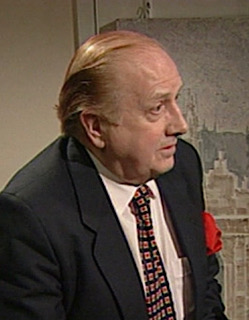
Kilfedder leaves the UUP in 1977 in opposition to the party’s policies tending to integrationism, preferring to advocate the restoration of the Stormont administration. For a time he sits as an “Independent Ulster Unionist.” He contests the 1979 European Parliament election under that label, finishing fourth in the count for the three seats, having overtaken the UUP leader Harry West on transfers.
On March 20, 1995, while traveling by train into London from Gatwick Airport, Kilfedder dies of a heart attack. This is the same day that the Belfast Telegraph carries a front-page story saying that an Ulster MP has been targeted as one of twenty MPs invited by the LGBT rights organisation OutRage! in a letter to come out. He dies unmarried and is survived by two sisters.
Wright attracts considerable media attention at the Drumcree standoff, where he supports the Orange Order‘s desire to march its traditional route through the Catholic/Irish nationalist area of Portadown. In 1994, the UVF and other paramilitary groups call ceasefires. However, in July 1996, Wright’s unit breaks the ceasefire and carries out a number of attacks, including a sectarian killing. For this, Wright and his Portadown unit of the Mid-Ulster Brigade are stood down by the UVF leadership. He is expelled from the UVF and threatened with execution if he does not leave Northern Ireland. Wright ignores the threats and, along with many of his followers, defiantly forms the breakaway Loyalist Volunteer Force (LVF).
In March 1997, Wright is sent to the HM Maze Prison for having threatened the life of a woman. While imprisoned, he continues to direct the LVF’s activities. On December 27 of that year, he is assassinated at the prison by Irish National Liberation Army (INLA) prisoners as he is led out to a van for a visit with his girlfriend. The LVF carries out a wave of sectarian attacks in retaliation.
Owing to his uncompromising stance as an upholder of Ulster loyalism and opposition to the Northern Ireland peace process, Wright is regarded as a cult hero, cultural icon, and martyr figure by hardline loyalists. His image adorns murals in loyalist housing estates and many of his devotees have tattoos bearing his likeness.
Wright’s funeral procession moves at a snail’s pace on a grey and windy day. Groups of mourners take turns carrying the coffin. Women carry a wreath that simply says “Billy.” Twenty men with tight haircuts and white shirts with black armbands flank the cortège. There is heavy security. Troops stand guard on bridges and Royal Ulster Constabulary (RUC) Land Rovers prowl the housing estates. A spotter plane flies overhead. A lone piper plays “Abide with Me” before a banner bearing the letters “LVF.”
Wright is buried at Seagoe Cemetery, Portadown, Northern Ireland.
Bates is born into an Ulster Protestant family and grows up in the Shankill Road area of Belfast. He has a criminal record dating back to 1966, and later becomes a member of the Ulster loyalistparamilitary organisation, the Ulster Volunteer Force (UVF). Bates, employed as a barman at the Long Bar, is recruited into the Shankill Butchers gang in 1975 by its notorious ringleader, Lenny Murphy.
The gang uses The Brown Bear pub, a Shankill Road drinking haunt frequented by the UVF, as its headquarters. Bates, a “sergeant” in the gang’s hierarchy, is an avid participant in the brutal torture and savage killings perpetrated against innocent Catholics after they are abducted from nationalist streets and driven away in a black taxi owned by fellow Shankill Butcher, William Moore.
The killings typically involve grisly-throat slashings preceded by lengthy beatings and torture. Bates is said to have been personally responsible for beating James Moorhead, a member of the Ulster Defence Association (UDA), to death on January 30, 1977, and to have played a central role in the kidnapping and murder of Catholic Joseph Morrisey three days later. He also kills Thomas Quinn, a derelict, on February 8, 1976, and the following day is involved in shooting dead Archibald Hanna and Raymond Carlisle, two Protestant workmen that Bates and Murphy mistake for Catholics.
Martin Dillon reveals that Bates is also one of the four UVF gunmen who carries out a mass shooting in the Chlorane Bar attack in Belfast city centre on June 5, 1976. Five people (three Catholics and two Protestants) are shot dead. The UVF unit bursts into the pub in Gresham Street and orders the Catholics and Protestants to line up on opposite ends of the bar before they open fire. He later recounts his role in the attack to police; however, he claims that he never fired any shots due to his revolver having malfunctioned. Forensics evidence contradicts him as it proves that his revolver had been fired inside the Chlorane Bar that night. Lenny Murphy is in police custody at the time the shooting attack against the Chlorane Bar takes place.
Bates is arrested in 1977, along with Moore and other “Shankill Butcher” accomplices. His arrest follows a sustained attack by Moore and Sam McAllister on Catholic Gerard McLaverty, after which they dump his body, presuming him dead. However, McLaverty survives and identifies Moore and McAllister to the Royal Ulster Constabulary who drive him up and down the Shankill Road during a loyalist parade until he sees his attackers. During questioning both men implicate Bates, and other gang members, leading to their arrests. Following a long period spent on remand, he is convicted in February 1979 of murder related to the Shankill Butcher killings and given ten life sentences, with a recommendation by the trial judge, Justice Turlough O’Donnell, that he should never be released.
At the start of his sentence, Bates is involved in a series of violent incidents involving other inmates. He later claims that he had perpetrated these acts in order to live up to his “Basher” nickname. He serves as company commander of the UVF inmates and becomes noted as a stern disciplinarian.
However, while in the Maze Prison, Bates is said to have “found God,” and as a result becomes a born again Christian. He produces a prison testimony, which is later reprinted in The Burning Bush, and, after publicly advocating an end to violence, is transferred to HM Prison Maghaberry.
In prison, Bates forms a friendship with Provisional IRA member and fellow detainee Brendan Hughes. Bates foil a UVF assassination plot on Hughes.
In October 1996, eighteen months prior to the signing of the Good Friday Agreement, Bates is cleared for early release by the Life Sentence Review Board. He is given the opportunity of participating in a rehabilitation scheme, spending the day on a work placement and returning to prison at night. As he arrives for work in his native Shankill area of Belfast early on the morning of June 11, 1997, he is shot dead by the son of a UDA man named James Curtis Moorehead, who Bates had killed in 1977. The killer identifies himself to Bates as the son of his victim before opening fire. The Sutton Index of Deaths attributes his assassination to a feud between the UVF and the UDA. Bates had been working at the Ex-Prisoners Interpretative Centre (EPIC), a drop-in centre for former loyalist prisoners.
Bates’s killing had not been sanctioned by the UDA leadership but nevertheless they refuse to agree to UVF demands that the killer should be handed over to them, instead exiling him from the Shankill. He is rehoused in the Taughmonagh area where he quickly becomes an important figure in the local UDA as a part of Jackie McDonald‘s South Belfast Brigade.
Bates’s name is subsequently included on the banner of a prominent Orange Lodge on the Shankill Road, called Old Boyne Island Heroes. Relatives of Shankill Butchers victim Cornelius Neeson condemn the banner, stating that “it hurts the memory of those the butchers killed.” A fellow Lodge member and former friend of Bates defends the inclusion of his name to journalist Peter Taylor: “I knew him very well and he’d been a personal friend for twenty or thirty years and to me he was a gentleman.” He goes on to describe him as having been “an easy-going, decent fellow, and as far as the Lodge is concerned, a man of good-standing.”
Bates is buried in a Free Presbyterian Church of Ulster ceremony by Reverend Alan Smylie. His funeral is attended by a large representation from local Orange Lodges. Peace activist Mairead Maguire is also among the mourners, arguing that Bates had “repented, asked for forgiveness and showed great remorse for what he had done,” while a memorial service held at the spot of his killing two days after the funeral is attended by Father Gerry Reynolds of Clonard Monastery.[8]
Fulton is born in Portadown, County Armagh in 1961, one of the children of Jim Fulton, a former British soldier who works as a window cleaner. His mother, Sylvia (née Prentice), comes from a family of wealthy car dealers. He grows up in the working classProtestant Killycomain area.
Fulton leaves school early and promptly joins the Mid-Ulster UVF, being sworn in at the age of 15. His early activity includes being part of the UVF gang that opens fire on a Craigavon mobile sweetshop on March 28, 1991, killing two teenaged girls and one man, all Catholics. The attack is allegedly planned by Robin Jackson.
In the early 1990s, Billy Wright, also from Portadown, takes over command of the UVF Mid-Ulster Brigade from Jackson. The Mid-Ulster Brigade, founded in 1972 by its first commander, Billy Hanna, operates mainly in the Lurgan and Portadown areas. Fulton soon becomes Wright’s closest associate and right-hand man and has an “extreme fixation and obsession over Wright.” He even has an image of Wright tattooed over his heart.
Fulton is alleged to have perpetrated twelve sectarian killings in the 1990s, and reportedly is implicated in many other attacks. His victims are often questioned about their religion prior to their killings, and sometimes they are killed in front of their families. He is very violent and has a quick temper. Wright is the only person who is able to control him. A Royal Ulster Constabulary (RUC) detective who knows both of them says that whenever they are stopped by the police in the 1990s, Wright is “coolness personified,” while Fulton rage’s, shouts and makes threats.
The Mid-Ulster Brigade calls themselves the “Brat Pack,” which journalist Martin O’Hagan of the Sunday World altered to “Rat Pack.” After the nickname of “King Rat” is given to Wright by local Ulster Defence Association commander Robert John Kerr as a form of pub bantering, O’Hagan takes to describing Wright by that term. This soubriquet is thereafter used by the media, much to Wright’s fury. This leads him to issue threats against O’Hagan and all journalists who work for the newspaper. The unit initially welcomes the Combined Loyalist Military Command ceasefire in October 1994; however, things change drastically over the next few years.
Following the order given in August 1996 by the UVF’s Brigade Staff (Belfast leadership) for Wright and the Portadown unit of the Mid-Ulster Brigade to stand down, Fulton remains loyal to Wright and defies the order. This comes after the Mid-Ulster UVF’s killing of a Catholic taxi driver, Michael McGoldrick, while the UVF are on ceasefire. After Wright defies a UVF order to leave Northern Ireland, he forms the breakaway Loyalist Volunteer Force, taking the members of the officially-disbanded Portadown unit with him, including Fulton.
Fulton, as Wright’s deputy, assumes effective control of the LVF when Wright is sent to the Maze Prison in March 1997. When Wright is shot dead by the Irish National Liberation Army (INLA) in December 1997, in a prison van while being taken to the Maze’s visitor block, Fulton assumes control of the LVF. He is deeply affected by Wright’s death, and reportedly spends many nights alone by his grave. In May 1998, the LVF calls a ceasefire. It is accepted by the Northern Ireland Office six months later.
Fulton is arrested in 1998 after shooting at an off-duty soldier in Portadown. He is heavily intoxicated at the time and sentenced to four years imprisonment. While he is out on compassionate leave in early 1999, he allegedly organises the killing of Catholic lawyer Rosemary Nelson. During the Drumcree standoff, Nelson had represented the Catholic Portadown residents who opposed the Orange Order‘s march through the predominantly nationalist Garvaghy area. She is blown up by a car bomb on March 15, 1999, outside her home in Lurgan. The bomb is allegedly made by a man from the Belfast UDA but planted by Fulton’s associates acting on his orders.
Colin Port, the Deputy Chief Constable of Norfolk Constabulary who heads the investigation into Nelson’s death, says “without question” Fulton is the person who had masterminded her killing. Although he is back in prison at the time, he is excited when he hears the news of her death on the radio. He is linked to the killing by police informers but not forensics. It is also revealed that prior to his own death, Wright had threatened to kill Nelson in the belief she had defended Irish Republican Army (IRA) volunteers. Fulton is released from prison in April 2001.
On June 10, 2002, Fulton, who has been held on remand in HM Prison Maghaberry since December 2001, is found dead in his prison cell with a leather belt around his neck. He is found on his bed rather than hanging from the ceiling, leading to speculation that his death had been accidentally caused by autoerotic asphyxiation. Friends claim he had expressed suicidal thoughts due to both his failure to recover from his close friend Wright’s death, as well as his fears that he was suffering from stomach cancer. Some reports suggest his unstable mental state had seen him stand down as leader several weeks before his death, with the LVF’s power base transferred to Belfast. He was also afraid that rival loyalist inmates wished to kill him inside the prison.
At the time of his death, Fulton is awaiting trial, having been charged with conspiracy to murder Rodney Jennett, a member of a rival loyalist paramilitary organisation, in connection with an ongoing feud. He leaves behind his wife, Louise and two children, Lee and Alana. His funeral is attended by 500 mourners, including a number of senior loyalist paramilitaries, including Johnny Adair and John White, who act as pallbearers alongside Fulton’s brother Jim and son, Lee. After a service at St. Columba’s Parish Church, he is interred in Kernan Cemetery in Portadown.
The 1973 Northern Ireland border poll is a referendum held in Northern Ireland on March 8, 1973, on whether Northern Ireland should remain part of the United Kingdom or join with the Republic of Ireland to form a united Ireland. It is the first time that a major referendum has been held in any region of the United Kingdom. The referendum is boycotted by nationalists and results in a conclusive victory for remaining in the UK. On a voter turnout of 58.7 percent, 98.9 percent vote to remain in the United Kingdom, meaning the outcome among registered voters is not affected by the boycott.
The Unionist parties support the “UK” option, as do the Northern Ireland Labour Party (NILP) and the Alliance Party of Northern Ireland (APNI). However, the Alliance Party is also critical of the poll. While it supports the holding of periodic plebiscites on the constitutional link with Great Britain, the party feels that to avoid the border poll becoming a “sectarian head count,” it should ask other relevant questions such as whether the people support the UK’s white paper on Northern Ireland. Nevertheless, on February 5, 1973, the party’s chairman, Jim Hendron, states that “Support for the position of Northern Ireland as an integral part of the United Kingdom is a fundamental principle of the Alliance Party, not only for economic reasons but also because we firmly believe that a peaceful solution to our present tragic problems is only possible within a United Kingdom context. Either a Sinn Féin all-Ireland republic or a Vanguard-style Ulster republic would lead to disaster for all our people.”
The Social Democratic and Labour Party (SDLP), however, calls for a boycott of the referendum, urging its members on January 23, 1973 “to ignore completely the referendum and reject this extremely irresponsible decision by the British Government.” Gerry Fitt, leader of the SDLP, says he has organised a boycott to stop an escalation in violence.
The civil authorities are prepared for violence on polling day. They put in place mobile polling stations which can be rushed into use if there is bomb damage to scheduled poll buildings. Two days before the referendum a British soldier, Guardsman Anton Brown of the 2nd Battalion, Coldstream Guards, is shot dead in Belfast as the army searches for weapons and explosives which can be used to disrupt the upcoming referendum.
As a political response to the referendum, the Provisional Irish Republican Army also plants four car bombs in London that day, two of which detonate, causing one death and injuring over two hundred.
The vote results in an overwhelming majority of those who voted stating they wish to remain in the UK. The nationalist boycott contributes to a turnout of only 58.7% of the electorate. In addition to taking a majority of votes cast, the UK option receives the support of 57.5% of the total electorate. According to the BBC, less than 1% of the Catholic population turn out to vote.
The referendum electorate consists of 1,030,084 adults registered to vote out of a total population of approximately 1,529,993.
The Government of the United Kingdom takes no action on receipt of the referendum result, as the result is in favour of the status quo (Northern Ireland remaining part of the UK). It is followed by an Assembly election on June 28, 1973.
Brian Faulkner, who had been the sixth and last Prime Minister of Northern Ireland, claims the result leaves “no doubt in any one’s mind what the wishes of Ulster’s people are. Despite an attempted boycott by some, almost 600,000 electors voted for the maintenance of the union with Great Britain.” He also claims that the poll showed that a “quarter of the [N.I.] Catholic population who voted … voted for the maintenance of the union” and that the result is a “blow … against IRA mythology.”
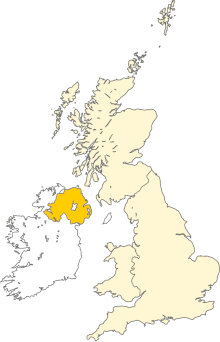
(Pictured: Map of Northern Ireland (yellow) within the United Kingdom.)
The trio is believed to be planning a car bomb attack on British military personnel in Gibraltar. They are shot dead while leaving the territory, having parked a car. All three are found to be unarmed, and no bomb is discovered in the car, leading to accusations that the British government conspired to murder them. An inquest in Gibraltar rules that the authorities had acted lawfully but the European Court of Human Rights holds that, although there had been no conspiracy, the planning and control of the operation is so flawed as to make the use of lethal force almost inevitable. The deaths are the first in a chain of violent events in a fourteen-day period. On March 16, the funeral of the three IRA members is attacked, leaving three mourners dead. At the funeral of one, two British soldiers are murdered after driving into the procession in error.
In late 1987, British authorities become aware of an IRA plan to detonate a bomb outside the governor’s residence in Gibraltar. On the day of the shootings, Savage, a known IRA member, is seen parking a car near the assembly area for the parade. Fellow members McCann and Farrell are seen crossing the border shortly afterward. As SAS personnel move to intercept the three, Savage splits from McCann and Farrell and runs south. Two soldiers pursue him while two others approach McCann and Farrell. The soldiers report seeing the IRA members make threatening movements when challenged, so the soldiers shoot them multiple times. All three are found to be unarmed, and Savage’s car does not contain a bomb.
When the bodies are searched, a set of car keys is found on Farrell. Spanish and British authorities conduct enquiries to trace the vehicle. Two days after the shootings, their enquiries lead them to a red Ford Fiesta in a car park in Marbella, fifty miles from Gibraltar. The car contains a large quantity of Semtex surrounded by 200 rounds of ammunition, along with four detonators and two timers.
The IRA notifies the McCann, Savage, and Farrell families of the deaths on the evening of March 6, and the following day publicly announces that the three were members of the IRA. A senior member of Sinn Féin, Joe Austin, is tasked with recovering the bodies. On March 9, he and Terence Farrell (Mairéad Farrell’s brother) travel to Gibraltar to identify the bodies. A charter aircraft flies the corpses to Dublin on March 14. Two thousand people wait to meet the coffins in Dublin, which are then driven north to Belfast. At the border, the Northern Irish authorities meet the procession with a large number of police and military vehicles, and insist on intervals between the hearses, causing tensions between police and members of the procession.
The joint funeral of McCann, Farrell and Savage takes place on March 16 at Milltown Cemetery in Belfast. The Royal Ulster Constabulary (RUC) agree to maintain a minimal presence at the funeral in exchange for guarantees from the families that there will be no salute by masked gunmen. This agreement is leaked to Michael Stone, who describes himself as a “freelance Loyalistparamilitary.” During the burial, Stone throws grenades into the crowd and begins shooting with an automatic pistol, injuring 60 people. Several mourners chase Stone, throwing rocks and shouting abuse. Stone continues shooting and throwing grenades at his pursuers, killing three of them. He is chased onto a road and his pursuers beat him until the RUC arrive to extract and arrest him.
Two months after the shootings, the documentary “Death on the Rock” is broadcast on British television. Using reconstructions and eyewitness accounts, it presents the possibility that the three IRA members had been unlawfully killed.
The inquest into the deaths begins in September 1988. The authorities state that the IRA team had been tracked to Málaga, where they were lost by the Spanish police, and that the three did not re-emerge until Savage was seen parking his car in Gibraltar. The soldiers testify that they believed the suspected bombers had been reaching for weapons or a remote detonator. Several eyewitnesses recall seeing the three shot without warning, with their hands up, or while they were on the ground. One witness, who told “Death on the Rock” he saw a soldier fire at Savage repeatedly while he was on the ground, retracts his statement at the inquest, prompting an inquiry into the programme which largely vindicated it. The inquest returns a verdict of lawful killing. Dissatisfied, the families take the case to the European Court of Human Rights. Delivering its judgement in 1995, the court finds that the operation had been in violation of Article 2 of the European Convention on Human Rights as the authorities’ failure to arrest the suspects at the border, combined with the information given to the soldiers, rendered the use of lethal force almost inevitable. The decision is cited as a landmark case in the use of force by the state.
(Pictured: The three IRA members shot in Gibraltar: (l to r) Sean Savage, Mairéad Farrell, Daniel McCann, PA Archive / PA Images)