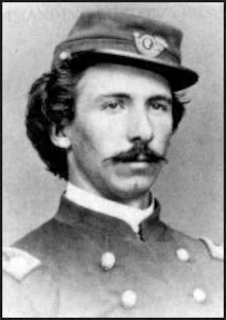
Guiney is the second and eldest surviving son of James Roger Guiney, who is descended from Jacobites, and Judith Macrae. His father, impoverished after a failed runaway marriage, brings with him on his second voyage to New Brunswick his favourite child Patrick, not yet six years old. After some years, his mother and younger brother, William, rejoin her husband, recently crippled by a fall from his horse. They settle in Portland, Maine. The young Guiney works as a wheel boy in a rope factory, and at the age of fourteen apprenticed to a machinist in Lawrence, Massachusetts, but stays only a year and a half before returning to Portland.
Guiney hopes to better himself through education and attends the public grammar school. He matriculates at the College of the Holy Cross in Worcester, Massachusetts. His depleting finances cause him to leave after about a year, despite the fact that the college president offers to make some arrangement for him to stay, which his honor would not allow him to accept. His book-loving father having meanwhile died, he goes to study for the Bar under Judge Walton, and is admitted in Lewiston, Maine, in 1856, taking up the practice of criminal law.
Familiar with the manual of arms, Guiney enlists for example’s sake as a private, refusing a commission from GovernorJohn A. Andrew until he has worked hard to help recruit the 9th Massachusetts Infantry Regiment. By June 1861, he is a captain. In July 1862, the first colonel having died from a wound received in action, Lieutenant Colonel Guiney succeeds him to the command. He wins high official praise, notably for courage and presence of mind at the Battle of Gaines’ Mill in Hanover County, Virginia. Here, after three successive color-bearers had been shot down, he himself reportedly seizes the flag, throws aside coat and sword-belt, rises white-shirted and conspicuous in the stirrups, inspires a final rally, and turns the fortune of the day.
The 9th Massachusetts is present at Gettysburg, Pennsylvania, in second brigade first division V Corps on July 1, 1863. Col Jacob B. Sweitzer the brigade commander, detaches Guiney’s regiment for picket duty. Consequently, the regiment misses the second day’s fighting at the Battle of Gettysburg.
In 1864, through the Battle of the Wilderness, Guiney frequently has been in command of his brigade, the second brigade, first division, V Corps. After many escapes from dangerous combats without serious injury, he is shot in the face by a sharpshooter at the Battle of the Wilderness on May 5, 1864. The Minié ball destroys his left eye, and inflicts, it is believed, a fatal wound. During an interval of consciousness, however, he insists on an operation which saves his life. He is honorably discharged and mustered out of the U.S. Volunteers on June 21, 1864, just before the mustering out of his old regiment.
On February 21, 1866, PresidentAndrew Johnson nominates Guiney for the award of the honorary grade of brevetbrigadier general, to rank from March 13, 1865, for gallant and meritorious services during the war. The U.S. Senate confirms the award on April 10, 1866.
Kept alive for years by nursing, Guiney runs unsuccessfully for the United States Congress on a sort of “Christian Socialist” platform, is elected assistant district attorney (1866–70), and acts as consulting lawyer (no longer being able to plead) on many locally celebrated cases.
Guiney’s last exertions are devoted to the defeat of the corruption and misuse of the Probate Court of Suffolk County, Massachusetts, of which he had become registrar (1869–77). He dies suddenly on March 21, 1877, in Boston and is found kneeling against an elm in the little park near his home. General Guiney is Commandant of the Loyal Legion, Major-General Commandant of the Veteran Military League, member of the Charitable Irish Society of Boston, and one of the founders and first members of the Catholic Union of Boston. He also publishes some literary criticism, a few graphic prose sketches and some verse.
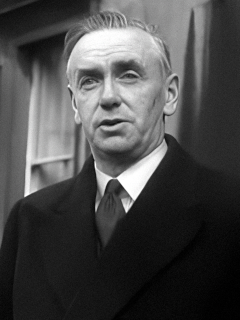
Costello is born on June 20, 1891, in Fairview, Dublin, the younger son of John Costello senior, a civil servant, and Rose Callaghan. He is educated at St. Joseph’s, Fairview, and then moves to O’Connell School, for senior classes, and later attends University College Dublin (UCD), where he graduates with a degree in modern languages and law. He studies at King’s Inns to become a barrister, winning the Victoria Prize there in 1913 and 1914. He is called to the Irish Bar in 1914, and practises as a barrister until 1922.
In 1922, Costello joins the staff at the office of the Attorney General in the newly established Irish Free State. Three years later he is called to the inner bar, and the following year, 1926, he becomes Attorney General of Ireland, upon the formation of the Cumann na nGaedheal government, led by W. T. Cosgrave. While serving in this position he represents the Free State at Imperial Conferences and League of Nations meetings.
Costello is also elected a Bencher of the Honourable Society of King’s Inns. He loses his position as Attorney General of Ireland when Fianna Fáil comes to power in 1932. The following year, however, he is elected to Dáil Éireann as a Cumann na nGaedheal TD. Cumann na nGaedheal soon merges with other parties to form Fine Gael.
During the Dáil debate on the Emergency Powers Act 1939, Costello is highly critical of the Act’s arrogation of powers, stating that “We are asked not merely to give a blank cheque, but to give an uncrossed cheque to the Government.” He loses his seat at the 1943 Irish general election but regains it when Éamon de Valera calls a snap election in 1944. From 1944 to 1948, he is the Fine Gael front-bench Spokesman on External Affairs.
In 1948, Fianna Fáil has been in power for sixteen consecutive years and has been blamed for a downturn in the economy following World War II. The 1948 Irish general election results show Fianna Fáil short of a majority, but still by far the largest party, with twice as many seats as the nearest rival, Fine Gael. It appears that Fianna Fáil is headed for a seventh term in government. However, the other parties in the Dáil realise that between them, they have only one seat fewer than Fianna Fáil, and if they band together, they would be able to form a government with the support of seven Independent deputies. Fine Gael, the Labour Party, the National Labour Party, Clann na Poblachta and Clann na Talmhan join to form the first inter-partygovernment in the history of the Irish state.
While it looks as if cooperation between these parties will not be feasible, a shared opposition to Fianna Fáil and Éamon de Valera overcomes all other difficulties, and the coalition government is formed.
Since Fine Gael is the largest party in the government, it has the task of providing a suitable candidate for Taoiseach. Naturally, it is assumed that its leader, Richard Mulcahy, will be offered the post. However, he is an unacceptable choice to Clann na Poblachta and its deeply republican leader, Seán MacBride. This is due to Mulcahy’s record during the Irish Civil War. Instead, Fine Gael and Clann na Poblachta agree on Costello as a compromise candidate. Costello had never held a ministerial position nor was he involved in the Civil War. When told by Mulcahy of his nomination, Costello is appalled, content with his life as a barrister and as a part-time politician. He is persuaded to accept the nomination as Taoiseach by close non-political friends.
During the campaign, Clann na Poblachta had promised to repeal the Executive Authority (External Relations) Act 1936 but does not make an issue of this when the government is being formed. However, Costello and his Tánaiste, William Norton of the Labour Party, also dislike the act. During the summer of 1948, the cabinet discusses repealing the act, however, no firm decision is made.
In September 1948, Costello is on an official visit to Canada when a reporter asks him about the possibility of Ireland leaving the British Commonwealth. For the first time, he declares publicly that the Irish government is indeed going to repeal the External Relations Act and declare Ireland a republic. It has been suggested that this is a reaction to offence caused by the Governor General of Canada at the time, Harold Alexander, 1st Earl Alexander of Tunis, who is of Northern Irish descent and who allegedly arranges to have placed symbols of Northern Ireland in front of Costello at an official dinner. Costello makes no mention of these aspects on the second reading of the Republic of Ireland Bill on November 24 and, in his memoirs, claims that Alexander’s behaviour had in fact been perfectly civil and could have had no bearing on a decision which had already been made.
The news takes the Government of the United Kingdom and even some of Costello’s ministers by surprise. The former had not been consulted and following the declaration of the Republic in 1949, the UK passes the Ireland Act that year. This recognises the Republic of Ireland and guarantees the position of Northern Ireland within the United Kingdom for so long as a majority there want to remain in the United Kingdom. It also grants full rights to any citizens of the Republic living in the United Kingdom. Ireland leaves the Commonwealth on April 18, 1949, when The Republic of Ireland Act 1948 comes into force. Frederick Henry Boland, Secretary of the Department of External Affairs, says caustically that the affair demonstrates that “the Taoiseach has as much notion of diplomacy as I have of astrology.” The British envoy, John Maffey, 1st Baron Rugby, is equally critical of what he calls a “slipshod and amateur” move.
Many nationalists now see partition as the last obstacle on the road to total national independence. Costello tables a motion of protest against partition on May 10, 1949, without result.
In 1950, the independent-minded Minister for Health, Noël Browne, introduces the Mother and Child Scheme. The scheme would provide mothers with free maternity treatment and their children with free medical care up to the age of sixteen, which is the normal provision in other parts of Europe at that time. The bill is opposed by doctors, who fear a loss of income, and Roman Catholic bishops, who oppose the lack of means testing envisaged and fear the scheme could lead to birth control and abortion. The cabinet is divided over the issue, many feeling that the state cannot afford such a scheme priced at IR£2,000,000 annually. Costello and others in the cabinet make it clear that in the face of such opposition they will not support the Minister. Browne resigns from the government on April 11, 1951, and the scheme is dropped. He immediately publishes his correspondence with Costello and the bishops, something which had hitherto not been done. Derivatives of the Mother and Child Scheme are introduced in Public Health Acts of 1954, 1957 and 1970.
The Costello government has a number of noteworthy achievements. A new record is set in housebuilding, the Industrial Development Authority and Córas Tráchtála are established, and the Minister for Health, Noel Browne, with the then new Streptomycin, bring about an advance in the treatment of tuberculosis. Ireland also joins a number of organisations such as the Organization for European Economic Co-operation and the Council of Europe. However, the government refuses to join NATO, allegedly because the British remain in Northern Ireland. The scheme to supply electricity to even the remotest parts of Ireland is also accelerated.
While the “Mother and Child” incident does destabilise the government to some extent, it does not lead to its collapse as is generally thought. The government continues; however, prices are rising, a balance of payments crisis is looming, and two TDs withdraw their support for the government. These incidents add to the pressure on Costello and so he decides to call a general election for June 1951. The result is inconclusive but Fianna Fáil returns to power. Costello resigns as Taoiseach. It is at this election that his son Declan is elected to the Dáil.
Over the next three years while Fianna Fáil is in power a dual-leadership role of Fine Gael is taking place. While Richard Mulcahy is the leader of the party, Costello, who has proved his skill as Taoiseach, remains as parliamentary leader of the party. He resumes his practice at the Bar. In what is arguably his most celebrated case, the successful defence of The Leader against a libel action brought by the poet Patrick Kavanagh, dates from this period. Kavanagh generously praises Costello’s forensic skill, and the two men become friends.
At the 1954 Irish general election Fianna Fáil loses power. A campaign dominated by economic issues results in a Fine Gael-Labour Party-Clann na Talmhan government coming to power. Costello is elected Taoiseach for the second time.
The government can do little to change the ailing nature of Ireland’s economy, with emigration and unemployment remaining high, and external problems such as the Suez Crisis compounding the difficulty. Measures to expand the Irish economy such as export profits tax relief introduced in 1956 would take years have sizable impact. Costello’s government does have some success with Ireland becoming a member of the United Nations in 1955, and a highly successful visit to the United States in 1956, which begins the custom by which the Taoiseach visits the White House each Saint Patrick’s Day to present the U.S. President with a bowl of shamrock. Although the government has a comfortable majority and seems set for a full term in office, a resumption of Irish Republican Army (IRA) activity in Northern Ireland and Great Britain causes internal strains. The government takes strong action against the republicans.
In spite of supporting the government from the backbenches, Seán MacBride, the leader of Clann na Poblachta, tables a motion of no confidence, based on the weakening state of the economy and in opposition to the government’s stance on the IRA. Fianna Fáil also tables its own motion of no confidence, and rather than face almost certain defeat, Costello again asks PresidentSeán T. O’Kelly to dissolve the Oireachtas. The general election which follows in 1957 gives Fianna Fáil an overall majority and starts another sixteen years of unbroken rule for the party. Some of his colleagues questioned the wisdom of his decision to call an election. The view is expressed that he was tired of politics and depressed by his wife’s sudden death the previous year.
Following the defeat of his government, Costello returns to the bar. In 1959, when Richard Mulcahy resigns the leadership of Fine Gael to James Dillon, he retires to the backbenches. He could have become party leader had he been willing to act in a full-time capacity. He remains as a TD until 1969, when he retires from politics, being succeeded as Fine Gael TD for Dublin South-East by Garret FitzGerald, who himself goes onto to become Taoiseach in a Fine Gael-led government.
During his career, Costello is presented with a number of awards from many universities in the United States. He is also a member of the Royal Irish Academy from 1948. In March 1975, he is made a freeman of the city of Dublin, along with his old political opponent Éamon de Valera. He practises at the bar until a short time before his death at the age of 84, in Ranelagh, Dublin, on January 5, 1976. He is buried at Dean’s Grange Cemetery in Dublin.
Blair urges Protestant waverers to keep the Good Friday Agreement alive and insists that IRA disarmament, which the pro-British unionists are demanding, is “part of the agreement.”
Britain says two monitors, former President of FinlandMartti Ahtisaari and South AfricanCyril Ramaphosa, have reported to the province’s disarmament commission. “We and the Irish government understand from the decommissioning commission that a second inspection of IRA dumps has now taken place, and they have received a report to that effect from President Ahtisaari and Mr. Ramaphosa,” a Northern Ireland Office statement says.
The IRA discloses the inspection, aimed to show that arms from its long anti-British war are no longer being used, as tension grows ahead of a crucial October 28 conference of the Protestant Ulster Unionist Party (UUP). “We specifically announced that we would repeat the inspection of a number of arms dumps by third parties to confirm that our weapons are secure,” the IRA says. “We now wish to confirm that this re-inspection has taken place and thank those involved for their co-operation.”
Ramaphosa and Ahtisaari first examine arms stockpiles in June 2000.
The IRA is observing a ceasefire following a 30-year war against British rule in Northern Ireland.
U.S. PresidentBill Clinton joins Britain and Ireland in applauding the IRA’s decision that it will permit a fresh look at some of its hidden arsenal.
However, as Blair arrives three bomb alerts underline the fragility of a peace that has been shaken by sporadic attacks by armed dissidents who oppose the 1998 Good Friday Agreement. A detective escapes injury when a bomb under his car fails to explode in a carpark at Antrim, north Belfast. A police spokesman blames Protestant “loyalistparamilitaries.” Army bomb experts also deal with two “suspicious objects” found in other parts of the province, police say.
Blair’s visit is seen as a bid to garner support for First MinisterDavid Trimble, who is under pressure from within his Ulster Unionist Party over his decision to share power with Sinn Féin, even though the IRA has not disarmed.
Blair appeals to unionists ahead of their conference not to squander the accord’s hard-won political advances. He warns that disarmament will be out of reach if the coalition falls. “This is the only way forward for the future. If the Executive collapses and the Assembly then collapses, which must automatically happen, you don’t have a process at all, you don’t have decommissioning,” he tells reporters.
Confirmation of the second inspection is seen as a lift for the peace process which might ease pressure on Trimble.
UUP hardliners on Saturday, October 28, plan to urge grassroots members to back their demand for Trimble to pull out of the ruling coalition by November 30 if the IRA has not disarmed by that time. However, Trimble, at a news conference, dismisses the five-week deadline as “a crude device.”
(From: “IRA confirms arms dump inspections,” CNN.com, October 26, 2000 | Pictured: David Trimble, Seamus Mallon and Tony Blair at Stormont. Photograph: Eric Luke/The Irish Times)
Smith is born at 174 South Street, New York City, on December 30, 1873, and raised in the Fourth Ward on the Lower East Side of Manhattan. He resides there for his entire life. His mother, Catherine (née Mulvihill), is the daughter of Maria Marsh and Thomas Mulvihill, who are immigrants from County Westmeath, Ireland. His father, baptised Joseph Alfred Smith in 1839, is a Civil War–veteran and the son of Emanuel Smith, an Italian marinaro.
Although Smith remains personally untarnished by corruption, he — like many other New York Democrats — is linked to the notorious Tammany Hallpolitical machine that controls New York City politics during his era. He serves in the New York State Assembly from 1904 to 1915 and holds the position of Speaker of the Assembly in 1913. He also serves as sheriff of New York County from 1916 to 1917. He is first elected governor of New York in 1918, loses his 1920 bid for re-election, and is elected governor again in 1922, 1924, and 1926. He is the foremost urban leader of the efficiency movement in the United States and is noted for achieving a wide range of reforms as the New York governor in the 1920s.
Smith is the first Roman Catholic to be nominated for president of the United States by a major party. His 1928 presidential candidacy mobilizes both Catholic and anti-Catholic voters. Many Protestants, including German AmericanLutherans and Southern Baptists, fear his candidacy, believing that the Pope in Rome would dictate his policies. He is also a committed “wet” (i.e., an opponent of Prohibition in the United States) and as New York governor, he repeals the state’s prohibition law. As a “wet,” he attracts voters who want beer, wine and liquor without having to deal with criminal bootleggers, along with voters who are outraged that new criminal gangs have taken over the streets in most large and medium-sized cities. Incumbent RepublicanSecretary of CommerceHerbert Hoover is aided by national prosperity, the absence of American involvement in war and anti-Catholic bigotry, and he defeats Smith in a landslide in 1928.
Smith then enters business in New York City and becomes involved in the construction and promotion of the Empire State Building. He seeks the 1932 Democratic presidential nomination but is defeated by Franklin D. Roosevelt, his former ally and successor as governor of New York. During the Roosevelt presidency, he becomes an increasingly vocal opponent of Roosevelt’s New Deal.
Smith is an early and vocal critic of the Nazi regime in Germany. He supports the Anti-Nazi boycott of 1933 and addresses a mass-meeting at Madison Square Garden against Nazism in March 1933. His speech is included in the 1934 anthology Nazism: An Assault on Civilization. In 1938, he takes to the airwaves to denounce Nazi brutality in the wake of Kristallnacht. His words are published in The New York Times article “Text of the Catholic Protest Broadcast” of November 17, 1938.
Like most New York City businessmen, Smith enthusiastically supports American military involvement in World War II. Although he is not asked by Roosevelt to play any role in the war effort, he is an active and vocal proponent of FDR’s attempts to amend the Neutrality Act in order to allow “Cash and Carry” sales of war equipment to be made to the British. He speaks on behalf of the policy in October 1939, to which FDR responds directly: “Very many thanks. You were grand.”
Smith is memorialized by The Alfred E. Smith Foundation, founded by CardinalFrancis Spellman. Today it is a significant fund raiser for charity. Each election year, presidential candidates are expected to attend, make witty remarks, and profound commentary about Smith. In 2008, then candidate Barack Obama speaks eloquently of “a man who fought for many years to give Americans nothing more than fair shake and a chance to succeed. He touched the lives of millions as a result.”
(Pictured: Official Gubernatorial portrait of Alfred E. “Al” Smith by Douglas Volk)
Keating is the youngest of six surviving children of Michael Keating, baker, and his wife Johanna, a native of County Kerry. He was educated at a local school and was an active member of the Gaelic Athletic Association (GAA), playing football and hurling. After the 1916 Easter Rising, he leaves school at the age of thirteen to join the Irish Volunteers, which later becomes the IRA, serving in the 4th Cork Brigade. He is arrested by British troops in November 1920 and badly beaten. He spends a month in the Cork jail and is then interned for a year in Ballykinlar internment camp until December 1921. While interned he participates in several hunger strikes and makes several escape attempts. Following his release, he opposes the Anglo-Irish Treaty and serves in the Fianna Cork 4th Brigade on the Republican side under Seán Moylan during the Irish Civil War.
Keating emigrates to New York City in 1927 and becomes involved in Irish cultural organizations and Democratic party politics. He is a founder of American Friends of Irish Neutrality, which opposes Irish involvement in World War II, ostensibly fearing it will result in British re-occupation of Ireland.
Following World War II, Keating is chairman of the executive council of the 1947 Irish Race Convention and president of the American League for an Undivided Ireland, lobbying in support of the Fogarty Amendment, which unsuccessfully attempts to tie the release of Marshall Plan funds to British withdrawal from Northern Ireland.
Between the 1940s and 1960s, Keating serves as president of the County Corkmen Association, president of the United Irish Counties Association, and president of the Irish Institute. In 1956, he serves as Grand Marshal of the New York City St. Patrick’s Day Parade.
Keating serves in various positions under New York City mayors William O’Dwyer, Vincent R. Impellitteri, and Robert F. Wagner, Jr., rising to the position of Deputy Mayor, under Wagner. He is reportedly the first to publicly introduce future President Kennedy as “the next President of the United States” at an Irish Institute event in 1957. He is appointed Regional Director of the United States Postal Service by President Kennedy and serves in that position from 1961 until his retirement in 1966.
In retirement, Keating returns to Kanturk and continues to advocate for the reunification of Ireland. Keating dies at his home in Kanturk on July 2, 1976, and is buried in a local cemetery with military honors. He represents an emigrant political and social milieu which is often treated dismissively by later, more cosmopolitan Irish commentators, but his career reflects not only his own considerable talents but the ways in which this milieu sustains a generation of immigrants, and the contribution of Irish America to Irish development in the post-war decades.
Kathleen Hayes Rollins Snavely, the world’s oldest ever Irish-born woman, dies on July 6, 2015, at the age of 113 years and 140 days in a nursing home in Syracuse, New York, her hometown since leaving Ireland as a 19-year-old immigrant in 1921. Her grandniece attributes her long life to hard work, love, family and the odd Manhattan cocktail.
Born on February 16, 1902, Snavely is the 16th oldest person in the world at the time of her death and the sixth oldest in the United States.
A native of Feakle, County Clare, Snavely is listed on the 1911 Irish Census as an eight-year-old scholar. Her father Patrick (42) is described as an agricultural labourer and there are three other members at her family home: mother Ellen and her sisters Anna May (9) and Lena (1).
A successful businesswoman, Snavely founds and runs a dairy in Syracuse with her first husband, Roxie Rollins. She outlives him by 47 years and her second husband, Jesse Snavely, by 27 years. She also outlives some of her second husband’s children. She has none of her own but has an extended close family.
“She was a pull-yourself-up person,” her grandniece Donna Moore tells The Irish Times. “She came over to a whole new world at 19 and left everything she knew and loved behind.” Asked about the secret of her aunt’s long life, Moore says, “Her spirit, hard work and two good loves – her two wonderful husbands, a wonderful family and maybe the occasional Manhattan.”
Snavely arrives in New York City on September 30, 1921, on the Scythia, from Queenstown, now Cobh, in County Cork, according to the immigration records at Ellis Island, then a hub for new emigrants.
Snavely marries Rollins, a young cook, in 1924 and they open the Seneca Dairy in 1933 during the depths of the Great Depression. She lives through two world wars and eighteen American presidents.
Moore says she and her husband Bruce meet her grandaunt for the last time in April 2015. Still business savvy at the age of 113, Snavely chides her grandniece for not selling another relative’s house more quickly to avoid the costs of holding on to the property. “She yelled at me for not selling the house,” she says. “She always had a laugh.”
Moore says that Snavely continues to check her financial statements on monthly visits from her lawyer right up to her death. “She was a wonderful lady, sharp as a tack,” she says. “She was very quick-witted and a very nice, very caring person. Everybody liked her. She just had a way about her. It is the end of an era in our family.”
(From: “Oldest Irish person Kathleen Snavely dies a 113” by Simon Carswell, The Irish Times, http://www.irishtimes.com, July 7, 2015)
The senior surviving leader of the 1916 Easter Rising, de Valera is jailed by the British after his death sentence for his participation in the Rising is reduced to life imprisonment. He likes to tell the story that his life was spared because of his American birth, a story he tells the visiting United States presidentJohn F. Kennedy at a State reception in 1963. However, it is most likely that his court-martial is scheduled too late after the public and popular pressure becomes too much on the British Government who call a stop to the executions. British prison authorities are surely glad to see him go. He had led Irish prisoners in acts of defiance in several different prisons.
At Dartmoor Prison, de Valera goes on hunger strike and gets a fellow prisoner off bread and water. When all the Irish prisoners are transferred to Lewes Jail, he organizes a work stoppage and gets another man off bread and water. The exasperated British then split up the Irish prisoners, sending de Valera to Maidstone Prison, whose governor has a reputation for breaking men. De Valera meets him head on, refusing to stand at attention or button his jacket as required in his presence, then piercing his pride by wondering aloud, to the delight of the British prison guards, why a military-age man such as he is not at the front. The governor avoids him after that.
Soon after this, de Valera is transferred to Pentonville Prison for early release. Most of the notable leaders of the 1916 Rising, including Dr. Kathleen Lynn, Thomas Ashe and others, had been released from various British prisons. Before his release, they congregate at Pentonville and say a prayer over the grave of Roger Casement, who had been hanged there.
As a free man, de Valera continues to plague Ireland’s foreign rulers. He is handed a telegram saying that he is going to stand as the Sinn Féin candidate in the East Clare by-election. This is the start of a political career that extends over fifty years.
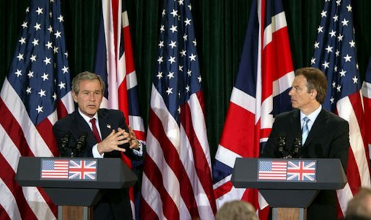
The two leaders meet at Hillsborough Castle and begin their sessions on April 7 with a half-hour walk through the gardens before dinner. The following day they hold a press conference and further talks, including a session on the Northern Ireland peace effort.
Bush and Blair, Bush’s closest ally in confronting Saddam Hussein, come together to discuss questions made increasingly urgent by the rapid military progress American and British forces have made and to plan for a postwar Iraq. They seek to bridge their differences over how much of a role to give the United Nations in rebuilding the country and putting together a new government.
Blair has been under pressure at home and from much of Europe to support giving the United Nations a strong role in stabilizing Iraq. The White House, however, has consistently signaled that it wants the United States and Britain to play the lead role in creating a new Iraqi government.
United States Secretary of StateColin L. Powell tells reporters traveling with the president that the United States is sending officials to the region to begin assembling a group of Iraqis who will constitute an interim governing authority and will be put in place alongside the American-led military and civilian authorities. In a sign of the speed with which the maneuvering for power in post-Hussein Iraq is unfolding, Ahmed Chalabi, the leader of the main Iraqi exile opposition group, the Iraqi National Congress (INC), is reported to be heading to Baghdad from southern Iraq.
“The hostilities phase is coming to a conclusion,” Powell says. “It’s time for all of us to think about the post-hostilities phase, how we create a representative government consisting of all elements of Iraqi society.”
Powell and British officials play down the magnitude of the differences between the United States and Britain over the United Nations role. The United Nations, Powell says, will have “an endorsing role to play to the interim authority to give it legitimacy,” a formulation that appears to reserve for the United States and Britain the right to select the leaders of the temporary postwar administration. A spokesman for Blair uses similar language, referring to the United Nations’ being involved “in a way that endorses that new Iraqi authority” as a step toward establishing a full-fledged Iraqi government.
Initially, primary responsibility for administering Iraq would rest with a team led by a retired United States Armylieutenant general, Jay Garner, and the interim Iraqi authority would be likely to begin assuming power after that, perhaps 90 days later, the British spokesman says.
Clearly wary of getting into another diplomatic squabble with other members of the United Nations Security Council, Powell and other administration officials have emphasized in recent days that the United States and Britain, having waged the war and paid for it with blood and money, will not be drawn into a negotiation with countries like France and Germany over the immediate postwar period.
Powell emphasizes, however, that part of his focus will now be on “healing” diplomatic wounds and granting the United Nations an important role once Iraq is stabilized.
At the United Nations, Secretary-GeneralKofi Annan says he will travel to Britain, France, Germany and Russia in the coming week to test whether the Security Council might be able to agree on a postwar plan. He announces that he has been working on post-conflict issues with a special adviser, Rafeeuddin Ahmed. He says he expects the United Nations to play an important role, whether as a political facilitator or dealing with issues like reconstruction or human rights. “Above all, the U.N. involvement does bring legitimacy, which is necessary, necessary for the country, for the region and for the peoples around the world,” Annan says.
Bush’s trip to see Blair here is the third British-American summit meeting in as many weeks. It coincides with news that American forces are attacking the presidential palaces and other symbols of the Iraqi government in the heart of Baghdad and that British soldiers have taken control of Iraq’s second-largest city, Basra.
The presence of the two leaders draws crowds of antiwar protesters and set off a local debate about whether this city, which has been trying to put behind it a history of sectarian violence, is an appropriate location for a war council.
The city authorities in Belfast have to divert traffic and clear public buildings in various locations following a series of bomb scares. The scenes are reminiscent of the conflicted time before the Northern Ireland peace agreement in 1998 put an end to organized sectarian violence that cost the lives of more than 3,600 people over three decades.
In the conversations about Iraq, Blair plays his customary role of trying to bridge trans-Atlantic differences. He hopes to placate criticism at home and ease relations with his European neighbors by pushing for a United Nations resolution authorizing an interim governing authority.
He had earlier envisaged a more prominent role for the United Nations, but he emerged from his last meeting with Bush, at Camp David on March 27, emphasizing the need for the United Nations to endorse the transition plans rather than play a central part in the plans, as he had advocated at the first summit meeting, in the Azores on March 16.
Europeans express alarm at what they see as the marginalization of the United Nations. At the same time, European critics of the war, like France, Germany and Russia, may object to Blair’s compromise proposal on grounds that it legitimizes a war they oppose. Even in Britain, the one European country where the war has majority support, there is great resistance to American domination of the postwar running of Iraq. An opinion poll in The Daily Telegraph shows that while Britons’ enthusiasm for the war has grown to a high of 60 percent and their approval of Blair’s conduct has also risen, there is only 2 percent approval of an American-controlled administration of Iraq.
Powell says the United States is only trying to lay out a plan under which military control of Iraq can give way to a mix of civilian and military control, including substantial involvement by Iraqis, and then to a full-fledged government. He says United Nations involvement might be necessary to convince banks and financial markets that they can safely and legally lend money to Iraq. Asked about peacekeeping duties, he says NATO is open to the possibility of helping to provide postwar security or assisting in the search for weapons of mass destruction.
Planning for the peace has exposed differences not only between the United States and Britain, but also within the Bush administration and between the administration and Congress.
Blair chose to hold his meeting with Bush in Northern Ireland in part so that the president can lend his support to the long-running efforts by Britain and Ireland to find a peaceful solution to the strife between Catholics and Protestants in the province. The White House, however, seems not to be paying much attention to Northern Ireland diplomacy. The schedules and credentials it distributes to reporters list the site as “Belfast, Ireland.”
(From: “Bush Meets With Blair to Discuss Postwar Iraq” by Richard W. Stevenson and Warren Hoge, The New York Times, http://www.nytimes.com, April 8, 2003)
The Organisation’s aims are to “encourage and assist any movement that will tend to bring about the National Independence of Ireland.” Among the first members of the Executive Committee are Victor Herbert (President), Thomas Hughes Kelly (Treasurer) and John D. Moore (Secretary). An office is set up in Sweden and relations are established with Imperial Germany. The Friends of Irish Freedom support the 1916 Easter Rising and, in the months following, raise $350,000 through the Irish Relief Fund to assist dependents of many who fought in the Rising.
In 1917, the Executive Committee of the Friends of Irish Freedom circulates a petition calling for the independence of Ireland throughout the United States and secures several hundred thousand signatures. PresidentWoodrow Wilson in turn directs Secret Service agents to examine the membership and funding of the organisation. In May 1918, the Friends of Irish Freedom organises the fourth Irish Race Convention during which Diarmuid Lynch becomes National Secretary holding the post until his return to Ireland in 1932.
By 1920, there is a Regular membership of 100,000 and 484 Associate Branches with an Associate membership of 175,000. During the Irish War of Independence, the Friends of Irish Freedom raise over $5,000,000 in Dáil loans for the newly declared Irish Republic through the promotion of Bond Certificates. Legal advisor to the organisation for the Bond Drive is Franklin Delano Roosevelt. In October 1920, a rift develops between the Irish American leaders and Éamon de Valera which results in a split between the Friends of Irish Freedom in the United States and the Irish Republican Brotherhood in Ireland. Prior to his departure from the United States, de Valera founds a rival organisation — the American Association for the Recognition of the Irish Republic — to take over the activities of the Friends.
The public dispute between the Friends of Irish Freedom and Sinn Féin representatives damages the effectiveness and credibility of the Irish American organisation. While the Executive largely remains loyal to Daniel F. Cohalan, many rank-and-file members do not renew their subscriptions. By mid-1921 membership has fallen to 20,000 and is further reduced after the outbreak of Irish Civil War in 1922. By 1928, the Friends of Irish Freedom has virtually ceased to exist as a viable Irish American organisation.
The Friends of Irish Freedom is wound up in 1932 following extensive litigation concerning the funds raised for the Irish Republic which were claimed by de Valera. Most of the funds are returned to the original donors.
(Pictured: Éamon de Valera and Friends of Irish Freedom members Daniel Cohalan, John Goff and James Devoy)
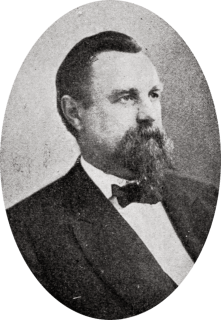
Roberts is the son of Randall Roberts, a baker, and Mary Roberts (née Bishop). He is educated locally and in July 1849 leaves with his family for the United States. For several years he works as a clerk for a dry goods company in New York City. In 1857, he sets up his own dry goods business, the Crystal Palace, which becomes successful. He retires in 1869 as a very wealthy man.
Having joined the American Fenian Brotherhood in 1863, Roberts gives it strong financial support for the remainder of the decade. He also supports several Irish American charitable organisations, including the Knights of St. Patrick, of which he is president. In October 1865, he is responsible for a change in the constitution of the Fenian Brotherhood, which results in a split in the movement. The majority of the Brotherhood supports his proposal to elect a “senate” to govern the organisation, with himself as president, in place of the autocratic leader, John O’Mahony. After the suppression of the Irish People and the arrest of the Irish Republican Brotherhood (IRB) leaders in Dublin in September 1865, he believes that it to be foolish to send American Fenian troops to Ireland.
Seeking to capitalise on the bad relations that develop between the United States and Britain during the American Civil War, Roberts hopes that a Fenian Brotherhood invasion Canada might provoke a war between Britain and the United States and thereby make a successful insurrection in Ireland more possible. Once the invasion takes place (May 31 – June 3, 1866), however, the American government seizes the Fenians’ supplies and reinforcements, thereby prompting him to abandon the attack. He is arrested in New York on June 7 and detained in prison but escapes prosecution and is released on June 15. Three days later, with the support of Irish American politicians, he is allowed to deliver an address to the United States Senate appealing for support for the cause of the amnesty of IRB prisoners in Ireland. Thereafter he goes on a lecture tour and argues that American politicians cannot hope to receive Irish American electoral support if they do not support the Fenian cause. In response to demands from Irish American politicians, in September 1866, PresidentAndrew Johnson orders that the arms seized by the United States army be returned to the Fenian Brotherhood.
After the failure of the March 1867 rising in Ireland, Roberts sends men to Ireland to assume command of the IRB on his behalf. A significant number of IRB men follow his lead, and in June 1867 a convention is held in Paris over which he presides. At this he proposes the establishment of a Supreme Council to govern the IRB, a proposal that is soon accepted. He seeks to be appointed president of the new Supreme Council, but the IRB refuses owing to his being such a divisive figure within American Fenianism. In dismay he resigns as president of the Senate wing of the Fenian Brotherhood on December 31, 1867, and becomes less active in the revolutionary movement. In 1870, he opposes the attempt of Fenians to invade Canada once more, and in January 1871 organises a welcoming committee in New York for five recently released IRB leaders who had been banished from Ireland.
By that time, however, Roberts is more concerned with American politics. During 1870, he is elected to Congress as a Democratic Party candidate for New York, a seat he holds until 1874 when, due to financial difficulties, he decides not to run for reelection. As a congressman, he criticises the Republican government for its policy towards the former Confederate states, opposes the increasing power of railroad companies, demands greater protection for American citizens living in foreign countries (including the Fenians imprisoned in Canada), and supports civil rights for black people. He also attracts much praise for his strong criticism of British foreign policy.
After leaving Congress, Roberts becomes a member of the Tammany Society and attains prominence in New York municipal politics, being elected president of the New York City Board of Aldermen in 1878. The following year, he runs for the position of sheriff of New York but is defeated. Thereafter, he leaves the Tammany Society and establishes a rival organisation, the New York County Democracy. In 1882, he supports Grover Cleveland for the governorship of New York and in 1884 as the Democratic candidate for the United States presidency. He is rewarded on April 2, 1885, when President Cleveland appoints him Envoy Extraordinary and Minister Plenipotentiary to Chile.
Roberts’s term of office is cut short, however, when he suffers a paralytic stroke in May 1888. He is sent back to New York and to hospital, where he remains for nine years. He never regains his mental or physical health and dies on August 9, 1897. His funeral takes place on hospital grounds with few people in attendance. He had been separated from his wife, of whom nothing is known, except that they had at least one son, prior to being admitted to hospital. He is buried at Calvary Cemetery, Queens, New York City.
(From: “Roberts, William Randall” by Owen McGee, Dictionary of Irish Biography, http://www.dib.ie, October 2009)




 seamus dubhghaill