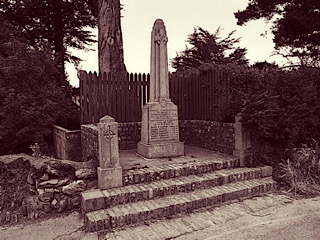
The Clogheen Ambush takes place in the early morning of March 23, 1921, as six members of “C” Company, First Battalion, 1st Cork Brigade of the Irish Republican Army (IRA) are shot by a party of Black and Tans and Royal Irish Constabulary (RIC) at a farm at Ballycannon, Clogheen, just outside Cork, County Cork, during the Irish War of Independence. The IRA believes that they have been betrayed by Patrick ‘Cruxy’ Connor. Connor has returned to Cork after the Coolavokig Ambush, which had taken place on February 25. Once in Cork he is soon arrested by the RIC for the possession of a revolver. The IRA believes that Connors broke down under interrogation and betrayed them.
Cornelius O’Keefe farms 105 acres at Ballycannon, on the road leading from Clogheen to Tower. His house is a known ”safe house” where volunteers can shelter when it is unsafe for them to sleep at home. On the farm there are secure hiding places for the guns and explosives with which they carry out their missions.
At 4:00 a.m on the morning of Wednesday, March 23, O’Keefe is awakened by the arrival of a large force of police. They break down the farm door with blows from their rifle butts. The family is ordered back to the bedrooms and the house is thoroughly searched. The British then search the farmyard, where six volunteers are discovered asleep in a barn.
A local schoolteacher whose house overlooks the two fields outside the barn is awakened by the sound of gunshots at about 4:30 a.m., while it is still quite dark. He watches the lights moving around the farmyard. He hears one voice scream out and another shout “run for it.” He can barely see a man breaking away and running across the field. A volley of shots ring out and the man falls. Another man with a light walks toward the body. After ten minutes there are more shots but this time he sees nobody fall. Later he sees another man fleeing and more shots ring out. As the light increases, he identifies the men with guns as police. Later he watches as the police bring down bodies in blankets and lay them outside the house in the boreen, which leads from the O’Keeffe farmyard to the public road. Around 6:00 a.m. the bodies are placed in lorries which then drive away.
Meanwhile Cornelius O’Keeffe, the farm owner, is brought across the field where he sees five bodies laid out in blankets. He watches as they are placed in the lorries. In his sworn deposition he states that a sixth man is then brought out blindfolded, still alive, and is also put in the lorry. O’Keefe is put in a third lorry, which follows the other two to Victoria Barracks. There the first two lorries speed off and he loses sight of them. He is imprisoned in a cell in the Barracks and is kept there until on April 17, when he is finally released without charge.
The six IRA men killed are:
Daniel Crowley, aged 23. occupation plasterer, of 171 Blarney Street, Cork
William Deasy, aged 20, of Mount Desert , Blarney Road, Cork
Thomas Dennehy, aged 21, of 104 Blarney Street, Cork
Daniel Murphy, aged 24. occupation pig buyer, of Orrery Hill, off Blarney Street , Cork
Jeremiah O’Mullane, aged 23, of 237 Blarney Street, Cork
Michael O’Sullivan, aged 20 of 281 Blarney Street ,Cork
(From: “Ballycannon, Clogheen – IRA ambushed by the British – 23 Mar 1921,” posted on http://www.theauxiliaries.com | Pictured: The Clogheen Ambush Memoral in County Cork)
Dwyer runs a off-licence/grocery shop in Rathmines and is a member of the Rathmines Urban Council. He marries Marie Molloy in 1914, they have no children. He is a member of the Peace Committee of ten men which sit in May 1922 and bring about the agreement between Michael Collins and Éamon de Valera.
On December 20, 1922, Dwyer is shot dead in his shop at 5 Rathmines Road, Dublin, by anti-Treaty IRA Volunteer Robert Bonfield. At about 4:50 p.m., Dwyer is talking to a customer when a young man enters the shop. Addressing Dwyer, the young man asks “Are you Mr. O’Dwyer?” Dwyer replies yes and the young man says that he has a note for him. The young man reaches into the pocket of his overcoat a draws a revolver. He fires twice at Dwyer at point-blank range and he dies instantly. The customer and a shop assistant give chase but are unable to catch the assassin. Two republicans, Frank Lawlor and the actual assassin, Robert Bonfield, are later killed by Free State forces in revenge for the shooting of Dwyer.
Swanzy lives at 31 Railway Street and attends Morning Service at the Cathedral. At 1:06 p.m. as he is walking past the entrance to the Northern Bank (now Shannon’s Jewelers), he is shot by the IRA and dies at the scene.
In February 1921, a memorial is erected in the north wall of the Cathedral by his mother and sister. The brass tablet mounted in Irish Oak bears the following inscription:
“In proud and loving memory of Oswald Ross Swanzy DI Royal Irish Constabulary who gave his life in Lisburn on Sunday, August 22, 1920, and his gallant comrades who, like him, have been killed in the unfaltering discharge of their duty and in the service of their country. Be thou faithful unto death and I will give you a crown of life.”
In his book, Police Casualties in Ireland 1919 to 1922, Royal Ulster Constabulary (RUC) Inspector Richard Abbott says the decision to kill Swanzy is taken by Michael Collins himself who believes the officer had been the leader of the party of unidentified men who killed Tomás Mac Curtain, the Lord Mayor of Cork and Commandant of Cork Number One Brigade of the IRA.
With the help of RIC Sergeant Matt McCarthy, who had provided Collins with information in the past, Swanzy is traced to Lisburn. The Intelligence Officer of B Company of the IRA’s First Cork Battalion, Sean Culhane, is then sent to Belfast to link up with local IRA activists. On the day of the attack, Culhane and a number of Belfast IRA men leave the city in a taxi and make their way to Lisburn.
Culhane and Roger McCorley, a Belfast member of the IRA, walk up to Swanzy and shoot him at close range. They, along with their accomplices, then run in pairs along Castle Street with another man in the middle of the road. They continue to fire as they make their way to the taxi which is waiting outside the Technical College.
The vehicle starts to move off before McCorley reaches it and he is forced to throw himself into the car. As he does so he lands in a heap on the back floor of the car and accidentally fires a round from his revolver inside the taxi.
A member of the public notes the taxi’s number as it leaves Lisburn and the driver is arrested later that afternoon. He tells police he works for the Belfast Motor Cab and Engineering Co. at Upper Library Street. At 11:45 a.m., he says he had been sent to the Great Northern Railway Station in Great Victoria Street to collect a fare who wanted to “take a run along the County Down coast.” The taxi driver is later tried for the killing of Swanzy but is found not guilty.
The IRA killing of Detective Inspector Swanzy leads to bitter sectarian rioting in Lisburn. A number of Catholics are murdered and others assaulted and terrorised as their homes and businesses are burned by mobs on the rampage. Journals kept at the time recall how groups of people wait at Lambeg to attack Catholics fleeing the town on the main Belfast Road. This forces many to leave Lisburn by way of the mountain route into the city as columns of smoke rise into the air above the town.
Workers at local mills are also called upon to sign the following declaration: “I…. …hereby declare I am not a Sinn Féiner nor have any sympathy with Sinn Féin and do declare I am loyal to king and country.” Violence also sweeps across Belfast in the wake of the Market Square attack.
A total of 22 people are killed in one week and on August 24 the authorities swear in a number of special constables to try to regain control of the situation. This is the first time since the start of the IRA campaign in 1919 that Special Constables have to be used.
(From: “Assassination of Detective Inspector Oswald Ross Swanzy,” Lisburn.com)
The East Clare Brigade plans to raid the Limerick train to take mail which will reveal the identity of a local spy. The eight IRA men, under the command of John McCormack, build a stone barricade across the tracks and put a red flag on top to stop the train. They will then board the train and take what they need. Tom Bentley, an IRA volunteer from Cratloe, is aboard the train so he can signal his comrades if there are British soldiers or Black and Tans on the train.
When the driver, a republican and supporter of the cause of Irish freedom, sees the barricade, he knows an ambush is about to take place but he also knows there are 30 British soldiers of the Royal Scots Regiment onboard and, should an ambush take place, the IRA will be out numbered and certainly outgunned. He smashes through the stone barricade, which is for the best, as McCormack does not see the signal from Bentley, their man on the train.
As the train passes, McCormack takes a pot shot at a soldier on the train, which turns out to be a bad idea. Once the train reaches Cratloe station, the soldiers make all civilians disembark and at gunpoint force the train driver to return to Woodcock Hill. McCormack knows the soldiers will alert the local military barracks and enemy troops will soon swarm the area. He climbs a telegraph pole to cut the wire but the shears break. He sends Lieutenant James O’Halloran to a nearby house to get replacement shears.
Gleeson and McCarthy are in charge of a group of volunteers waiting at the top of a field armed with rifles. When they see that something is delaying the cutting of the telegraph wires, they walk down the field to see what is happening. When they reach the edge of the tracks, the train comes around the bend one hundred yards from them. The Scots train their two machine guns and rifles on the fleeing volunteers. McCarthy is wounded during the opening volley and falls to the ground. As the rest of the ambushing party scatters, Gleeson realizes that McCarthy is not with them.
Gleeson races down the open field through a hail of British rifle and machine gun fire. He reaches McCarthy and helps him to his feet. In a desperate attempt to escape, Gleeson draws his revolver and staggers uphill supporting McCarthy with one arm and firing back at the British soldiers with his free hand.
They have only covered a short distance when Gleeson is shot and both men collapse to the ground. Gleeson is unable to continue but McCarthy manages to stagger on. Within a few seconds, the advancing British soldiers surround Gleeson and shoot him dead where he lay. McCarthy carries on through the fields but is soon outrun and is captured and killed by Lieutenant A. Gordan and a group of the Royal Scots, who shoot him several times and stab him with their bayonets.
Meanwhile, on the southern side of the railway track, McCormack is lying flat, hidden from the British soldiers. In order to make good his escape, he needs to climb over a thick fence of wire and hedge in full view of the soldiers. The train is only a short distance away and if the British soldiers make a search of the area, he is likely to become the third casualty the day. When he realises McCormack’s difficulty, James O’Halloran attempts to draw the British soldiers’ fire and attention and give McCormack a chance to escape. From behind a stone pier, O’Halloran opens fire on the British soldiers. He comes under heavy rifle fire but stands his ground and succeeds in wounding one of them before his rifle jams and he is forced to retreat. By this time, O’Halloran’s action has allowed McCormack to escape unseen. All the other IRA volunteers also manage to get away safely.
When the fighting ends, the British soldiers go to the scene of the killings and force a number of farm labourers to help them remove the two bodies. McCarthy’s body had been placed on a wicker gate and Michael Doherty and another farm labourer are ordered to carry it. Doherty lifts back the covering that has been placed over McCarthy’s body and sees that his throat has been cut and his chest is riddled with bullet wounds. Immediately, Doherty receives a blow of a rifle butt from one of the Royal Scots, who replaces the covers on McCarthy’s body.
Both bodies are taken to the house of the Collins family where the soldiers guard them until British reinforcements arrive and take them to Limerick. Gleeson and McCarthy are buried in the Republican plot in Meelick churchyard alongside Patrick White, who had been shot by a British sentry at Spike Island Prison, County Cork, earlier in the month.
This event, subsequently known as The Meelick Ambush, is the only occasion in County Clare during the Irish War of Independence when two Republicans are killed in action fighting against the British forces.
Bates is born into an Ulster Protestant family and grows up in the Shankill Road area of Belfast. He has a criminal record dating back to 1966, and later becomes a member of the Ulster loyalistparamilitary organisation, the Ulster Volunteer Force (UVF). Bates, employed as a barman at the Long Bar, is recruited into the Shankill Butchers gang in 1975 by its notorious ringleader, Lenny Murphy.
The gang uses The Brown Bear pub, a Shankill Road drinking haunt frequented by the UVF, as its headquarters. Bates, a “sergeant” in the gang’s hierarchy, is an avid participant in the brutal torture and savage killings perpetrated against innocent Catholics after they are abducted from nationalist streets and driven away in a black taxi owned by fellow Shankill Butcher, William Moore.
The killings typically involve grisly-throat slashings preceded by lengthy beatings and torture. Bates is said to have been personally responsible for beating James Moorhead, a member of the Ulster Defence Association (UDA), to death on January 30, 1977, and to have played a central role in the kidnapping and murder of Catholic Joseph Morrisey three days later. He also kills Thomas Quinn, a derelict, on February 8, 1976, and the following day is involved in shooting dead Archibald Hanna and Raymond Carlisle, two Protestant workmen that Bates and Murphy mistake for Catholics.
Martin Dillon reveals that Bates is also one of the four UVF gunmen who carries out a mass shooting in the Chlorane Bar attack in Belfast city centre on June 5, 1976. Five people (three Catholics and two Protestants) are shot dead. The UVF unit bursts into the pub in Gresham Street and orders the Catholics and Protestants to line up on opposite ends of the bar before they open fire. He later recounts his role in the attack to police; however, he claims that he never fired any shots due to his revolver having malfunctioned. Forensics evidence contradicts him as it proves that his revolver had been fired inside the Chlorane Bar that night. Lenny Murphy is in police custody at the time the shooting attack against the Chlorane Bar takes place.
Bates is arrested in 1977, along with Moore and other “Shankill Butcher” accomplices. His arrest follows a sustained attack by Moore and Sam McAllister on Catholic Gerard McLaverty, after which they dump his body, presuming him dead. However, McLaverty survives and identifies Moore and McAllister to the Royal Ulster Constabulary who drive him up and down the Shankill Road during a loyalist parade until he sees his attackers. During questioning both men implicate Bates, and other gang members, leading to their arrests. Following a long period spent on remand, he is convicted in February 1979 of murder related to the Shankill Butcher killings and given ten life sentences, with a recommendation by the trial judge, Justice Turlough O’Donnell, that he should never be released.
At the start of his sentence, Bates is involved in a series of violent incidents involving other inmates. He later claims that he had perpetrated these acts in order to live up to his “Basher” nickname. He serves as company commander of the UVF inmates and becomes noted as a stern disciplinarian.
However, while in the Maze Prison, Bates is said to have “found God,” and as a result becomes a born again Christian. He produces a prison testimony, which is later reprinted in The Burning Bush, and, after publicly advocating an end to violence, is transferred to HM Prison Maghaberry.
In prison, Bates forms a friendship with Provisional IRA member and fellow detainee Brendan Hughes. Bates foil a UVF assassination plot on Hughes.
In October 1996, eighteen months prior to the signing of the Good Friday Agreement, Bates is cleared for early release by the Life Sentence Review Board. He is given the opportunity of participating in a rehabilitation scheme, spending the day on a work placement and returning to prison at night. As he arrives for work in his native Shankill area of Belfast early on the morning of June 11, 1997, he is shot dead by the son of a UDA man named James Curtis Moorehead, who Bates had killed in 1977. The killer identifies himself to Bates as the son of his victim before opening fire. The Sutton Index of Deaths attributes his assassination to a feud between the UVF and the UDA. Bates had been working at the Ex-Prisoners Interpretative Centre (EPIC), a drop-in centre for former loyalist prisoners.
Bates’s killing had not been sanctioned by the UDA leadership but nevertheless they refuse to agree to UVF demands that the killer should be handed over to them, instead exiling him from the Shankill. He is rehoused in the Taughmonagh area where he quickly becomes an important figure in the local UDA as a part of Jackie McDonald‘s South Belfast Brigade.
Bates’s name is subsequently included on the banner of a prominent Orange Lodge on the Shankill Road, called Old Boyne Island Heroes. Relatives of Shankill Butchers victim Cornelius Neeson condemn the banner, stating that “it hurts the memory of those the butchers killed.” A fellow Lodge member and former friend of Bates defends the inclusion of his name to journalist Peter Taylor: “I knew him very well and he’d been a personal friend for twenty or thirty years and to me he was a gentleman.” He goes on to describe him as having been “an easy-going, decent fellow, and as far as the Lodge is concerned, a man of good-standing.”
Bates is buried in a Free Presbyterian Church of Ulster ceremony by Reverend Alan Smylie. His funeral is attended by a large representation from local Orange Lodges. Peace activist Mairead Maguire is also among the mourners, arguing that Bates had “repented, asked for forgiveness and showed great remorse for what he had done,” while a memorial service held at the spot of his killing two days after the funeral is attended by Father Gerry Reynolds of Clonard Monastery.[8]
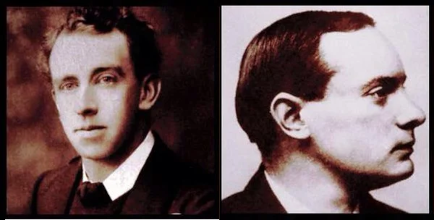
In a letter to his family written on April 30, 1916, Thomas MacDonagh recalls “I was astonished to receive by a messenger from P.H. Pearse, Commandant General of the Army of the Irish Republic, an order to surrender unconditionality to the British General. I did not obey the order as it came from a prisoner. I as then in supreme command of the Irish Army, consulted with my second in command and decided to confirm the order. I knew that it would involve my death and the deaths of other leaders. I hoped that it would save many true men among our followers, good lives for Ireland. God grant it has done so and God approve our deed. For my self I have no regret. The one bitterness that death has for me is the separation it brings from my beloved wife Muriel, and my beloved children, Donagh and Barbara. My country will then treat them as wards, I hope. I have devoted myself too much to National work and too little to the making of money to leave them a competence. God help them and support them, and give them a happy and prosperous life. Never was there a better, truer, purer woman than my wife Muriel, or more adorable children than Don and Barbara. It breaks my heart that I shall never see my children again, but I have not wept or murmured. I counted the cost of this and am ready to pay it. Muriel has been sent for here. I do not know if she can come. She may have no one to take the children while she is coming. If she does.”
MacDonagh and Pearse are contemporaries of one another: poets, progressive educators, Gaelic revivalists. They are men who gird for battle “with a revolver in one hand and a copy of Sophocles in the other.” Each man commands a unit of Irish Volunteers during the Easter Rising, which takes place the week of April 24-30,1916. MacDonagh occupies Jacob’s biscuit factory and Pearse the General Post Office (GPO), from which he issues the surrender at the end of the week.
McDonagh and Pearse are signatories of the Proclamation of the Irish Republic, a document issued by the Irish Volunteers and the Irish Citizen Army at the beginning of the Easter Rising, proclaiming Ireland’s independence from the United Kingdom. The reading of the proclamation by Pearse outside the General Post Office (GPO) on Sackville Street (now O’Connell Street), Dublin‘s main thoroughfare, marks the beginning of the Rising.
Pearse’s and MacDonagh’s signatures on the Proclamation are a fatal endorsement for them and for each of the other five men to lend it their signatures. After being court-martialed, both Pearse and MacDonagh, along with Thomas Clarke, are executed by firing squad at Kilmainham Gaol in Dublin on May 3, 1916, the first of the rebels to be executed.
(Pictured: Thomas McDonagh (left) and Patrick Pearse)
Although nobody is ever charged in connection with the killings, it is widely believed by nationalists and much of the press that the attack had been planned and led by Billy Wright, the leader of the Mid-Ulster Brigade’s Portadown unit. Wright himself takes credit for this and boasts to The Guardian newspaper, “I would look back and say Cappagh was probably our best,” though some sources are sceptical about his claim.
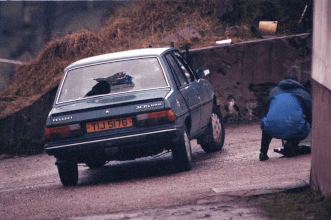
On the evening of Sunday, March 3, 1991, a unit of the UVF’s Mid-Ulster Brigade drive into the heartland of the East Tyrone IRA, intent on wiping out an entire IRA unit that is based in the County Tyrone village of Cappagh. One team of the UVF men wait outside Boyle’s Bar, while a second team waits on the outskirts of the town. At 10:30 p.m. a car pulls into the car park outside the bar and the UVF gunmen open fire with vz. 58assault rifles, killing Provisional IRA volunteers John Quinn (23), Dwayne O’Donnell (17) and Malcolm Nugent (20). The victims and car are riddled with bullets. According to author Thomas G. Mitchell, Quinn, O’Donnell and Nugent are part of an IRA active service unit (ASU). The gunmen then attempt to enter the pub but are unable to after the civilians inside realise what is happening and barricade the door. Unable to get into the bar, a UVF gunman shoots through a high open toilet window killing local civilian, Thomas Armstrong (50) and badly wounding a 21-year-old man. Their intended target, IRA commander Brian Arthurs, escapes with his life by crouching behind the bar during the shooting. According to the Conflict Archive on the Internet (CAIN), the three IRA volunteers chose to go to the pub “on the spur of the moment,” thus are unlikely to be the UVF’s original target.
After the attack, the UVF issues a statement: “This was not a sectarian attack on the Catholic community, but was an operation directed at the very roots of the Provisional IRA command structure in the Armagh–Tyrone area.” The statement concludes with the promise that “if the Provisional IRA were to cease its campaign of terror, the Ulster Volunteer Force would no longer deem it necessary to continue with their military operations.” Privately the UVF are hugely pleased with the attack in a republican heartland and Billy Wright, leader of the Portadown unit of the UVF’s Mid-Ulster Brigade, who is alleged to be centrally involved, tells Jim Cusack and Henry McDonald the killings were “one of things we did militarily in thirty years. We proved we could take the war to the Provos in one of their strongest areas.” Cusack and McDonald assert that a wealthy UVF supporter with a business in South Belfast helped the UVF purchase the cars used in the attack at auctions in the city.
The Provisional IRA initially does not acknowledge that three of the victims are within its ranks, apparently with the aim of garnering sympathy from the wider world, particularly in the Republic of Ireland, toward nationalists in Northern Ireland.
The first reprisal takes place on April 9, 1991, when alleged UVF member Derek Ferguson, a cousin of local MP Reverend William McCrea, is shot and killed in Coagh by members of the East Tyrone Brigade. His family denies any paramilitary links. In the months following the 1991 shootings, two former UDR soldiers are killed by the IRA near Cappagh. One of them is shot dead while driving along Altmore Road on August 5, 1991. The other former soldier is blown up by an IRA bomb planted inside his car at Kildress on April 25, 1993. It is claimed that he has loyalist paramilitary connections. The 1993 bombing leads to allegations that the IRA is killing Protestant landowners in Tyrone and Fermanagh in an orchestrated campaign to drive Protestants out of the region. There are at least five botched IRA attempts against the life of Billy Wright before the Irish National Liberation Army (INLA) succeeds in killing him in 1997 inside the Maze Prison.
This is not the first time the UVF carries out an attack on Boyle’s Bar in Cappagh. On January 17, 1974, at around 7:40 p.m. two masked UVF gunmen enter the pub and open fire indiscriminately on the customers with a Sterling submachine gun and a Smith & Wessonrevolver, firing at least 35 shots. A Catholic civilian and retired farmer Daniel Hughes (73) is shot eleven times and killed in the attack and three other people are injured. A group calling itself the “Donaghmore-Pomeroy Battalion of the UVF” claim responsibility for the shooting. The attack is linked to the notorious Glenanne gang.
(Pictured: The scene of the UVF attack outside Boyle’s Bar in Cappagh in March 1991. Photo: Pacemaker Archive Belfast 153-91-BW)
On a cold December day in 1919, a group of young IRA volunteers wait at a public house near the Ashtown gate of Dublin’s Phoenix Park. Some are from Dublin, members of Michael Collins’ recently created assassination unit, the Squad. Others are from farther afield, like Dan Breen and Seán Treacy from County Tipperary and Martin Savage from County Sligo.
They are waiting for Sir John French, Lord Lieutenant of Ireland, the most senior British official in the land. He is returning from a visit to the west of Ireland and has alighted at Ashtown train station before returning by car to his official residence, the Viceregal Lodge, in the Phoenix Park.
The IRA men have a signaler in a tree and when French’s car approaches, they attempt to block the road with a farm cart. However, they are too late to block the Lord Lieutenant’s car which sweeps through the impromptu barricade. Shots are fired and one policeman is wounded but French himself emerges unscathed.
A second car, which the IRA believes to contain French, bears the brunt of the volunteers’ revolver fire and grenades. Though the car is badly damaged, there are no casualties.
The third car in the convoy contains French’s military escort and the soldiers inside the vehicle return fire, killing one of the attackers, Martin Savage. Some of the volunteers attempt to recover his body but the Crown forces’ fire is too heavy. Savage’s body is left on the scene as the IRA party flees on bicycles back to the city.
The Irish Times, for one, expresses outrage at the attack, “the attempted assassination of the greatest of Irishmen” which it says will “shock Ireland” and force Sinn Féin, victorious in the election of the previous year, to reflect on whether it wants to be associated with “outrage and assassination.” “There will now be many throughout the world ready to attribute the character of a murder society to the whole new Irish movement.”
Many in Ireland are even less sympathetic to hear of the escape of the Lord Lieutenant. The Irish Catholicbishops issue a statement the next day condemning not the attack but British rule in Ireland, which they characterise as “rule of the sword, utterly unsuited to a civilised nation.”
The attack is, in hindsight, a turning point, moving the standoff over Irish independence toward all out guerrilla warfare, but also, in a way, symbolising the eclipse of French and of his vision for what the country should be.
Sir John French’s health declines in 1920 and though he holds the position of Lord Lieutenant until April 1921, his central role in Irish affairs is eclipsed by new Chief Secretary for Ireland Sir Hamar Greenwood. He wants to retire to his estates in Ireland in 1922 but is told it is simply too dangerous for him. During the Irish Civil War (1922-23), his country house at Drumdoe, County Roscommon, is raided by armed men who carry off much of the furniture.
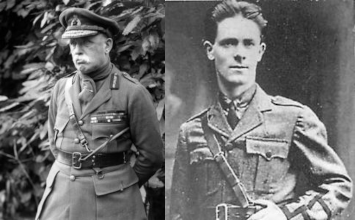
(From: “Today in Irish History: 19 December 1919, The Attempted Assassination of Sir John French” by John Dorney, The Irish Story, http://www.theirishstory.com, December 18,2019 | Pictured: L to R, Sir John French and Martin Savage)
Whelan is the sixth of thirteen children born to farmer John Whelan and Bridget Price. He attends national school at Beleek and Clifden, before leaving school at the age of 15 to work on his father’s farm. He moves to Dublin at the age of 18, where he finds work as a railway man, and joins the Irish Volunteers as a member of ‘A’ Company, 3rd Battalion, Dublin Brigade. He lives at Barrow Street, Ringsend, Dublin, and works at a train depot.
Whelan is arrested on November 23, 1920, and, on February 1, 1921, is charged with the shooting death of Captain G.T. Baggallay, an army prosecutor who had been a member of courts that sentenced Volunteers to death under the Restoration of Order in Ireland Act on Bloody Sunday (1920).
Whelan is defended at his court-martial by Michael Noyk, through whom he protests his innocence of the charges. As in the case of Patrick Moran, there is eyewitness evidence that Whelan had been at Mass at the time the shooting had taken place.
The prosecution casts doubt on the reliability of the eyewitnesses, arguing that as Catholics they are not neutral. The defence complains that it is unfair to suggest the witnesses “were prepared to come up and perjure themselves on behalf of the prisoner” because “they belonged to a certain class and might hold certain political opinions.”
The military court does, however, trust the evidence of an army officer who lives in the same house as Baggallay and who has identified Whelan as the man covering him with a revolver during the raid. There is also testimony by a soldier who had passed by the house when he heard shots fired. This witness says he saw Whelan outside, attempting to start his motorcycle. Whelan is found guilty of murder and sentenced to death.
In Mountjoy Prison, Whelan is imprisoned with the writer and activist Ernie O’Malley, who describes him as “… smooth-faced, quiet and brown eyed with wavy hair; he smiled quietly and steadily. His voice was soft and when he laughed with the others one knew that the fibre was not as hard and that there was a shade of wistfulness about him.”
Whelan is quoted just before being hanged, “Give the boys my love. Tell them to follow on and never surrender. Tell them I am proud to die for Ireland.”
Whelan is hanged at 6:00 a.m. along with Patrick Moran, the first of six men to be executed in pairs that day. A crowd estimated at 40,000 gathers outside the prison to pray as the executions take place. His mother, Bridget, sees him before his execution and waits outside with the praying crowd holding candles. She tells a reporter that she had left her son “so happy and cheerful you would almost imagine he was going to see a football match.” He is 22 years old at the time of his death.
Following the Two for One policy that decrees the assassination of two members of the Royal Irish Constabulary (RIC) in retaliation for every executed Irish Volunteer, the Irish Republican Army (IRA) in Whelan’s native Clifden ambushes and fatally shoots RIC Constables Charles Reynolds and Thomas Sweeney at Eddie King’s Corner on March 16, 1921. In response to the RIC’s request for assistance over the wireless, a trainload of Black and Tans arrive in Clifden from Galway in the early hours of Saint Patrick’s Day, March 17, 1921, and proceed to “burn, plunder and murder.” During what is now called “The Burning of Clifden,” the Black and Tans kill one local civilian (John McDonnell), seriously injure another, burn down fourteen houses, and damaged several others.
Whelan is one of a group of men hanged in Mountjoy Prison in the period 1920-1921 who are commonly referred to as the Forgotten Ten. In 2001, he and the other nine, including Kevin Barry, are exhumed from their graves in Mountjoy Prison and given a full state funeral. He is now buried in Glasnevin Cemetery, Dublin. An annual commemoration is still held in Clifden in his honor.
(Pictured: Patrick Moran (left) and Thomas Whelan (right) before their executions, Mountjoy Prison, Dublin, March 14, 1921, courtesy of Kilmainham Gaol Museum.)
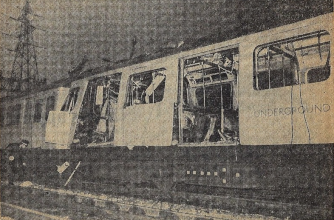
A 5-lb. (2.3 kg) bomb on a Metropolitan line train explodes prematurely in the front carriage of the train, injuring seven passengers. The bomb detonates prior to reaching the City of London, where it is thought the intended target to be Liverpool Street station at rush hour. Adrian Vincent Donnelly, a Provisional Irish Republican Army (IRA) volunteer, then shoots Post Office engineer Peter Chalk in the chest, and kills train driver Julius Stephen, who had attempted to catch him. Donelly exits the station to the street and threatens people with his revolver before Police Constable Raymond Kiff catches up with him. Shouting “You English bastards!” Donelly shoots himself in the chest but survives and is apprehended by Kiff.
Eleven days prior to the West Ham station attack, an IRA bomb explodes in a train at Cannon Street station. The day after the West Ham attack, a bomb on a train at Wood Green tube station explodes, injuring a man. On March 17, a 9-lb. (4.1 kg) bomb is discovered in a train at Neasden Depot. After these events, the London Transport Executive launches a security operation and assigns 1,000 plainclothed policemen on the London Underground system.
An appeal to raise money is launched for the family of the driver of the train, Julius Stephen, who left behind a widow and a family. As of August 1976, £17,000 had been raised.
(Pictured: The underground train damaged in the explosion, The Times, March 16, 1976)




 seamus dubhghaill