seamus dubhghaill

Promoting Irish Culture and History from Little Rock, Arkansas, USA


Leave a comment

People’s Democracy March Ambush at Burntollet Bridge

On January 4, 1969, during the first stages of the Troubles in Northern Ireland, the civil rights group People’s Democracy is attacked at Burntollet Bridge on the final day of a four-day march from Belfast to Derry by 200 loyalists and off-duty Royal Ulster Constabulary (RUC) officers armed with iron bars, bricks, and bottles.

The People’s Democracy organizes the four-day march from Belfast to Derry, starting on January 1, 1969. The march is to be the acid test of the government’s intentions. Either the government will face up to the extreme right of its own Unionist Party and protect the march from the ‘harassing and hindering,’ or it will be exposed as impotent in the face of sectarian thuggery, and Westminster will be forced to intervene, re-opening the whole Irish question for the first time in 50 years. The march is modelled on the Selma to Montgomery march in Alabama in 1965, which had exposed the racist thuggery of America’s Deep South and forced the United States government into major reforms.

The departure on New Year’s Day 1969 of approximately 40 People’s Democracy supporters on the march to Derry is marked by a protest in Belfast by loyalists under the direction of Major Ronald Bunting, a close associate of Rev. Ian Paisley. It is the loyalist’s intention to harass the march along its entire journey.

On the first day of the march, the group makes its way unhindered towards Antrim. Just outside Antrim the marchers run into a police barricade, behind which several hundred loyalists are gathered, led by Major Bunting. The RUC refuses to remove the blockade and after a lengthy delay, and minor scuffles, the marchers are driven in police tenders to Whitehall Community Centre where they spend an unsettled night interrupted by a bomb threat.

The next day, the marchers set off for Randalstown but again find their way blocked by Major Bunting and a crowd of loyalists. Once again, the RUC refuses to remove the loyalist protesters and the marchers are eventually transported to Toome by car. The marchers are welcomed at Toome and after taking lunch in the village they set out for Maghera. After 30 minutes the march is again halted and then rerouted away from the loyalist village of Knockloughlin. After two miles, loyalist protestors led by Major Bunting again halt the march. Another standoff ensues and, as locals gather to support the marchers, the RUC’s County Inspector Kerr asks the loyalists to stand aside, which they do. The marchers then make their way towards Maghera, where loyalists have gathered to await their arrival. On hearing of this ‘reception’ committee, which is armed with clubs and sticks, the marchers decide to bypass the village and spend the night at Bracaghreilly. That night Maghera witnesses considerable violence from frustrated loyalists.

On January 3, the third day of the march, the marchers set out for Dungiven and encounter little opposition. After lunch in Dungiven they travel on to Feeny. A mile outside Dungiven the marchers are halted by the RUC with reports of a loyalist protest further along the road. A civil rights supporter then arrives along the road that is allegedly blocked and reports no obstructions ahead. The marchers decide to breach police lines and encounter no protest ahead. After reaching Feeny the marchers move on to Claudy, where they receive a friendly reception and settle down for the night. That night a loyalist attack on the hall in which the marchers are staying is repulsed by locals.

The same night in Derry, a rally by Ian Paisley in the Guildhall leads to serious disorder. While those inside the hall are listening to Major Bunting call for loyalists to gather the next day at Burntollet, a crowd of nationalists gather outside the building in protest. During clashes as the rally disperses, Major Bunting’s car is destroyed. Later that night stockpiles of bottles and stones are left by loyalists in the fields at Burntollet.

On the morning of January 4, the marchers, who now number approximately 500, set out on the last league of their journey to Derry. Just before reaching Burntollet District Inspector Harrison stops the march in order to investigate reports of loyalists ahead. Harrison, together with County Inspector Kerr, speak of 50 loyalists ahead and claim to be confident that there is no danger. With the RUC leading the way the marchers advance. In the field overlooking the road the marchers observe approximately 300 loyalists, identified by white armbands and armed with cudgels. They come under a bombardment of missiles. Marchers seek to escape the bombardment by speeding up the road but there is to be no escape as they immediately encounter a second contingent of loyalists blocking their escape.

As many marchers flee into the fields they are pursued by attackers and the RUC makes no attempt to intervene. Others are thrown into the nearby River Faughan. As what is left of the marchers continue on to Derry, they are also attacked twice in Derry’s Waterside before receiving a rousing welcome in Guildhall Square.

That night clashes occur between the RUC and local people and the first “Free Derry” is born. At 2:00 AM members of the RUC attack the Bogside, running amok in the Lecky Road and St. Columbs Wells districts. Windows are broken, residents are assaulted, and sectarian abuse is directed at the people of the Bogside. The reaction to this ‘invasion’ ranges from the painting of the Free Derry legend to the formation of vigilante squads in the area, based at the Foyle Harps Hall in the Brandywell and Rossville Hall in the Bogside. The barricades remain up for a number of days and relations between the community in the Bogside and the RUC, which has never been particularly good, grows steadily worse.

These events, together with the steady increase of conflict between local youths and the RUC as the year progress, is to lay the foundations for the resistance that is to take place during the Battle of the Bogside.

(From: “People’s Democracy march, January 4, 1969” by Jude Collins, http://www.judecollins.com, January 4, 2016)


Leave a comment

Birth of Pádraig McKearney, Provisional Irish Republican Army Volunteer

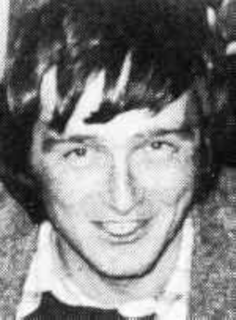
Pádraig Oliver McKearney, a Provisional Irish Republican Army (IRA) paramilitary volunteer, is born on December 18, 1954.

McKearney is raised in Moy, County Tyrone, Northern Ireland, in a staunchly Irish republican family. Both his grandfathers had fought in the Irish Republican Army during the Irish War of Independence, his maternal grandfather in south County Roscommon and his paternal grandfather in east County Tyrone. He is educated at local Catholic schools in Collegeland, County Armagh, and Moy, and later goes to St. Patrick’s Academy, Dungannon.

McKearney joins the Provisional IRA and is first arrested in 1972 on charges of blowing up the post office in Moy. He spends six weeks on remand but is released due to insufficient evidence. In December 1973 he is arrested again and later sentenced to seven years for possession of a rifle. He is imprisoned in Long Kesh Detention Centre and later in Magilligan Prison. During this time, a younger brother, Seán, also an IRA paramilitary, is killed on May 13, 1974. He is released in 1977 but is sentenced to 14 years in August 1980 after being caught by the British Army with a loaded Sten gun along with fellow IRA member Gerard O’Callaghan. That same year an older brother, Tommy McKearney, who had been sentenced to life imprisonment for the murder of an off-duty Ulster Defence Regiment (UDR) soldier who worked as a postman in 1977, nearly dies on hunger strike after refusing food for 53 days. Another brother, Kevin, and an uncle, Jack McKearney, are both murdered by Loyalist paramilitaries in revenge attacks upon the family.

On September 25, 1983, McKearney takes part in the Maze Prison escape along with 37 other prisoners. At the beginning of 1984 he rejoins IRA activity in his native East Tyrone with the Provisional IRA East Tyrone Brigade. He advocates the commencement of the “third phase” of the armed struggle, the ‘strategic defensive,’ in which the Royal Ulster Constabulary (RUC), Ulster Defence Regiment and British Army would be denied all support in selected areas following repeated attacks on their bases. In 1985 Patrick Kelly becomes commander of the Provisional IRA East Tyrone Brigade, and it is under his leadership that this strategy is pursued. Remote Royal Ulster Constabulary bases are attacked and destroyed, and building contractors who try to repair them are targeted and sometimes murdered, as occurs with the attack on the Ballygawley barracks in December 1985, which results in the death of two policemen, and The Birches police station in August 1986.

McKearney is shot dead by the British Army on May 8, 1987, during an IRA attack that he is taking part in upon Loughgall police station, which also claims the lives of seven other IRA members. His body is buried at his hometown of Moy.


Leave a comment

The Derryard Checkpoint Attack

The Provisional Irish Republican Army (IRA) attacks a British Army permanent vehicle checkpoint complex manned by the King’s Own Scottish Borderers (KOSB) near the Northern IrelandRepublic of Ireland border at Derryard, north of Rosslea, County Fermanagh, on December 13, 1989.

According to journalist Ed Moloney, the IRA Army Council, suspecting a great deal of infiltration by double agents at the grassroots level of the IRA, decide to form an experimental flying column (rather than the usual active service unit) to mount a large-scale operation against a permanent vehicle checkpoint along the border. It hopes that this will prevent any information leak that might result in another fiasco like the Loughgall Ambush of 1987.

Moloney maintains that the planning is in the charge of Thomas Murphy, alleged leader of the South Armagh Brigade, and that the raid is to be led by East Tyrone Brigade member Michael “Pete” Ryan. Journalist Ian Bruce instead claims that the IRA unit is led by an Irish citizen who had served in the Parachute Regiment, citing intelligence sources. The column is made up of about 20 experienced IRA volunteers from throughout Northern Ireland, eleven of whom are to carry out the attack itself. Bruce reports that IRA members from County Monaghan, supported by local Fermanagh militants, carry out the raid.

The target is a permanent vehicle checkpoint at Derryard. Described as a “mini base,” it includes an accommodation block and defensive sangars. It is manned by eight soldiers of the 1st Battalion, King’s Own Scottish Borderers and a Royal Ulster Constabulary (RUC) officer. The eleven IRA members are driven to the checkpoint in the back of a makeshift Bedford armoured dumper truck. They are armed with 7.62mm AK-47s, 5.56mm ArmaLite AR-18s, two 12.7mm DShK heavy machine-guns, RPG-7s, different kinds of grenades, and a LPO-50 flamethrower. The heavy machine guns and the flamethrower are mounted on a tripod on the lorry bed. To assure widespread destruction, the column plan to detonate a van bomb after the initial assault.

The attack takes place shortly after 4:00 PM. IRA members seal off roads leading to the checkpoint in an attempt to prevent civilians from getting caught up in the attack. The truck is driven from the border and halted at the checkpoint. As Private James Houston begins to check the back of the truck, the IRA open fire with assault rifles and throw grenades into the compound. Two RPG-7s are fired at the observation sangar while the flamethrower stream is directed at the command sangar. Heavy shooting continues as the truck reverses and smashes through the gates of the compound. At least three IRA volunteers dismount inside the checkpoint and spray the portacabins with gunfire and the flamethrower’s fire stream, while throwing grenades and nail bombs. The defenders are forced to seek shelter in sangars, from where they fire into their own base. A farmer some distance away sees an orange ball of flames and hears gunfire ‘raking the fields.’ As the truck drives out of the now wrecked compound, a red transit van loaded with a 400-lb. (182 kg) bomb is driven inside and set to detonate once the IRA unit has made its escape. However, only the booster charge explodes.

The attack is finally repulsed by a four-men Borderers section from the checkpoint that is patrolling nearby, with the support of a Westland Wessex helicopter. The patrol fires more than 100 rounds at the IRA unit. The Wessex receives gunfire and is forced to take evasive action. The IRA column, at risk of being surrounded, flee toward the border in the armoured truck. It is found abandoned at the border with a 460-lb. (210 kg) bomb on board.

Two soldiers are killed in the attack: Private James Houston (22) from England and Lance-Corporal Michael Patterson (21) from Scotland. Corporal Whitelaw is badly wounded by shrapnel and later airlifted for treatment. Another soldier suffers minor injuries.

There is outrage in Westminster and among unionists, as a supposedly well-defended border post has been overrun by the IRA and two soldiers killed. On the other hand, according to Moloney, there is also some disappointment among republicans. Despite the positive propaganda effect, the quick and strong reaction from the outpost’s defenders convince some high-ranking IRA members that the Army Council has been infiltrated by a mole.

KOSB officers and security sources believe that the IRA unit involved was not locally recruited, putting the blame instead on IRA members from Clogher, County Tyrone and South Monaghan in the Republic. The same sources say that the attack was executed “in true backside-or-bust Para style.”

After the action of Derryard, the British Army in Northern ireland are issued the French designed Luchaire 40mm rifle grenade, fitted on the muzzle of the SA80 rifle. This gives the troops a lightweight armour piercing capability to deal with the threat imposed by improvised armoured vehicles. Permanent checkpoints along the border are also fitted with general-purpose machine guns. From 1990 until the end of the IRA campaign in 1997, there are a number of further bloodless, small-scale attacks against permanent vehicle checkpoints along this part of the border using automatic weapons, particularly in County Fermanagh and against a military outpost at Aughnacloy, County Tyrone.

Two soldiers, Corporal Robert Duncan and Lance Corporal Ian Harvey, are bestowed the Distinguished Conduct Medal (DCM), while Lance-Corporal Patterson receives a posthumous mention in dispatches for his actions during the attack. The checkpoint is dismantled in March 1991, as part of a major border security re-arrangement codenamed Operation Mutilate.

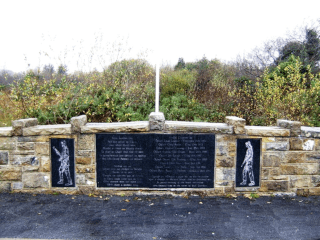
(Pictured: Republican memorial at Carragunt bridge, on the border between Northern Ireland and the Republic, often crossed by Provisional IRA forces during the Troubles to attack British targets inside County Fermanagh)


Leave a comment

The Ballygawley Barracks Attack

The Provisional Irish Republican Army (IRA) launches an assault on the Royal Ulster Constabulary (RUC) barracks in Ballygawley, County Tyrone, on December 7, 1985. Two RUC officers are shot dead, and the barracks are raked with gunfire before being completely destroyed by a bomb, which wounds an additional three officers.

In 1985, Patrick Kelly becomes leader of the Provisional IRA East Tyrone Brigade. He, along with East Tyrone Brigade members Jim Lynagh and Pádraig McKearney, advocate using flying columns to destroy isolated British Army and RUC bases and stop them from being repaired. The goal is to create and hold “liberated zones” under IRA control that will be gradually enlarged. Although IRA Chief of Staff Kevin McKenna turns down the flying column idea, IRA Northern Command approves the plan to destroy bases and prevent their repair. In 1985 alone there are 44 such attacks. Among the most devastating is the mortar attack on Newry RUC barracks in March.

The Ballygawley attack involves two IRA active service units from the East Tyrone Brigade: an armed assault unit and a bomb unit. There are also several teams of IRA observers in the area. The assault team is armed with AK-47 and AR-15 rifles, while the bombing unit is responsible for planting and detonating a 100-pound (45 kg) bomb. Both units are commanded by Patrick Kelly.

The assault is launched on Saturday, December 7, at 6:55 PM, when the handful of RUC officers manning the base are getting ready to hand over to the next shift. In the first burst of automatic fire, the two guards at the entrance are killed, Constable George Gilliland and Reserve Constable William Clements. Constable Clements’s Ruger Security-Six revolver is taken by the attackers. The base is then raked with gunfire. Another three RUC officers who are inside run out to the back of the base, where they hope the walls might offer some cover. IRA members go into the building and take documents and weapons. The bomb is placed inside and, upon detonation, destroys the entire base, injuring three officers.

The republican IRIS Magazine (#11, October 1987) describes the attack as follows:

“One volunteer took up a position close to the front gate. Two RUC men opened the gate and the volunteer calmly stepped forward, shooting them both dead at point blank range. Volunteers firing AK-47 and Armalite rifles moved into the barracks, raking it with gunfire. Having secured the building, they planted a 100-lb. bomb inside. The bomb exploded, totally destroying the building after the volunteers had withdrawn to safety.”

The first British Army unit to arrive at the base in the wake of the attack is X Company, 1st Battalion, Royal Regiment of Fusiliers.

The attack is one of the Provisional IRA’s biggest during this period. Twelve days later the same IRA brigade mortar the RUC station at Castlederg badly damaging the base and injuring four people. The Ballygawley base is rebuilt by the Royal Engineers in 1986.

The East Tyrone IRA launches two similar attacks in the following years: the successful attack on the Birches base in 1986, and the ill-fated attack on the Loughgall base in 1987, in which eight IRA members are killed. Ballygawley itself had seen conflict before with the Ballygawley land mine attack in 1983 and would see more violence in 1988 with the Ballygawley bus bombing, that cost the lives of eight British soldiers. The gun taken from Constable Clements is found by security forces after the SAS ambush at Loughgall.

The RUC base at Ballygawley is once again targeted by the East Tyrone Brigade on December 7, 1992, in what becomes the debut of the IRA’s brand-new Mark-15 improvised mortar, better known as “Barrack Buster.” Another attack with a horizontal mortar occurs on April 30, 1993, when a RUC mobile patrol leaving Ballygawley compound is targeted. According to an IRA statement, the projectile misses one of the vehicles, hits a wall and explodes.

(Pictured: A Provisional Irish Republican Army badge, with the phoenix symbolising the origins of the Provisional IRA)


Leave a comment

The Beginning of the 1980 Hunger Strike

Irish political prisoners confined in the infamous H-Blocks of Long Kesh Detention Centre commence a hunger strike on October 27, 1980. The hunger strike is to continue until their demands for political status and for an end to British torture are met, or until death.

It begins with seven republican volunteers: Brendan Hughes, the IRA commanding officer in the prison, Sean McKenna, Tommy McKearney, Tommy McFeely, Leo Green, and Raymond McCartney, all of the Irish Republican Army (IRA), and John Nixon of the Irish National Liberation Army (INLA).

On December 1, three female prisoners, Mary Doyle, Mairéad Farrell and Mairéad Nugent, join the strike in Armagh Prison. Thirty more republican prisoners join later.

Despite being deceived into ending prematurely after 53 days, it sets the scene for a second hunger strike the following March, led by Bobby Sands. The first hunger strike announcement is made in a statement which is reprinted in full below.

“We the Republican POWs in the H-Blocks, Long Kesh, demand the right of political recognition and that we be accorded the status of political prisoners. We claim this right as captured combatants in the continuing struggle for national liberation and self-determination. We refute most strongly the tag of criminal with which the British have attempted to label us and our struggle, and we point to the devisive, partitionist institution of the six-county state as the sole criminal aspect of the present conflict.

“All of us were arrested under repressive laws, interrogated and often tortured in RUC barracks, and processed through special non-jury courts, where we were sentenced to lengthy terms of imprisonment. After this we were put in the H-Blocks and were expected to bow the knee before the British administration and wear their criminal uniform. Attempts to criminalise us were designed to depoliticise the Irish national struggle.

“We don’t have to recite again the widespread, almost total forms of punishment, degradations and deprivations we have been subjected to. All have failed to break our resistance.

“For the past four years we have endured this brutality in deplorable conditions. We have been stripped naked and robbed of our individuality, yet we refuse to be broken. Further repression only serves to strengthen our resolve and that of our gallant female comrades’ enduring the same hardships in Armagh jail.

“During this period many individuals, religious figures and political organisations and sections of the media have condemned the way we have been treated. Yet despite appeals for a resolution of the H-Block protest, the British government has remained intransigent and has displayed vindictive arrogance in dealing with the problem. They refuse to treat this issue in a realistic manner which is just another reflection of their attitude to the entire Irish question.

“Bearing in mind the serious implications of our final step, not only for us but for our people, we wish to make it clear that every channel has now been exhausted, and not wishing to break faith with those from whom we have inherited our principles, we now commit ourselves to a hunger strike.

“We call on the Irish people to lend us their support for our just demands and we are confident that this support will be very much in evidence in the coming days.

“We call on all solidarity and support groups to intensify their efforts and we also look forward with full confidence to the support of our exiled countrymen in America and Australia.

“We declare that political status is ours of right and we declare that from Monday, October 27th, 1980, a hunger strike by a number of men representing H- Blocks 3, 4, and 5 will commence.

“Our widely recognised resistance has carried us through four years of immense suffering, and it shall carry us through to the bitter climax of death, if necessary.”

Signed: PRO, H-Block blanket men, Long Kesh camp

(From: “The 1980 H-Block hunger strike,” Irish Republican News, http://www.republican-news.org, October 31, 2020)


Leave a comment

The Shankill Road Bombing

The Shankill Road bombing is carried out by the Provisional Irish Republican Army (IRA) on October 23, 1993 and is one of the most notorious incidents of the Troubles in Northern Ireland.

During the early 1990s, loyalist paramilitaries drastically increase their attacks on the Irish Catholic and Irish nationalist community and, for the first time since the beginning of the Troubles, are responsible for more deaths than the republicans. The Ulster Defence Association‘s (UDA) West Belfast brigade, and its commander, Johnny Adair, play a key role in this. Adair had become the group’s commander in 1990.

The UDA’s Shankill headquarters is above Frizzell’s fish shop on the Shankill Road. The UDA’s Inner Council and West Belfast brigade regularly meets there on Saturdays. Peter Taylor says it is also the office of the Loyalist Prisoners’ Association (LPA), and on Saturday mornings is normally crowded, as that is when money is given to prisoners’ families. According to Henry McDonald and Jim Cusack, the IRA have had the building under surveillance for some time. They say that the IRA decides to strike when one of their scouts spots Adair entering the building on the morning of Saturday, October 23, 1993. Later, in a secretly-recorded conversation with police, Adair confirms that he had been in the building that morning.

The IRA’s Belfast Brigade launches an operation to assassinate the UDA’s top commanders, whom it believes are at the meeting. The plan allegedly is for two IRA members to enter the shop with a time bomb, force out the customers at gunpoint and flee before it explodes, killing those at the meeting. As they believe the meeting is being held in the room above the shop, the bomb is designed to send the blast upwards. IRA members maintain that they would have warned the customers as the bomb was primed. It has an eleven-second fuse, and the IRA state that this would allowed just enough time to clear the downstairs shop but not enough for those upstairs to escape.

The operation is carried out by Thomas Begley and Seán Kelly, two IRA members in their early twenties from Ardoyne. They drive from Ardoyne to the Shankill in a hijacked blue Ford Escort, which they park on Berlin Street, around the corner from Frizzell’s. Dressed as deliverymen, they enter the shop with the five-pound bomb in a holdall. It is shortly after 1:00 PM on a Saturday afternoon and the area is crowded with mostly women and children. While Kelly waits at the door, Begley makes his way through the customers towards the counter, where the bomb detonates prematurely. Forensic evidence shows that Begley had been holding the bomb over the refrigerated serving counter when it exploded. Begley is killed along with nine other people, two of them children. They are the owner John Frizzell (63), his daughter Sharon McBride (29), Leanne Murray (13), UDA member Michael Morrison (27), his partner Evelyn Baird (27) and their daughter Michelle (7), George Williamson (63) and his wife Gillian (49), and Wilma McKee (38). The force of the blast causes the old building to collapse into a pile of rubble. The upper floor comes down upon those inside the shop, crushing many of the survivors under the rubble, where they remain until rescued some hours later by volunteers and emergency services. About 57 people are injured. At the scene during the rescue operation are several senior loyalists, including Adair and Billy McQuiston. The latter had been in a pub on the nearest corner when the bomb went off. Among those rescued from the rubble is the badly-wounded Seán Kelly.

Unknown to the IRA, if a UDA meeting had taken place, it had ended early and those attending it had left the building before the bomb exploded. McDonald and Cusack state that Adair and his men had stopped using the room for important meetings, allegedly because a sympathiser within the Royal Ulster Constabulary (RUC) told Adair that the police had it bugged.

There was great anger and outrage in the Shankill in the wake of the bombing. Billy McQuiston tells journalist Peter Taylor that “anybody on the Shankill Road that day, from a Boy Scout to a granny, if you’d given them a gun they would have gone out and retaliated.” Many Protestants see the bombing as an indiscriminate attack on them. Adair believes that the bomb was meant for him. Two days after the bombing, as Adair is driving away from his house, he stops and tells a police officer, “I’m away to plan a mass murder.”

In the week following the bombing, the UDA and UVF launch a wave of “revenge attacks,” killing 14 civilians. The UDA shoots a Catholic delivery driver in Belfast after luring him to a bogus call just a few hours after the bombing. He dies on October 25. On 26 October, the UDA shoots dead another two Catholic civilians and wounds five in an indiscriminate attack at a Council Depot on Kennedy Way, Belfast. On October 30, UDA members enter a pub in Greysteel frequented by Catholics and again open fire indiscriminately. Eight civilians, six Catholics and two Protestants, are killed and 13 are wounded. This becomes known as the Greysteel massacre. The UDA states it is a direct retaliation for the Shankill Road bombing.

Seán Kelly, the surviving IRA member, is badly wounded in the blast, having lost his left eye and is unable to move his left arm. Upon his release from hospital, however, he is arrested and convicted of nine counts of murder, each with a corresponding life sentence. In July 2000, he is released under the terms of the Good Friday Agreement. In an interview shortly after his release, he says he had never intended to kill innocent people and regrets what happened.


Leave a comment

Death of Irish Tenor Josef Locke

Joseph McLaughlin, Irish tenor known professionally as Josef Locke, dies in Clane, County Kildare on October 15, 1999. He is successful in the United Kingdom and Ireland in the 1940s and 1950s.

Born in Derry on March 23, 1917, McLaughlin is the son of a butcher and cattle dealer, and one of nine children. He starts singing in local churches in the Bogside at the age of seven, and as a teenager adds two years to his age to enlist in the Irish Guards, later serving abroad with the Palestine Police Force, before returning in the late 1930s to join the Royal Ulster Constabulary.

Known as The Singing Bobby, McLaughlin becomes a local celebrity before starting to work in the UK variety circuit, where he also plays summer seasons in English seaside resorts. The renowned Irish tenor John McCormack (1884–1945) advises him that his voice is better suited to a lighter repertoire than the operatic one he has in mind and urges him to find an agent. He finds the noted impresario Jack Hylton (1892–1965) who books him but is unable to fit his full name on the bill, thus Joseph McLaughlin becomes Josef Locke.

Locke makes an immediate impact when featured in “Starry Way,” a twenty-week summer show at the Opera House Theatre in Blackpool, Lancashire, England in 1946 and is rebooked for the following summer, then starring for three seasons at the Blackpool Hippodrome. He appears in ten Blackpool seasons from 1946 to 1969, not the nineteen seasons he later claims.

Locke makes his first radio broadcast in 1949 and subsequently appears on television programmes such as Rooftop Rendezvous, Top of the Town, All-star Bill and The Frankie Howerd Show. He is signed to the Columbia label in 1947, and his first releases are the two Italian songs “Santa Lucia” and “Come Back to Sorrento.”

In 1947, Locke releases “Hear My Song, Violetta,” which becomes forever associated with him. It is based on a 1936 tango “Hör’ mein Lied, Violetta” by Othmar Klose and Rudolf Lukesch. The song “Hör’ mein Lied, Violetta” is often covered, including by Peter Alexander and is itself based on Giuseppe Verdi‘s La traviata. His other songs are mostly a mixture of ballads associated with Ireland, excerpts from operettas, and familiar favourites.

In 1948, Locke appears in several films produced by Mancunian Films, usually as versions of himself. He plays himself in the film Holidays with Pay. He also appears as “Sergeant Locke” in the 1949 comedy What a Carry On!

In 1958, after Locke has appeared in five Royal Variety Performance telecasts, and while he is still at the peak of his career, the British tax authorities begin to make substantial demands that he declines to meet. Eventually he flees the country for Ireland, where he lays low for several years. When his differences with the taxman are eventually settled, he relaunches his career in England with tours of the northern variety clubs and summer seasons at Blackpool’s Queen’s Theatre in 1968 and 1969, before retiring to County Kildare, emerging for the occasional concert in England. He later appears on British and Irish television, and in November 1984 is given a lengthy 90-minute tribute in honour of the award he is to receive at the Olympia theatre commentating his career in show business on Gay Byrne‘s The Late Late Show. He also makes many appearances on the BBC Television‘s long running variety show The Good Old Days.

In 1991, the Peter Chelsom film Hear My Song is released. It is a fantasy based on the notion of Locke returning from his Irish exile in the 1960s to complete an old love affair and save a Liverpool-based Irish night-club from ruination. Locke is played by Ned Beatty, with the singing voice of Vernon Midgley. The film leads to a revival in Locke’s career. A compilation CD is released, and he appears on This Is Your Life in March 1992. He performs in front of the Prince and Princess of Wales at the 1992 Royal Variety Show, singing “Goodbye,” the final song performed by his character in the film. He announces prior to the song that this will be his final public appearance.

Locke dies at the age of 82 in Clane, County Kildare on October 15, 1999, and is survived by his wife, Carmel, and a son.

On March 22, 2005, a bronze memorial to Locke is unveiled outside the City Hotel on Queen’s Quay in Derry by Phil Coulter and John Hume. The memorial is designed by Terry Quigley. It takes the form of a spiraling scroll divided by lines, representing a musical stave. The spiral suggests the flowing melody of a song and is punctuated by images illustrating episodes in his life, including Locke in police uniform, Blackpool Tower, Carnegie Hall, and the musical notes of the opening lines of “Hear My Song.”

A biography of the singer, entitled Josef Locke: The People’s Tenor, by Nuala McAllister Hart is published in March 2017, the centenary of his birth. The book corrects many myths that the charismatic Locke circulated about his career.


Leave a comment

The Maze Prison Escape

The Maze Prison escape, known to Irish republicans as the Great Escape, takes place on September 25, 1983, in County Antrim, Northern Ireland. HM Prison Maze, also known as Long Kesh, is a maximum-security prison considered to be one of the most escape-proof prisons in Europe, and holds prisoners suspected of taking part in armed paramilitary campaigns during the Troubles. In the biggest prison escape in UK history, 38 Provisional Irish Republican Army (IRA) prisoners escaped from H-Block 7 (H7) of the prison. One prison officer dies of a heart attack during the escape and twenty others are injured, including two who are shot with guns that had been smuggled into the prison. The escape is a propaganda coup for the IRA, and a British government minister faces calls to resign. The official inquiry into the escape places most of the blame onto prison staff, who in turn blame the escape on political interference in the running of the prison.

IRA volunteers regard themselves as prisoners of war with a duty to escape. During the Troubles, Irish republican prisoners escape from custody en masse on several occasions between 1971 and 1981.

Prisoners had been planning the 1983 escape for several months. Bobby Storey and Gerry Kelly start working as orderlies in H7, which allows them to identify weaknesses in the security systems. Six handguns are also smuggled into the prison. Shortly after 2:30 PM on September 25, prisoners seize control of H7 by simultaneously taking the prison officers hostage at gunpoint in order to prevent them from triggering an alarm. One officer is stabbed with a craft knife, and another is knocked down by a blow to the back of the head. One officer who attempts to prevent the escape is shot in the head by Gerry Kelly but survives. By 2:50 PM the prisoners are in control of H7 without an alarm being raised. A dozen prisoners also take uniforms from the officers, and the officers are forced to hand over their car keys and details of where their cars are, for possible later use during the escape. A rearguard is left behind to watch over hostages and keep the alarm from being raised until they believe the escapees are clear of the prison, at which time they return to their cells. At 3:25 PM, a lorry delivering food supplies arrives at the entrance to H7, whereupon Brendan McFarlane and other prisoners take the occupants hostage at gunpoint and move them inside H7. The lorry driver is told the lorry is being used in the escape, and he is instructed what route to take and how to react if challenged.

At 3:50 PM the prisoners leave H7, and the driver and a prison orderly are taken back to the lorry. Thirty-seven prisoners climb into the back of the lorry, while Gerry Kelly lay on the floor of the cab with a gun pointed at the driver, who is also told the cab has been booby trapped with a hand grenade. At nearly 4:00 PM the lorry drives toward the main gate of the prison, where the prisoners intend to take over the gatehouse. Ten prisoners dressed in guards’ uniforms and armed with guns and chisels dismount from the lorry and enter the gatehouse, where they take the officers hostage.

At 4:05 PM the officers begin to resist, and an officer presses an alarm button. When other staff respond via an intercom, a senior officer says while being held at gunpoint that the alarm had been triggered accidentally. By this time the prisoners are struggling to maintain control in the gatehouse due to the number of hostages. Officers arriving for work are entering the gatehouse from outside the prison, and each is ordered at gunpoint to join the other hostages. Officer James Ferris runs from the gatehouse toward the pedestrian gate attempting to raise the alarm, pursued by Dermot Finucane. Ferris had already been stabbed three times in the chest, and before he can raise the alarm he collapses.

Finucane continues to the pedestrian gate where he stabs the officer controlling the gate, and two officers who had just entered the prison. This incident is seen by a soldier on duty in a watchtower, who reports to the British Army operations room that he has seen prison officers fighting. The operations room telephones the prison’s Emergency Control Room (ECR), which replies that everything is all right and that an alarm had been accidentally triggered earlier.

At 4:12 PM the alarm is raised when an officer in the gatehouse pushes the prisoner holding him hostage out of the room and telephones the ECR. However, this is not done soon enough to prevent the escape. After several attempts the prisoners open the main gate and are waiting for the prisoners still in the gatehouse to rejoin them in the lorry. At this time two prison officers block the exit with their cars, forcing the prisoners to abandon the lorry and make their way to the outer fence which is 25 yards away.

Four prisoners attack one of the officers and hijack his car, which they drive toward the external gate. They crash into another car near the gate and abandon the car. Two escape through the gate, one is captured exiting the car, and another is captured after being chased by a soldier. At the main gate, a prison officer is shot in the leg while chasing the only two prisoners who have not yet reached the outer fence. The prisoner who fires the shot is captured after being shot and wounded by a soldier in a watch tower, and the other prisoner is captured after falling. The other prisoners escape over the fence, and by 4:18 PM the main gate is closed and the prison secured, after 35 prisoners had breached the prison perimeter. The escape is the biggest in British history, and the biggest in Europe since World War II.

Outside the prison the IRA has planned a logistical support operation involving 100 armed members, but due to a miscalculation of five minutes, the prisoners find no transport waiting for them and are forced to flee across fields or hijack vehicles. The British Army and Royal Ulster Constabulary immediately activate a contingency plan and by 4:25 PM a cordon of vehicle checkpoints are in place around the prison, and others are later in place in strategic positions across Northern Ireland, resulting in the recapture of one prisoner at 11:00 PM. Twenty prison officers are injured during the escape, thirteen are kicked and beaten, four stabbed, and two shot. One prison officer, James Ferris, who had been stabbed, dies after suffering a heart attack during the escape.

The escape is a propaganda coup and morale boost for the IRA, with Irish republicans dubbing it the “Great Escape.” Leading unionist politician Ian Paisley calls on Nicholas Scott, the Parliamentary Under-Secretary of State for Northern Ireland, to resign. The British Prime Minister Margaret Thatcher makes a statement in Ottawa during a visit to Canada, saying “It is the gravest [breakout] in our present history, and there must be a very deep inquiry.” The day after the escape, Secretary of State for Northern Ireland James Prior announces an inquiry to be headed by Her Majesty’s Chief Inspector of Prisons, James Hennessy. The Hennessy Report is published on January 26, 1984, placing most of the blame for the escape on prison staff, and making a series of recommendations to improve security at the prison. The report also places blame with the designers of the prison, the Northern Ireland Office and successive prison governors who had failed to improve security. Prior announces that the prison’s governor has resigned, and that there will be no ministerial resignations as a result of the report’s findings. Four days after the Hennessy Report is published, the Minister for Prisons Nicholas Scott dismisses allegations from the Prison Governors Association and the Prison Officers Association that the escape is due to political interference in the running of the prison.

Fifteen escapees are captured on the day, including four who are discovered hiding underwater in a river near the prison using reeds to breathe. Four more escapees are captured over the next two days, including Hugh Corey and Patrick McIntyre who are captured following a two-hour siege at an isolated farmhouse. Out of the remaining 19 escapees, 18 end up in the republican stronghold of South Armagh where two members of the IRA’s South Armagh Brigade are in charge of transporting them to safehouses and given the option of either returning to active service in the IRA’s armed campaign or a job and new identity in the United States.

On October 25, 1984, nineteen prisoners appear in court on charges relating to the death of prison officer James Ferris, sixteen charged with his murder. A pathologist determines that the stab wounds Ferris suffered would not have killed a healthy man. The judge acquits all sixteen as he cannot correlate the stabbing to the heart attack.


Leave a comment

Death of Kieran Doherty, Irish Republican Hunger Striker

Kieran Doherty, Irish republican hunger striker and politician who serves as a Teachta Dála (TD) for the Cavan–Monaghan constituency from June 1981 to August 1981, dies on August 2, 1981, in HM Prison Maze (known to republicans as Long Kesh) on the 73rd day of his hunger strike. He is a volunteer in the Belfast Brigade of the Provisional Irish Republican Army (IRA).

Doherty is the third son in a family of six. He is born on October 16, 1955, in the Andersonstown area of Belfast and is educated at St. Theresa’s Primary School and Glen Road Christian Brothers School (CBS). The Doherty brothers are known cyclists and sportsmen in the Andersontown area. He wins an Antrim Gaelic football medal at minor level in 1971.

Doherty joins Fianna Éireann in 1971 and is interned by the British Government between February 1973 and November 1975. His brothers Michael and Terence are interned between 1972 and 1974.

Doherty works as an apprentice heating engineer. His girlfriend is Geraldine Scheiss and, although they never become formally engaged, they become very close toward the end of his life. Before his arrest, she had not known that he is in the IRA.

In August 1976, while he is out to set a bomb, the van in which he is riding is chased by the Royal Ulster Constabulary (RUC). During the chase Doherty manages to leave the van and hijack a car. He later ditches the car and is found one mile away from the car. He is convicted and sentenced to 18 years for possession of firearms and explosives, with another four years for the hijack.

Doherty starts his hunger strike on May 22, 1981. While on hunger strike, he is elected as an Anti H-Block TD for the Cavan–Monaghan constituency at the 1981 Irish general election, which is held on June 11. He receives 9,121 (15.1%) first preference votes and is elected on the fourth count. The two seats gained by Anti H-Block candidates denies Taoiseach Charles Haughey the chance to form a government, and the 22nd Dáil Éireann sees a Fine GaelLabour Party coalition government come to office, with Garret FitzGerald as Taoiseach.

Doherty dies at the age of 25 on August 2, 1981. He lasts 73 days on hunger strike, the longest of the 1981 hunger strikers, and only one day short of Terence MacSwiney. He is the shortest-serving Dáil deputy ever, serving as a TD for only two months.

Doherty is commemorated on the Irish Martyrs Memorial at Waverley Cemetery in Sydney, Australia. In October 2016, a painting of him is unveiled in Leinster House by Sinn Féin.


Leave a comment

1990 Armagh City Roadside Bomb Attack

The Provisional Irish Republican Army (IRA) carries out an IED roadside bomb attack at the Killylea Road on the outskirts of Armagh, County Armagh, Northern Ireland, on July 24, 1990. An IRA active service unit detonates a large bomb as an unmarked Royal Ulster Constabulary (RUC) vehicle and a civilian car pass, killing three RUC officers and a Catholic nun.

Leading up to the attack, on April 9, 1990 four Ulster Defence Regiment (UDR) soldiers (Michael Adams, John Birch, John Bradley, Steven Smart) are killed in a similar attack when the IRA detonates a land mine under their patrol vehicle on Ballydugan Road, Downpatrick, County Down. The land mine contains over 1,000 lbs. of explosives.

On the afternoon of July 24, 1990, 37-year-old nun Catherine Dunne is driving an Austin Metro car with a passenger, Cathy McCann, a 25-year-old social worker. Some hours previously, members of the IRA take over a house close to Killylea Road, two miles outside Armagh, County Armagh, holding its occupants, a married couple and their children, at gunpoint.

A detonating wire is placed from the house to a 1,000 lb. bomb, placed in a culvert under Killylea Road. At approximately 2:00 PM, as Dunne’s car is driving to Armagh, a Royal Ulster Constabulary patrol car is traveling in the opposite direction. Dunne’s car passes by the patrol car just as the police drive over the culvert, at which point the IRA detonate the bomb. Constable William James Hanson (37), and reserve officers Joshua Cyril Willis (35) and David Sterritt (34), are all killed instantly. Their car is blown into the air and lands upside down. Dunne and McCann are both severely injured with Dunne later dying of her injuries.

Witness Paul Corr, owner of a petrol filling station nearby, says, “The ground shook beneath us and it was accompanied by a very large explosion. At first we did not see the police car. The whole place was a terrible mess. Then we saw two young girls in the [Austin Metro]. They were unconscious and looked in a pretty bad way. There was nothing we could do for the policemen. Nobody could have come out of that car alive. It was dreadful.”

The bomb leaves a 20-foot-diameter crater in the two-lane road.

Taoiseach Charles Haughey is quoted as saying, “I know all the people of Ireland join me in my condemnation of this atrocity.”

The IRA releases a message claiming responsibility for the attack, and calls Dunne a victim of “unforeseen and fluke circumstances.” The statement is rejected in advance by political and Catholic and Protestant leaders alike and politicians in Ireland and Great Britain.

Sinn Féin‘s Martin McGuinness says, “Our sorrow at these deaths is genuine and profound, but will be abused by our political opponents who will cynically exploit yesterday’s events for their own political purpose.”

Pope John Paul II sends a message to be read at Dunne’s funeral in which he condemns the “grievous injustice and futility” of the murders that leave him “deeply shocked and saddened.” He implores “the men and women who espouse violence to recognise the grievous injustice and futility of terrorism.”

Two men, Henry McCartney (26) and Tarlac Connolly (29), are charged with the killings. They are later given life sentences but are released in 2000 under the terms of the Good Friday Agreement.