seamus dubhghaill

Promoting Irish Culture and History from Little Rock, Arkansas, USA


Leave a comment

Death of Madeleine ffrench-Mullen, Revolutionary & Labour Activist

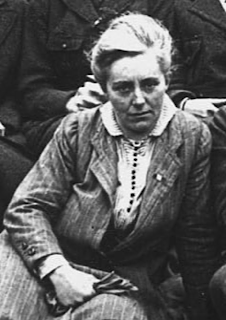
Madeleine ffrench-Mullen, Irish revolutionary and labour activist who takes part in the Easter Rising in Dublin in 1916, dies in Dublin on May 26, 1944.

Ffrench-Mullen is born on December 30, 1880, in Malta, where her father, St. Lawrence ffrench-Mullen, a Royal Navy surgeon, is stationed. She has two brothers, St. Lawrence Patrick Joseph (1890–1891) and Douglas (1893–1943).

Ffrench-Mullen’s interest in politics starts young. Her father is a committed Parnellite and their Dundrum home is a campaign headquarters. She is a radical feminist and republican during her life. Like many others of the time, she regards it as a woman’s right to vote. She joins the suffrage movement, and meets women with a similar worldview and values. The women’s suffrage movement is included in the Movements of Extremists reports of the Dublin Metropolitan Police. Ffrench-Mullen goes on to join Inghinidhe na hÉireann, a radical nationalist women’s group founded by Maud Gonne in 1900. The organisation develops into Cumann na mBan in 1913. Suffragist values are central to Cumann na mBan’s goal of standing side-by-side with men in the fight for the Irish Republic. Some members see this as women regaining the rights that had belonged to them in pre-invasion Gaelic civilisation. She is on the socialist wing of the moment, holding to the ideals of universal social equality of the syndicalist James Connolly and the Irish Citizen Army (ICA).

During the 1916 Easter Rising, ffrench-Mullen serves as a lieutenant in the Irish Citizen Army. She sees action with the St. Stephen’s Green and Royal College of Surgeons garrison. In St. Stephen’s Green she is in command of the 15 Citizen Army women who set up a medical station and field kitchen. While occupying St. Stephen’s Green, she and her comrades come under sustained heavy fire from the Shelbourne Hotel and buildings on the north side of the Green. After the surrender of the College of Surgeons garrison, ffrench-Mullen is one of the 77 women who had fought in the Rising who are imprisoned, among them her life partner Kathleen Lynn. While in captivity ffrench Mullen is moved three times, spending time in Richmond BarracksKilmainham Gaol and Mountjoy Prison. She is released on June 5, 1916.

Ffrench-Mullen meets Kathleen Lynn through Inghinidhe na h-Éireann. In 1915, she moves into Lynn’s home in Belgrave Road, Rathmines, where they live together for thirty years, until ffrench-Mullen’s death in 1944.

Ffrench-Mullen records in her prison diary in 1916 that she can face prison without fear once Lynn (whom she refers to as “the Doctor”) and she are together. Katherine Lynch of the Women’s Studies Centre at University College Dublin (UCD) describes them as partners, calling them part of a network of lesbians living in Dublin—which includes Helena MolonyLouie Bennett and Elizabeth O’Farrell—who meet through the suffrage movement and later become involved with the national and trade union movement. These women are featured, along with Eva Gore-Booth and others, in a 2023 TG4 documentary about “the radical queer women at the very heart of the Irish Revolution”: Croíthe Radacacha (Radical Hearts).

In 1919, Madeleine ffrench-Mullen and Kathleen Lynn establish Saint Ultan’s Children’s Hospital, also known as Teach Ultan, which is a female-run hospital for infants at 37 Charlemont Street, Dublin. The hospital focuses on children’s health and wellbeing, an area that is perceived at the time as women’s concern. In the aftermath of World War I many health problems have arisen including a rise in venereal diseases such as syphilis, carried from soldiers returning home from war. Many of Ireland’s infants of the time suffer from congenital syphilis (inherited disease from mother at birth), and this is a driving factor in the opening of St Ultan’s hospital. Tuberculosis is endemic in Ireland during its time as a British colony. Against steadfast opposition by the State and the Catholic Church, Lynn and ffrench-Mullen establish a vaccination project, vaccinating thousands of impoverished children who would have died of tuberculosis without their vaccines. Their success leads to the foundation of Ireland’s BCG vaccine programme, which has vaccinated all babies since the 1950s.

Ffrench-Mullen dies at the age of 63 in a Dublin nursing home on May 26, 1944. She is interred with her parents as well as her younger brothers (whom she outlives) in the ffrench-Mullen family plot in Glasnevin Cemetery. Her funeral takes place on the same day as the 1944 Irish general election.


Leave a comment

First Voluntary Smallpox Inoculations in Ireland

Five Dublin children receive the first voluntary smallpox inoculations in Ireland on August 26, 1725.

Smallpox is an acute and infectious disease caused by a virus. It is characterized by high fever and large sores on the body that leaves scars. The disease is estimated to have killed up to one-third of its victims. Those who are not killed are left with pock-marked skin or even blind. The name “smallpox” is coined in the 15th century to distinguish it from the “great pox,” better known as syphilis. However, smallpox’s history on earth is believed to date back thousands of years.

In 1980 the World Health Organization (WHO) officially declares smallpox eradicated. After ten years and $300 million, used on a global vaccination program, the disease is gone. The last recorded death from this disease is in Somalia in 1977.

In Ireland, the spread of smallpox from the 1600s onward inspires dread. Ireland’s poverty and ignorance of infectious disease, at the time, sees typhoid and dysentery ravage communities. Between 1661 and 1746 smallpox is believed to be the cause of 20% of all deaths in Dublin and a third of all children deaths in the area. This highly infectious disease does not discriminate as the rich, as well as the poor, are badly affected.

By the 18th century, hope emerges and an inoculation technique is found. Since the 10th century, the Chinese had been inoculating people, by using a small dose of the disease. This technique does not arrive in Europe for almost 800 years. This technique is first tried on prisoners in Cork Jail in 1721, presumably against their will. Four years later five children in Dublin voluntarily receive the inoculation on August 26, 1725.

Over the years this technique shows its effectiveness. The rich begin to infest and inoculate their families. Throughout the 18th century, as the disease has periodic epidemics, the richer families are less affected. By the middle of the 18th century, the inoculation is in widespread use. The South Infirmary, in Cork, even initiates a program to inoculate the poor.

Sadly, of course, the unscrupulous see an opportunity to make money as people queue up to receive the treatment. In Donegal in 1781, all but one child of a group of 52 die when an unqualified practitioner supposedly inoculates the group.

While inroads are being made against smallpox, with the emergence of the Great Famine in Ireland (1845–49), the disease returns with a vengeance. This devastates even those who had found a way to make ends meet. Smallpox means that even if you survive the disease you will be unable to work for some time and many are pauperized by the lack of income and die eventually.

As Ireland emerges from the poverty and devastation of the Great Hunger, during the 1870s over 7,000 die in Ireland from the disease. It is only from the 1880s that smallpox becomes more earnestly eradicated in Ireland. By the 1910s the death rate is down to just 65 people. From 1901 to 1910 almost 1 million Irish are inoculated.

The last outbreak of smallpox in Ireland is in 1903. In Dublin, there are found to be 256 cases. Sadly elsewhere around the world even up to the 1960s smallpox is rampant, taking up to two million lives per year and leaving millions more disfigured and blind.

Thankfully by the 1980s, the WHO’s world vaccine program has done its work and now the world is free of this disease which plagued the earth for thousands of years.

(From: “On this day: In 1725 Dublin children received the first smallpox vaccination” by IrishCentral staff, http://www.irishcentral.com, August 26, 2020)


Leave a comment

Death of Feargus Edward O’Connor, Irish Chartist Leader

Zoomify http://137.73.123.18/ncse/liv/zoomify/ns_por13 x=1200 y=1734 maxzoom=3

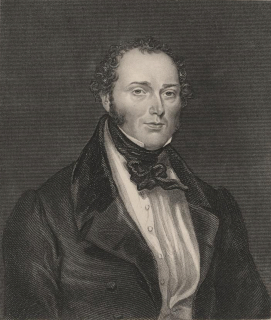
Feargus Edward O’Connor, Irish Chartist leader and advocate of the Land Plan, which seeks to provide smallholdings for the labouring classes, dies in Notting Hill, West London, England on August 30, 1855. He succeeds in making Chartism the first specifically working-class national movement in Great Britain. A highly charismatic figure, he is admired for his energy and oratory but was criticised for alleged egotism.

O’Connor is born on July 18, 1796, in Connorville house, near Castletown-Kinneigh in west County Cork, into a prominent Irish Protestant family. He is originally christened Edward Bowen O’Connor, but his father, the Irish nationalist politician Roger O’Connor, chooses to call him Feargus. He is educated mainly at Portarlington Grammar School and has some elementary schooling in England.

O’Connor, who claims royal descent from the ancient kings of Ireland, practices law but exchanges law for politics when he is elected to the British House of Commons as Member of Parliament for County Cork, as a Repeal candidate rather than a Whig. Unseated in 1835, he turns to radical agitation in England, although he continues to press Irish grievances and to seek Irish support. As a result of his humour, invective, and energy, he becomes the best-known Chartist leader and the movement’s most popular speaker. His journal, The Northern Star, founded in 1837, gains a wide circulation.

O’Connor’s methods and views alienate other Chartist leaders, particularly William Lovett, but in 1841, after spending a year in prison for seditious libel, he acquires undisputed leadership of the Chartists. Failing to lead the movement to victory and vacillating in his attitude toward the middle class and toward the People’s Charter, a six-point bill drafted and published in May 1838, he begins to lose power, although he is remarkably elected to Parliament for Nottingham in 1847, defeating Thomas Benjamin Hobhouse.

The failure of the People’s Charter in 1848 marks the beginning of the end for O’Connor, whose egocentricity is already bordering on madness. In the spring of 1852, he visits the United States, where his behaviour leaves no doubt that he is not a well man. It is possible that he is in the early stages of general paralysis of the insane, brought on by syphilis.

In the House of Commons in 1852 O’Connor strikes three fellow MPs, one of them Sir Benjamin Hall, a vocal critic of the Land Plan. Arrested by the Deputy Sergeant-at-Arms, he is sent by his sister to Dr. Thomas Harrington Tuke‘s private Manor House Asylum in Chiswick, where he remains until 1854, when he is removed to his sister’s house. He dies on August 30, 1855, at 18 Albert Terrace, Notting Hill Gate. He is buried in Kensal Green Cemetery on September 10. No fewer than 40,000 people witness the funeral procession. Most Chartists prefer to remember his strengths rather than his shortcomings.

(Pictured: Stipple engraving portrait of the Chartist leader Feargus Edward O’Connor by an unknown artist, mid 19th century, published in the Northern Star in December 1837)


Leave a comment

Death of Oscar Wilde, Poet & Playwright

oscar-wilde

Oscar Fingal O’Flahertie Wills Wilde, Irish poet and playwright, dies in Paris, France on November 30, 1900. After writing in different forms throughout the 1880s, the early 1890s see him become one of the most popular playwrights in London. He is best remembered for his epigrams and plays, his novel The Picture of Dorian Gray, and the circumstances of his criminal conviction for “gross indecency,” imprisonment, and early death at age 46.

Wilde is born on October 16, 1854, at 21 Westland Row, Dublin (now home of the Oscar Wilde Centre, Trinity College), the second of three children born to Anglo-Irish Sir William Wilde and Jane Wilde, two years behind his brother William. His parents are successful Anglo-Irish intellectuals in Dublin. He learns to speak fluent French and German. At university, he reads Greats. He demonstrates himself to be an exceptional classicist, first at Trinity College Dublin, then at Magdalen College, Oxford. He becomes associated with the emerging philosophy of aestheticism, led by two of his tutors, Walter Pater and John Ruskin. After university, he moves to London into fashionable cultural and social circles.

As a spokesman for aestheticism, Wilde tries his hand at various literary activities: he publishes a book of poems, lectures in the United States and Canada on the new “English Renaissance in Art” and interior decoration, and then returns to London where he works prolifically as a journalist. Known for his biting wit, flamboyant dress and glittering conversational skill, he becomes one of the best-known personalities of his day.

At the turn of the 1890s, Wilde refines his ideas about the supremacy of art in a series of dialogues and essays, and incorporates themes of decadence, duplicity, and beauty into what would be his only novel, The Picture of Dorian Gray (1890). The opportunity to construct aesthetic details precisely, and combine them with larger social themes, draw him to write drama. He writes Salome (1891) in French while in Paris, but it is refused a licence for England due to an absolute prohibition on the portrayal of Biblical subjects on the English stage. Unperturbed, he produces four society comedies in the early 1890s, which make him one of the most successful playwrights of late-Victorian London.

At the height of his fame and success, while The Importance of Being Earnest (1895) is still being performed in London, Wilde has John Douglas, 9th Marquess of Queensberry prosecuted for criminal libel. The Marquess is the father of Wilde’s lover, Lord Alfred Douglas. The libel trial unearths evidence that causes him to drop his charges and leads to his own arrest and trial for gross indecency with men. After two more trials he is convicted and sentenced to two years of hard labour, the maximum penalty, and is jailed from 1895 to 1897. During his last year in prison, he writes De Profundis, published posthumously in 1905, a long letter which discusses his spiritual journey through his trials, forming a dark counterpoint to his earlier philosophy of pleasure. On his release, he leaves immediately for France, never to return to Ireland or Britain. There he writes his last work, The Ballad of Reading Gaol (1898), a long poem commemorating the harsh rhythms of prison life.

By November 25, 1900, Wilde has developed meningitis, then called “cerebral meningitis”. On November 29, he is conditionally baptised into the Catholic Church by Fr. Cuthbert Dunne, a Passionist priest from Dublin. He dies of meningitis on November 30, 1900. Different opinions are given as to the cause of the disease. Richard Ellmann claims it is syphilitic. Merlin Holland, Wilde’s grandson, believes this to be a misconception, noting that Wilde’s meningitis followed a surgical intervention, perhaps a mastoidectomy. Wilde’s physicians, Dr. Paul Cleiss and A’Court Tucker, report that the condition stems from an old suppuration of the right ear treated for several years and makes no allusion to syphilis.

Wilde is initially buried in the Cimetière parisien de Bagneux outside Paris. In 1909 his remains are disinterred and transferred to Père Lachaise Cemetery, inside the city. In 2011, the tomb is cleaned of the many lipstick marks left there by admirers and a glass barrier is installed to prevent further marks or damage.

In 2017, Wilde is among an estimated 50,000 men who are pardoned for homosexual acts that are no longer considered offences under the Policing and Crime Act 2017. The Act is known informally as the Alan Turing law.

In 2014 Wilde is one of the inaugural honorees in the Rainbow Honor Walk, a walk of fame in San Francisco’s Castro District noting LGBTQ people who have “made significant contributions in their fields.”


Leave a comment

Birth of Marie Dolores Eliza Rosanna Gilbert, Dancer & Actress

lola-montez

Marie Dolores Eliza Rosanna Gilbert, Countess of Landsfeld, Irish dancer and actress better known by the stage name Lola Montez, is born in Grange, County Sligo, on February 17, 1821. She becomes famous as a “Spanish dancer,” courtesan, and mistress of King Ludwig I of Bavaria, who makes her Countess of Landsfeld. She uses her influence to institute liberal reforms. At the start of the German revolutions of 1848-1849, she is forced to flee. She proceeds to the United States via Switzerland, France, and London, returning to her work as an entertainer and lecturer.

Gilbert’s family makes their residence at King House in Boyle, County Roscommon, until early 1823, when they journey to Liverpool, thence departing for India on March 14. Gilbert spends much of her childhood in India but is educated in Scotland and England. At age 19 she elopes with Lieutenant Thomas James. The couple separates five years later, and, in 1843, Gilbert launches a career as a dancer. Her London debut in June 1843 as “Lola Montez, the Spanish dancer” is disrupted when she is recognized as Mrs. James. The fiasco would probably have ended the career of anyone less beautiful and determined, but Gilbert receives additional dancing engagements throughout Europe. During her travels she reputedly forms liaisons with Franz Liszt and Alexandre Dumas, among many others.

Late in 1846, Gilbert dances in Munich and Ludwig I of Bavaria is so struck by her beauty that he offers her a castle. She accepts, becomes Baroness Rosenthal and Countess of Lansfeld, and remains as his mistress. Under Gilbert’s influence, Louis inaugurates liberal and anti-Jesuit governmental policies, but his infatuation with her helps to bring about the collapse of his regime in the revolution of 1848. In March of that year Ludwig abdicates in favour of his son. Gilbert flees to London, where in 1849 she marries Lieutenant George Heald, although she has never been divorced from James. Heald later leaves her.

From 1851 to 1853 Gilbert performs in the United States. Her third marriage, to Patrick P. Hull of San Francisco in 1853, ends in divorce soon after she moves to Grass Valley, California. There, among other amusements, she coaches young Lotta Crabtree in singing and dancing. She settles in New York City after an unsuccessful tour of Australia in 1855–1856 and gathers a following as a lecturer on such topics as fashion, gallantry, and beautiful women. An apparently genuine religious conversion leads her to take up various personal philanthropies.

Gilbert publishes Anecdotes of Love; Being a True Account of the Most Remarkable Events Connected with the History of Love; in All Ages and among All Nations (1858), The Arts of Beauty, or, Secrets of a Lady’s Toilet with Hints to Gentlemen on the Art of Fascination (1858), and Lectures of Lola Montez, Including Her Autobiography (1858). The international notoriety of her heyday persists long after her death and inspires numerous literary and balletic allusions.

Gilbert spends her last days in rescue work among women. By November 1859 she is showing the tertiary effects of syphilis, and her body begins to waste away. She dies at the age of 39 on January 17, 1861. She is buried in Green-Wood Cemetery in Brooklyn, New York.


Leave a comment

Death of Marie Dolores Eliza Rosanna Gilbert, Dancer & Actress

lola-montez

Marie Dolores Eliza Rosanna Gilbert, Countess of Landsfeld, Irish dancer and actress better known by the stage name Lola Montez, dies in Brooklyn, New York, on January 17, 1861. She becomes famous as a “Spanish dancer,” courtesan, and mistress of King Ludwig I of Bavaria, who makes her Countess of Landsfeld. She uses her influence to institute liberal reforms. At the start of the German revolutions of 1848-1849, she is forced to flee. She proceeds to the United States via Switzerland, France, and London, returning to her work as an entertainer and lecturer.

Gilbert is born in Grange, County Sligo, on February 17, 1821. Her family makes their residence at King House in Boyle, County Roscommon, until early 1823, when they journey to Liverpool, thence departing for India on March 14. Gilbert spends much of her childhood in India but is educated in Scotland and England. At age 19 she elopes with Lieutenant Thomas James. The couple separates five years later, and, in 1843, Gilbert launches a career as a dancer. Her London debut in June 1843 as “Lola Montez, the Spanish dancer” is disrupted when she is recognized as Mrs. James. The fiasco would probably have ended the career of anyone less beautiful and determined, but Gilbert receives additional dancing engagements throughout Europe. During her travels she reputedly forms liaisons with Franz Liszt and Alexandre Dumas, among many others.

Late in 1846, Gilbert dances in Munich and Ludwig I of Bavaria is so struck by her beauty that he offers her a castle. She accepts, becomes Baroness Rosenthal and Countess of Lansfeld, and remains as his mistress. Under Gilbert’s influence, Louis inaugurates liberal and anti-Jesuit governmental policies, but his infatuation with her helps to bring about the collapse of his regime in the revolution of 1848. In March of that year Ludwig abdicates in favour of his son. Gilbert flees to London, where in 1849 she marries Lieutenant George Heald, although she has never been divorced from James. Heald later leaves her.

From 1851 to 1853 Gilbert performs in the United States. Her third marriage, to Patrick P. Hull of San Francisco in 1853, ends in divorce soon after she moves to Grass Valley, California. There, among other amusements, she coaches young Lotta Crabtree in singing and dancing. She settles in New York City after an unsuccessful tour of Australia in 1855–1856 and gathers a following as a lecturer on such topics as fashion, gallantry, and beautiful women. An apparently genuine religious conversion leads her to take up various personal philanthropies.

Gilbert publishes Anecdotes of Love; Being a True Account of the Most Remarkable Events Connected with the History of Love; in All Ages and among All Nations (1858), The Arts of Beauty, or, Secrets of a Lady’s Toilet with Hints to Gentlemen on the Art of Fascination (1858), and Lectures of Lola Montez, Including Her Autobiography (1858). The international notoriety of her heyday persists long after her death and inspires numerous literary and balletic allusions.

Gilbert spends her last days in rescue work among women. By November 1859 she is showing the tertiary effects of syphilis, and her body begins to waste away. She dies at the age of 39 on January 17, 1861. She is buried in Green-Wood Cemetery in Brooklyn, New York.