seamus dubhghaill

Promoting Irish Culture and History from Little Rock, Arkansas, USA


Leave a comment

Death of Charlie Hurley, OC of the IRA’s 3rd Cork Brigade

Charles Hurley (Irish: Cathal Ó Muirthile), Officer Commanding of the 3rd Cork Brigade (West Cork) of the Irish Republican Army (IRA) during the Irish War of Independence (1919–21), is killed by British Army troops on March 19, 1921. 

Hurley is born in Baurleigh, County Cork, near the village of Kilbrittain, on March 20, 1893, and is educated in the national school and subsequently passes the civil service examinations at age fifteen. According to his brother James, he is one of seven siblings, “born and reared in a farm of 35 acres.”

In his adolescence, Hurley becomes a clerk working for the government. In 1915, he is offered a promotion and a transfer to Haulbowline Island but declines on the grounds that this entails enlisting in the Royal Navy, albeit in a purely administrative role. Returning to Cork, he becomes friends with Liam Deasy who introduces him to the Irish republican movement. In 1917, he takes a job at Castletownbere and it is there that he joins the Irish Volunteers in 1917. He is also a member of Sinn Féin, the Gaelic Athletic Association (GAA) and the Gaelic League (Conradh na Gaeilge).

In 1918, Hurley is sentenced to five years penal servitude for possession of arms and plans of the British military fortifications at Bere Island. However, he is released in 1919 following a hunger strike. In the same year, his brother Willie, also an IRA Volunteer, dies of typhoid fever. He first becomes vice-commandant of the Volunteers or IRA Bandon Battalion and then in August 1920, after the arrest and imprisonment of Tom Hales, he becomes commander of the Third Cork Brigade of the IRA. One of his most important decisions is to establish a full-time guerrilla unit or flying column, under Tom Barry.

The 3rd Cork Brigade (also known as the West Cork Brigade) goes on to be one of the most active IRA units during the guerrilla war against the British in 1919–21. According to Barry, Hurley leads an ambush of the Royal Irish Constabulary (RIC) at Ahawadda in April 1920, killing three policemen, wounding one and taking their arms and ammunition. In July of that same year, he leads a successful attack on the Coastguard station at Howes Strand, capturing a large number of weapons and ammunition. Barry remarks that Hurley is “a remarkable man and a lovable personality” and “continually urged a fighting army policy.” 

Hurley is present at the Tooreen ambush in October 1920 and subsequently is part of an assassination attempt on a judge who gives “harsh sentences” to IRA members. From December 1920 until January 1921, he takes command of the 3rd Cork Brigade’s flying column while Barry is ill. He also tours IRA units to assess the impact of the decree of excommunication on the guerrilla movement issued by Catholic Bishop of Cork, Daniel Cohalan.

In February 1921, Hurley leads the disastrous Upton train ambush on February 15, 1921, an attack on a train carrying British troops. In the action, the attacking IRA party is heavily outnumbered and the firefight results in three IRA men and six civilians being killed. He is also badly wounded in the face and ankle. Barry writes of the aftermath of the ambush that “he (Hurley) mourned deeply for his dead comrades and for the dead civilians, whom he did not know.”

Hurley is killed in action by British troops just before the Crossbarry ambush on March 19, 1921. He is staying in a house with a pro-republican family, where he is recuperating from the serious wounds he had received at Upton a month earlier. When he realises that he is surrounded by the British forces, he flees the house, as Barry comments in his book, to reduce the danger to those in the house, and is shot dead by pursuing troops. Barry remarks that he “died in the manner in which we expected.” 

The British Army places Hurley’s body at the workhouse in Bandon. However, members of Cumann na mBan surreptitiously take his body and he is given a secret republican funeral in Clogagh. A local ballad exists that commemorates him. In addition, the Gaelic Athletic Association grounds in Bandon is named after him in 1971.

Leave a comment

First Voluntary Smallpox Inoculations in Ireland

Five Dublin children receive the first voluntary smallpox inoculations in Ireland on August 26, 1725.

Smallpox is an acute and infectious disease caused by a virus. It is characterized by high fever and large sores on the body that leaves scars. The disease is estimated to have killed up to one-third of its victims. Those who are not killed are left with pock-marked skin or even blind. The name “smallpox” is coined in the 15th century to distinguish it from the “great pox,” better known as syphilis. However, smallpox’s history on earth is believed to date back thousands of years.

In 1980 the World Health Organization (WHO) officially declares smallpox eradicated. After ten years and $300 million, used on a global vaccination program, the disease is gone. The last recorded death from this disease is in Somalia in 1977.

In Ireland, the spread of smallpox from the 1600s onward inspires dread. Ireland’s poverty and ignorance of infectious disease, at the time, sees typhoid and dysentery ravage communities. Between 1661 and 1746 smallpox is believed to be the cause of 20% of all deaths in Dublin and a third of all children deaths in the area. This highly infectious disease does not discriminate as the rich, as well as the poor, are badly affected.

By the 18th century, hope emerges and an inoculation technique is found. Since the 10th century, the Chinese had been inoculating people, by using a small dose of the disease. This technique does not arrive in Europe for almost 800 years. This technique is first tried on prisoners in Cork Jail in 1721, presumably against their will. Four years later five children in Dublin voluntarily receive the inoculation on August 26, 1725.

Over the years this technique shows its effectiveness. The rich begin to infest and inoculate their families. Throughout the 18th century, as the disease has periodic epidemics, the richer families are less affected. By the middle of the 18th century, the inoculation is in widespread use. The South Infirmary, in Cork, even initiates a program to inoculate the poor.

Sadly, of course, the unscrupulous see an opportunity to make money as people queue up to receive the treatment. In Donegal in 1781, all but one child of a group of 52 die when an unqualified practitioner supposedly inoculates the group.

While inroads are being made against smallpox, with the emergence of the Great Famine in Ireland (1845–49), the disease returns with a vengeance. This devastates even those who had found a way to make ends meet. Smallpox means that even if you survive the disease you will be unable to work for some time and many are pauperized by the lack of income and die eventually.

As Ireland emerges from the poverty and devastation of the Great Hunger, during the 1870s over 7,000 die in Ireland from the disease. It is only from the 1880s that smallpox becomes more earnestly eradicated in Ireland. By the 1910s the death rate is down to just 65 people. From 1901 to 1910 almost 1 million Irish are inoculated.

The last outbreak of smallpox in Ireland is in 1903. In Dublin, there are found to be 256 cases. Sadly elsewhere around the world even up to the 1960s smallpox is rampant, taking up to two million lives per year and leaving millions more disfigured and blind.

Thankfully by the 1980s, the WHO’s world vaccine program has done its work and now the world is free of this disease which plagued the earth for thousands of years.

(From: “On this day: In 1725 Dublin children received the first smallpox vaccination” by IrishCentral staff, http://www.irishcentral.com, August 26, 2020)


Leave a comment

Birth of Edward Hand, Soldier, Physician & Politician

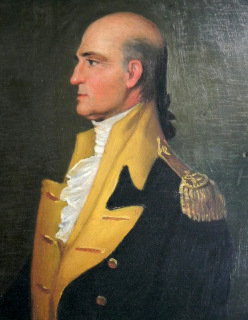
Edward Hand, Irish soldier, physician, and politician who serves in the Continental Army during the American Revolutionary War, is born in Clyduff, King’s County (now County Offaly) on December 31, 1744. He rises to the rank of general and later is a member of several Pennsylvania governmental bodies.

Hand, the son of John Hand, is baptised in Shinrone. Among his immediate neighbours are the Kearney family, ancestors of United States President Barack Obama. He is a descendant of either the families of Mag Fhlaithimh (of south Ulaidh and Mide) or Ó Flaithimhín (of the Síol Muireadaigh) who, through mistranslation became Lavin or Hand.

Hand earns a medical certificate from Trinity College, Dublin. In 1767, he enlists as a Surgeon’s Mate in the 18th (Royal Irish) Regiment of Foot. On May 20, 1767, he sails with the regiment from Cobh, County Cork, arriving at Philadelphia on July 11, 1767. In 1772, he is commissioned an ensign. He marches with the regiment to Fort Pitt, on the forks of the Ohio River, returning to Philadelphia in 1774, where he resigns his commission.

In 1774, Hand moves to Lancaster, Pennsylvania, where he practices medicine. On March 13, 1775, he marries Catherine Ewing. Lancaster is the region of some of the earliest Irish and Scotch-Irish settlements in Pennsylvania. As a people, they are well known for their anti-English and revolutionary convictions. He is active in forming the Lancaster County Associators, a colonial militia. He is a 32nd degree Freemason, belonging to the Montgomery Military Lodge number 14.

Hand enters the Continental Army in 1775 as a lieutenant colonel in the 1st Pennsylvania Regiment under Colonel William Thompson. He is promoted to colonel in 1776 and placed in command of the 1st Continental, then designated the 1st Pennsylvania. Promoted to brigadier general in March 1777, he serves as the commander of Fort Pitt, fighting British loyalists and their Indian allies. He is recalled, after over two years at Fort Pitt, to serve as a brigade commander in Major General La Fayette‘s division.

In 1778, Hand attacks the Lenape, killing Captain Pipe‘s mother, brother, and a few of his children during a military campaign. Failing to distinguish among the Native American groups, he had attacked the neutral Lenape while trying to reduce the Indian threat to settlers in the Ohio Country, because other tribes, such as the Shawnee, had allied with the British.

After a few months, he is appointed Adjutant General of the Continental Army and serves during the Siege of Yorktown in that capacity. In recognition of his long and distinguished service, he is promoted by brevet to major general in September 1783. He resigns from the Army in November 1783.

Hand returns to Lancaster and resumes the practice of medicine. A Federalist, he is also active in civil affairs. Beginning in 1785, he owns and operates Rock Ford plantation, a 177-acre farm on the banks of the Conestoga River, one mile south of Lancaster, Pennsylvania. The Georgian brick mansion remains today, and the farm is a historic site open to the public.

Hand dies from typhoid fever, dysentery or pneumonia at Rock Ford on September 3, 1802, although medical records are unclear with some sources stating he died of cholera. There is no evidence Lancaster County suffered from a cholera epidemic in 1802. He is buried in St. James’s Episcopal Cemetery in Lancaster, the same church where he had served as a deacon.


1 Comment

“Typhoid Mary” Placed in Quarantine

typhoid-mary

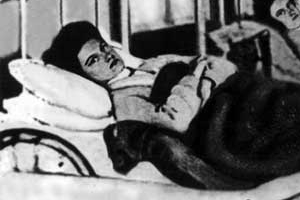
Mary Mallon, better known as Typhoid Mary, the first person in the United States identified as an asymptomatic carrier of the pathogen associated with typhoid fever, is placed in quarantine on March 27, 1869, where she remains for the rest of her life.

Mallon is presumed to have infected 51 people, three of whom die, over the course of her career as a cook. She is twice forcibly isolated by public health authorities and dies after a total of nearly three decades in isolation.

Mallon is born on September 23, 1869, in Cookstown, County Tyrone in what is now Northern Ireland. She immigrates to the United States in 1883 at the age of fifteen and lives with her aunt and uncle.

From 1900 to 1907, Mallon works as a cook in the New York City area for seven families. In 1900, she works in Mamaroneck, New York, where, within two weeks of her employment, residents develop typhoid fever. In 1901, she moves to Manhattan, where members of the family for whom she works develop fevers and diarrhea, and the laundress dies. Mallon then goes to work for a lawyer but leaves after seven of the eight people in that household become ill.

In 1906, Mallon takes a position in Oyster Bay, Long Island, and within two weeks ten of the eleven family members are hospitalized with typhoid. She changes jobs again and similar occurrences happen in three more households. She works as a cook for the family of a wealthy New York banker, Charles Henry Warren. When the Warrens rent a house in Oyster Bay for the summer of 1906, Mallon goes along as well. From August 27 to September 3, six of the eleven people in the family come down with typhoid fever. The disease at that time is “unusual” in Oyster Bay, according to three medical doctors who practice there. Mallon is subsequently hired by other families and outbreaks follow her.

In late 1906, one family hires a typhoid researcher named George Soper to investigate. Soper publishes the results on June 15, 1907, in the Journal of the American Medical Association. He believes Mallon might be the source of the outbreak, but she repeatedly turns him away.

The New York City Health Department sends physician Sara Josephine Baker to talk to Mallon. A few days later, Baker arrives at Mallon’s workplace with several police officers, who take her into custody.

Mallon attracts so much media attention that she is called “Typhoid Mary” in a 1908 issue of the Journal of the American Medical Association. Later, in a textbook that defines typhoid fever, she is again called “Typhoid Mary.”

The New York City Health Inspector determines her to be a carrier. Under sections 1169 and 1170 of the Greater New York Charter, Mallon is held in isolation for three years at a clinic located on North Brother Island.

Upon her release, Mallon is given a job as a laundress. In 1915, Mallon starts another major outbreak, this time at Sloane Hospital for Women in New York City. Twenty-five people are infected and two die. She again leaves, but the police are able to locate and arrest her when she brings food to a friend on Long Island. After arresting her, public health authorities return her to quarantine on North Brother Island on March 27, 1915.

Mallon spends the rest of her life in quarantine at the Riverside Hospital. Six years before her death, she is paralyzed by a stroke. She dies in North Brother Island, East River, New York, on November 11, 1938, of pneumonia. An autopsy finds evidence of live typhoid bacteria in her gallbladder. Mallon’s body is cremated, and her ashes are buried at Saint Raymond’s Cemetery in the Bronx.


Leave a comment

Birth of Thomas Burke, Irish Dominican Preacher

thomas-nicholas-burke-statue

Thomas Nicholas Burke, Irish Dominican preacher, is born in Galway, County Galway on September 8, 1830.

Burke’s parents, though in moderate circumstances, gave him a good education. He studies at first under the care of the Patrician Brothers and is afterwards sent to a private school. An attack of typhoid fever when he is fourteen years old, and the famine year of 1847 have a sobering effect. Toward the end of that year, he asks to be received into the Order of Preachers and is sent to Perugia in Italy to make his novitiate. On December 29, he is clothed there in the habit of St. Dominic and receives the name of Thomas.

Shortly afterward Burke is sent to Rome to begin his studies at the College of St. Thomas, the future Pontifical University of Saint Thomas Aquinas, where he is a student of philosophy and theology. He passes thence to the Roman convent of Santa Sabina. His superiors send him, while yet a student, as novice-master to Woodchester, the novitiate of the resuscitated English Province. He is ordained into the priesthood on March 26, 1853. On August 3, 1854, he defends publicly the theses in universâ theologiâ. He is made lector at the College of St. Thomas in 1854.

Early in the following year Burke is recalled to Ireland to found the novitiate of the Irish Province at Tallaght, near Dublin. In 1859 he preaches his first notable sermon on “Church Music.” It immediately lifts him into fame.

Elected Prior of Tallaght in 1863, Burke goes to Rome the following year as Rector of the Dominican Convent of San Clemente and attracts great attention by his preaching. He returns to Ireland in 1867 and delivers his oration on Daniel O’Connell at Glasnevin before fifty thousand people.

Bishop Leahy takes him as his theologian to the First Vatican Council in 1870, and the following year he is sent as Visitor to the Dominican convents in America. He is besieged with invitations to preach and lecture. The seats are filled hours before he appears, and his audiences overflow the churches and halls in which he lectures. In New York City he delivers the discourses in refutation of the English historian James Anthony Froude.

In an eighteen-month period Burke gives four hundred lectures, exclusive of sermons, with the proceeds amounting to nearly $400,000. His mission is a triumph, but the triumph is dearly won. When he arrives in Ireland on March 7, 1873, he is spent and broken.

During the next decade Burke preaches in Ireland, England, and Scotland. He begins the erection of the church in Tallaght in 1883, and the following May preaches a series of sermons in the new Dominican church, London. In June he returns to Tallaght in a dying condition and preaches his last sermon in the Jesuit church, Dublin, in aid of the starving children of Donegal. A few days afterwards, on July 2, 1882, he dies. He is buried in the church of Tallaght, now a memorial to him.

(Pictured: Statue of Thomas Nicholas Burke by John Francis Kavanagh by Nimmo’s Pier in Galway)


Leave a comment

Birth of Januarius MacGahan, Journalist & Correspondent

januarius-macgahan

Januarius Aloysius MacGahan, American journalist and war correspondent for the New York Herald and The Daily News, is born near New Lexington, Ohio on June 12, 1844. His articles describing the massacre of Bulgarian civilians by Turkish soldiers and irregular volunteers in 1876 creates public outrage in Europe and are a major factor in preventing Britain from supporting Turkey in the Russo–Turkish War of 1877–78, which leads to Bulgaria gaining independence from the Ottoman Empire.

MacGahan’s father is an immigrant from Ireland who had served on the Northumberland, the ship which took Napoleon into exile on Saint Helena. He moves to St. Louis, where he briefly works as a teacher and as a journalist. There he meets his cousin, General Philip Sheridan, an American Civil War hero also of Irish parentage, who convinces him to study law in Europe. He sails to Brussels in December 1868.

MacGahan does not get a law degree, but he discovers that he has a gift for languages, learning French and German. He runs short of money and is about to return to America in 1870 when the Franco-Prussian War breaks out. Sheridan happens to be an observer with the German Army, and he uses his influence to persuade the European editor of the New York Herald to hire MacGahan as a war correspondent with the French Army.

MacGahan’s vivid articles from the front lines describing the stunning defeat of the French Army win him a large following, and many of his dispatches to the Herald are reprinted by European newspapers. When the war ends, he interviews French leader Léon Gambetta and Victor Hugo and, in March 1871, he hurries to Paris and is one of the first foreign correspondents to report on the uprising of the Paris Commune. He is arrested by the French military and nearly executed and is only rescued through the intervention of the U.S. Minister to France Elihu B. Washburne.

In 1871 MacGahan is assigned as the Herald‘s correspondent to Saint Petersburg. He learns Russian, mingles with the Russian military and nobility, covers the Russian tour of General William Tecumseh Sherman and meets his future wife, Varvara Elagina, whom he marries in 1873. In 1874 he spends ten months in Spain, covering the Third Carlist War.

In 1876 MacGahan quarrels with James Gordon Bennett Jr., the publisher of the New York Herald, and leaves the newspaper. He is invited by his friend, Eugene Schuyler, the American Consul-General in Constantinople, to investigate reports of large-scale atrocities committed by the Turkish Army following the failure of an attempted uprising by Bulgarian nationalists in April 1876. He obtains a commission from The Daily News, then the leading liberal newspaper in England, and leaves for Bulgaria on July 23, 1876.

MacGahan reports that the Turkish soldiers have forced some of the villagers into the church, then the church is burned, and survivors tortured to learn where they have hidden their treasures. He says that of a population of seven thousand, only two thousand survive. According to his account, fifty-eight villages in Bulgaria are destroyed, five monasteries demolished, and fifteen thousand people in all massacred. These reports, published first in The Daily News, and then in other papers, cause widespread popular outrage against Turkey in Britain. The government of British Prime Minister Benjamin Disraeli, a supporter of Turkey, tries to minimize the massacres and says that the Bulgarians are equally to blame, but his arguments are refuted by the newspaper accounts of MacGahan.

In the wake of the massacres and atrocities committed by the Ottoman forces during the suppression of the April Uprising, as well as centuries-long conflicts between Russia and Turkey in Crimea, the Russian Government, stirred by anti-Turkish and Pan-Slavism sentiment, prepare to invade the Ottoman Empire, and declare war on it on April 24, 1877. The Turkish Government of Sultan Abdul Hamid II appeals for help to Britain, its traditional ally against Russia, but the British government responds that it cannot intervene “because of the state of public feeling.”

MacGahan is assigned as a war correspondent for The Daily News and, thanks to his friendship with General Skobelev, the Russian commander, rides with the first units of the Russian Army as it crosses the Danube into Bulgaria. He covers all the major battles of the Russo–Turkish War, including the Siege of Plevna and the Battle of Shipka Pass. He reports on the final defeat of the Turkish armies and is present at the signing of the Treaty of San Stefano, which ends the war.

MacGahan is in Constantinople, preparing to travel to Berlin for the conference that determines the final borders of Bulgaria, when he catches typhoid fever. He dies on June 9, 1878, and is buried in the Greek cemetery, in the presence of diplomats, war correspondents, and General Skobelev. Five years later his body is returned to the United States and reburied in New Lexington and a statue is erected in his honor by a society of Bulgarian Americans.


Leave a comment

Birth of Irish Revolutionary Maud Gonne

maud-gonne

Maud Gonne, Irish revolutionary, romantic muse for William Butler Yeats, and mother to Nobel Peace Prize-winner Seán MacBride, is born at Tongham, England on December 21, 1866.

Gonne is born into a distinguished and wealthy family, and her father serves as an army captain. Her mother dies of tuberculosis when she is a child, and she and her sister are raised and educated by a French nanny. This cosmopolitan upbringing is furthered by travels throughout Europe with her father, then a military attaché.

In 1884, Gonne’s father dies of typhoid fever, and she receives a considerable inheritance. After moving to France to be with her aunt, she meets and falls in love with right wing politician Lucien Millevoye. Though he is already married, he instills Gonne with his political passions. She begins a nearly lifelong fight for Irish freedom from England and the release of political prisoners. She and Millevoye have two children, one of whom survives, before their relationship ends.

Moved by the plight of those evicted in the Land Wars, Gonne continues to campaign for the Irish nationalist cause. While living in Paris, she is introduced to Fenianism by John O’Leary, a veteran of the Young Ireland Rebellion of 1848. In 1889, O’Leary introduces her to a man whose infatuation with her would last most of his life, poet William Butler Yeats. She begins a relationship with Yeats, though she refuses his many marriage proposals. She is the inspiration for many of Yeats’s poems. In 1900, she founds the Daughters of Ireland, which provides a home for Irish nationalist women.

In 1918, Gonne is arrested for being a political agitator. She becomes severely ill in prison and after her release, she begins a crusade for improved conditions for Ireland’s political prisoners. In 1903, she marries Major John MacBride, who had led the Irish Transvaal Brigade against the British in the Second Boer War, in Paris in 1903. After the birth of their son, Seán, Gonne and her husband agree to end their marriage. She demands sole custody of their son but MacBride refuses, and a divorce case begins in Paris on February 28, 1905. The only charge against MacBride substantiated in court is that he was drunk on one occasion during the marriage. A divorce is not granted, and MacBride is given the right to visit his son twice weekly.

The couple’s son, Seán MacBride, is active in politics in Ireland and in the United Nations. He is a founding member and Chairman of Amnesty International and is awarded the Nobel Peace Prize in 1974.

Gonne dies in Clonskeagh on April 27, 1953, at the age of 86 and is buried in Glasnevin Cemetery, Dublin. Maud Gonne’s autobiography, A Servant of the Queen, is published in 1938.


Leave a comment

Death of Mary Mallon, Better Known as “Typhoid Mary”

typhoid-mary

Mary Mallon, better known as Typhoid Mary, dies in North Brother Island, East River, New York, on November 11, 1938. She is the first person in the United States identified as an asymptomatic carrier of the pathogen associated with typhoid fever. She is presumed to have infected 51 people, three of whom die, over the course of her career as a cook. She is twice forcibly isolated by public health authorities and dies after a total of nearly three decades in isolation.

Mallon is born on September 23, 1869, in Cookstown, County Tyrone, Northern Ireland. She immigrates to the United States in 1883 at the age of fifteen and lives with her aunt and uncle.

From 1900 to 1907, Mallon works as a cook in the New York City area for seven families. In 1900, she works in Mamaroneck, New York, where, within two weeks of her employment, residents develop typhoid fever. In 1901, she moves to Manhattan, where members of the family for whom she works develop fevers and diarrhea, and the laundress dies. Mallon then goes to work for a lawyer but leaves after seven of the eight people in that household become ill.

In 1906, she takes a position in Oyster Bay, Long Island, and within two weeks ten of the eleven family members are hospitalized with typhoid. She changed jobs again and similar occurrences happen in three more households. She works as a cook for the family of a wealthy New York banker, Charles Henry Warren. When the Warrens rent a house in Oyster Bay for the summer of 1906, Mallon goes along as well. From August 27 to September 3, six of the eleven people in the family come down with typhoid fever. The disease at that time is “unusual” in Oyster Bay, according to three medical doctors who practice there. Mallon is subsequently hired by other families and outbreaks follow her.

In late 1906, one family hires a typhoid researcher named George Soper to investigate. Soper publishes the results on June 15, 1907, in the Journal of the American Medical Association. He believes Mallon might be the source of the outbreak, but she repeatedly turns him away.

The New York City Health Department sends physician Sara Josephine Baker to talk to Mallon. A few days later, Baker arrives at Mallon’s workplace with several police officers, who take her into custody.

Mallon attracts so much media attention that she is called “Typhoid Mary” in a 1908 issue of the Journal of the American Medical Association. Later, in a textbook that defines typhoid fever, she is again called “Typhoid Mary.”

The New York City Health Inspector determines her to be a carrier. Under sections 1169 and 1170 of the Greater New York Charter, Mallon is held in isolation for three years at a clinic located on North Brother Island.

Upon her release, Mallon is given a job as a laundress. In 1915, Mallon starts another major outbreak, this time at Sloane Hospital for Women in New York City. Twenty-five people are infected and two die. She again leaves, but the police are able to locate and arrest her when she brings food to a friend on Long Island. After arresting her, public health authorities return her to quarantine on North Brother Island on March 27, 1915.

Mallon spends the rest of her life in quarantine at the Riverside Hospital. Six years before her death, she is paralyzed by a stroke. On November 11, 1938, at the age of 69, she dies of pneumonia. An autopsy finds evidence of live typhoid bacteria in her gallbladder. Mallon’s body is cremated, and her ashes are buried at Saint Raymond’s Cemetery in the Bronx.