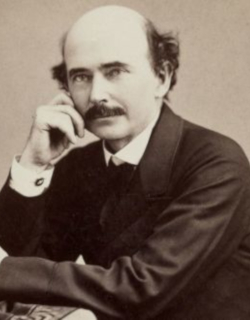
Educated in England, Boucicault begins acting in 1837 and in 1840 submits his first play to Lucia Elizabeth Vestris at Covent Garden, however it is rejected. His second play, London Assurance (1841), which foreshadows the modern social drama, is a huge success and is frequently revived into the 20th century. Other notable early plays were Old Heads and Young Hearts (1844) and The Corsican Brothers (1852).
In 1853 Boucicault and his second wife, Agnes Robertson, arrive in New York City, where his plays and adaptations are long popular. He leads a movement of playwrights that produces in 1856 the first copyright law for drama in the United States. His play The Poor of New York, based on the panics of 1837 and 1857, has a long run at Wallack’s Theatre in 1857 and is presented elsewhere as, for example, The Poor of Liverpool. The Octoroon (1859) causes a sensation with its implied attack on slavery.
Boucicault and his actress wife join Laura Keene’s theatre in 1860 and begin a series of his popular Irish plays — The Colleen Bawn, or The Brides of Garryowen (1860), Arrah-na-Pogue (1864), The O’Dowd (1873), andThe Shaughraun (1874). Returning to London in 1862, he provides Joseph Jefferson with a successful adaptation of Rip Van Winkle (1865). In 1872 he returns to the United States, where he remains, except for a trip to Australia that results in his third marriage (for which he renounced the legitimacy of his second marriage). Among his associates in the 1870s is the young David Belasco. At the time of his death on September 18, 1890, in New York City, he is a poorly paid teacher of acting. He is buried in Mount Hope Cemetery, Hastings, Westchester County, New York.
About 150 plays are credited to Boucicault, who, as both writer and actor, raises the stage Irishman from caricature to character. To the American drama he brings a careful construction and a keen observation and recording of detail. His concern with social themes prefigures the future development of drama in both Europe and America.
(Pictured: Dionysius Boucicault, taken 1890 or before. Photograph: Harvard Theatre Collection/Wikimedia Commons)
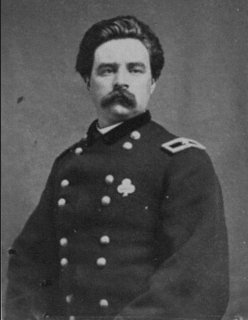
In 1861 Smyth enlists in the Union army in an Irish American three-months regiment, the 24th Pennsylvania, and is quickly made a captain. He is later commissioned as a major of the 1st Delaware Infantry, a three-years regiment. He serves at the battles of Chancellorsville and Fredericksburg, following which he is promoted to lieutenant colonel and then to colonel. During the Gettysburg campaign, he commands the 2nd Brigade, 3rd Division of the II Corps. During the Battle of Gettysburg, his men help defend Cemetery Ridge and advance to the area of the Bliss farm to oust enemy sharpshooters. He is wounded on the third day of the battle and relinquishes command briefly.
Smyth retains brigade command during the reorganization of II Corps before Ulysses S. Grant‘s Overland Campaign. He leads the second brigade of the first division from March 25 to May 17, 1864. When Colonel Samuel S. Carroll is wounded, Smyth is transferred to his command, the third brigade of second division, the Gibraltar Brigade. In October 1864, he is promoted to brigadier general during the Siege of Petersburg. He retains command of his brigade throughout the siege.
On March 18, 1867, PresidentAndrew Johnson nominates Smyth for posthumous appointment to the grade of brevet major general of volunteers to rank from April 7, 1865, the date he was mortally wounded, and the United States Senate confirms the appointment on March 26, 1867. He is the last Union general killed or mortally wounded during the war and is buried in Wilmington and Brandywine Cemetery in Wilmington, Delaware.
Born in what is now Northern Ireland in 1831 to Scotch-Irish parents, Fair immigrates with his family to the United States when he is a boy and grows up on a farm in Illinois. Following the 1849 California Gold Rush, he travels to California. He earns a reputation for understanding ore bodies, inspiring his eventual employment as superintendent of various mines.
The 1859 discovery of the Comstock Lode in Nevada provides Fair with new opportunities. In 1865, he becomes superintendent of the prestigious Ophir Mine. Two years later, the Hale and Norcross Mine in Virginia City hire him as assistant superintendent, but the owners dismiss him within a year for unclear reasons.
While at the Hale and Norcross, Fair meets John William Mackay, whose success at the Kentuck Mine made him a millionaire. The two Irish immigrants recognize common interests and form an alliance. Mackay gives Fair the position of superintendent of the Rising Star Mine in Idaho, a property he had recently acquired. The venture proves unsuccessful, but it solidifies a working relationship between the two.
Fair works quietly with Mackay and investors James C. Flood and William S. O’Brien to obtain control of the Hale and Norcross Mine. Fair turns it to profit with better management. He and Mackay combine their expertise to acquire and explore other claims. In 1873, largely through Fair’s persistent search in the Consolidated California and Virginia Mine, the partnership discovers the famed Big Bonanza, one of the richest ore bodies in history. Fair and the others become extremely wealthy. He uses his assets to defeat the incumbent William Sharon for a seat in the United States Senate, which he holds in an undistinguished way from 1881-1887 as a Democrat.
Fair develops real estate in San Francisco and acquires mining property outside Nevada. Theresa Fair, his wife, is respected in Virginia City for donations to causes including those of the Catholic Church and the Daughters of Charity. When she divorces her husband in 1883 for habitual adultery, national public opinion turns against the senator. During his bid for reelection, he finds little support. Even Mackay fails to come to his aid, and he easily loses his seat to William Morris Stewart in 1887. He then moves back to San Francisco.
Wilde is born on October 16, 1854, at 21 Westland Row, Dublin (now home of the Oscar Wilde Centre, Trinity College), the second of three children born to Anglo-Irish Sir William Wilde and Jane Wilde, two years behind his brother William. His parents are successful Anglo-Irish intellectuals in Dublin. He learns to speak fluent French and German. At university, he reads Greats. He demonstrates himself to be an exceptional classicist, first at Trinity College Dublin, then at Magdalen College, Oxford. He becomes associated with the emerging philosophy of aestheticism, led by two of his tutors, Walter Pater and John Ruskin. After university, he moves to London into fashionable cultural and social circles.
As a spokesman for aestheticism, Wilde tries his hand at various literary activities: he publishes a book of poems, lectures in the United States and Canada on the new “English Renaissance in Art” and interior decoration, and then returns to London where he works prolifically as a journalist. Known for his biting wit, flamboyant dress and glittering conversational skill, he becomes one of the best-known personalities of his day.
At the turn of the 1890s, Wilde refines his ideas about the supremacy of art in a series of dialogues and essays, and incorporates themes of decadence, duplicity, and beauty into what would be his only novel, The Picture of Dorian Gray (1890). The opportunity to construct aesthetic details precisely, and combine them with larger social themes, draw him to write drama. He writes Salome (1891) in French while in Paris, but it is refused a licence for England due to an absolute prohibition on the portrayal of Biblical subjects on the English stage. Unperturbed, he produces four society comedies in the early 1890s, which make him one of the most successful playwrights of late-Victorian London.
At the height of his fame and success, while The Importance of Being Earnest (1895) is still being performed in London, Wilde has John Douglas, 9th Marquess of Queensberry prosecuted for criminal libel. The Marquess is the father of Wilde’s lover, Lord Alfred Douglas. The libel trial unearths evidence that causes him to drop his charges and leads to his own arrest and trial for gross indecency with men. After two more trials he is convicted and sentenced to two years of hard labour, the maximum penalty, and is jailed from 1895 to 1897. During his last year in prison, he writes De Profundis, published posthumously in 1905, a long letter which discusses his spiritual journey through his trials, forming a dark counterpoint to his earlier philosophy of pleasure. On his release, he leaves immediately for France, never to return to Ireland or Britain. There he writes his last work, The Ballad of Reading Gaol (1898), a long poem commemorating the harsh rhythms of prison life.
By November 25, 1900, Wilde has developed meningitis, then called “cerebral meningitis”. On November 29, he is conditionally baptised into the Catholic Church by Fr. Cuthbert Dunne, a Passionist priest from Dublin. He dies of meningitis on November 30, 1900. Different opinions are given as to the cause of the disease. Richard Ellmann claims it is syphilitic. Merlin Holland, Wilde’s grandson, believes this to be a misconception, noting that Wilde’s meningitis followed a surgical intervention, perhaps a mastoidectomy. Wilde’s physicians, Dr. Paul Cleiss and A’Court Tucker, report that the condition stems from an old suppuration of the right ear treated for several years and makes no allusion to syphilis.
Wilde is initially buried in the Cimetière parisien de Bagneux outside Paris. In 1909 his remains are disinterred and transferred to Père Lachaise Cemetery, inside the city. In 2011, the tomb is cleaned of the many lipstick marks left there by admirers and a glass barrier is installed to prevent further marks or damage.
In 2017, Wilde is among an estimated 50,000 men who are pardoned for homosexual acts that are no longer considered offences under the Policing and Crime Act 2017. The Act is known informally as the Alan Turing law.
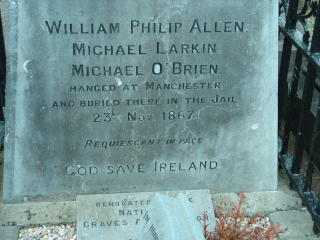
Fenians William Philip Allen, Michael Larkin, and Michael O’Brien, known as the Manchester Martyrs, are publicly hanged for the murder of a police officer in Manchester, England on November 23, 1867, during an incident that becomes known as the Manchester Outrages.
The three are members of the Irish Republican Brotherhood, also known as the Fenians, an organisation dedicated to ending British rule in Ireland, and are among a group of 30–40 Fenians who attack a horse-drawn police van transporting two arrested leaders of the Brotherhood, Thomas J. Kelly and Timothy Deasy, to Belle Vue Gaol. Police Sergeant Charles Brett, traveling inside with the keys, is shot and killed as the attackers attempt to force the van open by blowing the lock. Kelly and Deasy are released after another prisoner in the van takes the keys from Brett’s body and passes them to the group outside through a ventilation grill. The pair escape and make their way to safety in the United States. They are never recaptured, despite an extensive search.
Two others are also charged and found guilty of Brett’s murder, Thomas Maguire and Edward O’Meagher Condon, but their death sentences are overturned — O’Meagher Condon’s through the intercession of the United States government as he is an American citizen, and Maguire’s because the evidence given against him is considered unsatisfactory. Allen, Larkin, and O’Brien are publicly hanged on a temporary structure built on the wall of Salford Gaol on November 23, 1867, in front of a crowd of 8,000–10,000 people.
The bodies of the three men are buried in the New Bailey Prison graveyard, from which they are transferred to Strangeways Prison cemetery when New Bailey Prison is closed in 1868. In 1991 their remains are cremated and reinterred at Blackley Cemetery in Manchester.
Brett is the first Manchester City Police officer to be killed on duty, and he is memorialised in a monument in St. Ann’s Church. Allen, Larkin, and O’Brien are also memorialised, both in Manchester, where the Irish community makes up more than 10 percent of the population, and in Ireland, where they are regarded by many as inspirational heroes.
(Pictured: Manchester Martyrs monument, Glasnevin Cemetery, Dublin)
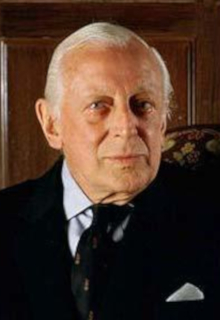
Alistair Cooke, British journalist, television personality, and broadcaster, who describes himself as a “Lancastrian Irishman,” is born in Salford, Lancashire, England on November 20, 1908. He is best known for his lively and insightful interpretations of American history and culture.
From the late 1930s, Cooke reports and comments on American affairs for BBC Radio and several major British newspapers. His weekly 15-minute program, Letter from America, broadcast from 1946 to 2004, is one of the longest-running series on radio. The texts of many broadcasts are collected in One Man’s America (1952) and Talk About America (1968). From 1956 to 1961 he hosts and narrates the weekly television “magazine” Omnibus, which wins numerous broadcasting awards.
Cooke’s interpretation of the American experience culminates in his BBC-produced television series America: A Personal History of the United States (1972–1973). In thirteen installments, filmed on location throughout the United States, he surveys some 500 years of American history in an eclectic and personal but highly coherent narrative. Alistair Cooke’s America (1973), the book based on the award-winning program, is a best-seller in the United States. From the 1970s to the early 1990s, as host of Masterpiece Theatre, he serves as an interpreter of British culture through the presentation of BBC dramatic television programming to American audiences.
Cooke’s other works include the critical biography Douglas Fairbanks: The Making of a Screen Actor (1940), Generation on Trial: The USA v. Alger Hiss (1950), based on his coverage of a celebrated Congressional investigation, The Vintage Mencken (1955), The Patient Has the Floor (1986), America Observed (1988), Memories of the Great and the Good (2000) and, with Robert Cameron, The Americans (1977).
On March 2, 2004, at the age of 95, following advice from his doctors, Cooke announces his retirement from Letter from America—after 58 years, the longest-running speech radio show in the world.
Alistair Cooke dies at midnight on March 30, 2004 at his home in New York City. He had been ill with heart disease, but dies of lung cancer, which had spread to his bones. He is cremated and his ashes are clandestinely scattered by his family in New York’s Central Park.
The Articles of Confederation is approved, after much debate between July 1776 and November 1777, by the Second Continental Congress and sent to the states for ratification. The Articles come into force on March 1, 1781, after being ratified by all thirteen states. A guiding principle of the Articles is to preserve the independence and sovereignty of the states. The weak central government established by the Articles receives only those powers which the former colonies had recognized as belonging to king and parliament.
The document provides clearly written rules for how the states’ “league of friendship” is to be organized. During the ratification process, the Congress looks to the Articles for guidance as it conducts business, directs the war effort, conducts diplomacy with foreign nations, addresses territorial issues and deals with Native American relations. Little changes politically once the Articles of Confederation go into effect, as ratification does little more than legalize what the Continental Congress had already been doing. That body is renamed the Congress of the Confederation however most Americans continue to call it the Continental Congress, since its organization remains the same.
As the Confederation Congress attempts to govern the continually growing American states, delegates discover that the limitations placed upon the central government render it ineffective at doing so. As the government’s weaknesses become apparent, especially after Shays’ Rebellion, some prominent political thinkers in the fledgling nation begin asking for changes to the Articles. Their hope is to create a stronger national government.
Initially, some states meet to deal with their trade and economic problems. However, as more states become interested in meeting to change the Articles, a meeting is set in Philadelphia on May 25, 1787. This becomes the Constitutional Convention. It is quickly agreed that changes will not work, and instead the entire Articles needs to be replaced. On March 4, 1789, the government under the Articles is replaced with the federal government under the Constitution of the United States. The new Constitution provides for a much stronger federal government by establishing a chief executive (the President), courts, and taxing powers.
Máiría Cahill is elected to Seanad Éireann on November 13, 2015 after winning a by-election held to fill the seat left vacant after the resignation of the Labour Party‘s Jimmy Harte. She wins 122 of the 188 valid votes cast in an election in which only Teachta Dálas (TDs) and Senators can cast a vote.
Cahill is born in 1981 into a prominent republican extended family in West Belfast. Her great-uncle Joe Cahill is one of the founders and chief of staff of the Provisional Irish Republican Army (IRA) in the 1970s. She is a cousin of both Siobhán O’Hanlon, a prominent republican activist in the IRA and later in Sinn Féin until her death in 2006, and her sister Eilis O’Hanlon, a political commentator for the Irish Independent and critic of both the IRA and Sinn Féin. She also claims her grandfather recruited Gerry Adams into the IRA.
Cahill is elected National Secretary of Ógra Shinn Féin and works for Sinn Féin between 1998 and 2001. She quits Sinn Féin in 2001 when she moves to the United States. She later returns and works on two election campaigns for the party before growing disillusioned at her treatment and leaving for good.
In February 2015, Cahill receives a James Larkin Thirst for Justice award from the Irish Labour Party. In November 2015, she receives a Special Recognition Award in the Irish Tatler‘s Woman of the Year Awards.
In October 2015, Labour Party leader Joan Burton announces Cahill has joined the party and she, along with her deputy Alan Kelly, will put her forward as the party’s nominee in a by-election to Seanad Éireann’s Industrial and Commercial Panel. The by-election has been occasioned by the resignation of Senator Jimmy Harte due to illness. Cahill secures the party’s nomination unopposed and wins the election in November 13 on the first count, with 122 first preferences out of 188 valid votes from Oireachtas members.
Cahill is criticised by Senator David Norris for failing to satisfactorily answer questions on her links to dissident republican groups and for failing to take part in media debates with other candidates. Norris later states that she is “an interesting and vital voice in Seanad Éireann.”
In a March 2016 interview with Catherine Shanahan of the Irish Examiner, Kathleen Lynch, a former Labour party TD and Minister of state, states she has no idea as to why Cahill was chosen as the party’s by-election candidate. Cahill does not contest the 2016 Seanad elections.
Cahill is co-opted into a Social Democratic and Labour Party (SDLP) council seat in Lisburn and Castlereagh council in July 2018. She has to withdraw from the local election campaign in April 2019, due to a law requiring candidates to publish their home addresses. Cahill is unable to do so due to threats made against her. The British Government subsequently apologises.
Mary Patricia McAleese (née Leneghan) is inaugurated as the eighth President of Ireland on November 11, 1997. She succeeds Mary Robinson, making her the second female president of Ireland and the first woman in the world to succeed another woman as president. She is the first president to come from Northern Ireland.
Leneghan marries Martin McAleese, an accountant and dentist in 1976. They have three children, Emma, born 1982, and twins Justin and SaraMai, born in 1985.
In 1987, McAleese returns to her Alma Mater, Queen’s University Belfast, to become Director of the Institute of Professional Legal Studies. In 1994, she becomes the first female Pro-Vice-Chancellor of the university.
McAleese wins the presidency with 45.2% of first preference votes. In the second and final count against Banotti, McAleese wins 55.6% of preferences. Within weeks of her November 1997 inauguration, she makes her first official overseas trip to Lebanon.
McAleese describes the theme of her presidency as “building bridges.” The first individual born in Northern Ireland to become President of Ireland, McAleese is a regular visitor to Northern Ireland throughout her presidency, where she is on the whole warmly welcomed by both communities, confounding critics who had believed she would be a divisive figure. While on an official visit to the United States in 1998, Archbishop of BostonCardinalBernard Francis Law tells her he is “sorry for Catholic Ireland to have you as President.” She tells the cardinal that she is the “President of Ireland and not just of Catholic Ireland.”
McAleese’s initial seven-year term of office ends in November 2004, but she stands for a second term in the 2004 presidential election. She is re-elected on October 1, 2004, being the only validly nominated candidate.
McAleese is an experienced broadcaster, having worked as a current affairs journalist and presenter in radio and television with Radio Telefís Éireann. She has a longstanding interest in many issues concerned with justice, equality, social inclusion, anti-sectarianism and reconciliation.
“Clair” is the love song of a close family friend who babysits a young girl (actually the artist’s manager’s daughter), though for the first part of the song, the ambiguous text leads one to think that it is from one adult to another. The brief instrumental introduction is the sound of O’Sullivan whistling, before he comes in. The real Clair is the three-year-old daughter of O’Sullivan’s producer-manager, Gordon Mills and his wife, the model Jo Waring. The little girl’s giggling is heard at the end of the song. The “Uncle Ray” mentioned in the song is O’Sullivan himself, a reference to his real name of Raymond O’Sullivan. The instrumental break in the middle section is done half a step up from A to B-Flat, before going back to A.





 Irish-English singer-songwriter
  seamus dubhghaill