seamus dubhghaill

Promoting Irish Culture and History from Little Rock, Arkansas, USA


Leave a comment

The First Dungannon Convention

bank-of-ireland-college-green

The first Dungannon Convention of the Ulster Volunteers on February 15, 1782, calls for an independent Irish parliament. This is the parliament that Henry Grattan also campaigns for and later becomes known as “Grattan’s parliament.”

The Irish Volunteers are a part-time military force whose original purpose is to guard against invasion and to preserve law and order when regular troops are being sent to America during the American Revolutionary War. Members are mainly drawn from the Protestant urban and rural middle classes and the movement soon begins to take on a political importance.

The first corps of Volunteers is formed in Belfast and the movement spreads rapidly across Ireland. By 1782 there are 40,000 enlisted in the Volunteers, half of them in Ulster. Strongly influenced by American ideas, though loyal to the Crown, the Volunteers demand greater legislative freedom for the Dublin Parliament.

The Dungannon Convention is a key moment in the eventual granting of legislative independence to Ireland.

At the time, all proposed Irish legislation has to be submitted to the Privy Council of the United Kingdom for its approval under the great seal of England before being passed by the Parliament of Ireland. English Acts emphasise the complete dependence of the Irish parliament on its English counterpart and English Houses claim and exercise the power to legislate directly for Ireland, even without the agreement of the parliament in Dublin.

The Ulster Volunteers, who assemble in Dungannon, County Tyrone, demand change. Prior to this, the Volunteers received the thanks of the Irish parliament for their stance but in the House of Commons, the British had ‘won over’ a majority of that assembly, which led to a resistance of further concessions. Thus, the 315 volunteers in Ulster at the Dungannon convention promised “to root out corruption and court influence from the legislative body,” and “to deliberate on the present alarming situation of public affairs.”

The Convention is held in a church and is conducted in a very civil manner. The Volunteers agree, almost unanimously, to resolutions declaring the right of Ireland to legislative and judicial independence, as well as free trade. A week later, Grattan, in a great speech, moves an address of the Commons to His Majesty, asserting the same principles but his motion is defeated. So too is another motion by Henry Flood, declaring the legislative independence of the Irish Parliament.

However, the British soon realise they can resist the agitation no longer. It is through ranks of Volunteers drawn up outside the parliament house in Dublin that Grattan passes on April 16, 1782, amidst unparalleled popular enthusiasm, to move a declaration of the independence of the Irish parliament. After a month of negotiations, legislative independence is granted to Ireland.

(Pictured: The original Irish Parliament Building which now houses the Bank of Ireland, College Green, opposite the main entrance to Trinity College, Dublin)
Leave a comment

Thin Lizzy’s “Whiskey in the Jar” Charts in UK

whiskey-in-the-jar

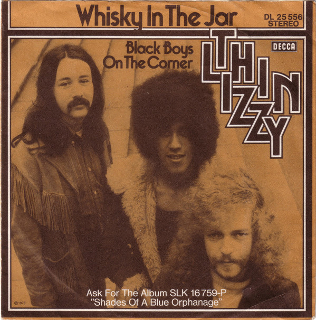
Whiskey in the Jar” by Thin Lizzy enters the UK charts on January 20, 1973.

“Whiskey in the Jar” is the tale of a highwayman or footpad who, after robbing a military or government official, is betrayed by a woman. Whether she is his wife or sweetheart is not made clear. Various versions of the song take place in County Kerry, Kilmoganny, Cork, Sligo, and other locales throughout Ireland. It is also sometimes placed in the American South, in various places among the Ozarks or Appalachians, possibly due to Irish settlement in these places. Names in the song change, and the official can be a Captain or a Colonel, called Farrell or Pepper among other names. The protagonist’s wife or lover is sometimes called Molly, Jenny, Emzy, or Ginny among various other names. The details of the betrayal are also different, being either betraying him to the person he robbed and replacing his ammunition with sand or water, or not, resulting in his killing the person.

The song’s exact origins are unknown. The song first gains wide exposure when the Irish folk band The Dubliners perform it internationally as a signature song and record it on three albums in the 1960s. In the United States, the song is popularized by The Highwaymen, who record it on their 1962 album Encore. Building on their success, the Irish rock band Thin Lizzy hits the Irish and British pop charts with the song in 1973. In 1990 The Dubliners re-record the song with The Pogues with a faster rocky version charting at No.4 in Ireland and No.63 in the UK. The American metal band Metallica brings it to a wider rock audience in 1998 by playing a version very similar to that of Thin Lizzy’s, though with a heavier sound, winning a Grammy Award for the song in 2000 for Best Hard Rock Performance.

Thin Lizzy’s 1972 single stays at the top of the Irish charts for 17 weeks, and the British release stays in the top 30 for 12 weeks, peaking at No. 6, in 1973. This version has since been covered by U2, Pulp (first released on a 1996 various artist compilation album Childline and later on deluxe edition of Different Class in 2006), Smokie, Metallica (Garage Inc. 1998, which wins a Grammy), Belle and Sebastian (The Blues Are Still Blue EP 2006), Gary Moore (2006), Nicky Moore (Top Musicians Play Thin Lizzy 2008), Simple Minds (Searching for the Lost Boys 2009), and Israeli musician Izhar Ashdot. The song is also on the Grateful Dead live compilation So Many Roads (1965-1995) disc five.


Leave a comment

Birth of Thomas Clarke Luby, Irish Revolutionary

thomas-clarke-luby

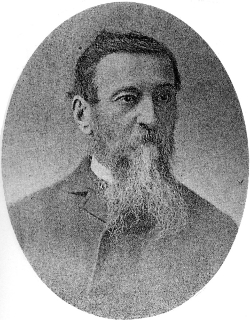
Thomas Clarke Luby, Irish revolutionary, author, journalist and one of the founding members of the Irish Republican Brotherhood, is born in Dublin on January 16, 1822.

Luby is the son of a Church of Ireland clergyman from Templemore, County Tipperary, his mother being a Catholic. He is educated at Trinity College Dublin where he studies law and puts in the necessary number of terms in London and Dublin where he acquires a reputation as a scholar and takes his degree. He goes on to teach at the college for a time.

Luby supports the Repeal Association and contributes to The Nation newspaper. After the breach with Daniel O’Connell, he joins the Young Irelanders in the Irish Confederation. He is deeply influenced by James Fintan Lalor at this time. Following the suppression of the Young Ireland Rebellion of 1848, he with Lalor and Philip Gray attempt to revive the fighting in 1849 as members of the secret Irish Democratic Association. This, however, ends in failure.

In 1851 Luby travels to France, where he hopes to join the French Foreign Legion to learn infantry tactics but finds the recruiting temporarily suspended. From France he goes to Australia for a year before returning to Ireland. From the end of 1855 he edits the Tribune newspaper founded by John E. Pigot who had been a member of The Nation group. During this time, he remains in touch with the small group of ’49 men including Philip Gray and attempts to start a new revolutionary movement. Luby’s views on social issues grow more conservative after 1848 which he makes clear to James Stephens whom he meets in 1856.

In the autumn of 1857 Owen Considine arrives with a message signed by four Irish exiles in the United States, two of whom are John O’Mahony and Michael Doheny. The message conveys the confidence they have in Stephens and asks him to establish an organisation in Ireland to win national independence. Considine also carries a private letter from O’Mahony to Stephens which is a warning, and which is overlooked by Luby and Stephens at the time. Both believe that there is a strong organisation behind the letter, only later to find it is rather a number of loosely linked groups. On December 23 Stephens dispatches Joseph Denieffe to America with his reply which is disguised as a business letter dated and addressed from Paris. In his reply, Stephen’s outlines his conditions and his requirements from the organisation in America.

On March 17, 1858, Denieffe arrives in Dublin with the acceptance of Stephens’s terms by the New York Committee and the eighty pounds. On that very evening the Irish Republican Brotherhood is established in Peter Langan’s timberyard in Lombard Street.

In mid-1863 Stephens informs his colleagues he wishes to start a newspaper, with financial aid from O’Mahony and the Fenian Brotherhood in America. The offices are established at 12 Parliament Street, almost at the gates of Dublin Castle. The first issue of the Irish People appears on November 28, 1863. The staff of the paper along with Luby are Charles J. Kickham and Denis Dowling Mulcahy as the editorial staff. Jeremiah O’Donovan Rossa and James O’Connor have charge of the business office, with John Haltigan being the printer. John O’Leary is brought from London to take charge in the role of Editor.

On July 15, 1865, American-made plans for a rising in Ireland are discovered. Superintendent Daniel Ryan, head of the G Division of the Dublin Metropolitan Police at Dublin Castle, has an informer within the offices of the Irish People who supplies him with an “action this year” message on its way to the IRB unit in Tipperary. With this information, Ryan raids the offices of the Irish People on Thursday, September 15, followed by the arrests of Luby, O’Leary and O’Donovan Rossa. Kickham is caught after a month on the run. Stephens is also caught with the support of Fenian prison warders. The last number of the paper is dated September 16, 1865.

After his arrest and the suppression of the Irish People, Luby is sentenced to twenty years of penal servitude. He is released in January 1871 but is compelled to remain away from Ireland until the expiration of his sentence.

Upon his release Luby goes first to the Continent and later settles in New York City. He lectures all over the country for years and writes for a number of Irish newspapers on political topics. At the memorial meeting on the death of John Mitchel, he delivers the principal address in Madison Square Garden.

Thomas Clarke Luby dies at 109½ Oak Street, Jersey City, New Jersey of paralysis, on November 29, 1901, and is buried in a grave shared with his wife in Bayview Cemetery in Jersey City. His epitaph reads: “Thomas Clarke Luby 1822–1901 He devoted his life to love of Ireland and quest of truth.”


Leave a comment

Death of Professional Golfer Christy O’Connor Jnr

christy-o-connor-jnr

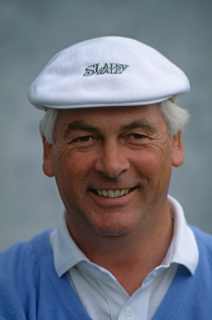
Christy O’Connor Jnr, professional golfer, dies on January 6, 2016, in Tenerife, Canary Islands. He is known as “Junior” as he is a nephew of golfer Christy O’Connor Snr.

O’Connor is born in Knocknacarra, County Galway, near Salthill, on August 19, 1948, the son of Elizabeth (née Noone) and John O’Connor. The family farms cattle and pigs near a golf club.

O’Connor turns professional in 1967. The PGA European Tour officially begins in 1972, and O’Connor makes the top hundred on the Order of Merit in each of its first twenty-one seasons, with a best ranking of seventh in 1975. He wins four European Tour events. As a senior he competes on both the European Senior Tour and the United States-based Champions Tour and wins two Senior British Open titles (before it becomes one of the senior majors) and two Champions Tour events.

In 1992 O’Connor wins the Dunhill British Masters at the Woburn Golf Club, his fourth and final European Tour victory, with scores of 71, 67, 66, 66. A weather-interrupted tournament means that 36 holes have to be played on Sunday. At 44 years, O’Connor is the oldest player in the field.

O’Connor plays in the Ryder Cup twice. In 1975 he is a member of a losing Great Britain & Ireland team and in 1989 he is part of a European team which ties the match to retain the trophy. His personal record is one win, three losses and no ties. His win over Fred Couples is best remembered for a stunning 2 iron shot on the last hole at The Belfry which he leaves just 4 feet from the hole.

O’Connor is also active in golf course design, being involved in the design of at least 18 courses in Ireland, and many more abroad.

Christy O’Connor Jnr dies while on holiday with his wife Ann on January 6, 2016, in Tenerife, Canary Islands.


Leave a comment

Birth of Jazz Guitarist Louis Stewart

louis-stewart

Louis Stewart, Irish jazz guitarist, is born in Waterford, County Waterford on January 5, 1944.

Stewart grows up in Dublin. He begins playing guitar when he is thirteen, influenced by guitarists Les Paul and Barney Kessel. He begins his professional career performing in Dublin showbands. In 1968 he wins an award as best soloist at the Montreux Jazz Festival. Soon after, he spends three years with Benny Goodman.

Stewart records his debut album, Louis the First, in Dublin, and then records in London with Billy Higgins, Peter Ind, Sam Jones, Red Mitchell, and Spike Robinson. From the mid to late 1970s he works with George Shearing, touring the United States, Brazil, and playing European festivals, and recording eight albums, including several in a trio with bassist Niels-Henning Orsted-Pedersen. He also appears on albums by Joe Williams and J. J. Johnson.

In 1981, ahead of his debut in the United States as a leader, The New York Times states, “Mr. Stewart seems to have his musical roots in be-bop. He leans toward material associated with Charlie Parker and he spins out single note lines that flow with an unhurried grace, colored by sudden bright, lively chorded phrases. His up-tempo virtuosity is balanced by a laid-back approach to ballads, which catches the mood of the piece without sacrificing the rhythmic emphasis that keeps it moving.” In a review of Stewart’s 1995 album Overdrive, AllMusic states, “Louis Stewart is one of the all-time greats, and it is obvious from the first notes he plays on any occasion.”

Stewart receives an honorary doctorate from Trinity College, Dublin, in 1998. In 2009, he is elected to Aosdána, an Irish affiliation of people engaged in literature, music, and visual arts that was established by the Arts Council of Ireland in 1981 to honour those whose work has made an outstanding contribution to the creative arts in Ireland.

In late 2015, Stewart is diagnosed with cancer. He dies nine months later, on August 20, 2016, at Our Lady’s Hospice, Harold’s Cross at the age of 72.


Leave a comment

Birth of Kuno Meyer, Scholar of Celtic Philology

kuno-meyer

Kuno Meyer, German scholar distinguished in the field of Celtic philology and literature, is born in Hamburg, Germany on December 20, 1858. He was considered first and foremost a lexicographer among Celtic scholars but is known by the general public in Ireland rather as the man who introduced them to Selections from Ancient Irish Poetry (1911). His brother was the distinguished classical scholar, Eduard Meyer.

Meyer studies in Hamburg at the Gelehrtenschule des Johanneums. He spends two years in Edinburgh, Scotland, as a teenager (1874–1876) learning English. From 1879, he attends Leipzig University, where he is taught Celtic scholarship by Ernst Windisch. He receives his doctorate for his thesis Eine irische Version der Alexandersage, an Irish version of the Romance of Alexander, in 1884.

Meyer then takes up the post of lecturer in Teutonic languages at the new University College, Liverpool, the precursor of the University of Liverpool, which is established three years earlier.

Meyer continues to publish on Old Irish and more general topics on the Celtic languages, as well as producing textbooks for German. In 1896, he founds and edits, jointly with Ludwig Christian Stern, the prestigious Zeitschrift für celtische Philologie. He also cofounds Archiv für celtische Lexicographie in 1898 with Whitley Stokes, producing three volumes from 1900 to 1907.

In 1903, Meyer founds the School of Irish Learning in Dublin, and the next year creates its journal Ériu of which he is the editor. Also in 1904, he becomes Todd Professor in the Celtic Languages at the Royal Irish Academy. In October 1911, he follows Heinrich Zimmer as Professor of Celtic Philology at Friedrich Wilhelm University in Berlin. The following year, a volume of Miscellany is presented to him by pupils and friends in honour of his election, and he is made a freeman of both Dublin and Cork.

At the outbreak of World War I, Meyer leaves Europe for the United States, where he lectures at Columbia University, University of Illinois at Urbana-Champaign, and elsewhere. A pro-German speech he gives in December 1914 to Clan na Gael on Long Island causes outrage in Britain and some factions among the Irish, and as a result, he is removed from the roll of freemen in Dublin and Cork and from his Honorary Professorship of Celtic at Liverpool. He also resigns as Director of the School of Irish Learning and editor of Ériu. Harvard University also had extended an invitation to Meyer to lecture on campus, but it subsequently cancels the invitation in the fall of 1914 on account of Meyer’s propagandist activity.

Meyer nevertheless accepts candidacy for the post of exchange professor at Harvard, at the recommendation of German professors there. However, when the April 1915 issue of The Harvard Advocate awards first prize to an anti-German satirical poem “Gott mit Uns” written by an undergraduate, Meyer sends the university and the press a letter of protest, rebuking the faculty members who served as judges for failure to exercise neutrality. Meyer also declines his candidacy from the exchange professorship in the letter. In a reply, President Abbott Lawrence Lowell says, in explaining Harvard’s policy, that freedom of speech includes pro-German and pro-Allied voices alike.

Meyer is injured in a railway collision in 1915 and meets 27-year-old Florence Lewis while he is recovering in a California hospital. They marry shortly afterwards. He returns to Germany in 1917 and dies in Leipzig on October 11, 1919.

Posthumously, in 1920, Meyer’s name is restored, both by Dublin and Cork, in their Rolls of Honorary Freemen. The restoration occurs on April 19, 1920, in Dublin, where Sinn Féin had won control of the City Council three months earlier, rescinding the decision taken in 1915 by the Irish Parliamentary Party. The restoration in Cork follows on May 14, 1920.


Leave a comment

Harrods Bombing

harrods-bombing

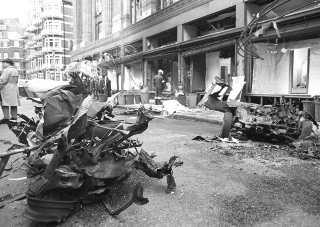
A Provisional Irish Republican Army (PIRA) car bomb kills six and injures ninety outside London‘s Harrods department store, a large, upmarket department store in the affluent Knightsbridge district near Buckingham Palace on December 17, 1983. The IRA Army Council claims that it has not authorised the attack and expresses regret for the civilian casualties. After the bombing, the IRA changes its tactic to focus on military targets on the mainland.

Harrods had been the target of an earlier IRA bomb on December 21, 1974, which was placed in the northeast corner of the first floor. There was a very short warning, and the store was in the process of being cleared when it exploded. It was also the target of a much smaller IRA bomb almost ten years later, in January 1993, which injured four people.

From 1973 the Provisional IRA has carried out waves of bombing attacks on commercial targets in London and elsewhere in England as part of its “economic war.” The goal is to damage the economy and cause disruption, which would put pressure on the British government to withdraw from Northern Ireland. On December 10, 1983, the IRA carries out its first attack in London in some time when a bomb explodes at the Royal Artillery Barracks, injuring three British soldiers.

One week later, on the afternoon of December 17, IRA members park a car bomb near the side entrance of Harrods, on Hans Crescent. The bomb contains 25 to 30 lbs. of explosives and is set to be detonated by a timer. It is left in a 1972 blue Austin 1300 GT four-door sedan. At 12:44 PM a man using an IRA codeword phones the central London branch of the Samaritans charity. The caller says there is a car bomb outside Harrods and another bomb inside Harrods and gives the car’s registration plate. According to police, he does not give any other description of the car.

The bomb explodes at about 1:21 PM, as four police officers in a car, an officer on foot and a police dog-handler near the suspect vehicle. Three officers and three bystanders are killed, and 90 others are injured, including 14 police officers. The blast damages 24 cars and all five floors on the side of Harrods, sending a shower of glass down onto the street. The police car absorbs much of the blast and this likely prevents further casualties.

Five people die at the scene of the bombing and a sixth later dies in the hospital. The bystanders who die are Philip Geddes (24), a journalist who had heard about the alert and went to the scene, Jasmine Cochrane-Patrick (25) and Kenneth Salvesen (28), a United States citizen. The Metropolitan Police Service officers killed are Sergeant Noel Lane (28) and Constable Jane Arbuthnot (22). A third officer, Inspector Stephen Dodd (34), dies in the hospital from his injuries on December 24. Constable Jon Gordon survives but loses both legs and part of a hand in the blast.

At the time of the explosion, a second warning call is made by the IRA. The caller says that a bomb has been left in the C&A department store at the east end of Oxford Street. Police clear the area and cordon it off, but this claim is found to be false. In the aftermath of the attack, hundreds of extra police and mobile bomb squads are drafted into London. Aleck Craddock, chairman of Harrods, reports that £1 million in turnover has been lost as a result of the bombing. Despite the damage, Harrods re-opens three days later, proclaiming it will not be “defeated by acts of terrorism.” Denis Thatcher, the husband of British Prime Minister Margaret Thatcher, visits the store and tells reporters “no damned Irishman is going to stop me going there.”


Leave a comment

Birth of Daniel O’Donnell, Singer & Presenter

daniel-o-donnell

Daniel Francis Noel O’Donnell, singer, television presenter and philanthropist affectionately known as “Wee Daniel,” is born in Kincasslagh, County Donegal on December 12, 1961. After rising to public attention in 1983 he has since become a household name in Ireland and Britain. He has also had considerable success in the United States and Australia. In 2012, he becomes the first artist to have a different album in the British charts every year for 25 consecutive years.

Known for his close relationship with his fanbase, and his charismatic and engaging stage presence, O’Donnell’s music has been described as a mix of country and Irish folk. He has had twenty UK Top 40 albums as well as fifteen Top 40 singles and has sold 10 million records to date. He is widely considered a “cultural icon” in Ireland, and is often parodied in the media.

During his school years, O’Donnell considers pursuing a career in banking. Despite this, a career in music is also always a possibility. As a youngster, O’Donnell performs in the local religious choir. In 1980, he goes to Galway to pursue business studies, however, he never settles down and by Christmas he is in his sister Margo‘s band.

Not getting enough opportunities to perform solos with the band, in 1983 O’Donnell decides to record his own record. On February 9, 1983, he records his first single, Johnny McCauley‘s My Donegal Shore, with £1,200 of his own money, selling all the copies himself. Later that year, he forms his own musical group, Country Fever. After the group disbands, he forms The Grassroots. In 1985, the manager of the Ritz label, Mick Clerkin, sees him perform and introduces him to Sean Reilly, who remains as his manager to this day.

Under Reilly’s management, O’Donnell starts to sell concerts out in England on a regular basis. By January 1992, he has hit rock bottom with exhaustion. After a three-month recovery break, he returns to the stage, this time at the Point Theatre, Dublin.

By the mid-1990s, O’Donnell has become a household name across Ireland and Great Britain. He appears on popular television shows in both countries and wins various awards. Among the accolades, he is named Donegal Person of the Year in 1989, which he still rates as the best award. He is given the Irish Entertainer of the Year award in 1989, 1992 and 1996. His first chart hit single in the UK is in 1992 with I Just Want to Dance With You (later covered by George Strait). This also leads to his first-ever appearance on Top of the Pops.

During his lengthy career, O’Donnell has made friends with his childhood idols, including Cliff Richard and Loretta Lynn. He has also forged a close professional relationship with the Irish songstress Mary Duff, who regularly tours with O’Donnell.

On November 4, 2002, O’Donnell marries Majella McLennan from Thurles, whom he had met on holiday in Tenerife three years previously. The couple lives in Meenbanad, County Donegal, and spend time at their second home in Tenerife.


Leave a comment

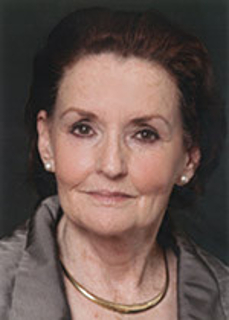
Birth of American-Irish Writer Morgan Llywelyn

morgan-llywelyn

Morgan Llywelyn, American-Irish historical fantasy, historical fiction, and historical non-fiction writer, is born Sally Snyder in New York City on December 3, 1937. Her fiction has received several awards and has sold more than 40 million copies, and she herself is recipient of the 1999 Exceptional Celtic Woman of the Year Award from Celtic Women International.

In her teens, Llywelyn moves to the Dallas area, where she develops a love of horses. By the age of 16, she is competing in professional horse shows across the United States. By age 18, she models for Neiman Marcus and Arthur Murray. After 15 years of experience as a horse trainer and instructor, she tries out for and narrowly misses making the 1976 United States Olympic Team in Dressage. She is instead shortlisted, missing the cut off score by .05 percent.

With her mother’s encouragement and a successfully published article on horse training, she refocuses her efforts in tracing the Llywelyn family history and eventually makes a career out of writing historical novels that allow the exploration of her Celtic roots. In reference to this career change, Llywelyn has this to say:

“I have a strong strain of Welsh on my mother’s side, which does indeed go back to Llywelyn ap Iorwerth. And Llywelyn the Great! (We have the proven genealogy from the College of Heralds.) She was very proud of her royal Welsh connection. That is why she was so interested in genealogy in the first place, and inspired me to get involved as well … leading in turn to “The Wind from Hastings.” But both my parents were predominantly Irish – my father totally so – and I spent half the years of my childhood here. So I have always been much more interested in Ireland and its history and legends.”

Llywelyn has received several awards for her works. She receives the Novel of the Year Award from the National League of American Pen Women for her novel, The Horse Goddess, as well as the Woman of the Year Award from the Irish-American Heritage Committee for Bard: The Odyssey of the Irish. The latter award is presented to her by Ed Koch, then-mayor of New York City.

Although Llywelyn’s grandparents have their roots in Ireland, it is only after the death of her parents and her husband in 1985 that she relocates to Ireland. Llywelyn now lives outside Dublin and has become an Irish citizen.

In 1990, Llywelyn begins her focus on writing books geared for younger readers. These works start with Brian Boru: Emperor of the Irish, for which she wins an Irish Children’s Book Trust Bisto Award in 1991, and includes other titles, such as Strongbow: The Story of Richard and Aoife, for which she wins a Bisto Award in the Historical Fiction category, 1993 and the Reading Association of Ireland Award, 1993, and Star Dancer which departs from her usual Celtic topic and is centered on her experiences with Dressage. Further works include The Vikings in Ireland, an exploration of when the Norsemen arrived in Ireland and Pirate Queen, a younger reader’s version of the story of Grace O’Malley, told through letters from Granuaile to her beloved son.


Leave a comment

Birth of Charlotte Grace O’Brien

charlotte-grace-obrien

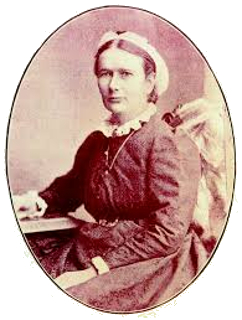
Charlotte Grace O’Brien, author, philanthropist, plant collector, and activist in nationalist causes and the protection of female emigrants, is born on November 23, 1845, at Cahirmoyle, County Limerick.

O’Brien is the younger daughter in a family of five sons and two daughters of William Smith O’Brien, Irish nationalist, and his wife Lucy Caroline, eldest daughter of Joseph Gabbett, of High Park, County Limerick. Upon her father’s return in 1854 from the penal colony in Tasmania, she rejoins him in Brussels and stays there until his removal to Cahirmoyle in 1856. Upon her mother’s death in 1861 she moves with her father to Killiney, near Dublin, and is his constant companion until his death at Bangor, Gwynedd in 1864.

From 1864 O’Brien lives at Cahirmoyle with her brother Edward, tending his motherless children, until his remarriage in 1880. She then goes to live at Foynes on the River Shannon and there devotes herself to literary pursuits. She has already published in 1878 her first novel, Light and Shade, a tale of the Fenian rising of 1867, the material for which had been gathered from Fenian leaders. A Tale of Venice, a drama, and Lyrics appear in 1880.

By 1881 her interests and pen are absorbed in Irish political affairs, in which she shares her father’s opinions. She contributes articles to the Nineteenth Century on The Irish Poor Man (December 1880) and Eighty Years (March 1881). In the spring of 1881, the attitude of the liberal government towards Ireland leads her to address many fiery letters to The Pall Mall Gazette, then edited by John Morley.

Another interest, however, soon absorbs O’Brien’s activities. The disastrous harvest in Ireland in 1879, combined with Irish political turmoil, leads to much emigration to the United States. At Queenstown, the port of embarkation, female emigrants suffer much from overcrowded lodgings and robbery. She not only induces the board of trade to exercise greater vigilance but also founds in 1881 a large boarding-house at Queenstown for the reception and protection of girls on the point of emigrating.

In order to improve the steamship accommodations for female emigrants, and to study their prospects in America, O’Brien makes several steerage passages to America. She also establishes in New York a similar institution to that in Queenstown for the protection of girls. Many experiences during this period find expression in her Lyrics (Dublin, 1886), a small volume of poems, which gives simple pictures of the emigrants and contains some stirring nationalist ballads.

On her retirement from active public work in 1886, O’Brien returns to Ardanoir, Foynes, on the bank of the Shannon, devoting her leisure to writing and to study of plant life. She contributes much on the flora of the Shannon district to the Irish Naturalist and joins the Roman communion in 1887.

Charlotte Grace O’Brien dies on June 3, 1909, at Foynes, and is buried at Knockpatrick. Selections from her Writings and Correspondence is published at Dublin in 1909. Her verses have dignity and grace, her polemical essays are vigorous and direct, and her essays on nature charm by their simple style.