seamus dubhghaill

Promoting Irish Culture and History from Little Rock, Arkansas, USA


Leave a comment

Birth of Journalist Eoghan Corry

eoghan-corry

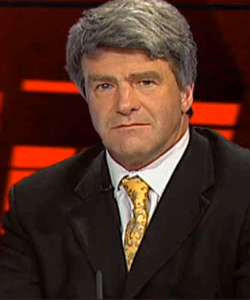
Eoghan Corry, Irish journalist and author regarded as the most extensively traveled writer in Ireland, averaging over 30 countries a year, is born in Dublin on January 19, 1961.

Corry is the third of four children of Patrick Corry (1916–1971) from Kilmacduane, Cooraclare and Anne Corry (1929–2009) from Clahanmore, Milltown Malbay, both from County Clare. He grows up in Ardclough, Straffan, County Kildare.

Corry is educated at Scoil Mhuire, Clane, at the Dublin Institute of Technology (DIT) and University College Dublin (UCD). His first published work, as a teenager, is poetry in English and the Irish language in literary magazines and the New Irish Writing section of The Irish Press.

He begins his journalistic career as a sportswriter with The Irish Times and Sunday Tribune where he wins several awards and becomes sports editor. Determined to pursue a career outside of sports journalism, he joins The Sunday Press as a feature writer in 1985 and becomes features editor of The Irish Press in 1986, bringing younger writers and a more contemporary, polemical and literary style to the paper. He revives the literary and travel sections of the paper and is an adjudicator of the Dublin Theatre Festival awards.

When The Irish Press closes in 1995, he becomes Features Editor of the short-lived Evening News, storylines the Gaelic Athletic Association (GAA) museum in Croke Park in 1998 and is founding editor of High Ball magazine. Since then, he has been a columnist, first with The Sunday Business Post and then with the Evening Herald and Irish Independent. As a journalism lecturer in the Dublin Institute of Technology he tells students that “journalism is about pissing people off.”

Since 2002 Corry has edited Ireland’s biggest circulation travel publication, Travel Extra. He has fronted travel shows broadcast in Ireland and the Middle East and is a regular commentator on travel affairs to Raidió Teilifís Éireann (RTÉ) and TG4, and an occasional guest contributor to BBC Northern Ireland. He writes the ten-part series GAA@125, screened on Irish television station TG4 in 2009. He appears on Tonight with Vincent Browne from time to time to preview the next day’s newspapers.

Corry is awarded a lifetime “contribution to the industry” award at the Irish Travel Industry Awards in Dublin on January 22, 2016. He receives the Business Travel Journalist of the year award in London in October 2015. Previous awards include Irish sportswriter of the year, young journalist of the year, Seamus Kelly award, MacNamee award for coverage of Gaelic Games and is short listed for sports book of the year.


Leave a comment

Death of Mary Raftery, Investigative Journalist

mary-rafteryMary Frances Thérèse Raftery, Irish investigative journalist, filmmaker and writer, dies in Dublin on January 10, 2012.

Raftery is born in Dublin on December 21, 1957. Her father, Adrian, is in the Irish foreign service, and she spends much of her childhood abroad. Though she enters University College Dublin to study engineering, she is derailed by an interest in journalism and never finishes her degree.

Raftery starts her investigative journalism career with In Dublin magazine in the 1970s, before moving on to Magill magazine and then to the Irish television channel Raidió Teilifís Éireann (RTÉ) in 1984. Her documentary series States of Fear is broadcast on RTÉ in 1999. A book she writes later that year called Suffer the Little Children adds more detail to her claim that the Irish childcare system between the 1930s and 1970s was guilty of widespread persecution and abuse.

In 2000, the Commission to Inquire into Child Abuse is established by the Irish Government to examine the evidence with its report published in May 2009. Her programme “Cardinal Secrets” is broadcast as a Prime Time special on RTÉ in 2002. It leads to the setting up of the Murphy Commission of Investigation into clerical abuse in the Archdiocese of Dublin which published the Murphy Report in 2009. Colm O’Gorman of Amnesty International Ireland says, “Ms. Raftery’s work transformed Ireland. Without the work that Mary did as a journalist (on the abuse of children), I don’t think much of this would have surfaced.”

Raftery is nominated for “NNI National Journalist of the Year” in 2011 for her work in exposing clerical abuse of children.

Mary Frances Thérèse Raftery dies of ovarian cancer at the age of 54 at St. Vincent’s University Hospital in Dublin on January 10, 2012. She is survived by her mother, three siblings, her husband and her son.


Leave a comment

Patrick J. Hillery Inaugurated Sixth President of Ireland

Patrick John Hillery, Irish politician, is inaugurated as the sixth President of Ireland on December 3, 1976. He serves two terms in the presidency and, though widely seen as a somewhat lacklustre President, is credited with bringing stability and dignity to the office. He also wins widespread admiration when it emerges that he has withstood political pressure from his own Fianna Fáil party during a political crisis in 1982.

Hillery is born in Spanish Point, County Clare on May 2, 1923. He is educated locally at Milltown Malbay national school before later attending Rockwell College. At third level he attends University College Dublin where he qualifies with a degree in medicine. Upon his conferral in 1947 he returns to his native town where he follows in his father’s footsteps as a doctor.

Hillery is first elected at the 1951 general election as a Fianna Fáil Teachta Dála (TD) for Clare and remains in Dáil Éireann until 1973. During this time, he serves as Minister for Education (1959–1965), Minister for Industry and Commerce (1965–1966), Minister for Labour (1966–1969) and Minister for Foreign Affairs (1969–1973).

Following Ireland’s successful entry into Europe in 1973, Hillery is rewarded by becoming the first Irishman to serve on the European Commission, serving until 1976 when he becomes President. In 1976 the Fine GaelLabour Party National Coalition under Liam Cosgrave informs him that he is not being re-appointed to the Commission. He considers returning to medicine; however, fate takes a turn when Minister for Defence Paddy Donegan launches a ferocious verbal attack on President Cearbhall Ó Dálaigh, calling him “a thundering disgrace” for referring anti-terrorist legislation to the courts to test its constitutionality. When a furious President Ó Dálaigh resigns, a deeply reluctant Hillery agrees to become the Fianna Fáil candidate for the presidency. Fine Gael and Labour decide it is unwise to put up a candidate in light of the row over Ó Dálaigh’s resignation. As a result, Hillery is elected unopposed, becoming President of Ireland on December 3, 1976.

When Hillery’s term of office ends in September 1983, he indicates that he does not intend to seek a second term, but he changes his mind when all three political parties plead with him to reconsider. He is returned for a further seven years without an electoral contest. After leaving office in 1990, he retires from politics.

Hillery’s two terms as president, from 1976 to 1990, end before the 1998 Good Friday Agreement, which sets terms for an end to violence in Northern Ireland. But he acts at crucial moments as an emollient influence on the republic’s policies toward the north and sets a tone that helps pave the way for eventual peace.

Patrick Hillery dies on April 12, 2008, in his Dublin home following a short illness. His family agrees to a full state funeral for the former president. He is buried at St. Fintan’s Cemetery, Sutton, Dublin. In the graveside oration, Tánaiste Brian Cowen says Hillery was “A humble man of simple tastes, he has been variously described as honourable, decent, intelligent, courteous, warm and engaging. He was all of those things and more.”


Leave a comment

Birth of Cardinal Tomás Séamus Ó Fiaich

Tomás Séamus Ó Fiaich, Irish prelate of the Roman Catholic Church, is born in Cullyhanna, County Armagh, on November 3, 1923. He serves as the Catholic Primate of All Ireland and Archbishop of Armagh from 1977 until his death. He is created a Cardinal in 1979.

Ó Fiaich is ordained a priest on July 6, 1948. He spends his first year of ordination as assistant priest in Clonfeacle parish. He undertakes post-graduate studies at University College, Dublin, (1948–50), receiving a Master of Arts (MA) in early and medieval Irish history. He also studies at the Catholic University of Leuven in Belgium, (1950–52), receiving a licentiate in historical sciences.

In 1952 Ó Fiaich returns to Clonfeacle where he remains as assistant priest until the following summer and his appointment to the faculty of St. Patrick’s College, Maynooth. He is an academic and noted Irish language scholar, folklorist and historian in the Pontifical University in St. Patrick’s College, Maynooth, the National Seminary of Ireland. From 1959 to 1974 he is Professor of Modern Irish History at the college. In this capacity he suggests to Nollaig Ó Muraíle that he begin research on Dubhaltach Mac Fhirbhisigh and his works. He “was an inspired lecturer, an open and endearing man, who was loved by his students… Tomas O’Fiaich was my Good Samaritan.”

Ó Fiaich serves as vice president of the college from 1970 to 1974 and is then appointed college president, a post that traditionally precedes appointment to an episcopal position in the Irish Church. He holds this position until 1977.

Following the relatively early death from cancer of Cardinal William Conway in April 1977, Monsignor Ó Fiaich is appointed Archbishop of Armagh by Pope Paul VI on August 18, 1977. He is consecrated bishop on October 2, 1977. The principal consecrator is the papal nuncio Archbishop Gaetano Alibrandi. The principal co-consecrators are Bishop Francis Lenny, the auxiliary Bishop of Armagh, and Bishop William Philbin, the Bishop of Down and Connor. Pope John Paul II raises Ó Fiaich to the cardinalate on June 30, 1979, and he is appointed Cardinal-Priest of S. Patrizio that same day.

Ó Fiaich dies of a heart attack on the evening of May 8, 1990, while leading the annual pilgrimage by the Archdiocese of Armagh to the Marian shrine of Lourdes in France. He arrives in France the day before and complains of feeling ill shortly after saying Mass at the grotto in the French town. He is rushed by helicopter to a hospital in Toulouse, 125 miles away, where he dies. He lies in state at the cathedral in Armagh, where thousands of people lined up to pay their respects.

Ó Fiaich is succeeded as archbishop and cardinal by a man six years his senior, Cahal Daly, then the Bishop of Down and Connor.


Leave a comment

Birth of Eavan Boland, Irish Poet, Author & Professor

Eavan Boland, Irish poet, author and professor who has been active since the 1960s and helped develop feminist publishing company Arlen House, is born in Dublin on September 24, 1944. She is currently a professor at Stanford University, where she has taught since 1996. Her work deals with the Irish national identity and the role of women in Irish history. A number of poems from Boland’s poetry career are studied by Irish students who take the Leaving Certificate.

Boland’s father, Frederick Boland, is a career diplomat and her mother, Frances Kelly, is a noted post-expressionist painter. When she is six, her father is appointed Irish Ambassador to the United Kingdom. The family follows him to London, where she has her first experiences of anti-Irish sentiment. Her dealing with this hostility strengthens her identification with her Irish heritage. She speaks of this time in her poem “An Irish Childhood in England: 1951.”

At 14, she returns to Dublin to attend Holy Child School in Killiney. She publishes a pamphlet of poetry, 23 Poems, in her first year at Trinity College, Dublin in 1962. She earns a BA with First Class Honors in English Literature and Language from Trinity in 1966. Since then, she has held numerous teaching positions and published poetry, prose criticism and essays. She marries the novelist Kevin Casey in 1969 and has two daughters. Her experiences as a wife and mother influence her to write about the centrality of the ordinary, as well as provide a frame for more political and historical themes.

Boland has taught at Trinity College, Dublin, University College Dublin, and Bowdoin College, and was a member of the International Writing Program at the University of Iowa. She was also writer in residence at Trinity College, Dublin, and at the National Maternity Hospital, Dublin. In the late 1970s and 1980s, she teaches at the School of Irish Studies in Dublin. Since 1996 she has been a tenured Professor of English at Stanford University where she is currently Bella Mabury and Eloise Mabury Knapp Professor in the Humanities and Melvin and Bill Lane Professor for Director of the Creative Writing program. She divides her time between Palo Alto, California and her home in Dublin.

In 2015, Boland says that Trinity College, Dublin not only “influenced her career,” but “determined her career.”


Leave a comment

Death of Novelist & Playwright Kate O’Brien

Kathleen Mary Louise “Kate” O’Brien, novelist and playwright, dies in Canterbury, England, on August 13, 1974.

O’Brien is born in Limerick, County Limerick on December 3, 1897. Following the death of her mother when she is five years old, she becomes a boarder at Laurel Hill Convent. She graduates in English and French from the newly established University College Dublin, and she then moves to London, where she works as a teacher for a year.

In 1922–1923, O’Brien works as a governess in the Basque Country, in the north of Spain, where she begins to write fiction. Upon her return to England, she works at the Manchester Guardian. After the success of her play Distinguished Villa in 1926, she takes to full-time writing and is awarded both the 1931 James Tait Black Memorial Prize and the Hawthornden Prize for her debut novel Without My Cloak. O’Brien is best known for her 1934 novel The Ante-Room, her 1941 novel The Land of Spices, and the 1946 novel That Lady.

Many of O’Brien’s books deal with issues of female agency and sexuality in ways that are new and radical at the time. Her 1936 novel, Mary Lavelle, is banned in Ireland and Spain, while The Land of Spices is banned in Ireland upon publication. In addition to novels, she writes plays, film scripts, short stories, essays, copious journalism, two biographical studies, and two very personal travelogues. Throughout her life, she feels a particular affinity with Spain. While her experiences in the Basque Country inspire Mary Lavelle, she also writes a life of the Spanish mystic Teresa of Avila, and she uses the relationship between the Spanish king Philip II and Maria de Mendoza to write the anti-fascist novel That Lady.

O’Brien writes a political travelogue, Farewell Spain, to gather support for the leftist cause in the Spanish Civil War, and it has been argued that she is close to anarchism in the 1930s. A feminist, her novels promote gender equality and are mostly protagonised by young women yearning for independence. Several of her books include positive gay/lesbian characters. Her determination to encourage a greater understanding of sexual diversity makes her a pioneer in queer literary representation. She is very critical of conservatism in Ireland, and by spearheading a challenge to the Irish Censorship Act, she helps bring to an end the cultural restrictions of the 1930s and 40s in the country.

Kate O’Brien lives much of her life in England and died in Faversham, near Canterbury, on August 13, 1974.


Leave a comment

Birth of Arthur Colahan, Doctor & Songwriter

Arthur Nicholas Whistler Colahan, Irish doctor, British Army officer and songwriter, is born in Enniskillen, County Fermanagh, on August 12, 1884. The eldest child of Professor Nicholas Whistler Colahan and Elisabeth Quinn of Limerick, the family moves to Galway, and he grows up there.

After completing his secondary education at St. Joseph’s College, Galway, he enrolls at University College Dublin in 1900 where he receives an arts degree and then studies medicine. He transfers to University College, Galway and graduates in 1913. He is a member of the college Literary and Debating Society and participates in drama.

He begins his medical career in the County Infirmary in Galway and then moves to Holles Street Hospital. He joins the Royal Army Medical Corps and is badly affected by mustard gas in India. After the war he settles in Leicester, where he spends the rest of his career as a neurological specialist.

Colahan is also a composer of popular songs. He is a quiet man who is often homesick for his beloved Galway Bay. These feelings lead him to write his most famous work, “Galway Bay.” Popularised by Bing Crosby, it becomes the biggest selling record of all time at one point. Theories abound as to where the song is written or where it is first heard. Some say it is in the home of Dr. Morris at 1 Montpelier Terrace, while others believe it is in The Vicars Croft on Taylor’s Hill, from where one can see Galway Bay.

Other songs written by Colahan include “Maccushla Mine,” “Asthoreen Bawn,” “Until God’s Day,” “The Kylemore Pass” and “The Claddagh Ring.” Sadly, before his music is selling in the High Street he dies on September 15, 1952, and is buried in an unmarked grave back in his Irish birthplace.


Leave a comment

Birth of Frank McGuinness, Playwright & Poet

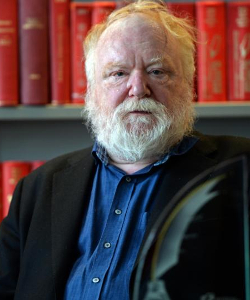
Frank McGuinness, award-winning Irish playwright and poet, is born in Buncrana, a town located on the Inishowen peninsula of County Donegal on July 29, 1953. As well as his own works, which include The Factory Girls, Observe the Sons of Ulster Marching Towards the Somme, Someone Who’ll Watch Over Me and Dolly West’s Kitchen, he is recognised for a “strong record of adapting literary classics, having translated the plays of Jean Racine, Sophocles, Henrik Ibsen, Federico García Lorca, and August Strindberg to critical acclaim.”

McGuinness is educated locally and at University College Dublin, where he studies Pure English and medieval studies to postgraduate level.

He first comes to prominence with his play The Factory Girls but establishes his reputation with his play about World War I, Observe the Sons of Ulster Marching Towards the Somme, which is staged in Dublin‘s Abbey Theatre and internationally. The play makes a name for him when it is performed at Hampstead Theatre, drawing comments about McGuinness’s Irish Catholic background. It wins numerous awards including the London Evening Standard Award for Most Promising Playwright for McGuinness and the Christopher Ewart-Biggs Memorial Prize. He has also written new versions of classic dramas, including works by Henrik Ibsen, Anton Chekhov, and Euripides, adapting the literal translations of others. In addition, he writes the screenplay for the film Dancing at Lughnasa, adapting the stage play by fellow Ulsterman Brian Friel.

McGuinness’s first poetry anthology, Booterstown, is published in 1994. Several of his poems have been recorded by Marianne Faithfull, including Electra, After the Ceasefire and The Wedding.

McGuinness previously lectured in Linguistics and Drama at the University of Ulster, Medieval Studies at University College, Dublin and English at the National University of Ireland, Maynooth. Then he is a writer-in-residence lecturing at University College Dublin before being appointed Professor of Creative Writing in the School of English, Drama and Film there in 2007.


Leave a comment

Death of Playwright & Broadcaster Máiréad Ní Ghráda

Máiréad Ní Ghráda, poet, playwright, and broadcaster, dies on June 13, 1971. She is a tireless promoter of the Irish language and writes many educational texts, some of which are still widely used today including Progress in Irish.

Máiréad is born and raised in Kilmaley, County Clare, a Breac Ghaeltacht, with Irish speaking parents. She wins a university scholarship while attending the local Convent of Mercy School and receives a BA in English, Irish, and French and an MA in Irish from University College Dublin (UCD).

An active member of the Gaelic League and Cumann na mBan, she is imprisoned in 1920 for selling flags on behalf of the Gaelic League on Grafton Street. After a short time teaching in St. Brendan’s private school, Glenageary, County Dublin, Máiréad is employed as organiser and later as secretary to Ernest Blythe in the first Dáil Éireann and during the Irish Civil War. In 1923, she marries Richard Kissane, a civic guard (Garda Síochána). They have two sons and settle in Ranelagh, Dublin.

Beginning in 1926 she spends nine years working for 2RN (now Radió Éireann). She is the first female announcer with 2RN, engaged as Woman’s Organiser with the national radio station for many years, a job which involves programming for women and children. She is the first female announcer in Ireland and Britain, and perhaps in Europe.

Máiréad writes her first play in 1931 while teaching Irish in a domestic science college in Kilmacud. An Uacht, a one act comedy based on Gianni Schicchi by Giacomo Puccini, is produced by Michéal Mac Liammóir at the Gate Theatre (1931). Her writing for theatre includes Mícheál, 1933 (adaptation of Michael, a story by Leo Tolstoy), An Grádh agus an Garda (1937), Giolla an tSoluis (1945), Hansel & Gretel (1951), Lá Buí Bealtaine (1953), Úll glas Oíche Shamhna (1955), Ríte (1955), Súgán Sneachta (1959), Mac Uí Rudaí (1961) and Stailc Ocrais (1962). An Triail (1964) and On Trial (1965) and Breithiúnas (1968), although critical of Irish society at the time, are her greatest successes.

Her enormous contribution to Irish language theatre includes eleven original plays, more than any other playwright in Irish.


Leave a comment

Birth of Brian Coffey, Poet & Publisher

Brian Coffey, Irish poet and publisher, is born in Dún LaoghaireCounty Dublin on June 8, 1905. His work is informed by his Catholicism and by his background in science and philosophy, and his connection to surrealism. For these reasons, he is seen as being closer to an intellectual European Catholic tradition than to mainstream Irish Catholic culture.

Coffey attends the Mount St. Benedict boarding school in GoreyCounty Wexford from 1917 to 1919 and then Clongowes Wood College, in ClaneCounty Kildare from 1919 until 1922. In 1923, he goes to France to study for the Bachelor’s degree in Classical Studies at the Institution St. Vincent, SenlisOise. While still at college, Coffey begins writing poetry. He publishes his first poems in University College Dublin‘s The National Student under the pseudonym Coeuvre.

In the early 1930s, Coffey moves to Paris where he studies Physical Chemistry under Jean Baptiste Perrin, who won the Nobel Prize for Physics in 1926. He completes these studies in 1933, and his Three Poems is printed in Paris by Jeanette Monnier that same year. In 1934 he enters the Institut Catholique de Paris to work with the noted French philosopher Jacques Maritain, taking his licentiate examination in 1936. He then moves to London for a time and contributes reviews and a poem to T.S. Eliot‘s The Criterion magazine. He returns to Paris in 1937 as an exchange student to work on his doctoral thesis on the idea of order in the work of Thomas Aquinas. In 1938, Coffey’s second volume of poetry, Third Person, is published by George Reavey‘s Europa Press.

During the war, Coffey teaches in schools in London and Yorkshire, leaving his young family in Dublin. After the war, he returns to Paris and completes his doctoral thesis. The family then moves so that Coffey can take up a teaching post at the Jesuit Saint Louis University.

By the early 1950s, Coffey becomes uncomfortable for a number of reasons, including the nature of his work, his distance from Ireland and the pressures that inevitably come to bear on an academic who has previously associated with well-known left-wing writers in Paris. For these reasons, he resigns in 1952.

In 1952, Coffey returns to live in London and, from 1973, Southampton. He begins again to publish his poetry and translations, mainly of French poetry. The first work in English to appear after this period of silence is Missouri Sequence, apparently begun in St. Louis but first appearing in the University Review, later known as the Irish University Review, in 1962.

Over the next decade or so, he publishes regularly in the University Review. He also sets up his own publishing enterprise, Advent Press, which publishes work by himself and by younger writers he wants to support.

Brian Coffey dies at the age of 89 on April 14, 1995, and is buried in Southampton, England.