seamus dubhghaill

Promoting Irish Culture and History from Little Rock, Arkansas, USA


Leave a comment

Birth of Novelist John Banville

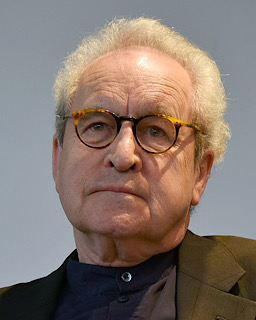
William John Banvillenovelistshort story writer, adapter of dramas, and screenwriter, is born in Wexford, County Wexford, on December 8, 1945. He also has a 30-year career working in the Irish newspaper industry and serves as literary editor of The Irish Times from 1988 until 1999.

Banville is born to Agnes (née Doran) and Martin Banville, a garage clerk, in Wexford. He is the youngest of three siblings. He is educated at CBS Primary, Wexford, a Christian Brothers school, and at St. Peter’s College, Wexford. Despite having intentions of being a painter and an architect, he does not attend university. After school, he works as a clerk at Aer Lingus, which allows him to travel at deeply discounted rates. He takes advantage of these rates to travel to Greece and Italy. He begins working as a sub-editor at The Irish Press in 1969.

Banville publishes his first book, a collection of short stories titled Long Lankin, in 1970. His first novelNightspawn, appears in 1971, followed by his second, Birchwood, two years later. His The Revolutions Trilogy, published between 1976 and 1982, comprises works named after renowned scientists: Doctor CopernicusKepler and The Newton Letter. His next work, Mefisto, has a mathematical theme, and, in combination with the three books from The Revolutions Trilogy, is the fourth book from the “Scientific Tetralogy.” His 1989 novel, The Book of Evidence, begins The Frames Trilogy, dealing with the work of art. It is completed by Ghosts and Athena. His thirteenth novel, The Sea, wins the Booker Prize in 2005. In addition, he publishes crime novels as Benjamin Black, most of which feature the character of Quirke, an Irish pathologist based in 1950s Dublin. His alternative history novel, The Secret Guests (2020), is published under the name B. W. Black.

Banville wins the 1976 James Tait Black Memorial Prize, the 2003 International Nonino Prize, the 2005 Booker Prize, the 2011 Franz Kafka Prize, the 2013 Austrian State Prize for European Literature and the 2014 Prince of Asturias Award for Literature. He is elected a Fellow of the Royal Society of Literature in 2007. Italy makes him a Cavaliere of the Ordine della Stella d’Italia (a knighthood) in 2017. He is a former member of Aosdána, having voluntarily relinquished the financial stipend in 2001 to another, more impoverished, writer. He is considered a contender for the Nobel Prize in Literature.

In 1969, Banville marries the American textile artist Janet Dunham, whom he met in San Francisco the previous year while she is a student at the University of California, Berkeley. The couple has two sons together. The marriage breaks down after Banville has an affair with a neighbour, Patricia Quinn, who subsequently becomes director of the Arts Council of Ireland. Banville has two daughters with Quinn, born around 1990 and 1997. Despite separating, Banville and Dunham never divorce and he describes them as remaining “on good terms.” Dunham dies at Blackrock Clinic on November 22, 2021, after which Banville states that he experienced “brain fog” due to grief and is unable to write for six months. In a 2024 interview, he expresses regret over his relationship history, saying, “I caused Janet such anguish. I have caused Patricia Quinn such anguish. I wasn’t good with my children. I was not a good parent. I am not a good person. I am selfish. But I have to have responsibility.”

Banville currently lives in Howth, Dublin.

Leave a comment

Birth of Seamus Deane, Poet, Novelist, Critic & Historian

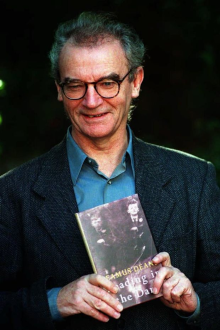
Seamus Francis Deane, Irish poet, novelist, critic, and intellectual historian, is born in Derry, County Londonderry, Northern Ireland on February 9, 1940. He is noted for his debut novel, Reading in the Dark, which wins several literary awards and is nominated for the Booker Prize in 1996.

Deane is the fourth child of Frank Deane and Winifred (Doherty) and is brought up as part of a Catholic nationalist family. He attends St. Columb’s College in his hometown, where he befriends fellow student Seamus Heaney. He then attends Queen’s University Belfast (BA and MA) and Pembroke College, Cambridge (PhD). Although he too becomes noted for his poetry, he chooses to go into academia instead. He workws as a teacher in Derry, with Martin McGuinness being one of his students. McGuinness later recalls how Deane was “gentle, kind and never raised his voice at all, an ideal teacher who was very highly thought of.”

After graduating from Cambridge, Deane teaches at the Reed College in Portland, Oregon during the 1960s and the University of California, Berkeley during the 1970s. Over the next two decades, he teaches American college juniors part-time at the School of Irish Studies in the Ballsbridge section of Dublin. He is a professor of Modern English and American Literature at University College Dublin (UCD) until 1992. He subsequently relocates to the University of Notre Dame in South Bend, Indiana, as the Donald and Marilyn Keough Chair of Irish Studies, from which he retires as professor emeritus.

Deane is a member of the Royal Irish Academy and a founding director of the Field Day Theatre Company, together with Heaney, Tom Paulin, and David Hammond.

Deane is the co-editor of Field Day Review, an annual journal of Irish studies. He also serves as general editor of the Penguin Classic James Joyce series and of Critical Conditions, a series in Irish Studies which is jointly published by the University of Notre Dame Press and Cork University Press. He co-founds the book series Field Day Files, which contains key works by David Lloyd, Joe Cleary, Marjorie Howes, and Kerby A. Miller.

The first collection of Deane’s poetry, Gradual Wars, is published in 1972 and receives the AE Memorial Award for Literature. His first novel, Reading in the Dark, is published in 1996 and is partly autobiographical. It wins the 1996 Guardian Fiction Prize and the 1996 South Bank Show Award for Literature, is a New York Times Notable Book, wins The Irish Times International Fiction Prize and the Irish Literature Prize in 1997, besides being shortlisted for the Booker Prize in 1996. The novel is translated into more than twenty languages. He is also the general editor of the monumental Field Day Anthology of Irish Writing, which is 4,000 pages long and whose first volumes are released in 1990. It is later criticised for excluding the voices and experiences of Irish women. He responds to this by stating, “To my astonishment and dismay, I have found that I myself have been subject to the same kind of critique to which I have subjected colonialism … I find that I exemplify some of the faults and erasures which I analyse and characterize in the earlier period.”

Deane’s first marriage is to Marion Treacy. Together, they have four children. He is in a civil partnership with Emer Nolan until his death. They have one child together.

Following a short illness, Deane dies at the age of 81 on May 12, 2021 at Beaumont Hospital in Dublin.


Leave a comment

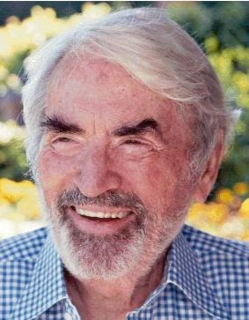
Death of Irish American Actor Gregory Peck

Actor Gregory Peck dies at his home in Los Angeles, California, from bronchopneumonia at the age of 87 on June 12, 2003.

Peck is born in La Jolla, California on April 5, 1916, to Bernice Mary (Ayres) and Gregory Pearl Peck, a chemist and pharmacist in San Diego. Through his Irish-born paternal grandmother, Catherine Ashe, Peck is related to Thomas Ashe, who takes part in the Easter Rising fewer than three weeks after Peck’s birth and dies while on hunger strike in 1917.

Peck’s parents divorce when he is five years old. An only child, he is sent to live with his grandmother. He never feels as though he has a stable childhood. His fondest memories are of his grandmother taking him to the movies every week and of his dog, which follows him everywhere.

At the age of ten Peck is sent to a Catholic military school, St. John’s Military Academy in Los Angeles. While he is a student there, his grandmother dies. At 14, he moves back to San Diego to live with his father and attends San Diego High School. After graduating he enrolls for one year at San Diego State Teacher’s College (now known as San Diego State University).

Peck studies pre-med at the University of California, Berkeley and while there is bitten by the acting bug and decides to change the focus of his studies. He enrolls in the Neighborhood Playhouse School of the Theatre in New York City and debuts on Broadway after graduation. His debut is in Emlyn Williams‘ play The Morning Star (1942). By 1943, he is in Hollywood, where he debuts in the RKO Pictures film Days of Glory (1944).

Stardom comes with Peck’s next film, The Keys of the Kingdom (1944), for which he is nominated for an Academy Award. Peck’s screen presence displays the qualities for which he becomes well known. He is tall, rugged and heroic, with a basic decency that transcends his roles. He appears in Alfred Hitchcock‘s Spellbound (1945) as an amnesia victim accused of murder. In The Yearling (1946), he is again nominated for an Academy Award and wins the Golden Globe Award. He is especially effective in westerns and appears in such varied fare as David O. Selznick‘s critically blasted Duel in the Sun (1946), the somewhat better received Yellow Sky (1948) and the acclaimed The Gunfighter (1950). He is nominated again for the Academy Award for his roles in Gentleman’s Agreement (1947), which deals with antisemitism, and Twelve O’Clock High (1949), a story of high-level stress in an Air Force bomber unit in World War II.

With a string of hits to his credit, Peck makes the decision to only work in films that interest him. He continues to appear as the heroic, larger-than-life figures in such films as Captain Horatio Hornblower R.N. (1951) and Moby Dick (1956). He works with Audrey Hepburn in her debut film, Roman Holiday (1953).

Peck finally wins the Oscar, after four nominations, for his performance as lawyer Atticus Finch in To Kill a Mockingbird (1962). In the early 1960s, he appears in two darker films than he usually makes, Cape Fear (1962) and Captain Newman, M.D. (1963), which deal with the way people live. He also gives a powerful performance as Captain Keith Mallory in The Guns of Navarone (1961), one of the biggest box-office hits of that year.

In the early 1970s, Peck produces two films, The Trial of the Catonsville Nine (1972) and The Dove (1974), when his film career stalled. He makes a comeback playing, somewhat woodenly, Robert Thorn in the horror film The Omen (1976). After that, he returns to the bigger-than-life roles he is best known for, such as MacArthur (1977) and the monstrous Nazi Dr. Josef Mengele in the huge hit The Boys from Brazil (1978). In the 1980s, he moves into television with the miniseries The Blue and the Gray (1982) and The Scarlet and the Black (1983). In 1991, he appears in the remake of his 1962 film, playing a different role, in Martin Scorsese‘s Cape Fear (1991). He is also cast as the progressive-thinking owner of a wire and cable business in Other People’s Money (1991).

In 1967, Peck receives the Academy’s Jean Hersholt Humanitarian Award. He has also been awarded the Presidential Medal of Freedom. Always politically progressive, he is active in such causes as anti-war protests, workers’ rights and civil rights. In 2003, Peck’s portrayal of Atticus Finch is named the greatest film hero of the past 100 years by the American Film Institute.

Peck dies in his sleep at his home in Los Angeles, California from bronchopneumonia at the age of 87 on June 12, 2003. He is entombed in the Cathedral of Our Lady of the Angels mausoleum in Los Angeles. His eulogy is read by Brock Peters, whose character, Tom Robinson, was defended by Peck’s Atticus Finch in To Kill a Mockingbird.


Leave a comment

Death of John Robert Gregg, Inventor of Gregg Shorthand

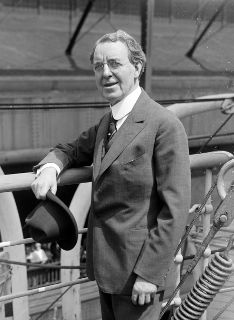
John Robert Gregg, educator, publisher, humanitarian, and the inventor of the eponymous shorthand system Gregg shorthand, dies in Cannondale, Connecticut on February 23, 1948.

Gregg is born on June 17, 1867, in Shantonagh, County Westmeath, as the youngest child of Robert and Margaret Gregg, where they remain until 1872, when they move to Rockcorry, County Monaghan. He enters the village school in Rockcorry in 1872. On his second day of class, he is caught whispering to a schoolmate, which prompts the schoolmaster to hit the two children’s heads together. This incident profoundly damages his hearing for the rest of his life, rendering him unable to participate fully in school, unable to understand his teacher. This ultimately leads to him being unnecessarily perceived as dull or mentally challenged by his peers, teachers, and family.

In 1877, after seeing a friend use Pitman shorthand to take verbatim notes of a preacher’s sermon, Robert Gregg sees the shorthand skill as a powerful asset, so he makes it mandatory for his children to learn Pitman shorthand, with the exception of John, who is considered by his family too “simple” to learn it. None of the children succeed in fully learning the system. On his own, John learns the shorthand system of Samuel Taylor. He teaches himself the system fully, since he does not require the ability to hear in order to learn from the book.

Gregg says he initially set out to improve the English adaptation by John Matthew Sloan of the French Duployan shorthand, while working with one of Sloan’s sales agents, Thomas Malone. Malone publishes a system called Script Phonography, of which Gregg asserts a share in authorship is owed to him. Angered by Malone, he resigns from working with him and encouraged by his older brother Samuel, publishes and copyrights his own system of shorthand in 1888. It is put forth in a brochure entitled Light-Line Phonography: The Phonetic Handwriting which he publishes in Liverpool, England.

In 1893, Gregg emigrates to the United States. That year he publishes Gregg shorthand with great success. He settles in Chicago in 1895 and by 1896 dozens of American public schools are teaching Gregg shorthand. The first Gregg Shorthand Association is formed in Chicago that year with 40 members. In 1897 the Gregg Publishing Company is formed to publish shorthand textbooks.

By 1907 Gregg is so successful that he opens an office in New York and then moves there. The popularity of his shorthand system continues to grow with it being taught in 533 school systems by 1912. In 1914 the New York City Board of Education approves the experimental introduction of Gregg shorthand into its high schools, where the Pitman system had long held sway. That same year the system is admitted to Columbia University (New York) and the University of California, Berkeley.

After World War I, Gregg travels extensively throughout Great Britain, hoping to popularize his system there. He is not quite as successful in this endeavor as he had been in America, but he sees Gregg shorthand become wildly popular in France, Germany, Poland, Spain, and especially Latin America, where for years Gregg’s birthday is a national holiday.

Following his wife’s death in 1928 Gregg returns to New York. He throws himself into volunteer work and continues to perfect the Gregg system. Over the next several years he is the recipient of several honorary degrees from American educational institutions. At one such ceremony in June 1930 he renews his acquaintance with Janet Kinley, daughter of the president of the University of Illinois. The two are married in October of that year. They purchase a home in Cannondale, a historic section of Wilton, Connecticut.

In the 1930s Gregg begins writing a history of shorthand, the subject that had been his lifelong obsession. The first chapter is printed in 1933, and successive chapters follow at intervals until 1936. He devotes time to charitable work and institutes scholarships in the arts and in court reporting at his Chicago school. His voluntary work on behalf of Allied soldiers and British civilians during World War II wins recognition from King George VI, who awards him a medal for “Service in the Cause of Freedom” in 1947.

In December 1947 Gregg undergoes surgery from which he seems to recover well. However, on February 23, 1948, he suffers a heart attack and dies in Cannondale, Connecticut at the age of eighty.


Leave a comment

Birth of Irish American Actor Gregory Peck

gregory-peck

Actor Gregory Peck is born in La Jolla, California on April 5, 1916, to Bernice Mary (Ayres) and Gregory Pearl Peck, a chemist and pharmacist in San Diego. Through his Irish-born paternal grandmother, Catherine Ashe, Peck is related to Thomas Ashe, who takes part in the Easter Rising fewer than three weeks after Peck’s birth and dies while on hunger strike in 1917.

Peck’s parents divorce when he is five years old. An only child, he is sent to live with his grandmother. He never feels as though he has a stable childhood. His fondest memories are of his grandmother taking him to the movies every week and of his dog, which follows him everywhere.

At the age of ten Peck is sent to a Catholic military school, St. John’s Military Academy in Los Angeles. While he is a student there, his grandmother dies. At 14, he moves back to San Diego to live with his father and attends San Diego High School. After graduating he enrolls for one year at San Diego State Teacher’s College (now known as San Diego State University).

Peck studies pre-med at the University of California, Berkeley and while there is bitten by the acting bug and decides to change the focus of his studies. He enrolls in the Neighborhood Playhouse School of the Theatre in New York City and debuts on Broadway after graduation. His debut is in Emlyn Williams‘ play The Morning Star (1942). By 1943, he is in Hollywood, where he debuts in the RKO Pictures film Days of Glory (1944).

Stardom comes with Peck’s next film, The Keys of the Kingdom (1944), for which he is nominated for an Academy Award. Peck’s screen presence displays the qualities for which he becomes well known. He is tall, rugged and heroic, with a basic decency that transcends his roles. He appears in Alfred Hitchcock‘s Spellbound (1945) as an amnesia victim accused of murder. In The Yearling (1946), he is again nominated for an Academy Award and wins the Golden Globe Award. He is especially effective in westerns and appears in such varied fare as David O. Selznick‘s critically blasted Duel in the Sun (1946), the somewhat better received Yellow Sky (1948) and the acclaimed The Gunfighter (1950). He is nominated again for the Academy Award for his roles in Gentleman’s Agreement (1947), which deals with antisemitism, and Twelve O’Clock High (1949), a story of high-level stress in an Air Force bomber unit in World War II.

With a string of hits to his credit, Peck makes the decision to only work in films that interest him. He continues to appear as the heroic, larger-than-life figures in such films as Captain Horatio Hornblower R.N. (1951) and Moby Dick (1956). He works with Audrey Hepburn in her debut film, Roman Holiday (1953).

Peck finally wins the Oscar, after four nominations, for his performance as lawyer Atticus Finch in To Kill a Mockingbird (1962). In the early 1960s, he appears in two darker films than he usually makes, Cape Fear (1962) and Captain Newman, M.D. (1963), which deal with the way people live. He also gives a powerful performance as Captain Keith Mallory in The Guns of Navarone (1961), one of the biggest box-office hits of that year.

In the early 1970s, Peck produces two films, The Trial of the Catonsville Nine (1972) and The Dove (1974), when his film career stalled. He makes a comeback playing, somewhat woodenly, Robert Thorn in the horror film The Omen (1976). After that, he returns to the bigger-than-life roles he is best known for, such as MacArthur (1977) and the monstrous Nazi Dr. Josef Mengele in the huge hit The Boys from Brazil (1978). In the 1980s, he moves into television with the miniseries The Blue and the Gray (1982) and The Scarlet and the Black (1983). In 1991, he appears in the remake of his 1962 film, playing a different role, in Martin Scorsese‘s Cape Fear (1991). He is also cast as the progressive-thinking owner of a wire and cable business in Other People’s Money (1991).

In 1967, Peck receives the Academy’s Jean Hersholt Humanitarian Award. He has also been awarded the Presidential Medal of Freedom. Always politically progressive, he is active in such causes as anti-war protests, workers’ rights and civil rights. In 2003, Peck’s portrayal of Atticus Finch is named the greatest film hero of the past 100 years by the American Film Institute.

Gregory Peck dies in his sleep at his home in Los Angeles, California from bronchopneumonia at the age of 87 on June 12, 2003. He is entombed in the Cathedral of Our Lady of the Angels mausoleum in Los Angeles. His eulogy is read by Brock Peters, whose character, Tom Robinson, was defended by Peck’s Atticus Finch in To Kill a Mockingbird.


Leave a comment

Birth of Poet John Montague

john-montague

Irish poet John Montague is born on Bushwick Avenue at St. Catherine’s Hospital in Brooklyn, New York City, New York, on February 28, 1929. His father, James Montague, an Ulster Catholic, from County Tyrone, had come to the United States in 1925.

Life in New York is difficult during the Great Depression, so John and his two brothers are shipped back to Ireland in 1933. The two eldest are sent to their maternal grandmother’s house in Fintona, County Tyrone, but John is sent to his father’s ancestral home at Garvaghey, then maintained by two spinster aunts.

John studied at University College Dublin in 1946. Stirred by the example of other student poets he begins to publish his first poems in The Dublin Magazine, Envoy, and The Bell, edited by Peadar O’Donnell. But the atmosphere in Dublin is constrained and he leaves for Yale University on a Fulbright Fellowship in 1953.

A year of graduate school at University of California, Berkeley convinces Montague that he should return to Ireland. He settles in Dublin working at the Irish Tourist Office. In 1961 he moves to Bray, County Wicklow. A regular rhythm of publication sees his first book of stories, Death of a Chieftain (1964) after which the musical group The Chieftains is named, his second book of poems, A Chosen Light (1967), Tides (1970).

All during the 1960s, Montague continues to work on his long poem, The Rough Field, a task that coincides with the outbreak of the Northern Ireland civil rights movement. A Patriotic Suite appears in 1966, Hymn to the New Omagh Road and The Bread God in 1968, and A New Siege, dedicated to Bernadette Devlin which he reads outside Armagh Jail in 1970.

In 1972, Montague takes a teaching job at University College Cork, at the request of his friend, the composer Seán Ó Riada, where he inspires an impressive field of young writers including Gregory O’Donoghue, Seán Dunne, Thomas McCarthy, William Wall, Maurice Riordan, Gerry Murphy, Greg Delanty and Theo Dorgan.

Montague settles in Cork in 1974 and publishes an anthology, the Faber Book of Irish Verse (1974) with a book of lyrics, A Slow Dance (1975). Recognition is now beginning to come, with the award of the Irish American Cultural Institute in 1976, the first Marten Toonder Award in 1977, and the Alice Hunt Bartlett Award for The Great Cloak in 1978.

In 1987, Montague is awarded an honorary doctor of letters by the State University of New York at Buffalo. He serves as distinguished writer-in-residence for the New York State Writers Institute during each spring semester, teaching workshops in fiction and poetry and a class in the English Department of the University at Albany. In 1998, he is named the first Irish professor of poetry, a three-year appointment to be divided among Queen’s University Belfast, Trinity College Dublin, and University College Dublin. In 2008, he publishes A Ball of Fire, a collection of all his fiction including the short novella The Lost Notebook.

John Montague dies at the age of 87 in Nice, France on December 10, 2016, after complications from a recent surgery.