seamus dubhghaill

Promoting Irish Culture and History from Little Rock, Arkansas, USA


Leave a comment

Birth of Erskine B. Childers, Writer, Correspondent & Civil Servant

erskine-barton-childers

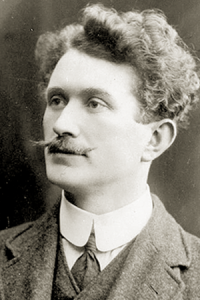
Erskine Barton Childers, Irish writer, BBC correspondent and United Nations senior civil servant, is born in Dublin on March 11, 1929.

Childers is born to Erskine Hamilton Childers (Ireland’s fourth President) and his first wife Ruth Ellen Dow. He grows up in a multi-cultural atmosphere which influences his whole life. From an early age, he has an obvious fascination with history and world affairs. He studies at Newtown School, Waterford and much later on at Trinity College, Dublin and Stanford University. At Stanford he is actively involved with the National Student Association and rises to Vice-President of the organisation by 1949.

By 1960, Childers is in London working for the BBC in both radio and television. His broadcasts from the BBC World Service range on varying topics from the Suez Crisis and Palestine to the John F. Kennedy assassination in 1963. He is one of the first presenters at the start of the BBC TV show The Money Programme in 1966. The Suez Canal and Palestine issues later form the basis of his writing on the subjects.

Childers is distinguished as one of the first mainstream writers in the West to systematically challenge the contention that Palestinian Arab refugees of the 1947–1948 Civil War in Mandatory Palestine and the 1948 Arab–Israeli War fled their homes primarily from Arab broadcast evacuation orders, rather than from the use of force and terror by armed forces of the newly forming state of Israel.

Childers specialises in UN issues, even serving as a periodic consultant including a special mission in the Congo for Secretary-General U Thant. In 1967, under the leadership of Henry Richardson Labouisse, Jr., he is hired to lead a United Nations, UNICEF and United Nations Development Programme (UNDP) programme called Development Support Communication. In 1968 he co-authors a paper with United Nations colleague Mallica Vajrathon called “Project Support Communication,” later published in an important anthology about social change.

From 1975 to 1988, Childers is based in New York as Director of Information for UNDP. By his retirement in 1989 after 22 years of service as Senior Advisor to the UN Director General for Development and International Economic Co-operation, Childers had worked with most of the organisations of the UN system, at all levels and in all regions.

After his retirement, Childers continues to strive relentlessly for the ideals for which he had worked so hard. He co-authors several notable books for the Ford Foundation and the Dag Hammarskjöld Foundation on the reform of the United Nations with his colleague and equally devoted United Nations civil servant, Sir Brian Urquhart. The best known of these publications is A World in Need of Leadership. He continues writing on United Nations matters while traveling constantly and lecturing on the Organisation and the many challenges confronting it, such as globalisation and democracy, conflict prevention and peacekeeping, humanitarian assistance, human rights, famine, ageing and development, health, financial arrangement of the United Nations, citizen’s rights, female participation, design and perceptions, education, the North South divide and world economy. In 1995 he co-authors a paper with his international law colleague Marjolijn Snippe called The Agenda for Peace and the Law of the Sea, for Pacem in Maribus XXIII, the Annual Conference of the International Ocean Institute, that is held in Costa Rica, December 1995.

Childers becomes Secretary General of the World Federation of United Nations Associations in March 1996. Having served for only five months, he dies on August 25, 1996, during the organisation’s fiftieth anniversary congress. He is buried in Roundwood, County Wicklow.
Leave a comment

Death of Joan Denise Moriarty, Ballet Dance & Choreographer

joan-denise-moriarty

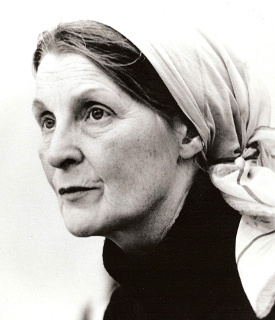
Joan Denise Moriarty, Irish ballet dancer, choreographer, teacher of ballet and traditional Irish dancer and musician, dies on January 24, 1992. She is a key figure in the development of both amateur and professional ballet in Ireland.

Little is known of Moriarty’s early life. Her year of birth is estimated between 1910 and 1913 but no documentation has been found. The place of her birth is also unknown, and even the country is uncertain. She grows up as the daughter of Michael Augustus Moriarty, an alumnus of Stonyhurst College and contemporary of Sir Arthur Conan Doyle, and his wife, Marion (née McCarthy). The Moriartys are originally from Mallow, County Cork, where her grandfather John Moriarty was a successful solicitor.

Moriarty is brought up in England. She studies ballet until her early teens with Dame Marie Rambert. She is an accomplished Irish step-dancer and traditional musician and becomes the champion Irish step-dancer of Britain on April 24, 1931. She also wins a swimming championship. She is a member of the Liverpool branch of the Conradh na Gaeilge.

In the autumn of 1933 Moriarty returns with her family to their native Mallow in County Cork. In 1934, she sets up her first school of dance there. From 1938 she also gives weekly classes in Cork in the Gregg Hall and Windsor School. During the 1930s she takes part in the Cork Feis, annual arts competitions with a focus on traditional dance and music, competing in Irish step-dancing, warpipes and operatic solo singing. She performs on the warpipes in various public concerts and gives at least two broadcasts. In 1938 she is invited by Seán Neeson, lecturer in Irish music at University College Cork, to perform at a summer school which the Music Department organises for primary school teachers.

Moriarty’s mother dies in February 1940. The following November she moves to Cork where she sets up the Moriarty School of Dancing. The early years during the war are very difficult financially. In the early 1940s she performs with her dancers in musicals and variety shows at the Cork Opera House.

In 1945 the composer Aloys Fleischmann invites Moriarty to perform in his Clare’s Dragoons for baritone, war pipes, choir and orchestra, which had been commissioned by the national broadcasting company, Radio Éireann, for the Thomas Davis centenary. Moriarty agrees on condition that his Cork Symphony Orchestra would play for her Ballet Company’s annual performances, which marks the beginning of a lifelong collaboration.

Branches of the Moriarty School of Dance are established in Bandon, Clonmel, Fermoy, Killarney, Mallow, Tralee, Waterford, and Youghal. Moriarty bequeaths her Cork school to Breda Quinn, a long-standing member of the Cork Ballet Company, who runs it with another Moriarty student, Sinéad Murphy, who creates a new dance school, Cork School of Dance, after Breda’s death in 2009.

Moriarty founds the Cork Ballet Group in 1947, the members recruited from her school. It gives its first performance in June of that year at the Cork Opera House. In 1954 the group is registered as a company under the name “Cork Ballet Company.” The company’s final season is 1993, the year following Moriarty’s death.

Irish Theatre Ballet is founded by Moriarty in the summer of 1959, and gives its first performance in December 1959. It is a small touring company of 10 to 12 dancers, which travels all over Ireland, going to some 70 venues annually with extracts from the classical ballets, contemporary works and folk ballets. In an attempt to resolve the constant financial difficulties, the Arts Council in 1963 insists on a merger with Patricia Ryan’s Dublin National Ballet. The amalgamation does not bring a solution to the financial problems besetting both companies and, after one joint season, the amalgamated company, Irish National Ballet, has to be disbanded in March 1964.

In 1973, the Irish government decides to fund a professional ballet company, the Irish Ballet Company, and entrusts it to Moriarty. Like Irish Theatre Ballet, it is a touring company which travels all over Ireland in two annual seasons. The company has a number of striking successes between 1978 and 1981. In 1983 the name of the company is changed to Irish National Ballet. The severe recession in Ireland during the 1980s and shrinking funds force the Irish National Ballet to disband in 1989.

Moriarty spends almost 60 years working for ballet in Ireland. Her amateur Cork Ballet Company is still the longest-lasting ballet company the country’s history. Her two professional touring companies bring ballet to all parts of Ireland for 21 years. She receives numerous awards for her work, among them an honorary doctorate from the National University of Ireland in 1979.

During the last years of her life, Moriarty suffers ill-health, but continues her work with the Cork Ballet Company, bringing the shows to towns in the county. She dies on January 24, 1992, in Dublin.


Leave a comment

Death of Teresa Deevy, Playwright & Writer

teresa-deevy

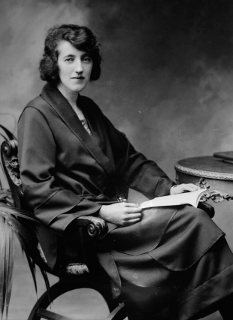
Teresa Deevy, deaf Irish playwright, short story writer, and writer for radio, dies in Waterford, County Waterford on January 19, 1963.

Deevy is born on January 21, 1894, in Waterford. She is the youngest of 13 siblings, all girls. Her mother is Mary Feehan Deevy and her father is Edward Deevy who passes away when she is two years old.

Deevy attends the Ursuline Convent in Waterford and in 1913, at the age of 19, she enrolls in University College Dublin, to become a teacher. However, that same year, she becomes deaf through Ménière’s disease and has to relocate to University College Cork so she can receive treatment in the Cork Ear, Eye, and Throat Hospital, while also being closer to the family home. In 1914 she goes to London to learn lip reading and returns to Ireland in 1919. She starts writing plays and contributing articles and stories to the press around 1919.

Deevy’s return to Ireland takes place during the Irish War of Independence and this heavily influences her writing and ideology as she is heavily involved in the nationalistic cause. She heavily admires Constance Markievicz and joins Cumann na mBan, an Irish women’s Republican group and auxiliary to the Irish Volunteers.

In 1930 Deevy has her first production at the Abbey Theatre, Reapers. Many more follow in rapid succession, such as In Search of Valour, Temporal Powers, The King of Spain’s Daughter and Katie Roche, the play she is perhaps best known for. Her works are generally very well received with some of them winning competitions, becoming headline performances, or being revived numerous times. After a number of plays staged in the Abbey, her relationship with the theater sours over the rejection of her play, Wife to James Whelan in 1937.

After Deevy stops writing plays for the Abbey, she mainly concentrates on radio, a remarkable feat considering she had already become deaf before radio had become a popular medium in Ireland in the mid-to-late 1920s. She has a prolific output for twenty years on Raidio Éireann and on the BBC.

Deevy is elected to the prestigious Irish Academy of Letters in 1954, as a recognition to her contribution to the Irish theater. Her sister, Nell, with whom she had lived in Dublin, dies in the same year, so she returns to Waterford. She becomes a familiar figure in Waterford as she cycles around the city on her “High Nelly” bike.

When Deevy’s health begins to fail she is eventually admitted to the Maypark Nursing Home in Waterford. She dies there on January 19, 1963, at the age of 68, two days before her birthday.


Leave a comment

Birth of Jazz Guitarist Louis Stewart

louis-stewart

Louis Stewart, Irish jazz guitarist, is born in Waterford, County Waterford on January 5, 1944.

Stewart grows up in Dublin. He begins playing guitar when he is thirteen, influenced by guitarists Les Paul and Barney Kessel. He begins his professional career performing in Dublin showbands. In 1968 he wins an award as best soloist at the Montreux Jazz Festival. Soon after, he spends three years with Benny Goodman.

Stewart records his debut album, Louis the First, in Dublin, and then records in London with Billy Higgins, Peter Ind, Sam Jones, Red Mitchell, and Spike Robinson. From the mid to late 1970s he works with George Shearing, touring the United States, Brazil, and playing European festivals, and recording eight albums, including several in a trio with bassist Niels-Henning Orsted-Pedersen. He also appears on albums by Joe Williams and J. J. Johnson.

In 1981, ahead of his debut in the United States as a leader, The New York Times states, “Mr. Stewart seems to have his musical roots in be-bop. He leans toward material associated with Charlie Parker and he spins out single note lines that flow with an unhurried grace, colored by sudden bright, lively chorded phrases. His up-tempo virtuosity is balanced by a laid-back approach to ballads, which catches the mood of the piece without sacrificing the rhythmic emphasis that keeps it moving.” In a review of Stewart’s 1995 album Overdrive, AllMusic states, “Louis Stewart is one of the all-time greats, and it is obvious from the first notes he plays on any occasion.”

Stewart receives an honorary doctorate from Trinity College, Dublin, in 1998. In 2009, he is elected to Aosdána, an Irish affiliation of people engaged in literature, music, and visual arts that was established by the Arts Council of Ireland in 1981 to honour those whose work has made an outstanding contribution to the creative arts in Ireland.

In late 2015, Stewart is diagnosed with cancer. He dies nine months later, on August 20, 2016, at Our Lady’s Hospice, Harold’s Cross at the age of 72.


Leave a comment

Peter O’Connor Sets World Long Jump Record

peter-oconnor

Peter O’Connor, Irish track and field athlete, sets a long-standing world long jump record of 24′ 11-3/4″ in Dublin on August 5, 1901. He also wins two Olympic medals in the 1906 Intercalated Games.

Born in Millom, Cumberland, England on October 24, 1872, O’Connor grows up in Wicklow, County Wicklow. He joins the Gaelic Athletic Association (GAA) in 1896. In 1899 he wins All-Ireland medals in long jump, high jump and hop, step and jump (triple jump). Over the next ten years he consistently beats British athletes in international competitions. The Amateur Athletic Association of England invites him to represent Britain in the 1900 Summer Olympics but he refused as he only wishes to represent Ireland.

As of June 1900, the world record for the long jump is held by Myer Prinstein of Syracuse University, at 24′ 7-1/4″. In 1900 and 1901, competing with the Irish Amateur Athletic Association (IAAA), a rival association to the GAA, O’Connor sets several unofficial world records in the long jump. He sets an officially recognised world record of 24′ 9″ at the Royal Dublin Society’s grounds in Dublin on May 27, 1901. On August 5, 1901 he jumps 24′ 11-3/4″ in Dublin. This is the first IAAF-recognised long jump world record. It causes a sensation at the time, being only a fraction short of the 25-foot barrier, and remains unbeaten for 20 years, a longevity surpassed only by Jesse Owens‘s 25-year record and Bob Beamon‘s 23-year record. It remains an Irish record for a remarkable 89 years.

In 1906 O’Connor and two other athletes, Con Leahy and John Daly, are entered for the Intercalated Games in Athens by the IAAA and GAA, representing Ireland. However, the rules of the games are changed so that only athletes nominated by National Olympic Committees are eligible. Ireland does not have an Olympic Committee, and the British Olympic Council claims the three. On registering for the Games, O’Connor and his fellow athletes find that they are listed as Great Britain, not Irish, team members.

In the long jump competition, O’Connor finally meets Myer Prinstein of the Irish American Athletic Club who is competing for the U.S. team and whose world record O’Connor had broken five years previously. The only judge for the competition is Matthew Halpin, who is manager of the American team. O’Connor protests, fearing bias, but is overruled. He continues to protest Halpin’s decisions through the remainder of the competition. When the distances are announced at the end of the competition, Prinstein is declared the winner, with O’Connor in Silver Medal position.

At the flag-raising ceremony, in protest of the flying of the Union Flag for his second place, O’Connor scales a flagpole in the middle of the field and waves the Irish flag, while the pole is guarded by Con Leahy.

In the hop, step and jump competition two days later, O’Connor beats his fellow countryman, Con Leahy, to win the Gold Medal. At 34 he is the oldest ever Gold Medal winner in this event. Prinstein, the champion in 1900 and 1904, did not medal.

O’Connor wins no more titles after 1906. He remains involved in athletics all his life. He is a founder member and first Vice-President of Waterford Athletic Club, and attends later Olympics both as judge and spectator. He practises as a solicitor in Waterford and is married with nine children. He dies in Waterford on November 9, 1957.


1 Comment

Final Barge Journey on the Grand Canal

barge-51m

The last barge on the Grand Canal makes its final journey to Limerick on May 27, 1960 carrying a cargo of Guinness. The impressive broad-beamed barge carrying the number 51M casts off from Dublin‘s James Street Harbour marking the end of a way of life on the canal which has existed since the construction of the waterway in the early 1800s.

For some 160 years freight barges ply the canal bringing cargoes to and from Dublin, Limerick, Waterford and canal-side villages across the midlands from Sallins to Shannon Harbour. The spine of the waterways system is the Grand Canal which crosses mid-Kildare in a southwest direction from Hazelhatch to west of Ticknevin.

Typically a crew of four men live on the boats on voyages which can take up to four days from Dublin to Limerick. The crew is comprised of the Master or skipper, the Engineman, Deck man and Greaser. Although a seemingly idyllic job the boatmen worked hard in all weather, sometimes sailing through the night.

The canal cargo business is always under pressure from the railways but tonnages of bulk goods (barrels of porter, turf, coal, sand, gravel, and grain and flour) where speed is not important remain high. Competition from the motor lorry in the 1920s and 1930s causes tonnages to fall severely. The canals get a brief respite during the Emergency years (1939-45) when they are pressed into service to transport turf from the Bog of Allen to Dublin city where it is stored in massive clamps at Phoenix Park.

As part of a rationalisation in the post-war decades, the Government brings out the shareholders of the Grand Canal Company and amalgamates its operations with Córas Iompair Éireann (CIÉ), a newly formed semi-state entity with a mandate to take over all transport services in Ireland. CIÉ has enough on its hands trying to keep the railway system viable and it is clear that the days of canal freight are numbered. In November 1959 CIÉ announces that the Grand Canal will close to cargo boats on December 31 of that year.

The Guinness brewery asks for a stay of a few months so it can complete alternative arrangements for road deliveries. The definitive final voyage from Dublin begins on the afternoon of May 27, 1960 when 51M casts off at James Street Harbour bound for the Guinness depot in Limerick.

51M escapes the wrecker’s torch and is kept in service though a succession of canal authorities as a maintenance boat for the canals. In May 2010, fifty years after it carried the last commercial cargo from Dublin to Limerick, the canal boat 51M retraces its historic journey, once again carrying a number of original Guinness casks as its cargo.


Leave a comment

Irish Ferries Protest

irish-ferries-protest

Nearly 150,000 people take to the streets on December 9, 2005, as the Irish Ferries protest mushrooms into the largest public demonstration the country has seen for two decades.

The national day of protest is called by the Irish Congress of Trade Unions, which is demanding Government action to combat exploitation of migrant workers and the displacement of jobs. There are rallies in Dublin, Cork, Waterford, Limerick, Galway, Sligo, Athlone and Rosslare.

An Garda Síochána estimate that 40,000 people take part in the march in Dublin, although organisers claim the figure is far higher. Gerry Adams of Sinn Féin, Pat Rabbitte of the Labour Party and John Gormley of the Green Party participate in the march in the capital. Staff on board the MS Isle of Inismore in Pembroke and the four engineers holed up in the ships control room say they are overwhelmed by the level of support shown by marchers in the rallies.

Bus and rail services are disrupted during the protest but return to normal for evening rush hour.

The Irish Small & Medium Enterprises Association (ISME) strongly criticises the National Day of Protest. In a statement, ISME Chief Executive Mark Fielding says the protest is undermining the industrial relations process in this country and has very little to do with the Irish Ferries dispute and is in fact an attempt by the unions to influence negotiations in advance of any new national pay agreement.

Speaking on RTÉ Radio’s Morning Ireland, Services Industrial Professional Technical Union (SIPTU) President Jack O’Connor says the rallies give workers the chance to take a stand.

Director General of the Irish Business and Employers Confederation (IBEC) Turlough O’Sullivan says there is nothing to be gained from disrupting business and the general public. He adds that whatever one’s views on the Irish Ferries dispute, nothing can justify calling a national work stoppage when discussions are already underway in a bid to resolve the row.


Leave a comment

Birth of Comedian & Actor Niall Tóibín

Niall Tóibín, Irish comedian and actor, is born into an Irish speaking family in Cork, County Cork, on November 21, 1929. He is the sixth of seven children born to Siobhán (née Ní Shúileabháin) and Seán Tóibín.

Tóibín’s father is born in Passage West, County Cork, and his parents come from Waterford and West Cork. His father is a teacher in the School of Commerce in Cork city and the author of two books, Blátha an Bhóithrín and Troscán na mBánta, on wayside and meadowland flowers, both written in the Irish language. His mother comes from Beaufort, County Kerry.

Tóibín is born on the south side of Cork city in Friars’ Walk. He is raised with Irish and uses the language in his professional career, notably in the film Poitín. As a child he sings in the cathedral choir and the Opera House in Cork. In his teens he joins a drama society attached to the Keating Branch of the Gaelic League. He is educated by the Irish Christian Brothers at the North Monastery after which he leaves Cork in January 1947 for a job in the Civil Service in Dublin.

Tóibín starts acting in the 1950s and spends fourteen years with the Radio Éireann Players. From Ryan’s Daughter and Bracken in the 1970s, to The Ballroom of Romance, The Irish R.M., Brideshead Revisited (TV serial) and Caught in a Free State in the 1980s, and Far and Away, Ballykissangel and Veronica Guerin in the 1990s and 2000s, Toibin’s entertainment career in television, film and theatre spans over four decades.

Tóibín plays Dr. Paul O’Callaghan in the first series of the Irish TV programme The Clinic. He also plays Judge Ballaugh, alongside Cate Blanchett, in Jerry Bruckheimer‘s film Veronica Guerin. He also acts for the radio, such as his guest appearance in the BBC Radio 4 series Baldi.

In 1973, Tóibín wins a Jacob’s Award for his performance in the RTÉ comedy series, If the Cap Fits. He receives an Honorary Doctor of Arts Degree from University College Cork (UCC) on June 4, 2010, and is honoured with the Irish Film and Television Academy‘s (IFTA) Lifetime Achievement Award at a ceremony at the Irish Film Institute on November 3, 2011.


Leave a comment

Death of Hunger Striker Thomas Patrick Ashe

Thomas Patrick Ashe, a member of the Gaelic League, the Irish Republican Brotherhood (IRB), and a founding member of the Irish Volunteers, dies on September 25, 1917, at Mater Misericordiae Hospital in Dublin following a hunger strike.

Ashe is born in Lispole, County Kerry, on January 12, 1885. He enters De La Salle Training College, Waterford in 1905 and begins a teaching career as principal of Corduff National School, Lusk, County Dublin, in 1908.

Ashe plays a major part in the 1916 Easter Rising outside the capital city commanding the Fingal battalion of the Irish Volunteers. He is commandant of the 5th battalion of the Dublin brigade, a force of 60–70 men engaging British forces around north County Dublin during the rising. They are armed only with a few rounds, about a dozen service rifles, a dozen Mausers, and a dozen Martini carbines. Some of Ashe’s men are armed only with a shotgun against the well-equipped army regulars.

Ashe’s battalion wins a major victory in Ashbourne, County Meath, where they engage a much larger force. They capture a significant quantity of arms and up to twenty Royal Irish Constabulary (RIC) vehicles. Eleven RIC members, including County Inspector Alexander Gray, and two volunteers are killed during the 5-1/2-hour battle. Twenty-four hours after the rising collapses, Ashe’s battalion surrenders on the orders of Patrick Pearse. On May 8, 1916, Ashe and Éamon de Valera are court-martialled and sentenced to death. The sentences are commuted to penal servitude for life. Ashe is imprisoned in Frongoch internment camp and Lewes Prison in Lewes, East Sussex, England.

De Valera, Ashe, and Thomas Hunter lead a prisoner hunger strike on May 28, 1917. With accounts of prison mistreatment appearing in the Irish press and mounting protests in Ireland, Ashe and the remaining prisoners are freed on June 18, 1917, by David Lloyd George as part of a general amnesty.

Upon his release, Ashe returns to Ireland and begins a series of speaking engagements. In August 1917, he is arrested and charged with sedition for a speech that he makes in Ballinalee, County Longford, where Michael Collins is also speaking. He is detained at the Curragh but is then transferred to Mountjoy Prison in Dublin. He is convicted and sentenced to two years hard labour. Ashe and other prisoners, including Fionán Lynch and Austin Stack, demand prisoner of war status.

On September 20, 1917, Ashe again goes on hunger strike. He dies at Mater Misericordiae Hospital on September 25, 1917, after being force fed by prison authorities. At the inquest into his death, the jury condemns the staff at the prison for the “inhuman and dangerous operation performed on the prisoner, and other acts of unfeeling and barbaric conduct.” His body lies in state at Dublin City Hall and is buried in Glasnevin Cemetery in Dublin.

The Ashe Memorial Hall built in 1928, housing the Kerry County Museum, in Tralee is named after him while Nelson Street, also in Tralee, is renamed Ashe Street. Ashe is a relative of Catherine Ashe, the paternal grandmother of American actor Gregory Peck, who emigrates to the United States in the 19th century.


Leave a comment

Earliest Verifiable Viking Invasion of Ireland

The earliest verifiable date of a Viking invasion of Ireland is September 9, 872, in Dunrally in what is now County Laois.

The Vikings conduct extensive raids in Ireland and found many towns, including Dublin, Limerick, Wexford, Waterford, Wicklow, Arklow and Leixlip. Literature, crafts, and decorative styles in Ireland and Britain reflect Scandinavian culture. Vikings trade at Irish markets in Dublin. Excavations find imported fabrics from England, Byzantium, Persia, and Central Asia. Dublin becomes so crowded by the 11th century that houses are built outside the town walls.

The Vikings pillage monasteries on Ireland’s west coast in 795 and then spread out to cover the rest of the coastline. The north and east of the island are most affected. During the first 40 years, the raids are conducted by small, mobile Viking groups. From 830 on, the groups consist of large fleets of Viking ships. From 840, the Vikings begin establishing permanent bases at the coasts. Dublin is the most significant settlement in the long term. The Irish become accustomed to the Viking presence and culture. In some cases, they become allies and also intermarry.

In 832, a Viking fleet of about 120 ships under Turgesius invades kingdoms on Ireland’s northern and eastern coasts. Some believe that the increased number of invaders coincides with Scandinavian leaders’ desires to control the profitable raids on the western shores of Ireland. During the mid-830s, raids begin to push deeper into Ireland. Navigable waterways make this deeper penetration possible. After 840, the Vikings have several bases in strategic locations throughout Ireland.

In 838, a small Viking fleet enters the River Liffey in eastern Ireland, probably led by the chieftain Saxolb, who is killed later that year. The Vikings set up a base, which the Irish call longphorts. This longphort would eventually become Dublin. After this interaction, the Irish experience Viking forces for about 40 years. The Vikings also establish longphorts in Cork, Limerick, Waterford, and Wexford. The Vikings are driven out of Ireland for a short period around 900 but return to Waterford in 914 to found what would become Ireland’s first city. The other longphorts are soon re-occupied and developed into cities and towns.

The last major Irish battle involving Vikings is the Battle of Clontarf in 1014, in which a large force from the pan-Viking world and their Irish allies oppose Brian Boru, then the High King of Ireland and his forces, a small contingent of which are Viking defectors. The battle is fought in what is the now Dublin suburb of Clontarf on Good Friday of that year. Boru, the Irish High King has allowed the Viking King of Dublin, Sigtrygg Silkbeard, one year to prepare for his coming assault. Silkbeard responds by offering the bed of his mother to several Viking lords from Scandinavia, Ireland and Britain. The savage mêlée between the heavily mailed Norse and the unarmoured, yet undaunted Gaels ends in a rout of the Vikings and their Irish allies. Careful accounts are taken by both sides during the battle, and thus many famous warriors seek each other out for personal combat and glory. High King Brian, who is nearly eighty, does not personally engage in the battle but retires to his tent where he spends the day in quiet prayer.

The Viking Brodir of Man chances upon Brian’s tent as he flees the field. He and a few followers seize the opportunity, and surprise the High King, killing the aged Brian before being captured. Brian’s foster son Ulf the Quarrelsome later tracks down and dispatches Brodir by disembowelment. The battle is fairly matched for most of the day and each side has great respect for the prowess of the other, however, in the end, the Irish forces the Norse to return to the sea. Many of the fleeing Vikings are drowned in the surf due to their heavy mail coats as they struggled for the safety of their longships. Others are pursued and slain further inland.

After the battle, Viking power is broken in Ireland forever, though many settled Norse remain in the cities and prosper greatly with the Irish through trade. With Brian dead, Ireland returns to the fractured kingdom it had once been but is now cleared of further Viking predation.

(Pictured: Guest from Overseas, Nicholas Roerich, 1901)