seamus dubhghaill

Promoting Irish Culture and History from Little Rock, Arkansas, USA


Leave a comment

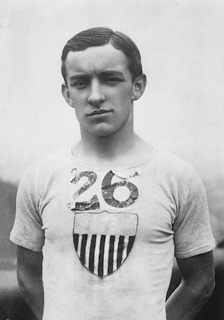
Death of Johnny Hayes, Member of the Irish American Athletic Club

John Joseph Hayes, an American athlete and a member of the Irish American Athletic Club, dies on August 25, 1965, in Englewood, New Jersey. He is the winner of the men’s marathon race at the 1908 Summer Olympics in London. His Olympic victory contributes to the early growth of long-distance running and marathoning in the United States.

Born in New York City on April 10, 1886, to a family of Irish emigrants from NenaghCounty Tipperary, Hayes is probably best known for winning the controversial marathon race at the London Olympics. He is one of only three male American athletes to win the Olympic Marathon, the other two being Thomas Hicks in 1904 and  Frank Shorter in 1972.

In 1905, Hayes joins Bloomingdale Brothers as an assistant to the manager of the sporting goods department. At night, he trains on a cinder track on the roof of the Bloomingdale’s building in New York. He is promoted to manager of the department after returning from his Olympic victory.

Hayes starts his athletics career with a fifth-place finish at the 1906 Boston Marathon, running for the St. Bartholemew Athletic Club in a time of 2:55:38. He improves on that the following year by finishing third in Boston with a time of 2:30:38 and winning the inaugural Yonkers Marathon. In 1908, he finishes second, 21 seconds behind Thomas Morrissey in the Boston Marathon with a time of 2:26:04 and thus qualifies for the Olympic Games held in London that same year.

The British Olympic Association wants to start the race in front of Windsor Castle and finish in front of the royal reviewing stand at the White City Stadium. As a result, the distance is 26 miles and 385 yards (42.195 km). It takes until 1921 for the IAAF to codify that distance as the official length of the marathon. Prior to this, races are usually about 25 miles (40 km).

At the race itself, Dorando Pietri from Italy is the first to enter the stadium. But Pietri has depleted himself to open a more than 10 minute lead over the field and is suffering extreme fatigue and dehydration. When he enters the stadium, he takes the wrong path, and when umpires redirect him, he falls down for the first time. He gets up with their help in front of 75,000 spectators.

Pietri falls four more times, and each time, the umpires help him up. He manages to finish the race first, with a time of 2 hours, 54 minutes, 46 seconds. During all these stumbles and the direct aid from the officials, Hayes has now entered the stadium, finishing the race second, with a time of 2 hours, 55 minutes, 18 seconds.

Pietri is disqualified after the U.S. officials file a protest. Despite the official result, Pietri achieves much more fame than Hayes when Queen Alexandra awards him a special silver cup.

All of the Olympic officials are British, and the Pietri incident joins a list of other controversial calls in the 1908 Olympics, prompting the International Olympic Committee to start appointing judges from a wide variety of countries instead of only the host country.

After the dramatic Olympic battle between Pietri and Hayes, public interest is such that a match race is organized by professional promoters in November 1908 at Madison Square Garden. Pietri wins the race by 75 yards. A second match race is held on March 15, 1909, and again Pietri wins. Both Pietri and Hayes turn professional after the Olympics and achieve great fame.

Hayes is a trainer for the U.S. team for the 1912 Summer Olympics. He later teaches physical education and is a food broker. Hayes dies on August 25, 1965, in Englewood, New Jersey.

The Shore Athletic Club of New Jersey (Shore AC) holds the Johnny Hayes collection as lifetime trustees. Included in the collection are numerous trophies, as well as the 1908 Olympic gold medal for the marathon. This represents the first Olympic gold medal to be won at the modern marathon distance of 26 miles, 385 yards.

Hayes is a guest on the television show I’ve Got a Secret as one of five former Olympic champions, which airs on October 13, 1954.

In 2002, three statues honoring Olympic champions with links to Nenagh, Matt McGrath, Johnny Hayes and Bob Tisdall, are unveiled in front of the Nenagh Courthouse.


Leave a comment

The First Non-Stop Transatlantic Flight

British aviators John Alcock and Arthur Brown take off from Newfoundland on June 14, 1919, on the first ever non-stop transatlantic flight. They fly a modified World War I Vickers Vimy bomber from St. John’s, Newfoundland, to Clifden, Connemara, County Galway. A small amount of mail is carried on the flight, also making it the first transatlantic airmail flight.

In April 1913 London‘s Daily Mail offers a prize of £10,000 to the aviator who first crosses the Atlantic Ocean in an airplane from any point in the United States, Canada or Newfoundland to any point in Great Britain or Ireland in 72 continuous hours. The competition is suspended with the outbreak of war in 1914 but reopens after Armistice is declared in 1918.

Several teams enter the competition and, when Alcock and Brown arrive in St. John’s, the Handley Page team are in the final stages of testing their aircraft for the flight, but their leader, Admiral Mark Kerr, is determined not to take off until the plane is in perfect condition. The Vickers team quickly assembles their plane and while the Handley Page team are conducting yet another test, the Vickers plane takes off from Lester’s Field.

It is not an easy flight. The overloaded aircraft has difficulty taking off the rough field and barely misses the tops of the trees. At 5:20 PM the wind-driven electrical generator fails, depriving them of radio contact, their intercom and heating. An exhaust pipe bursts shortly afterwards, causing a frightening noise which makes conversation impossible without the failed intercom.

Alcock and Brown also have to contend with thick fog, which prevents Brown from being able to navigate using his sextant. Alcock twice loses control of the aircraft in the fog and nearly crashes into the sea. He also has to deal with a broken trim control that makes the plane become very nose heavy as fuel is consumed. Their electric heating suits fail, making them very cold in the open cockpit.

At 3:00 AM they fly into a large snowstorm. They are drenched by rain, their instruments ice up, and the plane is in danger of icing and becoming unflyable. The carburetors also ice up.

They make landfall in County Galway at 8:40 AM on June 15, 1919, not far from their intended landing place, after less than sixteen hours of flying time. The aircraft is damaged upon arrival because they land on what appears from the air to be a suitable green field, but which turns out to be Derrygilmlagh Bog, near Clifden. This causes the aircraft to nose-over, although neither of the airmen is hurt. Brown says that had the weather been favorable they could have pressed on to London. Their first interview is given to Tom ‘Cork’ Kenny of the Connacht Tribune.

Alcock and Brown are treated as heroes on the completion of their flight. The Secretary of State for Air, Winston Churchill, presents them with the Daily Mail prize. In addition to a share of the Daily Mail award, Alcock receives 2,000 guineas (£2,100) from the State Express Cigarette Company and £1,000 from Laurence R. Philipps for being the first Briton to fly the Atlantic Ocean. Both men are knighted a week later by King George V at Windsor Castle.

Alcock and Brown fly to Manchester in July 1919, where they are given a civic reception by the Lord Mayor of Manchester and Manchester City Council, and awards to mark their achievement.

(Pictured: Statue of Alcock and Brown formerly located at London Heathrow Airport. Relocated to Clifden, Connemara, County Galway, Ireland to celebrate centenary in 2019.)


Leave a comment

Death of Queen Victoria

queen-victoria

Queen Victoria dies at Osborne House, Isle of Wight on January 22, 1901, ending an era in which most of her British subjects know no other monarch.

With a reign of 63 years, seven months and two days, she is the longest-reigning British monarch and the longest-reigning queen regnant in world history until her great-great-granddaughter Elizabeth II surpasses her on September 9, 2015. She restores dignity to the English monarchy and ensures its survival as a ceremonial political institution. Edward VII accedes to the throne upon her death.

Born on May 24, 1819, in Kensington Palace, London, Victoria comes to the throne after the death of her uncle, King William IV, in 1837. As a young woman ascending to the throne, her future husband describes her “as one whose extreme obstinacy was constantly at war with her good nature.” Her first prime minister, William Lamb, 2nd Viscount Melbourne, becomes her close friend and adviser, and she succeeds in blocking his replacement by Tory leader Sir Robert Peel in 1839. Two years later, however, an election results in a Tory majority in the House of Commons, and she is compelled to accept Peel as prime minister. Never again does she interfere so directly in the politics of democratic Britain.

In 1839, her first cousin Albert, a German prince, comes to visit the English court at Windsor, and Victoria proposes to him five days after his arrival. Prince Albert accepts, and they are married in February 1840. He soon becomes the dominant influence in her life and serves as her private secretary. Among his greatest achievements as Prince Consort is his organization of The Great Exhibition of 1851, the first world’s fair, in the Crystal Palace in London. He also steers her support away from the Whigs to the conservative Tories. She later is a vocal supporter of Benjamin Disraeli, leader of the Conservative Party.

Victoria and Albert build royal residences at Osborne House on the Isle of Wight and at Balmoral Castle in Scotland and become increasingly detached from London. They have nine children, including Victoria, later the empress of Germany, and the Prince of Wales, later King Edward VII. In 1861, Albert dies, and Victoria’s grief is such that she does not appear in public for three years. She never entirely gets over the loss and, until the end of her life, has her maids nightly lay out Albert’s clothes for the next day and in the morning replace the water in the basin in his room.

Disraeli coaxes Victoria out of seclusion, and she is impressed by his efforts to strengthen and expand the British Empire. In 1876, he has her made “empress of India,” a title which pleases her and makes her a symbol of imperial unity. During the last few decades of her life, her popularity, which had suffered during her long public absence, increases greatly. She never embraces the social and technological advances of the 19th century but accepts the changes and works hard to fulfill her ceremonial duties as head of state.

Following a custom she maintains throughout her widowhood, Victoria spends the Christmas of 1900 at Osborne House on the Isle of Wight. Rheumatism in her legs has rendered her lame and her eyesight is clouded by cataracts. Through early January, she feels weak and unwell, and by mid-January she is drowsy, dazed and confused. She dies in the early evening of Tuesday, January 22, 1901, at the age of 81. Her son and successor King Edward VII, and her eldest grandson, Emperor Wilhelm II of Germany, are at her deathbed. Her favourite pet Pomeranian, Turi, is laid upon her deathbed as a last request.

Victoria’s funeral is held on Saturday, February 2, in St. George’s Chapel, Windsor Castle, and after two days of lying-in-state, she is interred beside Prince Albert in Frogmore Mausoleum at Windsor Great Park. When she dies, she has 37 surviving great-grandchildren, and their marriages with other monarchies give her the name “grandmother of Europe.”


Leave a comment

First Non-Stop Transatlantic Flight

alcock-and-brown

British aviators John Alcock and Arthur Brown complete the first non-stop transatlantic flight, landing at Clifden, County Galway on June 15, 1919. They fly a modified World War I Vickers Vimy bomber from St. John’s, Newfoundland, to Clifden. The Secretary of State for Air, Winston Churchill, presents them with the Daily Mail prize for the first crossing of the Atlantic Ocean by aeroplane in “less than 72 consecutive hours.” A small amount of mail is carried on the flight, making it the first transatlantic airmail flight.

Alcock and Brown take off from Lester’s Field at around 1:45 PM on June 14. They fly the modified Vickers Vimy, powered by two Rolls-Royce Eagle 360 hp engines which are supported by an on-site Rolls Royce team led by engineer Eric Platford.

It is not an easy flight. The overloaded aircraft has difficulty taking off from the rough field and only barely misses the tops of the trees. A short time later the wind-driven electrical generator fails, depriving them of radio contact, their intercom and heating. An exhaust pipe bursts shortly afterwards, causing a frightening noise which makes conversation impossible without the failed intercom.

At 5:00 PM they have to fly through thick fog. This is serious because it prevents Brown from being able to navigate using his sextant. Blind flying in fog or cloud should only be undertaken with gyroscopic instruments, which they do not have, and Alcock twice loses control of the aircraft and nearly hits the sea after a spiral dive. Alcock also has to deal with a broken trim control that makes the plane become very nose heavy as fuel is consumed.

At 12:15 AM on June 15 Brown gets a glimpse of the stars and is able to use his sextant and finds that they are still on course. By this point, their electric heating suits have failed, making them very cold in the open cockpit.

Then at 3:00 AM they fly into a large snowstorm. They are drenched by rain, their instruments ice up, and the plane is in danger of icing and becoming unflyable. The carburetors also ice up.

Alcock and Brown make landfall in County Galway at 8:40 AM on June 15, not far from their intended landing place, after less than sixteen hours of flying time. The aircraft is damaged upon arrival because of an attempt to land on what appears from the air to be a suitable green field, but which turns out to be a bog, near Clifden, but neither of the airmen is hurt. Brown says that if the weather had been good, they could have pressed on to London.

Alcock and Brown are treated as heroes on the completion of their flight. In addition to the Daily Mail award of £10,000, the crew receives 2,000 guineas (£2,100) from the Ardath Tobacco Company and £1,000 from Lawrence R. Phillips for being the first British subjects to fly the Atlantic Ocean. The two aviators are awarded the honour of Knight Commander of the Most Excellent Order of the British Empire (KBE) a week later by King George V at Windsor Castle.

Alcock and Brown fly to Manchester on July 17, where they are given a civic reception by the Lord Mayor and Corporation of Manchester, and awards to mark their achievement.

John Alcock is killed on December 18, 1919, when he crashes near Rouen while flying the new Vickers Viking amphibian to the Paris Air Show. Arthur Brown dies on October 4, 1948. Two memorials commemorating the flight are sited near the landing spot in County Galway. The first is an isolated cairn four kilometres south of Clifden, around 500 metres from the spot where they land, on the site of Guglielmo Marconi‘s first transatlantic wireless station from which the aviators transmit their success to London. In addition, there is a sculpture of an aircraft’s tailfin on Errislannan Hill two kilometres north of their landing spot, dedicated on June 15, 1959, the fortieth anniversary of their landing.


Leave a comment

Final Arrival of the Concorde in Ireland

The supersonic aircraft Concorde arrives at Belfast International Airport, Aldergrove on October 21, 2003, on a farewell tour during its final week before being taken out of service.

In a final week of farewell flights around the United Kingdom, a British Airways Concorde visits Birmingham on October 20, Belfast on October 21, Manchester on October 22, Cardiff on October 23, and Edinburgh on October 24. Each day the aircraft makes a return flight out and back into Heathrow Airport to the cities concerned, often overflying those cities at low altitude. Over 650 competition winners and 350 special guests are carried.

On the evening of October 23, 2003, Queen Elizabeth II consents to the illumination of Windsor Castle as Concorde’s final west-bound commercial flight departs London and flies overhead. This is an honour normally reserved for major state events and visiting dignitaries.

British Airways retires its aircraft the next day, October 24. G-BOAG leaves New York City to a fanfare similar to her Air France predecessor’s, while two more made roundtrips, G-BOAF over the Bay of Biscay, carrying VIP guests including many former Concorde pilots, and G-BOAE to Edinburgh. The three aircraft then circle over London, having received special permission to fly at low altitude, before landing in sequence at Heathrow.

The two round-trip Concordes land at 4:01 and 4:03 PM BST, followed at 4:05 by the one from New York. All three aircraft then spend 45 minutes taxiing around the airport before finally disembarking the last supersonic fare-paying passengers. The pilot of the New York to London flight is Mike Bannister.

All of British Airway’s Concordes have been grounded, have lost their airworthiness certificates and have been drained of hydraulic fluid. Ex-chief Concorde pilot and manager of the fleet, Jock Lowe, estimates it would cost £10-15 million to make G-BOAF airworthy again. British Airways maintains ownership of the Concordes and has stated that their Concordes will not be flown again.


2 Comments

Formation of The Irish Guards

The Irish Guards regiment is formed on April 1, 1900 by order of Queen Victoria to commemorate the Irishmen who fought in the Second Boer War for the British Empire. The Irish Guards, part of the Guards Division, is a Foot Guards regiment based in Cavalry Barracks, Hounslow.

The regiment takes its motto, “Quis Separabit” or “Who shall separate us?” from the Order of St. Patrick, an order of chivalry founded by George III.

As a Foot Guards Regiment the Irish Guards Regiment is involved in state ceremonial and public duties at Buckingham PalaceWindsor CastleSt. James’s Palace, and the Tower of London. HRH Prince William is Colonel of the Regiment and wore the uniform of the Irish Guards for his marriage to Kate Middleton.

Saint Patrick’s Day is the traditional celebration of the Irish Guards and fresh shamrock is presented to members of the regiment.

The 1st Battalion Irish Guards is broken down into five separate Companies – three rifle companies, Numbers One, Two, and Four Companies, the Support Company (3 Company) and Headquarter Company. The rifle companies use the Warrior tracked armoured vehicle. In common with her sister Guards regiments, the regimental organization also includes the Band of the Irish Guards and the Corps of Drums, a fife and drum band.

The Battalion has deployed on recent conflicts including Iraq and Afghanistan. The Battalion has also recently carried out a tour of Cyprus under the United Nations. As well as deploying on operations the Battalion has also deployed on various oversea exercises to BosniaLatviaOmanKenya, and numerous other countries.

(Photo used with approval of copyright holder James Brunker, https://james-brunker.pixels.com/featured/irish-guards-on-the-march-james-brunker.html)