seamus dubhghaill

Promoting Irish Culture and History from Little Rock, Arkansas, USA


Leave a comment

Birth of George Sigerson, Physician & Writer

george-sigerson

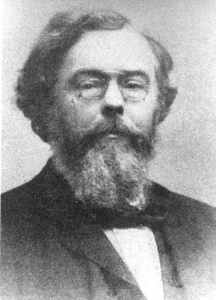
George Sigerson, Irish physician, scientist, writer, politician, and poet, is born at Holy Hill, near Strabane in County Tyrone on January 11, 1836. He is a leading light in the Irish Literary Revival of the late 19th century in Ireland.

Sigerson is the son of William and Nancy (née Neilson) Sigerson and has three brothers, James, John and William, and three sisters, Ellen, Jane, and Mary Ann. He attends Letterkenny Academy but is sent by his father, who developed the spade mill and who played an active role in the development of Artigarvan, to complete his education in France.

He studies medicine at the Queen’s College, Galway, and Queen’s College, Cork, and takes his degree in 1859. He then goes to Paris where he spends some time studying under Jean-Martin Charcot and Duchenne de Boulogne. Sigmund Freud is one of his fellow students.

Sigerson returns to Ireland and opens a practice in Dublin, specializing in neurology. He continues to visit France annually to study under Charcot. His patients included Maud Gonne, Austin Clarke, and Nora Barnacle. He lectures on medicine at the Catholic University of Ireland and is professor of zoology and later botany at the University College Dublin.

His first book, The Poets and Poetry of Munster, appears in 1860. He is actively involved in political journalism for many years, writing for The Nation. Sigerson and his wife Hester are by now among the dominant figures of the Gaelic Revival. They frequently hold Sunday evening salons at their Dublin home to which artists, intellectuals, and rebels alike attend, including John O’Leary, W.B. Yeats, Patrick Pearse, Roger Casement, and 1916 signatory Thomas MacDonagh. Sigerson is a co-founder of the Feis Ceoil and President of the National Literary Society from 1893 until his death. His daughter, Dora, is a poet who is also involved in the Irish literary revival.

Nominated to the first Seanad Éireann of the Irish Free State, Sigerson briefly serves as the first chairman on December 11-12, 1922, before the election of James Campbell, 1st Baron Glenavy. Sigerson dies at his home at 3 Clare Street, Dublin, on February 17, 1925, at the age of 89, after a short illness. On February 18, 1925, the day after his death, the Seanad Éireann pays tribute to him.

The Sigerson Cup, the top division of third level Gaelic football competition in Ireland is named in his honour. Sigerson donates the salary from his post at UCD so that a trophy can be purchased for the competition. In 2009, he is named in the Sunday Tribune‘s list of the “125 Most Influential People In GAA History.” The cup is first presented in 1911, with the inaugural winners being UCD GAA.


Leave a comment

Death of Irish Painter Sir John Lavery

john-lavery

Sir John Lavery, Irish painter best known for his portraits and wartime depictions, dies of natural causes at the age of 84 in Kilmoganny, County Kilkenny, on January 10, 1941.

Born in Belfast on March 20, 1856, Lavery attends Haldane Academy in Glasgow in the 1870s and the Académie Julian in Paris in the early 1880s. He returns to Glasgow and is associated with the Glasgow School. In 1888 he is commissioned to paint the state visit of Queen Victoria to the Glasgow International Exhibition of Science, Art and Industry. This launches his career as a society painter, and he moves to London soon thereafter. In London he becomes friends with James McNeill Whistler and is clearly influenced by him.

Like William Orpen, Lavery is appointed an official artist in World War I. Ill-health, however, prevents him from travelling to the Western Front. A serious car crash during a Zeppelin bombing raid also keeps him from fulfilling this role as war artist. He remains in Britain and mostly paints boats, aeroplanes, and airships. During the war years he is a close friend of H.H. Asquith‘s family and spends time with them at their Sutton Courtenay Thames-side residence, painting their portraits and idyllic pictures like Summer on the River (Hugh Lane Gallery).

After the war Lavery is knighted and in 1921 he is elected to the Royal Academy of Arts.

michael-collins-love-of-ireland

During this time, he and his wife, Hazel, are tangentially involved in the Irish War of Independence and the Irish Civil War. They give the use of their London home to the Irish negotiators during the negotiations leading to the Anglo-Irish Treaty. After Michael Collins is assassinated, Lavery paints Michael Collins, Love of Ireland, now in the Hugh Lane Gallery. In 1929, Lavery makes substantial donations of his work to both the Ulster Museum and the Hugh Lane Gallery and in the 1930s he returns to Ireland. He receives honorary degrees from the University of Dublin and Queen’s University Belfast. He is also made a free man of both Dublin and Belfast. A long-standing member of Glasgow Art Club, Lavery exhibits at the club’s annual exhibitions, including its exhibition in 1939 in which his The Lake at Ranelagh is included.

Sir John Lavery dies in Rossenarra House, Kilmoganny, County Kilkenny on January 10, 1941, and is interred in Putney Vale Cemetery.


Leave a comment

Birth of Irish Playwright Brian Patrick Friel

brian-patrick-friel

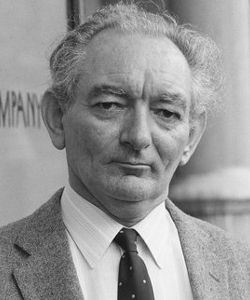
Brian Patrick Friel, Irish playwright, short story writer, and founder of the Field Day Theatre Company, is born on January 9, 1929, at Knockmoyle, near Omagh, County Tyrone. Prior to his death, he had been considered one of the greatest living English-language dramatists and referred to as an “Irish Chekhov” and “the universally accented voice of Ireland.” His plays have been compared favourably to those of contemporaries such as Samuel Beckett, Arthur Miller, Harold Pinter, and Tennessee Williams.

Friel is the son of Patrick “Paddy” Friel, a primary school teacher and councillor on Londonderry Corporation, the local city council in Derry. Friel’s mother, Mary McLoone, is postmistress of Glenties, County Donegal. The family moves to Derry when Friel is ten years old. There, he attends St. Columb’s College, the same school attended by Seamus Heaney, John Hume, Seamus Deane, Phil Coulter, Eamonn McCann, and Paul Brady.

Friel receives his B.A. from St. Patrick’s College, Maynooth (1945–48), and qualifies as a teacher at St. Joseph’s Training College in Belfast. He marries Anne Morrison in 1954, with whom he has four daughters and one son. Between 1950 and 1960, he works as a math teacher in the Derry primary and intermediate school system, taking leave in 1960 to pursue a career as a writer, living off his savings. In the late 1960s, the Friels move from 13 Malborough Street, Derry to Muff, County Donegal, eventually settling outside Greencastle, County Donegal.

Recognised for early works such as Philadelphia, Here I Come! and Faith Healer, Friel has 24 plays published in a more than half-century spanning career that culminates in his election to the position of Saoi of Aosdána. His plays are commonly featured on Broadway throughout this time. In 1980, Friel co-founds Field Day Theatre Company, and his play Translations is the company’s first production. With Field Day, Friel collaborates with Seamus Heaney, 1995 recipient of the Nobel Prize in Literature. Heaney and Friel first become friends after Friel sends the young poet a letter following the publication of Death of a Naturalist.

Friel is a member of the American Academy of Arts and Letters, the British Royal Society of Literature, and the Irish Academy of Letters. He is appointed to Seanad Éireann in 1987 and serves until 1989. In later years, Dancing at Lughnasa reinvigorates Friel’s oeuvre, bringing him Tony Awards, including Best Play, the Laurence Olivier Award for Best New Play, and the New York Drama Critics Circle Award for Best Play. It is also adapted into a film, starring Meryl Streep, directed by Pat O’Connor, script by Frank McGuinness.

After a long illness Friel dies at the age of 86 in the early morning of Friday, October 2, 2015, in Greencastle, County Donegal.


3 Comments

Birth of Stage Actress Julia Betterton Glover

julia-betterton-glover

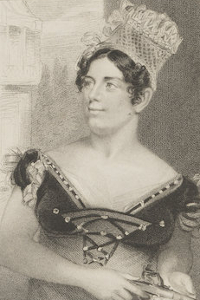
Julia Betterton Glover, Irish-born stage actress well known for her comic roles in the late 18th and 19th centuries, is born on January 8, 1779, in Newry, in what is now Northern Ireland.

“Betterton” is not her real name, despite her father`s promotion of the fiction. She is born Julianna Butterton, the daughter of the Newry`s theatre manager William Butterton. His venture fails and he decides there will be financial benefit to him if her name is changed to “Betterton,” claiming links to a famous actor and long dead Thomas Betterton. With this deception he and his family travel round the theatres and the young Julia is acclaimed as an infant acting prodigy in York, the West Country, Bath, and elsewhere.

In 1787, she joins the York Circuit under manager Tate Wilkinson and appears as the Page in Thomas Otway‘s The Orphan, as well as the Duke of York with George Frederick Cooke in Richard III. When Cooke is cast as Glumdalca, the Queen of the Giants, in Henry Fielding‘s burlesque play Tom Thumb, Cooke chooses Julia to play the title role.

In 1790, at age nine, she makes her debut in Scotland at the Dumfries Theatre Royal. In 1795 she goes to Bath and plays the parts of Juliet, Imogen, Desdemona, Lady Macbeth, and Lydia Languish. She becomes well known, particularly praised for her comic role as Languish, and news of her success reaches London. A number of job offers are made, but they are declined by her father. He eventually accepts a lucrative offer, taking her salary for himself, for which she makes her London début in 1797 as Percy by Hannah More.

In 1800, her father sells her in marriage to Samuel Glover, the son of an industrial family from Birmingham, for £1, 000, although the money is never paid. Unhappily married, she has eight children, four of whom survive childhood. In 1820, she plays Hamlet at the Lyceum Theatre to critical acclaim. In 1822, she appears as Nurse in Romeo and Juliet at the Theatre Royal, Drury Lane. Her daughter Phyllis plays Juliet. On February 8, 1837, her father, with whom she has had an unhappy relationship, dies.

One of her sons is Edmund Glover and another is William Howard Glover. In 1850, Glover announces her retirement from the stage. After two weeks confined to her bed, she appears at Drury Lane for her farewell benefit performance on July 12, 1850, as Mrs. Malaprop in The Rivals. She is noticeably ill and weak during her performance and is unable to stand to receive her applause at the end of the play. Instead, the curtain rises to reveal Glover seated, surrounded by the rest of the cast. She dies in London four days later on July 16, 1850. She is buried in St. George’s Churchyard Gardens in London.


Leave a comment

Dáil Éireann Approves the Anglo-Irish Treaty

second-all-ireland-dail

Dáil Éireann votes to approve the Anglo-Irish Treaty on January 7, 1922, following a debate through late December 1921 and into January 1922. The vote is 64 in favour, 57 against, with the Ceann Comhairle and three others not voting. The Sinn Féin party splits into opposing sides in the aftermath of the Treaty vote, which leads to the Irish Civil War from June 1922 until May 1923. The treaty is signed in London on December 6, 1921.

Two elections take place in Ireland in 1921, as a result of the Government of Ireland Act 1920 to establish the House of Commons of Northern Ireland and the House of Commons of Southern Ireland. The election is used by the Irish Republic as the basis of membership of the Second Dáil. The general election to the Northern Ireland House of Commons occurs on May 24, 1921. Of 52 seats, forty are won by unionists, six by moderate Irish nationalists, and six by Sinn Féin. No actual polling takes place in the Southern Ireland constituencies, as all 128 candidates are returned unopposed. Given the backdrop of the increasingly violent War of Independence, any candidates opposed to Sinn Féin, and their supporters can expect to be harassed by the Irish Republican Army (IRA). Supporters of the Irish Labour Party stand aside to allow the constitutional situation to run its course. Of these 128, 124 are won by Sinn Féin, and four by independent unionists representing the University of Dublin constituency. Only the Sinn Féin candidates recognise the Second Dáil and five of these have been elected in two constituencies, one in each part of Ireland, so the total number of members who assemble in the Second Dáil is 125.

During the Second Dáil, the government of the Irish Republic and the British government of David Lloyd George agree to hold peace negotiations. On September 14, 1921, the Dáil ratifies the appointment of Arthur Griffith, Michael Collins, Robert Barton, Eamonn Duggan, and George Gavan Duffy as envoys plenipotentiary for the peace conference in England. These envoys eventually sign the Anglo-Irish Treaty on December 6. After almost a month of acrimonious debate the treaty is formally ratified by Dáil Éireann on January 7, 1922.

To satisfy the requirements of the British constitution, the treaty also has to be ratified by the House of Commons of Southern Ireland. Thus, Irish nationalists end their boycott of the home rule parliament to attend the southern House of Commons as MPs. This they do alongside the four Unionist MPs who had refused to recognise the Dáil. In this way the treaty is ratified a second time in Dublin, this time unanimously as the anti-Treaty TDs refuse to attend.

Under the terms of the Anglo-Irish Treaty a provisional parliament, considered by nationalists to be the Third Dáil, is elected in the 1922 general election on June 16. Collins and Éamon de Valera agree a pact between the pro- and anti-Treaty wings of Sinn Féin, and this pact and the elections are endorsed by the Second Dáil. The new assembly is recognised both by nationalists and the British Government and so replaces both the Parliament of Southern Ireland and the Second Dáil with a single body. The anti-Treaty groups of IRA members, TDs, and their supporters are still bitterly opposed the settlement, despite the election result, and this leads to the Irish Civil War.

(Pictured: Second All-Ireland Dáil Éireann, elected in 1921)


Leave a comment

Birth of Irish Novelist Anna Maria Hall

anna-maria-hall

Anna Maria Hall (nee Fielding), Irish novelist who often publishes as “Mrs. S. C. Hall,” is born in Dublin on January 6, 1800. She lives with her mother, a widow named Sarah Elizabeth Fielding, and stepfather, George Carr of Graigie, Wexford, until 1815. She goes to England with her mother in 1815, and on September 20, 1824, marries Samuel Carter Hall. Her mother lives with her in London until she dies.

Hall’s first recorded contribution to literature is an Irish sketch called “Master Ben,” which appears in The Spirit and Manners of the Age, January 1829. Other tales follow. Eventually they are collected into a volume entitled Sketches of Irish Character (1829), and henceforth she becomes “an author by profession.” The following year she issues a little volume for children, Chronicles of a School-Room, consisting of a series of simple tales.

In 1831, she publishes a second series of Sketches of Irish Character fully equal to the first, which is well received. The first of her nine novels, The Buccaneer (1832), is a story of the time of The Protectorate, and Oliver Cromwell is among the characters. To The New Monthly Magazine, which her husband is editing, she contributes Lights and Shadows of Irish Life, articles which are republished in three volumes in 1838. The principal tale in this collection, “The Groves of Blarney,” is dramatised with considerable success by the author with the object of supplying a character for Tyrone Power and runs for a whole season at the Adelphi Theatre in 1838. Hall also writes “The French Refugee,” produced at the St. James’s Theatre in 1836, where it runs ninety nights, and for the same theatre Mabel’s Curse, in which John Pritt Harley sustains the leading part.

Another of her dramas, of which she has neglected to keep a copy, is Who’s Who? which is in the possession of Tyrone Power when he is lost in the President in April 1841. In 1840, she issues what has been called the best of her novels, Marian, or a Young Maid’s Fortunes, in which her knowledge of Irish character is again displayed in a style equal to anything written by Maria Edgeworth. Her next work is a series of “Stories of the Irish Peasantry,” contributed to Chambers’s Edinburgh Journal, and afterwards published in a collected form. In 1840 she aids her husband in a book chiefly composed by him, “Ireland, its Scenery, Characters, &c.” She edits the St. James’s Magazine from 1862 to 1863.

In the Art Journal, edited by her husband, she brings out Pilgrimages to English Shrines in 1849, and here the most beautiful of all her books, Midsummer Eve, a Fairy Tale of Love, first appears. One of her last works, Boons and Blessings (1875), dedicated to the Earl of Shaftesbury, is a collection of temperance tales, illustrated by the best artists.

Hall’s sketches of her native land bear a closer resemblance to the tales of Miss Mitford than to the Irish stories of John Banim or Gerald Griffin. They contain fine rural descriptions and are animated by a healthy tone of moral feeling and a vein of delicate humour. Her books are never popular in Ireland, as she sees in each party much to praise and much to blame, so that she fails to please either the Orange Order or the Roman Catholics.

On December 10, 1868, she is granted a civil list pension of £100 a year. She is instrumental in founding the Hospital for Consumption at Brompton, the Governesses’ Institute, the Home for Decayed Gentlewomen, and the Nightingale Fund. Her benevolence is of the most practical nature. She works for the temperance cause, for women’s rights, and for the friendless and fallen. She is a friend to street musicians, and a thorough believer in spiritualism, but this belief does not prevent her from remaining, as she ever was, a devout Christian. She dies at Devon Lodge, East Moulsey, January 30, 1881, and is buried in Addlestone churchyard on February 5.


Leave a comment

Birth of Lucien Bull, Pioneer in Chronophotography

lucien-bullLucien Bull, a pioneer in chronophotography, is born in Dublin on January 5, 1876. Chronophotography is defined as “a set of photographs of a moving object, taken for the purpose of recording and exhibiting successive phases of motion.”

Born in Dublin to British father, Cornelius Bull, and French mother, Gabrielle Joune, Bull lives his younger years in Dublin where he attends school and lives at home with his parents. In 1894, Bull moves to France to visit his aunts. After several months, Bull eventually settles in the area and becomes an assistant to Étienne-Jules Marey in 1895. At the time, Marey is working on the cinematographic, which is a camera that is shaped like a rifle and takes pictures of moving objects from a rotating plate. This eventually becomes known as the “gun camera.”

This camera is designed to investigate the study of motion. Basically, the “gun camera” is designed to take an object in motion and snap still shots. By taking these still shots, each movement made by the object is captured and then studied to analyze movement patterns that were unable to be studied before. The first successful film is taken in 1904 when Bull is able to film the flight of a fly at 1,200 frames per second.

As a result of Marey’s death in May 1904, Bull becomes head of the Marey Institute, which forms part of the Collège de France. While remaining with the Marey Institute, Bull is naturalized as a French citizen in 1931. After a few years, Bull eventually introduces a few papers on a wide variety of subjects ranging from spark illuminations, high-speed motion-picture photography, original studies of insect and bird flight, and electrocardiography and muscle and heart functions.

In 1933, Bull is put in charge of research, National Office of Research and Invention in France. In 1948 he becomes President of the Institute of Scientific Cinematography in Paris. His work is eventually listed by Dr. W. Hinsch in Research Film for December 1953.

Lucien Bull dies in Paris on August 25, 1972.


Leave a comment

Death of James Hogun, American Revolutionary War Officer

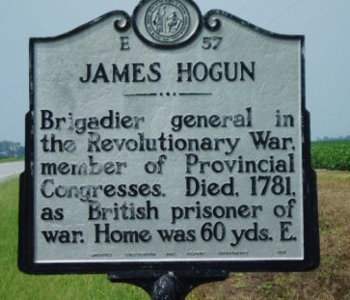
James Hogun, Irish American military officer who is as one of five generals from North Carolina to serve with the Continental Army during the American Revolutionary War, dies on January 4, 1781.

Born in Ireland around 1721, Hogun migrates to North Carolina, then a British colony, in 1751. Settling in Halifax County, he raises a family and establishes himself as a prominent local figure.

A member of the county’s Committee of Safety, he represents it at the North Carolina Provincial Congress and helps to draft the first Constitution of North Carolina. When North Carolina decides to raise three more regiments for George Washington’s Continental Army, James Hogun is appointed colonel of one of them, the 7th North Carolina. He participates in the battles of Brandywine and Germantown in 1777, where Hogun is cited for “distinguished intrepidity.” The Continental Congress promotes Hogun to brigadier general in 1779, although several congressmen and the North Carolina General Assembly wish to see Thomas Clark of North Carolina promoted instead.

In November 1779, Hogun is sent south in command of the North Carolina Brigade to the aid of General Benjamin Lincoln, who is facing an anticipated British assault at Charleston, South Carolina. The march south, through one of the worst winters ever, is a severe one and Hogun’s numbers are reduced by the time he reached Charleston on March 3, 1780. Before the end of the month, British General Henry Clinton’s men are besieging the city. The Americans, though outnumbered more than two to one, have a few successes but soon they are running low on food and ammunition.

At a council of war May 11, the decision is made to surrender. The surrender the following day is one of the worst American defeats of the war — more than 2,500 men become British prisoners. The British hastily build a prison on Haddrel’s Point, a peninsula in Charleston’s harbor, to hold the prisoners, but the site is incomplete, and conditions are harsh.

Generals McIntosh, Lincoln, and Scott, and other high-ranking officers accept parole from the British and depart. Generals William Moultrie and Hogun refuse, preferring to stay with their men. The British are trying to recruit colonial soldiers to serve them in the West Indies. In spite of his flagging health, Hogun fears some of his men might weaken if he departs.

As winter sets in, Hogun’s condition worsens. On January 4, 1781, he passes away and was buried near the prison. Like so many other Irish-born soldiers before and after him, James Hogun had given his last full measure of devotion to his adopted country.


2 Comments

Birth of Padraic Fallon, Poet & Playwright

padraic-fallon

Padraic Fallon, Irish poet and playwright, is born in Athenry, County Galway, on January 3, 1905.

Fallon’s upbringing and his early impressions of Athenry and the surrounding landscape are intimately described in his poetry. After passing the civil service exams in 1923 he moves to Dublin to work in the Customs House. In Dublin he becomes part of the circle of George William Russell (Æ) who encourages his literary ambitions and arranges for the publication of his early poetry. His early poetry, short stories, and literary criticism are published in The Dublin Magazine and The Bell.

He forms close friendships with Seumas O’Sullivan, editor of The Dublin Magazine, the poets Austin Clarke, Robert Farren, F.R. Higgins, and Patrick McDonagh and later the novelist James Plunkett. In 1939, Fallon leaves Dublin to serve as a Customs official in County Wexford, living in Prospect House, near Wexford Town with his wife, Dorothea (née Maher) and his six sons. During this time, he becomes a close friend of the painter Tony O’Malley.

Fallon is a regular contributor to Radio Éireann in the 1940s and 1950s, serving variously as a journalist, scriptwriter, and literary critic. A number of his short stories and early dramatic pieces are broadcast by the station during the 1940s. The first of Fallon’s verse plays for radio, Diarmuid and Gráinne, is broadcast by Radio Éireann in November 1950. This is followed by The Vision of Mac Conglinne (1953), Two Men with a Face (1953), The Poplar (1953), Steeple Jerkin (1954), A Man in the Window (1955), Outpost (1955), The Wooing of Étain (1955), Deirdre’s King (1956), The Five Stations (1957), The Hags of Clough (1957), The Third Bachelor (1958), At the Bridge Inn (1960), and Lighting up Time (1961).

Three plays adapted from Irish mythology, Diarmuid and Gráinne, The Vision of Mac Conglinne, and Deirdre’s King receive particular contemporary critical acclaim. The landscape, mythology, and history of Ireland, interwoven with classical themes and religious symbolism, are frequent themes in his poetry and dramatic works.

A number of his radio plays are later broadcast on the BBC Third Programme, and, in translation, in Germany, Holland, and Hungary. A stage play, The Seventh Step, is staged at The Globe Theatre in Dublin in 1954. A second stage play, Sweet Love ’till Morn, is staged in the Abbey Theatre in 1971. Fallon also writes dramatic pieces for television such as A Sword of Steel (1966) and The Fenians (1967), the latter produced by James Plunkett.

Fallon retires from the Civil Service in 1963, returning to Dublin before moving to Cornwall in 1967 to live with his son, the sculptor Conor Fallon and his daughter-in-law, the artist Nancy Wynne-Jones. He and his wife return to Ireland in 1971. He spends his last years in Kinsale. He is visiting his son Ivan Fallon in Kent at the time of his death on October 9, 1974.

While his poetry has previously appeared in The Dublin Magazine, The Bell, The Irish Times, and a number of anthologies, his first volume of collected poetry, Poems, incorporating a number of previously unpublished poems, is not produced until 1974, months before his death. Three volumes of his poetry, edited by his son, the journalist and critic Brian Fallon, are published after his death – Poems and Versions (1983), Collected Poems (1990), with an introduction by Seamus Heaney, and A Look in the Mirror and Other Poems (2003), with an introduction by Eavan Boland. In 2005, three of Fallon’s verse plays, The Vision of Mac Conglinne, The Poplar, and The Hags of Clough are published in a single volume. A selection of his prose writings and criticism edited by Brian Fallon, A Poet’s Journal, is published in the same year.


Leave a comment

First Edition of the “Irish Independent” Printed

irish-independent-first-issue

The first edition of the Irish Independent, flagship publication of Independent News & Media (INM) and Ireland’s largest-selling daily newspaper, is printed on January 2, 1905.

The Irish Independent is formed in 1905 as the direct successor to the Daily Irish Independent, an 1890s pro-Parnellite newspaper, and is launched by William Martin Murphy, a controversial Irish nationalist businessman, staunch anti-Parnellite and fellow townsman of Charles Stewart Parnell‘s most venomous opponent, Bantry’s Timothy Michael Healy.

During the Great Dublin Lockout of 1913, in which Murphy is the leading figure among the employers, the Irish Independent vigorously sides with its owner’s interests, publishing news reports and opinion pieces hostile to the strikers, expressing confidence in the unions’ defeat and launching personal attacks on the leader of the strikers, James Larkin. The Irish Independent describes the 1916 Easter Rising as “insane and criminal” and famously calls for the shooting of its leaders. In December 1919, during the Irish War of Independence, a group of twenty Irish Republican Army (IRA) men destroy the printing works of the paper, angered at its criticism of the IRA’s attacks on members of the Dublin Metropolitan Police and British government officials. In 1924, the traditional nationalist newspaper, the Freeman’s Journal, merges with the Irish Independent. Until October 1986 the paper’s masthead over the editorial contains the words “incorporating the Freeman’s Journal.”

For most of its history, the Irish Independent is seen as a nationalist, Catholic, anti-Communist, newspaper which gives its political allegiance to the Pro-Treaty party Cumann na nGaedheal and later its successor party, Fine Gael. During the Spanish Civil War, the Irish Independent‘s coverage is strongly pro-Franco, and the paper criticizes the De Valera government for not intervening on behalf of the Spanish Nationalists.

In the 1970s, the Irish Independent is taken over by former Heinz chairman Tony O’Reilly. Under his leadership, it becomes a more populist, market liberal newspaper — populist on social issues but economically right-wing. By the mid-nineties its allegiance to Fine Gael has ended. In the 1997 general election, it endorses Fianna Fáil under a front-page editorial entitled “It’s Payback Time.” While it suggests its headline refers to the fact that the election offers a chance to “pay back” politicians for their failings, its opponents suggest that the “payback” actually refers to its chance to get revenge for the refusal of the Rainbow Coalition to award the company a mobile phone licence.

In late 2004, Independent Newspapers moves from their traditional home in Middle Abbey Street to a new office, “Independent House” in Talbot Street, with the printing facilities already relocated to the Citywest business park near Tallaght.

On September 27, 2005, a fortnight after the paper publishes its centenary edition, it is announced that editor Vinnie Doyle will step down after 24 years in the position. He is replaced by Gerry O’Regan, who has until then been editor of the Irish Independent‘s sister paper, the Evening Herald. The newspaper’s previous editor Stephen Rae is also formerly editor of the Evening Herald and is appointed editor in September 2012. Fionnan Sheahan is appointed editor in January 2015.

In January 2008, at the same time as completing the purchase of Today FM, Ireland’s last national radio station independent of Denis O’Brien and state broadcaster RTÉ, O’Brien increases his INM shareholding to become the company’s second-largest shareholder behind Tony O’Reilly. In May 2008, O’Brien ousts O’Reilly and acquires a majority shareholding. Traditionally a broadsheet newspaper, it introduces an additional compact size in 2004 and in December 2012, following O’Brien’s takeover, it is announced that the newspaper will become compact only.

(Pictured: the first edition of the Irish Independent)