seamus dubhghaill

Promoting Irish Culture and History from Little Rock, Arkansas, USA


Leave a comment

Death of Irish Hunger Striker Raymond McCreesh

Raymond McCreeshvolunteer in the South Armagh Brigade of the Provisional Irish Republican Army (IRA), dies on hunger strike at 2:11 AM on May 21, 1981, in the H Blocks of Long Kesh Prison. McCreesh is one of ten Irish republicans who died on hunger strike in Long Kesh Prison.

Raymond Peter McCreesh, the seventh in a family of eight children, is born in St. Malachy’s Park, Camlough, on February 25, 1957. He is born into a strong Irish republican family and is active in the republican movement from the age of sixteen. He attends the local primary school in Camlough, St. Malachy’s, and later attends St. Colman’s College, Newry.

McCreesh first joins Fianna Éireann, the IRA’s youth wing, in 1973, and later that year he progresses to join the Provisional IRA South Armagh Brigade. He works for a short time as steelworker in a predominately Protestant factory in Lisburn. However, as sectarian threats and violence escalate, he switches professions to work as a milk roundsman in his local area of South Armagh, an occupation which greatly increases his knowledge of the surrounding countryside, as well as enables him to observe the movements of British Army patrols in the area.

On June 25, 1976, McCreesh and three other IRA volunteers attempt to ambush a British Army observation post in South Armagh. It lay opposite the Mountain House Inn, on the Newry–Newtonhamilton Road. As the armed, masked and uniformed IRA volunteers approached the observation post, they are spotted by British paratroopers on a hillside. The paratroopers open fire on the volunteers, who scatter. Two of them, McCreesh and Paddy Quinn, take cover in a nearby farmhouse. The paratroopers surround the house and fire a number of shots into the building. After some time, McCreesh and Quinn surrender and are taken to Bessbrook British Army base. Local Catholic priests facilitate their surrender. The third volunteer, Danny McGuinness, takes cover in a disused quarry outhouse but is captured the following day. The fourth member of the unit manages to escape despite being shot in the leg, arm and chest.

On March 2, 1977, McCreesh and Quinn are sentenced to fourteen years in prison for the attempted murder of British soldiers, possession of a rifle and ammunition, and an additional five years for IRA membership. The rifle that McCreesh has in his possession when captured is one of the rifles used in the Kingsmill massacre on January 5, 1976, when ten Protestant civilians are shot dead.

McCreesh is sent to the Maze Prison. He joins the blanket protest and takes part in the 1981 Irish hunger strike. He dies on 21 May, after 61 days on hunger strike.


Leave a comment

Prince Charles & Camilla Visit County Sligo

Charles, Prince of Wales, and his wife Camilla, Duchess of Cornwall, arrive at the Model Arts Centre in Sligo town on May 20, 2015, where the prince makes an address.

On arrival at the Model the couple delays for some time chatting to school children and local residents who line the street to greet them. The welcoming party also includes Minister for Foreign Affairs and Trade Charles Flanagan, and members of Sligo County Council including Sinn Féin’s Sean MacManus.

Charles speaks of his “deep anguish” following the killing of his “much loved grand uncle” Lord Louis Mountbatten by the Irish Republican Army (IRA) in Mullaghmore on August 27, 1979.

“At the time I could not imagine how we would come to terms with such anguish and such deep loss” he tells the gathering. “In August 1979, my much-loved great uncle, Lord Mountbatten, was killed alongside his young grandson and my godson, Nicholas, and his friend, Paul Maxwell, and Nicholas’s grandmother, the Dowager Lady Brabourne.”

“At the time I could not imagine how we would come to terms with the anguish of such a deep loss since, for me, Lord Mountbatten represented the grandfather I never had. So, it seemed as if the foundations of all that we held dear in life had been torn apart irreparably.”

But he stresses the tragedy helped him understand the widespread suffering.

“Through this dreadful experience, though, I now understand in a profound way the agonies borne by so many others in these islands, of whatever faith, denomination or political tradition. Despite the tragedy of August 1979, the memories that Lord Mountbatten’s family have of Classiebawn Castle and Mullaghmore, going right back to 1946, are of great happiness. I look forward to seeing, at last, the place that he and they so loved and to meeting its inhabitants. Many of them showed the most extraordinary outpouring of compassion and support to both Lord Mountbatten’s and Paul Maxwell’s families in the aftermath of the bombing. Their loving kindness has done much to aid the healing process.”

Charles says he is “only too deeply aware of the long history of suffering that Ireland has endured. A history that has caused much pain and much resentment in a world of imperfect human beings, where it’s always too easy to overgeneralise and attribute blame.” Referring to his mother’s speech at Dublin Castle he says, “with the benefit of historical hindsight we can all see things which we would wish had been done differently or not at all.”

Charles and Camilla then travel to Drumcliff church for a service of peace and reconciliation before proceeding to the village of Mullaghmore.


Leave a comment

Birth of John Sheahan, Musician & Composer

John Sheahan, musician and composer and the last surviving member of the definitive five-member line-up of The Dubliners, is born in Dublin on May 19, 1939. He joins The Dubliners in 1964 and plays with them until 2012 when The Dubliners’ name is retired following the death of founding member Barney McKenna.

Sheahan goes to school at the local Christian Brothers in Marino, Dublin, where he receives his first musical education, learning the tin whistle. When he is about twelve years old he begins to take an active interest in music and soon he transfers the musical knowledge gained on the whistle to a fiddle he finds lying around at home. Enthusiastically supported and encouraged by his parents, he attends the Municipal School of Music in Dublin where he studies classical violin for more than five years.

During this time he continues to maintain his interest in Irish traditional music, which sometimes leads him to improvise on the classics by putting in a few embellishments. His improvisions ultimately lead to the development of his unique style, gaining him a number of awards at various féiseanna. His interest in American bluegrass fiddle music must also have influenced his style, as can be heard in tunes like Flop Eared Mule, recorded with The Dubliners in 1968, 1969 and 1983.

Sheahan plays with a number of bands around the country until he meets The Dubliners in the early 1960s. At that time, the group is formed by Ronnie Drew, Barney McKenna, Ciarán Bourke and Luke Kelly. He joins the band in 1964, together with Bobby Lynch. Both musicians have been playing during the interval at concerts and usually stay on stage for the second half of the show. When Luke Kelly moves to England in 1964, Lynch is taken on as his temporary replacement. When Kelly returns in 1965, Lynch leaves the band and Sheahan stays. He is the only member of the Dubliners to have had a formal musical education.

After 50 years of playing and after the death of founding member Barney McKenna, in the fall of 2012 Sheahan announces the retirement of The Dubliners by the end of the 50th anniversary tour. The last formation of the band features Sheahan, Seán Cannon, Eamonn Campbell, Patsy Watchorn and Gerry O’Connor. He is a steady member of the band for 48 years and the high standards of his playing strongly contribute to forge the Dubliners’ sound.


Leave a comment

Death of Author & Journalist Standish James O’Grady

Standish James O’Grady, author, journalist, and historian, dies on May 18, 1928, at ShanklinIsle of WightHampshireEngland.

O’Grady is born on March 22, 1846, at Castletown, County Cork, the son of Reverend Thomas O’Grady, the scholarly Church of Ireland minister of Castletown Berehaven, County Cork, and Susanna Doe. After a rather severe education at Tipperary Grammar School, O’Grady follows his father to Trinity College, Dublin, where he wins several prize medals and distinguishes himself in several sports.

O’Grady proves too unconventional of mind to settle into a career in the church and earns much of his living by writing for the Irish newspapers. Reading Sylvester O’Halloran‘s General history of Ireland sparks an interest in early Irish history. After an initial lukewarm response to his writing on the legendary past in History of Ireland: Heroic Period (1878–81) and Early Bardic Literature of Ireland (1879), he realizes that the public wants romance, and so follows the example of James Macpherson in recasting Irish legends in literary form, producing historical novels including Finn and his Companions (1891), The Coming of Cuculain (1894), The Chain of Gold (1895), Ulrick the Ready (1896) and The Flight of the Eagle (1897), and The Departure of Dermot (1913).

O’Grady also studies Irish history of the Elizabethan period, presenting in his edition of Sir Thomas Stafford‘s Pacata Hibernia (1896) the view that the Irish people have made the Tudors into kings of Ireland in order to overthrow their unpopular landlords, the Irish chieftains. His The Story of Ireland (1894) is not well received, as it sheds too positive a light on the rule of Oliver Cromwell for the taste of many Irish readers. He is also active in social and political campaigns in connection with such issues as unemployment and taxation.

Until 1898, he works as a journalist for the Daily Express of Dublin, but in that year, finding Dublin journalism in decline, he moves to Kilkenny to become editor of the Kilkenny Moderator. It is here he becomes involved with Ellen Cuffe, Countess of Desart and Captain Otway Cuffe. He engages in the revival of the local woolen and woodworking industries. In 1900 he founds the All-Ireland Review and returns to Dublin to manage it until it ceases publication in 1908. O’Grady contributes to James Larkin‘s The Irish Worker paper.

O’Grady’s works are an influence on William Butler Yeats and George Russell and this leads to him being known as the “Father of the Celtic Revival.” Being as much proud of his family’s Unionism and Protestantism as of his Gaelic Irish ancestry, identities that are increasingly seen as antithetical in the late 1800s, he is described by Augusta, Lady Gregory as a “fenian unionist.”

Advised to move away from Ireland for the sake of his health, O’Grady passes his later years living with his eldest son, a clergyman in England, and dies on the Isle of Wight on May 18, 1928.

O’Grady’s eldest son, Hugh Art O’Grady, is for a time editor of the Cork Free Press before he enlists in World War I early in 1915. He becomes better known as Dr. Hugh O’Grady, later Professor of the Transvaal University College, Pretoria, who writes the biography of his father in 1929.


Leave a comment

Birth of Enya, Singer & Songwriter

Eithne Pádraigín Ní Bhraonáin, singer, songwriter, musician, and producer better known professionally as Enya, is born into a musical family in Dore, GweedoreCounty Donegal on May 17, 1961.

Enya’s father, Leo Brennan, is the leader of the Slieve Foy Band, an Irish showband, and runs Leo’s Tavern in Meenaleck. Her mother, Máire Brennan (née Duggan), who has Spanish roots, is an amateur musician who plays in Leo’s band and teaches music at Gweedore Community School. Her maternal grandfather, Aodh, is the founder of the Gweedore Theatre company.

Enya begins her music career when she joins her family’s Celtic band Clannad in 1980 on keyboards and backing vocals. She leaves in 1982 with their manager and producer Nicky Ryan to pursue a solo career, with Ryan’s wife Roma Ryan as her lyricist. Enya develops her distinct sound over the following four years with multi-tracked vocals and keyboards with elements of new age, Celtic, classical, church, and folk music. She sings in ten languages.

Enya’s first projects as a solo artist include soundtrack work for The Frog Prince (1984) and the 1987 BBC documentary series The Celts, which is released as her debut album, Enya (1987). She signs with Warner Music UK which grants her considerable artistic freedom and minimal interference from the label. The commercial and critical success of Watermark (1988) propels her to worldwide fame, helped by its international top 10 hit single Orinoco Flow. This is followed by the multi-million selling albums Shepherd Moons (1991), The Memory of Trees (1995), and A Day Without Rain (2000). Sales of the latter and its lead single, Only Time, surge in the United States following its use in the media coverage of the September 11 attacks. Following Amarantine (2005) and And Winter Came… (2008), Enya takes an extended break from music. She returns in 2012 and releases Dark Sky Island (2015).

Enya is known for her private lifestyle and has yet to undergo a concert tour. She is Ireland’s biggest selling solo artist and second overall behind U2, with a discography that has sold 26.5 million certified albums in the United States and an estimated 80 million albums worldwide, making her one of the best-selling music artists of all time. A Day Without Rain (2000) remains the best-selling new age album with an estimated 16 million copies sold worldwide.

Enya has won several awards throughout her career, including seven World Music Awards, four Grammy Awards for Best New Age Album, and an Ivor Novello Award. She is nominated for an Academy Award and a Golden Globe Award for May It Be, a song she writes for the film The Lord of the Rings: The Fellowship of the Ring (2001).


Leave a comment

Birth of Pierce Brosnan, Actor & Producer

Pierce Brendan Brosnan, actor, film producer, and activist, is born at Our Lady of Lourdes Hospital in DroghedaCounty Louth, on May 16, 1953.

Brosnan is the only child of Thomas Brosnan, a carpenter, and May (née Smith, born circa 1934). He lives in NavanCounty Meath for twelve years and considers it his hometown. He goes to Primary School in St. Annes Primary School, Navan. Brosnan’s father abandons the family when he is an infant. When he is four years old, his mother moves to London to work as a nurse. From that point on, he is largely raised by his grandparents, Philip and Kathleen Smith. After their deaths, he lives with an aunt and then an uncle, but is subsequently sent to live in a boarding house. He is educated at Elliott School, now known as Ark Putney Academy, a coeducational secondary school with academy status in southwest London.

Brosnan, after leaving comprehensive school at age sixteen, begins training in commercial illustration. He then goes on to train at Drama Centre London for three years. Following a stage acting career he rises to popularity in the television series Remington Steele (1982–87), which blends the genres of romantic comedy, drama, and detective procedural. After the conclusion of Remington Steele, Brosnan appears in films such as the Cold War spy film The Fourth Protocol (1987) and the comedy Mrs. Doubtfire (1993).

In 1994, Brosnan becomes the fifth actor to portray secret agent James Bond in the Eon Productions film series, starring in four films, GoldenEyeTomorrow Never DiesThe World Is Not Enough and Die Another Day, from 1995 to 2002. He lends his likeness for Bond in the video games James Bond 007: Nightfire and James Bond 007: Everything or Nothing, providing his voice for the latter. During this period, he also takes the lead in other films including the epic disaster adventure film Dante’s Peak (1997) and the remake of the heist film The Thomas Crown Affair (1999). Since leaving the role of Bond, he has starred in such films as the musical/romantic comedy Mamma Mia! (2008), the Roman Polanski-directed political thriller The Ghost Writer (2010) and the action spy thriller The November Man (2014).

In 1996, along with Beau St. Clair, Brosnan forms Irish DreamTime, a Los Angeles-based production company. In later years, he has become known for his charitable work and environmental activism. He is married to Australian actress Cassandra Harris from 1980 until her death in 1991. He marries American journalist and author Keely Shaye Smith in 2001, and becomes an American citizen in 2004, holding dual citizenship in the United States and Ireland. He has earned two Golden Globe Award nominations, first for the television miniseries Nancy Astor (1982) and next for the dark comedy film The Matador (2005).


Leave a comment

The Ballyturin House Ambush

In what is known as the Ballyturin House Ambush, an Irish Republican Army (IRA) unit in County Galway ambushes a motor car as it leaves Ballyturin House near Gort on May 15, 1921.

The IRA gets into position at about 1:00 PM. They see Royal Irish Constabulary (RIC) District Inspector Cecil Blake arrive, as they have positively identified him through prior reconnaissance. They take over the gatehouse, and make any passersby prisoner in it, seventeen in all, until Blake’s car is seen about 8:30 PM. Passengers in the car with Blake include his wife Eliza, Captain Cornwallis of the 17 Lancers, Lieutenant McCreery of the 17 Lancers, and the daughter-in-law of Lady Gregory of Coole Park.

The car drives down the long drive to the gate. When they get there, one of the gates is closed, unbeknown to them a ploy by the IRA ambushers to force the car to stop. The car stops and Captain Cornwallis gets out to open the gate. It is at this point that they are ambushed by a group of twenty IRA men.

One of the IRA men in the bushes to the right shouts, “Hands up.” Cornwallis dashes outside the gate to protect himself from the men in the bushes, and fires a couple of revolver shots at the group. He is completely protected from them by the wall, but completely exposed to the men in the gatehouse and is shot and killed.

Mrs. Gregory gets out of the car on the side facing the IRA ambushers, which is believed to have saved her life, as they leave her alone. She works her way around to the back of the car and is led back towards the house by some of the IRA men after the firing stops.

Blake, Mrs. Blake, and Lt. McCreery are apparently killed without firing a shot. The IRA men then move in and remove the guns of their victims.

John and Anna Bagot, who are the owners of Ballyturin House, run down the long drive to the gate when they hear the shooting. Mrs. Gregory was handed over to Miss Molly Bagot. She tells the inquiry that she does not recognise any of the men. John Bagot is held at gunpoint and handed a note which apparently reads, “Volunteer HQ. Sir, if there is any reprisals after this ambush, your house will be set on fire as a return. By Order IRA.”

John Bagot dies on the April 27, 1935. His wife, Anna, lives until January 17, 1963. She dies in London at the age of 96 and is buried at Gresford Church near WrexhamNorth Wales. Ballyturin House is abandoned and falls into a total ruin.

The ambush is believed to be in retaliation for an incident in which soldiers or police had tortured three local men for information by forcing them to dig their own graves and then threatening to bury them alive. It is also rumoured in the vicinity, although unsubstantiated, that Lady Gregory conspires with the IRA in planning the ambush which is why her daughter-in-law survives.

(Pictured: Death on a Summer’s evening: The deadly ambush at Ballyturin House on May 15 1921. London Illustrated News May 28 1921)


Leave a comment

Birth of Fighter Pilot George Edward Henry McElroy

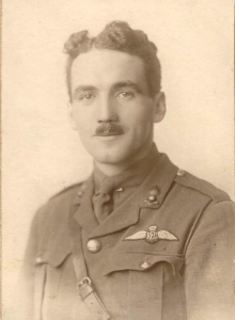
Captain George Edward Henry McElroy, a leading Irish-born fighter pilot of the Royal Flying Corps and Royal Air Force during World War I, is born at DonnybrookCounty Dublin, on May 14, 1893. He is credited with 47 aerial victories.

McElroy enlists promptly at the start of World War I in August 1914 and is shipped out to France two months later. He is serving as a corporal in the Motor Cyclist Section of the Royal Engineers when he is first commissioned as a second lieutenant on May 9, 1915. While serving in the Royal Irish Regiment he is severely affected by mustard gas and is sent home to recuperate. He is in Dublin in April 1916, during the Easter Rising, and is ordered to help quell the insurrection. McElroy refuses to fire upon his fellow Irishmen and is transferred to a southerly garrison away from home.

On June 1, 1916, McElroy relinquishes his commission in the Royal Irish Regiment when awarded a cadetship at the Royal Military Academy, Woolwich, from which he graduates on February 28, 1917, and is commissioned as a second lieutenant in the Royal Garrison Artillery.

McElroy is promptly seconded to the Royal Flying Corps, being trained as a pilot at the Central Flying School at Upavon, and is appointed a flying officer on June 28. On July 27 his commission is backdated to February 9, 1916, and he is promoted to lieutenant on August 9. On August 15 he joins No. 40 Squadron RFC, where he benefits from mentoring by Edward “Mick” Mannock. He originally flies a Nieuport 17, but with no success in battle. By the year’s end McElroy is flying Royal Aircraft Factory S.E.5s and claims his first victory on December 28.

An extremely aggressive dogfighter who ignores often overwhelming odds, McElroy’s score soon grows rapidly. He shoots down two German aircraft in January 1918, and by February 18 has run his string up to eleven. At that point, he is appointed a flight commander with the temporary rank of captain and transferred to No. 24 Squadron RFC. He continues to steadily accrue victories by ones and twos. By March 26, when he is awarded the Military Cross, he is up to 18 “kills.” On April 1, the Army’s Royal Flying Corps (RFC) and the Royal Naval Air Service (RNAS) are merged to form the Royal Air Force, and his squadron becomes No. 24 Squadron RAF. McElroy is injured in a landing accident on April 7 when he brushes a treetop while landing. By then he has run his score to 27. While he is sidelined with his injury, on April 22, he is awarded a bar to his Military Cross. Following his convalescence, McElroy returns to No. 40 Squadron in June, scoring three times, on the 26th, 28th, and 30th. The latter two triumphs are observation balloons. That runs his tally to thirty.

In July, he adds to his score almost daily, a third balloon busting on the 1st, followed by one of the most triumphant months in the history of fighter aviation, adding 17 victims during the month. His run of success is threatened on the 20th by a vibrating engine that entails breaking off an attack on a German two-seater and a rough emergency landing that leaves him with scratches and bruises. There is a farewell luncheon that day for his friend Gwilym Hugh “Noisy” Lewis. Their mutual friend Edward “Mick” Mannock pulls McElroy aside to warn him about the hazards of following a German victim down within range of ground fire.

On July 26, Mannock is killed by ground fire. Ironically, on that same day, “McIrish” McElroy receives the second Bar to his Military Cross. He is one of only ten airmen to receive the second Bar.

McElroy’s continues apparent disregard for his own safety when flying and fighting can have only one end. On July 31, 1918, he reports destroying a Hannoversche Waggonfabrik C for his 47th victory. He then sets out again. He fails to return from this flight and is posted missing. Later it is learned that McElroy has been killed by ground fire. He is 25 years old. McElroy is interred in Plot I.C.1 at the Laventie Military Cemetery in La Gorgue, northern France.

McElroy receives the Distinguished Flying Cross posthumously on August 3, citing his shooting down 35 aeroplanes and three observation balloons. The Bar arrives still later, on September 21, and lauds his low-level attacks. In summary, he shoots down four enemy aircraft in flames and destroys 23 others, one of which he shares with other pilots. He drives down 16 enemy aircraft “out of control” and out of the fight. He also destroys three balloons.


5 Comments

Death of Irish American Mobster Mickey Spillane

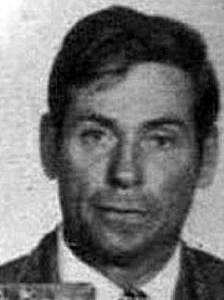
Michael J. Spillane, Irish American mobster much better known as Mickey Spillane from Hell’s KitchenNew York City, is killed outside his apartment in Queens on May 13, 1977. Spillane, who is called the “last of the gentleman gangsters,” is a marked contrast to the violent Westies mob members who succeed him in Hell’s Kitchen.

As a young boy in Hell’s Kitchen, Spillane starts as a numbers runner for various organized crime figures in his neighborhood. In 1960, he takes over the rackets left to him by his predecessor Hughie Mulligan. He marries Maureen McManus, the daughter of the Democratic district leader Eugene McManus.

Though Italian mobsters dominate organized crime in the city, the Italian mob stays out of Hell’s Kitchen while Spillane is the boss. Often, Spillane kidnaps members of the Italian Mafia and holds them for ransom to raise money for his operations. Although he runs the rackets such as gambling and loansharking, he never allows the sale of drugs.

It is Spillane’s refusal to allow the Italian mobsters to participate in the Hell’s Kitchen rackets that leads to his downfall. The Jacob K. Javits Convention Center is being built on Spillane’s westside at the time. The amount of money the new convention center, Madison Square Garden, the waterfront and the unions are generating for Spillane is enormous, and the Italians are desperate for a piece of the action. Spillane refuses to allow the Italian mob to participate, and the New York Irish-Italian Mob War begins.

In the 1970s the Irish mob sees an increased threat from the Italian Mafia as the Genovese crime family seeks control over the soon to be built Jacob K. Javits Convention Center. Since the convention center is located in Spillane’s Hell’s Kitchen neighborhood, Spillane refuses to allow any involvement by the Italians. Although the Italian gangsters greatly outnumber the members of the Irish mob, Spillane is successful in keeping control of the convention center and Hell’s Kitchen. The Italians, frustrated and embarrassed by their defeat to Spillane and the Irish gangsters, respond by hiring a rogue Irish American hitman named Joseph “Mad Dog” Sullivan to assassinate Tom DevaneyEddie “the Butcher” Cummiskey, and Tom “the Greek” Kapatos, three of Spillane’s chief lieutenants. By the mid-1970s, Spillane has moved his family out of Hell’s Kitchen to Woodside, Queens, because of threats of violence against his children.

In 1966, a young upstart named Jimmy Coonan attempts to take the neighborhood from Spillane, muscling in on his territory and murdering a Spillane underling. Ultimately, Coonan is sent to prison in 1967. When he is released from prison, Coonan seeks to align himself with the Gambino crime family through an up-and-coming mobster from Brooklyn, named Roy DeMeo. This marks the beginning of the end for the Irish mob, as Coonan eventually goes to work for the Gambinos.

On May 13, 1977, Spillane is killed outside his apartment in Queens. It has long been rumored that DeMeo murdered Spillane as a favor to Coonan, who subsequently takes over as the boss of the Hell’s Kitchen Irish Mob. Spillane is buried in Calvary Cemetery in Queens, New York.


Leave a comment

First Lady Hillary Clinton Receives Freedom of Galway

First Lady of the United States Hillary Rodham Clinton becomes the first woman to be granted the Freedom of Galway city on May 12, 1999, following in the footsteps of her country’s former presidents, John F. Kennedy and Ronald Reagan. Clinton also receives an honorary doctorate of laws.

“A great natural resource, a fine legal mind, an inspiration to aspiring women, a model of the loving yet autonomous wife, a consistent champion of children and a good soul,” is how the president of National University of Ireland Galway, Dr. Patrick Fottrell, summarises her contribution, quoting from the American writer Letty Cottin Pogrebin.

Dr. Fottrell pays tribute to her work as a lawyer, academic and public servant, and says she has championed the rights of women and children, while also showing a strong commitment to Northern Ireland.

In her speech, delivered to mark the university’s 150th anniversary, Clinton speaks about the continuing quest for peace.

Clinton flies into Shannon Airport early in the morning for her two-day Irish visit. Security is tight, but discreet.

About 100 protesters at the main entrance to NUI Galway miss Clinton’s arrival at the campus, and move to Eyre Square by the time she leaves for Belfast.

However, using megaphones, members of the NO to War campaign, the Socialist Party, several students and representatives of the arts community manage to drown out the Army Band of the 4th Western Brigade as the robed university procession proceeds to the conferring ceremony at Aras na Mac Leinn, performed to 1,000 invited guests.

The protesters, including the film-maker Lelia Doolan, writer Dervla Murphy, poet Rita Ann Higgins, Carol Fox of the Campaign for Nuclear Disarmament, and Micheline Sheehy-Skeffington of NUI Galway, circulate a petition calling on the Government to honour Fianna Fáil‘s election commitment to hold a referendum on membership of Partnership for Peace (PfP).

(From The Irish Times, May 13, 1999)