seamus dubhghaill

Promoting Irish Culture and History from Little Rock, Arkansas, USA


Leave a comment

Birth of Sophie Mary Peirce-Evans, Irish Aviator

lady-heath

Sophie Mary Peirce-Evans, Lady Heath, Irish aviator, is born on November 10, 1896, in Knockaderry, County Limerick, near the town of Newcastle West. She is one of the best-known women in the world for a five-year period from the mid-1920s.

When Peirce-Evans is one year old, her father, John Peirce-Evans, bludgeons her mother, Kate Theresa Dooling, to death with a heavy stick. He is found guilty of murder and declared insane. She is taken to the home of her grandfather in Newcastle West where she is brought up by two maiden aunts, who discourage her passion for sports.

After schooldays in Rochelle School in Cork, Princess Garden Belfast and St. Margaret’s Hall on Mespil Road in Dublin, where she plays hockey and tennis, Peirce-Evans enrolls in the Royal College of Science for Ireland. The college is designed to produce the educated farmers which the country then needs. One of the few women in the college, she duly takes a top-class degree in science, specialising in agriculture. She also plays with the college hockey team and contributes to a student magazine, copies of which are held in the National Library of Ireland.

Before becoming a pilot, Peirce-Evans has already made her mark. She spends two years as a dispatch rider during World War I, based in England and later France. By that time, she has married the first of her three husbands, Major William Elliot Lynn, and, as Sophie Mary Eliott-Lynn, is one of the founders of the Women’s Amateur Athletic Association after her move to London in 1922. She is Britain’s first women’s javelin champion and sets a disputed world record for the high jump. Alleging cruelty, her marriage to Elliot Lynn ends in divorce.

In 1925, Elliot-Lynn takes her first flying lessons and two years later becomes the first woman to hold a commercial flying licence in Britain. Along the way, she set records for altitude in a small plane and later a Shorts seaplane and is the first woman to parachute from an aeroplane.

In an era when the world has gone aviation-mad due to the exploits of Charles Lindbergh and Amelia Earhart, Elliot-Lynn is more than able to hold her own. “Britain’s Lady Lindy,” as she is known in the United States, makes front-page news as the first pilot, male or female, to fly a small open-cockpit aircraft from Cape Town to London. A scale model of the plane is on display at The Little Museum of Dublin. She writes about the experience later in the book Woman and Flying, which she co-authors with Stella Wolfe Murray. After her great flight from the Cape, she takes a mechanic’s qualification in the United States, the first woman to do so.

On October 11, 1927, Peirce-Evans marries Sir James Heath at Christ Church in Mayfair, London, and assumes the title Lady Heath. In July 1928, she spends a few weeks volunteering as a co-pilot with a civil airline, KLM. She is hoping to be appointed to the newly created Batavia route, which would make her the first female pilot with a commercial airline. The world is not ready for female pilots and her hope is not fulfilled.

In 1929, just when her fame is at its height, with her life a constant whirl of lectures, races and long-distance flights, Lady Heath is badly injured in a crash just before the National Air Races in Cleveland, Ohio. Before the accident Lady Heath applies for American citizenship, intending to remain in the United States where she has made a good living on the lecture circuit and as an agent for Cirrus engines. She is never the same after her accident.

Lady Heath divorces Sir James Heath in Reno, Nevada in January 1930. On 12 November 12, 1931, in Lexington, Kentucky, she marries G.A.R Williams, a horseman and pilot of Caribbean origin. They return to Ireland, and she becomes involved in private aviation, briefly running her own company at Kildonan, near Dublin in the mid-1930s, and helping produce the generation of pilots that would help establish the national airline Aer Lingus.

Lady Heath dies in St Leonard’s Hospital, Shoreditch, London on May 9, 1939, following a fall inside a double-decker tram. Although alcoholism had been a problem in previous years, a pathologist finds no evidence of alcohol but detailed evidence of an old blood clot which might have caused the fall. On May 15, 1939, according to newspaper reports, her ashes are scattered over Surrey from an aircraft flown by her estranged husband although legend has it that her ashes are returned to Ireland where they are scattered over her native Newcastle West.

Leave a comment

Birth of Hugh Leonard, Dramatist, Writer & Essayist

hugh-leonard

Hugh Leonard, Irish dramatist, television writer and essayist, is born in Dublin on November 9, 1926. In a career that spans 50 years, he writes nearly 30 full-length plays, 10 one-act plays, three volumes of essays, two autobiographies, three novels and numerous screenplays and teleplays, as well as writing a regular newspaper column.

After birth, Leonard is put up for adoption. Raised in Dalkey, a suburb of Dublin, by Nicholas and Margaret Keyes, he changes his name to John Keyes Byrne. For the rest of his life, despite the pen name of “Hugh Leonard” which he later adopts and becomes well known by, he invites close friends to call him “Jack.”

Leonard is educated at the Harold Boys’ National School, Dalkey, and Presentation College, Glasthule, winning a scholarship to the latter. He works as a civil servant for fourteen years. During that time, he both acts in and writes plays for community theatre groups. His first play to be professionally produced is The Big Birthday, which is mounted by the Abbey Theatre in Dublin in 1956. His career with the Abbey Theatre continues until 1994. After that his plays are produced regularly by Dublin’s theatres.

Leonard moves to Manchester for a while, working for Granada Television before returning to Ireland in 1970. There he settles in Dalkey.

During the 1960s and 1970s, Leonard is the first major Irish writer to establish a reputation in television, writing extensively for television including original plays, comedies, thrillers and adaptations of classic novels for British television. He is commissioned by RTÉ to write Insurrection, a 50th anniversary dramatic reconstruction of the Easter Rising of 1916. His Silent Song, adapted for the BBC from a short story by Frank O’Connor, wins the Prix Italia in 1967. He writes the script for the RTÉ adaptation of Strumpet City by James Plunkett.

Three of Leonard’s plays have been presented on Broadway: The Au Pair Man (1973), which stars Charles Durning and Julie Harris, Da (1978) and A Life (1980). Of these, Da, which originates off-off-Broadway at the Hudson Guild theatre before transferring to the Morosco Theatre, is the most successful, running for 20 months and 697 performances, then touring the United States for ten months. It earns Leonard both a Tony Award and a Drama Desk Award for Best Play. It is made into a film in 1988, starring Martin Sheen and Barnard Hughes, who reprises his Tony Award-winning Broadway performance.

Leonard writes two volumes of autobiography, Home Before Night (1979) and Out After Dark (1989). Some of his essays and journalism are collected in Leonard’s Last Book (1978) and A Peculiar People and Other Foibles (1979). In 1992 the Selected Plays of Hugh Leonard is published. Until 2006 he writes a humorous weekly column, “The Curmudgeon,” for the Irish Sunday Independent newspaper. He has a passion for cats and restaurants, and an abhorrence of broadcaster Gay Byrne.

Even after retiring as a Sunday Independent columnist, Leonard displays an acerbic humour. In an interview with Brendan O’Connor, he is asked if it galls him that Gay Byrne is now writing his old column. His reply is, “It would gall me more if he was any good at it.” He is a patron of the Dublin Theatre Festival.

In 1994, Leonard appears in a televised interview with Gerry Adams, president of Sinn Féin, an Irish political party associated with the Provisional Irish Republican Army. He has long been an opponent of political violence and a critic of the IRA. However, on the show and afterwards he is criticised for being “sanctimonious and theatrical” towards Adams. At one point he refers to Sinn Féin as “dogs.”

Hugh Leonard – Odd Man In, a film on his life and work is shown on RTÉ in March 2009. Leonard’s final play, Magicality, is not performed during his lifetime. A rehearsed reading of the second act is staged at the Dalkey Castle and Heritage Centre in June 2012.

Hugh Leonard dies after a long illness on February 12, 2009, in his hometown of Dalkey at the age of 82, leaving €1.5 million in his will.


Leave a comment

Birth of Sir Arnold Bax, Composer, Poet & Author

arnold-bax

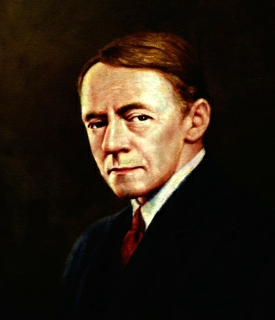
Sir Arnold Edward Trevor Bax, English composer, poet, and author, is born to a prosperous family in the London suburb of Streatham on November 8, 1883. His prolific output includes songs, choral music, chamber pieces, and solo piano works, but he is best known for his orchestral music. In addition to a series of symphonic poems he writes seven symphonies and is for a time widely regarded as the leading British symphonist.

Bax is encouraged by his parents to pursue a career in music, and his private income enables him to follow his own path as a composer without regard for fashion or orthodoxy. Consequently, he comes to be regarded in musical circles as an important but isolated figure.

After a preparatory school in Balham, Bax attends the Hampstead Conservatoire during the 1890s. In 1900 he moves on to the Royal Academy of Music, where he remains until 1905, studying composition with Frederick Corder and piano with Tobias Matthay.

While still a student at the Royal Academy of Music, Bax becomes fascinated with Ireland and Celtic culture, which become a strong influence on his early development. In the years before World War I he lives in Ireland and becomes a member of Dublin literary circles, writing fiction and verse under the pseudonym Dermot O’Byrne. Later, he develops an affinity with Nordic culture, which for a time supersedes his Celtic influences in the years after World War I.

Between 1910 and 1920 Bax writes a large amount of music, including the symphonic poem Tintagel, his best-known work. During this period he forms a lifelong association with the pianist Harriet Cohen – at first an affair, then a friendship, and always a close professional relationship. In the 1920s he begins the series of seven symphonies which form the heart of his orchestral output.

In 1942 Bax is appointed Master of the King’s Music, but composes little in that capacity. In his last years he maintains a contented retirement for much of the time but finds his music regarded as old-fashioned, and after his death it is generally neglected.

Celebrations are planned by the Hallé Orchestra and others to celebrate Bax’s seventieth birthday in November 1953. However, the celebrations become memorials as while visiting Cork in October 1953 he dies suddenly of heart failure. He is interred in St. Finbarr’s Cemetery, Cork.

From the 1960s onwards, mainly through a growing number of commercial recordings, his music is gradually rediscovered, although little of it is heard with any frequency in the concert hall. In more recent years, his music has been rediscovered enthusiastically by a new generation via online distribution services such as YouTube.

(Picture credit to Alan Patient of http://www.plaquesoflondon.co.uk)


Leave a comment

Opening of the Custom House in Dublin

custom-house

The Custom House (Irish: Teach an Chustaim), a neoclassical 18th century building in Dublin which houses the Department of Housing, Planning and Local Government, opens on November 7, 1791. It is located on the north bank of the River Liffey, on Custom House Quay between Butt Bridge and Talbot Memorial Bridge.

A previous Custom House had been built in 1707 by engineer Thomas Burgh. However, by the late 18th century it is deemed unfit for purpose.

The building of a new Custom House for Dublin is the idea of John Beresford, who becomes first commissioner of revenue for Ireland in 1780. In 1781 he appoints James Gandon as architect, after Thomas Cooley, the original architect on the project, dies. This is Gandon’s first large scale commission. The new Custom House is unpopular with the Dublin Corporation and some city merchants who complain that it moves the axis of the city, would leave little room for shipping, and is being built on what at the time is a swamp. Purchase of land is delayed and proves exorbitant, and the laying of foundations is disrupted by the High Sheriff and members of the Dublin Corporation with a mob of several thousand. However, Beresford is determined to complete the project and ignores the protests.

Construction begins in 1781, and for his assistants Gandon chooses Irish artists such as Meath stone-cutter Henry Darley, mason John Semple, and carpenter Hugh Henry. Every available mason in Dublin is engaged in the work. When it is completed and opens for business on November 7, 1791, it has cost £200,000 to build – a considerable sum at the time. The four facades of the building are decorated with coats-of-arms and ornamental sculptures by Edward Smyth representing Ireland’s rivers. Another artist, Henry Banks, is responsible for the statue on the dome and other statues.

As the port of Dublin moves further downriver, the building’s original use for collecting custom duties becomes obsolete, and it is used as the headquarters of local government in Ireland. During the Irish War of Independence in 1921, the Irish Republican Army (IRA) burns down the Custom House in an attempt to disrupt British rule in Ireland. Gandon’s original interior is completely destroyed in the fire and the central dome collapses. A large quantity of irreplaceable historical records is also destroyed in the fire. Despite achieving its objectives, the attack on the Custom House is a setback for the IRA as a large number of Volunteers are captured either during the attack or when falling back.

After the Anglo-Irish Treaty, it is restored by the Irish Free State government. The results of this reconstruction can still be seen on the building’s exterior today. The dome is rebuilt using Irish Ardbraccan limestone which is noticeably darker than the Portland stone used in the original construction. This is done as an attempt to promote Irish resources.

Further restoration and cleaning of the stonework is done by an Office of Public Works team in the 1980s.


Leave a comment

Birth of Siobhán McCarthy, Television & Stage Actress

siobhan-mccarthy

Siobhán Mary Ann McCarthy, television and stage actress, is born in Dublin on November 6, 1957. She is perhaps best known for her role as Roisin Connor in ITV1‘s prison drama Bad Girls. Her television credits include Lovejoy, The Big Battalions and Holby City.

McCarthy originates the roles of the Mistress in Evita in 1978 in London‘s West End, before later returning to the show to play the title role. In between, she joins the vocal harmony group Wall Street Crash (1980 – 1983) where she performs several times at London’s Talk of the Town, at the Casino in Monte Carlo, and in two episodes of Royal Variety Performance (1980 and 1982). She is also the first to play Donna Sheridan in Mamma Mia! in 1999, for which she is nominated for a Laurence Olivier Award for Best Actress in a Musical.

McCarthy’s other roles include leads as Mrs. Johnstone in Blood Brothers, Svetlana in the original London production of Chess, Fantine in Les Misérables, Mary Magdalene in Jesus Christ Superstar and Deborah Warner’s Medea.

More recently McCarthy plays the roles of Velma von Tussle in the London production of Hairspray (February 2010 – March 2010) and Joanne in the Southwark Playhouse revival of Stephen Sondheim‘s Company.

McCarthy is married to theatrical sound designer Andrew Bruce and resides in London with her husband and two children, Kieran and Juliet.


Leave a comment

Death of Eamonn Andrews, Radio & Television Presenter

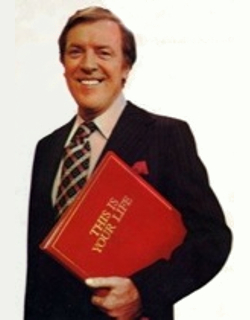
eamonn-andrewsEamonn Andrews, Irish radio and television presenter employed primarily in the United Kingdom from the 1950s to the 1980s, dies in London, England on November 5, 1987. From 1960 to 1964 he chairs the Radio Éireann Authority, which oversees the introduction of a state television service to the Republic of Ireland.

Andrews is born in Synge Street, Dublin, and educated at Synge Street CBS. He begins his career as a clerk in an insurance office. He is a keen amateur boxer and wins the Irish junior middleweight title in 1944.

In 1946 Andrews becomes a full-time freelance sports commentator, working for Radio Éireann, Ireland’s state broadcaster. In 1950, he begins presenting programmes for the BBC, being particularly well known for boxing commentaries, and soon becomes one of television’s most popular presenters. The following year, the game show What’s My Line? begins and Andrews is the host.

Throughout the 1950s, Andrews commentates on the major British heavyweight fights on the BBC Light Programme, with inter-round summaries by W. Barrington Dalby. On January 20 , 1956, he reaches No. 18 in the UK Singles Chart with a “spoken narrative” recording named “The Shifting Whispering Sands (Parts 1 & 2),” which is produced by George Martin with musical backing by the Ron Goodwin Orchestra, released by Parlophone as catalogue number R 4106, a double-sided 78rpm record. The song later reappears on Kenny Everett‘s compilation album The World’s Worst Record Show, which is released in June 1978.

Between 1955 and 1964, Andrews presents the long-running Sports Report on BBC’s Light Programme. In 1965, he leaves the BBC to join the ITV contractor ABC, where he pioneers the talk show format in the UK. He hosts a chat show on ITV, The Eamonn Andrews Show, for five years. He is known for coming up with off-the-cuff linkings that do not work, such as: “Speaking of cheese sandwiches, have you come far?” This is parodied by the character Seamus Android on Round the Horne in the 1960s, performed by Bill Pertwee. In the 1960s and 1970s he presents Thames Television‘s Today news magazine programme.

Andrews is probably best known as the presenter of the UK version of This Is Your Life, between its inception in 1955 and his death in 1987, when he is succeeded by Michael Aspel, who had also succeeded Andrews as the host of Crackerjack! more than twenty years earlier. Andrews is the first This Is Your Life subject on British television when he is surprised by the show’s creator, Ralph Edwards. He also creates a long-running panel game called Whose Baby? that originally runs on the BBC and later on ITV. He is a regular presenter of the early Miss World pageants.

Andrews’ chairs the Radio Éireann Authority between 1960 and 1964, overseeing the introduction of state television to the Republic of Ireland and establishing the broadcaster as an independent semi-state body. About this time, he also acquires a number of business interests in Ireland, including recording studios and a dance hall. He steps down from the RTE Authority amidst a bitter political storm started by the Catholic Church hierarchy over what is seen as the controversial content of The Late Late Show. Before leaving RTÉ, he defends the show as “freedom of expression.”

After months of illness during 1987, originally caused by a virus contracted during a plane journey but which is not recognised at the time, Andrews dies from heart failure on November 5, 1987 at the Cromwell Hospital in London. A funeral service is held at St. Anne’s Church in Portmarnock, where he had his home, and his body is buried in Balgriffin Cemetery to the north of Dublin. A memorial mass is held for him in Westminster Cathedral.

Andrews had recorded his last edition of This Is Your Life six days previously on October 30, 1987. After his death, the show, and two others that had yet to be broadcast, are postponed until, with his widow’s permission, they are broadcast in January 1988.


Leave a comment

Birth of Novelist Rosina Bulwer Lytton

rosina-bulwer-lytton

Novelist Rosina Bulwer Lytton (née Rosina Doyle Wheeler) is born in Ballywhire, County Limerick on November 4, 1802. She writes and publishes fourteen novels, a volume of essays and a volume of letters. Her husband is Edward Bulwer-Lytton, a novelist and politician. She spells her married surname without the hyphen used by her husband.

Rosina Doyle Wheeler’s mother is Anna Wheeler, the advocate of women’s rights and daughter of the Rev. Nicholas Milley Doyle, a Church of Ireland clergyman, Rector of Newcastle, County Tipperary. Her father is Francis Massey Wheeler, an Anglo-Irish landowner. One of her mother’s brothers, Sir John Milley Doyle (1781–1856), leads British and Portuguese forces in the Peninsular War and the War of the Two Brothers.

Rosina Doyle is educated at Reading Abbey Girls’ School in part by Frances Arabella Rowden, who is not only a poet, but, according to Mary Russell Mitford, “had a knack of making poetesses of her pupils.” This ties Rosina to other of Rowden’s pupils such as Caroline Posonby, later Lady Caroline Lamb, the poet Letitia Elizabeth Landon (“L.E.L.”), Emma Roberts, the travel writer and Anna Maria Fielding, who publishes as S.C. Hall.

Rosina Doyle Wheeler marries Edward Bulwer-Lytton, at that time surnamed simply Bulwer, on August 29, 1827. This is against the wishes of his mother, who withdraws his allowance, so that he is forced to work for a living.

His writing and efforts in the political arena take a toll upon their marriage, and the couple legally separates in 1836. Her children are taken from her. In 1839, her novel, Cheveley, or the Man of Honour, in which Edward Bulwer-Lytton is bitterly caricatured, is published.

In June 1858, when her husband is standing as parliamentary candidate for Hertfordshire, she appears at the hustings and indignantly denounces him. To silence her, Edward has her committed “insane.” Under the supervision of Robert Gardiner Hill, a British surgeon who specialises in the treatment of lunacy, she is incarcerated in a psychiatric hospital. She is liberated a few weeks later following a public outcry. This is chronicled in her book A Blighted Life. For years she continues her attacks upon her husband’s character. She outlives him by nine years.

Rosina Bulwer Lytton dies in Upper Sydenham, London, England on March 12, 1882.


Leave a comment

Birth of Albert Reynolds, Taoiseach & Fianna Fáil Leader

albert-reynolds

Albert Reynolds, politician and businessman, is born in Rooskey, County Roscommon on November 3, 1932. He serves as a Teachta Dála (TD) from 1977 to 2002, Minister for Posts and Telegraphs from 1979 to 1981, Minister for Transport from 1980 to 1981, Minister for Industry and Energy from March 1982 to December 1982, Minister for Industry and Commerce from 1987 to 1988, Minister for Finance from 1988 to 1991, Leader of Fianna Fáil from 1992 to 1994 and as Taoiseach from 1992 to 1994.

Reynolds is educated at Summerhill College in County Sligo and works for a state transport company before succeeding at a variety of entrepreneurial ventures, including promoting dances and owning ballrooms, a pet-food factory, and newspapers. In 1974 he is elected to the Longford County Council as a member of Fianna Fáil. He enters Dáil Éireann, lower house of the Oireachtas, the Irish parliament, in 1977 as a member representing the Longford-Westmeath parliamentary constituency and becomes Minister for Posts and Telegraphs in the Fianna Fáil government of Charles Haughey (1979–81). He is subsequently Minister of Industry and Commerce (1987–88) and Minister for Finance (1988–91) in Haughey’s third and fourth governments. He breaks with Haughey in December 1991 and succeeds him as leader of Fianna Fáil and as Taoiseach in February 1992.

The Fianna Fáil–Progressive Democrats coalition that Reynolds inherits breaks up in November 1992 but, after the general election later that month, he surprises many observers by forming a new coalition government with the Labour Party in January 1993. He plays a significant part in bringing about a ceasefire between the Irish Republican Army (IRA) and unionist paramilitary groups in Northern Ireland in 1994, but he is less effective in maintaining his governing coalition. When this government founders in November 1994, he resigns as Taoiseach and as leader of Fianna Fáil, though he remains acting prime minister until a new government is formed the following month. He unsuccessfully seeks his party’s nomination as a candidate for the presidency of Ireland in 1997. He retires from public life in 2002.

In December 2013, it is revealed by his son that Reynolds is in the final stages of Alzheimer’s disease. Albert Reynolds dies on August 21, 2014. The last politician to visit him is John Major. His funeral is held at Church of the Sacred Heart, in Donnybrook on August 25, 2014. Attendees include President Michael D. Higgins, Taoiseach Enda Kenny, former British Prime Minister John Major, former Social Democratic and Labour Party (SDLP) leader and Nobel Prize winner John Hume, Sinn Féin President Gerry Adams, Secretary of State for Northern Ireland Theresa Villiers, former President of Ireland Mary McAleese, former Taoiseach Liam Cosgrave, Archbishop of Dublin Diarmuid Martin and the Lord Mayor of Dublin Christy Burke. An unexpected visitor from overseas is the frail but vigorous Jean Kennedy Smith, former United States Ambassador to Ireland, who is the last surviving sibling of John Fitzgerald Kennedy. Reynolds is buried at Shanganagh Cemetery with full military honours.


Leave a comment

Execution of James Joseph Daly

james-joseph-daly

James Joseph Daly, a member of a mutiny of the Connaught Rangers in India in 1920, is executed by a British firing squad in India on November 2, 1920. He is the last British solider to be executed for mutiny.

On June 28, 1920, Joseph Hawes leads a company of the Connaught Rangers stationed at Jalandhar on the plains of the Punjab lay down their arms and refuse to perform their military duties as a protest against the activities of the Black and Tans, officially the Royal Irish Constabulary Special Reserve in Ireland. On the following day, the mutineers send two emissaries to a company of Connaught Rangers stationed at Salon, about twenty miles away in the foothills of the Himalayas. The soldiers there take up the protest as well and, like their counterparts at Jalandhar, fly the Irish tricolour, wear Sinn Féin rosettes on their British Army uniforms and sing rebel songs.

The protests are initially peaceful, but on the evening of July 1 around thirty members of the company at Salon, armed with bayonets, attempt to recapture their rifles from the company magazine. The soldiers on guard open fire, killing two men and wounding another. The incident effectively brings the mutiny to an end and the mutineers at both Jalandhar and Salon are placed under armed guard.

Sixty-one men are convicted by court-martial for their role in the mutiny. Fourteen are sentenced to death by firing squad, but the only soldier whose capital sentence is carried out is Private James Joseph Daly of Tyrellspass, County Westmeath. Daly is considered the leader of the mutiny at Salon and the man responsible for the failed attack on the magazine. On the morning of November 2, 1920, at the age of 22, he is executed in Dagshai prison in northern India.

The Connaught Rangers do not survive much longer than Daly. In 1922 the regiment is disbanded after the signing of the Anglo-Irish Treaty that creates the Irish Free State. In 1970, James Daly’s body is brought home and buried at Tyrellspass. Among those in the guard of honor at the reinterment ceremony are five of Daley’s fellow mutineers – Joseph Hawes, James Gorman, Eugene Egan, Patrick Hynes, and William Coote.


Leave a comment

Birth of Benjamin Lee Guinness

benjamin-lee-guinness

Sir Benjamin Lee Guinness, 1st Baronet, Irish brewer and philanthropist, is born in Dublin on November 1, 1798.

Guinness is the third son of Arthur Guinness II (1768–1855), and his wife Anne Lee, and a grandson of the first Arthur (1725–1803), who had bought the St. James’s Gate Brewery in 1759. He joins his father in the business in his late teens, without attending university, and from 1839 he takes sole control within the family. From 1855, when his father dies, he has become the richest man in Ireland, having built up a huge export trade and by continually enlarging his brewery.

In 1851 Guinness is elected the first Lord Mayor of Dublin under the reformed corporation. In 1863 he is made an honorary LL.D. (Doctor of Laws) by Trinity College Dublin, and on April 15, 1867, is created a baronet by patent, in addition to which, on May 18, 1867, by royal licence, he has a grant of supporters to his family arms.

Guinness is elected to the House of Commons of the United Kingdom in 1865 as a Conservative Party representative for Dublin City, serving until his death. His party’s leader is Edward Smith-Stanley, 14th Earl of Derby. Previously he had supported the Liberal Party‘s Henry John Temple, 3rd Viscount Palmerston, but in the 1860s the Liberals propose higher taxation on drinks such as beer. Before 1865 the Irish Conservative Party does not entirely support British conservative policy but does so after the Irish Church Act 1869. The government’s most notable reform is the Reform Act 1867 that expands the franchise.

From 1860 to 1865, Guinness undertakes at his own expense, and without hiring an architect, the restoration of the city’s St. Patrick’s Cathedral, an enterprise that costs him over £150,000. In 1865 the building is restored to the dean and chapter and reopens for services on February 24. The citizens of Dublin and the dean and chapter of St. Patrick’s present him with addresses on December 31, 1865, expressive of their gratitude for what he has done for the city. The addresses are in two volumes, which are afterwards exhibited at the Paris Exhibition.

In recognition of his generosity, Guinness is made a baronet in 1867. He is one of the ecclesiastical commissioners for Ireland, a governor of Simpson’s Hospital, and vice-chairman of the Dublin Exhibition Palace. He dies the following year, on May 19, 1868, at his Park Lane home in London. At the time of his death, he is engaged in the restoration of Marsh’s Library, a building which adjoins St. Patrick’s Cathedral. The restoration is completed by his son Arthur.

Guinness is buried in Mount Jerome Cemetery, Dublin, in the family vault, on May 27, 1868. His personalty is sworn under £1,100,000 on August 8, 1868. A bronze statue of him by John Henry Foley is erected by the Cathedral Chapter in St. Patrick’s churchyard, on the south side of the cathedral, in September 1875, which is restored in 2006.